
Glass Thickness & Cap Materials for Child-Resistant Jars
Glass Thickness & Cap Materials for Child-Resistant Jars
A technical guide to the violet glass lines HDV1, HDV2 and H21, the H19 vacuum jar, and the five closure materials — PE, PP, Urea, SAN and ABS — that decide whether protective packaging stays sealed and stays child-resistant.
Short answer: child-resistant and violet protective packaging is decided by two numbers and one material choice — the glass wall thickness, the neck finish, and the closure material. Across the lines covered in this guide, the declared wall thickness is 0.38 mm, documented outer diameters span 36 mm to 95 mm, finished heights span 24 mm to 193 mm, and five closure materials are documented: PE, PP, Urea, SAN and ABS. Each of those materials is attached to specific lines, not to the catalogue as a whole.
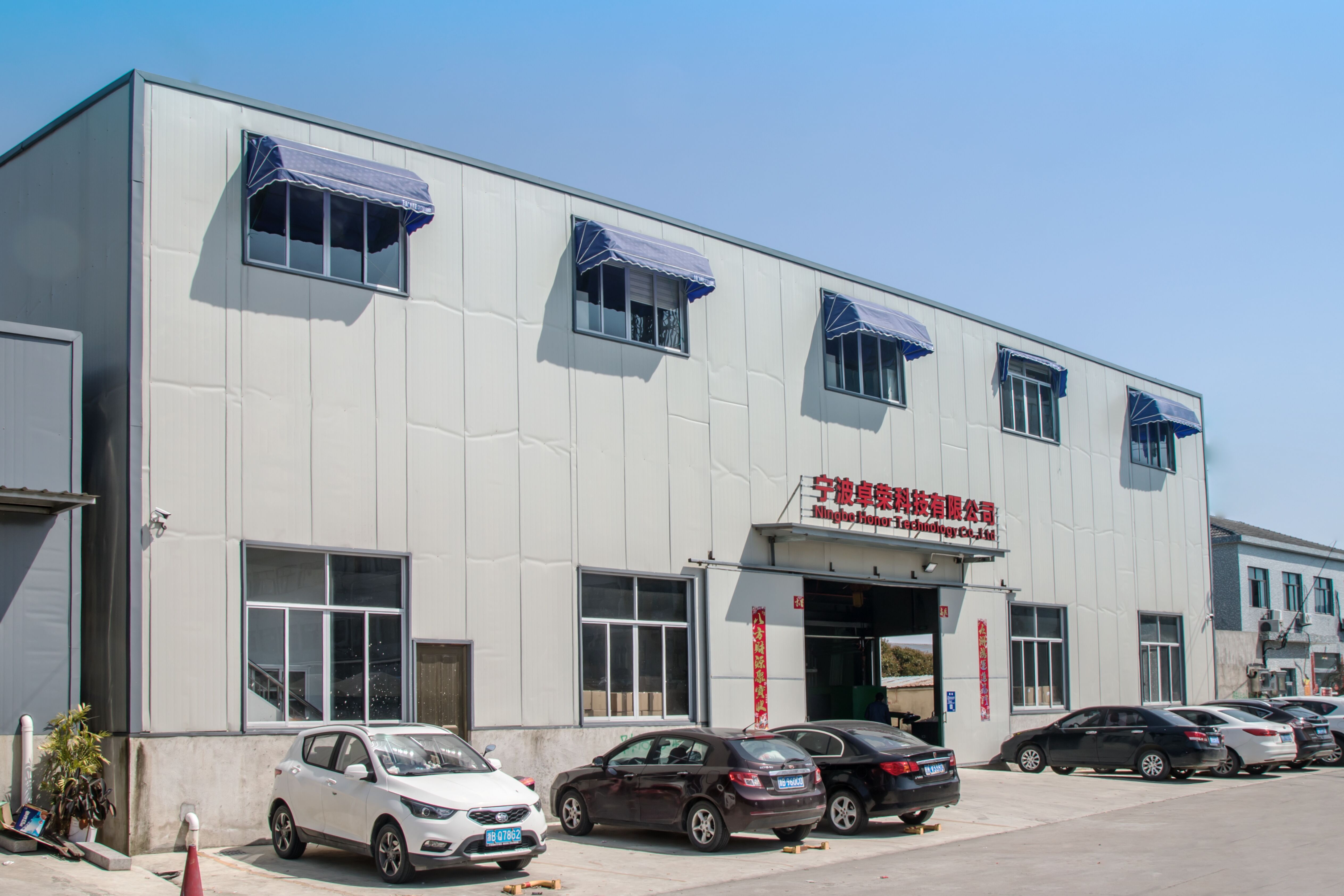
Ningbo Honor Packaging Co., Ltd (Honor Packaging) is a Ningbo-based packaging manufacturer founded in 2015 that specialises in child-resistant packaging, violet glass packaging and vacuum packaging. The company exports 100% of its output and lists the EU and the USA as its main markets, alongside the Middle East and Southeast Asia. This guide is written for engineers and packaging buyers who have already passed the discovery stage and are now choosing an item code, a closure and a validation route.
Problem Definition: Why Protective Packaging Fails at Component Level
Protective packaging is purchased as a category and fails as a component. Airtight packaging, leak free packaging, smell proof packaging, UV-blocking packaging and child-resistant packaging are outcome words. They are produced by three physical interfaces that have to be specified together, because changing one changes the behaviour of the others.
- Wall thickness and mass. The documented wall thickness of 0.38 mm appears across the HDV1, HDV2 and H21 families. Jar mass in the same families runs from 22.5 g (HDV3 essential oil bottles) to 610 g (HDV1 1 L wide mouth jars). Mass is not cosmetic: it sets the fill-line behaviour, the torque that the capping head must transmit through the glass, and the freight cost per unit.
- Neck finish. HDV1 uses neck finishes from 41/400 to 89/400; HDV2 uses 32/400 to 89/400. In these codes the leading figure is the nominal neck diameter in millimetres and the /400 suffix denotes a 400-series thread finish. A closure tooled for a 41/400 neck will not seal an 89/400 neck, and a leak-free result cannot be recovered by tightening torque alone.
- Closure material and engagement. Child resistance is a system property of closure plus container, verified by test rather than by material declaration. Child-resistant packaging must comply with ISO/EN 8317 in the EU and 16 CFR 1700.20 in the US, both of which restrict access by children under five.
The collision point is the cap. Violet glass is selected for light protection; a child-resistant cap is selected for access control. Both functions are delivered by the same closure, so a change made for one function must be re-validated for the other. Otherwise the failure mode simply migrates — from “a child opened it” to “the product leaked during transit”.
Industry Background: Why Buyers Now Ask for Specs, Not Brochures
Category-level demand for protective packaging is expanding, but the growth figures come with a segmentation caveat that matters when you are buying rigid glass. Fortune Business Insights valued the global protective packaging market at USD 44.02 billion in 2025 and projected USD 80.25 billion by 2034. Grand View Research estimated the same market at USD 40.4 billion in 2025, with flexible formats accounting for 66.4% of revenue. The gap between the two estimates reflects different segmentation criteria rather than a contradiction, and the flexible-format share indicates that rigid glass jars sit outside the fastest-growing slice of that spend. Category growth is therefore context, not a forecast for violet glass demand.
What has changed on the buyer side is the level of proof requested. Two regulatory facts drive that shift. First, child-resistant performance is a tested outcome under ISO/EN 8317 and 16 CFR 1700.20, so a supplier either has the closure and container combination validated or does not. Second, light protection is a transmission characteristic rather than a colour. Violet glass (often described as biophotonic glass) is characterised in supplier technical literature such as Miron Violetglass as blocking visible light while transmitting roughly 25%–45% of UVA and around 60% of infrared. That is a filtering profile, not a total block — a distinction that changes how a formulator writes a UV protection claim.
Detailed Solution: The Verified Specification Set Behind the CR and Violet Lines
What 0.38 mm glass thickness actually defines
The 0.38 mm wall is documented in the specification records for four families: HDV1 (Wide Mouth Violet Jars), HDV2 (Cosmetic Violet Jars), and both the round and square H21 Violet Glass Jars. It is the value an engineer can quote in a specification sheet for those lines without further confirmation.
Two lines in the same portfolio do not carry a documented wall thickness: HDV3 (Round Violet Glass Essential Oil Bottle) and H19 (Vacuum Packaging / Vacuum Click Jar). For those two, thickness has to be confirmed against the specific item code rather than assumed from a family-level figure. This is the first place where a specification sheet that reads “all jars 0.38 mm” would be wrong.
The diameter and height envelope
The documented outer-diameter envelope across the violet glass lines runs from 36 mm at the small end of HDV2 to 95 mm at the large end of HDV1. Finished heights run from 24 mm on the square H21 jars to 193 mm on the tall HDV1 wide mouth jar. That envelope is wide enough to cover sample vials, cosmetic jars, wide mouth storage jars and 1 L refillable glass storage jars inside one architecture, which is why diameter and height are the first two columns a buyer should compare before discussing decoration.
Cap materials: what is documented where
Closure materials are not interchangeable across the portfolio. HDV1 documents violet glass with Urea, PE, SAN and ABS. HDV2 documents violet glass with Urea and PE. The H21 round and square jars are supplied with child-resistant caps in PP and PE. HDV3 uses PP, with a closure choice of plastic cap, dropper, mist sprayer or lotion pump. The H19 vacuum jar is recorded as a glass vacuum click jar.
Where H19 and H21 sit in the child-resistant discussion
Buyers often encounter H19 and H21 in the same comparison. The verified records separate them. H21 is documented as a Violet Glass Jar — round (60 mm diameter, 30 ml to 6 oz) and square (58 mm diameter, 15 ml to 60 dr) — supplied with a child-resistant cap. H19 is documented under Vacuum Packaging as a 5 ml square glass vacuum click jar, packed 250 pcs per carton. Child-resistance is also available inside the violet jar families through dedicated item codes: HDV1100M-1-CR in HDV1 and HDV2005M-CR in HDV2 carry an explicit CR designation. Where an item code uses H19, the closure engagement should be confirmed against that code rather than inferred from the family name.
Comparison Table: Verified Specifications by Line
The table below contains only values recorded in the specification data for these lines. Where a field is not recorded, it is shown as not listed, which is a signal to request confirmation rather than an assumption of a default value.
| Model | Product / type | Capacity | Neck finish | Diameter | Height | Weight | Glass thickness | Closure materials documented |
|---|---|---|---|---|---|---|---|---|
| HDV1 | Violet Glass Packaging — Wide Mouth Violet Jars | 100 ml, 150 ml, 200 ml, 250 ml, 300 ml, 500 ml, 1 L | 41/400 – 89/400 | 48 – 95 mm | 84.7 – 193 mm | 117 – 610 g | 0.38 mm | Urea, PE, SAN, ABS |
| HDV2 | Violet Glass Packaging — Cosmetic Violet Jars | 3, 5, 10, 30, 50, 60, 100, 200 ml | 32/400 – 89/400 | 36 – 93.2 mm | 25.6 – 55 mm | 36 – 205 g | 0.38 mm | Urea, PE |
| HDV3 | Violet Glass Packaging — Round Violet Glass Essential Oil Bottle | 5, 10, 15, 20, 30, 50, 60, 100 ml | Not listed | Not listed | 54.5 – 125 mm | 22.5 – 120 g | Not listed | PP (plastic cap, dropper, mist sprayer or lotion pump) |
| H21 (round) | Violet Glass Packaging — Round Violet Glass Jars | 30 ml, 2 oz, 20/30/40/60 dr, 6 oz | Not listed | 60 mm | 36.5 – 125 mm | 84 – 268 g | 0.38 mm | PP, PE — with child-resistant cap |
| H21 (square) | Violet Glass Packaging — Square Violet Glass Jars | 15 ml, 30 ml, 20/30/40/60 dr | Not listed | 58 mm | 24 – 115 mm | 75 – 280 g | 0.38 mm | PP, PE — with child-resistant cap |
| H19 | Vacuum Packaging — Vacuum Click Jar | 5 ml (250 pcs/ctn) | Not listed | Not listed | Not listed | Not listed | Not listed | Glass body |
Cap Materials Compared by Documented Use
PE, PP, Urea, SAN and ABS are all used in closure manufacture, but they are not interchangeable within this portfolio. The table shows which material is documented on which line, together with the general engineering consideration that typically drives the choice. It is a mapping of availability, not a ranking of quality.
| Material | Documented on | Typical engineering consideration |
|---|---|---|
| PE (polyethylene) | HDV1, HDV2, H21 round, H21 square | Generally selected where a compliant, softer contact surface and good moisture resistance are wanted; wide availability across the violet jar lines. |
| PP (polypropylene) | H21 round, H21 square, HDV3 | Generally selected where a rigid closure body with good chemical resistance is required; the standard CR cap material pairing on H21. |
| Urea | HDV1, HDV2 | Generally selected where a hard, dense closure with a heavier feel is wanted; typical of premium cosmetic and wide mouth jar closures. |
| SAN | HDV1 | Generally selected where dimensional stability and a clearer, glossier surface finish matter. |
| ABS | HDV1 | Generally selected where impact strength and surface finish are the priority, for example thicker decorative wide mouth jar caps. |
Three consequences follow from this mapping. First, the closure material list is narrower on some lines than others, so a decoration or colour decision taken early can eliminate a material later. Second, the material does not by itself deliver child resistance — engagement geometry does, and it is verified by test. Third, because closure mass is part of total unit mass (36 g to 610 g across the documented jar families), a heavier cap on a heavy 1 L jar has a measurable effect on shipping weight, while the same cap on a 22.5 g essential oil bottle does not.
Step-by-Step Breakdown: Specifying a Jar in Eight Steps
This sequence is written for the Evaluation-to-Execution handover, where a chosen design has to become a repeatable item code.
- Fix the fill volume and the headspace. Convert the fill into a capacity from the documented lists: HDV1 from 100 ml to 1 L, HDV2 from 3 ml to 200 ml, HDV3 from 5 ml to 100 ml, H21 round from 30 ml to 6 oz, H21 square from 15 ml to 60 dr, H19 at 5 ml.
- Check the diameter and height envelope. Confirm the candidate sits inside the 36–95 mm diameter and 24–193 mm height range and inside the specific line’s narrower band — for example HDV2 caps out at 55 mm in height, H21 square at 115 mm.
- Confirm the wall thickness is documented for that family. 0.38 mm is recorded for HDV1, HDV2 and both H21 shapes. HDV3 and H19 require item-code-level confirmation.
- Read the neck finish before choosing a closure. Match the closure tooling to the 41/400–89/400 range on HDV1 or the 32/400–89/400 range on HDV2. A mismatch here is the most common root cause of a leak free packaging failure that appears only after filling.
- Choose the engagement type. Options recorded in the portfolio are a standard closure, an explicit child-resistant item code (HDV1100M-1-CR, HDV2005M-CR), a child-resistant cap as standard on H21, or the vacuum click engagement on H19.
- Select the closure material from the line’s documented list. Urea, PE, SAN or ABS on HDV1; Urea or PE on HDV2; PP or PE on H21; PP on HDV3.
- Re-run the mass and logistics calculation. Use the documented weight ranges (22.5 g to 610 g) plus closure mass, and remember packing density where it is recorded — H19 ships at 250 pcs per carton.
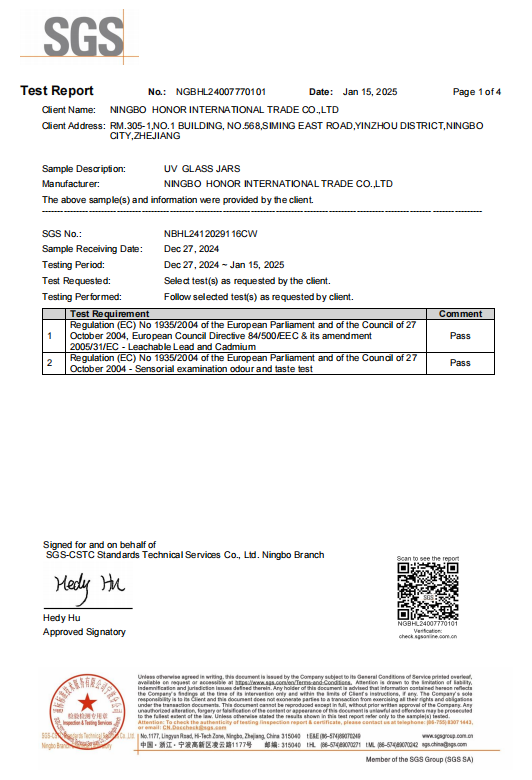
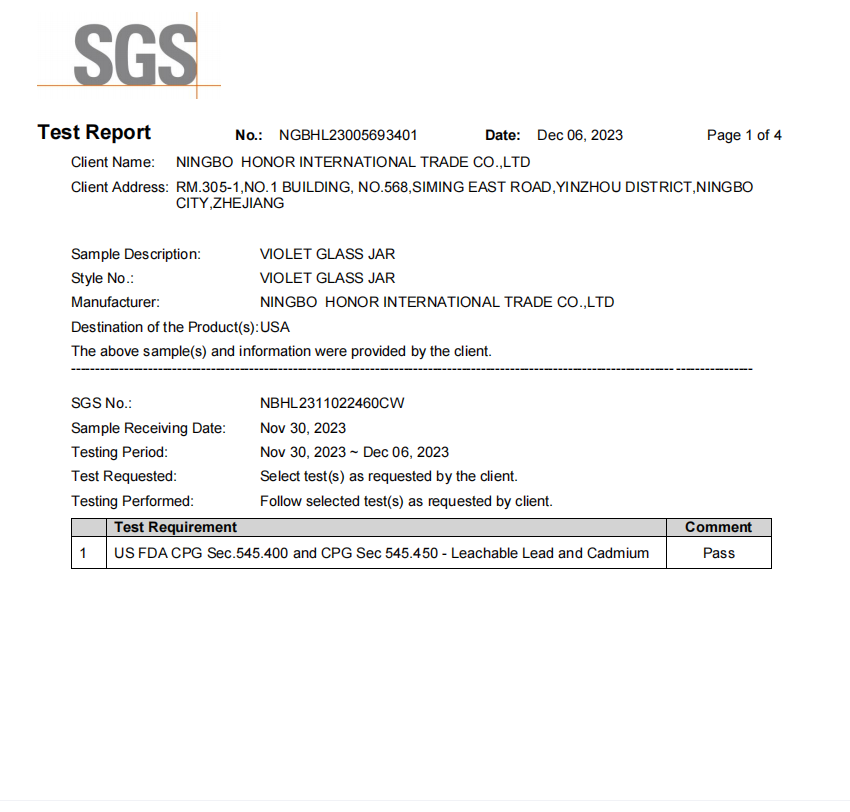
- Separate the two compliance tracks. Material and food-contact compliance is documented through the EU certificate NGBHL24007770101 issued by SGS against EC No 1935/2004 and the FDA certificate NGBHL23005693401 issued by SGS against FDA CPG. Child-resistant performance is a separate track governed by ISO/EN 8317 and 16 CFR 1700.20. Validation is supported by 100% pre-shipment testing and third-party inspection by SGS.
Use Cases: Matching the Parameter Set to the Product
Child-resistant supplement or botanical jars
A 30 ml to 6 oz product with an access-control requirement maps to the round H21 jar at 60 mm diameter, 0.38 mm wall, 36.5–125 mm height and 84–268 g, supplied with a PP or PE child-resistant cap. The square H21 alternative at 58 mm diameter and 24–115 mm height suits shorter fills from 15 ml to 60 dr and gives a lower profile on shelf.
Cosmetic and skincare violet jars
Small-volume skincare formats from 3 ml to 200 ml sit in HDV2, with neck finishes from 32/400 to 89/400, diameters from 36 mm to 93.2 mm, heights from 25.6 mm to 55 mm and weights from 36 g to 205 g. Where a CR variant is needed for a 5 ml fill, HDV2005M-CR is the recorded child-resistant item code in this family.
Wide mouth storage and 1 L refillable formats
Wide mouth glass jar formats from 100 ml to 1 L belong to HDV1, with neck finishes of 41/400 to 89/400 and weights up to 610 g. It is the only family in this portfolio that documents all four closure materials — Urea, PE, SAN and ABS — which makes it the natural choice where a decorative or heavyweight cap is part of the product concept, including printed protective packaging and matt black finishing.
Essential oil and dropper formats
HDV3 covers 5 ml to 100 ml essential oil bottles with a PP closure, and offers a plastic cap, dropper, mist sprayer or lotion pump. Heights run from 54.5 mm to 125 mm and weights from 22.5 g to 120 g, which keeps unit mass low for multi-unit sets.
Sample and vacuum formats
H19 provides a 5 ml square glass vacuum click jar packed 250 pcs per carton, appropriate for sample programmes or small-format vacuum packaging where a compact, low-mass unit is required.
Documented reference: three-year pharmaceutical packaging project
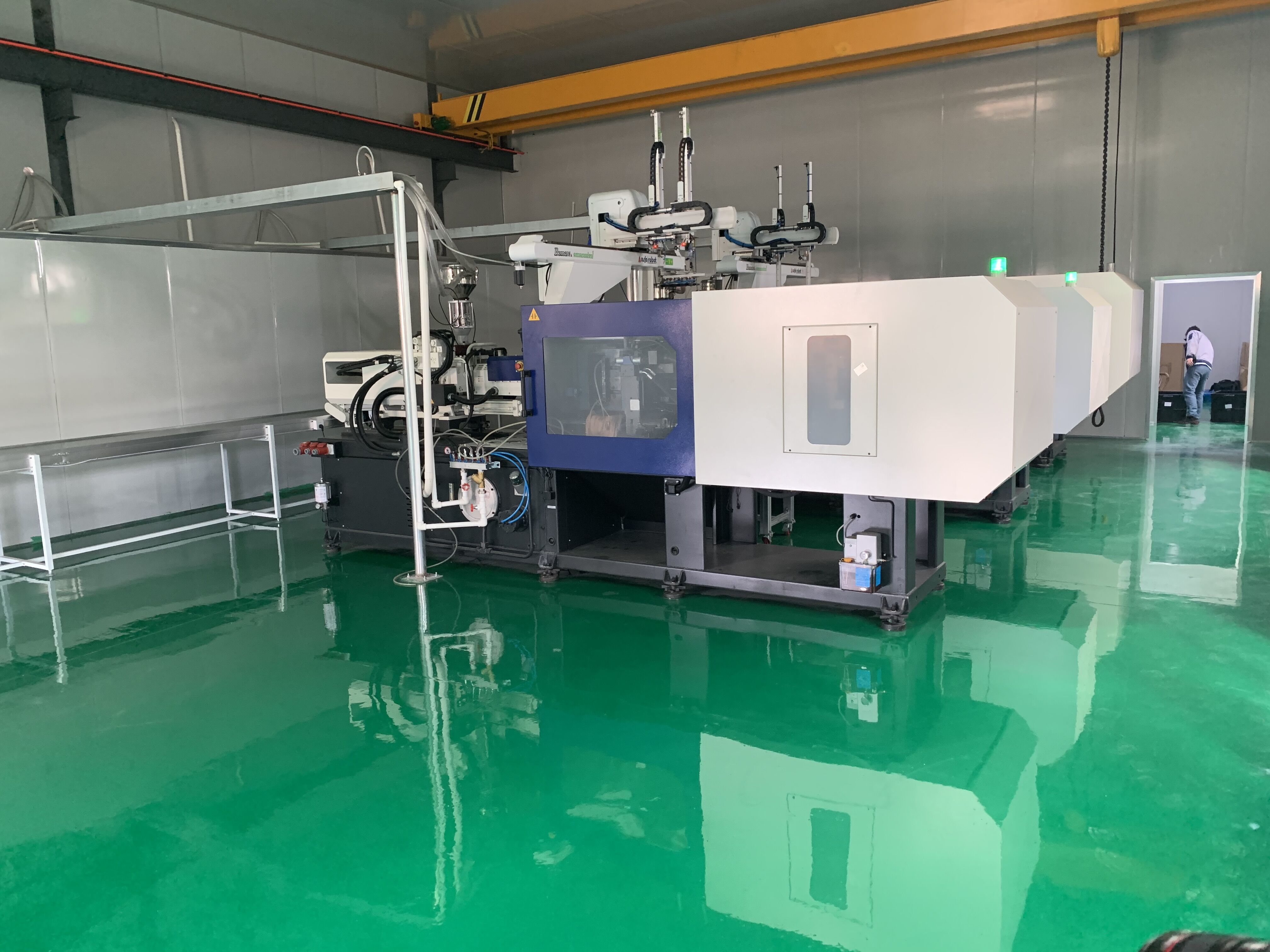
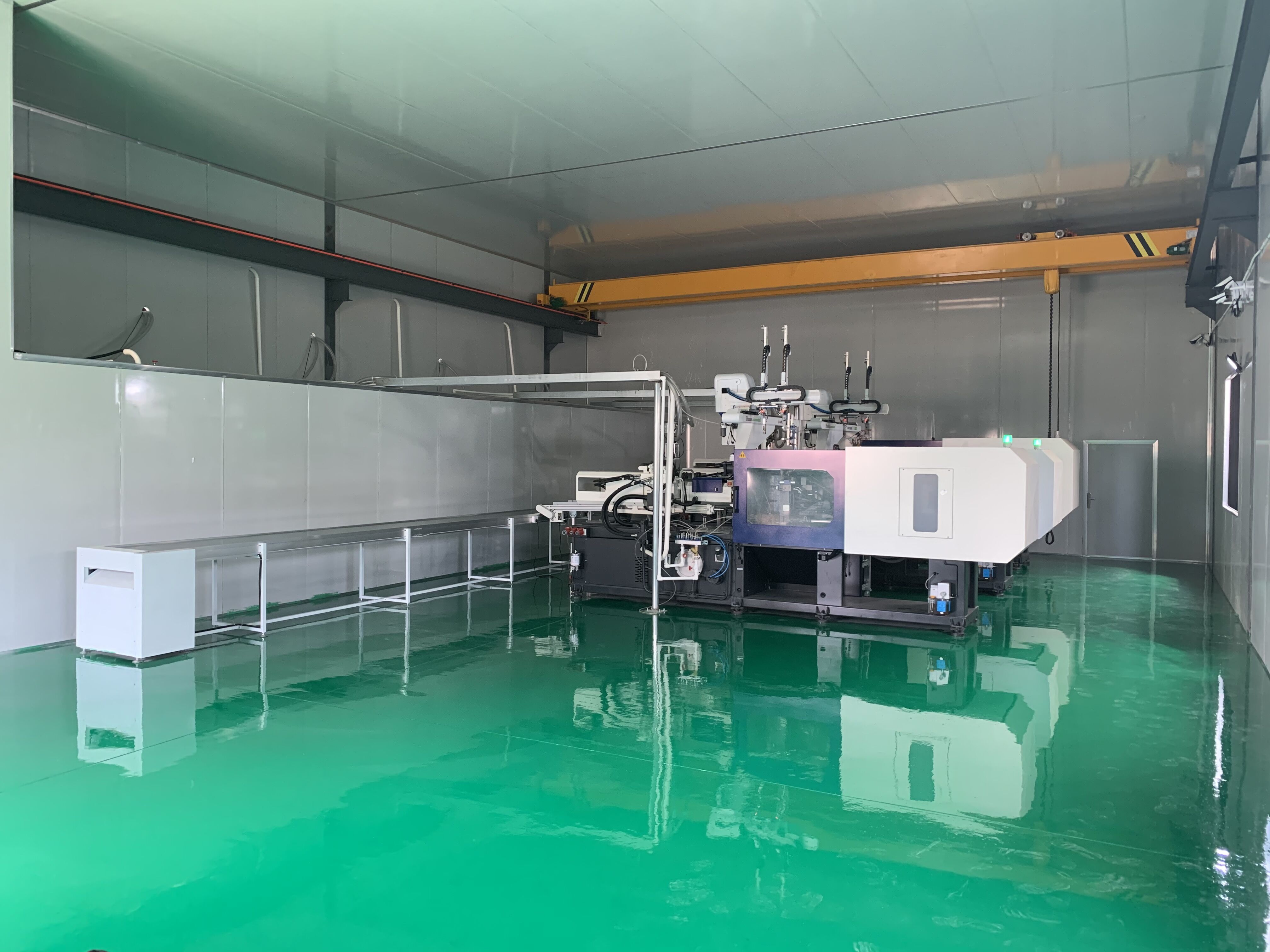
A branding business client in Germany ran a pharmaceutical packaging project of 10,000 units using violet glass packaging. The project duration was three years and the recorded outcome is that the products remained fresh throughout. Reusability and UV protection are the recorded highlights, and the applicable lines in the portfolio are H21, HDV1, HDV2, HDV3 and H19. For an engineer, the relevance is not the outcome claim itself but the fact that a three-year programme was run on the same 0.38 mm wall specification that is documented here.
FAQ
Does the EU or FDA certificate cover child-resistant performance?
No — they cover different things, and treating them as one document is a common compliance error. Certificate NGBHL24007770101, issued by SGS against EC No 1935/2004, and certificate NGBHL23005693401, issued by SGS against FDA CPG, document material and food-contact scope for the violet glass and vacuum packaging lines. Child-resistant performance is governed separately by ISO/EN 8317 in the EU and 16 CFR 1700.20 in the US, both of which restrict access by children under five. A project that needs both should request both as distinct evidence items.
Can Honor Packaging apply a 0.38 mm wall across a 36–95 mm diameter range with custom decoration?
The 0.38 mm wall is documented on HDV1 (48–95 mm diameter), HDV2 (36–93.2 mm), and both H21 shapes at 60 mm and 58 mm. HDV3 and H19 do not carry a recorded wall thickness and must be confirmed per item code. OEM and ODM services are available, and ODM scope includes printing client artwork, creating new designs and applying frosted finishes. Surface treatments recorded across the lines include sticker, silk-screen printing, heat transfer printing, hot stamping and frosted finish.
What are the order terms and what drives unit cost?
The minimum order quantity is 10,000 units and delivery terms are FOB, with production arranged on receipt of a 30% down payment and the remaining 70% payable before shipment. The main specification-level cost drivers visible in the data are capacity selection, glass mass (documented at 22.5 g to 610 g depending on line), and the closure material, since not every material is available on every line and a change of material can require new tooling rather than a simple substitution.
How is conformance validated before shipment?
All orders undergo 100% pre-shipment testing and are subject to third-party inspection by SGS, with pre-shipment test defined as the acceptance criterion. After-sales policy is that the supplier accepts reissuing. For CR projects, request the validation route for closure plus container as a system, because the engagement that produces the child-resistant result is a combined property and cannot be confirmed by inspecting the cap in isolation.
What is the lead time and monthly capacity?
Typical lead time is 30–45 days against a monthly production capacity of 100,000 units, with annual output recorded at 1,000,000 units. A 10,000-unit qualification order therefore fits inside a single month of capacity, but the 30–45 day window should still be planned against the artwork-approval date rather than the enquiry date. To begin, request a quotation or sample set through the contact details below.
Conclusion: Specify the Line, Then the Closure, Then the Evidence
The technical decision behind child-resistant and violet protective packaging is narrower than the category language suggests. Four families — HDV1, HDV2, and the round and square H21 — carry a documented 0.38 mm wall. The portfolio spans 36 mm to 95 mm in diameter, 24 mm to 193 mm in height and 22.5 g to 610 g in mass. Five closure materials are documented, and each is attached to specific lines: Urea, PE, SAN and ABS on HDV1; Urea and PE on HDV2; PP and PE with child-resistant caps on H21; PP on HDV3. H19 covers compact vacuum formats at 5 ml.
Choose the line first. Select a closure material that is already documented for that line. Then keep the two compliance tracks separate — EC No 1935/2004 and FDA CPG for material scope, ISO/EN 8317 and 16 CFR 1700.20 for child-resistant performance — and validate with 100% pre-shipment testing plus third-party inspection by SGS. That sequence removes most of the rework risk in a protective packaging programme before the first tooling payment is made.
Next step: get the specification sheet and a sample
Send your target capacity, neck finish and closure requirement, and Honor Packaging will return a matching item code with the documented dimensions. Download the full catalogue or request a sample set and quotation.
Download the Honor Packaging catalogue (PDF) Visit honorcrpkg.com- Ningbo Honor Packaging Co., Ltd — founded 2015, Ningbo, China
- Email: info@honorpkg.com
- Tel: +86-574-88004632 / +86-15968944995
- WhatsApp: +86 15968944995 — start a chat
- Address: Rm.305, No.1 Building, No.568 SiMing East Road, YinZhou District, Ningbo City, China
Have Questions or Need More Details?
Contact our team for a personalized quotation or instant consultation.
Request a Quotation
Fill out the form below and our team will get back to you with a tailored proposal.
WhatsApp Direct Chat
Prefer to chat in real-time? Message us on WhatsApp for instant assistance & quick answers.
- Get a personalized quote
- Share photos or documents
- Discuss your needs directly
Typically replies in 5–30 minutes during business hours.