
H19 Vacuum & Child-Resistant Jars: A Supplement Packaging Compliance Check
H19 Vacuum & Child-Resistant Jars: A Supplement Packaging Compliance Check
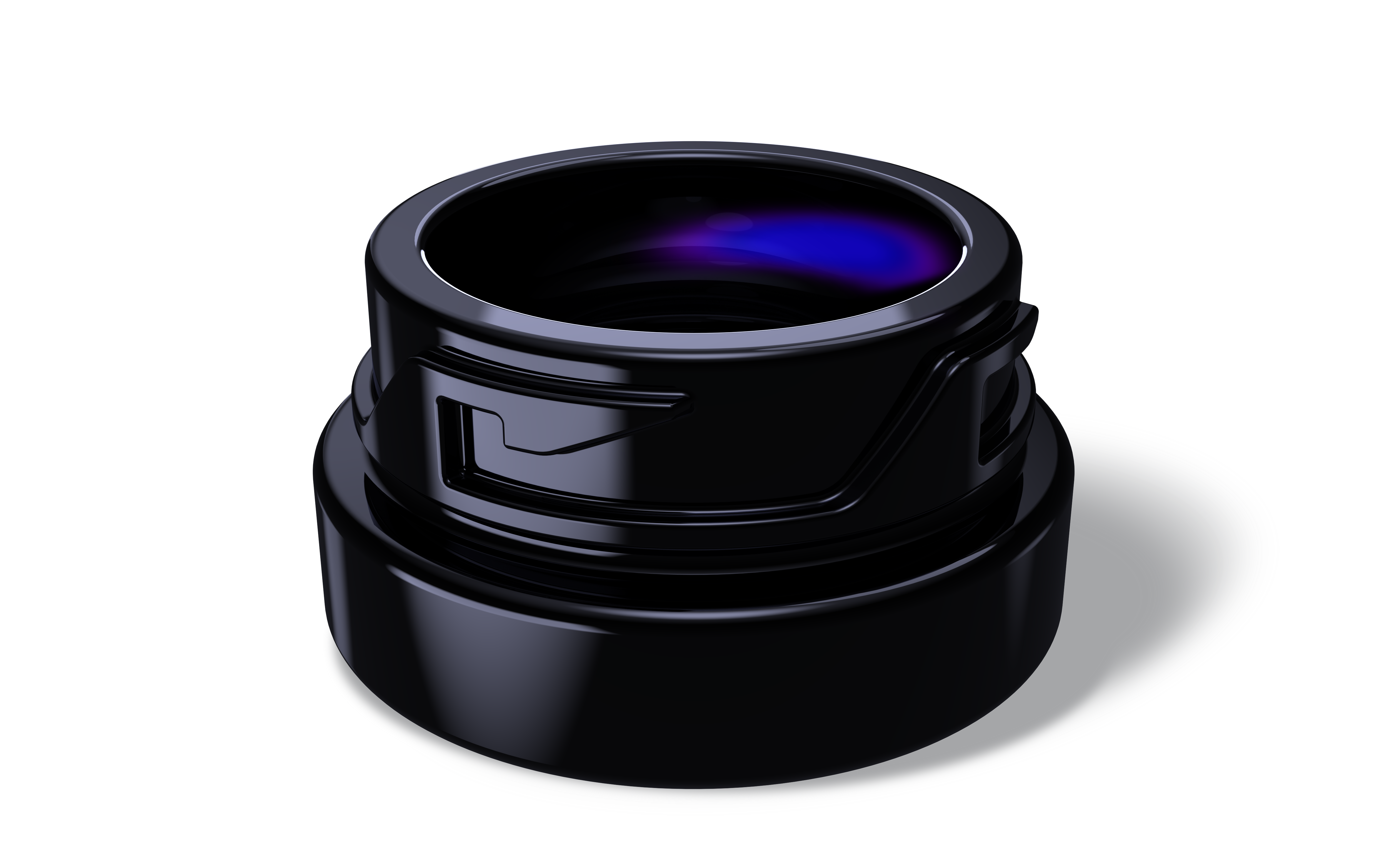
Approving an H19 jar means proving six things before the purchase order is released: that the item code matches the product you intend to buy, that capacity and shape match the label claim, that the closure does what the specification says, that the carton count matches the packing list, that any certificate cited actually names this product and this market, and that the supplier's production and quality terms are written into the order rather than assumed.
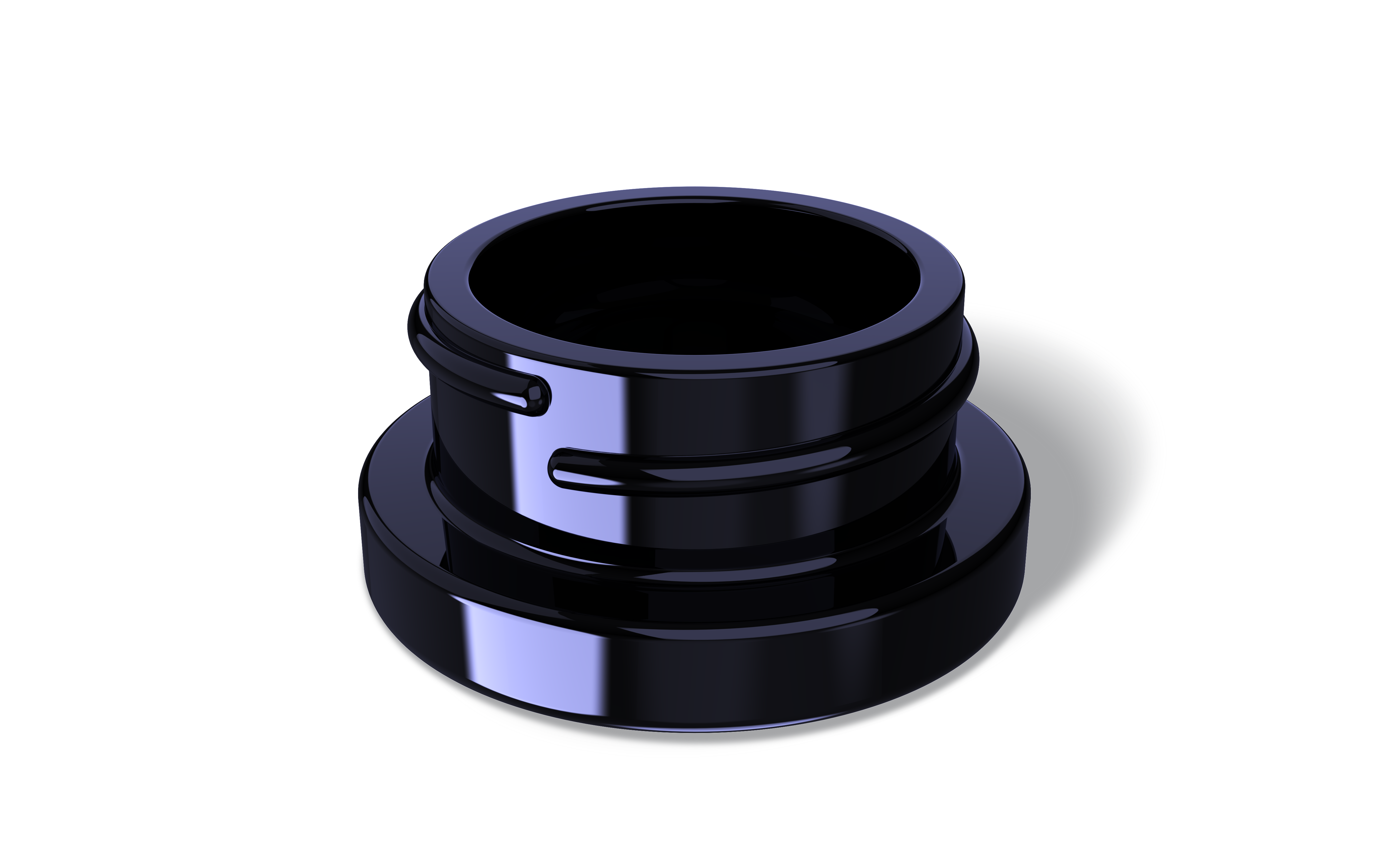
The H19 range from Ningbo Honor Packaging Co., Ltd. makes that check possible because its attributes are recorded rather than implied. The range covers a 5 ml square glass vacuum jar sold under the name Vacuum Click Jar, and 5 ml and 9 ml glass child-resistant jars in white and black across square, round, triangle and hexagon shapes. All three records state 250 pieces per carton. This guide sets out how to verify each of those attributes against purchasing terms and acceptance criteria without assuming certifications that the record does not support.
Why H19 approval problems cluster around components, not the jar body
Small-capacity supplement jars concentrate risk in the parts that are easiest to overlook. The glass body is visually obvious, so it gets inspected. The failure modes that actually stop a shipment are usually less visible, and three of them recur in this format.
Certification is recorded per product and per market, not per factory. A certificate held for one product family does not automatically extend to a different model, and a certificate issued for one market does not cover another. A buyer who treats certification as a company-level attribute will approve the wrong document.
Closure performance cannot be inferred from the jar specification. A child-resistant cap and a vacuum closure are functional components. Their behaviour depends on the closure itself, on the container finish it mates with, and on the assembly condition. The recorded jar parameters describe capacity, material, shape, weight and carton count; they do not describe opening force, torque, or seal integrity.
Carton-level facts are where counting and freight disputes begin. A 250-piece carton and a recorded unit weight of 27 g to 38 g for the black child-resistant range give a buyer a cross-check against the packing list. Without that cross-check, a short count is only discovered at the pick-and-pack stage, after the goods have cleared customs.
The core approval principle: every claim on the purchase order should be traceable to one of three things — a recorded product parameter, a physical sample tested to an agreed method, or a certificate whose number, standard, product list and market have been read in full.
What the compliance context requires in 2026
Supplement packaging sits inside a large and fragmented market, and the regulatory layer around it is moving. Two data points frame the commercial context. Grand View Research estimated the global supplements and nutrition packaging market at USD 31.3 billion in 2025, and reported plastic as the dominant material with approximately 41.67% of the material segment share in the same year. Glass is therefore a minority material chosen for specific reasons — barrier behaviour, weight perception, chemical inertness, or brand positioning — rather than a default. The H19 range is a glass range, so its commercial justification has to be product-specific.
On the regulatory side, two developments matter for a buyer checking small jars and their closures.
- EU BPA restriction. Regulation (EU) 2024/3190 restricts bisphenol A in food contact materials, including coatings, with application to single-use items from 20 July 2026 according to the European Commission record. The practical implication for a glass jar is that the question does not stop at the jar: any plastic cap, liner, dropper or inner seal in contact with the product falls inside the same conversation, and material statements should be requested for the closure as well as the container.
- US tamper-evidence expectations. A published guidance summary notes that, for dietary supplements, tamper-evident packaging is not generally mandated at federal level in the same way as it is for many over-the-counter drugs. That is a signal about legal default, not a reason to skip the feature. Where tamper evidence is not compelled by statute, it becomes a contractual and brand requirement, which means it must be written into the specification rather than assumed from the category.
Neither point is a legal determination for a specific product or market. They are reasons to convert vague compliance language into named documents, named standards and named tests before approval.
The H19 range in recorded specifications
The H19 platform is documented as three related product records rather than one generic jar. Reading them side by side is the fastest way to see which attributes are fixed and which need to be confirmed in writing.
| Attribute | H19 vacuum jar | H19 child-resistant, black | H19 child-resistant, white |
|---|---|---|---|
| Recorded product type | Vacuum Jar (named Vacuum Click Jar) | Black concentrate jar | White concentrate jar |
| Capacity | 5 ml | 5 ml / 9 ml | 5 ml / 9 ml |
| Material | Glass | Glass | Glass |
| Shape | Square | Square, round, triangle, hexagon | Square, round, triangle, hexagon |
| Closure | Vacuum closure (product-name and cap-image record only) | Child-resistant cap | Child-resistant cap |
| Recorded unit weight | Not stated | 27 g to 38 g | 27 g and 36 g |
| Item codes | Not split by code | H19-0001B, H19-0002B, H19-0004B, H19-0005B, H19-0007B, H19-0008B, H19-0009B, H19-0010B, H19-0011B | H19-0001W, H19-0002W, H19-0004W, H19-0005W, H19-0007W, H19-0008W, H19-0009W, H19-0010W, H19-0011W |
| Pieces per carton | 250 | 250 | 250 |
| Recorded industry scope | Food, cosmetic, medical | Food, cosmetic, medical | Food, cosmetic, medical |
Two details in that table deserve attention because they change how a buyer writes the specification. First, the white range records two unit weights, 27 g and 36 g, while the black range records a span of 27 g to 38 g. A carton-weight check therefore has to be calibrated per item code, not per colour family. Second, the vacuum jar record identifies the product through its type and name and through cap images, but does not state a separate closure specification. That gap should be closed in writing before the first order, not after the first complaint.
A seven-step approval sequence for H19 jars
Step 1 — Lock the item code to the product
Start with the code, not the description. The black and white child-resistant ranges are itemised separately (H19-0001B through H19-0011B and H19-0001W through H19-0011W), and the code is the only reliable way to distinguish a shape or capacity variant within the family. A purchase order that names only "H19 5 ml black" leaves shape and closure configuration open. Write the code, the shape and the capacity on the same line, and require the supplier to confirm the mapping in the order acknowledgement.
Step 2 — Confirm capacity, shape and colour against the label claim
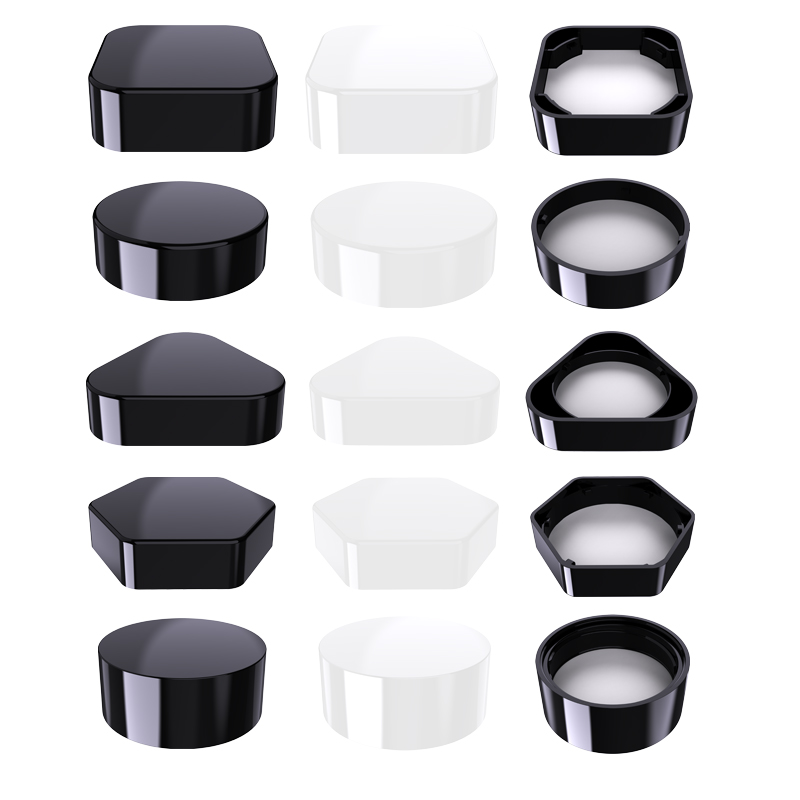
Capacity in this range is 5 ml or 9 ml, and shape options are square, round, triangle and hexagon. Neither figure should be taken from a photograph. Request the specific item, fill it with the intended product or a representative fluid, and confirm the usable fill level against the net-content statement on your label. For a 5 ml jar, the difference between nominal capacity and practical fill is small in absolute terms but large in percentage terms, and it is the buyer's label claim that carries the risk.
Step 3 — Define the child-resistant closure by behaviour, not by name
The records state that the closure is a child-resistant cap. They do not state the opening mechanism or a force threshold. That is not a defect in the record; it is a signal that the requirement belongs in your specification. Agree with the supplier which opening action the cap requires, how it should be demonstrated to a line operator, and what sample size and acceptance rule you will use at incoming inspection. If your market imposes a formal child-resistance protocol, name the protocol and the test house in the order — do not rely on the phrase "child-resistant" alone.
Step 4 — Set a vacuum acceptance criterion for the 5 ml square jar
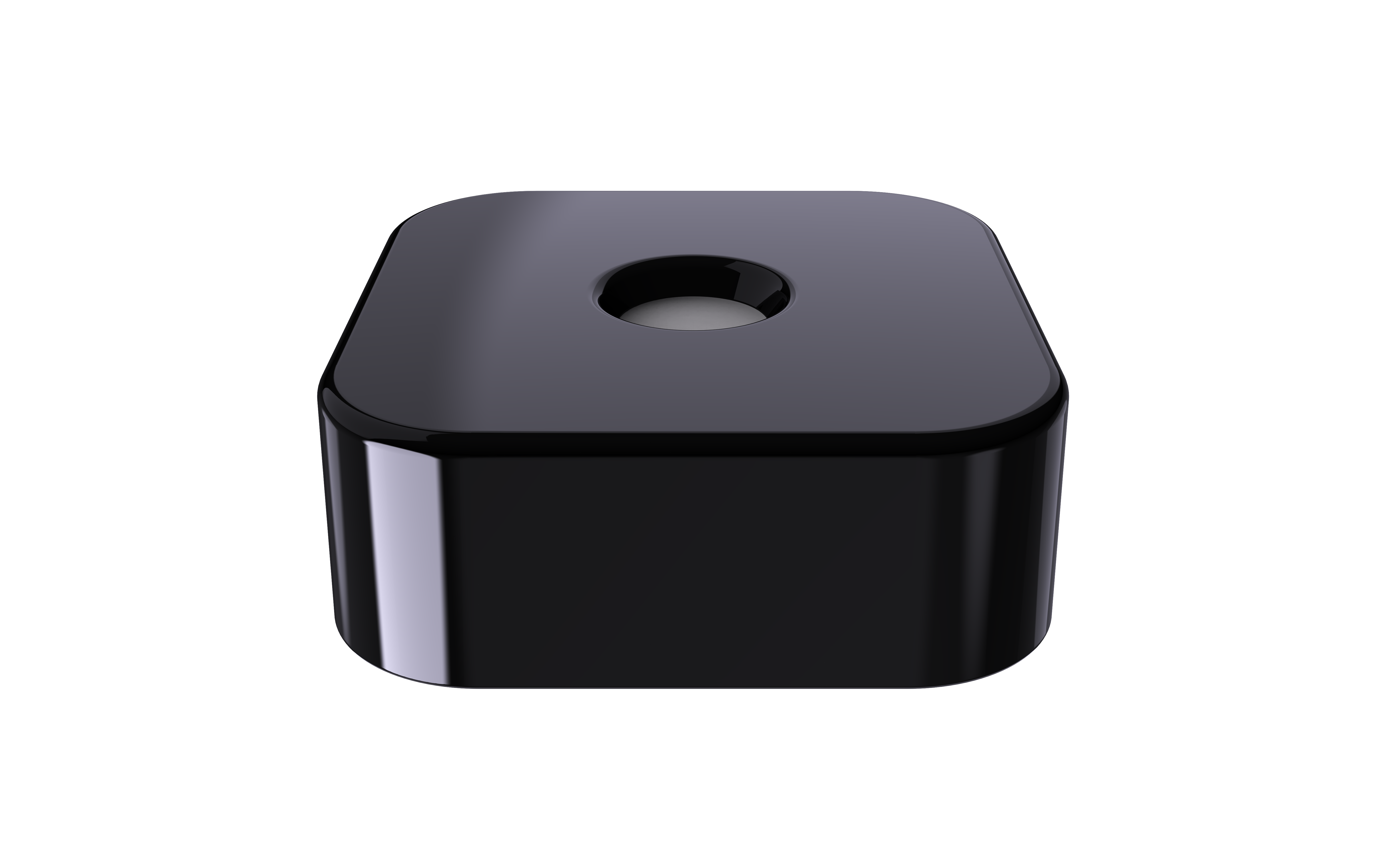
The vacuum format is recorded as a 5 ml square glass jar named Vacuum Click Jar, with cap imagery in the product record. Vacuum is a performance claim, so it needs a performance test. Decide before sampling how seal integrity will be judged: visual indicator, pressure retention over a defined interval, or a destructive check on a sample from each batch. Also decide what happens to units that fail — rework, replacement, or rejection — and put that in the quality clause. A vacuum jar approved on appearance alone has not been approved at all.
Step 5 — Check carton count and unit weight together
All three H19 records state 250 pieces per carton. Combine that with the recorded unit weight and you have a usable receiving check: 250 units at the low and high end of the stated weight band gives an expected carton-weight window, and a carton outside that window is a prompt to recount and inspect. Calibrate the window per item code, because the white range records 27 g and 36 g while the black range records 27 g to 38 g. Treat the check as a screening tool rather than a substitute for counting, and record the result on the receiving document.
Step 6 — Match certificate scope to product and market
This is the step most often done from memory rather than from the document. Open the certificate, read the standard number, the certificate number, the issuing body, the market and the applicable product list, and confirm that the product you are buying appears on that list. The next section sets out exactly what the supplied records show for H19 and what they do not.
Step 7 — Write quality control, MOQ and lead time into the order
Recorded commercial terms for Honor Packaging are a minimum order quantity of 10,000 units, a lead time of 30 to 45 days, and a monthly capacity of 100,000 units, with 100% pre-shipment testing and third-party inspection such as SGS cited as the quality-control approach. Those figures belong in the contract as commitments with dates, not as background information in a quotation email. If your first order is also your trial order, state explicitly whether it can be scheduled inside normal lead time or must be planned as a separate validation batch.
Reading the certification record correctly
Two certification records are associated with Honor Packaging's glass packaging in the supplied documentation, and only one of them lists H19. Distinguishing them is the single most useful compliance check a buyer can perform on this range.
- FDA CPG record, US market. Certificate number NGBHL23005693401, issued by SGS, dated 30 November 2023, recorded against the FDA CPG standard with a scope of food, cosmetic and medical applications. The H19 vacuum packaging appears in the applicable product list for this record, alongside violet glass models HDV1, HDV2, HDV3 and H21.
- EU record under EC No 1935/2004. Certificate number NGBHL24007770101, issued by SGS, dated 27 December 2025, recorded for the EU market with a Europe scope. The applicable products listed are the violet glass models HDV1, HDV2, HDV3 and H21. H19 is not listed on this record.
The practical consequence is straightforward. A buyer planning a US-market launch can point to a certification record whose product list names the H19 vacuum packaging, subject to verifying that the certificate is current. A buyer planning an EU-market launch cannot treat that EU record as covering H19, because the product list does not include it — a separate confirmation would be required.
Two further cautions apply to both records. Neither carries a stated expiry date in the supplied documentation, which means currency has to be confirmed in writing rather than assumed from the issue date. And a certificate attached to a quotation is not automatically attached to your order: the document reference should appear on the order confirmation so that the specification, the certificate and the delivered goods all refer to the same product identity.
Verification habit worth building: request the certificate as a file, not as a line in an email. Check four fields against your purchase order — product name or code, standard number, certificate number, and market. If any one of the four does not match, the certificate does not support the claim.
Where the H19 format fits, and where it needs testing first
The recorded industry scope for the H19 range is food, cosmetic and medical packaging, and the recorded application conditions include food, cosmetic and medical packaging use with UV-protective black glass and a child-resistant design. That scope describes intended use categories; it does not certify fitness for a specific formulation. Three application patterns follow from the format itself.
Concentrated resins and extracts
A 5 ml or 9 ml jar suits products sold in small, high-value doses — concentrated resin, thick extract, or a measured single-serving concentrate. The constraint is compatibility, not capacity: a thick resin can bridge around a closure seat, and a product with volatile components puts more demand on seal integrity than on glass thickness. For these applications, the vacuum variant deserves a defined seal test before the child-resistant variant is ruled in or out on cost grounds.
Herbal and botanical products
Where the product is hygroscopic or aroma-bearing, the closure and any liner do most of the protective work. Moisture and odour control should be specified as a closure requirement, with the jar treated as the rigid outer container. Buyers evaluating this format against pouches or larger jars should compare on protection per dose rather than cost per unit, because a 5 ml glass jar and a multi-gram pouch are not substitutes at the same fill level.
Cosmetic and medicinal-adjacent products
Small glass jars with child-resistant closures are also used for cosmetic concentrates and medicinal-adjacent products, which is consistent with the recorded industry scope. Where a product crosses into a regulated medicinal claim, the packaging discussion shifts: the questions become stability data, extractables and leachables, and market-specific registration, none of which a product parameter table can answer.
Honor Packaging's recorded case material describes a German branding business purchasing 10,000 units over a three-year relationship for pharmaceutical packaging, with reusable and UV-protection characteristics highlighted and freshness retention reported as the outcome. That record spans violet glass and H19 vacuum products together, so it should be read as evidence of a sustained supply relationship in pharma-adjacent packaging, not as a measured performance result for the H19 jar on its own.
What the supplier record adds to the approval decision
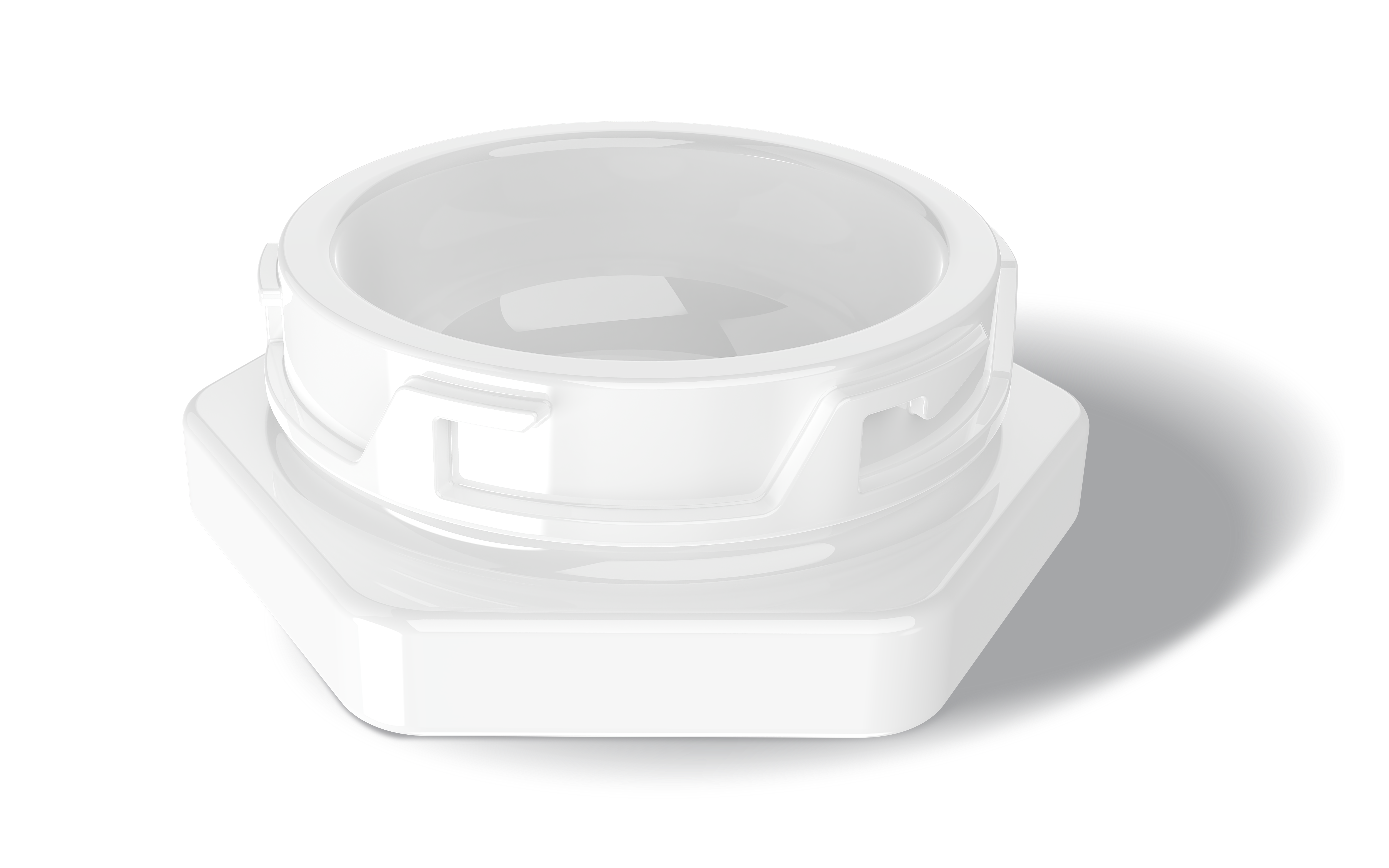
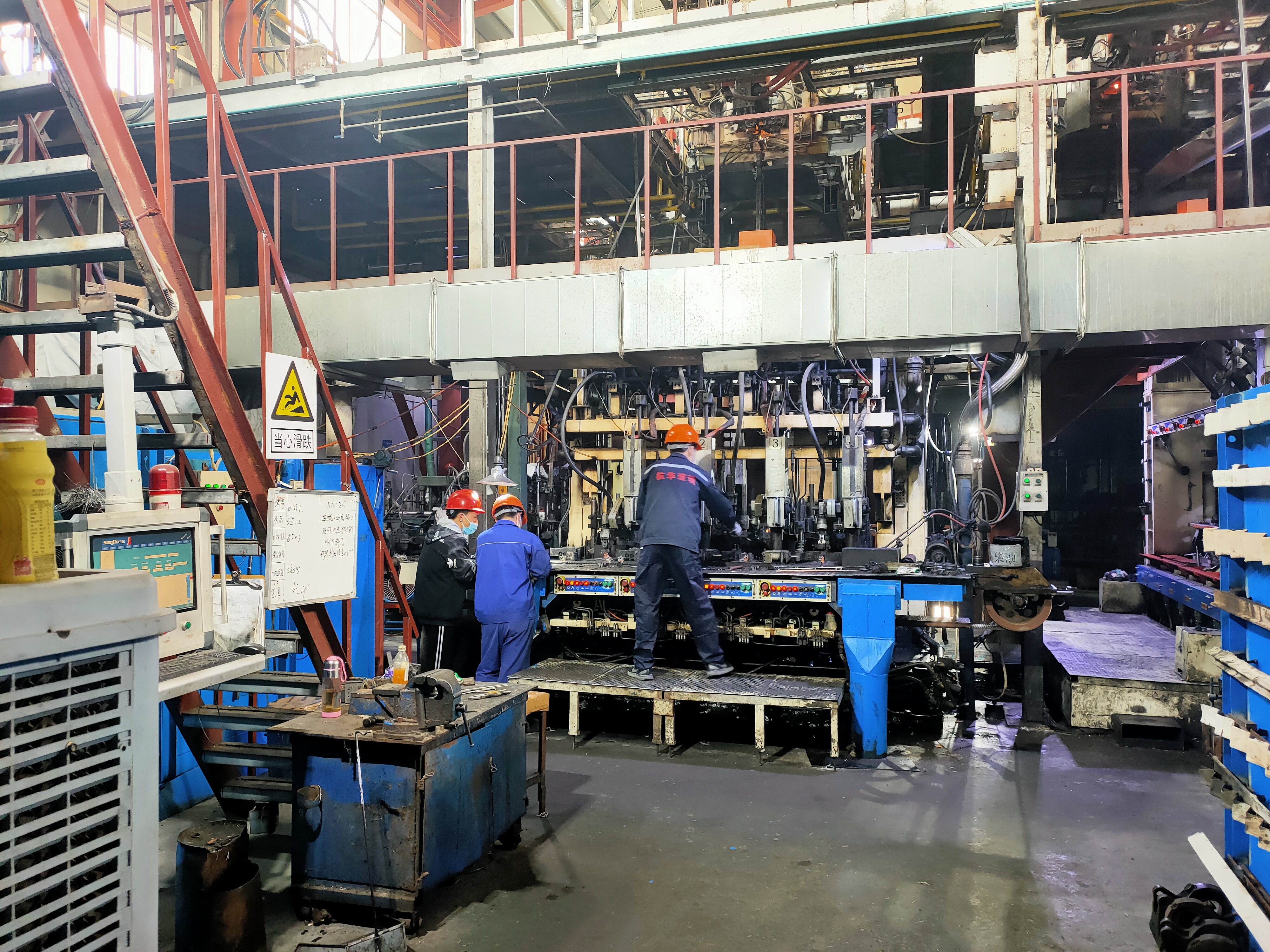
Ningbo Honor Packaging Co., Ltd. was founded in 2015 and operates from Ningbo, China, close to the Ningbo and Shanghai seaports, which matters for a buyer scheduling ocean freight around a 30 to 45 day production window. The recorded profile lists 310 employees, a 15-person R&D team, an annual output of 1,000,000 units, a 100% export ratio, and the EU and USA as main markets.
Capability statements that affect a packaging approval are narrower than a company profile. Four are worth carrying into the specification:
- Order size. A recorded MOQ of 10,000 units against a recorded monthly capacity of 100,000 units means a first order represents a modest share of a month's stated output. That is favourable for trial runs, but capacity is not a reservation — the production slot still has to be confirmed for a specific delivery date.
- Customisation. Printing of client artwork, new design development and frosted finishing are recorded as available. Each of these changes the approval path: artwork requires a proof approval step, and a frosted finish changes the surface inspection criteria.
- Quality control. 100% pre-shipment testing with third-party inspection such as SGS is the recorded approach. Ask which defects the pre-shipment test covers, and whether the third-party inspection is per order or per shipment.
- After-sales. Reissue is recorded as the accepted remedy. Define what triggers it — count shortfall, closure failure rate, transit damage — before the first shipment rather than after it.
The approval checklist to attach to the purchase order
Consolidating the checks into a single page makes the difference between a specification that is discussed and one that is enforced. The list below covers the attributes that are recorded for H19 and the ones that must be agreed.
- Item code, shape, capacity and colour stated on the order line, matching a named H19 code.
- Glass material confirmed as glass, with any post-treatment (frosted, printed) named separately.
- Closure type stated, with an agreed opening-action description and an incoming inspection rule.
- For the vacuum variant, a seal test method, sample size and acceptance criterion.
- Carton count of 250 pieces confirmed, with a per-code carton-weight screening window.
- Certificate reference, standard, number, market and applicable product list verified in writing, with a note that H19 appears on the FDA CPG record and not on the EU EC No 1935/2004 record.
- Material statement requested for any plastic component in product contact, in view of the EU restriction on bisphenol A in food contact materials.
- MOQ, lead time, pre-shipment test scope, third-party inspection arrangement and reissue terms written as commitments.
- Sample retention: at least one approved reference sample held by both parties, identified by item code and approval date.
Frequently asked questions
Does the H19 jar carry FDA or EU certification?
Partly, and the distinction matters. The FDA CPG record (certificate NGBHL23005693401, issued by SGS, dated 30 November 2023, scope food, cosmetic and medical, market US) lists the H19 vacuum packaging among its applicable products. The EU record under EC No 1935/2004 (certificate NGBHL24007770101, issued by SGS, dated 27 December 2025, market EU) lists violet glass models HDV1, HDV2, HDV3 and H21; H19 is not on that list. Neither record states an expiry date, so current validity should be confirmed before either certificate is referenced in your own customer documentation.
What capacities and shapes are available in the H19 range?
The child-resistant jars are recorded in 5 ml and 9 ml capacities across square, round, triangle and hexagon shapes, in both white and black. The vacuum jar is recorded as a 5 ml square glass jar under the name Vacuum Click Jar. Shape and capacity are tied to specific item codes, so the code — not the description — should appear on the purchase order.
How many jars are in a carton, and how is the count checked?
All three H19 records state 250 pieces per carton, including the 5 ml square vacuum jar. The count can be cross-checked at receiving using unit weight: the black child-resistant range is recorded at 27 g to 38 g per unit and the white range records 27 g and 36 g, so a carton-weight window should be calculated per item code and used as a screening tool alongside a physical count.
What are the minimum order quantity and lead time?
The recorded MOQ is 10,000 units and the recorded lead time is 30 to 45 days, against a recorded monthly capacity of 100,000 units. For a first order that doubles as a validation batch, confirm the production slot and delivery date in writing, because a stated capacity range does not reserve capacity for a specific shipment.
How should the child-resistant cap and vacuum seal be tested before approval?
Agree the test, not just the feature. For the child-resistant cap, define the opening action, the demonstration method and an incoming inspection rule. For the vacuum jar, define seal integrity as a measurable outcome — visual indicator, pressure retention over a stated interval, or a destructive check on a sample per batch — and state the remedy for failures. A practical route is to test the item code you actually intend to order, retain approved reference samples with both parties, and confirm the certificate scope at the same time. Sample requests, current certificate copies and the product catalogue can be directed to info@honorpkg.com or +86-574-88004632.
Conclusion: compliance is a document trail, not an impression
The H19 range is simple to describe and easy to mis-approve. A 5 ml square vacuum jar and 5 ml or 9 ml child-resistant jars in white and black, four shapes, 250 pieces per carton — the attributes are narrow enough that every one of them can be verified. What separates a clean approval from a costly one is whether the verification is written down: the item code on the order line, the closure behaviour defined as a test, the carton-weight window calculated per code, and the certificate read for product list and market rather than for the logo at the top.
Two facts do most of the work in that process. The H19 vacuum packaging appears on the FDA CPG record held against certificate NGBHL23005693401, and it does not appear on the EU EC No 1935/2004 record held against certificate NGBHL24007770101. Buyers who check that distinction before quoting a compliance claim to their own customers avoid the most common and most expensive error in this category.
Next step: request H19 samples by item code together with the current certificate copies, then run the seven-step check against your own acceptance criteria. The full product and capability overview is available in the Honor Packaging brochure (PDF), and the company profile is published at honorcrpkg.com.
Have Questions or Need More Details?
Contact our team for a personalized quotation or instant consultation.
Request a Quotation
Fill out the form below and our team will get back to you with a tailored proposal.
WhatsApp Direct Chat
Prefer to chat in real-time? Message us on WhatsApp for instant assistance & quick answers.
- Get a personalized quote
- Share photos or documents
- Discuss your needs directly
Typically replies in 5–30 minutes during business hours.