
H19 vs H21 Child-Resistant Glass Jars: A Buyer's Comparison Guide
H19 vs H21 Child-Resistant Glass Jars: A Buyer's Comparison Guide
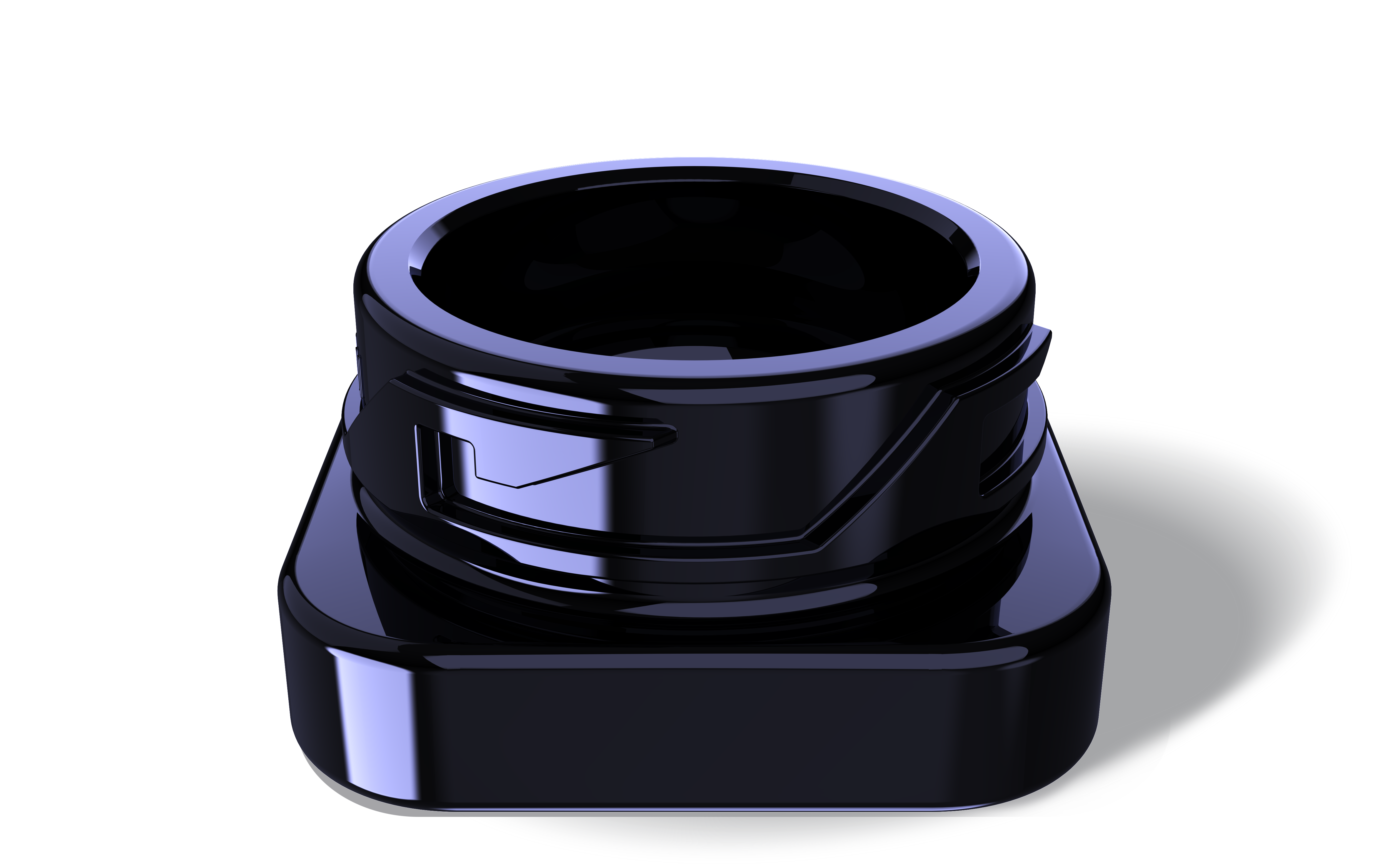
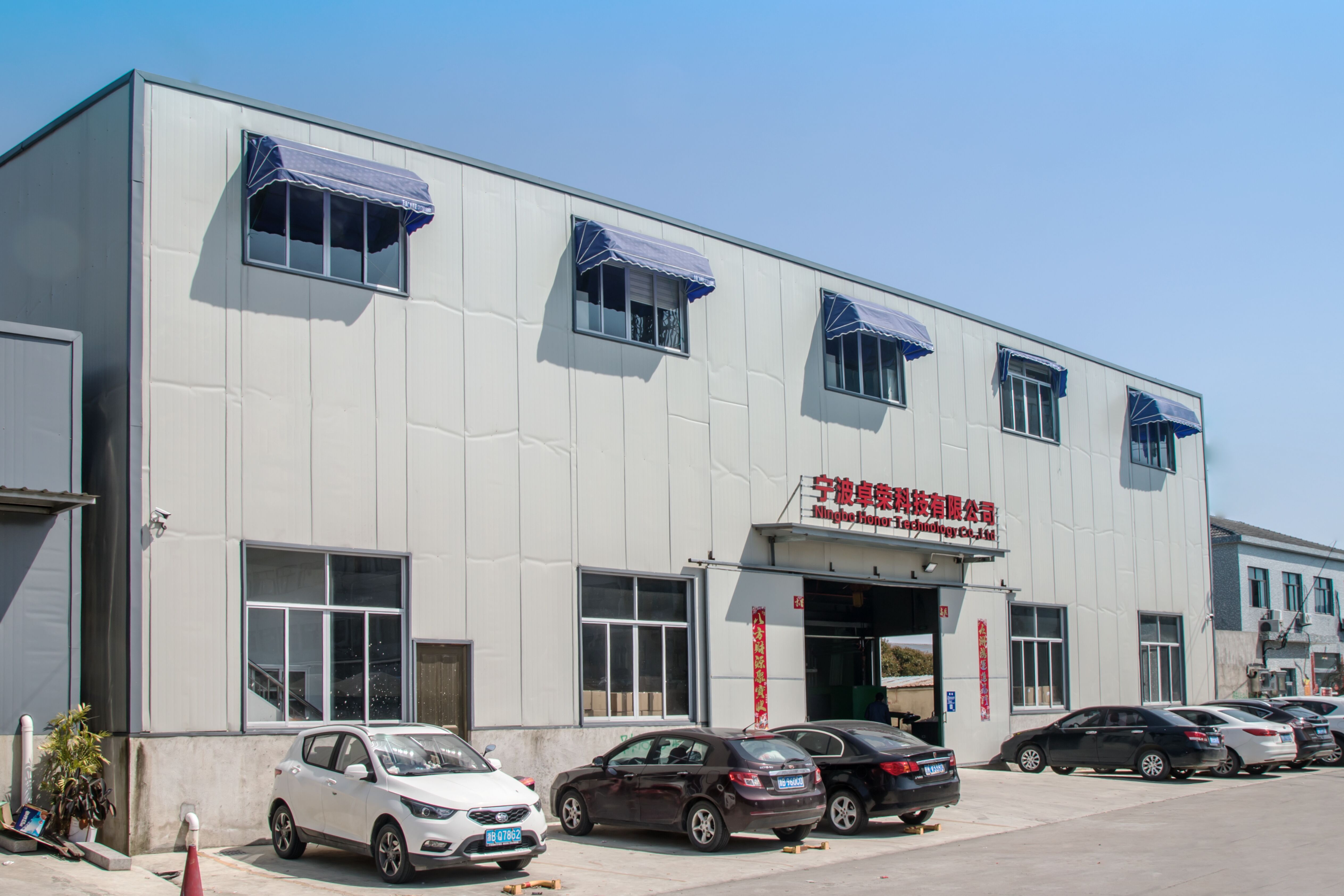
Ningbo Honor Packaging Co., Ltd. (Honor) is a packaging manufacturer founded in 2015 and headquartered in Ningbo, China, producing child-resistant packaging, violet glass packaging, and vacuum packaging for global buyers. All of its output is exported, with the EU and the USA as its main markets. Two of its glass jar families are compared most often during sourcing: the H19 child-resistant concentrate jar series and the H21 child-resistant jar series.
Both are glass jars closed with a child resistant cap, and both are catalogued under the same product name, Child Resistant Packaging. The real difference sits in the specification lines: capacity band, shape range, jar diameter, glass colour, decoration options, and whether a vacuum closure exists in the series at all.
Short answer: choose the H19 series for 5 ml and 9 ml fills, four jar shapes (square, round, triangle, hexagon), black, white or clear glass, and the 5 ml Vacuum Click Jar. Choose the H21 series for 15 ml to 200 ml fills in 58 mm square or 60 mm round jars, in clear or violet glass.
Why the H19 vs H21 Decision Goes Wrong in Practice
A child-resistant glass jar is specified across at least six lines: capacity, jar geometry, diameter, glass colour, closure, and decoration. When a buyer shortlists by the phrase "child-resistant jar" alone, re-specification tends to happen late, after label artwork, carton tooling, or filling trials are already in progress. Four mismatches recur in this particular family pair.
- Volume mismatch. H19 is documented at 5 ml and 9 ml. H21 begins at 15 ml and extends to 200 ml equivalents (60 dr). A 5 ml concentrate dose packed in a 30 ml jar changes headspace, shelf presence, and the amount of label area that has to be filled.
- Geometry mismatch. H21 square jars measure 58 mm in diameter; H21 round jars measure 60 mm. Heights run from 24 mm to 115 mm on the square group and from 36.5 mm to 125 mm on the round group. Artwork developed for one of those formats does not transfer unchanged to the other.
- Light-protection mismatch. The H19 range is offered in black, white, and clear glass. The H21 range is offered in clear and violet glass. A formulation that was approved in a clear jar may need a different light-blocking container once stability or shelf-life review begins.
- Vacuum mismatch. The only documented vacuum option in this pair is the H19 Vacuum Click Jar at 5 ml in a square glass body. A project that assumes a vacuum seal at 30 ml or 60 ml will not find a documented H21 vacuum variant to fall back on.
For a buyer who is researching and evaluating rather than ordering, the useful output of this comparison is a documented item code plus a short list of open questions for the supplier — not a preference for one series over the other.
Where These Two Series Sit in the Protective Packaging Market
Protective packaging is a large category measured differently by different research houses. Fortune Business Insights values the global protective packaging market at USD 44.02 billion in 2025 and projects USD 80.25 billion by 2034. Grand View Research estimates the same market at USD 40.4 billion in 2025 under a narrower segmentation, with flexible formats taking a 66.4% revenue share and paper and paperboard materials holding a 45.7% share. The two figures are not in conflict; they reflect different definitions of what counts as protective packaging. The practical takeaway for buyers is that the market is broad and uneven, and rigid glass serves the part of it where the container is also the brand's primary touchpoint and where the formulation is sensitive to light, air, or moisture.
Two constraint layers apply specifically to child-resistant glass jars:
- Child-resistance standards. Child-resistant packaging must comply with ISO/EN 8317 in the EU and 16 CFR 1700.20 in the US, both intended to prevent access by children under five.
- Light transmission. Violet glass is used as a light filter rather than as a decoration. Miron Violetglass describes violet (biophotonic) glass as blocking visible light while allowing roughly 25% to 45% penetration of UVA and about 60% of infrared light, which is the basis for its use with light-sensitive organic contents.
Honor's position in this market is deliberately narrow. The company produces high-grade, technically demanding packaging — child-resistant packaging, violet glass packaging with UV protection, and vacuum packaging for leak-free and airtight sealing — and exports 100% of its sales, with the EU and the USA as its main markets and additional coverage in the Middle East and Southeast Asia.
The H19 Series: 5 ml and 9 ml Formats, Four Shapes, Three Glass Colours
The H19 series is built for small-dose concentrates. It is documented at 5 ml and 9 ml, uses a child resistant cap on a glass body, and is supplied at 250 pieces per carton. Three colour variants share the same nine item codes and the same four available shapes.
| H19 variant | Item codes | Capacity | Shape | Weight | Packing |
|---|---|---|---|---|---|
| Black concentrate jars | H19-0001B / H19-0002B / H19-0004B / H19-0005B / H19-0007B / H19-0008B / H19-0009B / H19-0010B / H19-0011B | 5 ml / 9 ml | Square / Round / Triangle / Hexagon | 27 g – 38 g | 250 pcs/ctn |
| White concentrate jars | H19-0001W / H19-0002W / H19-0004W / H19-0005W / H19-0007W / H19-0008W / H19-0009W / H19-0010W / H19-0011W | 5 ml / 9 ml | Square / Round / Triangle / Hexagon | 27 g / 36 g | 250 pcs/ctn |
| Clear concentrate jars | H19-0001C / H19-0002C / H19-0004C / H19-0005C / H19-0007C / H19-0008C / H19-0009C / H19-0010C / H19-0011C | 5 ml / 9 ml | Square / Round / Triangle / Hexagon | 27 g – 38 g | 250 pcs/ctn |
In the item code system, the trailing letter identifies the glass colour: B for black, W for white, and C for clear. The middle number identifies the individual shape and tooling, which is why the black, white, and clear catalogues list the same numeric sequence from 0001 to 0011. Documented applications are food, cosmetic, and medical packaging.
The 5 ml Vacuum Click Jar: The Only Vacuum Option in This Pair
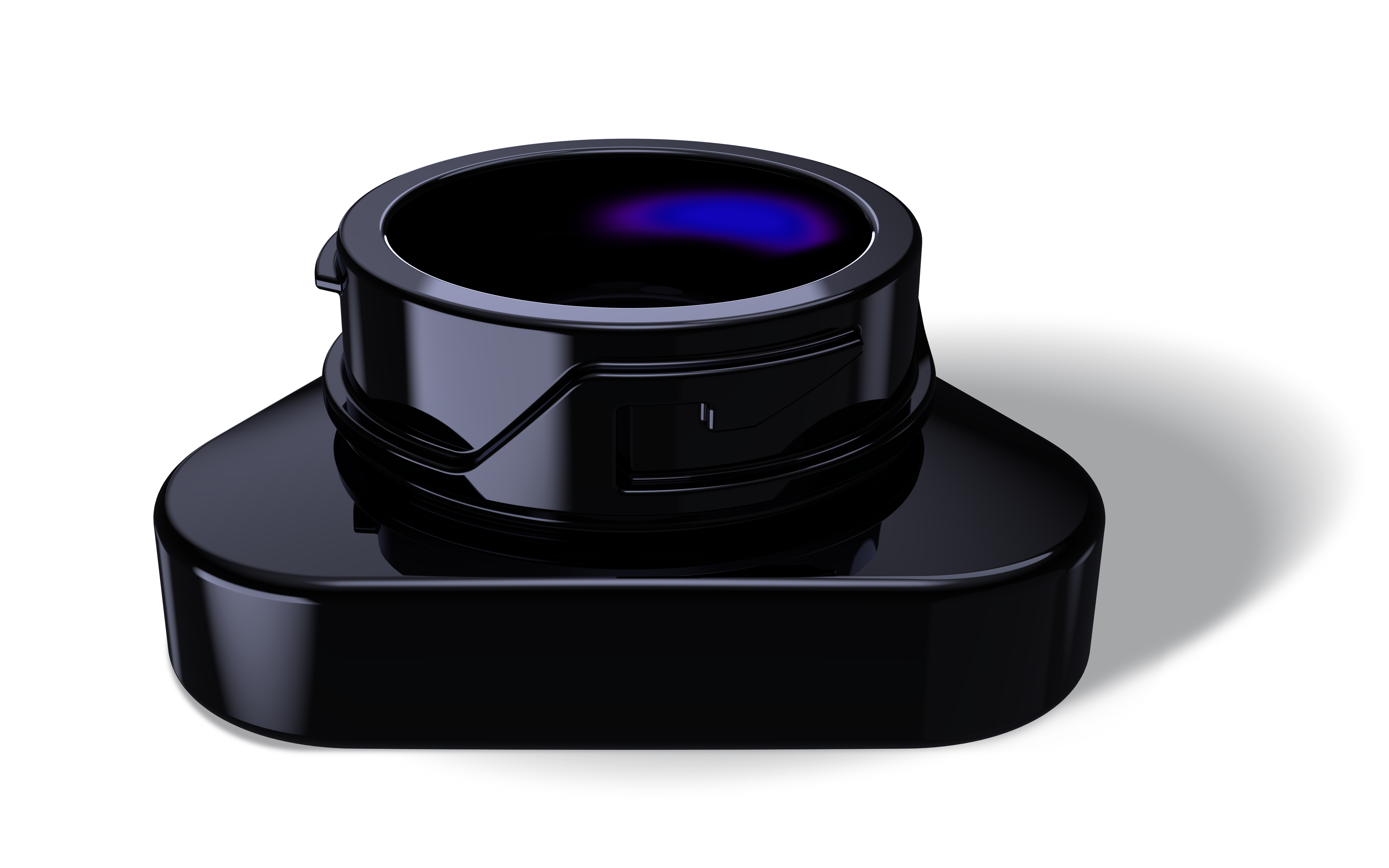
The H19 Vacuum Click Jar is documented as a 5 ml square glass vacuum jar, supplied at 250 pieces per carton and listed for food, cosmetic, and medical applications. Vacuum packaging in this range is described as providing leak-free and airtight sealing, which makes it the series to specify when the closure has to do more than child resistance alone — for example when oxygen exposure or content migration during distribution is part of the packaging risk review. It is also listed among the applicable products on the company's FDA CPG certification document, which is useful when a US buyer needs the vacuum variant to sit inside an existing compliance file.
The H21 Series: 15 ml to 200 ml in 58 mm and 60 mm Formats
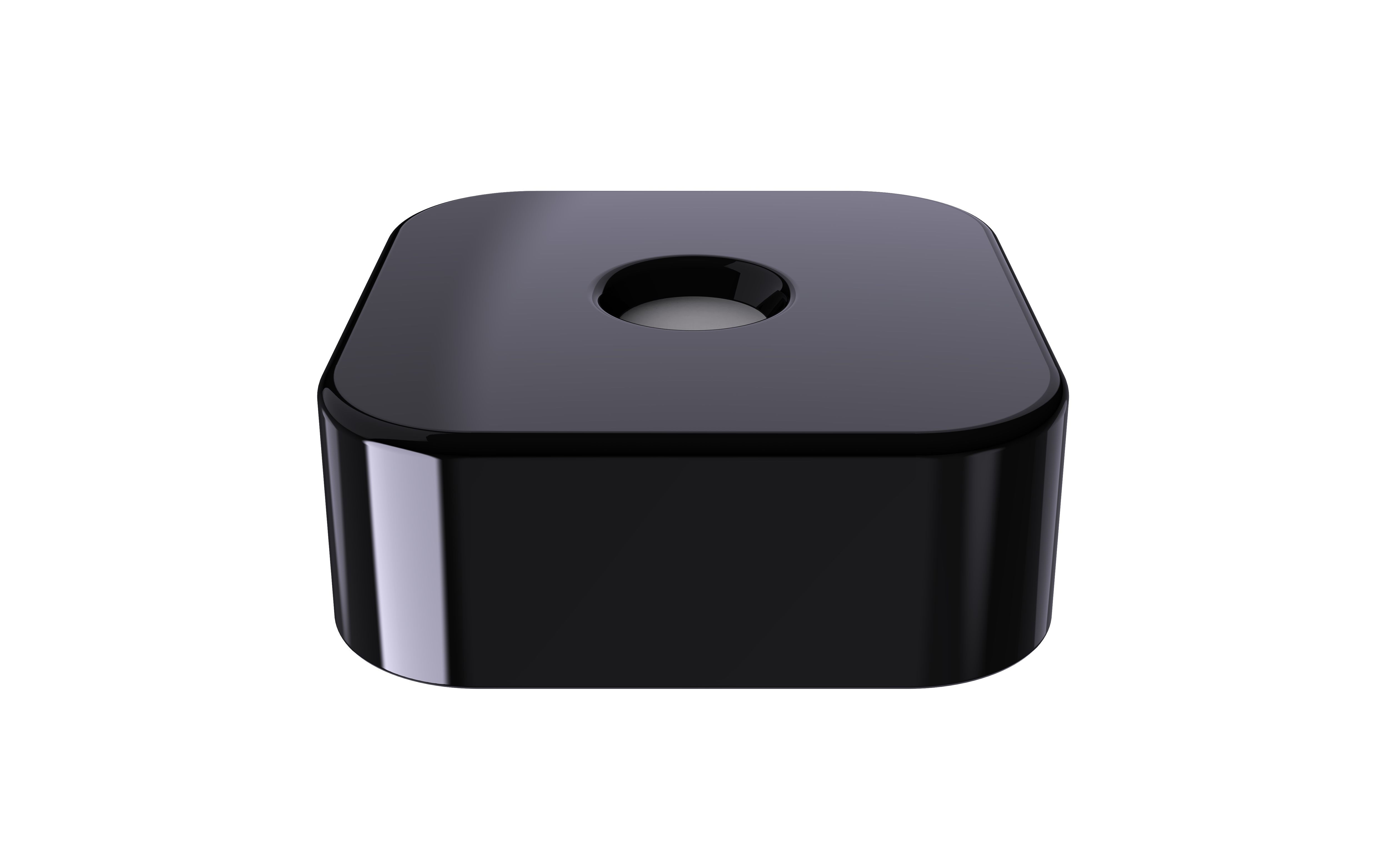
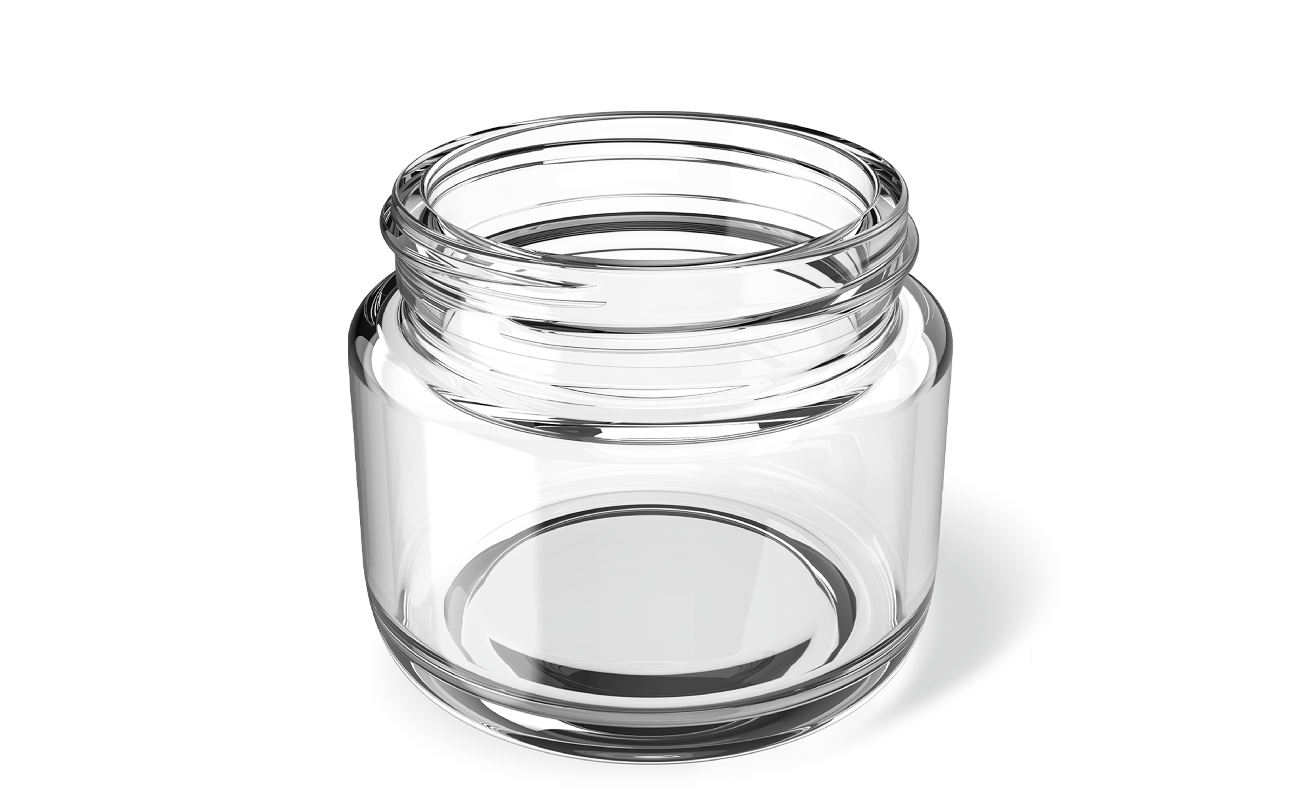
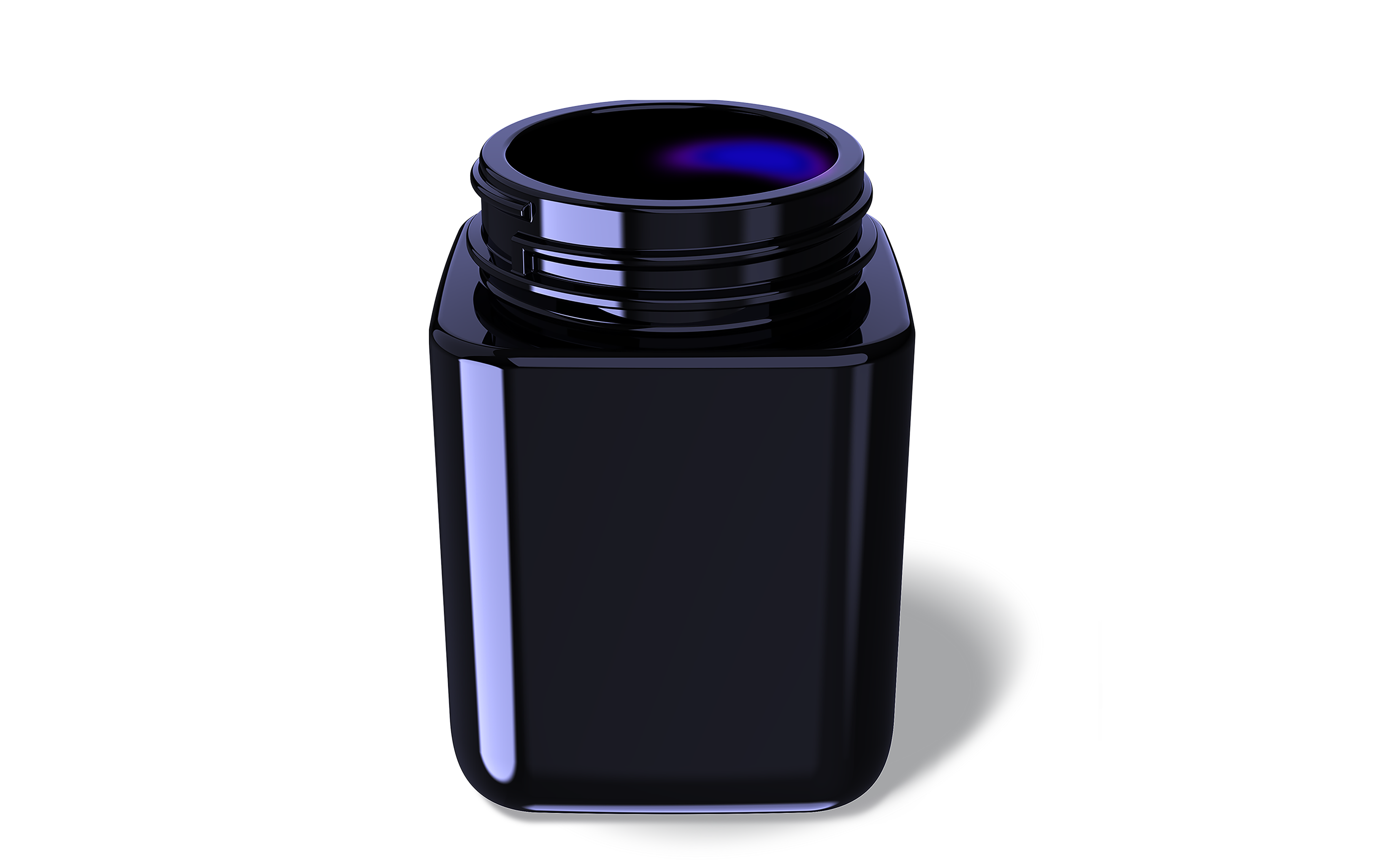
H21 is the mid-to-large volume side of the family. It is organised into four catalogue groups — clear square, violet square, clear round, and violet round — all closed with a child resistant cap and all built on 0.38 mm glass thickness.
| H21 group | Item codes | Capacity | Diameter | Height | Weight |
|---|---|---|---|---|---|
| Clear square jars | H21-0003C / H21-0004C / H21-0005C / H21-0006C / H21-0007C / H21-0008C | 15 ml / 30 ml / 20 dr / 30 dr / 40 dr / 60 dr | 58 mm | 24 mm – 115 mm | 75 g – 280 g |
| Violet square jars | H21-0003V / H21-0004V / H21-0005V / H21-0006V / H21-0007V / H21-0008V | 15 ml / 30 ml / 20 dr / 30 dr / 40 dr / 60 dr | 58 mm | 24 mm – 115 mm | 75 g – 280 g |
| Clear round jars | H21-0012C / H21-0013C / H21-0014C / H21-0015C / H21-0016C / H21-0017C / H21-0018C | 30 ml / 2 oz / 20 dr / 30 dr / 40 dr / 60 dr / 6 oz | 60 mm | 36.5 mm – 125 mm | 84 g – 268 g |
| Violet round jars | H21-0012V / H21-0013V / H21-0014V / H21-0015V / H21-0016V / H21-0017V / H21-0018V | 30 ml / 2 oz / 20 dr / 30 dr / 40 dr / 60 dr / 6 oz | 60 mm | 36.5 mm – 125 mm | 84 g – 268 g |
Materials follow the glass colour: the clear groups are documented as glass, plastic, and PE, while the violet groups are documented as violet glass, PP, and PE. Surface treatment options listed for H21 include sticker, silk-screen printing, hot stamping, heat transfer printing, and frosted finish. Documented industries are broader than on H19 and include food, cosmetic and medical, cosmetics and daily chemicals, pharmaceutical and medical, cannabis, packaging design, packaging wholesale, and supplements.
Certification and Documentation Facts That Tie to an Item Code
Two SGS-issued certificates are documented for the violet glass packaging line. For the US market, the product is certified under FDA CPG standards with certification number NGBHL23005693401. For the EU market, it complies with EC No 1935/2004 with certification number NGBHL24007770101. The applicable product lists behind these documents cover the H21 violet square and round jars and the H19 vacuum jar for the FDA scope, and the violet glass jar series for the EU scope.
Two practical consequences follow. First, the certificates are issued against defined product scopes, so the copy a buyer receives should name the exact item code on the purchase order — H21-0004V is not interchangeable with H21-0013C on a compliance file. Second, child resistance is tested against its own standards, ISO/EN 8317 in the EU and 16 CFR 1700.20 in the US, so a food-contact declaration and a child-resistance test report are separate documents and both belong in the sourcing checklist.
Step-by-Step: How to Choose Between H19 and H21
- Lock the fill volume and the dose per unit. If the fill is 5 ml or 9 ml, only H19 matches. If it is 15 ml or above, H21 is the relevant series, up to the 60 dr (200 ml) and 6 oz formats. If the fill is exactly 5 ml and also needs a vacuum seal, that is the H19 Vacuum Click Jar rather than a standard H19 concentrate jar.
- Match the diameter and height to your label and filling line. H21 square jars are 58 mm across and run 24 mm to 115 mm tall; H21 round jars are 60 mm across and run 36.5 mm to 125 mm tall. H19 dimensions are not published in the same series data, so request a drawing for the specific H19 item code before approving artwork.
- Decide the light-protection strategy. Clear glass keeps contents visible; violet glass is the UV-protective option in the H21 range; black and white glass variants cover the H19 range where a darker or non-transparent presentation is preferred. The choice usually follows from the formulation's sensitivity rather than from aesthetics alone.
- Decide whether the closure must vacuum-seal. Child resistance is present across both series. Vacuum sealing is documented only on the 5 ml H19 Vacuum Click Jar, described together with the range's leak-free and airtight sealing performance.
- Confirm decoration against the listed surface treatments. H21 lists sticker, silk-screen printing, hot stamping, heat transfer printing, and frosted finish. Customisation through the company's OEM and ODM service covers printing client artwork, developing a new design, and frosted finish; confirm the exact decoration route for H19 at quotation stage.
- Confirm commercial terms and documents together. The published order parameters are a 10,000-unit MOQ, a 30 to 45 day production lead time, a monthly capacity of 100,000 units, 100% pre-shipment testing plus third-party inspection by SGS, and an after-sales policy of accepting reissues. Ask for the certificate scope, the child-resistance test document, and the decoration proof in the same request so nothing appears after tooling is committed.
Use Cases: Matching the Series to the Product
Small-dose cannabis and concentrate formats. A 5 ml or 9 ml fill with brand differentiation built into the jar silhouette is an H19 project. Four shapes — square, round, triangle, hexagon — are available in the same capacity, and the black, white, and clear variants let one product line carry three visual tiers without changing tooling families.
Pharmaceutical and medical packaging in the EU. Violet glass with a child-resistant cap is the configuration used for larger fills. One documented case is a branding business in Germany that has packed pharmaceutical products in Honor violet glass packaging for over three years at a 10,000-unit order level; the reported result is that the products are still keeping fresh, with reusable, UV-protected packaging cited as the highlight of the format.
Supplements and nutraceuticals. H21 covers the supplement range from 15 ml to 200 ml in both clear and violet glass, on square and round platforms, with capacities also expressed in 2 oz, 6 oz, and dram equivalents. Supplements are among the industries explicitly listed in the H21 specification data.
Food and freshness-sensitive formats. Food is listed as an application across both series. Where the priority is seal integrity rather than light control, the 5 ml H19 Vacuum Click Jar is the documented vacuum option; where the priority is larger fill volume in transparent packaging, the H21 clear round group extends to 6 oz (180 ml).
H19 vs H21 at a Glance
| Decision factor | H19 series | H21 series |
|---|---|---|
| Capacity | 5 ml / 9 ml | 15 ml to 200 ml equivalents (15 ml, 30 ml, 20 dr, 30 dr, 40 dr, 60 dr; round group also 2 oz and 6 oz) |
| Item code pattern | H19-0001 to H19-0011 with B (black), W (white), or C (clear) suffix | H21-0003 to H21-0008 (square) and H21-0012 to H21-0018 (round) with C (clear) or V (violet) suffix |
| Shape | Square, round, triangle, hexagon | Square, round |
| Diameter | Not specified in the published series data | 58 mm (square) / 60 mm (round) |
| Height | Not specified in the published series data | 24 mm – 115 mm (square) / 36.5 mm – 125 mm (round) |
| Weight | 27 g – 38 g (black, clear); 27 g / 36 g (white) | 75 g – 280 g (square); 84 g – 268 g (round) |
| Glass thickness | Not specified in the published series data | 0.38 mm |
| Material | Glass | Clear: glass / plastic / PE; Violet: violet glass / PP / PE |
| Glass colour | Black, white, clear | Clear, violet |
| Closure | Child resistant cap | Child resistant cap |
| Vacuum option | Yes — 5 ml Vacuum Click Jar, square | No vacuum variant documented |
| Surface treatment options | Not specified in the published series data | Sticker, silk-screen printing, hot stamping, heat transfer printing, frosted finish |
| Packing | 250 pcs/ctn | Not specified in the published series data |
| Documented industries | Food, cosmetic, medical | Food, cosmetic and medical; cosmetics and daily chemicals; pharmaceutical and medical; cannabis; packaging design; packaging wholesale; supplements |
| Documented certification coverage | H19 vacuum jar listed on the FDA CPG certificate (SGS, NGBHL23005693401) | H21 violet jars listed on the FDA CPG certificate (SGS, NGBHL23005693401) and the EC No 1935/2004 certificate (SGS, NGBHL24007770101) |
Frequently Asked Questions
Are H19 and H21 child-resistant glass jars certified for the US and EU markets?
Two SGS-issued certificates are documented for the violet glass packaging line. For the US market, the product is certified under FDA CPG standards with certification number NGBHL23005693401. For the EU market, it complies with EC No 1935/2004 with certification number NGBHL24007770101. The FDA document lists the H21 violet square and round jars and the H19 vacuum jar among its applicable products; the EU document covers the violet glass jar series. Child resistance is assessed separately against ISO/EN 8317 in the EU and 16 CFR 1700.20 in the US, so buyers should request the certificate copy and the child-resistance test document for the exact item code being ordered — for example H19-0001C or H21-0013V — rather than relying on a general certificate statement.
Can H19 and H21 jars be customised in shape, colour, and printing?
Yes, within the documented ranges. Customisation runs through the company's OEM and ODM service and covers printing client artwork, developing a new design, and frosted finish. H21 additionally lists sticker, silk-screen printing, hot stamping, heat transfer printing, and frosted finish as surface treatment options. On the colour and shape side, H19 is offered in black, white, and clear glass across square, round, triangle, and hexagon shapes, while H21 is offered in clear and violet glass across square and round shapes. The supporting structure is a 45,000 m² facility, approximately 310 staff, a 15-person R&D team of engineers and technicians, and long-term joint-venture production bases for plastic and glass packaging.
What is the MOQ, and how is pricing determined?
The published minimum order quantity is 10,000 units, and monthly production capacity is 100,000 units. Unit pricing is not published, and it is driven by the specification choices a buyer makes rather than by the series name alone: capacity and glass weight, clear versus violet or black or white glass, the closure type, and the decoration route (label, silk-screen print, hot stamping, heat transfer, or frosted finish). The efficient way to request a quote is to send the item code, target fill volume, glass colour, decoration method, and annual volume in one request, so the quotation and the technical review happen in the same cycle.
How can a buyer validate an H19 or H21 jar before mass production?
Validation is structured around the pre-production phase: the company is involved in product structural development, tooling strategy definition, and critical manufacturing risk assessment and validation before mass production starts. After production, quality is controlled through 100% pre-shipment testing plus third-party inspection by SGS. To make validation meaningful, the request should specify the fill product, the target fill volume, the closure requirement (standard child resistant cap or the 5 ml vacuum click closure), and the decoration plan, so the sample is evaluated against the same configuration that will be ordered. Buyers who want to review the catalogue scope before sampling can download the company brochure at the Honor Packaging brochure.
What is the production lead time, and how is supply continuity handled?
The documented production lead time is 30 to 45 days, supported by a monthly capacity of 100,000 units and a 10,000-unit MOQ. Manufacturing is based in Ningbo, China, close to both the Ningbo and Shanghai seaports, which supports export logistics; export accounts for 100% of sales, with the EU and the USA as the main markets and additional coverage in the Middle East and Southeast Asia. After-sales policy is to accept reissues where required. For a project that spans several SKUs or several order cycles, the practical next step is to send the full item code list, target volumes, and delivery schedule to info@honorpkg.com or via WhatsApp at +86 15968944995, so the quotation, certificate scope, and delivery plan are confirmed together.
Conclusion: Match the Fill, Not the Name
The H19 and H21 series are not competing versions of one product; they cover two different zones of the same protective packaging problem. H19 owns the small-dose end at 5 ml and 9 ml, with the widest shape range in the family and the only documented vacuum option, the 5 ml Vacuum Click Jar. H21 owns the volume end from 15 ml to 200 ml, on 58 mm square and 60 mm round platforms, with child-resistant closures, clear and violet glass options, and a full set of surface treatments.
The decision rule that survives contact with a real project is simple. Fix the fill volume first, then the diameter and label format, then the light-protection need, then whether the closure must vacuum-seal, and only then negotiate decoration and commercial terms. The recurring commercial parameters are the 10,000-unit MOQ, the 30 to 45 day lead time, and the 100,000-unit monthly capacity, while the recurring documentation items are the FDA CPG certificate, the EC No 1935/2004 certificate, and the child-resistance test report for the exact item code.
Next step: send the item code, fill volume, glass colour, and decoration requirement, and Honor Packaging will confirm the matching H19 or H21 configuration, certification scope, and delivery schedule.
Website: www.honorcrpkg.com | Email: info@honorpkg.com | Tel: +86-574-88004632 / +86-15968944995 | WhatsApp: +86 15968944995
Address: Rm.305, No.1 Building, No.568 Siming East Road, Yinzhou District, Ningbo City, China. Blog: blog.honorcrpkg.com | Catalog: Download the protective packaging brochure