
H19 vs H21: Child-Resistant Jar Formats by Fill Volume
H19 vs H21 Child-Resistant Glass Jars: Formats by Fill Volume
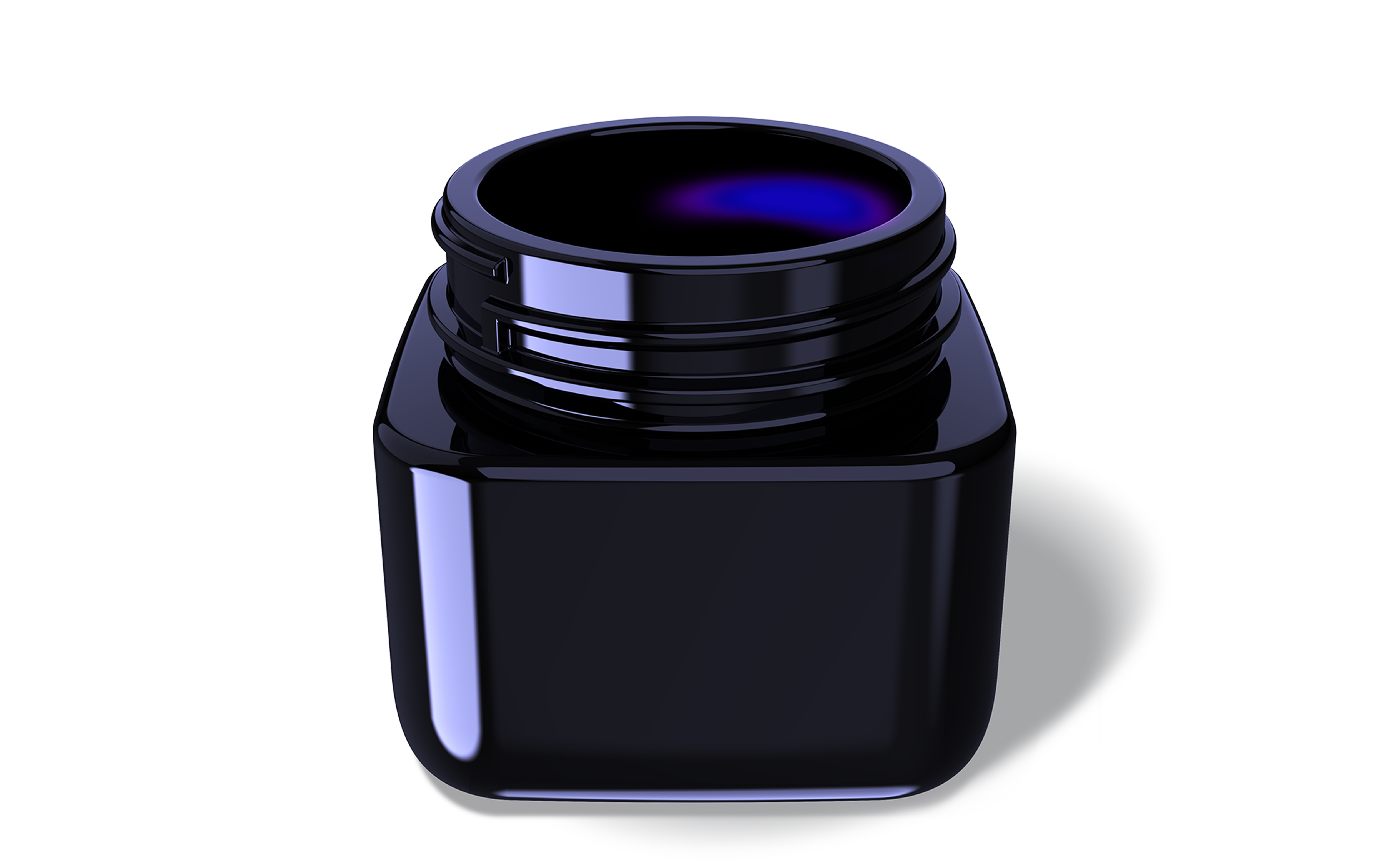
Choosing between the H19 and H21 child-resistant glass jar families comes down to one variable before any other: fill volume. H19 serves 5 ml and 9 ml fills and is available in square, round, triangle and hexagon shapes at 27 g to 38 g net weight. H21 covers 30 ml to 180 ml, with 58 mm or 60 mm diameters, heights from 24 mm to 115 mm and net weights from 75 g to 280 g. Both families share a 0.38 mm glass thickness. No format in either range covers a 10 ml to 29 ml fill, and that single gap is the most consequential fact in the comparison.
This guide puts the two families side by side on the criteria that settle a protective packaging order: dose size, shelf footprint, cap material in PP or PE, and surface treatment such as silk-screen printing, hot stamping or frosting. Every specification below is drawn from the supplied product data for the two families. Where a value is not part of that data, the guide says so rather than filling the gap with an estimate.
Why the jar should follow the fill, not the shelf
Fill volume is not only the millilitres of product; it is the product plus the headspace the closure needs. A jar that is oversized for its fill leaves a large air volume above the product, so the same quantity of product sits under more air and against a wider glass surface than it needs to. A jar that is undersized leaves no headspace for the closure to seat, and filling becomes a precision operation instead of a controlled one.
Because H19 stops at 9 ml and H21 starts at 30 ml, the family decision is a step rather than a slope. There is no H19 in 15 ml and no H21 in 20 ml. A buyer with a 12 ml fill cannot resolve the question by choosing between the families; the fill itself has to be re-specified first, either down to 9 ml or below or up to the 30 ml entry point of H21.
Once the fill is fixed, the rest of the comparison behaves predictably. Within H19 the decision moves to shape, because capacity is held at 5 ml or 9 ml and weight stays inside a 27 g to 38 g band. Within H21 the decision moves to height, because diameter is specified at either 58 mm or 60 mm while height ranges from 24 mm to 115 mm.
The 2026 context: demand and the compliance floor
Protective packaging is a large enough category that format choices are rarely made in isolation from compliance. Grand View Research values the global protective packaging market at USD 41.5 billion in 2026, and Global Market Insights projects the child-resistant packaging segment at USD 31.07 billion in 2026. The second figure is a projection rather than a reported actual, but it indicates how much of the category is shaped by access-control requirements rather than by decoration preferences.
Those requirements are specific. Under the U.S. Consumer Product Safety Commission protocol at 16 CFR 1700.20, a child-resistant package must prevent at least 85% of children under five from opening it within five minutes, while at least 90% of adults must still be able to open and reseal it. Regulations issued under the Poison Prevention Packaging Act and FIFRA require special packaging for many regulated products, and the CPSC notes that the requirement applies to the primary or immediate packaging — the jar itself, not the outer carton. ISO 8317:2015 sets performance requirements and test methods for reclosable child-resistant packages, which is the relevant standard for a jar that is opened and closed repeatedly. ASTM D3475 adds a classification layer by grouping special packaging by closure type and by the action needed to open it.
For a buyer weighing H19 against H21, the practical reading is this: child resistance belongs to the assembled package — jar, liner, cap and the fill inside it — and to the test report that covers that combination. A jar specification, however detailed, is an input to that test, not a substitute for it.
H19 and H21 specifications side by side
In one sentence: H19 is the small-format family and H21 is the mid-to-large family, and the two do not overlap. The table below sets the supplied values against each other.
| Specification | H19 | H21 |
|---|---|---|
| Fill volume | 5 ml and 9 ml | 30 ml to 180 ml |
| Shapes | Square, round, triangle, hexagon | Shape options not stated in the supplied data |
| Glass thickness | 0.38 mm | 0.38 mm |
| Net weight | 27 g to 38 g | 75 g to 280 g |
| Outer diameter | Not stated in the supplied data | 58 mm or 60 mm |
| Height | Not stated in the supplied data | 24 mm to 115 mm |
| Closure | Child-resistant cap; supplied as a child-resistant pack | Child-resistant configuration; confirm the cap SKU per format |
| Carton packing | 250 pieces per carton | Not stated in the supplied data |
A blank or 'not stated' cell means the value is not part of the supplied data for that family — not that the option is unavailable. Buyers should treat undetermined values as items to confirm at quotation rather than as weaknesses in the format.
Both families are supplied by Honor Packaging, a Ningbo-based packaging manufacturer founded in 2015 whose stated product focus covers child-resistant packaging, violet glass packaging and vacuum packaging, with exports directed entirely to EU and USA markets.
Reading the numbers: what each specification changes for a buyer
Glass thickness: the shared constant
Both families are specified at 0.38 mm glass thickness, and that shared value explains something useful. The weight gap between the two families — 27 g to 38 g against 75 g to 280 g — comes from size and shape, not from a heavier wall on the larger jar. A buyer comparing the two on perceived robustness should therefore compare them on geometry and on packing protection, not on an assumption that the bigger jar is built from thicker glass.
Net weight: what 27 g to 38 g versus 75 g to 280 g means in freight
Net weight per jar is the number that decides pallet economics, carton handling and inbound freight, and it is the one place where the two families diverge most sharply in relative terms. An H19 jar weighs a fraction of an H21 jar, so the same number of cartons moves far more units.
The H19 pack is 250 pieces per carton. At 27 g to 38 g per empty jar, one carton carries roughly 6.75 kg to 9.5 kg of glass before caps, liners and carton board are added (calculated from the supplied per-piece weight and pack quantity; this is not a supplier-stated carton weight). That range is comfortable for manual handling and matters when a distribution centre sets a per-carton weight limit.
Diameter and height: shelf footprint versus label area
H21 is specified at 58 mm or 60 mm diameter across heights from 24 mm to 115 mm. Because the stated diameters differ by only 2 mm, almost all of the volume difference between a 30 ml and a 180 ml jar is carried by height rather than by width. The practical consequence is that an H21 jar occupies a similar shelf or tray footprint at every size, while the visible label panel changes substantially.
A low-profile H21 jar at the bottom of the 24 mm to 115 mm height range suits shelving with tight vertical clearance and keeps the product visually low; a jar at the top of that range gives more graphics area but needs more vertical space and a correspondingly deeper case. For H19, the supplied data does not state diameter or height, so those values should be confirmed against the specific shape you choose rather than assumed to be uniform across square, round, triangle and hexagon variants.
Shape: the H19 variable that H21 does not expose in the same way
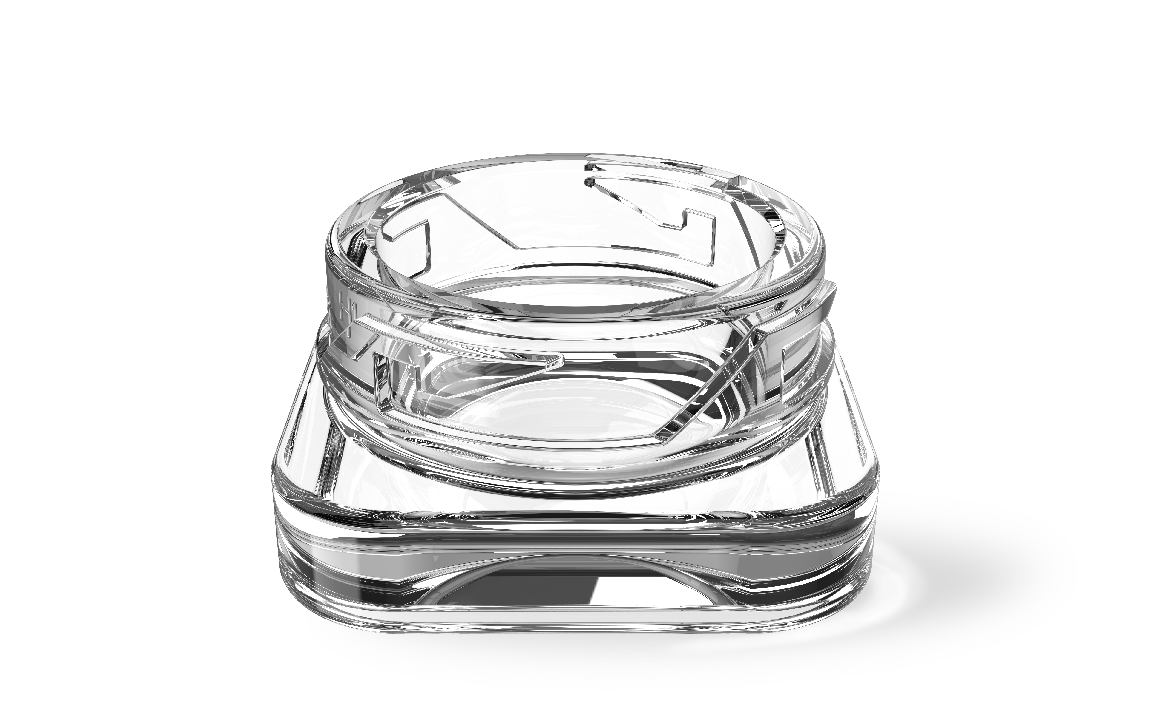
H19 is offered in four shapes at the same 5 ml and 9 ml capacities. Shape changes the silhouette, the front-facing graphic panel and the tactile identity of the pack without changing the capacity band or the 27 g to 38 g weight band. For buyers whose product is sold in sets or displayed in trays, shape is often the deciding variable inside H19, while height is the deciding variable inside H21.
Step-by-step: matching format to fill volume
- Fix the fill in millilitres, including headspace. Write the target fill and the headspace your closure needs as one number. This is the input that decides everything downstream, and it is the number that is most often stated loosely in a brief.
- Map the fill to a family. A fill of 9 ml or less maps to H19. A fill of 30 ml or more maps to H21. A fill between 10 ml and 29 ml maps to neither family, and the fill specification has to change before a supplier conversation can progress.
- Narrow inside the family. For H19, choose among square, round, triangle and hexagon. For H21, choose the 58 mm or 60 mm diameter and a height between 24 mm and 115 mm that delivers the fill volume with the headspace you set in step one.
- Check the shelf and logistics envelope. Confirm the footprint allowed by your shelf, tray or display unit and the carton weight your warehouse can handle. H19 ships at 250 pieces per carton; H21 carton quantities are not part of the supplied data and should be requested.
- Choose the cap polymer: PP or PE. Polypropylene and polyethylene behave differently under torque and temperature, and the choice interacts with how the child-resistant closure is designed. Both are named as cap materials for these families; the specific cap SKU is confirmed per format.
- Select the surface treatment. Silk-screen printing, hot stamping and frosting each change cost, lead time and appearance differently. Decide before sampling, because decoration proofing sits on the critical path.
- Validate the assembled pack. Test the jar, cap and fill together: closure behaviour, transit performance with the real pallet configuration, and a child-resistance report covering that exact combination.
Cap material: PP versus PE
Polypropylene (PP) is the stiffer of the two polymers and holds moulded detail — threads, lugs, the geometry that a push-and-turn child-resistant closure depends on — with less deformation under load. It also tolerates higher temperatures than polyethylene, which matters when jars are filled warm or stored in a hot climate. Polyethylene (PE) is softer and more flexible, gives a more forgiving fit against the jar finish and behaves better under impact at low temperature.
Neither polymer is universally better. A stiffer cap resists deformation and keeps the opening action crisp over repeated cycles; a softer cap conforms to small variations in the glass finish and can be easier to seat. The right choice follows the closure design, the torque your filling line applies and the climate the product ships through. Because both PP and PE are named as cap materials for these families, the question is not which polymer exists but which one the selected cap SKU uses.
Surface treatment: silk-screen printing, hot stamping and frosting
- Silk-screen printing lays down opaque ink in defined layers, which makes it the practical route for multi-colour graphics and for small mandatory text that has to stay legible on a curved surface.
- Hot stamping applies a metallic or pigmented foil under heat and pressure, producing a high-contrast brand mark. It adds a process step and is usually reserved for the primary brand element rather than for body copy.
- Frosting gives an etched, matte surface that changes both the tactile feel and the way light meets the glass. If light protection is part of your specification, confirm that a frosted version of the SKU still sits inside the light-transmission profile you validated.
Decoration is also a scheduling decision. Each additional colour or process adds a proofing round before mass production, so the decoration brief should be settled alongside the format rather than after it. Which of these routes applies to a given H19 or H21 format is confirmed at quotation.
Where each family fits: fill bands and formats
- 5 ml fill: H19, in any of the four shapes.
- 9 ml fill: H19 at the top of its capacity band.
- 10 ml to 29 ml fill: outside both families.
- 30 ml fill: the entry point of H21, at 58 mm or 60 mm diameter.
- Mid-range fills inside 30 ml to 180 ml: H21, with height carrying the volume difference.
- 180 ml fill: the top of the H21 range, at 75 g to 280 g jar weight depending on format.
The product data also places the violet glass option in food, cosmetic and pharmaceutical packaging scenarios where UV protection is critical. That is a category-level statement about where light protection is valued, not a claim that every H19 or H21 SKU is a violet glass jar — which is why the material of the specific SKU has to be confirmed in writing.
UV protection, cost and maintenance: what the comparison data actually says
The supplied comparison data makes three claims that matter when choosing between formats and materials.
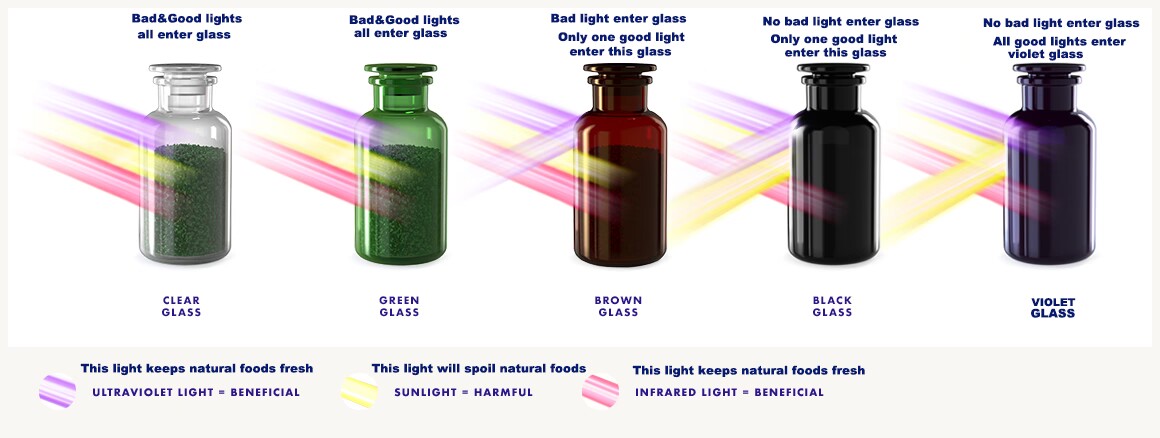
- Light transmittance is the core difference. Protection against ultraviolet rays depends on how much light passes through the glass, and the violet option is described as having distinct advantages in UV protection compared with amber glass packaging, helping maintain product freshness.
- Cost carries a premium. The same comparison data positions the enhanced-protection option at about 15% higher cost than alternatives, with reduced maintenance requirements in exchange.
- Child safety is part of the design brief. The design is described as reducing the risk of a child accidentally ingesting the contents, alongside lower maintenance than similar products.
Two limits belong beside those claims. First, the 15% figure is a relative statement against unspecified alternatives; it is not a quoted price for H19 or H21, and it does not establish the price difference between the two families, which is not part of the supplied data. Second, UV performance is SKU-specific: the H19 concentrate jar in its base specification is described as clear glass, so a buyer choosing between the families for light protection should specify the violet glass version explicitly rather than assume it.
That leaves a judgement the data can support but not make for you. If the premium is smaller than the cost of the spoilage, rework or return it is meant to prevent for your product, it pays for itself; if your product is not light-sensitive, the same premium buys nothing in use. The comparison data does not contain the shelf-life test results that would settle that question for a specific formulation, so the test belongs in your sample validation.
Breakage risk and how it is controlled in transit
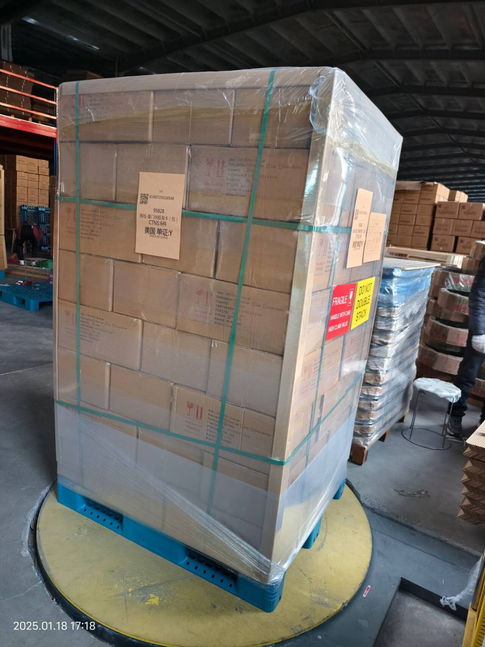
Glass jars break, and the useful question is where in the chain the risk is managed. Honor Packaging's stated control method for fragile shipments is protective foam wrapping and careful pallet loading, backed by shockproof packaging and palletizing standards. For a buyer, that converts into checks at the sample stage rather than assurances at the quotation stage: how the jars are wrapped, how the pallet is built, and whether the pallet configuration has been trialled for your specific sea or road leg.
Weight band matters here too. An H19 carton at roughly 6.75 kg to 9.5 kg of glass behaves very differently in a drop or a stack from an H21 carton carrying jars of 75 g to 280 g each. The transit trial should use the real format, not a proxy.
Buyer checklist before the order
- Fill volume confirmed in millilitres, headspace included, and checked against the 9 ml to 30 ml gap.
- Family selected: H19 for 5 ml and 9 ml, H21 for 30 ml to 180 ml.
- Shape fixed for H19, or diameter (58 mm or 60 mm) and height (24 mm to 115 mm) fixed for H21.
- 0.38 mm glass thickness noted as common to both, so weight differences are attributed to size, not wall.
- Cap polymer decided: PP for stiffness and temperature tolerance, PE for flexibility and low-temperature impact.
- Surface treatment chosen from silk-screen printing, hot stamping and frosting, with a proof approved.
- Carton quantity and carton weight checked — 250 pieces per carton is stated for H19; H21 quantities requested.
- Child-resistance test report requested for the exact jar-cap-fill combination.
- Pallet and foam configuration agreed and trialled.
- Terms commonly marketed as airtight, leak-free, smell-proof or waterproof verified with test evidence rather than assumed from a product name.
Frequently asked questions
Are the H19 and H21 jars certified child-resistant?
The H19 pack is supplied as a child-resistant pack with a child-resistant cap. For either family, child resistance is demonstrated on the assembled package — jar, liner, cap and contents — under a recognised protocol. The U.S. CPSC protocol at 16 CFR 1700.20 requires at least 85% of children under five to fail to open the package within five minutes while at least 90% of adults can still open and reseal it, and ISO 8317:2015 sets the equivalent requirements and test methods for reclosable packages. Ask for the test report covering your exact jar-cap-fill combination rather than a general statement of compliance.
Can I use an H21 jar for a 10 ml fill?
Not on the supplied specifications. H19 covers 5 ml and 9 ml and H21 starts at 30 ml, so a fill between 10 ml and 29 ml falls outside both families. Buyers in that band either reduce the fill to 9 ml or below, or move up to the smallest H21 format at 30 ml and accept the larger headspace and shelf footprint. The second option is a real trade-off: by stated capacity, a 30 ml jar holding 10 ml is two-thirds empty.
Why does the enhanced-protection option cost about 15% more?
The supplied comparison data positions the enhanced-protection option at roughly 15% higher cost than alternatives and links that premium to better UV protection and reduced maintenance. The figure is relative and is not a price for either H19 or H21; it also does not establish the price gap between the two families, which is not part of the supplied data. The practical test is whether the premium is smaller than the cost of the spoilage, rework or return it is meant to prevent for your product and channel.
How should I validate a format before ordering?
Order samples in the exact format — including shape for H19, and height and diameter for H21 — and test the assembled pack rather than the jar alone. Four checks cover most of the risk: fill and headspace with the real product; closure behaviour, including opening action and reseating over repeated cycles; a transit trial using the foam and pallet configuration the supplier will actually ship with; and a decoration proof if silk-screen printing, hot stamping or frosting is specified. Any child-resistance claim should be tied to a test report on that same combination.
What must be confirmed before a production order is placed?
Four items decide whether quotations are comparable across suppliers: the confirmed format code and its dimensions, the cap polymer (PP or PE) and closure design, the decoration route with its number of colours and processes, and the commercial terms — order quantity, packing configuration and delivery schedule. Only the H19 carton quantity of 250 pieces per carton is stated in the supplied data; equivalent figures for H21 formats, and lead times for either family, are not part of it and should be requested in writing for each order.
Conclusion: decide the fill first, then the format
The H19 and H21 comparison resolves quickly once fill volume is fixed. Fills of 5 ml and 9 ml point to H19, with a shape choice across square, round, triangle and hexagon and a jar weight of 27 g to 38 g. Fills of 30 ml to 180 ml point to H21, where 58 mm or 60 mm diameters and heights of 24 mm to 115 mm carry the volume and jar weight runs from 75 g to 280 g. The shared 0.38 mm glass thickness confirms that the weight difference is about size, not wall thickness. Anything between 9 ml and 30 ml needs a fill decision before it needs a supplier decision.
Cap material and surface treatment come next: PP for a stiffer closure, PE for a more forgiving one, and silk-screen printing, hot stamping or frosting for the surface. Then verify — child resistance on the assembled package, transit performance with the real pallet configuration, and a decoration proof before mass production. Written terms and test evidence, not product names, are what make two quotations genuinely comparable.
Honor Packaging publishes its product range in its company brochure (PDF). To move from comparison to a format recommendation, send the fill volume in millilitres, the target market and the decoration brief, and request samples of the H19 or H21 format under consideration through info@honorpkg.com or +86-574-88004632.
Have Questions or Need More Details?
Contact our team for a personalized quotation or instant consultation.
Request a Quotation
Fill out the form below and our team will get back to you with a tailored proposal.
WhatsApp Direct Chat
Prefer to chat in real-time? Message us on WhatsApp for instant assistance & quick answers.
- Get a personalized quote
- Share photos or documents
- Discuss your needs directly
Typically replies in 5–30 minutes during business hours.