
H21 Clear Square Jar vs. HDV2 Violet Jar: A Buyer's Decision Matrix
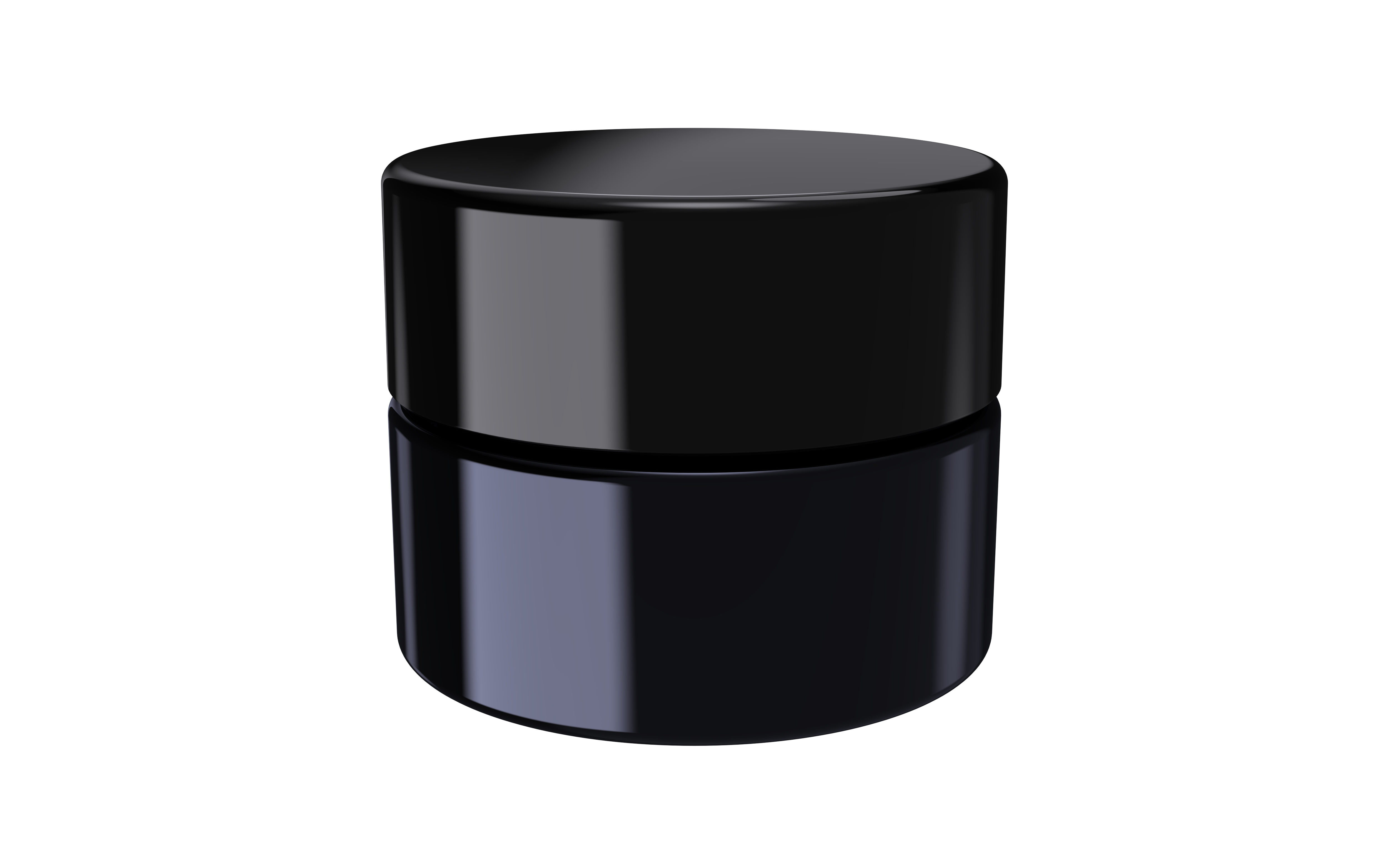
The HDV2 violet glass jar family, 3 ml–200 ml, with violet glass bodies and urea / PE closures. Product image: Honor Packaging.
Two models from the Ningbo Honor Packaging catalog keep landing on the same supplement shortlist: the H21 clear square jar and the HDV2 violet jar. Both are glass, both are specified at 0.38 mm wall thickness, and both accept the same five decoration methods — sticker, silk-screen printing, hot stamping, heat transfer printing and frosted finish. The choice between them is therefore decided by fill type, geometry, closure strategy and unit weight, not by a quality ranking between two product families made by the same manufacturer. This decision matrix sets the two models against their published specifications and closes with a selection sequence a buyer can run in a single meeting.
Short answer. Choose the H21 clear square jar for capsules, powders and granules in 15 ml–60 dr (up to 200 ml) where a child-resistant cap is required across the entire size range and a square footprint helps shelf density. Choose the HDV2 violet jar for light-sensitive, cosmetic-grade fills in 3–200 ml where a round violet glass body with a shallow 25.6–55 mm height suits the product and the brand. Where a brief requires violet light management and a square child-resistant body in one pack, the H21 square violet glass variant (H21-0003V to H21-0008V) sits closer to that brief than either model above.
Problem Definition: Why These Two Jars Get Confused
The confusion is structural, not accidental. The H21 clear square jar and the HDV2 violet jar share a substrate (glass), a wall thickness (0.38 mm) and a decoration menu, and both are listed for the supplements segment alongside cosmetic and pharmaceutical applications. On a quotation spreadsheet with a description column and a price column, they look interchangeable. They are not.
Three misreads recur in buyer conversations. The first is treating violet and child-resistant as the same buying criterion. On the H21 clear square range, the published specification states a child-resistant cap for the whole family. On the HDV2 family, the catalog lists one 5 ml code, HDV2005M-CR, and otherwise specifies urea / PE closures with 32/400 to 89/400 threads. A buyer who needs a child-resistant closure at 50 ml or 100 ml cannot assume the HDV2 format delivers it; that requirement has to be confirmed against the closure drawing for the specific code.
The second misread is treating a child-resistant closure as evidence of tamper-evidence. It is not. Published guidance summaries note that for dietary supplements in the United States, tamper-evident packaging is not generally mandated at federal level in the same way as for many over-the-counter drugs. Compliance for a supplement jar therefore comes from the material declarations, the closure system and the destination market's food-contact rules — not from the presence of a push-and-turn cap.
The third misread is comparing capacity as a single number while ignoring height. The H21 square body is published at 58 mm diameter with a height range of 24 mm to 115 mm; the HDV2 is published at 36 mm to 93.2 mm diameter with a height range of only 25.6 mm to 55 mm. Two 100 ml jars from these families occupy very different shelf, carton and filling-line envelopes, and a packaging spec that ignores that difference usually comes back for revision after the first carton arrives.
Industry Background: What Buyers Are Choosing Between
Commercial research cited by Grand View Research estimates the global supplements and nutrition packaging market at USD 31.3 billion in 2025. Within that market, plastic remains the dominant material: the same body of research places plastic at approximately 41.67% of the material segment share in 2025. Glass is therefore a specified minority substrate — chosen where transparency, inertness, weight perception or light management justify the cost, which is precisely the territory these two models occupy.
Regulatory pressure on material documentation has tightened in the European Union. Regulation (EU) 2024/3190 restricts bisphenol A (BPA) in food-contact materials, including supplement packaging coatings, and applies to single-use items from 20 July 2026. Because both models list polymer components — the H21 with plastic and PE in its material stack, the HDV2 with urea and PE in its closure — buyers sourcing for EU placement should request material declarations per component rather than per model name.
Demand for small-format jars is also being pulled by high-value herbal products. One commercial estimate places the global Shilajit market at USD 221.4 million in 2026, with liquid resin accounting for 40.5% of that revenue. Resin is viscous, dosed in small amounts and sold at premium prices, which is exactly the profile that pushes buyers toward a 5 ml or 10 ml violet glass jar — or toward a 15 ml square jar when the product is packed with a spoon or dropper tool.
Violet glass itself is used in UV-protective packaging scenarios in Honor Packaging's application data, alongside child-resistant design and dust protection. That is a positioning fact, not a test result: neither the H21 nor the HDV2 specification sheet publishes a light-transmission figure, so any light-protection claim on the shelf should be supported by the material supplier's own documentation rather than by color alone.
Detailed Solution: The Two Models on Paper
H21 clear square jar — published specification
- Family: child-resistant packaging, clear square jars; item codes H21-0003C, H21-0004C, H21-0005C, H21-0006C, H21-0007C, H21-0008C.
- Material: glass, plastic, PE — the widest material stack of the two models, which is what allows both an all-glass presentation and polymer-assisted components in the same family.
- Shape and dimensions: square, 58 mm overall diameter, height 24 mm to 115 mm, net weight 75 g to 280 g, glass thickness 0.38 mm.
- Capacity: 15 ml, 30 ml (1 oz), 20 dr (70 ml), 30 dr (100 ml), 40 dr (130 ml), 60 dr (200 ml).
- Closure: supplied with a child-resistant cap across the range.
- Decoration: sticker, silk-screen printing, hot stamping, heat transfer printing, frosted finish.
- Stated industries: food, cosmetic, medical, cannabis, pharmaceutical, supplements, packaging design and wholesale.
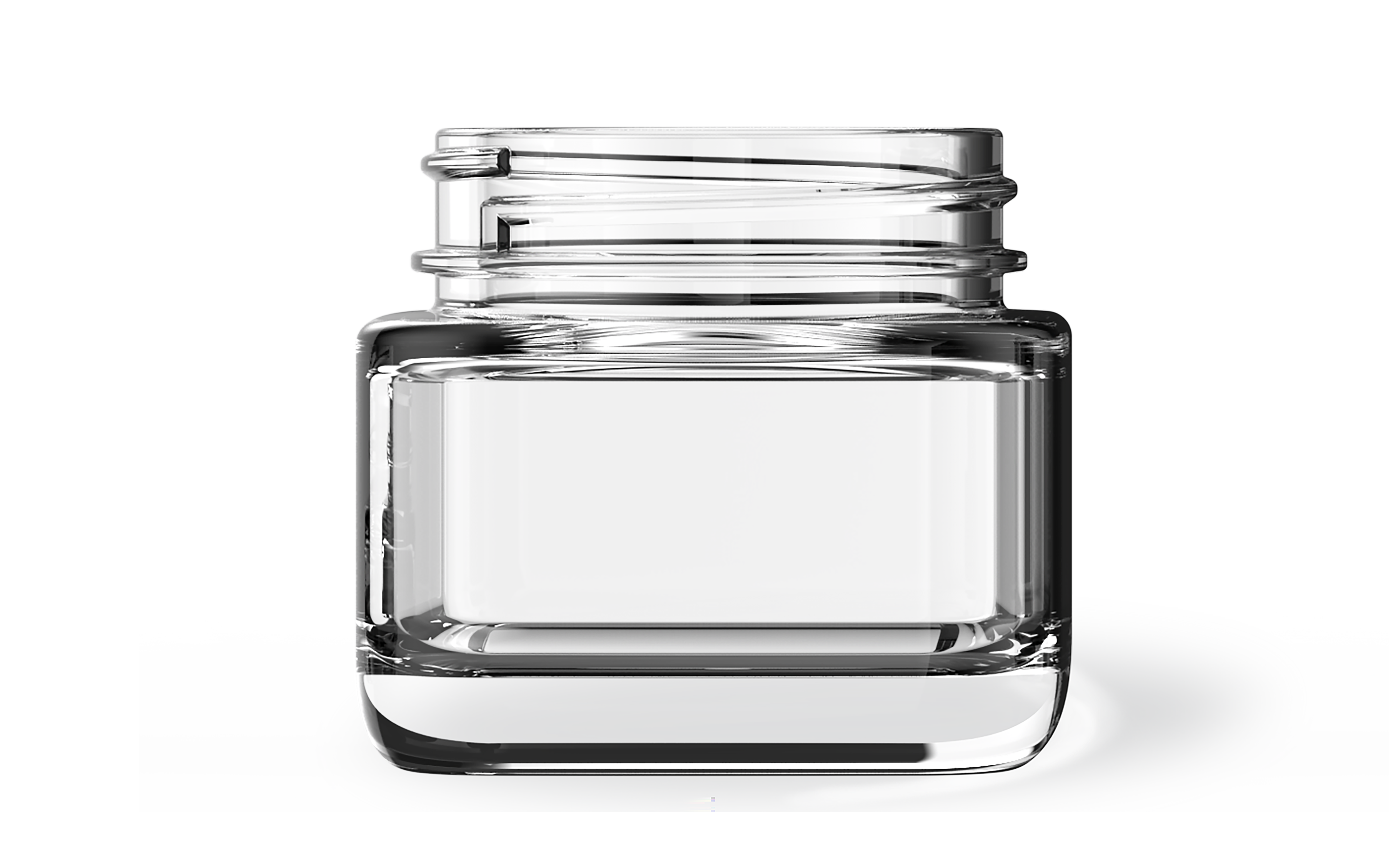
H21-0005C, 20 dr (70 ml): a square clear body with a child-resistant cap, in the middle of the family's 15 ml–200 ml range.
HDV2 violet jar — published specification
- Family: cosmetic violet jars; item codes HDV2003M, HDV2005M, HDV2005M-CR, HDV2010M, HDV2030M, HDV2050M, HDV2060M, HDV2100M, HDV5200M.
- Material: violet glass body with urea and PE closure components.
- Shape and dimensions: round, diameter 36 mm to 93.2 mm, height 25.6 mm to 55 mm, net weight 36 g to 205 g, glass thickness 0.38 mm.
- Capacity: 3 ml, 5 ml, 10 ml, 30 ml, 50 ml, 60 ml, 100 ml, 200 ml.
- Closure and neck: thread range 32/400 to 89/400 — the upper end of that range is what gives the larger codes their wide opening; urea / PE closures; the catalog includes the 5 ml child-resistant code HDV2005M-CR.
- Decoration: sticker, silk-screen printing, heat transfer printing, hot stamping, frosted finish.
- Stated industries: cosmetic packaging, food storage packaging, cosmetics and daily chemicals, pharmaceutical and medical, cannabis, supplements, packaging design and wholesale.
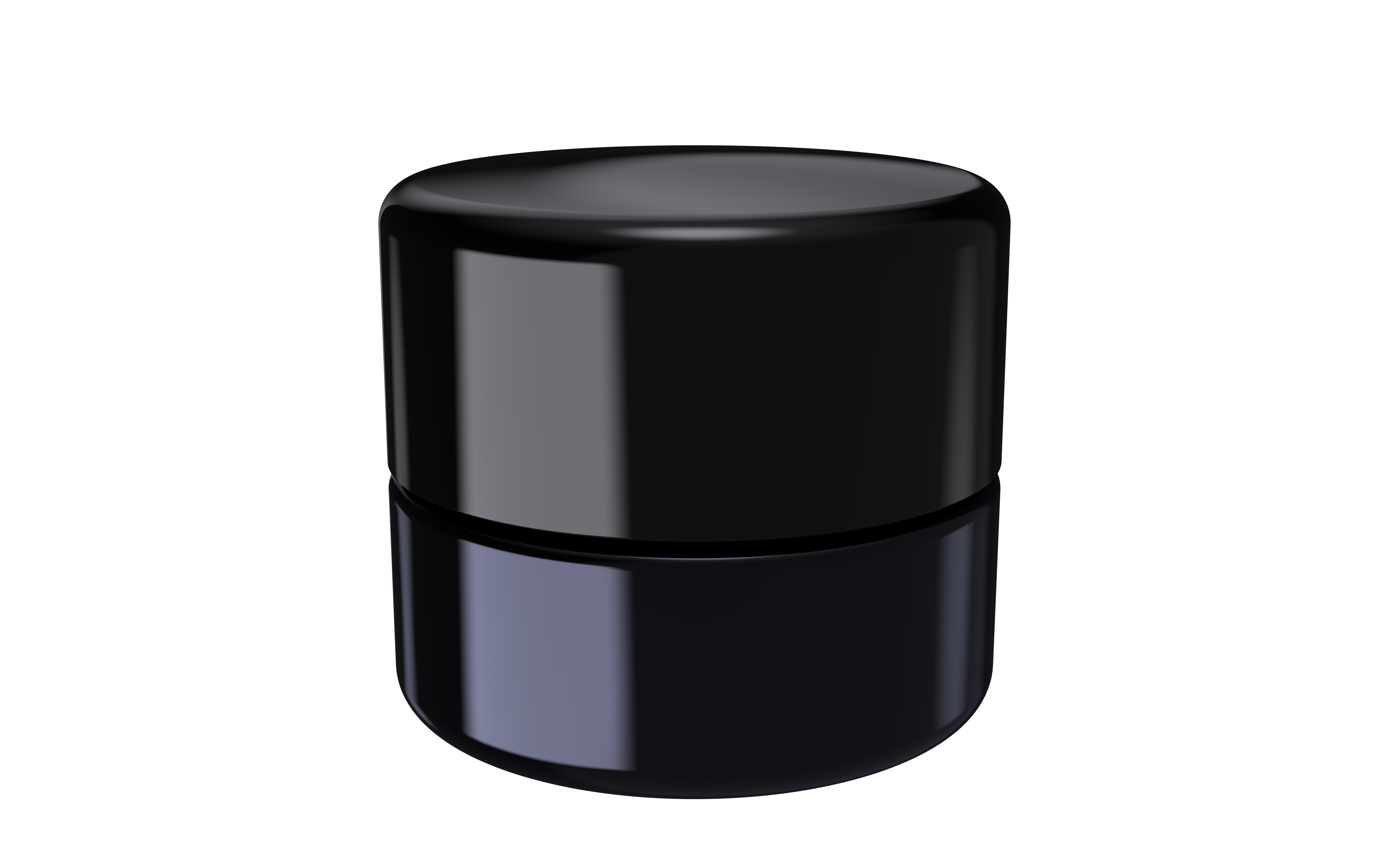
HDV2005M-CR: the 5 ml code in the HDV2 family listed with a child-resistant variant. Confirm closure drawings for any code outside this one.
The three differences that actually decide the purchase
Geometry. The H21 is square and tall for its volume; the HDV2 is round and deliberately shallow. A 100 ml fill exists in both families, but the H21 code reaches 115 mm in height across its range while the HDV2 family tops out at 55 mm. Deep cartons, tall shelf facings and gravity-fed filling favor the square body; low-profile jars, wide-mouth access for viscous fills and a rounded premium silhouette favor the HDV2.
Material stack. The H21 lists glass, plastic and PE and is published for cannabis, medical and supplement programs alongside cosmetics. The HDV2 lists violet glass, urea and PE and is positioned first as cosmetic packaging. When the fill is a cosmetic-grade gel, serum or balm sold in a supplement aisle, the HDV2's positioning is the better match; when the fill is a capsule or powder sold as a supplement, the H21's stated segment alignment is the cleaner fit.
Closure strategy. Child resistance is standard on the H21 across 15 ml to 200 ml. On the HDV2, it appears on a single 5 ml code. That single line item should decide several otherwise-close comparisons.
Where Each Model Wins — and Where It Does Not
H21 clear square jar: strengths and limits
Strengths are child resistance at every size, a square cross-section with four planar faces for labeling and print registration, a visible fill for capsule and powder presentation, a 15 ml–200 ml span that covers sample through multi-month supply in one family, and a material stack that includes plastic and PE options. Limits are equally concrete: clear glass does not deliver the violet light-management positioning, no light-transmission data is published for the clear body, and unit weight climbs to 280 g at the top of the range, which flows directly into freight cost per thousand units.
HDV2 violet jar: strengths and limits
Strengths are the violet glass body, an unusually broad neck range of 32/400 to 89/400 that lets one brand family serve both narrow- and wide-opening formats, a very low height profile of 25.6 mm to 55 mm, the lightest starting weight in the comparison at 36 g, and availability from 3 ml upward — which is where cosmetic-grade and resin-based products usually start. Limits are equally concrete: the family is specified as cosmetic violet jars with urea and PE closures, child resistance is documented only on HDV2005M-CR, and no light-transmission or moisture-barrier rating is published in the specification.
When neither model is the right answer
If the brief needs a violet body, a square footprint and a child-resistant cap simultaneously, neither model above satisfies all three. The H21 square violet glass variant, item codes H21-0003V to H21-0008V, publishes a square violet glass body with PP and PE and a child-resistant cap across 15 ml to 60 dr. If the brief needs 250 ml to 1 L of capacity, the HDV1 wide mouth violet jar family covers 100 ml to 1 L with 41/400 and 89/400 threads and a 0.38 mm wall. Both are different purchasing conversations from this one.
Step-by-Step: Running the Decision in One Meeting
The sequence below converts the specifications into a decision in about an hour, which is the practical length of a first packaging review.
- Classify the fill. Capsules, tablets, granules and powders go to the H21 side of the matrix; oils, resins, cosmetic-grade gels and serums go to the HDV2 side. If the fill is a viscous resin dosed in drops or grams, start at the 3 ml–10 ml end of the HDV2 range and work upward only if the dose demands it.
- Fix capacity from the dose, not from the shelf. The H21 spans 15 ml, 30 ml, 20 dr (70 ml), 30 dr (100 ml), 40 dr (130 ml) and 60 dr (200 ml). The HDV2 spans 3 ml to 200 ml in eight steps. Pick two candidate sizes per model and carry both into the next step — one size rarely survives contact with a filling line.
- Test the envelope. Check height clearance against the H21 maximum of 115 mm and the HDV2 maximum of 55 mm, and diameter against the H21's 58 mm and the HDV2's 36 mm to 93.2 mm span. Carton fill, pallet pattern and retail facing depth all follow from these two numbers.
- Lock the closure. Confirm child resistance at the exact code under consideration. This is a straightforward confirmation on the H21 range and a code-specific check on the HDV2 range.
- Confirm the neck finish. The HDV2 publishes 32/400 to 89/400 threads; the H21 specification publishes diameter and height. Where a specific closure, liner or dosing fitment matters, confirm the neck drawing before committing artwork.
- Plan decoration on the same menu. Both models accept sticker, silk-screen printing, hot stamping, heat transfer printing and frosted finish, so one artwork system usually transfers across the two if a brand uses both jars in a line.
- Weigh freight, not just units. The H21 runs 75 g to 280 g per unit; the HDV2 runs 36 g to 205 g. For a glass jar shipped in volume, that difference compounds across a container and belongs in the landed-cost calculation, not in a footnote.
Use Cases: Which Jar Fits Which Brief
Capsule and powder supplement programs
A capsule or powder product sold in 90 to 180 count units typically lands in the 100 ml to 200 ml band, where the H21 publishes 30 dr (100 ml), 40 dr (130 ml) and 60 dr (200 ml) options with a square body and a child-resistant cap. The square cross-section also gives four flat labeling faces, which simplifies print registration on multi-panel labels. This is the core H21 brief.
Resin and oil-based herbal products
Liquid resin formats favor small glass with a wide opening. Within the HDV2 family, the 3 ml, 5 ml and 10 ml codes sit at the small end, and the 5 ml code HDV2005M-CR adds a child-resistant variant for markets where that matters. Where a larger resin pack is required, the 30 ml and 50 ml codes in the same family keep the same violet presentation and the same 0.38 mm wall.
Cosmetic-grade supplements and crossover SKUs
A collagen, beauty-blend or topical-adjacent product sits awkwardly between categories: the fill behaves like a cosmetic, the claim behaves like a supplement. The HDV2 is specified as a cosmetic violet jar that also lists supplements as an applicable industry, which makes it the natural first candidate for that crossover. Decoration options are identical to the H21, so the same brand system can be applied across both.
Sample, travel and trial sizes
Sampling programs usually need the smallest glass at the lowest freight impact. The HDV2 starts at 3 ml with a 36 g unit weight; the H21 starts at 15 ml with a 75 g unit weight. For a 10,000-unit sample drop, that weight difference is a real cost line, while a 15 ml square jar remains the better sample choice when the sample is a capsule or powder that must mirror the retail format.
Comparison Table: H21 vs. HDV2
| Decision variable | H21 clear square jar | HDV2 violet jar |
|---|---|---|
| Body shape | Square | Round |
| Material | Glass / plastic / PE | Violet glass / urea / PE |
| Glass thickness | 0.38 mm | 0.38 mm |
| Capacity range | 15 ml, 30 ml, 20 dr (70 ml), 30 dr (100 ml), 40 dr (130 ml), 60 dr (200 ml) | 3 ml, 5 ml, 10 ml, 30 ml, 50 ml, 60 ml, 100 ml, 200 ml |
| Diameter | 58 mm | 36 mm–93.2 mm |
| Height | 24 mm–115 mm | 25.6 mm–55 mm |
| Unit weight | 75 g–280 g | 36 g–205 g |
| Closure | Child-resistant cap across the range | Urea / PE closure; thread 32/400–89/400; child-resistant code HDV2005M-CR (5 ml) |
| Decoration | Sticker, silk-screen printing, hot stamping, heat transfer printing, frosted finish | Sticker, silk-screen printing, heat transfer printing, hot stamping, frosted finish |
| Item codes | H21-0003C to H21-0008C | HDV2003M to HDV5200M |
| Best-fit fill | Capsules, powders, granules, concentrates | Oils, resins, cosmetic-grade gels and serums |
| Light management | Clear body; square violet variant available as H21-0003V–H21-0008V | Violet glass body |
Both models are manufactured by Ningbo Honor Packaging Co.,Ltd. Figures are taken from the published product specifications for each family.
Frequently Asked Questions
1. Do the H21 and HDV2 jars meet food-contact requirements for supplement packaging?
Compliance is decided by the specific material and closure combination and by the destination market, not by the model name, so the answer sits in the documentation rather than the catalog page. Two verified points frame the request. Regulation (EU) 2024/3190 restricts BPA in food-contact materials, including supplement packaging coatings, and applies to single-use items from 20 July 2026, so EU-bound programs should ask for a component-level material declaration covering the H21's glass, plastic and PE parts and the HDV2's violet glass, urea and PE parts. Separately, published guidance notes that tamper-evident packaging is not generally mandated at federal level for dietary supplements in the United States in the same way as for many over-the-counter drugs, which means a child-resistant cap should be treated as a design feature and not as proof of tamper-evidence. Buyers should request declarations and, where required, migration testing for the exact code in the exact color.
2. Can Honor Packaging supply both jar families and apply the same decoration to each?
Yes. Ningbo Honor Packaging Co.,Ltd. was established in 2015, operates a 45,000 square meter manufacturing facility with approximately 310 staff, an R&D team of 15 and annual production capacity of 1,000,000 units, and works through long-term joint-venture production bases for plastic and glass packaging. The H21 and HDV2 families share the same five surface treatments — sticker, silk-screen printing, hot stamping, heat transfer printing and frosted finish — so a single artwork system can be applied across both, which is useful for brands that use a square jar for capsules and a violet round jar for a resin or cosmetic-grade SKU.
3. Which jar costs more per unit?
Unit prices are quoted per project and are not published for either family, so the honest answer is that the comparison has to be run on cost drivers rather than on a sticker figure. Four drivers separate these two models: unit weight, where the H21 runs 75 g–280 g and the HDV2 runs 36 g–205 g, and heavier glass costs more to move; material stack, where the HDV2 uses a violet glass body while the H21 is offered in glass, plastic and PE; closure system, where the H21 supplies a child-resistant cap across the range and the HDV2 uses urea / PE closures with one child-resistant 5 ml code; and decoration coverage, which is priced by area and by print method rather than by jar. Comparing a 100 ml H21 code with a 100 ml HDV2 code on the same decoration, the same carton specification and the same delivery terms is the only quote-level comparison that means anything.
4. How should a buyer validate the choice before placing a bulk order?
Validate on the exact item code, not on the family. Request samples of the specific codes under consideration — for example H21-0006C at 30 dr (100 ml) against HDV2005M-CR at 5 ml — and check four things on arrival: that the fill weight or count fits the nominal capacity with the required headspace, that the closure engages correctly and stays engaged after repeated opening, that the decoration registers cleanly on the chosen surface treatment, and that the packed carton survives your own distribution drop test. Where light or moisture protection is a product claim, pair the sample with the material supplier's documentation rather than relying on the jar's appearance.
5. What lead time should be planned for either model?
Lead time is not published for individual codes and depends on the item code, the decoration method, the quantity and the season, so it should be confirmed in writing at quotation stage rather than assumed from the catalog. Two facts help frame the plan: annual production capacity is 1,000,000 units, and the company is headquartered in Ningbo, China, close to both Ningbo and Shanghai seaports, which shortens inland transit before ocean freight. Programs that must hit a fixed retail launch date should confirm the schedule for the specific code and decoration before locking artwork.
Conclusion: Choose by Brief, Not by Family
The H21 clear square jar and the HDV2 violet jar are not competing quality tiers; they are two different answers to the same question. The H21 answers a supplement brief built on capsules or powders, a square footprint, a 58 mm diameter, a 15 ml–200 ml span and child resistance as standard. The HDV2 answers a brief built on light-sensitive or cosmetic-grade fills, a round violet glass body, a 3 ml–200 ml span, a shallow 25.6 mm–55 mm profile and a 32/400–89/400 neck range. Where the brief asks for both violet glass and a square child-resistant body, the H21 square violet variant — not either model in this comparison — is the correct starting point.
Run the seven-step sequence, hold the decision to a specific item code, and confirm closure and material documentation before artwork is released. That is the whole matrix.
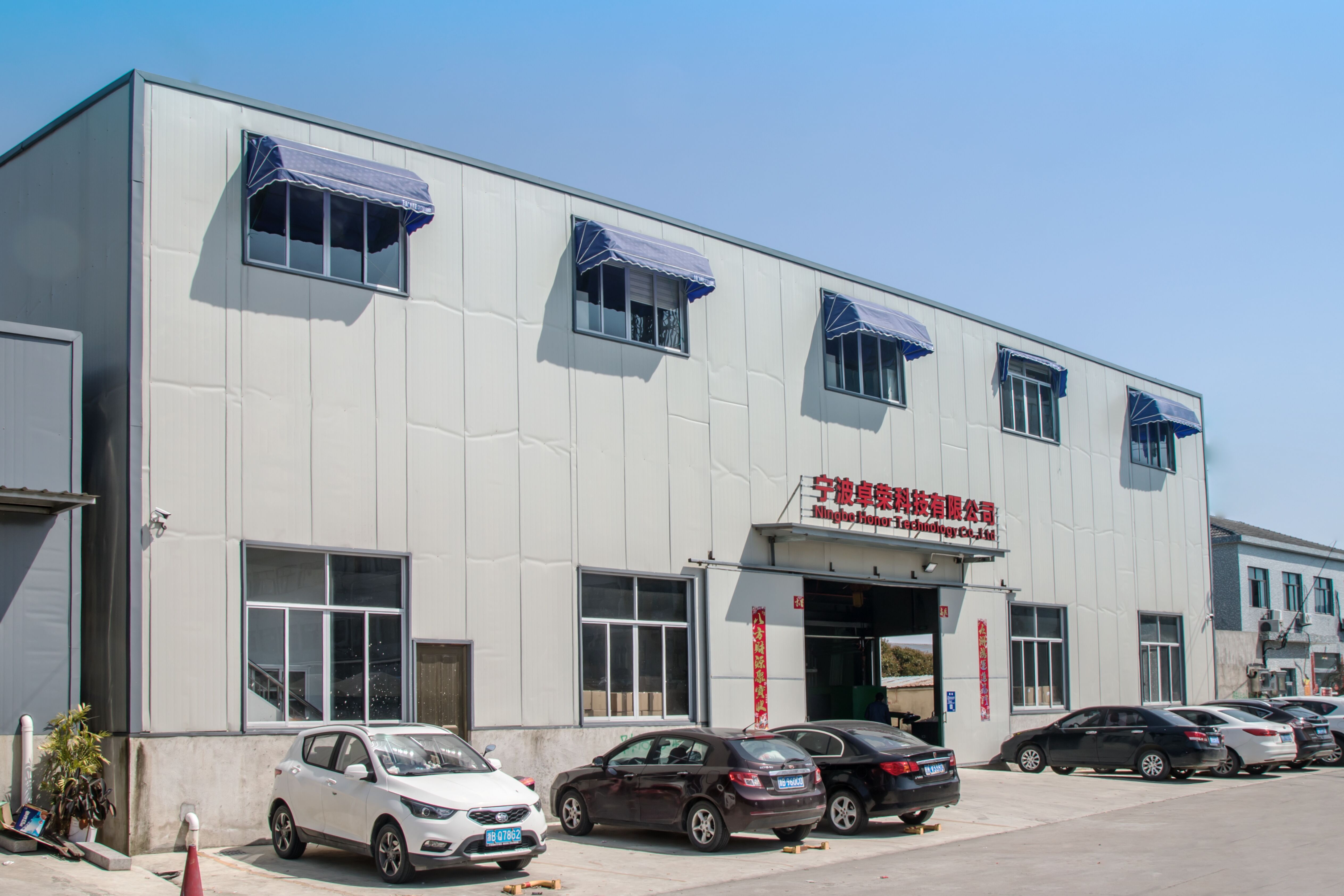
Honor Packaging operates through long-term joint-venture production bases for plastic and glass packaging. Facility image: Ningbo Honor Packaging Co.,Ltd.
Next step: compare the two jars on your own fill. Request a sample set of the H21 and HDV2 codes closest to your capacity, or ask for a quotation against a specific item code, decoration method and quantity. Both requests can be answered against the exact specification rather than a family description.
Email: info@honorpkg.com | Tel: +86-574-88004632 / +86-15968944995 | WhatsApp: +86 15968944995
Website: www.honorcrpkg.com | Download the product catalog: Honor Packaging brochure (PDF)
Ningbo Honor Packaging Co.,Ltd. — Rm.305, No.1 Building, No.568 SiMing East Road, YinZhou District, Ningbo City, China.
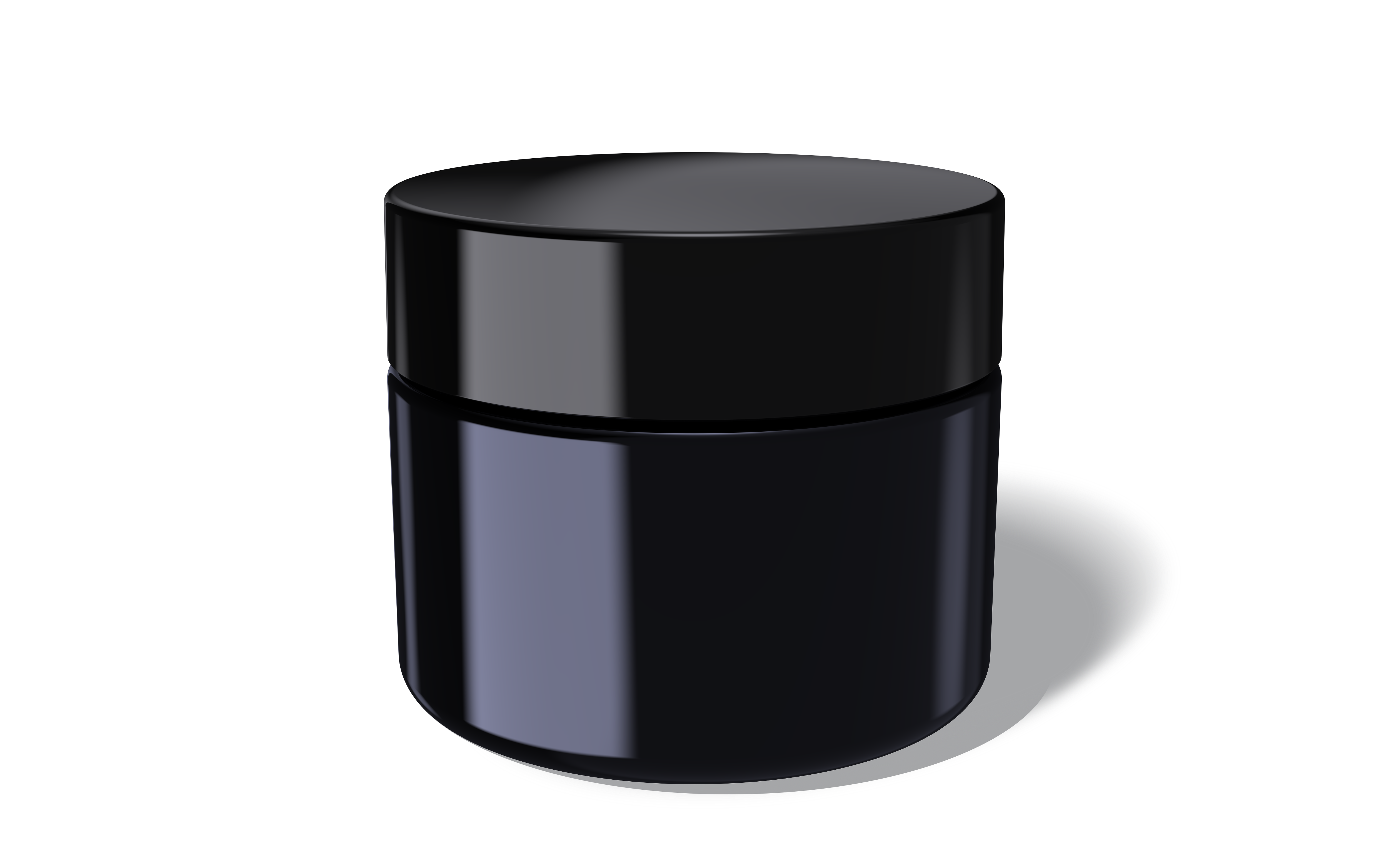
HDV2 violet glass jar in the mid-range size: sample codes and quotation are available against specific item numbers.
Have Questions or Need More Details?
Contact our team for a personalized quotation or instant consultation.
Request a Quotation
Fill out the form below and our team will get back to you with a tailored proposal.
WhatsApp Direct Chat
Prefer to chat in real-time? Message us on WhatsApp for instant assistance & quick answers.
- Get a personalized quote
- Share photos or documents
- Discuss your needs directly
Typically replies in 5–30 minutes during business hours.