Long-Term Supplement Packaging Sourcing: The Questions Buyers Ask Before They Commit
A supplement brand rarely replaces its jar because a competitor has a prettier one. It replaces it because a repeat order arrived with a different tint, a closure that seated differently, or a decoration that no longer matched the artwork file. This page answers the questions buyers raise before committing to a multi-year packaging arrangement — purchasing terms, acceptance criteria, repeat-order consistency and after-sales support — using the verified specifications of the glass packaging produced by Honor Packaging (NINGBO HONOR PACKAGING CO.,LTD.).
The Short Answer
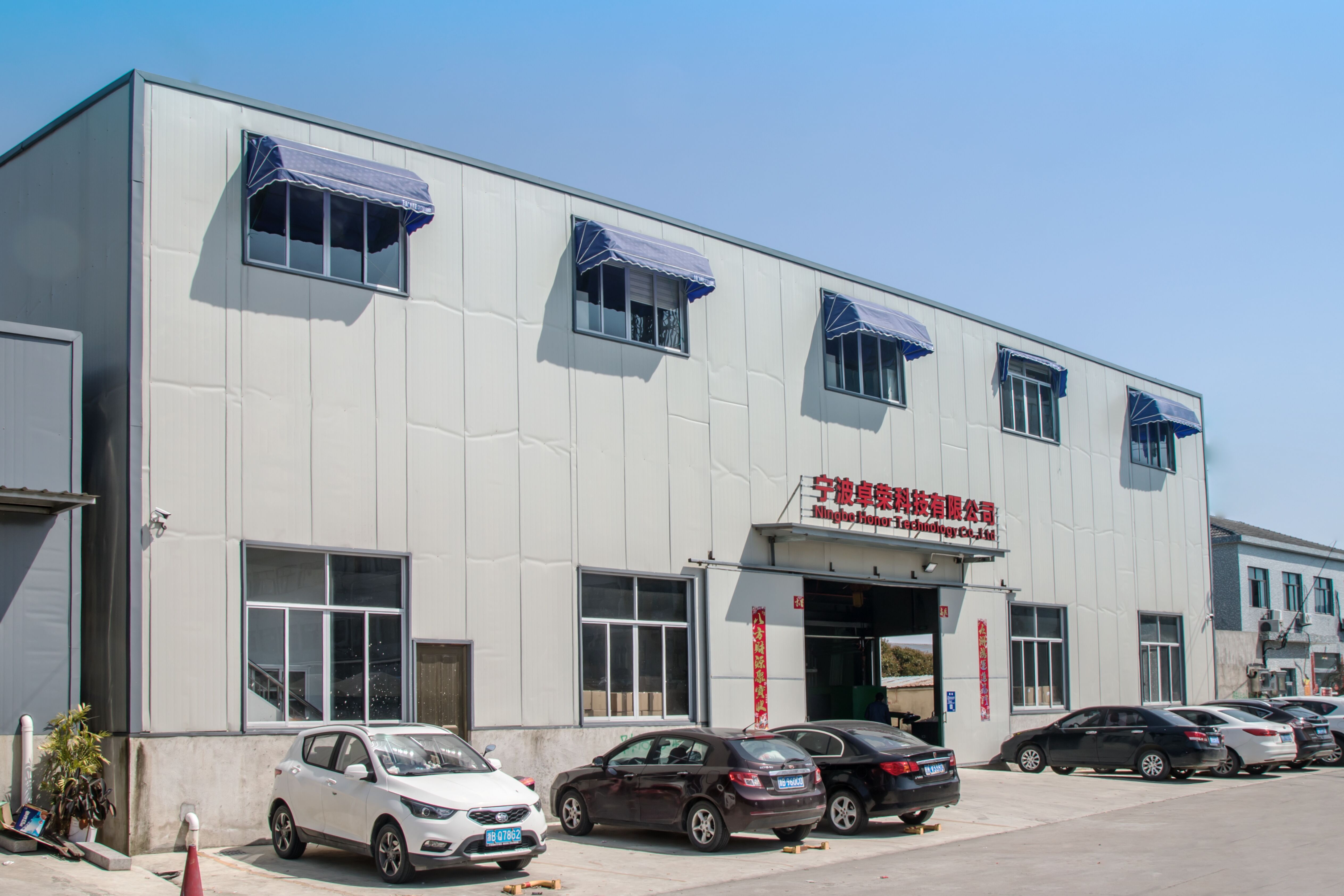
Honor Packaging is a Ningbo, China-based packaging manufacturer founded in 2015. It operates a 45,000 m² facility with approximately 310 staff, a 15-person R&D team and an annual production capacity of 1,000,000 units, exporting 100% of its output with the EU and USA as its main markets.
For supplement brands, the relevant range spans three glass families:
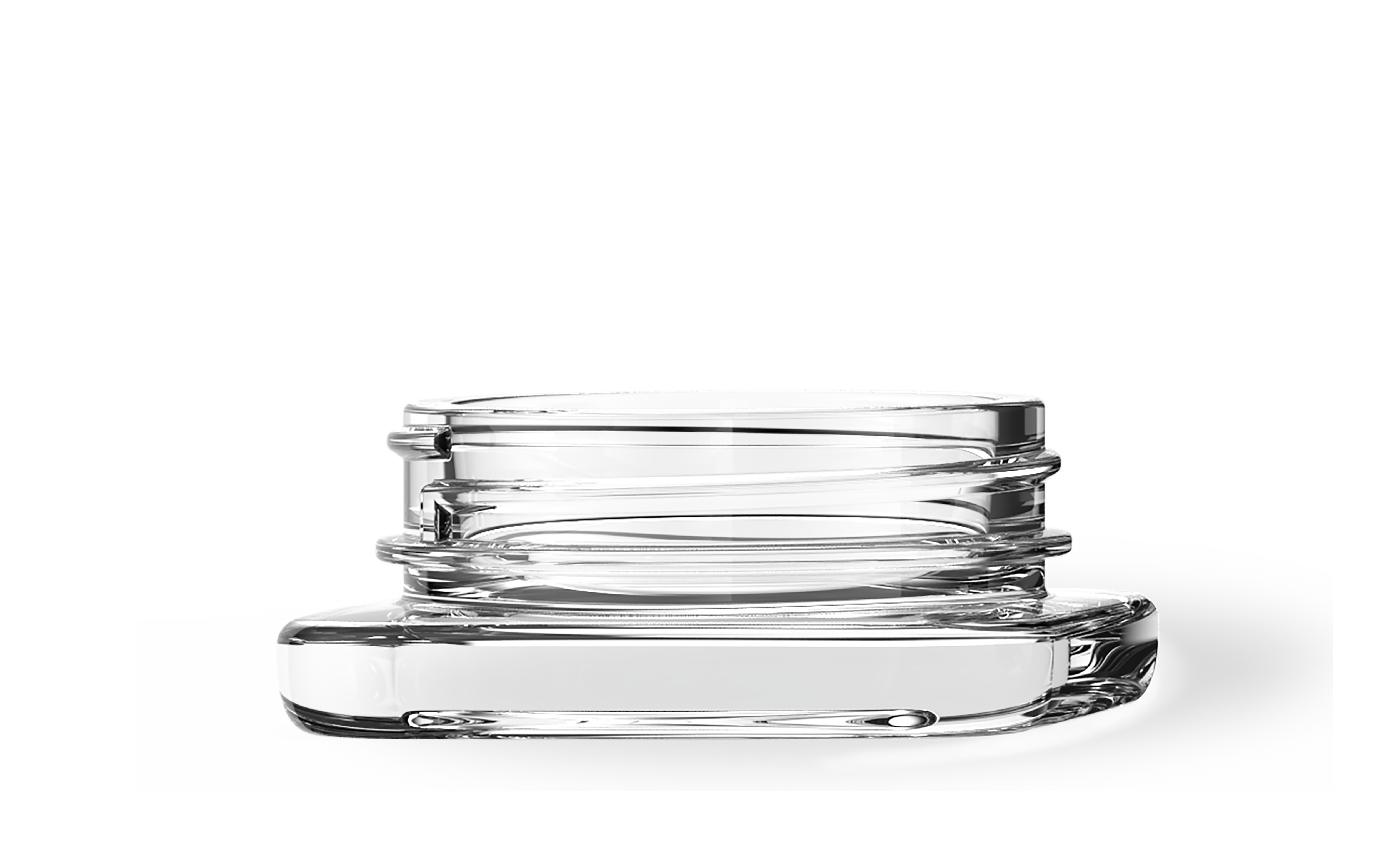
- Child-resistant glass jars — the H21 clear square range in 15 ml, 30 ml, 20 dr, 30 dr, 40 dr and 60 dr, built on a 0.38 mm glass wall with a child-resistant cap (item codes H21-0003C to H21-0008C).
- Small-format and vacuum jars — the H19 range, including a 5 ml square vacuum jar and 5 ml / 9 ml child-resistant concentrate jars, packed 250 pieces per carton.
- Violet glass jars and bottles — H21 square violet jars (15 ml to 60 dr / 200 ml), HDV1 wide-mouth jars (100 ml to 1 L, 41/400 and 89/400 threads), HDV2 jars (3 ml to 200 ml, 32/400 to 89/400 threads) and HDV3 round bottles (5 ml to 100 ml).
Those three families are the basis for every answer below.
The Sourcing Problem: Order One Is Easy, Order Twenty Is Not
A single packaging purchase can survive on goodwill and a sample photo. A multi-year supply arrangement cannot. In practice, three things fail first, and all three are specification problems rather than manufacturing problems.
Spec drift between runs. The first order is approved against a jar that a buyer physically held. Order twenty is approved against a purchase order line that says only “violet jar, 30 ml.” If the line does not carry the item code, the capacity unit, the closure type and the glass thickness, the supplier is filling a gap with judgement — and judgement varies.
Acceptance criteria that were never written down. Child-resistant performance, cap seating, print registration, frosting consistency and colour across a violet glass batch all need a stated acceptance standard. If the standard lives in a buyer's memory, every repeat order becomes a negotiation.
Decoration routes that are not repeatable. A sticker, a silk-screen print, a hot-stamped logo, a heat-transfer print and a frosted finish are five different processes. Switching decoration route between runs to save cost is one of the most common causes of a product looking different on shelf.
None of these risks are exotic. They are the reason experienced buyers ask four questions before signing: what exactly is being produced, what is being accepted, what will be identical on order twenty, and who answers when something differs.
Industry Background: Packaging Is Now an Operating Decision
The global supplements and nutrition packaging market was estimated at USD 31.3 billion in 2025 (Grand View Research). Within the material mix, the same analysis reports plastic holding roughly 41.67% of material segment share that year. That figure is useful for buyers because it reframes glass: glass is usually a deliberate choice rather than a default, selected when appearance, weight, perceived quality or light protection matter more than absolute unit cost.
Category demand shifts the same equation. The Shilajit market was projected to reach USD 221.4 million in 2026, with liquid resin accounting for 40.5% of that value (Grand View Research). For packaging planning, a resin-weighted category mix increases the importance of small-format jars and bottles relative to bulk containers.
Regulation is moving too. Regulation (EU) 2024/3190 restricts the use of Bisphenol A (BPA) in food contact materials, including supplement packaging coatings, with the provisions applying to single-use items from 20 July 2026. Buyers specifying closures, liners or internal coatings for EU-market products should confirm material documentation with their supplier rather than assume a legacy specification still qualifies.
On tamper-evidence, published industry guidance notes that for dietary supplements, tamper-evident packaging is not generally mandated at federal level in the United States in the same way as for many over-the-counter drugs. That does not make tamper-evidence irrelevant — retail and brand requirements frequently exceed the legal minimum — but it does mean the obligation usually comes from the buyer's own channel requirements and written specification rather than from one federal rule.
Both points lead to the same conclusion: the specification, not the catalogue page, is the real procurement document.
What Can Be Locked Into a Long-Term Specification
Honor Packaging manufactures across three families that between them cover most supplement formats. Each family operates on fixed item codes, which is what makes repeat ordering tractable over several years.
H21 clear square child-resistant jars
The H21 clear square jar is the workhorse format for small-dose supplement and concentrate products. It is made of glass, plastic and PE, with a square profile, a 58 mm overall diameter, an overall height range of 24 mm to 115 mm and a net weight range of 75 g to 280 g. The glass wall is specified at 0.38 mm. Capacities are 15 ml, 30 ml, 20 dr, 30 dr, 40 dr and 60 dr, with item codes H21-0003C through H21-0008C. The cap is a child-resistant closure, and the surface-treatment menu covers sticker, silk-screen printing, hot stamping, heat transfer printing and frosted finish.
H19 vacuum jars and small child-resistant concentrate jars
The H19 vacuum jar is a square glass jar with a 5 ml capacity, designed for supplement packaging and intended for the food, cosmetic and medical industries. Each carton contains 250 pieces. It is the smallest unit in the range and is the format that usually drives fill-weight discipline and dosing accuracy in a specification review.
The H19 child-resistant concentrate jars share the same carton quantity of 250 pieces and are made of glass with a child-resistant cap. They are available as clear, white and black variants in 5 ml and 9 ml capacities, in square, round, triangle and hexagon shapes, with net weights from 27 g to 38 g (the white variant is listed at 27 g or 36 g). Item codes run from H19-0001C through H19-0011C for the clear variant, H19-0001W through H19-0011W for the white variant, and H19-0001B through H19-0011B for the black variant.
Violet glass: H21 violet jars, HDV1, HDV2 and HDV3
Violet glass is the family that most buyers associate with light-sensitive formulations and premium positioning. In the application data for these formats, the working condition is described as UV-protective glass packaging with a child-resistant design.
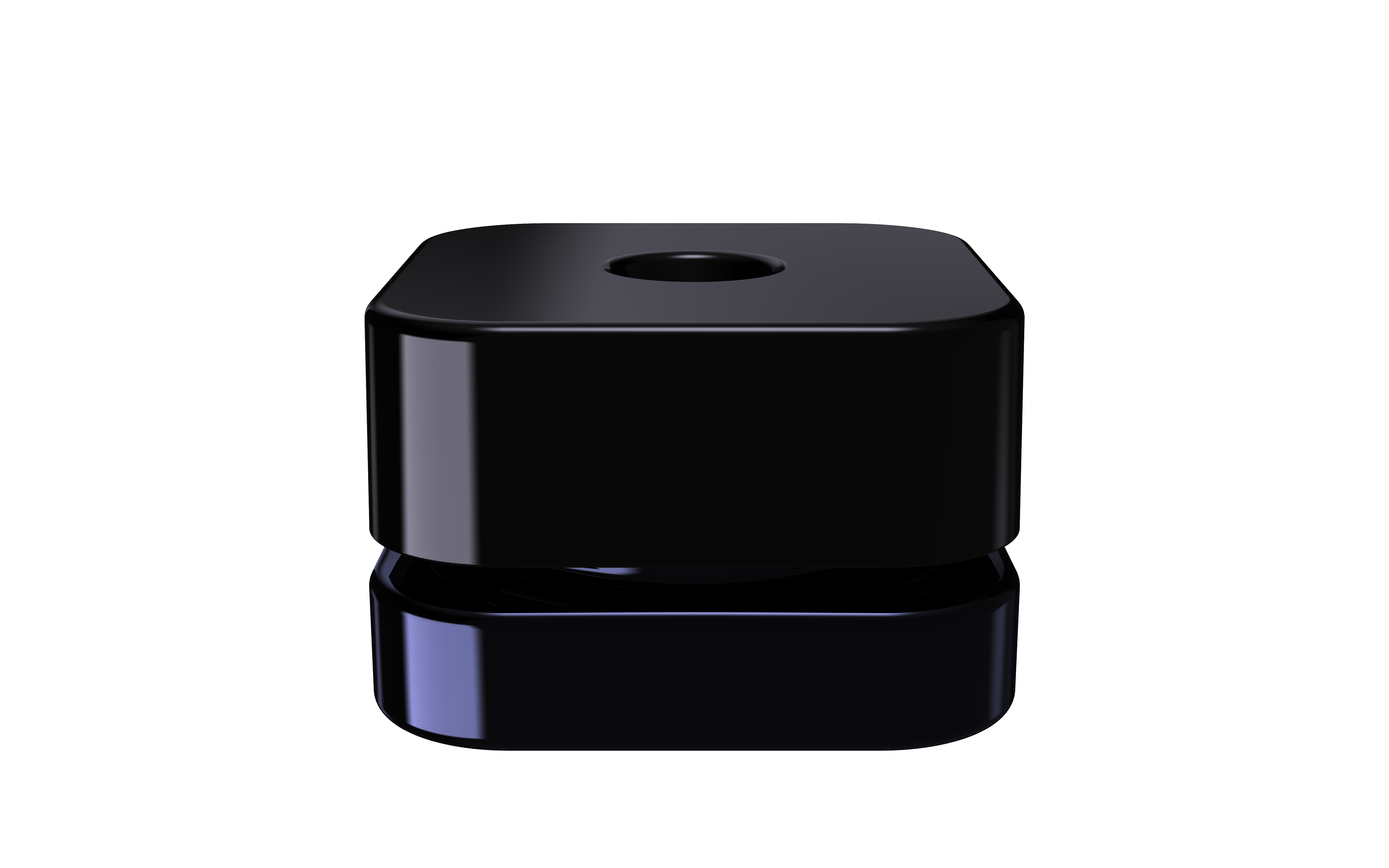
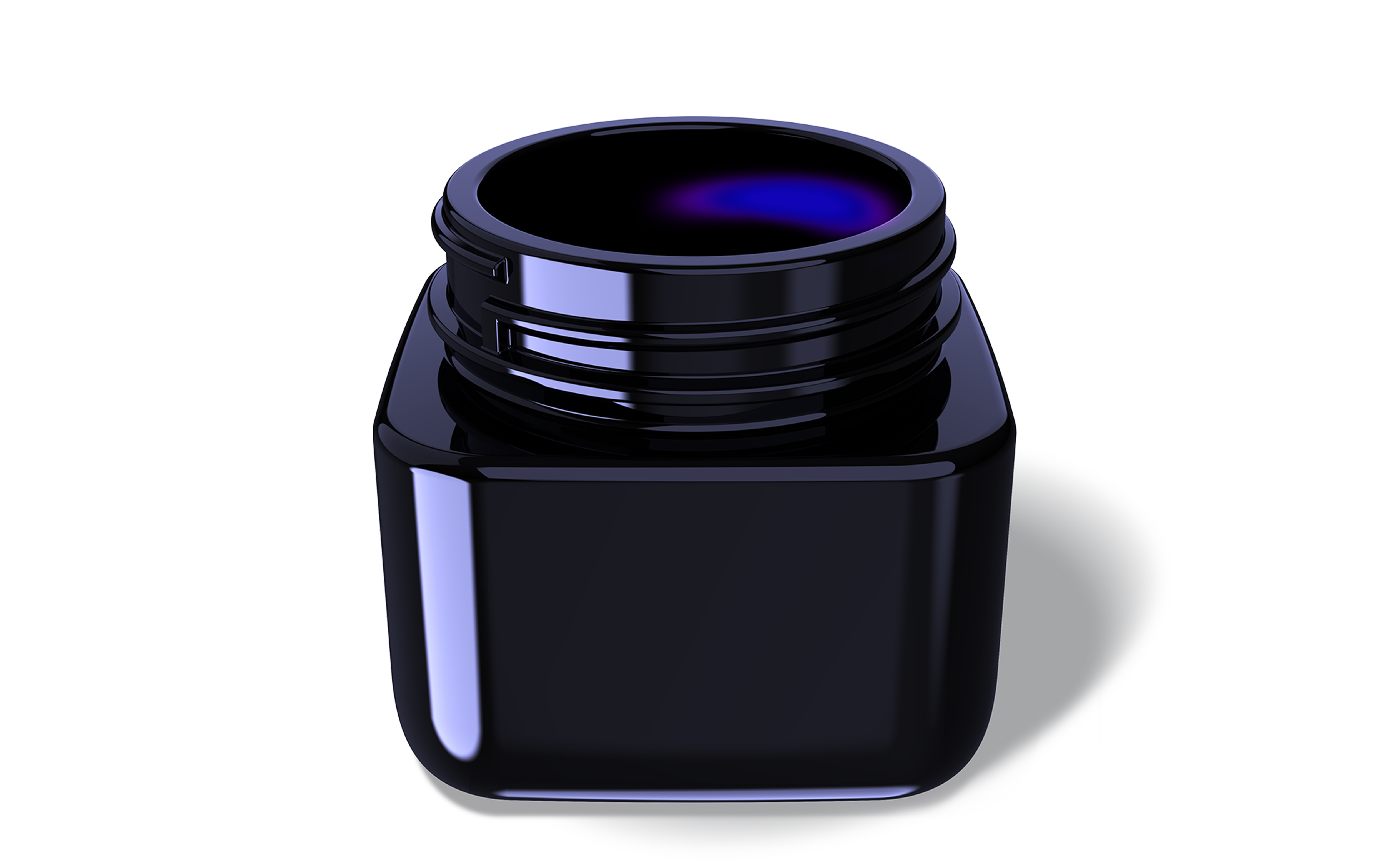
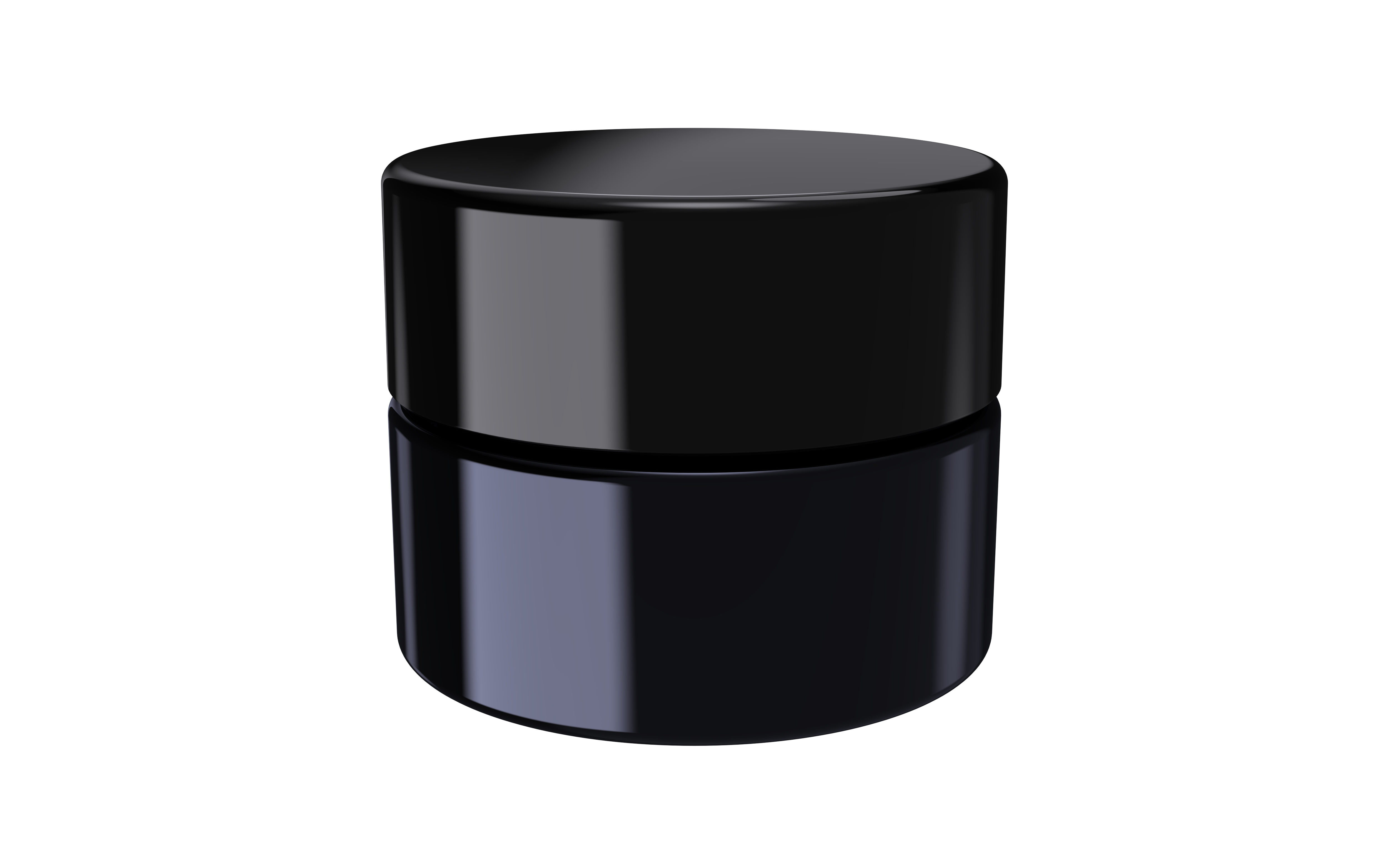
The H21 square violet glass jar mirrors the clear square jar dimensionally: square shape, 58 mm diameter, 24 mm to 115 mm height, 75 g to 280 g net weight, 0.38 mm glass thickness and a child-resistant cap. Capacities are 15 ml, 30 ml, 20 dr (70 ml), 30 dr (100 ml), 40 dr (130 ml) and 60 dr (200 ml), with item codes H21-0003V through H21-0008V. The materials are violet glass, PP and PE.
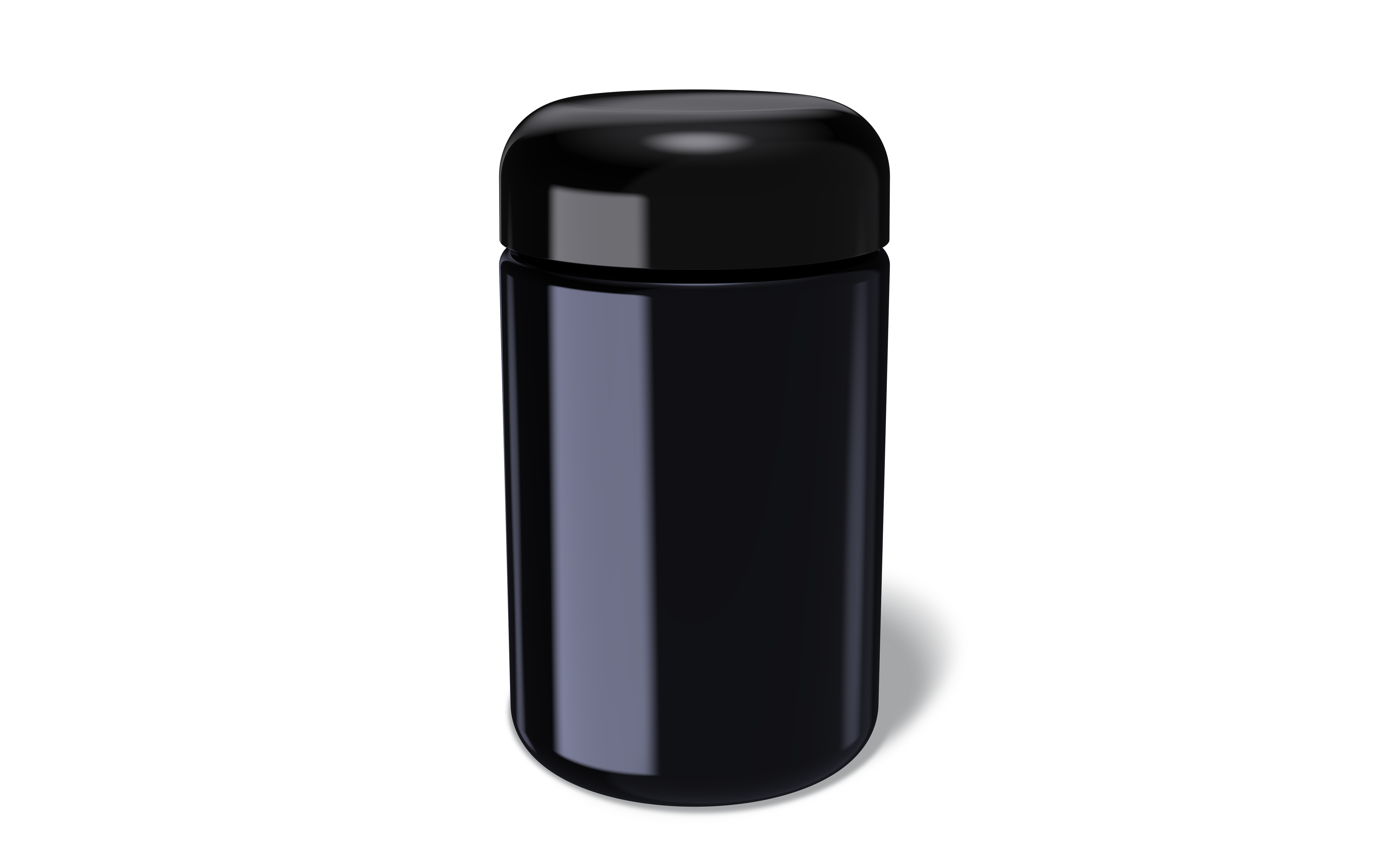
The HDV1 wide-mouth violet jar covers larger doses. Capacity runs from 100 ml to 1 L, with diameters from 48 mm to 95 mm, heights from 84.7 mm to 193 mm, net weights from 117 g to 610 g and a 0.38 mm glass thickness. Thread specifications are 41/400 and 89/400. Materials are violet glass, urea, PE, SAN and ABS.
The HDV2 violet jar covers the smaller and mid capacities: 3 ml, 5 ml, 10 ml, 30 ml, 50 ml, 60 ml, 100 ml and 200 ml, with diameters from 36 mm to 93.2 mm, heights from 25.6 mm to 55 mm, net weights from 36 g to 205 g and a 0.38 mm glass thickness. Thread options are 32/400 to 89/400. Materials are violet glass, urea and PE.
The HDV3 round violet glass bottle is the bottle-format option, with capacities of 5 ml, 10 ml, 15 ml, 20 ml, 30 ml, 50 ml, 60 ml and 100 ml, heights from 54.5 mm to 125 mm and net weights from 22.5 g to 120 g. It is made of violet glass with a PP closure, and closure choices include plastic cap, dropper, mist sprayer and lotion pump. Surface treatment options are label, silk-screen printing and gold stamping. Item numbers include HDV3005M, HDV3010M, HDV3015M, HDV3020M, HDV3030M, HDV3050M, HDV3060M and HDV3100M.
Step-by-Step: Setting Up a Multi-Year Supply Arrangement
The sequence below is the order that prevents most repeat-order problems. It assumes the buyer already has a finalised pack design.
Step 1 — Freeze the specification, not the sample
Convert the approved sample into a written specification: model and item code, capacity and capacity unit, shape, material, closure type, glass thickness where specified, surface treatment and carton quantity. For example, a 30 ml violet jar becomes “H21-0004V, square violet glass jar, 30 ml, child-resistant cap, 0.38 mm glass, frosted finish, carton quantity confirmed per code.”
Step 2 — Confirm the decoration route against the artwork
Sticker, silk-screen printing, hot stamping, heat-transfer printing and frosted finish are not interchangeable. Decide once, record it in the specification, and treat later changes as a new specification revision rather than a production tweak.
Step 3 — Confirm carton configuration for planning
Carton quantity drives warehouse planning, freight calculation and pallet design. The H19 vacuum jar and H19 concentrate jars are listed at 250 pieces per carton; confirm the pack data for each H21 and HDV code you intend to run regularly.
Step 4 — Run structural, tooling and risk validation before mass production
Honor Packaging states that before mass production it is involved in product structural development, tooling strategy definition, and critical manufacturing risk assessment and validation. For a long-term programme, this is the stage where closure fit, wall thickness and decoration feasibility should be closed out, because these are the variables that are expensive to change later.
Step 5 — Approve a reference standard for repeat orders
Keep one approved physical reference per item code, signed by both parties, alongside the written specification. This is the document that settles a dispute about “the same as last time” in one meeting instead of three.
Step 6 — Fix the production and fulfilment expectations
Honor Packaging states that during mass production it takes responsibility for manufacturing process control and order fulfilment, targeting stable quality, controlled cost and on-time delivery. Put those three words into the agreement in measurable form: the acceptance criteria, the cost basis, and the delivery window.
Step 7 — Agree the after-sales route before you need it
Name a contact, a channel and a response expectation. Honor Packaging's published contact route is Victor at info@honorpkg.com, telephone +86-574-88004632 or +86 15968944995, and WhatsApp on +86 15968944995. A long-term arrangement works better when the escalation path is written down at signature rather than discovered during a problem.
Use Cases: Matching Format to Product Reality
Resin and small-dose liquid supplements. Small formats dominate here. The H19 5 ml vacuum jar, the H21 clear square jar from 15 ml upward, and the H21 square violet jar from 15 ml to 60 dr all serve products where dose size is small and pack presentation has to carry premium positioning.
Larger-dose and multi-serving formats. The HDV1 wide-mouth violet jar runs from 100 ml to 1 L with 41/400 and 89/400 threads, which makes it the natural fit when a programme needs one violet glass family to flex across several pack sizes.
Retail lines where surface finish sells the product. The HDV2 violet jar spans 3 ml to 200 ml with frosted finish and hot stamping available, which allows a brand to hold one material story across a small and a large SKU.
Dropper, spray and pump formats. The HDV3 round violet glass bottle is supplied with plastic cap, dropper, mist sprayer or lotion pump closures in 5 ml to 100 ml, and is listed for cosmetics and daily chemicals, pharmaceutical, cannabis, and packaging design and wholesale applications.
Comparison Table: Format-by-Format Specifications
| Format / model | Shape | Capacity range | Closure | Glass thickness | Surface treatment |
|---|---|---|---|---|---|
| H21 clear square child-resistant jar | Square | 15 ml, 30 ml, 20 dr, 30 dr, 40 dr, 60 dr | Child-resistant cap | 0.38 mm | Sticker, silk-screen printing, hot stamping, heat transfer printing, frosted finish |
| H21 square violet glass jar | Square | 15 ml, 30 ml, 20 dr (70 ml), 30 dr (100 ml), 40 dr (130 ml), 60 dr (200 ml) | Child-resistant cap | 0.38 mm | Sticker, silk-screen printing, hot stamping, heat transfer printing, frosted finish |
| H19 vacuum jar | Square | 5 ml | Vacuum click jar | Not specified in published data | Not specified in published data |
| H19 child-resistant concentrate jar (clear / white / black) | Square, round, triangle, hexagon | 5 ml, 9 ml | Child-resistant cap | Not specified in published data | Not specified in published data |
| HDV1 wide-mouth violet jar | Wide mouth | 100 ml to 1 L | Thread 41/400 to 89/400 | 0.38 mm | Sticker, silk-screen printing, heat transfer printing, hot stamping, frosted finish |
| HDV2 violet jar | Round / cosmetic jar | 3 ml to 200 ml | Thread 32/400 to 89/400 | 0.38 mm | Sticker, silk-screen printing, heat transfer printing, hot stamping, frosted finish |
| HDV3 round violet glass bottle | Round bottle | 5 ml to 100 ml | Plastic cap, dropper, mist sprayer, lotion pump | Not specified in published data | Label, silk-screen printing, gold stamping |
Table compiled from published product specifications for the H21, H19, HDV1, HDV2 and HDV3 ranges. Where a value is not published, it is marked as not specified rather than estimated.
FAQ: Long-Term Sourcing Questions, Answered
1. Does supplement packaging have to be tamper-evident, and how does BPA regulation affect jar selection?
Two different questions sit inside this one. On tamper-evidence, published industry guidance states that for dietary supplements, tamper-evident packaging is not generally mandated at federal level in the United States in the same way as it is for many over-the-counter drugs. Child-resistant closures are a separate design decision, and they are built into the H21 and H19 ranges as standard caps. On materials, Regulation (EU) 2024/3190 restricts Bisphenol A (BPA) in food contact materials, including supplement packaging coatings, with application to single-use items from 20 July 2026 — which is relevant when specifying plastic closures, liners or coatings for EU-market products. The practical consequence is that compliance obligations usually come from the destination market and the retail channel, so they should be written into the specification and confirmed against material documentation rather than assumed.
2. Can one supplier cover clear child-resistant jars, vacuum jars and violet glass at the same time?
Yes, within the ranges covered here. Honor Packaging manufactures child-resistant glass jars (H21 clear square, 15 ml to 60 dr; H19 concentrate jars, 5 ml and 9 ml), vacuum jars (H19, 5 ml, 250 pieces per carton) and violet glass packaging (H21 square violet, HDV1, HDV2 and HDV3). The families share structural conventions that simplify a multi-SKU programme: the H21 clear square, H21 square violet, HDV1 and HDV2 formats are all specified at 0.38 mm glass thickness, and the same surface-treatment menu — sticker, silk-screen printing, hot stamping, heat transfer printing and frosted finish — appears across them. Consolidating one brand's glass packaging with a single manufacturer means one specification language, one decoration approval process and one set of carton data instead of several.
3. How should a buyer think about cost in a long-term packaging agreement?
Cost in glass packaging follows the specification, not a catalogue price. Four variables move it most: the format itself (capacity and glass weight), the closure type, the decoration route, and the packing configuration — for example, the H19 vacuum jar and H19 concentrate jars are listed at 250 pieces per carton. Because those four variables are the same ones that determine the product's appearance, the most reliable way to control cost over several years is to fix them once and keep them fixed. Honor Packaging's stated position during mass production is controlled cost alongside stable quality and on-time delivery, which is a commitment that only becomes measurable if the specification behind it is stable. Buyers should request a quotation against a frozen specification rather than a range of options.
4. How do we validate a format before committing to a multi-year schedule?
Validate in this order: confirm the item code and published specification first (capacity, shape, closure, glass thickness, surface treatment, carton quantity), then confirm the decoration route, then review the pre-production validation. Honor Packaging states that before mass production it is involved in product structural development, tooling strategy definition, and critical manufacturing risk assessment and validation — which is exactly the stage where closure fit and wall thickness should be settled. Only after that does it make sense to approve a physical reference standard and scale into repeat ordering. Buyers can request a sample or a specification review before scheduling volume.
5. What keeps repeat orders consistent, and what support exists after delivery?
Consistency comes from three fixed things: a fixed item code, a fixed glass thickness where specified, and a fixed decoration route. Honor Packaging states that during mass production it takes full responsibility for manufacturing process control and order fulfilment, ensuring stable quality, controlled cost and on-time delivery, and that it operates through long-term joint-venture production bases for plastic and glass packaging. The manufacturing base is 45,000 m² with approximately 310 staff and an annual production capacity of 1,000,000 units, supported by a 15-person R&D team, with logistics coordinated from Ningbo and close to both Ningbo and Shanghai seaports. For after-sales, the published contact route is Victor at info@honorpkg.com, +86-574-88004632 or +86 15968944995, and WhatsApp on +86 15968944995.
Next Step: Sample, Quotation or Catalogue
If you are evaluating a long-term supplement packaging programme, the fastest way to test the fit is with a specification review and a sample. Share your capacity, closure and decoration requirements, and Honor Packaging will respond against the relevant item code.

Download the product catalogueRequest a sample or quote
Honor Packaging — NINGBO HONOR PACKAGING CO.,LTD. · Rm.305, No.1 Building, No.568 SiMing East Road, YinZhou District, Ningbo City, China · www.honorcrpkg.com
Conclusion: Long-Term Supply Is a Specification Discipline
Long-term supplement packaging sourcing is not primarily a negotiation exercise. It is a documentation exercise that produces a commercial result. Three things decide the outcome:
- Fixed identity. An item code, a capacity unit, a closure type and a glass thickness — stated in writing, not remembered. The H21, H19, HDV1, HDV2 and HDV3 ranges all operate on published codes, which makes this achievable from the first order.
- Stated acceptance criteria. Child-resistant function, decoration route and finish are agreed once and revised only as new revisions, so that a repeat order is compared against a standard rather than against someone's recollection.
- A defined after-sales path. The contact exists before the problem does, with a named person and a reachable channel.
Honor Packaging's stated model — structural development, tooling strategy and manufacturing risk validation before mass production; process control and order fulfilment responsibility during it; long-term joint-venture production bases for glass and plastic; and logistics coordinated from Ningbo with access to both Ningbo and Shanghai seaports — is structured around exactly those three points. Whether it fits a specific supplement programme is a question of capacity, closure and decoration, and those are answerable in a single specification review.
Have Questions or Need More Details?
Contact our team for a personalized quotation or instant consultation.
Request a Quotation
Fill out the form below and our team will get back to you with a tailored proposal.
WhatsApp Direct Chat
Prefer to chat in real-time? Message us on WhatsApp for instant assistance & quick answers.
- Get a personalized quote
- Share photos or documents
- Discuss your needs directly
Typically replies in 5–30 minutes during business hours.