
Partnering for Scale: Common Questions About Sample, MOQ, and Decoration with Jar Manufacturers
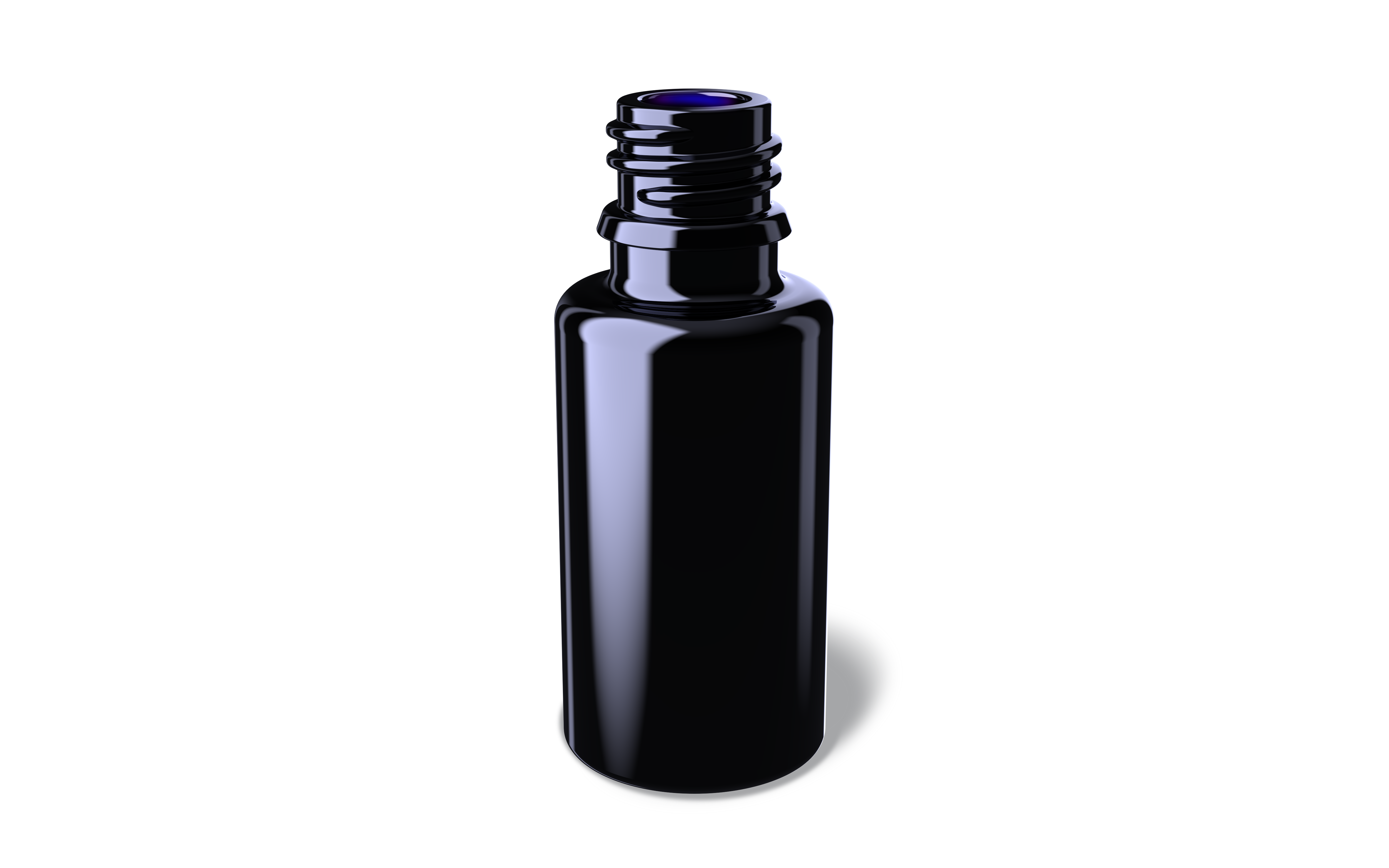
Most supplement brands do not lose weeks deciding between a violet glass jar and a clear child-resistant jar. They lose weeks on the details around it: which closure is specified for the neck, whether the brand mark is printed on the glass or applied as a label, how many units the first run has to be, and how much calendar the approval loop adds before production starts. Those are the questions answered here, using two verified Honor Packaging product families — the HDV3 round violet glass bottle and the H21 jar series — as working examples of how decoration, closures, MOQ and lead time fit together.
The short version: container model, closure, decoration method, order quantity and approval timing should be agreed in one document before the purchase order. On the verified Honor Packaging records used in this article, MOQ is 10,000 units, lead time is 30–45 days, monthly capacity is 100,000 units, and decoration options are listed per model rather than as a single catalogue-wide list.
The pre-production gap that delays supplement launches
A jar is one component. The saleable unit is container, closure, decoration and outer carton, and every one of those layers has to be confirmed twice: once by the brand as design intent, and once by the manufacturer as a producible specification. When those two confirmations live in different documents at different times, the gap between them shows up as rework.
The mismatches that recur most often in supplement jar sourcing look like this:
- A decoration method is requested for a model whose recorded surface treatments do not include it.
- A dropper or pump is specified without confirming that it belongs to that bottle series, while the jar series on the same order is supplied with child-resistant caps.
- A first order is planned below the 10,000-unit MOQ, or a multi-variant launch is planned without confirming how the quantity can be split.
- A launch date is set without allowing for sample approval ahead of a 30–45 day production window.
- Artwork is approved as a flat file but never proofed against the actual container surface.
None of these are manufacturing failures. They are specification failures — inexpensive to prevent at sample stage and expensive to correct after decoration has been applied.
What is shaping supplement jar orders in 2026
Grand View Research estimates the global supplements and nutrition packaging market at USD 31.3 billion in 2025. The same source records plastic at roughly 41.67% of the material segment share in 2025 — another way of saying that glass formats are chosen deliberately, for reasons such as light protection and reuse, rather than because they are the default material.
Two compliance signals are worth carrying into the decoration and closure conversation:
- EU food contact: Regulation (EU) 2024/3190 bans bisphenol A in food contact materials and applies to single-use items from 20 July 2026. For a jar-based pack, this is a closure, liner and coating question as much as a container question.
- US tamper-evidence: guidance summaries note that tamper-evident packaging is not generally mandated at federal level for dietary supplements in the same way as for many over-the-counter drugs. In practice, child-resistance and tamper-evidence are driven by market, channel and product-risk decisions rather than by a single federal rule.
Compliance framing here is a purchasing prompt, not legal advice. Confirm jurisdiction-specific requirements with your own regulatory review before the purchase order.
The practical consequence for buyers is that decoration, closure and compliance questions now arrive in the same conversation. A supplier who can answer all three in writing shortens the evaluation; one who answers only the jar prolongs it.
Five specifications to align before you place a purchase order
These five items are the ones that most often move between agreed verbally and missing from the PO.
1. Container model and capacity
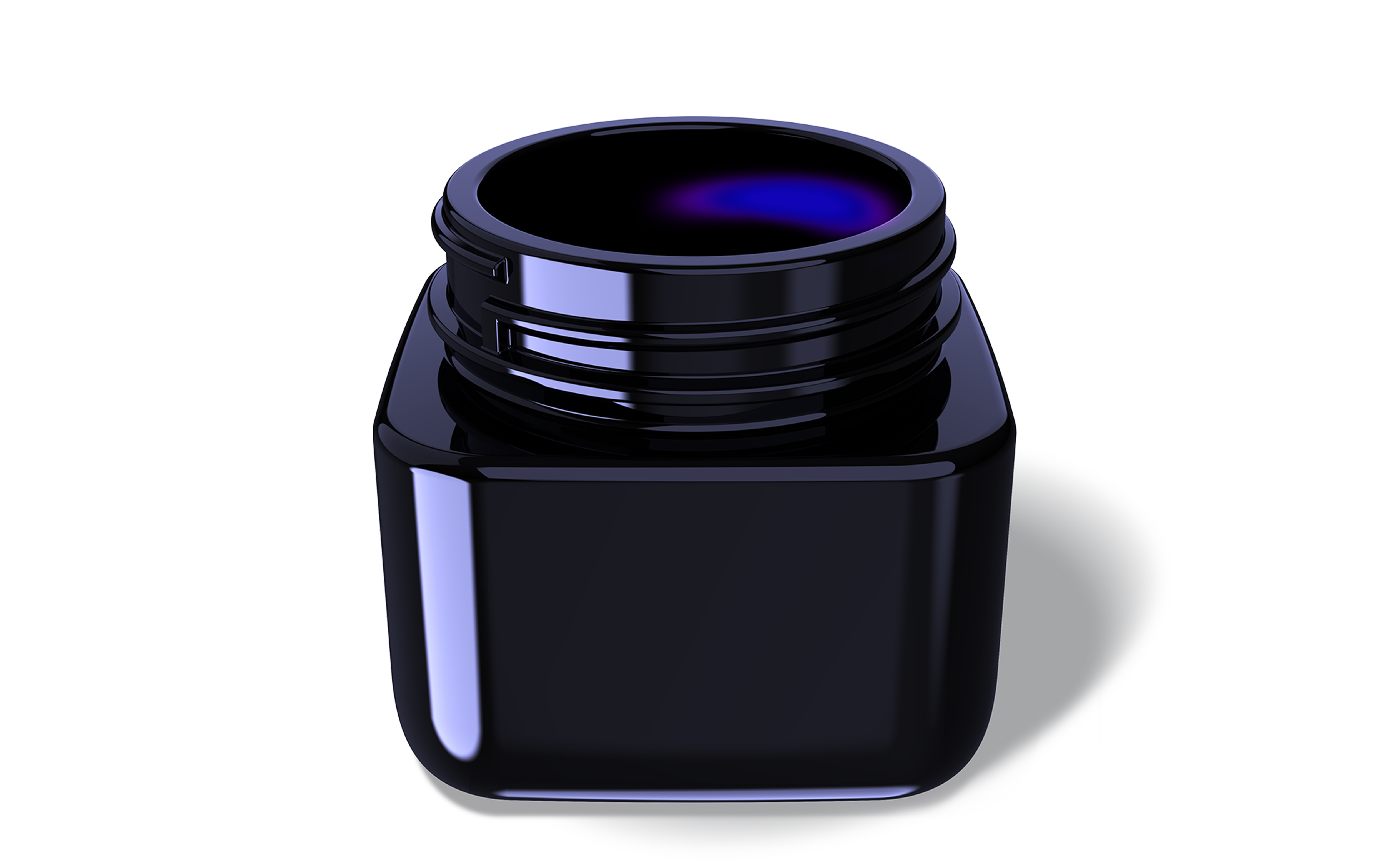
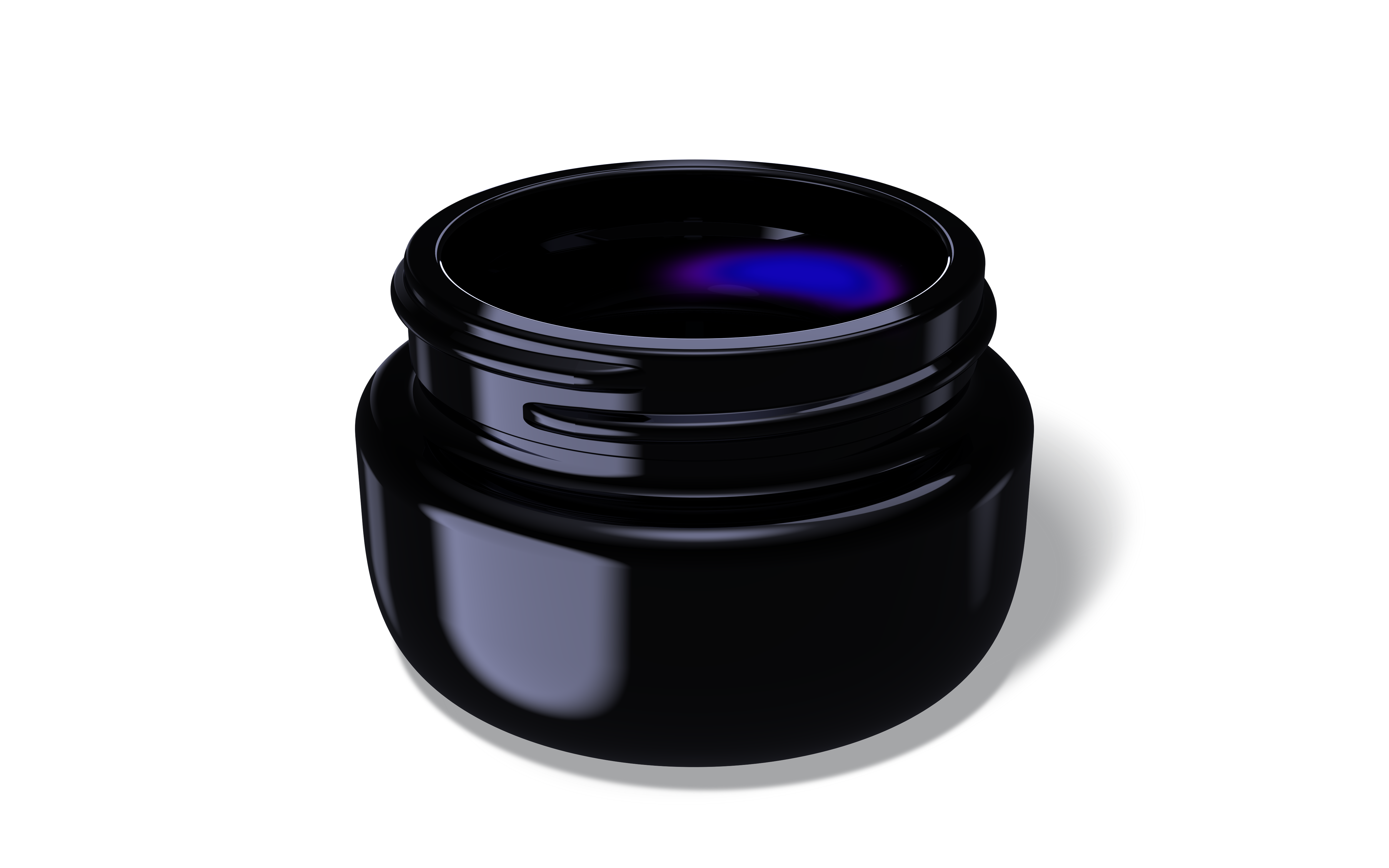
Capacity selects the model, and the model then decides which closures and decorations are available. HDV3 is a round violet glass bottle in 5, 10, 15, 20, 30, 50, 60 and 100 ml (item codes HDV3005M to HDV3100M), 54.5–125 mm in height and 22.5–120 g in weight. H21 square violet jars run 15 ml, 30 ml, 20 dr, 30 dr, 40 dr and 60 dr, at 24–115 mm tall and 75–280 g. H21 round violet jars run 30 ml, 2 oz, 20 dr, 30 dr, 40 dr, 60 dr and 6 oz, at 36.5–125 mm tall and 84–268 g. Square jars are 58 mm in diameter, round jars 60 mm, and both carry 0.38 mm glass thickness.
2. Closure interface
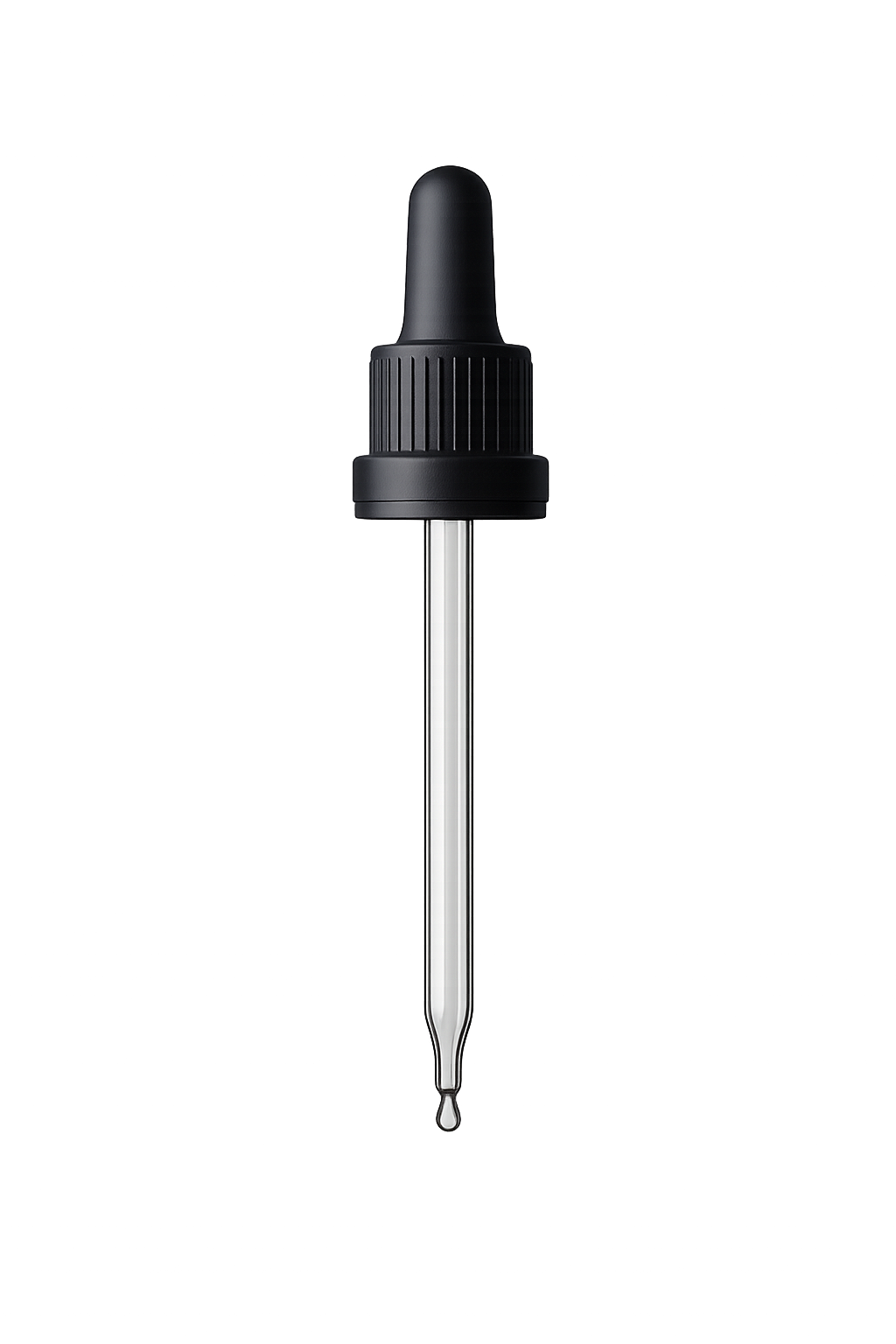
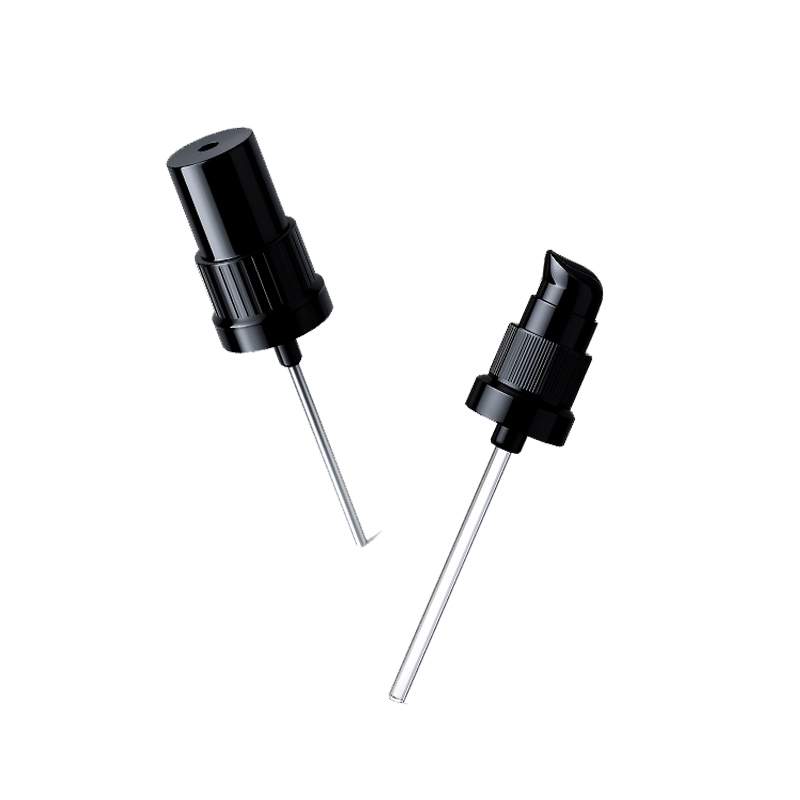
HDV3 is specified with a plastic cap, dropper, mist sprayer or lotion pump. H21 violet jars — square and round — are specified with child-resistant caps. The closure conversation is therefore already a model conversation: a dropper order and a child-resistant cap order do not point at the same container. A closure is not a cosmetic choice either; it changes fill method, dose, leak exposure and carton height, so it has to be validated with the container rather than alongside it.
3. Decoration method and artwork
Decoration options are recorded per model. H21 jars list sticker, silk-screen printing, hot stamping, heat transfer printing and frosted finish. HDV3 lists label, silk-screen printing and gold stamping. Honor Packaging's stated customization scope covers printing client artwork, developing a new design and applying a frosted finish. What to confirm in writing: the method, the position on the container, the colour reference, and whether the file you supply is the file the printer will use.
4. Order quantity against MOQ
MOQ is stated at 10,000 units, with monthly capacity of 100,000 units. The first order therefore has a floor, and the decoration plan has to fit inside it. How a 10,000-unit order can be split across capacities, colours or decoration variants depends on the specific combination — decorated glass is not interchangeable between models, so the split has to be confirmed for your SKU rather than inferred from a catalogue.
5. Approval and inspection
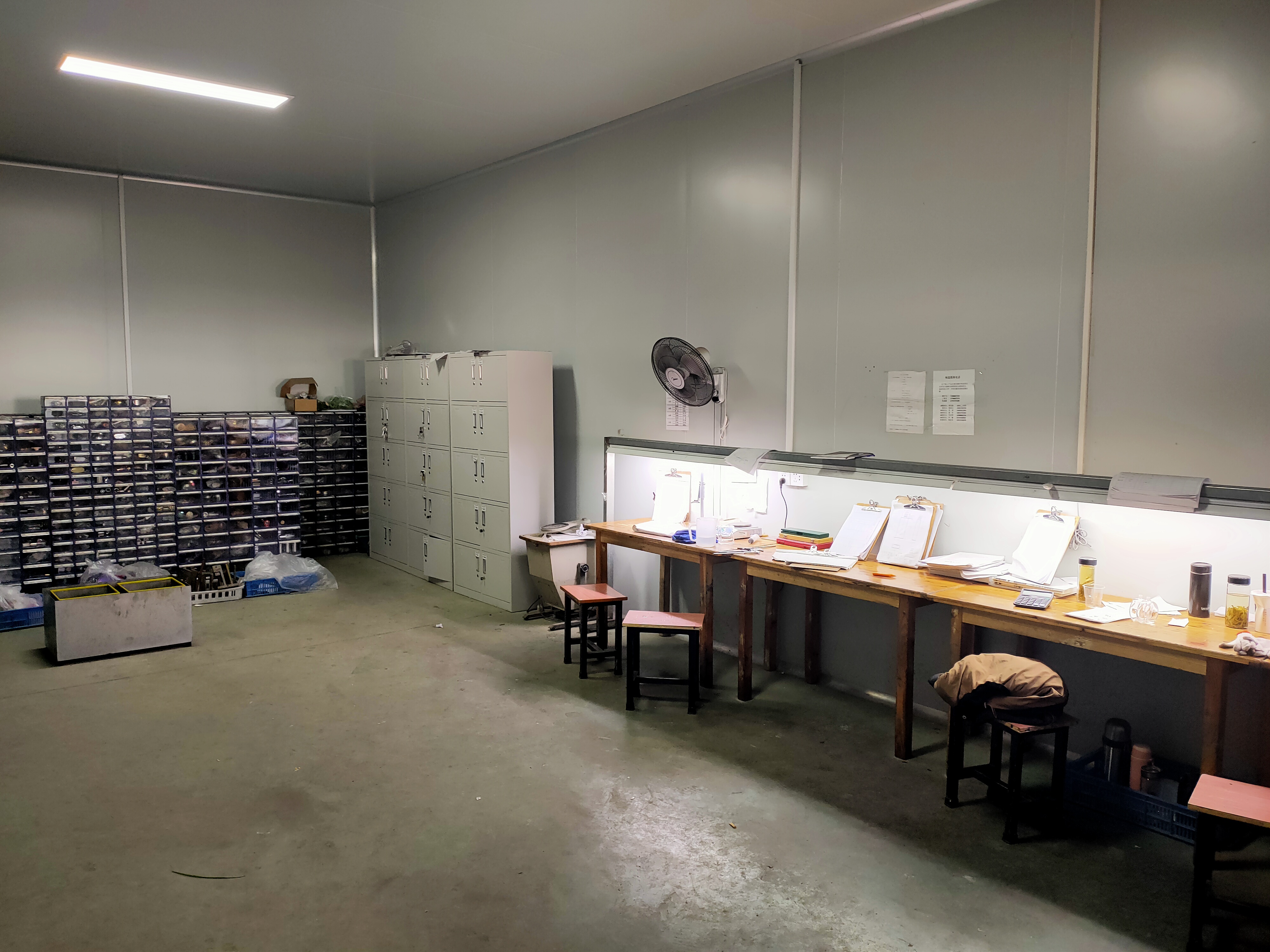
Before mass production, Honor Packaging's stated model is involvement in product structural development, tooling strategy definition, and manufacturing risk assessment and validation. During production it takes responsibility for process control and order fulfilment. Quality control is recorded as 100% pre-shipment testing with third-party inspection (SGS).
Decoration options on verified models — and what each one commits you to
Decoration is the part of a jar specification most likely to be copied from a previous project. The table below shows the treatments actually recorded for the HDV3 and H21 families, and what a buyer should confirm in each case.
| Decoration method | Recorded on | What the buyer should confirm before the PO |
|---|---|---|
| Sticker / label | H21 square and round violet jars; HDV3 (recorded as label) | Label size against the usable face of the container, placement height, and whether that area is kept clear of other decoration. |
| Silk-screen printing | H21 square and round violet jars; HDV3 | Colour count, print position, and artwork separations that match the printable area of the specific model. |
| Hot stamping | H21 square and round violet jars | Metallic colour reference and coverage area; confirm that the chosen model carries this treatment. |
| Gold stamping | HDV3 | Recorded under the HDV3 naming — do not assume the H21 treatment list applies to the bottle. |
| Heat transfer printing | H21 square and round violet jars | Whether the design is intended for heat transfer rather than silk-screen, because the two are separate recorded treatments. |
| Frosted finish | H21 square and round violet jars; also listed under Honor Packaging customization | Whether frosting is applied alone or combined with printing, and how the frosted area interacts with any label. |
The point of that table is not to rank methods. It is that decoration is model-specific. A finish recorded on the H21 square jar is not automatically recorded on the HDV3 bottle, and the HDV3 lists gold stamping and labelling where H21 lists hot stamping and heat transfer printing. Brands that want one master artwork across a jar and a bottle should confirm both surfaces before approving a single design.
Closures change the product, not just the opening
On the HDV3 bottle, the recorded closure options are a plastic cap, dropper, mist sprayer and lotion pump. That single line decides how the product is used: a dropper suits an oil, serum or essence; a mist sprayer suits a liquid applied over a wide area; a lotion pump suits a thicker formula. Each of those choices changes fill method and dose, and each one should be agreed with the decoration plan, because the visible surface above and below the closure differs by application.
On the jar side, the H21 square and round violet jars are supplied with child-resistant caps, and the H19 concentrate jars (5 ml and 9 ml, 250 pcs per carton, 27–38 g) also carry child-resistant caps. A separate H19 vacuum click jar covers 5 ml vacuum formats in a square glass body.
From design freeze to shipment: a six-step sequence
- Freeze the container model and item code. Confirm the code, not only the capacity — H21-0004V and H21-0012V are both violet glass jars but not the same jar.
- Fix the closure. Plastic cap, dropper, mist sprayer or lotion pump on HDV3; child-resistant cap on H21 and on H19 concentrate jars. Confirm the closure against the fill, not against the render.
- Lock decoration and artwork. Choose the method from the treatments recorded for that specific model, then supply production-ready artwork with colour reference and placement.
- Approve the pre-production sample. Structural development, tooling strategy and manufacturing risk assessment happen at this stage; approve on the sample, not on the screen.
- Place the PO at or above MOQ. 10,000 units minimum, planned against a 30–45 day lead time and a monthly capacity of 100,000 units.
- Inspect and ship. 100% pre-shipment testing plus third-party SGS inspection, then outbound logistics from Ningbo, which sits close to both the Ningbo and Shanghai seaports. If output does not meet specification, the recorded after-sales position is to accept a reissue.
Use cases where alignment made the difference
A German branding business running pharmaceutical packaging
A branding business in Germany has ordered 10,000 units for a pharmaceutical packaging application and has been sourcing for three years. The reported result is that the products stayed fresh, with reusable, UV-protective packaging as the highlighted features. The order size sits exactly at the 10,000-unit MOQ, which is the practical starting point for a repeat programme: validate at the floor, then reorder on proven output instead of over-committing on the first run.
Canadian supplement and concentrate packaging
Child-resistant design combined with UV-protective violet glass is recorded as a common requirement in Canada. That combination points at H21 violet jars with child-resistant caps for larger fills, and at H19 concentrate jars — 5 ml and 9 ml, child-resistant cap, 250 pcs per carton — for small concentrate formats. The alignment question here is not whether child-resistance is wanted; it is which capacity and which decoration carry it across the range.
Cosmetic crossover: oils, serums and mists
HDV3 also sits in the cosmetic and personal care space: a round violet glass bottle from 5 to 100 ml with a dropper, mist sprayer or lotion pump. For brands selling the same formula as a serum, a mist and a lotion, the constraint is rarely the bottle — it is agreeing on decoration that reads consistently across three different closure types without re-specifying each SKU from scratch.
Model comparison: HDV3 versus H21 square versus H21 round
The three families below share violet glass but differ in profile, capacity and closure, which is why they are specified separately rather than swapped by capacity alone.
| Attribute | HDV3 round violet glass bottle | H21 square violet jars | H21 round violet jars |
|---|---|---|---|
| Capacity range | 5 / 10 / 15 / 20 / 30 / 50 / 60 / 100 ml | 15 ml, 30 ml; 20 / 30 / 40 / 60 dr | 30 ml, 2 oz; 20 / 30 / 40 / 60 dr; 6 oz |
| Item codes | HDV3005M – HDV3100M | H21-0003V – H21-0008V | H21-0012V – H21-0018V |
| Diameter | Not recorded in the published specification | 58 mm | 60 mm |
| Height | 54.5 – 125 mm | 24 – 115 mm | 36.5 – 125 mm |
| Weight | 22.5 – 120 g | 75 – 280 g | 84 – 268 g |
| Glass thickness | Not recorded in the published specification | 0.38 mm | 0.38 mm |
| Closure | Plastic cap, dropper, mist sprayer, lotion pump | Child-resistant cap | Child-resistant cap |
| Recorded surface treatments | Label, silk-screen printing, gold stamping | Sticker, silk-screen printing, hot stamping, heat transfer printing, frosted finish | Sticker, silk-screen printing, hot stamping, heat transfer printing, frosted finish |
| Typical fit | Oils, serums and liquid formats where a dropper or pump is the applicator | Compact fills where a square profile and a child-resistant cap are wanted | Larger fills where a round profile and a child-resistant cap are wanted |
Frequently asked questions
Do supplement jars need child-resistant closures and UV-blocking glass?
Not as a blanket rule. In the United States, guidance summaries note that tamper-evident packaging is not generally mandated at federal level for dietary supplements in the same way as for many over-the-counter drugs, so child-resistance and tamper-evidence are usually specified through market, channel or product-risk requirements rather than one federal rule. Where child-resistance is specified, H21 violet jars and H19 concentrate jars are supplied with child-resistant caps. On the UV side, the recorded application requirement in Canada pairs child-resistant design with UV black glass protection. For EU-bound products, Regulation (EU) 2024/3190 bans bisphenol A in food contact materials for single-use items from 20 July 2026, which is a closure and coating question as much as a jar question. Confirm the final requirement for your market before the PO.
Can decoration be customised on HDV3 and H21, and is it the same list for both?
Decoration is available on both families, but the recorded lists differ. H21 jars list sticker, silk-screen printing, hot stamping, heat transfer printing and frosted finish. HDV3 lists label, silk-screen printing and gold stamping. Honor Packaging's customization scope covers printing client artwork, developing a new design and applying a frosted finish. For multi-SKU brands the practical rule is to confirm the treatment per model before approving one master artwork, because a treatment recorded on the jar is not automatically recorded on the bottle.
What is the MOQ, and how does it interact with the first production run?
MOQ is 10,000 units and monthly capacity is 100,000 units, so the first order is a floor rather than a ceiling. The quantity question is really a decoration question: how many models, colours and finishes those 10,000 units have to cover. Confirm the split for your exact combination before the PO instead of assuming a catalogue-wide rule. Lead time, stated at 30–45 days, runs after sample approval rather than in parallel with it.
How should a brand validate a jar before committing to 10,000 units?
Use the pre-production stage for what it is designed for: structural development, tooling strategy definition, and manufacturing risk assessment and validation. In practice that means approving a physical sample that carries the actual decoration method and the actual closure, then checking capacity fill, closure fit and label or print placement. Because quality control is recorded as 100% pre-shipment testing with third-party SGS inspection, sample approval is also the moment to agree what the inspection will check.
What lead time should be planned, and what happens if the shipment fails inspection?
Plan 30–45 days for production, scheduled after sample approval, then add freight from Ningbo, which sits close to the Ningbo and Shanghai seaports. If output does not meet the agreed specification, the recorded after-sales position is to accept a reissue. The most useful next step is to run the sequence once against a real specification: send the container model, closure, decoration method and target quantity, and request a sample and quotation against those four inputs.
What partnering for scale actually requires
Scale rarely fails at the glass. It fails at the handover between design and production, and almost always on one of five items: model, closure, decoration, quantity and timing. Honor Packaging (NINGBO HONOR PACKAGING CO.,LTD) was founded in 2015, employs 310 people including a 15-person R&D team, and records an annual output of 1,000,000 units with 100% of output exported and main markets in the EU and the USA — which is why the pre-production questions in this article are answered on specification records rather than on general claims.
- Container model and item code confirmed, not only the capacity.
- Closure chosen from the list recorded for that model.
- Decoration method selected from the treatments recorded for that model.
- Artwork production-ready, with colour reference and placement agreed.
- Order quantity at or above the 10,000-unit MOQ.
- Sample approved before the 30–45 day production window starts.
- Inspection criteria agreed: 100% pre-shipment test plus third-party SGS.
Next step: send your container model, closure, decoration method and target quantity to Honor Packaging and request a sample and quotation against those four inputs.
Email: info@honorpkg.com · Tel: +86-574-88004632 / +86-15968944995 · WhatsApp: +86 15968944995 · Web: www.honorcrpkg.com
Download the product catalogue: Honor Packaging brochure (PDF)
Have Questions or Need More Details?
Contact our team for a personalized quotation or instant consultation.
Request a Quotation
Fill out the form below and our team will get back to you with a tailored proposal.
WhatsApp Direct Chat
Prefer to chat in real-time? Message us on WhatsApp for instant assistance & quick answers.
- Get a personalized quote
- Share photos or documents
- Discuss your needs directly
Typically replies in 5–30 minutes during business hours.