
Protective Packaging Partnership FAQ: Purchase Terms, Acceptance Criteria and After-Sales Cover
Long-term protective packaging supply rarely fails on the first purchase order. It fails on the fifth — when a replacement batch arrives with a different wall thickness, a child-resistant closure that seats differently, or a defect nobody agreed how to remedy. The practical answer is to treat a supplier relationship as three written instruments: purchasing terms, acceptance criteria and after-sales remedies, attached to every repeat order.
This FAQ set answers the questions buyers raise most often when moving from a trial order to a multi-year programme. The product and certification references come from specifications published by Honor Packaging (Ningbo Honor Packaging Co., Ltd.), a Ningbo, China–based manufacturer of child-resistant packaging, violet glass packaging and vacuum packaging, founded in 2015.

H21-0016V round violet glass jar, 130 ml, 0.38 mm glass thickness — one of the models whose dimensions and weight band should be written into an acceptance document.
Why repeat orders drift: four gaps buyers leave open
A stable supply relationship depends less on supplier goodwill than on how precisely the buyer defines what “same as last time” means. In protective packaging, four gaps account for most disputes between order two and order ten.
- Commercial terms agreed verbally. Minimum order quantity, production lead time and available monthly capacity are frequently discussed in an email thread and never restated in the purchase agreement, so every reorder is quoted against whatever capacity exists that month.
- Acceptance criteria expressed as a photograph. A photo cannot define a 0.38 mm glass wall, a 60 mm diameter, or how a child-resistant cap should engage. Without a measurable criterion there is no objective basis for accepting or rejecting a lot.
- After-sales remedy left implicit. “We will look after it” is a sentiment, not a remedy. A buyer needs to know the claim window, the evidence required and whether the outcome is reissue, credit or replacement.
- Compliance evidence detached from the order. Certificates held in a folder do not protect a shipment. The certificate that matters is the one referenced on the purchase order for the specific model and market.
Industry background: compliance has moved into the commercial clause
Protective packaging is a large and regulation-driven category. Grand View Research valued the global protective packaging market at USD 41.5 billion in 2026, while Global Market Insights projected the child-resistant packaging segment at USD 31.07 billion in the same year. Growth of that scale is shaped less by consumer preference than by mandatory safety rules — and mandatory rules are what convert a packaging specification into a contractual obligation.
In the United States, 16 CFR 1700.20 sets the familiar performance benchmark: at least 85% of children under five must fail to open the package within five minutes, while at least 90% of adults must still be able to open and resecure it. ISO 8317:2015 specifies performance requirements and test methods for reclosable child-resistant packages, ISO 14375:2018 covers non-reclosable packages, and ASTM D3475 classifies special packaging by closure type and opening action. Under PPPA and FIFRA, the requirement applies to the primary or immediate packaging — the jar itself, not the shipper carton.
For EU-bound product, food-contact compliance under EC No 1935/2004 sits alongside those requirements. The commercial consequence is simple: an acceptance criterion that references neither a standard nor a certificate number is not a criterion. It is an assumption that will be tested at customs or at the customer’s goods-in inspection.
The three pillars of a repeatable protective packaging agreement
1. Purchasing terms to fix before the second order
Honor Packaging publishes the commercial parameters a long-term agreement should mirror: a minimum order quantity of 10,000 units, a production lead time of 30–45 days, and a monthly capacity of 100,000 units. The company operates a 45,000 m² facility in Ningbo with 310 staff and a 15-engineer R&D team, exports 100% of its output, and serves mainly the EU and US markets. OEM and ODM work is supported, including printing customer artwork, developing a new design, and frosted finishing.
Each figure becomes a clause with a purpose. The 10,000-unit MOQ defines the reorder trigger and therefore the inventory buffer a buyer must hold. The 30–45 day lead time defines how much safety stock is needed to cover a peak season. The 100,000-unit monthly capacity defines what happens when a promotion doubles demand: whether the buyer has a claim on capacity or joins a queue. Written down, these are planning inputs; left verbal, they are surprises.
2. Acceptance criteria for glass jars and bottles
Acceptance criteria should be built from the product record, not from a sample kept in a drawer. For the H21 violet glass jars, that record specifies a glass thickness of 0.38 mm, a 60 mm diameter on round jars and 58 mm on square jars, heights of 36.5–125 mm on round and 24–115 mm on square formats, weights of 84–268 g and 75–280 g respectively, capacities from 15 ml to 200 ml, and a child-resistant cap. The H21 clear round series follows the same 60 mm diameter and 0.38 mm wall with capacities from 30 ml to 6 oz. The H19 child-resistant concentrate jars cover 5 ml and 9 ml in square, round, triangle and hexagon shapes with a child-resistant cap, net weights of 27–38 g, and 250 pieces per carton.
Decoration belongs in the criterion as well. Sticker, silk-screen printing, hot stamping, heat transfer printing and frosted finish are all listed surface treatments, and a reorder that silently changes decoration method is a defect waiting to be argued about.
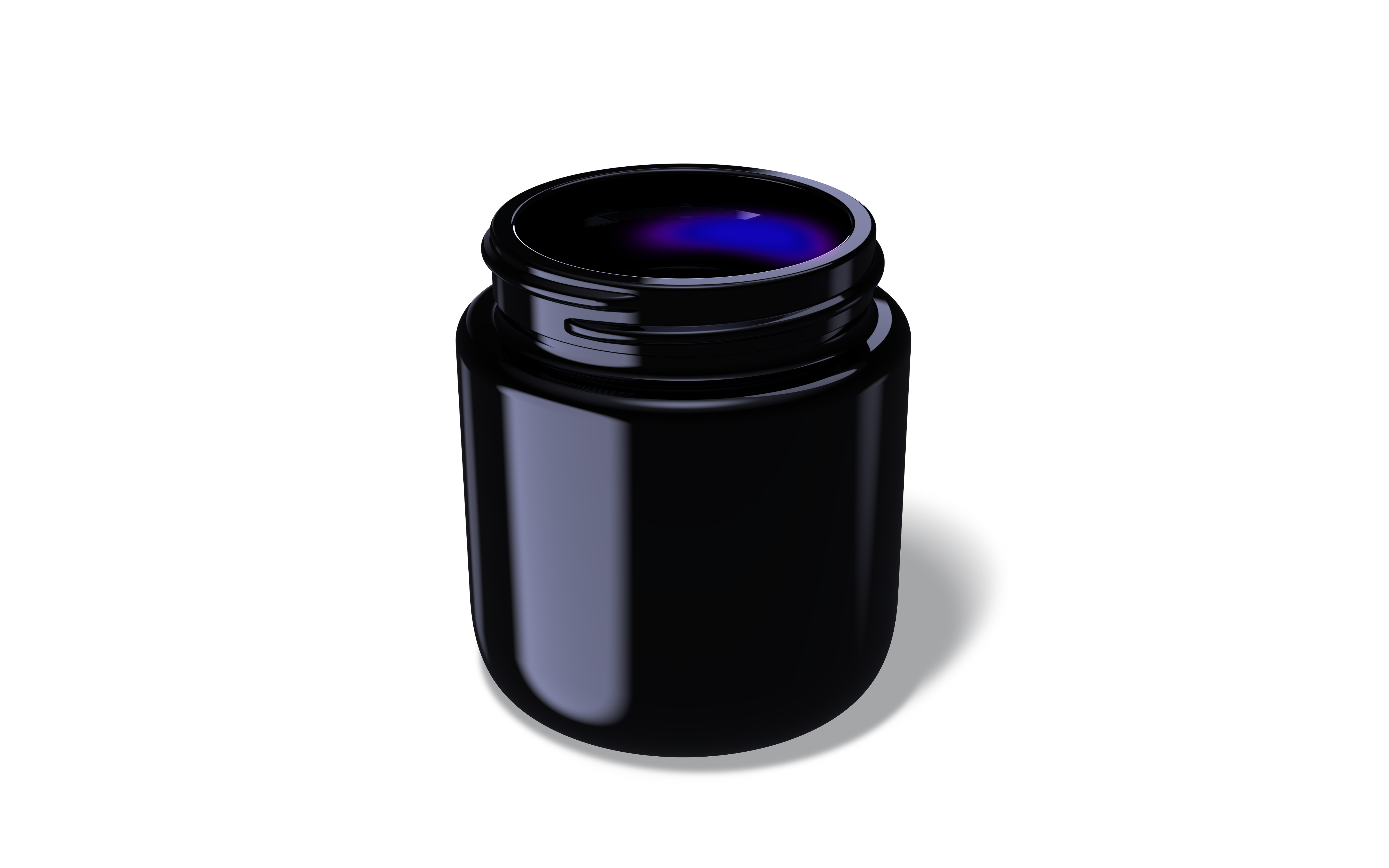
H21-0015V violet glass jar, 100 ml: capacity, diameter, height and weight band are the measures that most often drift between production lots.
Inspection has to be defined with the same precision as the product. Honor Packaging states its quality control as 100% pre-shipment testing plus third-party inspection by SGS. The agreement should state how those results are documented, who receives them, and what happens to a lot that fails — because a test whose consequence is undefined changes nothing.
3. After-sales protection: turning a promise into a remedy
The company’s stated after-sales position is acceptance to reissue, meaning replacement where a problem is confirmed. That is a usable starting point, but it becomes protection only when four elements are written down: the claim window, the evidence required, the person who decides, and the remedy type — reissue, credit, or priority replacement in the next production run.
Compliance documentation belongs in the same clause. The violet glass packaging range holds EU certification to EC No 1935/2004 under SGS certificate NGBHL24007770101, issued 27 December 2025, and FDA certification under the FDA CPG standard under SGS certificate NGBHL23005693401, issued 30 November 2023. Agreeing that each shipment carries the current certificate reference — and that the buyer is notified if either is reissued — prevents a compliance gap from surfacing at the border rather than at the buyer’s desk.
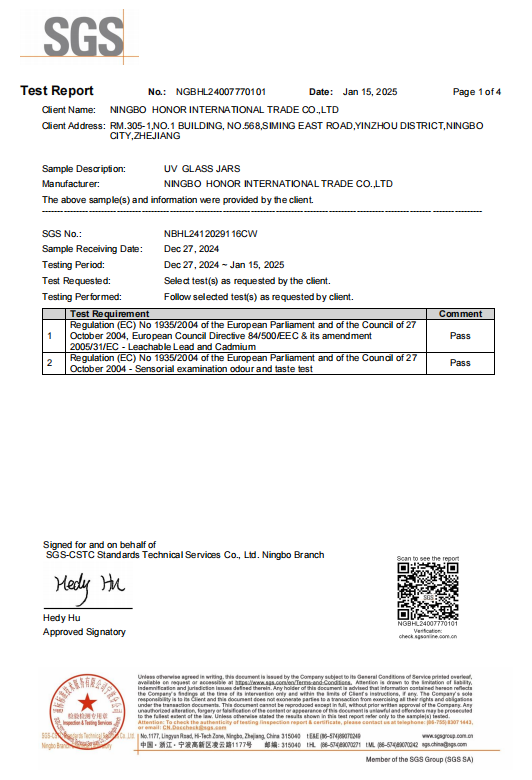
EU compliance evidence: EC No 1935/2004, SGS certificate NGBHL24007770101, issued 27 December 2025.
Step-by-step: building the acceptance and after-sales framework
- Write a controlled specification. Anchor it to a model code and the physical record — for example H21-0004V, a 30 ml square violet glass jar with a 0.38 mm wall and a child-resistant cap. Avoid descriptors such as “small jar”, which cannot be measured.
- Convert the specification into acceptance tests. Capacity, diameter, height, weight band, glass thickness, closure engagement, decoration type and carton count — each with a stated inspection method.
- Fix the commercial envelope. 10,000-unit MOQ, 30–45 day lead time, 100,000-unit monthly capacity, and a written rule for how these are reviewed if volumes change.
- Attach compliance evidence to the order. Reference the SGS certificate numbers for EU EC No 1935/2004 and FDA CPG, and align any child-resistant claim with ISO 8317:2015 or 16 CFR 1700.20 test evidence.
- Define the defect claim procedure. Window, photo and batch evidence, response time and remedy type. This is where the supplier’s reissue commitment becomes operative.
- Seal a reference sample. Measure it, label it with the model code and lot, and retain it on both sides. A sealed sample supports the written specification; it does not replace it.
- Review at every reorder. Compare each incoming lot against the sealed sample and the specification, and record drift before it becomes a claim.
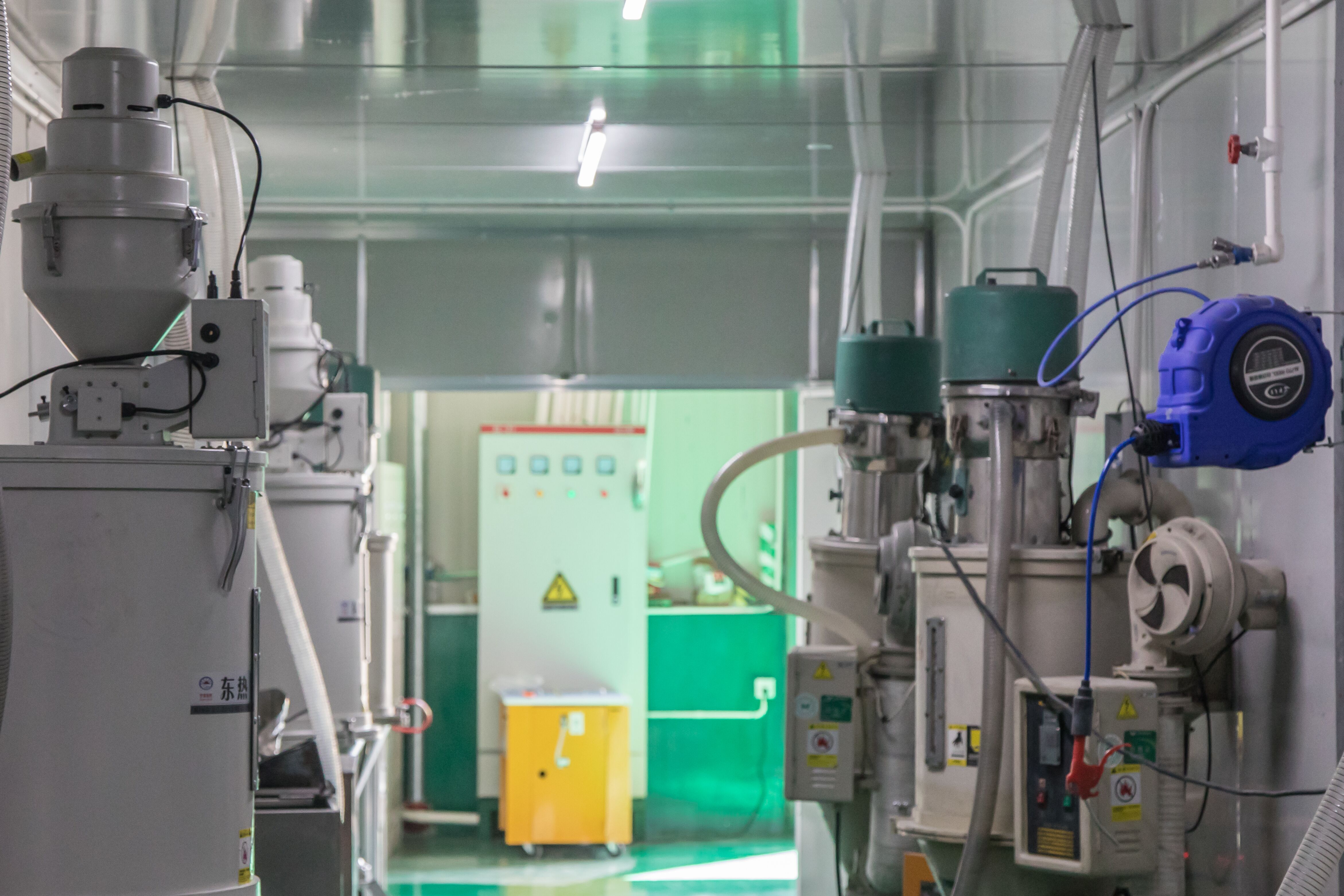
Pre-shipment testing happens in the production environment, but the result only has contractual weight when the acceptance criterion is written down.
Where these terms matter most: four practical scenarios
Child-resistant concentrates and pharmaceutical jars (5 ml and 9 ml)
The H19 series runs from 5 ml to 9 ml in square, round, triangle and hexagon shapes, with weights of 27–38 g and 250 pieces per carton. On repeat orders, closure function is the criterion most easily lost: the cap may still be child-resistant in principle while the opening action changes. Buyers should tie acceptance to test evidence against 16 CFR 1700.20 or ISO 8317:2015 and re-verify engagement at each lot, not only at the first approval.
Violet glass for light-sensitive formulations
H21 round and square violet jars span 15 ml to 200 ml at 0.38 mm glass thickness. Violet glass is used for light-sensitive contents because it filters most of the visible spectrum while transmitting UV-A and infrared light, which is the basis of its UV protection role. In practice, the two measures that drift first between batches are wall thickness and weight band, and both are already published, which makes them easy to write into an acceptance schedule.
Vacuum and airtight sealing
The H19 vacuum click jar is a 5 ml square glass jar, packed 250 pieces per carton, described by the company as delivering leak-free and airtight sealing for food, cosmetic and medical applications. Airtightness is a performance claim, and buyers should attach it to an agreed test rather than to a product description — a claim that cannot be checked at goods-in is a claim that cannot be enforced.
Cosmetic and essential-oil formats
The HDV3 violet glass bottles cover 5–100 ml with a plastic cap, dropper, mist sprayer or lotion pump, while the HDV2 violet jars run 3–200 ml with 32/400 to 89/400 threads and a 0.38 mm thickness. Multi-component formats live or die on closure compatibility, so the specification should name the exact closure, not the bottle alone.
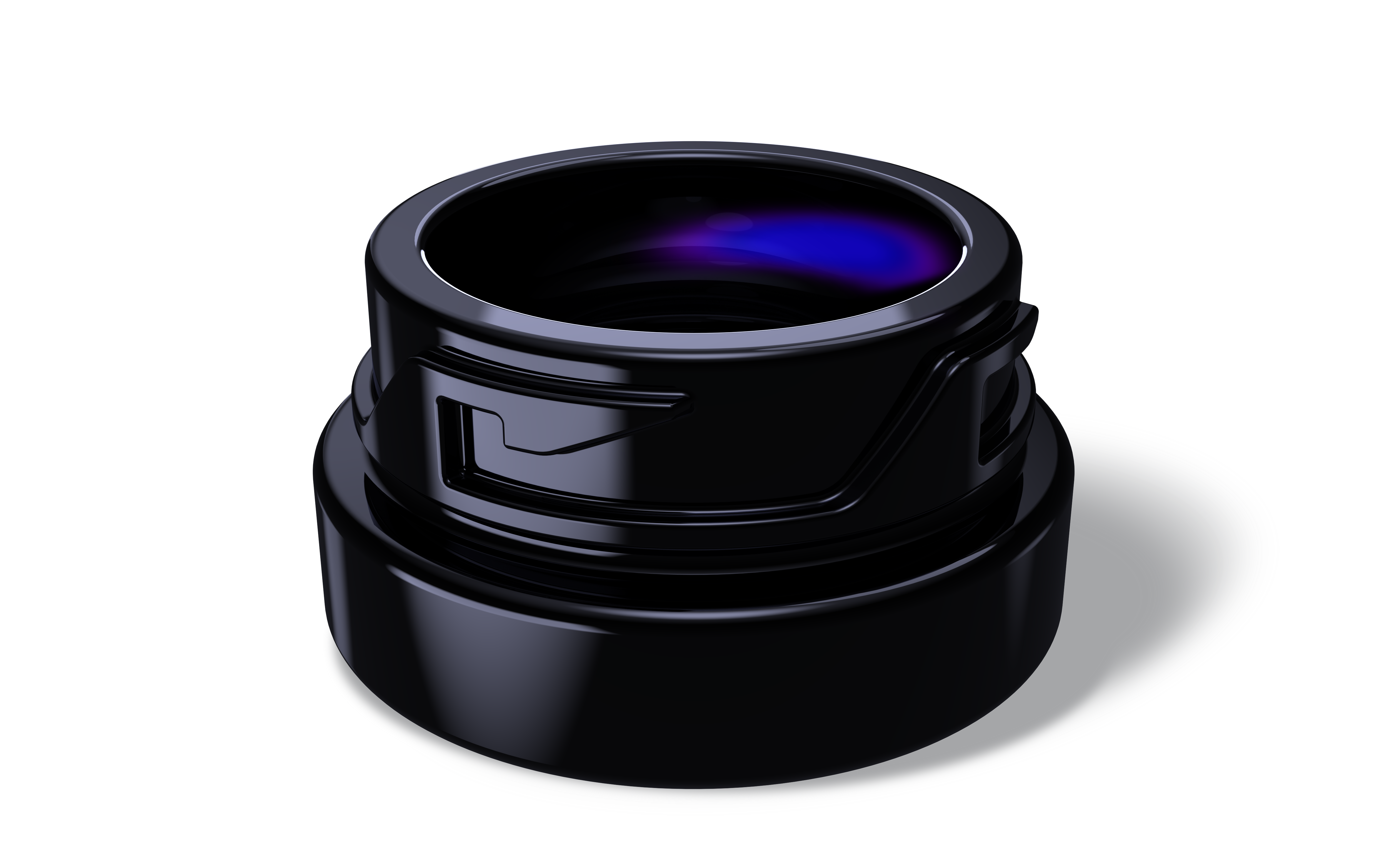
H19-0004B round child-resistant jar: closure engagement and weight band are the two criteria most worth re-checking on every reorder.
Evidence from a three-year repeat customer
A German branding business has purchased 10,000 units of violet glass packaging for pharmaceutical packaging for three years. The reported result is that the contents remain fresh, with reusability and UV protection cited as highlights. For a prospective buyer, the useful signal is not the volume but the duration: a specification that survived three years of repeat production is a specification that was written down somewhere.
Comparison: formats, specifications and partnership terms at a glance
The first table consolidates the published product record so a buyer can write model codes directly into an acceptance document. Where a value is not part of the published record, it is marked as such rather than estimated.
| Format | Models | Capacity | Glass thickness | Closure | Pack |
|---|---|---|---|---|---|
| Vacuum jar | H19 Vacuum Click Jar | 5 ml | Not stated in record | Vacuum click closure | 250 pcs/ctn |
| Child-resistant concentrate jar | H19-0001B to H19-0011B (black); W and C series equivalent | 5 ml / 9 ml | Not stated in record | Child-resistant cap | 250 pcs/ctn |
| Violet glass square jar | H21-0003V to H21-0008V | 15 ml – 200 ml | 0.38 mm | Child-resistant cap | Not stated in record |
| Violet glass round jar | H21-0012V to H21-0018V | 30 ml – 6 oz | 0.38 mm | Child-resistant cap | Not stated in record |
| Clear round jar | H21-0012C to H21-0018C | 30 ml – 6 oz | 0.38 mm | Child-resistant cap | Not stated in record |
| Cosmetic violet jar | HDV2 series | 3 ml – 200 ml | 0.38 mm | 32/400 – 89/400 thread | Not stated in record |
| Violet glass bottle | HDV3 series | 5 ml – 100 ml | Not stated in record | Plastic cap, dropper, mist sprayer or lotion pump | Not stated in record |
The second table converts the commercial and compliance record into the clauses a buyer would actually write.
| Parameter | Published value (Honor Packaging) | What to write into the agreement |
|---|---|---|
| Minimum order quantity | 10,000 units | Reorder trigger and the inventory buffer it implies |
| Production lead time | 30–45 days | Nominal and maximum lead time, plus the notification rule if it is exceeded |
| Monthly capacity | 100,000 units | Capacity commitment during peak season and how it is reviewed |
| Quality control | 100% pre-shipment test; third-party inspection (SGS) | Reporting format, retention period and consequence of a failed lot |
| After-sales | Reissue accepted | Claim window, required evidence, decision-maker, remedy type |
| EU compliance | EC No 1935/2004; SGS NGBHL24007770101; issued 27 December 2025 | Certificate reference on each PO; notification duty if reissued |
| US compliance | FDA CPG; SGS NGBHL23005693401; issued 30 November 2023 | Certificate reference on each PO; scope limited to listed models |
| Export profile | 100% export; EU, US, Middle East, Southeast Asia | Destination-specific labelling and documentation responsibilities |
Frequently asked questions
Which certificates should a buyer verify before committing to a long-term protective packaging supplier?
Verify the certificate that matches the destination market and the specific model. For the EU, violet glass packaging is certified to EC No 1935/2004 under SGS certificate NGBHL24007770101, issued 27 December 2025. For the US, it is certified under the FDA CPG standard under SGS certificate NGBHL23005693401, issued 30 November 2023. Separately, any child-resistant claim should be supported by test evidence against ISO 8317:2015 or 16 CFR 1700.20, because a food-contact certificate does not by itself prove closure performance.
What acceptance criteria should be written into every repeat order for glass jars and bottles?
Build the criteria from the product record: capacity, 0.38 mm glass thickness on the H21 and HDV2 series, 60 mm diameter on round and 58 mm on square H21 jars, the published height and weight bands, closure engagement, decoration method, and carton count of 250 pieces for H19 jars. Add the inspection method: 100% pre-shipment testing plus third-party inspection by SGS. A criterion without a stated test is only a description.
What MOQ and commercial terms should a buyer expect on a long-term order?
The published terms are a 10,000-unit minimum order quantity, a 30–45 day production lead time and a monthly capacity of 100,000 units. OEM and ODM services cover printing customer artwork, developing a new design and frosted finishing. Because output is 100% export-oriented, with the EU and US as the main markets, buyers should also confirm which destination-specific documentation is issued with each shipment.
How should a pre-production sample be used to protect a repeat order?
Use the sample as a sealed reference, not as the specification. Measure it against the written criteria — capacity, thickness, diameter, weight and closure action — label it with the model code and lot, and retain a counterpart on both sides. Every later lot is then compared against both the document and the sealed sample. Buyers who want to start that process can request a sample and specification sheet through info@honorpkg.com before placing a first production order.
What lead time and after-sales terms should be fixed in the contract?
Fix the 30–45 day production lead time with a notification rule if it slips, then define the after-sales clause in full: claim window, photographic and batch evidence, response time, and remedy. Honor Packaging’s stated position is acceptance to reissue where a problem is confirmed, which becomes enforceable once those four elements are written. The natural next step is to request the catalogue and a quotation against your own model list.
Next step: quote, sample or catalogue
Honor Packaging supplies child-resistant packaging, violet glass packaging and vacuum packaging to buyers in the EU, US, Middle East and Southeast Asia, with a 10,000-unit MOQ and a 30–45 day lead time.
Download the product catalogue: Honor Packaging brochure (PDF)
Email: info@honorpkg.com | Tel: +86-574-88004632 | WhatsApp: +86 15968944995
Website: www.honorcrpkg.com
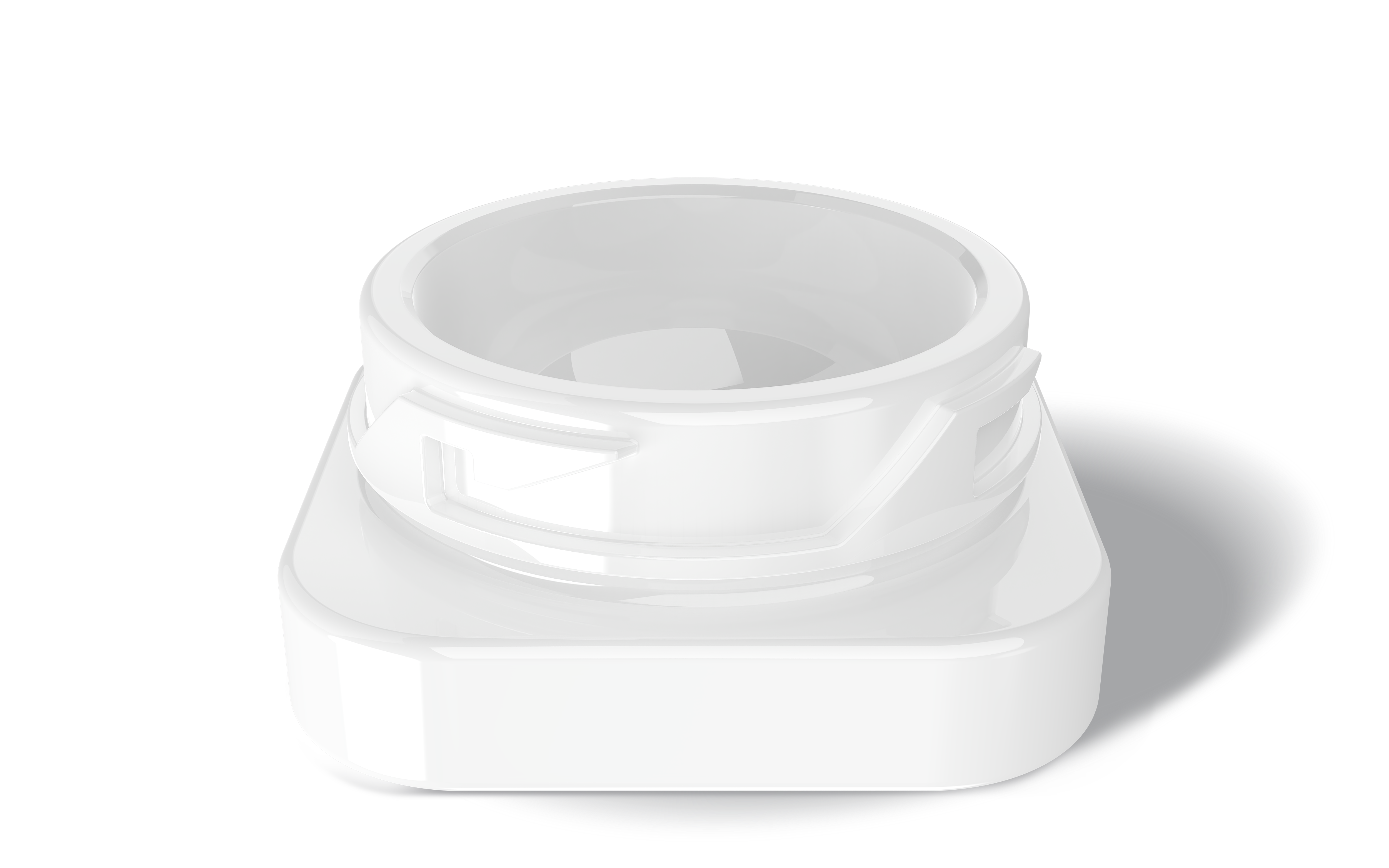
H19-0002W white square child-resistant jar, 5 ml / 9 ml — a typical starting point for a sample-led acceptance process.
Conclusion
A long-term protective packaging relationship is not secured by a good first shipment; it is secured by a document that makes the fifth shipment comparable to the first. Three instruments do most of that work: purchasing terms that fix MOQ, lead time and capacity in writing; acceptance criteria built from published specifications such as 0.38 mm glass thickness, 58 mm and 60 mm diameters, and defined weight bands; and an after-sales clause that converts reissue acceptance into a process with a window, evidence and a decision-maker.
Compliance should travel with those instruments rather than sit beside them. Referencing EC No 1935/2004 under certificate NGBHL24007770101 and FDA CPG under certificate NGBHL23005693401 on each purchase order takes a few lines and removes an entire category of risk. Everything else — the closure check, the sealed sample, the weight band verification — follows from the same discipline: measure against a written standard, and review at every reorder.
Have Questions or Need More Details?
Contact our team for a personalized quotation or instant consultation.
Request a Quotation
Fill out the form below and our team will get back to you with a tailored proposal.
WhatsApp Direct Chat
Prefer to chat in real-time? Message us on WhatsApp for instant assistance & quick answers.
- Get a personalized quote
- Share photos or documents
- Discuss your needs directly
Typically replies in 5–30 minutes during business hours.