
Protective Packaging Technical Guide: Specifying H19 & H21 Child-Resistant Violet Glass Jars
Protective Packaging Technical Guide: Specifying H19 & H21 Child-Resistant Violet Glass Jars
Short answer: a child-resistant violet glass jar is specified through six measurable fields — series and item code, capacity, shape and glass format, closure and opening action, surface treatment, and commercial terms. Anything that cannot be measured on a specification sheet is a preference, not a specification, and unmeasured preferences are what cause re-tooling, rejected shipments and delayed launches.
This guide converts protection requirements into those six fields. It uses the documented Honor Packaging H21 violet glass jar series as the worked example and applies the same method across the wider child-resistant jar range, including the H19 series. Where a value is item-code specific rather than series-wide, the guide says so instead of filling the gap with an assumption.
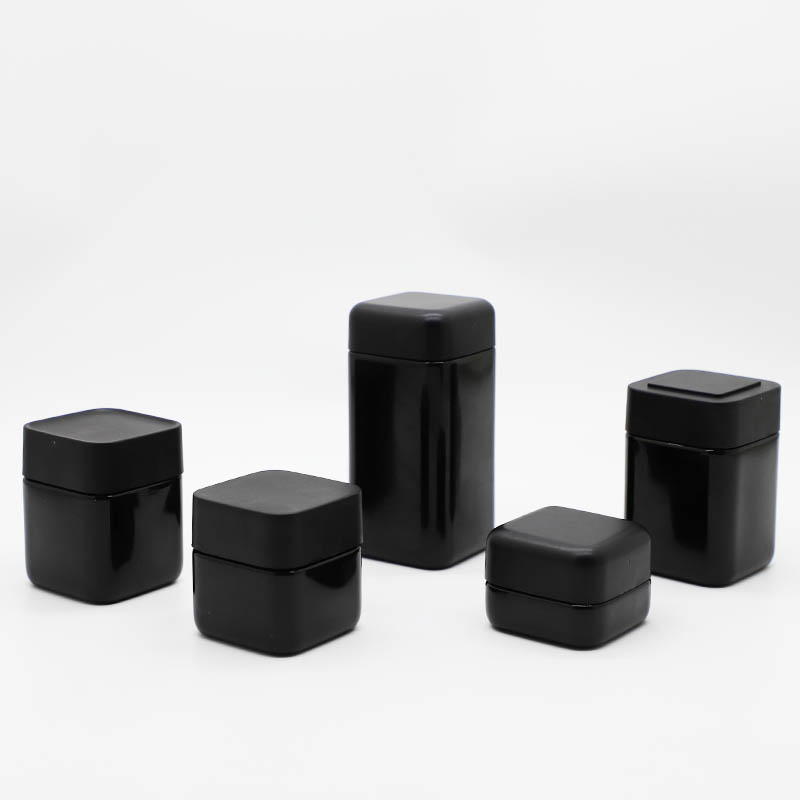
Problem Definition: Why Protective Packaging Specifications Break Down
The most expensive protective packaging errors are rarely caused by a bad jar. They are caused by a requirement written as an outcome and then quoted as if it were a product. Three failure patterns repeat in child-resistant and violet glass projects.
- Outcome-only requirements. “Protect the formula from light”, “must be child-resistant” and “must not leak” cannot be quoted, sampled or inspected. Each has to be translated into a field with a unit: a glass format, a capacity, a closure type, an acceptance test.
- The closure treated as an accessory. The closure is the part that determines whether a package is child-resistant. ASTM D3475 classifies special packaging by the type of closure and the action needed to open it, which makes the opening mechanism a specification variable rather than a finishing detail.
- Compliance treated as a design claim. Child resistance is a tested performance attribute. ISO 8317:2015 specifies the performance requirements and test methods for reclosable child-resistant packages. ISO 14375:2018 specifies the equivalent requirements and testing methods for non-reclosable child-resistant packages and adds that the package must be appropriate for the contents, provide mechanical protection and function properly for the life of the content and packaging. In the United States, 16 CFR 1700.20 requires child-resistant packaging to prevent 85% of children under five years old from opening it within five minutes, while remaining accessible to 90% of adults.
Scope matters here too. Under the U.S. Poison Prevention Packaging Act and FIFRA, the special packaging requirement applies to the primary or immediate packaging — the jar itself, not the shipper or the display carton. A project can therefore be fully compliant at the carton level and still non-compliant at the jar level.
The practical consequence: a specification sheet that says “child resistant” gives a buyer nothing to inspect. A sheet that says “reclosable child-resistant cap, closure type and opening action defined per ASTM D3475, test evidence requested against ISO 8317:2015” gives a buyer something that can be accepted or rejected.
Industry Background: What Is Driving Specification Discipline in 2026
Category scale. The global protective packaging market was valued at USD 41.5 billion in 2026 (Grand View Research). Child-resistant packaging, a sub-segment largely driven by regulatory pressure, is projected to reach USD 31.07 billion in 2026 (Global Market Insights). Odour-control packaging sits at a much smaller scale: the U.S. smell proof bag market is estimated at USD 133.7 million in 2026, with a projected CAGR of 7.9% through 2033 (Grand View Research).
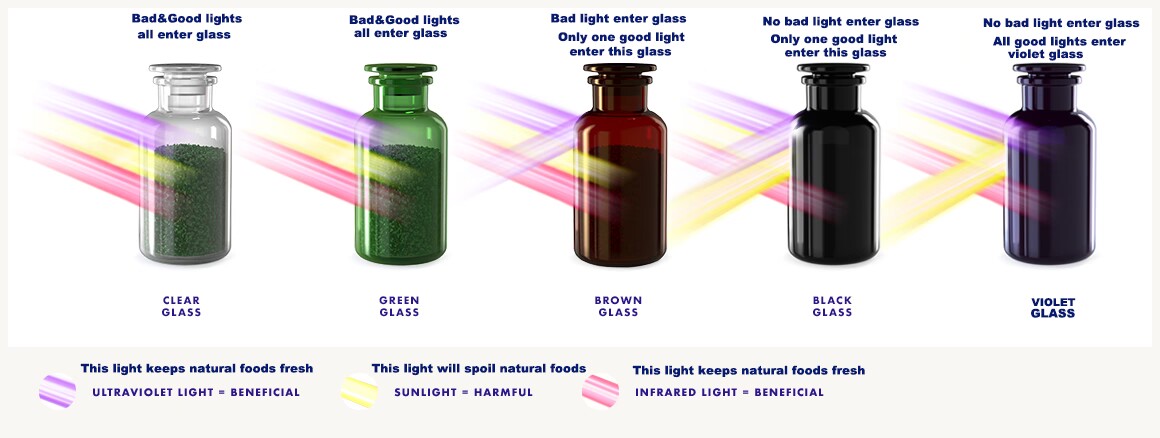
Light management has moved from colour to function. Violet glass is not simply a darker bottle. It blocks the visible light spectrum except for UV-A and infrared, which is why buyers who once selected a dark glass bottle as a general light-limiting option now treat glass format as a functional specification field rather than an aesthetic one.
One open gap is worth stating plainly: there is no widely published, verifiable transmission standard specific to violet glass or UV-blocking jars. UV performance should therefore be written into the specification as a declared property of the supplied glass, supported by the supplier’s own test data, instead of being inferred from the colour of the bottle.
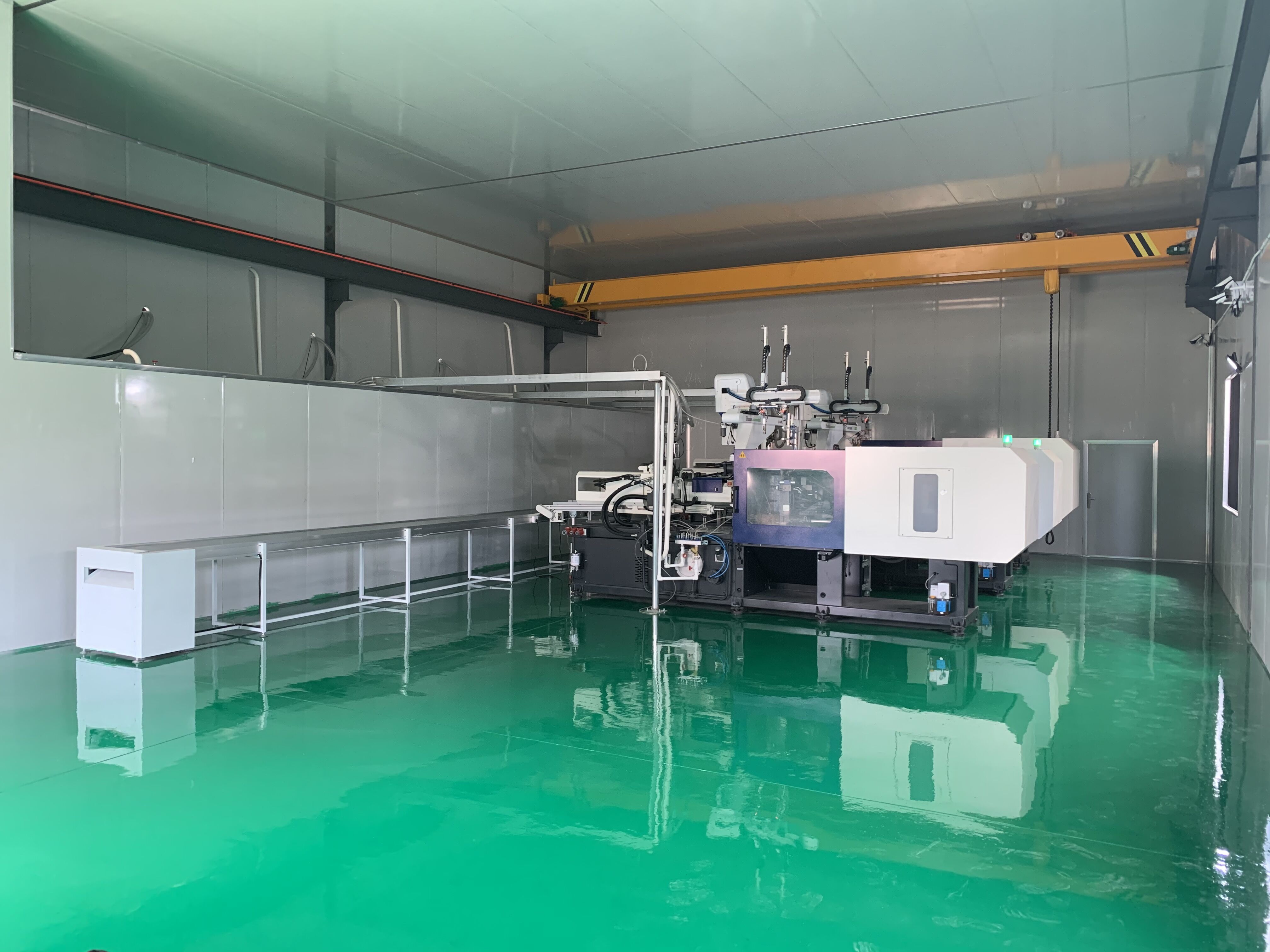
Supplier structure. Honor Packaging (Ningbo Honor Packaging Co., Ltd) is a Ningbo, China–based packaging manufacturer founded in 2015, operating through long-term joint-venture production bases for glass and plastic packaging. Its stated product focus covers child-resistant packaging, violet glass packaging and vacuum packaging. The company reports a 100% export ratio with main markets in the EU and the USA, a 15-person R&D team, a monthly production capacity of 100,000 units, a typical production lead time of 30–45 days and a minimum order quantity of 10,000 units.
For buyers, that combination — a defined MOQ, a defined lead time and a defined monthly capacity — is what makes long-term specification discipline possible: the same item code can be reordered without reopening the design file.
Detailed Solution: The Six-Field Specification Stack
A protective packaging specification only works if every field can be measured, quoted, sampled and inspected. Six fields do that for child-resistant violet glass jars.
- Series and item code — for example the H21 round series, the H21 square series, or the H19 child-resistant jar series. The item code is the only field that guarantees a reorder matches the approved sample.
- Capacity in millilitres — documented H21 square capacities are 15 ml, 30 ml, 70 ml, 100 ml, 130 ml and 200 ml.
- Shape and glass format — round or square, in violet glass.
- Closure and opening action — a child-resistant cap, defined by closure type and by the action required to open it.
- Surface treatment — sticker, silk-screen printing, hot stamping, heat transfer printing or frosted finish.
- Commercial terms — MOQ, delivery term, payment terms, acceptance criteria and lead time.
| Specification field | H21 round violet glass jar | H21 square violet glass jar |
|---|---|---|
| Glass format | Violet glass | Violet glass |
| Closure | Child-resistant cap | Child-resistant cap |
| Documented capacities | Confirm per item code | 15 ml, 30 ml, 70 ml, 100 ml, 130 ml, 200 ml |
| Series item codes | H21 series item-code range: H21-0003V to H21-0008V | |
| Surface treatments | Sticker, silk-screen printing, hot stamping, heat transfer printing, frosted finish | |
| Documented applications | Food, cosmetic, medical | Food, cosmetic, medical; the H21 series item codes also list cannabis, supplements and packaging wholesale |
| Production terms | MOQ 10,000 units; typical lead time 30–45 days; monthly capacity 100,000 units | |
These values are item-code specific, not interchangeable across the series. Confirm the exact code before tooling, artwork approval or purchase order. The same six-field method applies to the H19 child-resistant jar series; because capacity and finish values are item-code specific, confirm the H19 values against the current specification sheet at the quotation stage.
Step-by-Step Breakdown: From Requirement to Purchase Order
Step 1 — Write the protection envelope before looking at jars
Six questions define the envelope: how much light reaches the product, how much oxygen and moisture exchange is tolerable, whether odour must be contained, whether leakage is a risk, who can open the package, and what impact the shipment will take. Each answer maps to a specification field — light and odour map to glass format and closure seating, child access maps to closure type, and impact maps to transit packaging.
Step 2 — Fix capacity from fill volume, not from habit
Choose the smallest documented capacity step that holds the fill volume plus the headspace your filling line requires. The documented H21 square steps — 15 ml, 30 ml, 70 ml, 100 ml, 130 ml and 200 ml — cover most small-format cosmetic, food and medical fills. A requirement outside the documented steps is a development question, not a catalogue order: structural development, tooling strategy and manufacturing risk assessment are handled before mass production, which is where a non-standard format has to be evaluated.
Step 3 — Choose round or square against your line, not against a photograph
Square formats generally offer more usable flat surface for decoration and pack more efficiently into a shipping carton. Round formats present continuous curvature, which is often the default for liquids and semi-solids. Decide the shape against the filling line, the label artwork and the shelf presentation you already use.
Step 4 — Fix the glass format as a performance decision
Violet glass blocks the visible light spectrum except for UV-A and infrared. Where the formulation is light-sensitive, the glass format should be recorded on the specification sheet together with the declared UV performance the supplier is expected to meet, because no published transmission standard specific to violet glass exists to fall back on.
Step 5 — Specify the closure by type and opening action, never by adjective
Record three things: the closure type as classified by ASTM D3475, the action required to open it, and the standard the package will be evaluated against — ISO 8317:2015 for reclosable child-resistant packages, or ISO 14375:2018 where the package is non-reclosable. Then request test evidence rather than a declaration. For U.S.-bound products, remember that PPPA and FIFRA requirements apply to the primary or immediate packaging, so the jar and cap — not the outer carton — must carry the performance.
Step 6 — Lock the surface treatment per item code
Documented finish options are sticker, silk-screen printing, hot stamping, heat transfer printing and frosted finish. Finish is an item-code attribute, so it has to be confirmed against the selected code and approved at sample stage. Changing a finish after artwork approval is a new specification, not a revision.
Step 7 — Convert the specification into commercial terms
Documented purchasing terms for this range: MOQ 10,000 units, delivery term FOB, production arranged on receipt of a 30% down payment with the remaining 70% payable before shipment, and acceptance criteria defined as a pre-shipment test. Typical production lead time is 30–45 days against a monthly capacity of 100,000 units. Two practical readings follow. First, the MOQ is a purchasing constraint rather than a production constraint, since a minimum order represents a small fraction of monthly output. Second, and more important, the binding planning variable is the 30–45 day lead time — reorders should be triggered against lead time rather than against remaining stock.
Step 8 — Specify transit protection for fragile glass
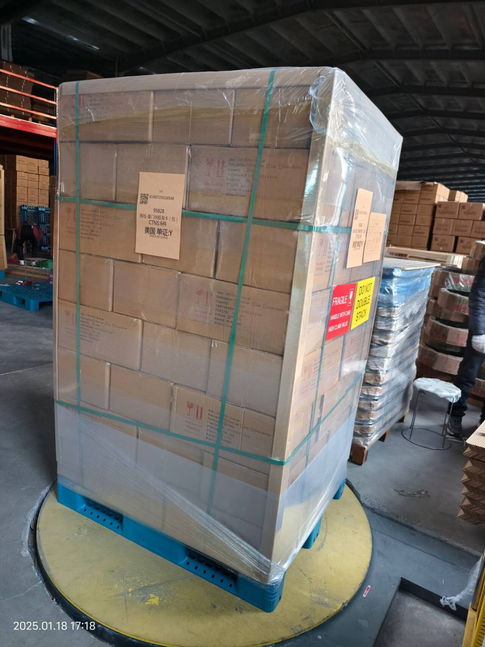
Glass is fragile by definition, so the specification should not stop at the jar. The documented control method is shockproof packing: fragile products are wrapped with protective foam and loaded onto pallets carefully before shipment.
Use Cases: How the Six Fields Apply in Practice
Supplement and nutraceutical brands exporting into the EU and USA. The primary requirement is usually light protection plus child resistance. A violet glass jar with a child-resistant cap in a mid-range capacity, decorated by silk-screen printing for dosage information, keeps the protection fields and the labelling field on one item code. The documented 10,000-unit MOQ supports a first production run while the 30–45 day lead time supports quarterly planning.
Cosmetic and skincare brands. Appearance and tactile finish carry as much weight as protection. Frosted finish and hot stamping allow a brand to keep one jar format across a range while differentiating SKUs by decoration. Smaller documented capacities suit trial sizes and travel formats.
Medical and cannabis-adjacent products. Here the compliance field dominates: closure type, opening action and test evidence define the package. Odour containment and light blocking are specified alongside child resistance, and larger capacities suit bulk or multi-dose formats.
Wholesalers and packaging distributors. The value of the six-field method is repeatability. When the item code, capacity, closure and finish are fixed on a specification sheet, a reorder becomes an administrative action instead of a new sampling cycle — which is what makes long-term supply terms meaningful rather than nominal.
Comparison Tables
Two comparison sets matter when a specification is being written: the glass format comparison and the compliance reference comparison. Both are reproduced below using documented values only.
Violet glass compared with amber glass
| Comparison basis | Violet glass packaging | Amber glass packaging |
|---|---|---|
| Light transmittance | Blocks the visible light spectrum except for UV-A and infrared | Light transmittance is the primary comparison variable against violet glass |
| Protection outcome | Better protection against ultraviolet rays and supports maintaining product freshness | Lower relative UV protection in this comparison |
| Relative cost | Approximately 15% higher | Reference point |
| Documented best fit | Food packaging, cosmetic packaging, pharmaceutical packaging | Not specified in this comparison |
The cost difference is a documented comparative figure rather than a price quotation, and it should be weighed against the protection requirement of the specific formulation rather than applied as a general rule.
Compliance references for child-resistant jars
| Reference | Scope | What it means for a specification |
|---|---|---|
| ISO 8317:2015 | Reclosable child-resistant packages | Performance requirements and test methods to request as evidence |
| ISO 14375:2018 | Non-reclosable child-resistant packages | Performance requirements and testing methods; the package must suit the contents, provide mechanical protection and function properly for the life of content and packaging |
| ASTM D3475 | Special packaging classification | Classifies packaging by closure type and the action needed to open |
| 16 CFR 1700.20 | U.S. child-resistant requirement | Prevent 85% of children under five from opening within five minutes; remain accessible to 90% of adults |
| PPPA / FIFRA | U.S. special packaging scope | The requirement applies to the primary or immediate packaging |

Buyer Checklist: Matching Purchasing Terms to Measurable Jar Specs
Use this checklist as the specification sheet itself. Every line must be filled with a measurable value before a purchase order is issued; blank lines become disputes later.
| Field to record | Documented value where available |
|---|---|
| Series and item code | H21 series item-code range H21-0003V to H21-0008V; confirm exact code per project |
| Capacity (ml) | 15, 30, 70, 100, 130, 200 ml (H21 square); confirm per item code for other formats |
| Shape and glass format | Round or square, violet glass |
| Closure type and opening action | Child-resistant cap; closure type and action classified per ASTM D3475 |
| Compliance evidence requested | Test evidence against ISO 8317:2015 (reclosable) or ISO 14375:2018 (non-reclosable) |
| Surface treatment | Sticker, silk-screen printing, hot stamping, heat transfer printing, frosted finish |
| Application | Food, cosmetic, medical; cannabis, supplements, packaging wholesale for the H21 series |
| MOQ | 10,000 units |
| Delivery term | FOB |
| Payment terms | 30% down payment to arrange production; 70% payable before shipment |
| Acceptance criteria | Pre-shipment test — define what is tested and how it is recorded before the PO |
| Lead time | 30–45 days typical, against monthly capacity of 100,000 units |
| Transit protection | Protective foam wrapping and palletising for fragile products |
FAQ
1. Is a “child-resistant cap” on its own enough to make a jar compliant?
No. Child resistance is a tested performance attribute, not a description of a cap. ASTM D3475 classifies special packaging by closure type and the action needed to open it, ISO 8317:2015 defines performance requirements and test methods for reclosable child-resistant packages, and ISO 14375:2018 does the same for non-reclosable packages, adding that the package must suit the contents and function properly for the life of the content and packaging. In the United States, 16 CFR 1700.20 sets the benchmark of preventing 85% of children under five from opening the package within five minutes while remaining accessible to 90% of adults, and under PPPA and FIFRA the requirement applies to the primary or immediate packaging. A specification should therefore name the closure type, the opening action and the standard the package will be tested against.
2. What capacities, closures and finishes are documented for the H21 violet glass jar series?
The H21 square violet glass jar is documented in 15 ml, 30 ml, 70 ml, 100 ml, 130 ml and 200 ml capacities. The H21 round violet glass jar series is also documented with a child-resistant cap; capacities for the round format are item-code specific and should be confirmed per code. The H21 series item-code range is H21-0003V to H21-0008V. Documented surface treatments across the series are sticker, silk-screen printing, hot stamping, heat transfer printing and frosted finish. Documented applications are food, cosmetic and medical, with the H21 series item codes additionally listing cannabis, supplements and packaging wholesale.
3. What purchasing terms should be planned into the budget and the schedule?
The documented terms are a minimum order quantity of 10,000 units, delivery term FOB, and payment of a 30% down payment to arrange production with the remaining 70% payable before shipment. The acceptance criterion is a pre-shipment test. Because the acceptance test is defined up front, the budget discussion and the quality discussion should happen in the same round — an acceptance criterion agreed after production has started is not an acceptance criterion.
4. How should a specification be validated before mass production?
Validate on the item code, not on a sample photograph. Confirm the exact code, fill in the specification checklist line by line, approve a physical sample that matches the selected surface treatment, and fix the pre-shipment test as the acceptance criterion before the purchase order is issued. Where child resistance is a requirement, the closure type and opening action should be recorded in ASTM D3475 terms and the applicable test standard named at this stage, because closure changes after sampling restart the validation cycle.
5. What production capacity and lead time should a long-term supply plan assume?
The documented monthly production capacity is 100,000 units and the typical production lead time is 30–45 days. For repeat business, plan reorders against the lead time rather than against remaining stock, and keep the approved item code on file so that each reorder is a repeat of a validated specification instead of a new sampling round. To confirm capacity against your own forecast, request a quotation and the current specification sheet with a sample for the item codes you intend to specify: email info@honorpkg.com or open a direct enquiry via WhatsApp.
Conclusion: The Specification Sheet Is the Product
Protective packaging is bought twice: once as a jar, and once as a specification. The jar determines whether the product survives the journey; the specification determines whether the second order looks like the first one. Six fields carry that responsibility — series and item code, capacity, shape and glass format, closure and opening action, surface treatment, and commercial terms.
For child-resistant violet glass jars, the documented position is clear. The H21 series is available in violet glass with a child-resistant cap, with square capacities of 15 ml, 30 ml, 70 ml, 100 ml, 130 ml and 200 ml, item-code range H21-0003V to H21-0008V, and finish options covering sticker, silk-screen printing, hot stamping, heat transfer printing and frosted finish. Purchasing terms are documented at a 10,000-unit MOQ, FOB delivery, 30% down payment with 70% before shipment, pre-shipment test as the acceptance criterion, and a 30–45 day lead time against 100,000 units of monthly capacity. The H19 and related child-resistant jar series follow the same six-field method, with values confirmed at item-code level.
What this guide deliberately does not do is claim certifications, glass thickness values, closure material grades or capacities that have not been documented. Those belong on the specification sheet only after the supplier has confirmed them for your item code — which is exactly the discipline that keeps a protective packaging programme stable over years rather than over one shipment.
Next Step: Turn Your Requirement Into a Specified Item Code
Send your fill volume, light-sensitivity requirement and child-resistance requirement, and Honor Packaging will map them to the relevant H21 or H19 item code with the matching capacity, closure and surface treatment.
Contact: Victor · info@honorpkg.com · Tel: +86-574-88004632 / +86-15968944995
WhatsApp: +86 15968944995
Website: www.honorcrpkg.com
Product brochure (download): Honor Packaging brochure — PDF
Address: Rm.305, No.1 Building, No.568 SiMing East Road, YinZhou District, Ningbo City, China.
Have Questions or Need More Details?
Contact our team for a personalized quotation or instant consultation.
Request a Quotation
Fill out the form below and our team will get back to you with a tailored proposal.
WhatsApp Direct Chat
Prefer to chat in real-time? Message us on WhatsApp for instant assistance & quick answers.
- Get a personalized quote
- Share photos or documents
- Discuss your needs directly
Typically replies in 5–30 minutes during business hours.