Selecting the Perfect Jar for Cannabis, Cosmetic, or Supplement Products: An Application Guide
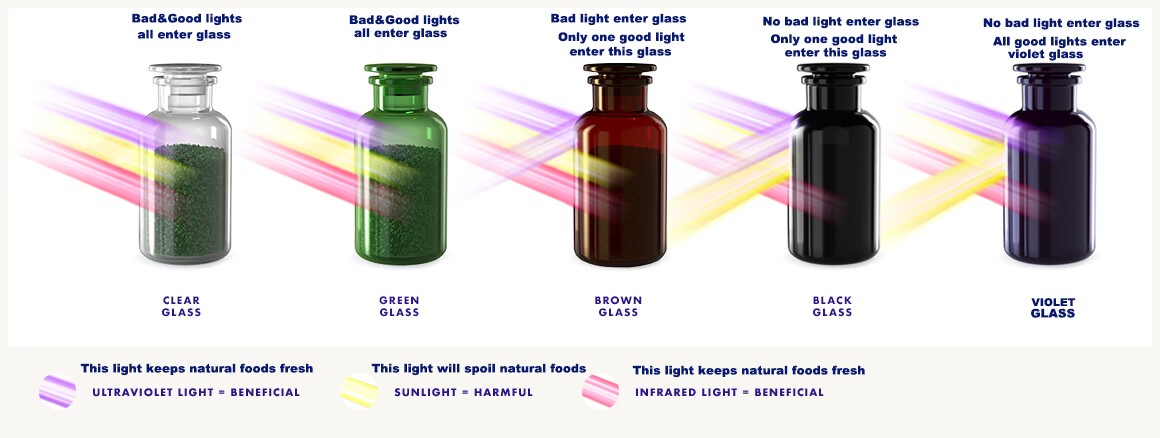
Cover: glass jar options compared across colour and UV protection — the starting point for application-based jar selection.
Selecting the Perfect Jar for Cannabis, Cosmetic, or Supplement Products: An Application Guide
A jar that protects a cannabis extract will not automatically protect a facial serum, and a jar that satisfies a US supplement buyer will not automatically satisfy an EU cosmetics buyer. Jar selection is an application decision: the regulatory class of the product, the behaviour of the contents (moisture, light, viscosity, odour), and the closure that keeps the pack compliant in the destination market decide the format before price or appearance enter the conversation.
This guide maps four jar systems from Honor Packaging — HDV1, positioned for cannabis and pharmaceutical applications; HDV2, positioned for cosmetics; the H21 series with child-resistant caps for medical and supplement segments; and the HDV3 series with flexible surface-treatment and closure options — against the products they actually fit. It then walks through the selection sequence, the commercial terms that apply at the execution stage, and the questions buyers ask most often before a first production order.
Problem Definition: Three Mismatches That Decide Whether a Jar Works
Most packaging catalogues answer a capacity question: how many millilitres fit inside the jar. That is a useful number and a poor starting point, because capacity does not describe what a product needs. Three mismatches account for most packaging rework, delayed launches, and rejected shipments.
- Regulatory mismatch. Supplement and medical products carry obligations that cosmetic jars do not. In the United States, tamper-evident packaging is mandatory for dietary supplements under the Poison Prevention Packaging Act (PPPA) for certain ingredients, including iron above 30 mg. A jar that is fully compliant for a facial serum can be unsuitable for a supplement SKU the moment the closure requirement changes.
- Functional mismatch. Contents behave differently inside the same format. Powders and herbs draw moisture, oils and extracts oxidise under light, and serums and creams interact with the delivery mechanism — a dropper, a lotion pump, or a mist sprayer. A jar chosen for shelf appearance alone can fail on barrier performance long before it fails aesthetically.
- Commercial mismatch. Material and tooling choices carry different cost and volume profiles. In Honor Packaging's material comparison, violet glass is priced about 15% higher than amber glass. On a minimum order of 10,000 units, that gap is a budgeting decision rather than a rounding error.
A mismatch found before tooling and artwork approval costs almost nothing to correct. The same mismatch found after the first production run costs tooling, artwork, and schedule. That is why an application guide — not a capacity chart — is the right starting document for a cannabis, cosmetic, or supplement jar programme.
Industry Background: Where Jar Demand Is Actually Coming From
The demand behind these selection decisions is large and still expanding. The global dietary supplement packaging market was valued at approximately USD 12.7 billion in 2024 and is expected to grow at a CAGR of 6.1% through 2034, according to Precedence Research. Material choice inside that market is concentrated: plastic held a 58.3% revenue share in 2024, a position attributed to its cost-effectiveness and barrier properties, according to Grand View Research. Regionally, North America accounted for 34.4% of global revenue in 2024, making it the largest single market, again per Grand View Research.
Flexible formats serve a different slice of the same demand rather than competing with jars. The Mylar bags market — frequently used for powder and herb supplement packaging — was valued at USD 2.4 billion in 2023 and is projected to reach USD 4.1 billion by 2030, according to Vantage Market Research. Rigid jars and flexible pouches are therefore selected by product form, not by preference.
On the supply side, the top tier of nutraceutical and dietary supplement packaging manufacturing is identified by Grand View Research as Amcor, Berry Global, and Gerresheimer. Below that tier sits a group of specialised manufacturing partners that brands approach for application-specific jar formats and customised programmes. Honor Packaging operates in this group. NINGBO HONOR PACKAGING CO.,LTD was founded in 2015 and is headquartered in Ningbo, China, close to both the Ningbo and Shanghai seaports. The company employs 310 people, including an R&D team of 15, works through long-term joint-venture production bases for plastic and glass packaging, reports monthly production capacity of 100,000 units, and exports 100% of its output, with main markets in the EU and the USA and shipments also reaching the Middle East and Southeast Asia.
That combination — glass and plastic capacity under one supply relationship, plus documented export experience in regulated markets — matters because the four jar systems discussed below do not all come from the same material family.
Detailed Solution: Matching Jar Series to Product Category
Cannabis and pharmaceutical applications: HDV1
HDV1 is the series Honor Packaging positions for cannabis and pharmaceutical applications. Two properties carry the most weight in this category. The first is light management. Honor Packaging compares violet glass against amber glass on the basis of light transmittance, and records violet glass as providing better protection against ultraviolet rays and better preservation of product freshness; the same comparison lists food packaging, cosmetic packaging, and pharmaceutical packaging as its best-fit applications. The second property is access control. Cannabis and pharmaceutical markets apply child-resistance and tamper-evidence rules that vary by jurisdiction, so the closure decision belongs in the same conversation as the jar decision — not in a later one.
Cosmetics and skincare: HDV2
HDV2 is positioned for cosmetics, where the delivery format often decides the closure rather than the jar body. A facial oil needs a dropper, a cream needs a lotion pump, a toner or mist needs a mist sprayer, and a solid or balm format can use a simple plastic cap. Honor Packaging documents exactly these closure options — plastic cap, dropper, mist sprayer, and lotion pump — in the HDV3 series, together with surface treatments that include label, silk-screen printing, and gold stamping. That decoration range matters in cosmetics because, once barrier and closure requirements are met, the buying decision shifts almost entirely to shelf presence.
Medical and supplement segments: H21 with child-resistant caps
The H21 series is the jar line Honor Packaging pairs with child-resistant caps for medical and supplement segments. The pairing addresses the two compliance-driven requirements of this category at once: a jar format suited to capsules, tablets, and powder fills, and a closure that reduces the risk of children opening the pack. The relevance is regulatory as much as commercial — under the PPPA, tamper-evident packaging is mandatory for dietary supplements containing certain ingredients such as iron above 30 mg in the US market. Honor Packaging's comparison of violet glass against amber glass also records less maintenance and reduced concern about children accidentally ingesting contents as properties associated with this configuration.
The material layer: violet glass, amber glass, or plastic
Material is decided after the application, not before it. Plastic remains the dominant material in nutraceutical packaging with a 58.3% revenue share in 2024, according to Grand View Research — a position driven by cost-effectiveness and barrier properties rather than by design fashion. Violet glass competes on a different axis: its documented advantage over amber glass is light transmittance and ultraviolet protection, at a cost about 15% higher than amber glass. The practical decision rule that follows is straightforward. Where unit economics dominate and light exposure is low, plastic is the reference material. Where light protection matters and the budget is moderate, amber glass applies. Where the product is genuinely light-sensitive and the brand can absorb the premium, violet glass earns its cost — and its best-fit applications, per Honor Packaging's own comparison, include food, cosmetic, and pharmaceutical packaging.
Step-by-Step Breakdown: From Application Mapping to Mass Production
The sequence below reflects how an application decision becomes a shipped order. Each step exists because skipping it forces a rework later in the chain.
Step 1 — Classify the product by regulation, not by category name. A capsule supplement sold in the United States sits under the Dietary Supplement Health and Education Act (DSHEA) of 1994 and FDA Current Good Manufacturing Practice 21 CFR Part 111. A supplement sold in the EU falls under Regulation (EU) No. 1169/2011, which governs the information and transparency required on food and supplement packaging. Cosmetic and cannabis products follow their own market-specific rules. Regulation defines the minimum closure and labelling requirements before anything else is discussed.
Step 2 — Define how the contents behave. List the properties that can damage the product: moisture uptake, light exposure, oxidation, odour migration, and viscosity. Powder and herb formats pull moisture; oils and extracts are light-sensitive; creams and gels interact with pumps and droppers. This list determines material and closure — not the other way round.
Step 3 — Select the jar series against the application. HDV1 for cannabis and pharmaceutical applications, HDV2 for cosmetics, the H21 series for medical and supplement segments. If a programme spans more than one category, treat each SKU separately rather than averaging the requirement.
Step 4 — Lock the closure with the jar, not after it. Child-resistant caps for medical and supplement segments; dropper, lotion pump, mist sprayer, or plastic cap for cosmetic formats. Closure compatibility is a structural question, and a change here resets the jar decision.
Step 5 — Choose the surface treatment and decoration. Documented options include labels, silk-screen printing, and gold stamping. Decoration comes last because it depends on material, jar shape, and closure — and because it is the cheapest element to change before tooling and the most expensive to change after.
Step 6 — Validate structure, tooling, and manufacturing risk before mass production. Honor Packaging's process is built around this step: before mass production, the company works on product structural development, tooling strategy definition, and critical manufacturing risk assessment and validation. Doing this early is what turns a decorative concept into something that can be produced consistently at volume.
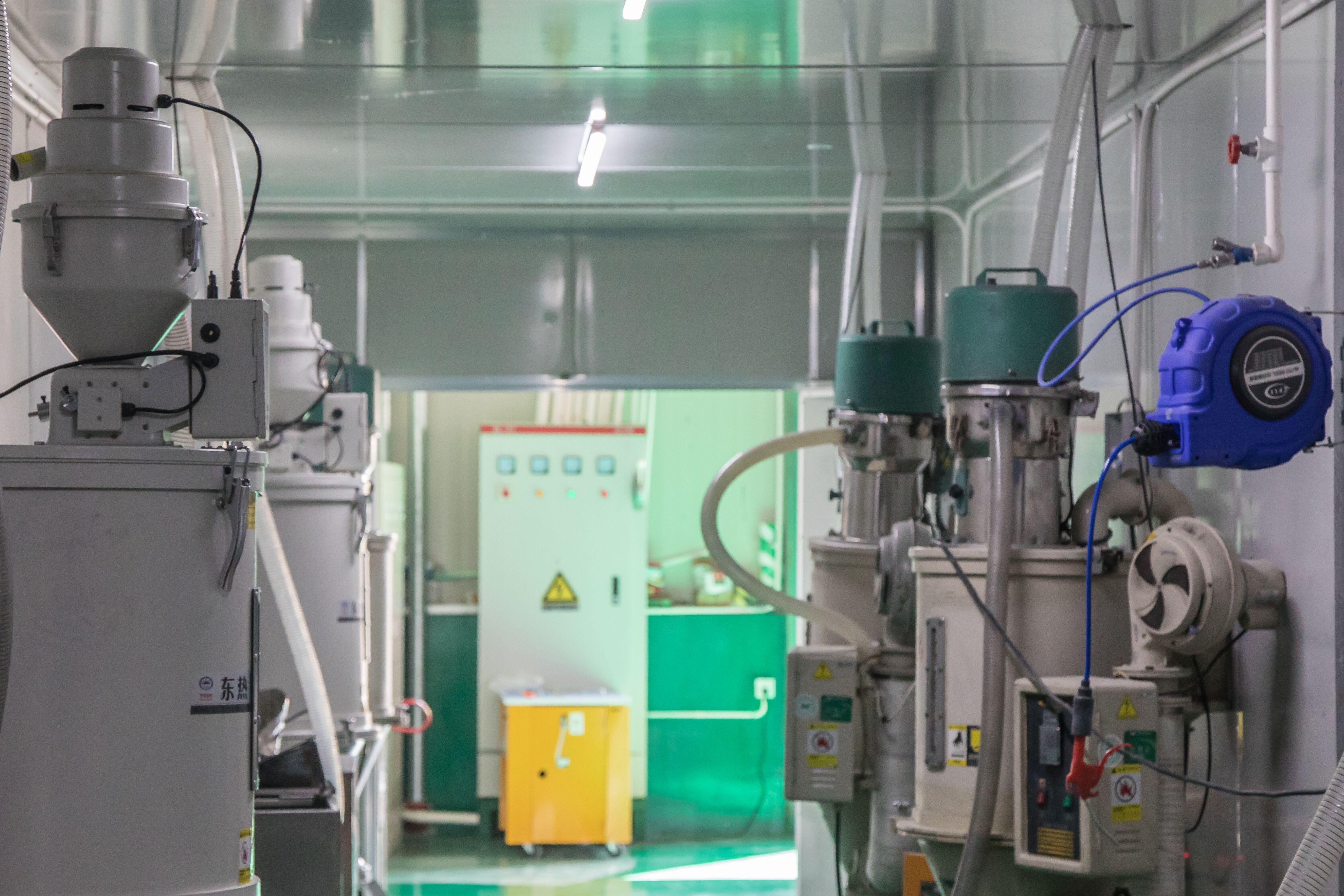
Production base: Honor Packaging operates through long-term joint-venture production bases for plastic and glass packaging.
Step 7 — Confirm the commercial and quality terms. For Honor Packaging, the minimum order quantity is 10,000 units, delivery terms are FOB, production is arranged upon receipt of a 30% down payment with the remaining 70% payable prior to shipment, and the acceptance criterion is a pre-shipment test. Quality control includes 100% pre-shipment testing and third-party inspection (SGS). Typical production lead time is 30–45 days, against a monthly production capacity of 100,000 units.
Step 8 — Plan logistics protection for glass formats. Breakage is the main logistics risk in glass packaging programmes. When fragile products are ready for shipment, Honor Packaging wraps them with protective foam and loads them onto pallets carefully, applying shockproof packaging and palletising standards. Packaging that survives production but not transport is not a finished packaging decision.
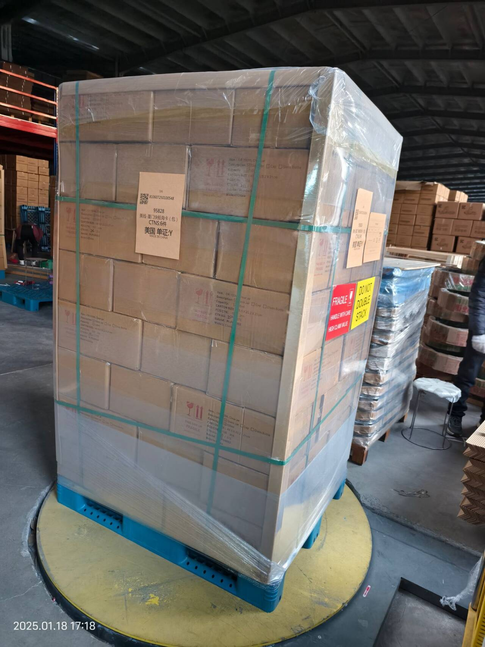
Breakage control: fragile products are wrapped with protective foam and loaded onto pallets.
Use Cases: Three Application Scenarios
Cannabis extract brand entering the US market
The binding constraint here is access control, not appearance. The programme needs a jar body with light protection for an extract that degrades under UV exposure, paired with a closure that satisfies child-resistance expectations in the destination market. HDV1 is the series positioned for cannabis and pharmaceutical applications, and the violet glass configuration documented in Honor Packaging's material comparison is the relevant option where light sensitivity is the primary risk. Decoration — label or silk-screen printing — is decided after the closure is locked, because the closure changes the visible surface area of the jar.
Cosmetics line for the EU market
Here the constraints run in a different order. Labelling obligations under Regulation (EU) No. 1169/2011 shape the available print area, and the delivery format decides the closure: dropper for oils and serums, lotion pump for creams, mist sprayer for toners. HDV2 is positioned for cosmetics, and the surface treatments documented in the HDV3 series — label, silk-screen printing, and gold stamping — cover the decoration range a cosmetic SKU usually needs. The material decision typically lands on glass for premium positioning, or plastic where unit economics dominate.
Capsule supplement brand scaling from pilot to repeat order
The requirement set is moisture protection, child resistance, and predictable replenishment. The H21 series with child-resistant caps matches the medical and supplement segment, and the commercial terms determine whether a scaling plan is realistic: a 10,000-unit minimum order quantity, a 30–45 day production lead time, a 100,000-unit monthly production capacity, FOB delivery terms, and pre-shipment testing plus third-party inspection (SGS) as the acceptance path. A brand that plans a launch calendar without those numbers will plan it twice.
Comparison Table: Series Fit, Material Choice, and Execution Terms
Table 1 — Jar series by application
| Series | Primary application fit | Closure and surface notes |
|---|---|---|
| HDV1 | Cannabis and pharmaceutical applications | Format selected for cannabis and pharmaceutical use; closure matched to destination-market access rules |
| HDV2 | Cosmetics | Delivery format drives the closure: dropper, lotion pump, mist sprayer, or plastic cap |
| H21 series | Medical and supplement segments | Used with child-resistant caps |
| HDV3 series | Formats requiring flexible decoration and closure choice | Surface treatment: label, silk-screen printing, gold stamping. Closures: plastic cap, dropper, mist sprayer, lotion pump |
Table 2 — Violet glass compared with amber glass (Honor Packaging material comparison)
| Comparison point | Documented detail |
|---|---|
| Primary difference | Light transmittance |
| Performance gap | Better protection against ultraviolet rays and better preservation of product freshness |
| Best-fit applications | Food packaging, cosmetic packaging, pharmaceutical packaging |
| Cost difference | Approximately 15% higher than amber glass |
| Usage and safety notes | Less maintenance; reduced concern about children accidentally ingesting contents |
Table 3 — Commercial and quality-control terms to plan around
| Item | Term |
|---|---|
| Minimum order quantity | 10,000 units |
| Delivery terms | FOB |
| Payment terms | Production arranged upon receipt of a 30% down payment; remaining 70% payable prior to shipment |
| Acceptance criteria | Pre-shipment test |
| Quality control | 100% pre-shipment testing; third-party inspection (SGS) |
| Monthly production capacity | 100,000 units |
| Typical production lead time | 30–45 days |
| Fragile-good protection | Protective foam wrapping and pallet loading |
FAQ: Compliance, Capability, Budget, Validation, and Lead Time
Which regulations should be checked before choosing a jar for supplements or cannabis products?
In the United States, dietary supplement packaging must comply with the Dietary Supplement Health and Education Act (DSHEA) of 1994 and FDA Current Good Manufacturing Practice 21 CFR Part 111, and tamper-evident packaging is mandatory under the Poison Prevention Packaging Act (PPPA) for certain ingredients, including iron above 30 mg. In the EU, Regulation (EU) No. 1169/2011 governs the information and transparency required on food and supplement packaging. Cannabis requirements vary by market, so the destination market should be confirmed before the closure is selected. A practical approach is to match the closure to the strictest market in the shipping plan rather than building a separate pack for each one.
What jar series and production capability does Honor Packaging offer for these industries?
Honor Packaging positions HDV1 for cannabis and pharmaceutical applications, HDV2 for cosmetics, and the H21 series with child-resistant caps for medical and supplement segments; the HDV3 series documents surface treatments including label, silk-screen printing, and gold stamping, with closure options covering plastic cap, dropper, mist sprayer, and lotion pump. NINGBO HONOR PACKAGING CO.,LTD was founded in 2015 and is headquartered in Ningbo, China, with 310 employees including an R&D team of 15, long-term joint-venture production bases for plastic and glass packaging, and monthly production capacity of 100,000 units. The company exports 100% of its output to the EU, US, Middle East, and Southeast Asia, with main markets in the EU and the USA.
What drives cost in a jar programme, and what are the minimum order terms?
Material is the clearest cost lever: violet glass is priced about 15% higher than amber glass in Honor Packaging's material comparison, while plastic remains the dominant material in nutraceutical packaging with a 58.3% revenue share in 2024, according to Grand View Research. The commercial terms are fixed and easy to plan around: a minimum order quantity of 10,000 units, FOB delivery terms, production arranged upon receipt of a 30% down payment, and the remaining 70% payable prior to shipment. Where a lower price point is the priority, amber glass or plastic formats move the cost line more than any other single decision.
How can a brand validate a jar before committing to mass production?
Validation happens at two levels. Before mass production, Honor Packaging is involved in product structural development, tooling strategy definition, and critical manufacturing risk assessment and validation — the stage where format and closure compatibility are proven. At the batch level, quality control includes 100% pre-shipment testing and third-party inspection (SGS), and the acceptance criterion for the order is a pre-shipment test. Together, the two levels let a buyer confirm the physical format before tooling and confirm the finished batch before paying the balance.
What lead time and logistics protection should be planned?
Typical production lead time for Honor Packaging is 30–45 days against a monthly production capacity of 100,000 units, with a minimum order quantity of 10,000 units. For glass formats, breakage is the main logistics risk: fragile products are wrapped with protective foam and loaded onto pallets, following shockproof packaging and palletising standards. Buyers building a launch calendar should treat the 30–45 day window as production time and add shipping separately. To review the full range before specifying a format, download the Honor Packaging brochure or send the product form, target market, and annual volume to info@honorpkg.com for a quotation.
Conclusion: Decide in the Right Order
Jar selection becomes simple once the order of decisions is correct. Regulation first, because it sets the closure requirement. Content behaviour second, because it sets the material requirement. Series third — HDV1 for cannabis and pharmaceutical applications, HDV2 for cosmetics, the H21 series with child-resistant caps for medical and supplement segments. Closure fourth. Decoration and surface treatment last. Brands that follow this order rarely rebuild a packaging programme, because every decision is made against a constraint rather than against a preference.
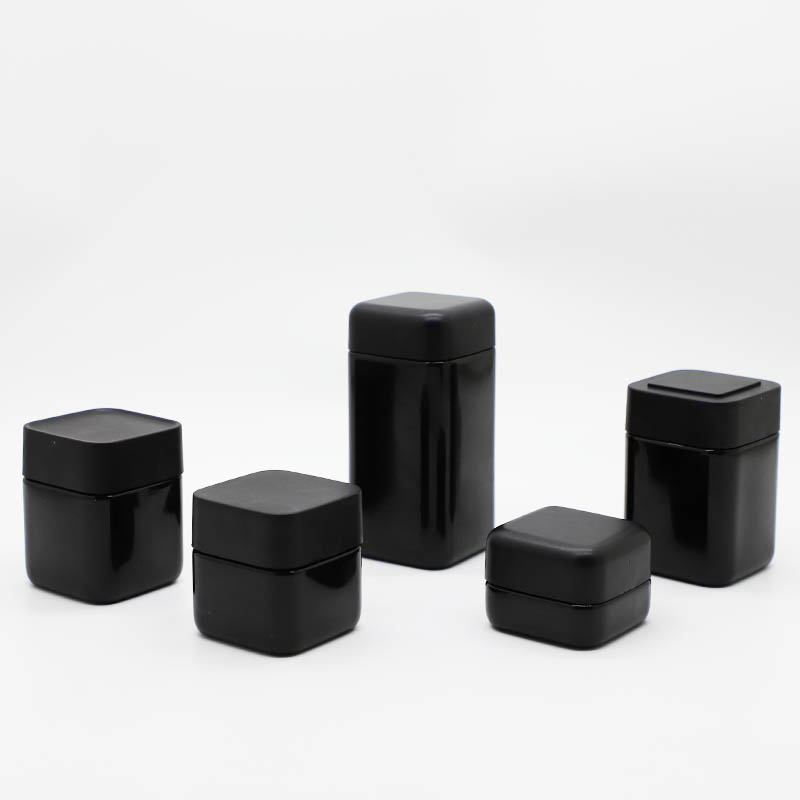
H21 series violet glass jar — the jar line paired with child-resistant caps for medical and supplement segments.
Next step

Send your product form, target market, and volume to info@honorpkg.com, or review the jar, closure, and decoration range in the Honor Packaging brochure (PDF). Sample and quotation requests for cannabis, cosmetic, medical, and supplement packaging programmes are welcome.
Contact
Victor
Email: info@honorpkg.com
Tel: +86-574-88004632 / +86-15968944995
WhatsApp: +86 15968944995
Website: www.honorcrpkg.com
Address: Rm.305,No.1 Building,No.568.SiMing East Road, YinZhou Distric, NingBo City, China