
Small-Dose Supplement Packaging: H21 & H19 Child-Resistant Jars
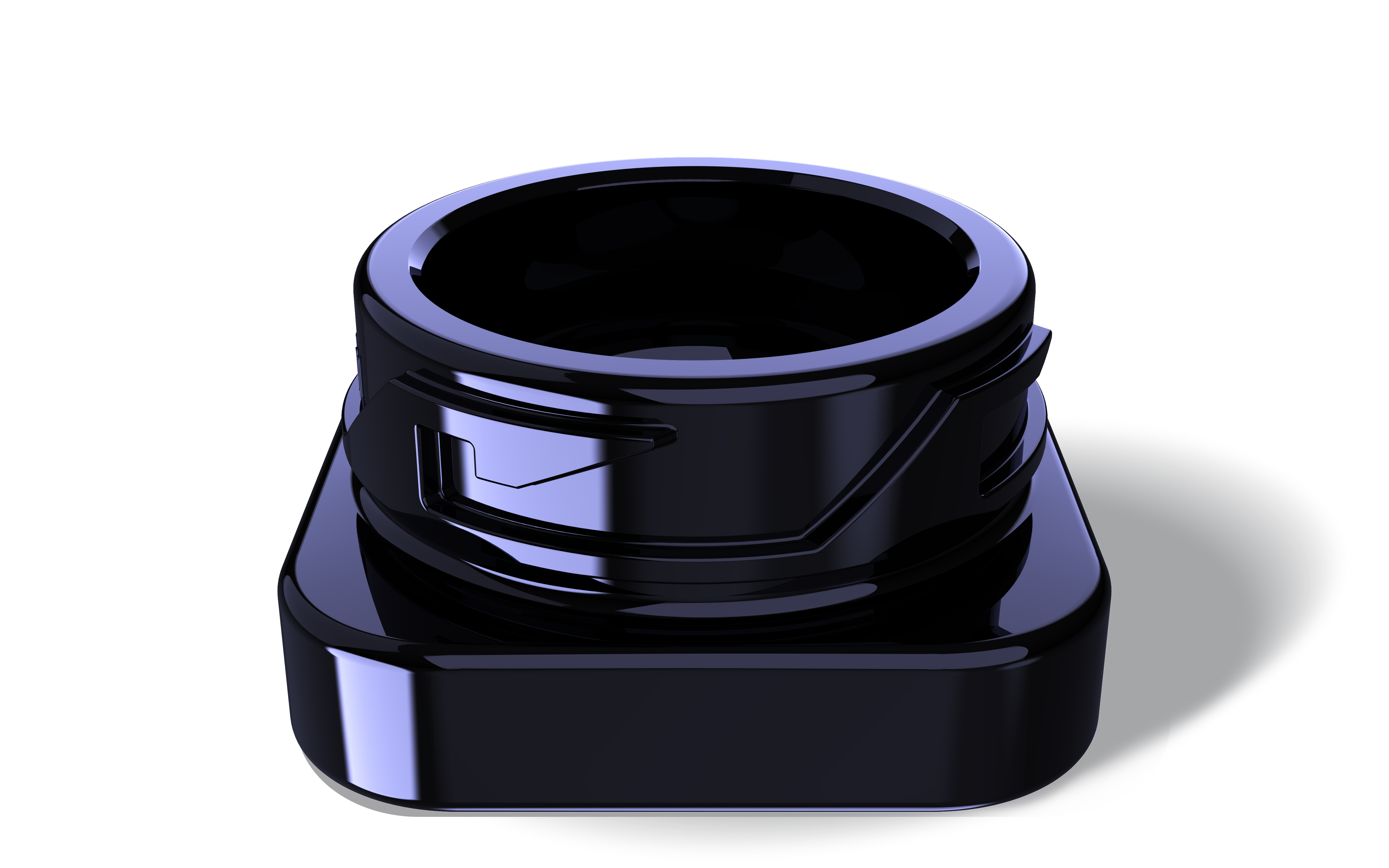
H19 child-resistant square glass jar — 5 ml and 9 ml, black glass, 250 pcs per carton.
Small-Dose Supplement Packaging: H21 and H19 Child-Resistant Jars
Small-dose supplements break the usual packaging logic. A 5 ml, 9 ml or 15 ml fill is too small for most glass jar ranges, and the child-resistant formats that do exist are frequently plastic. The glass route is narrower — but it exists. Honor Packaging builds it in two ranges: the H21 clear square jar with child-resistant cap from 15 ml to 60 dr, and the H19 child-resistant jar at 5 ml and 9 ml in square, round, triangle and hexagon shapes in clear, white or black glass, alongside an H19 5 ml square glass vacuum jar for fills that need a vacuum click closure.
Short answer: choose H21 when the dose needs 15 ml or more (15 ml, 30 ml, 20 dr, 30 dr, 40 dr, 60 dr) and you want a square clear jar with a child-resistant cap; choose H19 when the dose is 5 ml or 9 ml and you need shape and colour variation; choose the H19 5 ml square vacuum jar when the fill must sit under a vacuum click closure. All three are glass formats, and all three are quoted against a 10,000-unit minimum order with a 30–45 day production lead time.
Honor Packaging (Ningbo Honor Packaging Co., Ltd.) is a Ningbo, China–based packaging manufacturer founded in 2015 that focuses on child-resistant, violet glass and vacuum packaging for food, cosmetic and medical applications, exporting all of its output with the EU and USA as main markets.
Why Small Doses Create a Child-Resistance Gap
A child-resistant closure is a system, not a component. It relies on the interaction between the cap's inner mechanism and the jar's neck and thread geometry. Most of that engineering effort has historically gone into the neck sizes used by large-volume bottles and wide-mouth jars, because that is where order volume sits. When a brand moves to a micro-dose — a resin, a concentrate, a single-application serum — the jar shrinks, the neck shrinks, and the closure options shrink faster than the jar options do.
That produces a predictable set of compromises in the early research stage:
- Oversizing the pack. Dropping a 5 ml dose into a 30 ml jar solves the closure question and creates headspace, motion and product-waste problems instead.
- Dropping child-resistance. Using a standard screw cap or a dropper on a small glass jar keeps the pack compact but removes the safety feature.
- Switching to plastic. Plastic micro-jars with child-resistant caps are widely available, but brands positioning on glass clarity, weight and inertness lose the material they wanted.
- Mixing supply. Sourcing the jar from one factory and the closure from another leaves the closure-to-jar fit unvalidated until the filling line finds the problem.
It is worth separating two requirements that are often confused. Child-resistance is a closure performance question. Tamper-evidence is a separate feature, and in the United States tamper-evident packaging is not generally mandated at federal level for dietary supplements in the same way as for many over-the-counter drugs. Because requirements are set market by market, the specification should be checked against the destination market rather than assumed from a neighbouring category.
Where the Small-Dose Category Is Heading
The commercial context explains why micro-dose glass formats are worth tooling at all. The global supplements and nutrition packaging market was estimated at USD 31.3 billion in 2025, according to Grand View Research, and plastic remains the dominant material with roughly 41.67% of the material segment share in that year. Glass therefore competes for a minority position — which makes format availability, not price alone, the deciding factor for brands that want it.
Demand is also shifting toward concentrated, premium fills. A 2026 estimate puts the global Shilajit market at USD 221.4 million, with liquid resin accounting for 40.5% of share. Resin and extract formats are naturally small-dose, and they carry positioning expectations — weight in the hand, clarity, an inert contact surface — that push brands toward glass.
Regulation is moving in parallel. EU Regulation (EU) 2024/3190 restricts bisphenol A in food-contact materials, and the transition date for single-use items, 20 July 2026, has now passed. For a glass jar that decision mostly concerns the plastic child-resistant cap and any liner or wad, which is why closure documentation belongs in the same buyer folder as the jar certificate.
The H21 and H19 Answer
H21 clear square jars: 15 ml to 60 dr with a child-resistant cap
The H21 clear square jar is the larger of the two routes. It is a square glass jar with a 58 mm diameter, a published height range of 24 mm to 115 mm, a weight range of 75 g to 280 g, and a stated glass thickness of 0.38 mm. It is supplied with a child-resistant cap. Capacity options are 15 ml, 30 ml, 20 dr (70 ml), 30 dr (100 ml), 40 dr (130 ml) and 60 dr (200 ml), with item codes H21-0003C, H21-0004C, H21-0005C, H21-0006C, H21-0007C and H21-0008C respectively.
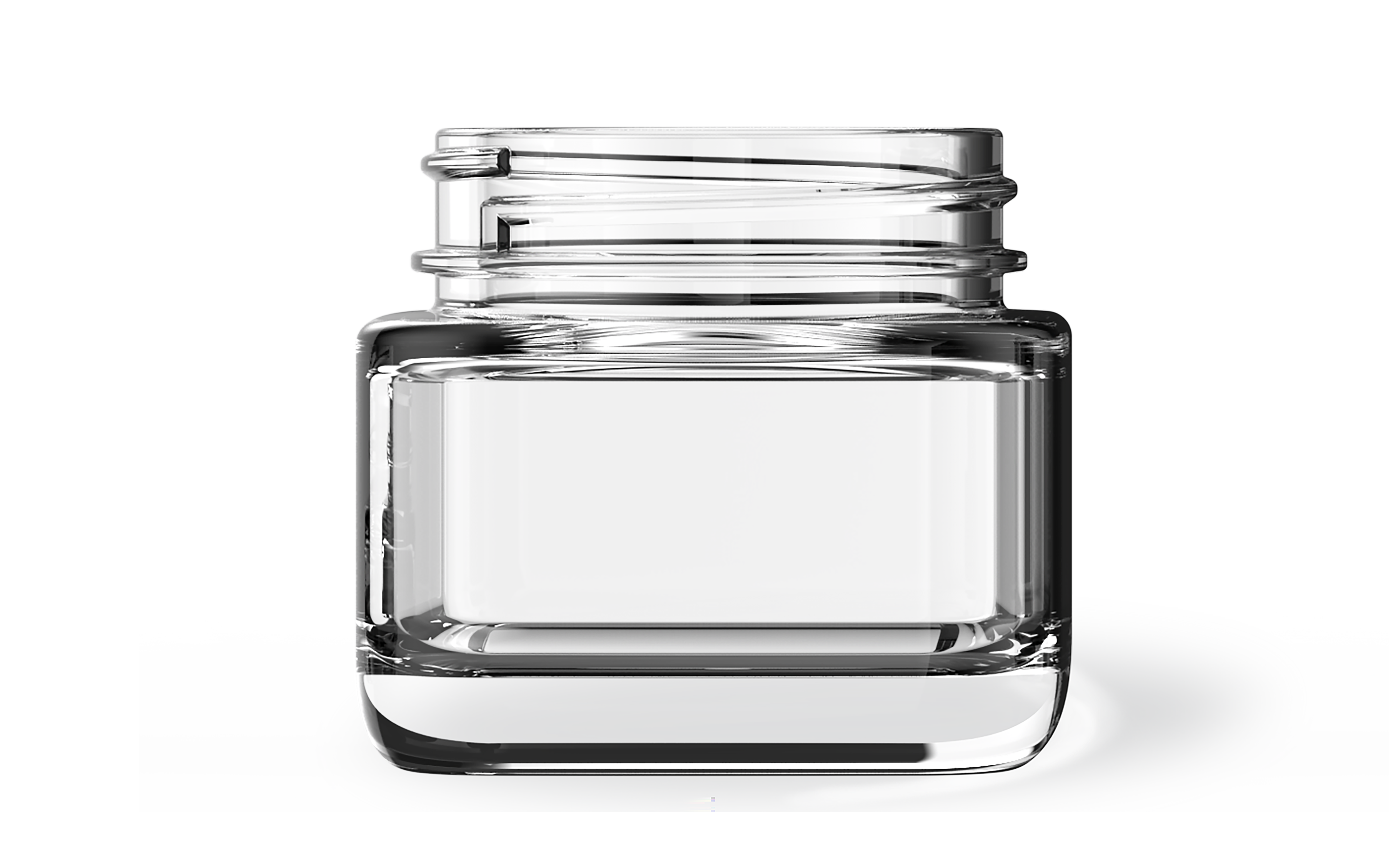
H21-0005C — 20 dr (70 ml) clear square glass jar with child-resistant cap.
Decoration options published for the H21 range are sticker, silk-screen printing, hot stamping, heat-transfer printing and frosted finish. For brands that also want light protection, the same 15 ml / 30 ml / 20 dr / 30 dr / 40 dr / 60 dr capacity set is available in violet glass under the H21 violet range, with matching item codes H21-0003V through H21-0008V.
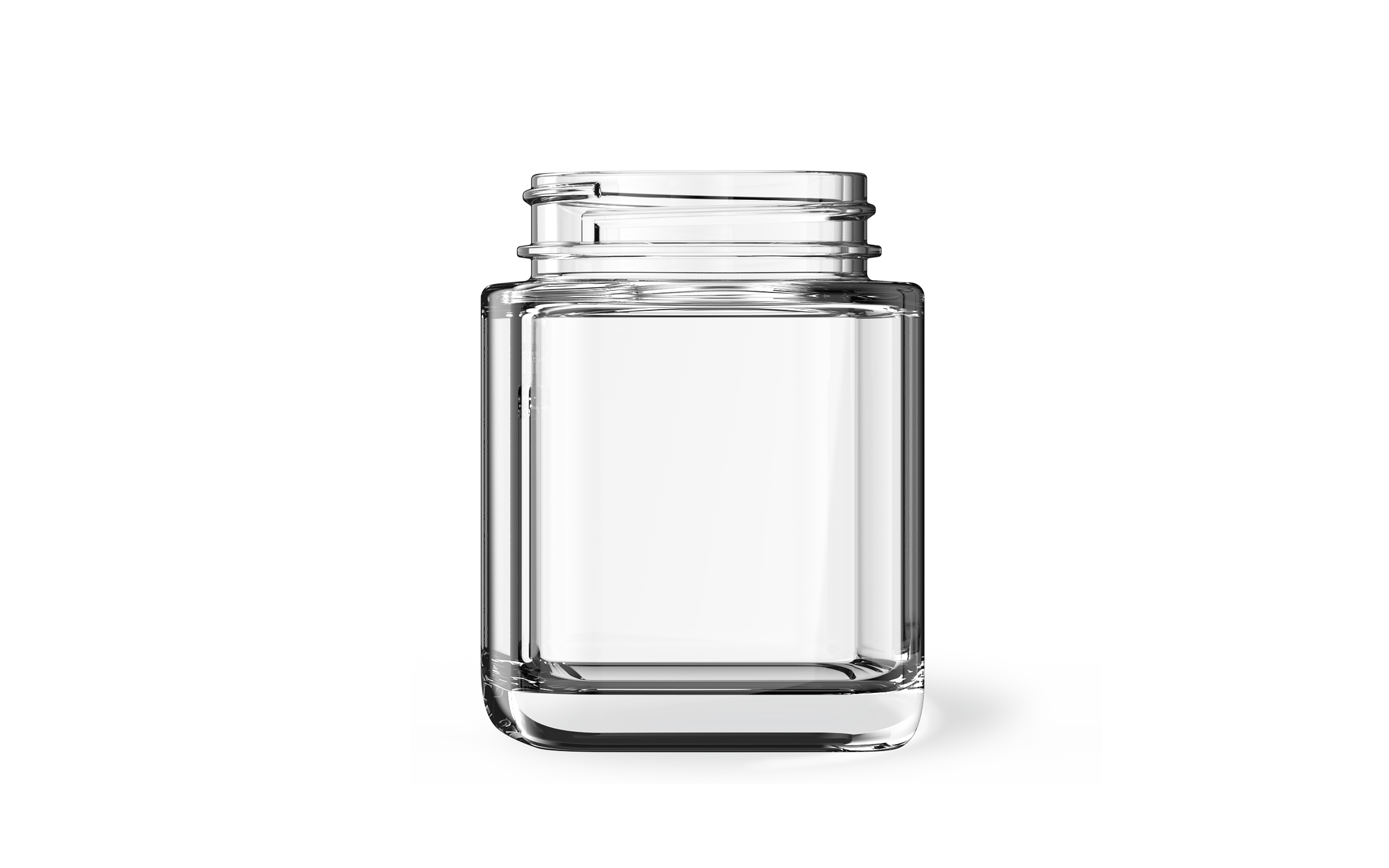
H21-0007C — 40 dr (130 ml) clear square glass jar, child-resistant cap, 0.38 mm glass thickness.
H19 child-resistant jars: 5 ml and 9 ml in four shapes and three colours
The H19 range is where the micro-dose problem is actually solved. It offers 5 ml and 9 ml glass jars with a child-resistant cap, in square, round, triangle and hexagon shapes, in clear, black and white glass. Published weights are 27 g to 38 g for clear and black, and 27 g or 36 g for white. Jars are packed 250 pieces per carton. Item codes run across the range as H19-0001 to H19-0011 with a C, B or W suffix for clear, black or white — for example H19-0001C, H19-0004B, H19-0011W.
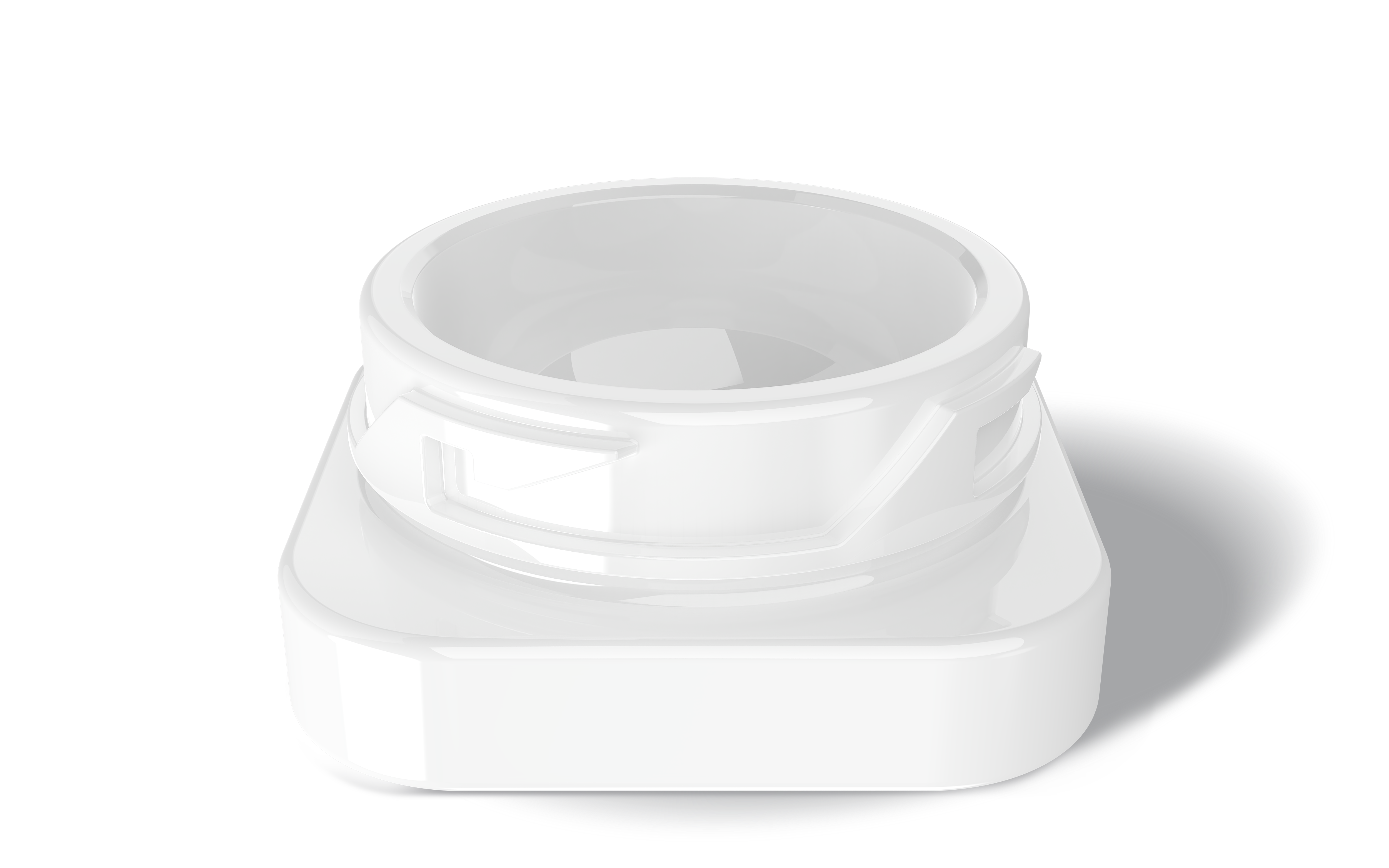
H19-0002W — white square glass child-resistant jar, 250 pcs per carton.
Shape choice is a practical decision rather than a decorative one. Square jars maximise label area per footprint and stack efficiently. Round jars suit a more conventional supplement look. Triangle and hexagon formats give shelf differentiation and improve grip, which matters when a small child-resistant cap has to be turned by an adult hand.
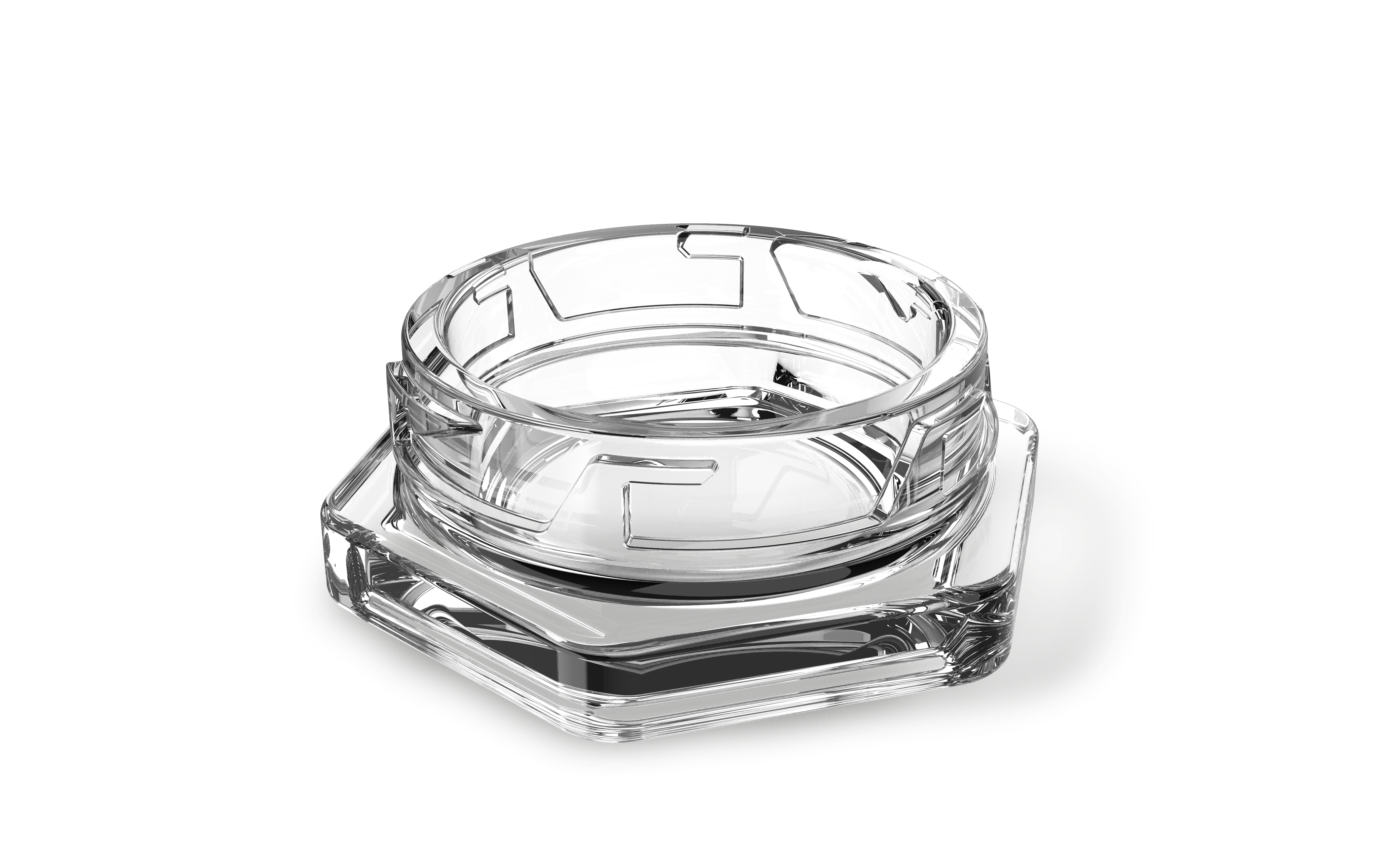
H19-0007C — hexagon clear glass child-resistant jar, part of the H19 5 ml / 9 ml shape range.
H19 5 ml square glass vacuum jar
For fills where the closure has to do more than resist opening, the H19 5 ml square glass vacuum jar uses a vacuum click closure instead of a standard child-resistant cap. It is a square glass jar at 5 ml, packed 250 pieces per carton, and it is listed for food, cosmetic and medical applications. This is the format to specify when a very small dose of an oxidation-sensitive liquid or semi-solid needs a low-headspace pack.
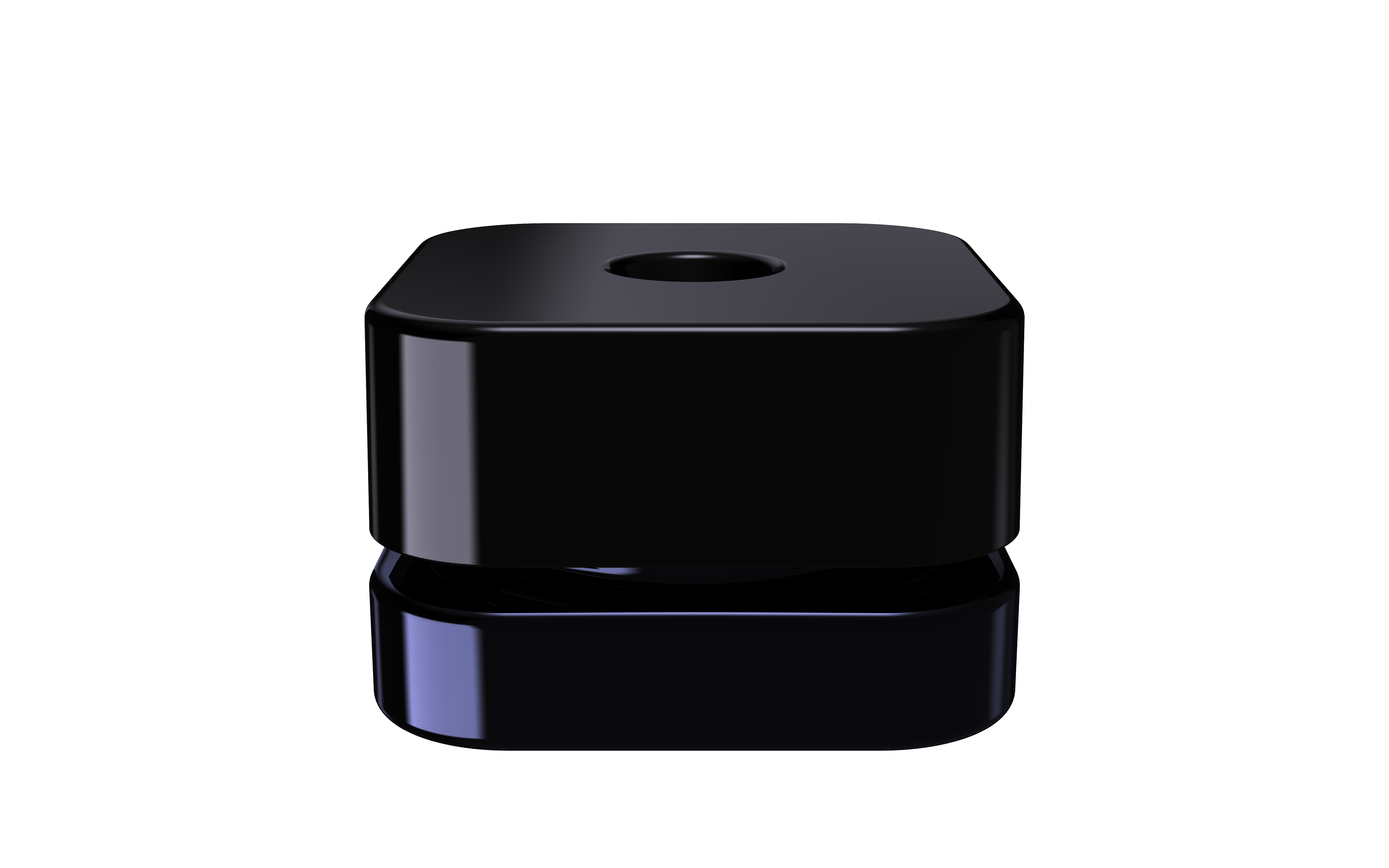
H19 5 ml square glass vacuum jar — vacuum click closure, 250 pcs per carton.
Step-by-Step: Specifying a Small-Dose Child-Resistant Programme
- Fix the dose, then the capacity. Convert the fill volume to the nearest published capacity and treat the difference as headspace you have to justify. 5 ml and 9 ml map to H19. 15 ml, 30 ml, 20 dr, 30 dr, 40 dr and 60 dr map to H21.
- Choose shape and glass colour. Square for label area and stacking, round for convention, triangle or hexagon for differentiation. Clear shows the product, black blocks light visually, white supports clean label design.
- Lock the closure against the jar. Specify the jar and cap as one item. Confirm the child-resistant cap engages and releases consistently on the actual jar, not on a representative sample of a different cavity.
- Define decoration as a sequence. Sticker, silk-screen printing, hot stamping, heat-transfer printing and frosted finish are the published options. More decoration steps mean more handling and longer tooling review, so decide before artwork approval, not after.
- Assemble the compliance file. Jar certificate, closure and liner food-contact declaration, and a market-by-market check — particularly for EU food-contact compliance given Regulation (EU) 2024/3190.
- Validate, then schedule. Run a fill-line trial with production-intent caps. Plan against a 10,000-unit minimum order quantity, 100,000 units monthly capacity and a 30–45 day production lead time, with 100% pre-shipment testing and third-party inspection such as SGS.
Matching Jar to Dose
| Fill volume | Start with | Reason |
|---|---|---|
| 5 ml | H19 5 ml (square, round, triangle, hexagon) or H19 5 ml vacuum jar | Smallest published child-resistant glass option |
| 9 ml | H19 9 ml | Same 27 g–38 g jar body, larger fill |
| 15 ml | H21-0003C | Entry point of the square H21 range |
| 30 ml (1 oz) | H21-0004C | Standard small supplement jar |
| 20 dr (70 ml) | H21-0005C | Mid-range dram sizing |
| 30 dr (100 ml) | H21-0006C | Larger multi-dose fills |
| 40 dr (130 ml) | H21-0007C | Powder and multi-serving formats |
| 60 dr (200 ml) | H21-0008C | Top of the square H21 capacity set |
Capacities and item codes as published for the H21 clear square range and the H19 child-resistant range.
Use Cases That Fit These Formats
Resin and extract supplements. The dominant small-dose scenario today. A 5 ml or 9 ml H19 jar in black glass holds a resin or thick extract without forcing an oversized pack, and the child-resistant cap answers the safety brief that a dropper bottle cannot.
Herbal concentrates and tincture-adjacent formats. Where the brand wants glass inertness and a compact footprint, the H19 shape range — square, round, triangle, hexagon — allows a family of SKUs sharing one closure system.
Micro-dose powders. A 5 ml or 9 ml glass jar works for single-serving or trial-size powder, and the H21 40 dr and 60 dr sizes cover multi-serving powder where a child-resistant square jar is required.
Cosmetic and crossover sampling. The same H19 jars are listed for cosmetic and medical applications, which makes them usable in gift, trial and travel sets where a child-resistant closure is a selling point rather than a regulatory obligation.
Oxygen-sensitive micro-fills. The H19 5 ml square vacuum jar with vacuum click closure suits fills where headspace, not opening force, is the limiting factor.
H21, H19 and H19 Vacuum: Specification Comparison
| Attribute | H21 clear square jar | H19 child-resistant jar | H19 5 ml vacuum jar |
|---|---|---|---|
| Capacity | 15 ml / 30 ml / 20 dr / 30 dr / 40 dr / 60 dr | 5 ml / 9 ml | 5 ml |
| Shape | Square | Square, round, triangle, hexagon | Square |
| Glass colour | Clear (violet-glass version available in the same capacities) | Clear, white, black | Glass (colour not stated in the published specification) |
| Closure | Child-resistant cap | Child-resistant cap | Vacuum click jar |
| Diameter | 58 mm | Not stated | Not stated |
| Height | 24 mm – 115 mm | Not stated | Not stated |
| Weight | 75 g – 280 g | 27 g – 38 g (clear, black); 27 g / 36 g (white) | Not stated |
| Glass thickness | 0.38 mm | Not stated | Not stated |
| Packing | Not stated in the published specification | 250 pcs / ctn | 250 pcs / ctn |
| Item codes | H21-0003C to H21-0008C | H19-0001 to H19-0011, with C / B / W suffix | H19 vacuum jar |
Only published specification values are shown. Where a field is not stated for a family, it is left blank rather than estimated — request the item-level datasheet before finalising a brief.
Frequently Asked Questions
Are the H21 and H19 jars certified for EU and US supplement packaging?
Honor Packaging holds an EU certification to EC No 1935/2004, certificate number NGBHL24007770101 issued by SGS, which covers the H21 violet glass jars and the HDV1–HDV3 violet glass range on the EU market. It also holds an FDA CPG certification, certificate number NGBHL23005693401 issued by SGS, applicable to products including the H19 5 ml square vacuum jar on the US market. Two checks matter before ordering: confirm that the exact item code and colour you specify appears on the certificate, and request the food-contact declaration for the plastic child-resistant cap and liner, because EU Regulation (EU) 2024/3190 restricts bisphenol A in food-contact materials.
Can one supplier produce both jar sizes with child-resistant caps and decoration?
Yes. Honor Packaging runs OEM and ODM production with a monthly capacity of 100,000 units and a 15-person R&D team, and lists printing of client artwork, new design development and frosted finishing among its customisation capabilities. Published surface options for the H21 jars are sticker, silk-screen printing, hot stamping, heat-transfer printing and frosted finish. Keeping jar, cap and decoration in one production responsibility avoids the fit problem that appears when closures and jars come from separate factories.
What order size applies, and what drives the cost?
The published minimum order quantity is 10,000 units against a monthly capacity of 100,000 units. Cost is driven mainly by glass mass — H21 jars are specified at 75 g to 280 g while H19 jars are specified at 27 g to 38 g — together with the closure type, the number of decoration steps, and packing configuration. H19 jars are packed 250 pieces per carton, which is a useful unit for estimating handling and warehouse space on a 5 ml or 9 ml programme.
How should a buyer validate H21 or H19 jars before mass production?
Validation starts before production: Honor Packaging works on product structural development, tooling strategy definition, and critical manufacturing risk assessment and validation ahead of mass production. For a small-dose programme, the two tests worth insisting on are consistent engagement and release of the child-resistant cap on the actual jar, and a fill-line trial with production-intent closures. Quality control is a 100% pre-shipment test supported by third-party inspection, and after-sales covers reissue. Sample and quotation requests can be sent to info@honorpkg.com or +86-574-88004632.
What is the production lead time for child-resistant glass jars?
Production lead time is 30–45 days, against a minimum order quantity of 10,000 units and a monthly capacity of 100,000 units. Orders are supported by 100% pre-shipment testing and third-party inspection such as SGS, with reissue available through after-sales. Because the lead time starts after artwork and closure approval, the practical planning sequence is to settle the cap, decoration and compliance documents first and treat them as the real start date.
Conclusion
The child-resistance gap in small-dose supplements is a format problem, not a design preference. It closes when a 5 ml or 9 ml fill can use a glass jar with a child-resistant cap — which is what the H19 range does across square, round, triangle and hexagon shapes in clear, white and black — and when a 15 ml to 60 dr fill can stay in a square jar rather than being pushed into an oversized pack, which is what the H21 range covers. The H19 5 ml square vacuum jar handles the narrower case where a vacuum click closure, not child-resistance, sets the specification.
Specify by dose first, then shape and colour, then lock the closure to the jar as one item, and assemble the compliance file before artwork. That sequence keeps the project on the 30–45 day production timeline instead of discovering a closure mismatch on the filling line.
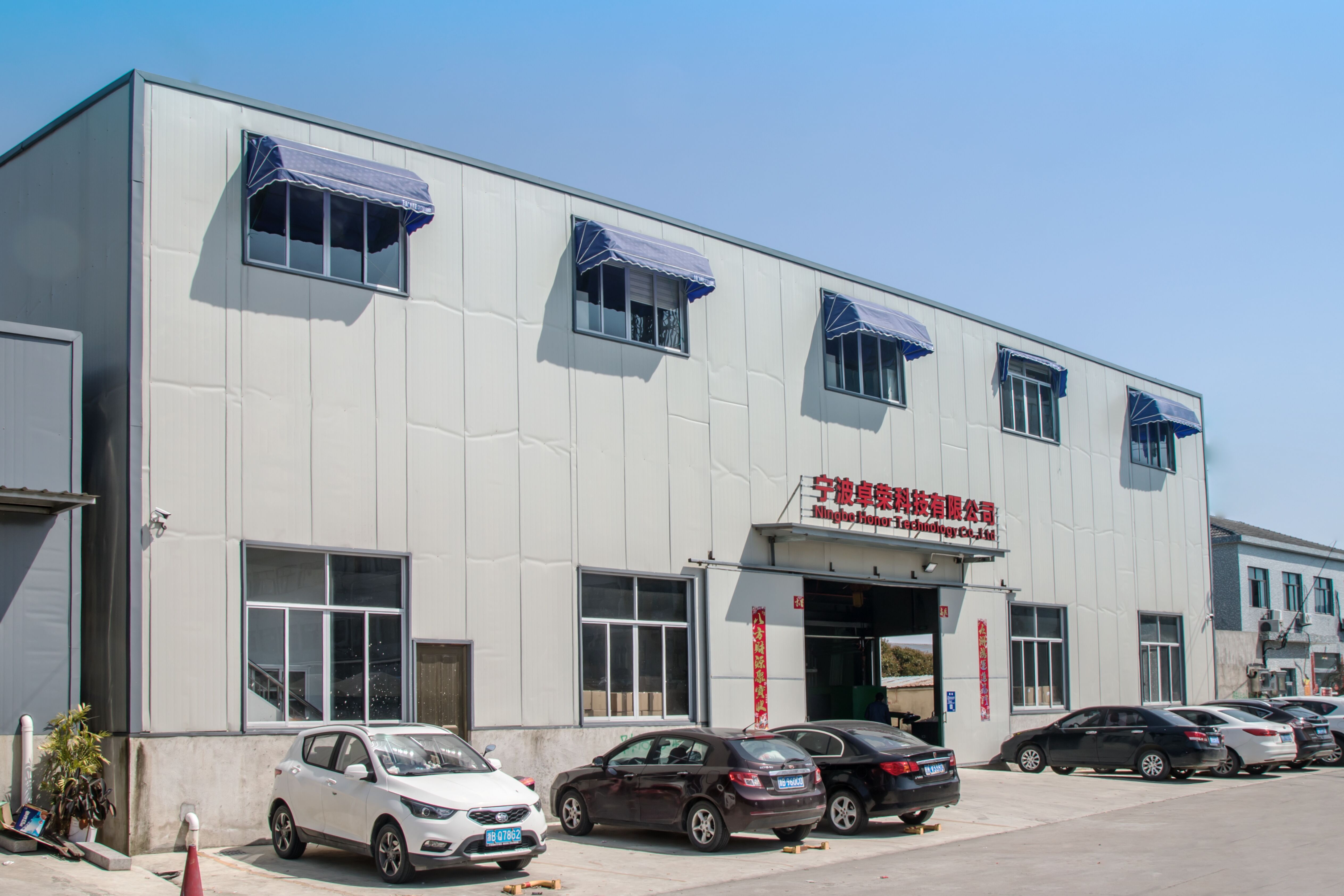
Honor Packaging operates through long-term joint-venture production bases for plastic and glass packaging.
Next step: sample and quotation
Send the fill volume, target market and decoration brief, and Honor Packaging will match it to an H21 or H19 item code, confirm the child-resistant closure and issue a quotation against the 10,000-unit minimum order.
Email: info@honorpkg.com | Tel: +86-574-88004632 / +86-15968944995
WhatsApp: +86 15968944995 | Web: www.honorcrpkg.com
Address: Rm.305, No.1 Building, No.568 SiMing East Road, YinZhou District, Ningbo City, China
Have Questions or Need More Details?
Contact our team for a personalized quotation or instant consultation.
Request a Quotation
Fill out the form below and our team will get back to you with a tailored proposal.
WhatsApp Direct Chat
Prefer to chat in real-time? Message us on WhatsApp for instant assistance & quick answers.
- Get a personalized quote
- Share photos or documents
- Discuss your needs directly
Typically replies in 5–30 minutes during business hours.