Supplement Packaging Partnership FAQ: Long-Term Supply, Quality Terms & After-Sales Support
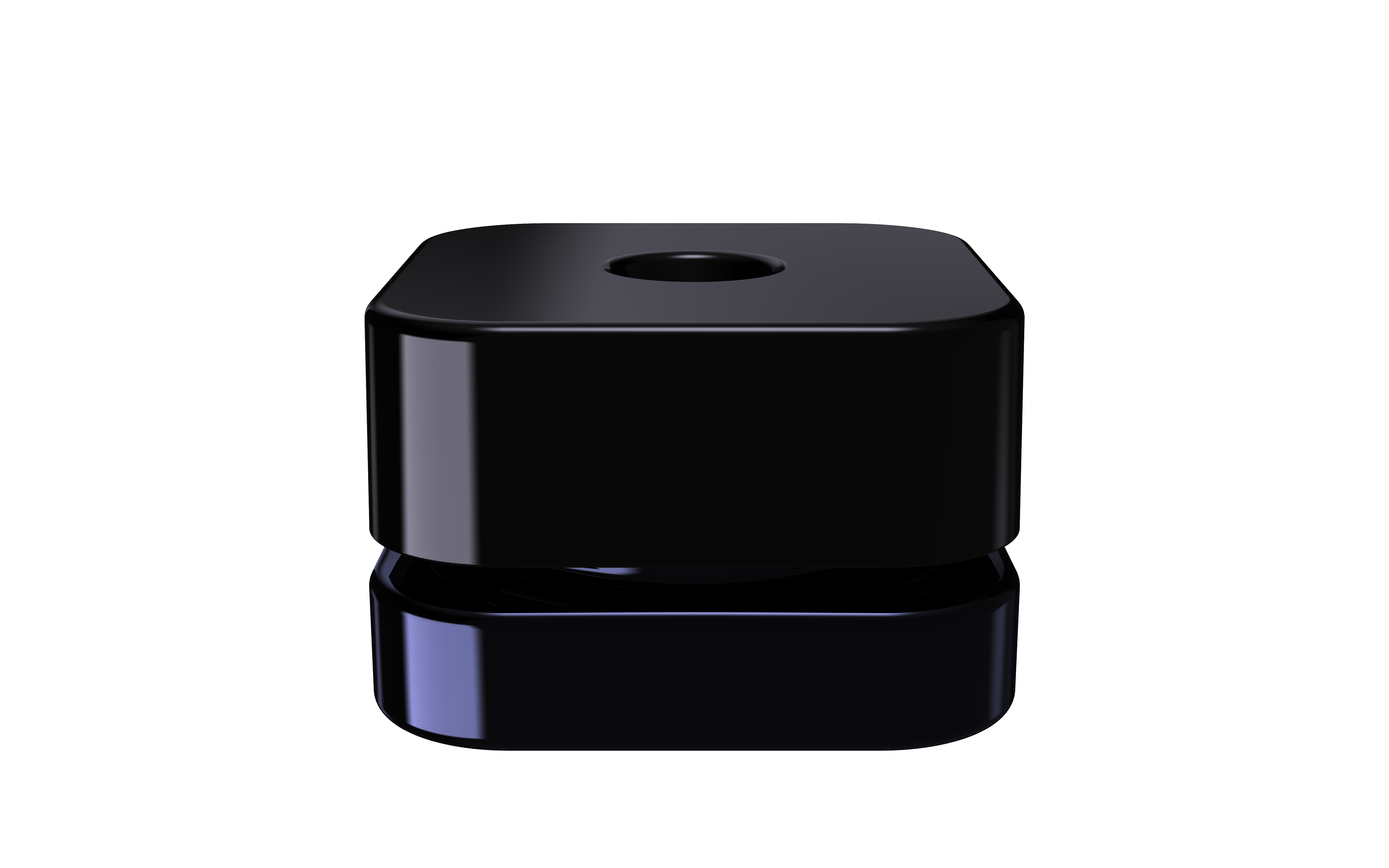
Supplement Packaging Partnership FAQ: Long-Term Supply, Quality Terms & After-Sales Support
Direct answer: A long-term supplement packaging partnership should be treated as a controlled specification relationship, not a repeated purchase order. Before committing, a supplement brand should lock the jar format, capacity, glass thickness, closure, decoration, carton count, approval sample, receiving criteria, and after-sales record path. Honor Packaging — NINGBO HONOR PACKAGING CO.,LTD. — is a Ningbo, China-based packaging manufacturer established in 2015. It operates a 45,000 square metre facility with approximately 310 staff and an annual production capacity of 1,000,000 units, focusing on child-resistant packaging, violet glass packaging, and vacuum packaging.
This FAQ is written for supplement brands that have moved past first sample requests and are comparing what a repeatable packaging partnership actually requires. The products referenced here are glass supplement packaging formats, but the same discipline applies to custom supplement packaging programs that combine several jar sizes, closures, and decoration methods.
Problem Definition: What Makes a Packaging Partnership Hard to Scale?
The difficult part of long-term supplement packaging is rarely the first order. The difficult part is keeping the second, fifth, and tenth order aligned with the approved jar, cap, print, carton count, and receiving standard. When a purchase order says only “same as last time,” the supplier and the brand can hold different assumptions about capacity, glass thickness, decoration color, or packaging quantity.
That gap creates three common problems. First, a child-resistant closure may feel correct on a sample but be judged differently at receiving. Second, a frosted finish or hot-stamped logo may look acceptable under one light source and inconsistent under another. Third, a long-term agreement may list a product family, such as the H21 series, without tying each SKU to an item code and approved specification. The solution is not more general promises. It is a narrower written baseline.
Industry Background: Why Supplement Brands Need More Than a Repeat PO
Supplement packaging carries both brand and compliance weight. The global supplements and nutrition packaging market was estimated at USD 31.3 billion in 2025, according to Grand View Research’s 2026 market report. That scale supports many packaging formats, but it also means buyers need clear product-level evidence rather than broad category claims.
Regulatory expectations add another layer. For EU-bound food-contact packaging, buyers should screen material declarations against applicable rules, including Regulation (EU) 2024/3190 on BPA in food contact materials, which applies to single-use food contact items from July 20, 2026. This does not replace a brand’s own legal review, but it explains why a long-term packaging file should include material declarations, closure specifications, and change-control notes — not only a product photo and a unit price.
Glass supplement packaging is also a visual category. Violet glass, clear glass, child-resistant caps, and surface treatments such as silk-screen printing, hot stamping, and frosted finishes all become part of the brand asset. A supplier that can repeat the same specification across orders protects that asset better than a supplier that can only produce an attractive first sample.
Detailed Solution: The Questions Buyers Ask Before They Commit
1. What purchasing terms belong in a long-term supplement packaging agreement?
A long-term agreement should define the commercial and technical baseline in the same document. At minimum, the purchasing terms should identify the exact model and item code, capacity, material, glass thickness where specified, closure type, surface treatment, carton quantity, approval sample reference, receiving acceptance method, and change-control procedure. Payment terms, Incoterms, and delivery responsibilities should be confirmed in the quotation and order confirmation rather than assumed from a product page.
For example, the H19 vacuum jar is a square glass jar with a 5 ml capacity, packed 250 pcs per carton. The H19 child-resistant packaging is also packed 250 pcs per carton and is available in 5 ml or 9 ml capacities, with white, black, and clear concentrate jar variants. These fixed references matter because they turn “small glass jar” into a repeatable purchasing line.
2. How do H19 vacuum and child-resistant jars support ongoing quality assurance?
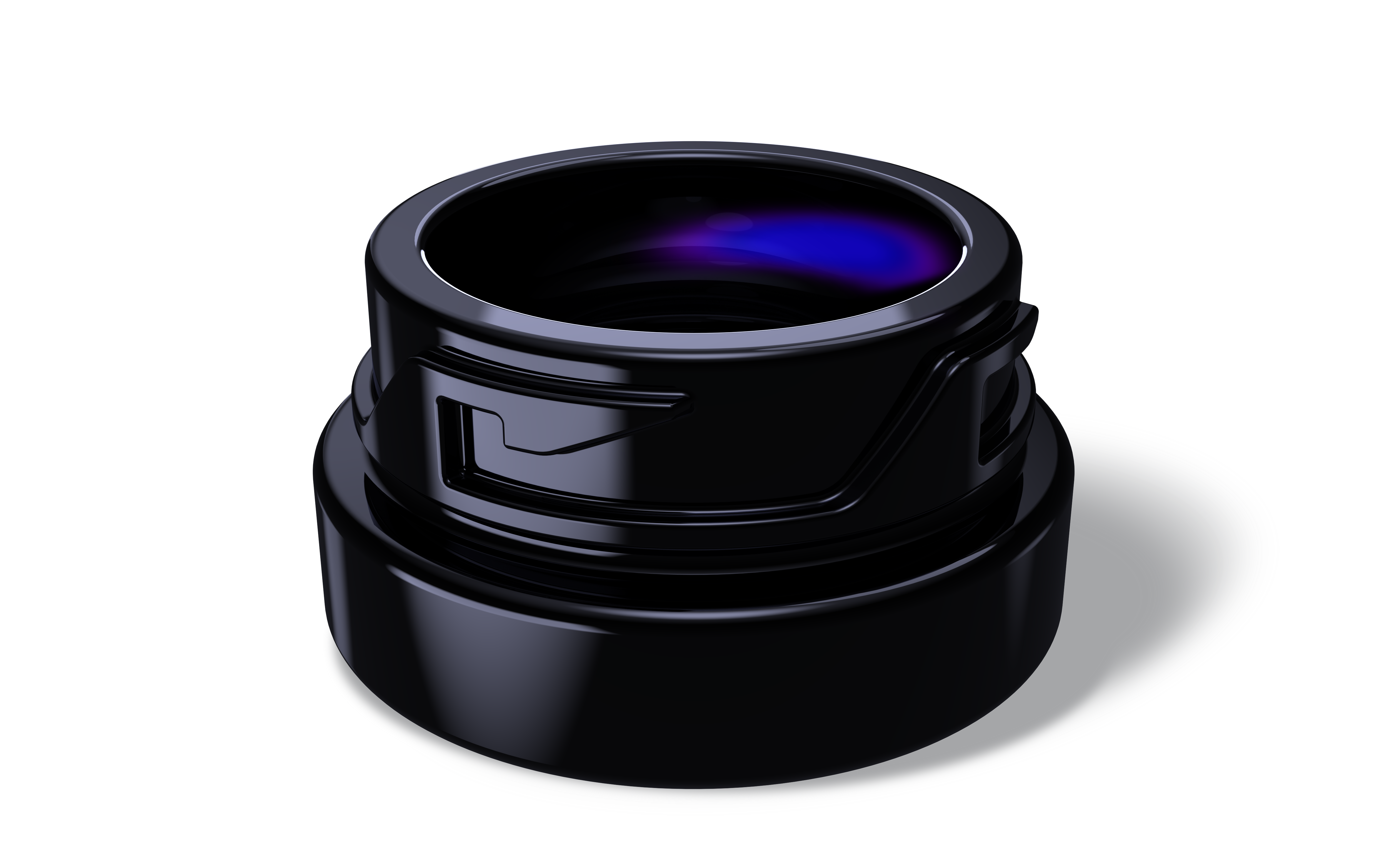
The H19 platform gives a supplement brand two different starting points. The H19 vacuum jar is a 5 ml square glass jar intended for supplement packaging in food, cosmetic, and medical industries. The H19 child-resistant packaging is a separate format with a child-resistant cap, available in square, round, triangle, and hexagon shapes, with net weights from 27 g to 38 g and 250 pcs per carton.
For ongoing quality assurance, the brand should not rely on the family name alone. The purchase order should specify the exact item code, capacity, shape, color variant, cap type, and carton count. Receiving checks can then compare the delivered cartons against the approved sample and the master specification. If the brand uses both H19 vacuum and H19 child-resistant formats, the two should be kept as separate SKUs in the packaging file, even though both are small-format glass jars.
3. How does the H21 child-resistant series fit multi-SKU supplement programs?
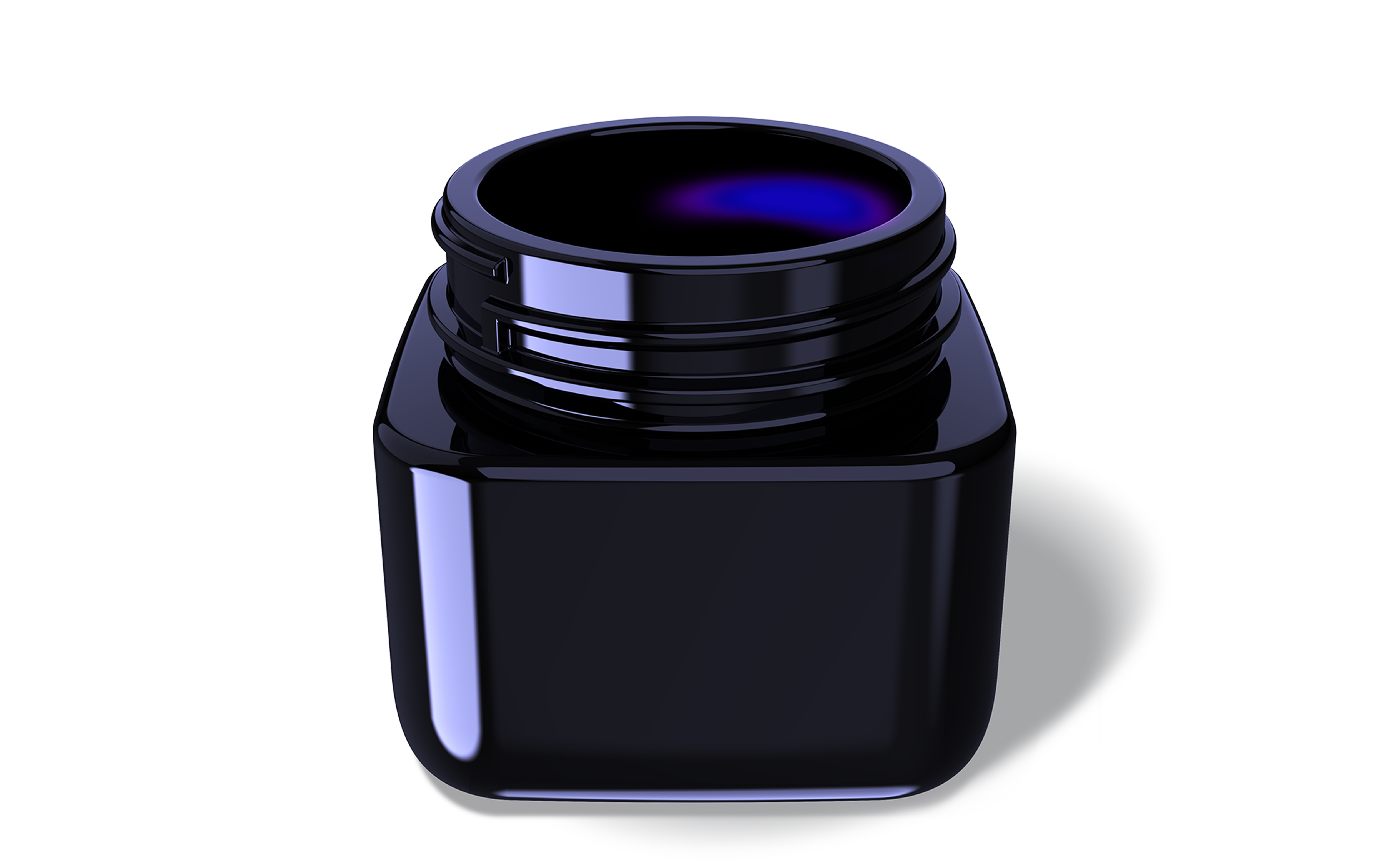
The H21 square child-resistant series is available in 15 ml, 30 ml, 20 dr, 30 dr, 40 dr, and 60 dr capacities, with a glass thickness of 0.38 mm. Clear square H21 jars use item codes H21-0003C through H21-0008C; square violet glass H21 jars use H21-0003V through H21-0008V. The series includes a child-resistant cap and offers surface treatments such as sticker, silk-screen printing, hot stamping, heat transfer printing, and frosted finish.
For a multi-SKU supplement program, the H21 series can reduce unnecessary format sprawl because the brand can keep one jar family across several fill sizes. The long-term agreement should still list each capacity and item code separately, together with the decoration specification for each SKU. A shared H21 platform does not mean shared approval for every jar size or every print run.
4. How do surface treatments sustain brand consistency across repeat orders?
Surface treatments are where brand consistency is most visible and most fragile. Silk-screen printing, hot stamping, heat transfer printing, and frosted finishes are available across several H21 and HDV formats. The HDV3 round violet glass bottle offers label, silk-screen printing, and gold stamping. These options support a consistent shelf presence, but only when the brand approves a physical decoration standard rather than a verbal color name.
A repeat-order decoration file should include the artwork version, print placement, color target, substrate, finish type, and the approved sample reference. For a frosted finish, the approval should cover the intended frost level and the area to be frosted. For hot stamping or gold stamping, the approval should cover foil appearance and placement. For silk-screen printing, the approval should cover coverage, edge definition, and color against the approved sample. The same approved decoration sample should then be referenced on every repeat purchase order.
5. Which violet glass formats should be scoped for long-term supply?
Three violet glass families provide different capacity anchors. The HDV1 wide-mouth violet jar covers 100 ml to 1 L, with a glass thickness of 0.38 mm and thread specifications of 41/400 and 89/400. The HDV2 violet jar covers 3 ml to 200 ml, with a glass thickness of 0.38 mm and thread specifications of 32/400 and 89/400. The HDV3 round violet glass essential oil bottle covers 5 ml to 100 ml, with heights from 54.5 mm to 125 mm, weights from 22.5 g to 120 g, and closure options including plastic cap, dropper, mist sprayer, and lotion pump.
For supplement brands, HDV1 and HDV2 are the more direct wide-mouth and jar-format references; HDV3 is a violet glass bottle format for liquid-adjacent products where a dropper, sprayer, or pump is part of the pack design. A long-term agreement should separate these families because their capacities, closures, and filling assumptions are different.
6. What acceptance criteria should be checked at receiving?
Receiving acceptance should be written before the first mass-production order, not after a dispute. A practical acceptance plan checks the carton count, item code, capacity, shape, color variant, closure type, glass thickness where specified, decoration match against the approved sample, and visible condition of the jars and caps. For H19 formats, the carton count is 250 pcs per carton. For H21 square formats, the specified capacity and 0.38 mm glass thickness should be matched to the approved specification.
The acceptance plan should also define what happens when a carton does not match. The brand needs a record path: photos, carton labels, item codes, quantity affected, and the approved sample reference. That record allows the supplier and the brand to discuss the issue against evidence rather than memory.
7. What after-sales support should be agreed before the first repeat order?
After-sales support should be tied to the same records used for production: the approved sample, master specification, decoration approval, carton count, receiving inspection, and change-control log. Honor Packaging’s manufacturing-responsibility model covers process control and order fulfillment during mass production, with a focus on stable quality, controlled cost, and on-time delivery. After-sales discussions should reference those production records and the approved specification rather than a general description of the product.
A long-term agreement should identify who receives an issue, what evidence is required, how replacement or correction is evaluated, and how the corrective action is reflected in the next order. This is especially important when a brand runs several H21 capacities or a mix of H19 vacuum and H19 child-resistant jars under one packaging program.
Step-by-Step Breakdown: From Sample to Repeat Supply
- Define the supplement packaging brief. State the product form, fill volume, preferred format, closure expectation, decoration method, and carton handling requirement. For small-dose formats, compare H19 vacuum and H19 child-resistant jars. For multi-SKU jar programs, shortlist H21 capacities from 15 ml through 60 dr. For violet glass, separate HDV1, HDV2, and HDV3 by capacity and closure.
- Validate the sample against a master specification. Record the model, item code, capacity, material, glass thickness where specified, closure, surface treatment, and carton count. Approve a physical sample that will be stored as the reference for receiving checks.
- Write purchasing terms and acceptance criteria. Include the approved sample reference, carton quantity, decoration standard, receiving inspection method, and change-control procedure in the purchase order or long-term agreement.
- Approve decoration and carton configuration. Confirm artwork, print placement, color target, finish, and carton count for each SKU. Keep separate approvals for silk-screen printing, hot stamping, heat transfer printing, and frosted finishes when more than one decoration method is used.
- Run the first mass-production order. Compare delivered cartons with the approved sample and the master specification. Record any deviation with photos, item codes, and quantities so the issue can be reviewed against evidence.
- Convert to repeat-order control. For each repeat order, reference the approved sample and specification instead of describing the product again. Review after-sales records before the next production run so corrective actions are carried forward.
Use Cases: Matching the Format to a Long-Term Program
- Small-dose child-resistant supplement programs: H19 child-resistant jars are available in 5 ml and 9 ml, with white, black, and clear variants, 27 g to 38 g net weight, and 250 pcs per carton. They suit programs that need a compact child-resistant glass jar and a fixed carton count.
- Small-volume vacuum jar references: The H19 vacuum jar is a 5 ml square glass jar packed 250 pcs per carton. It gives a long-term agreement a precise small-format reference instead of a general “mini jar” description.
- Multi-SKU jar families: The H21 square child-resistant series covers 15 ml, 30 ml, 20 dr, 30 dr, 40 dr, and 60 dr, with 0.38 mm glass thickness and several decoration options. A brand can keep one jar family across several supplement SKUs while still approving each capacity separately.
- Wide-mouth violet glass programs: HDV1 covers 100 ml to 1 L with 41/400 and 89/400 threads, making it a reference for larger wide-mouth violet jar formats.
- Broad-capacity violet glass jars: HDV2 covers 3 ml to 200 ml with 32/400 and 89/400 threads, useful when a brand needs a violet glass jar range that spans small and mid-size formats.
- Violet glass bottle formats: HDV3 covers 5 ml to 100 ml with plastic cap, dropper, mist sprayer, or lotion pump closures. It is relevant when the pack design calls for a round violet glass bottle rather than a jar.
Comparison Table: Verified Supplement Packaging Formats for Long-Term Scoping
| Format | Verified capacity and structure | Closure or design | Surface treatment options | Long-term planning note |
|---|---|---|---|---|
| H19 vacuum jar | 5 ml; square glass jar; 250 pcs/carton | Vacuum jar format | Not specified in the product record | Use a fixed carton count and item reference in the agreement. |
| H19 child-resistant packaging | 5 ml or 9 ml; glass; square, round, triangle, or hexagon; 27 g–38 g; 250 pcs/carton | Child-resistant cap; white, black, and clear variants | Not specified in the product record | Keep each shape and color variant as a separate SKU. |
| H21 square child-resistant jar | 15 ml, 30 ml, 20 dr, 30 dr, 40 dr, 60 dr; 0.38 mm glass thickness; 58 mm diameter | Child-resistant cap; clear or violet glass options | Sticker, silk-screen printing, hot stamping, heat transfer printing, frosted finish | Use one jar family across multiple capacities, with separate approvals per SKU. |
| HDV1 wide-mouth violet jar | 100 ml–1 L; 0.38 mm glass thickness; threads 41/400 and 89/400 | Wide-mouth violet jar | Sticker, silk-screen printing, heat transfer printing, hot stamping, frosted finish | Reference for larger fill volumes and wide-mouth jar programs. |
| HDV2 violet jar | 3 ml–200 ml; 0.38 mm glass thickness; threads 32/400 and 89/400 | Violet glass jar | Sticker, silk-screen printing, heat transfer printing, hot stamping, frosted finish | Reference for a broad violet glass jar range. |
| HDV3 round violet glass bottle | 5 ml–100 ml; height 54.5 mm–125 mm; weight 22.5 g–120 g | Plastic cap, dropper, mist sprayer, or lotion pump | Label, silk-screen printing, gold stamping | Reference for round violet glass bottle formats with liquid-dispensing closures. |
FAQ: Long-Term Supply, Quality Terms and After-Sales Support
What quality terms should be agreed before a long-term supplement packaging order?
The agreement should lock the master specification, approved sample, carton count, decoration standard, receiving acceptance method, and change-control procedure. Specific references help: the H19 vacuum jar is 5 ml with 250 pcs per carton; the H19 child-resistant jar is 5 ml or 9 ml with 250 pcs per carton; the H21 square series uses 0.38 mm glass thickness and capacities from 15 ml through 60 dr. These facts should be written into the order, not left to a product family name.
Can Honor Packaging support repeat orders across H19 and H21 child-resistant formats?
Honor Packaging’s product scope includes child-resistant packaging, violet glass packaging, and vacuum packaging. The H19 child-resistant range includes 5 ml and 9 ml glass jars in white, black, and clear variants, packed 250 pcs per carton. The H21 square child-resistant range includes 15 ml, 30 ml, 20 dr, 30 dr, 40 dr, and 60 dr capacities with 0.38 mm glass thickness. Repeat orders should be placed by item code and approved specification for each format.
How should a supplement brand budget for long-term packaging without a public price list?
Budgeting should be built around the verified format inputs: jar family, capacity, glass thickness where specified, closure type, surface treatment, carton count, order quantity, and logistics terms. H19 formats use 250 pcs per carton; H21 square formats use 0.38 mm glass thickness and multiple capacities; HDV1, HDV2, and HDV3 use different violet glass capacities and closure options. A quote should be requested against a defined specification rather than a generic supplement packaging category.
What sample approval steps reduce risk before repeat production?
Approve a physical sample against a written master specification that records model, item code, capacity, material, glass thickness where specified, closure, surface treatment, and carton count. For decorated jars, approve the decoration sample separately for silk-screen printing, hot stamping, heat transfer printing, or frosted finish. Store that approved sample as the receiving reference for the first order and all repeat orders.
What should buyers confirm about lead time and after-sales support before committing?
Lead time should be confirmed in the quotation and order confirmation because it depends on the format, decoration, quantity, and production schedule. After-sales support should reference the approved sample, master specification, receiving inspection records, and change-control log. Honor Packaging’s manufacturing role covers process control and order fulfillment during mass production, including stable quality, controlled cost, and on-time delivery. To scope a long-term supplement packaging program, request a sample or quote from Honor Packaging and download the brochure for the full product reference.
Conclusion: Build the Partnership Around Repeatable Evidence
A supplement packaging partnership becomes manageable when every repeat order points back to a written specification and an approved physical sample. The H19 vacuum jar, H19 child-resistant jars, H21 square child-resistant series, and HDV1–HDV3 violet glass formats provide concrete reference points for capacity, glass thickness, closure, carton count, and decoration. The partnership itself should define purchasing terms, receiving acceptance, decoration approval, and after-sales records before the first repeat order is placed.
Next Step: Scope the Repeat Order Against Verified Specs

Send the jar family, capacity, closure, decoration method, carton count, and target order volume to info@honorpkg.com. Product references are available at www.honorcrpkg.com.
Download the Honor Packaging brochure
Contact: NINGBO HONOR PACKAGING CO.,LTD. · Email: info@honorpkg.com · Tel: +86-574-88004632 / +86-15968944995 · WhatsApp: +86 15968944995
Have Questions or Need More Details?
Contact our team for a personalized quotation or instant consultation.
Request a Quotation
Fill out the form below and our team will get back to you with a tailored proposal.
WhatsApp Direct Chat
Prefer to chat in real-time? Message us on WhatsApp for instant assistance & quick answers.
- Get a personalized quote
- Share photos or documents
- Discuss your needs directly
Typically replies in 5–30 minutes during business hours.