
Supplement Packaging Technical Guide: H21, HDV1–HDV3 and H19 Selection Parameters
A supplement jar is fully specified only when six parameter groups are locked: capacity, glass wall thickness, body diameter and height, net weight, neck finish plus closure, and decoration. This guide maps those six groups onto five formats from Ningbo Honor Packaging — the H21 child-resistant glass jar, the HDV1 wide-mouth violet jar, the HDV2 cosmetic violet jar, the HDV3 round violet glass essential oil bottle, and the H19 child-resistant / vacuum jar — so that a purchase order can be written, sampled and accepted against measurable values instead of photographs.
Honor Packaging (NINGBO HONOR PACKAGING CO.,LTD) is a Ningbo, China–based packaging manufacturer founded in 2015. Its main products are child-resistant packaging, violet glass packaging and vacuum packaging; the company exports 100% of its output and ships to the EU, US, Middle East and Southeast Asia. Readers of this guide are assumed to be past the discovery stage: the supplier family is chosen, and the remaining work is to convert a design concept into a manufacturing specification that a factory and a quality team can both sign.
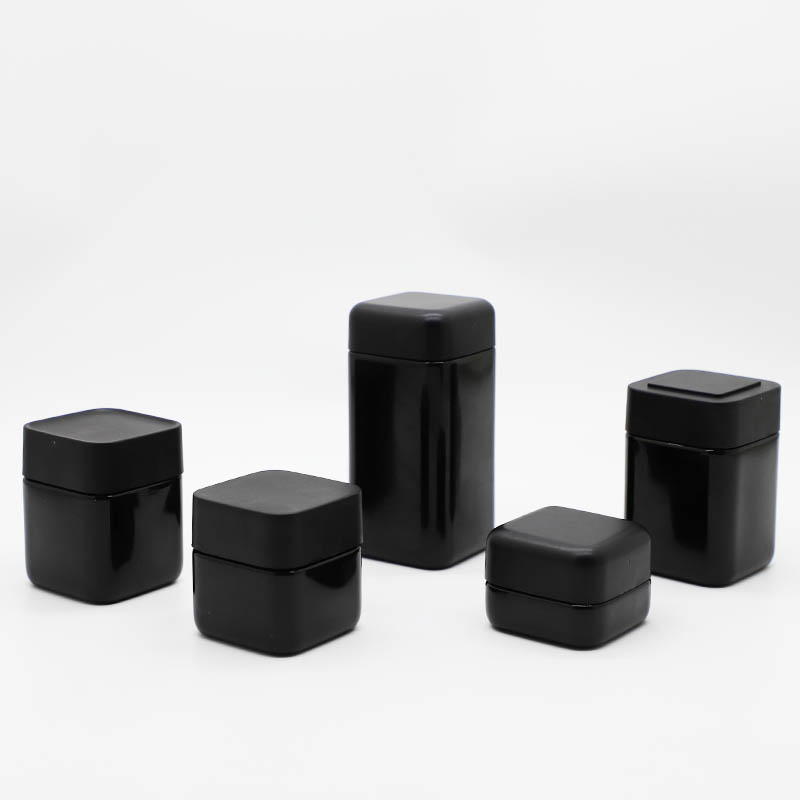
Violet glass packaging — H21 format. Capacity, wall thickness, neck finish and closure are four separate line items in a purchase specification.
The Specification Gap: Why Jars Fail After the Design Is Approved
Most packaging problems in supplement projects are specification problems, not design problems. A design is approved on appearance; mass production is then controlled on parameters that were never written down.
Four failure patterns repeat across buyer projects:
- Capacity ambiguity. A “30 ml jar” can mean 30 ml to the rim, 30 ml at the fill line, or 30 ml of labelled net content after headspace. If the drawing does not state which definition applies, the label claim and the fill line can disagree at the filling machine.
- Wall thickness treated as a constant. Violet glass bodies in this range are specified at 0.38 mm wall thickness. That single value drives unit weight, freight cost, resistance to transit shock, and the tare weight used in net-content checks. Buyers who accept “standard thickness” without a measured range have no acceptance yardstick at pre-shipment inspection.
- Neck finish and closure treated as interchangeable. The 32/400, 41/400 and 89/400 finishes in this range are different interfaces. A child-resistant cap, a dropper, a mist sprayer and a lotion pump each require a matching neck; a closure that threads on but does not pull the correct torque will leak, dry out, or fail a child-resistance check at the same time.
- Compliance documentation assumed rather than specified. Food-contact status is a property of the material set, not of the jar shape. Under Regulation (EU) 2024/3190, Bisphenol A is banned in food contact materials, with the restriction applying to single-use items from 20 July 2026 — a date that falls inside the production cycle of any programme launching now.
In the United States, tamper-evident packaging is not generally mandated at the federal level for dietary supplements in the same way as for many over-the-counter drugs. That is a market-access fact with a commercial consequence: tamper-evidence in supplement packaging is normally a brand and retailer decision that the buyer must specify deliberately, rather than a default legal requirement the factory will add on its own.
Industry Background: Why Format Selection Became a Technical Decision
Supplement packaging is a large, material-diverse category in which glass competes on protection and positioning rather than on volume. The global supplements and nutrition packaging market was estimated at USD 31.3 billion in 2025 (Grand View Research), while plastic holds approximately 41.67% of material segment share (2025). Glass formats therefore earn their place through light protection, premium perception and inertness — not through being the default container.
Demand for light-sensitive, resin-based products reinforces that logic. The Shilajit market is expected to reach USD 221.4 million in 2026, with liquid resin accounting for 40.5% of the category. Resin and oil formats are exactly the products where a container’s light path matters, which is why violet glass appears so often in premium supplement and botanical ranges.
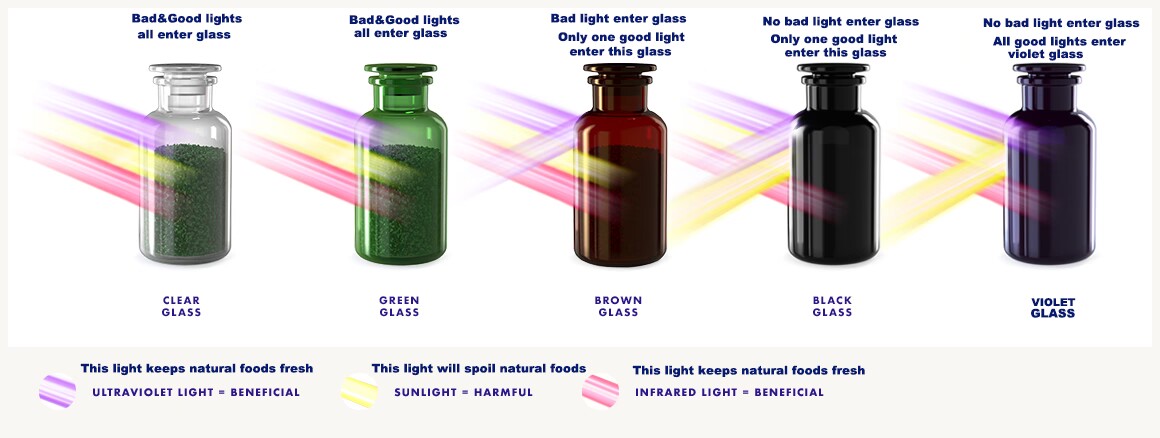
Light transmittance across glass colours. Violet glass is compared with amber on UV blocking; amber is generally the lower-cost route, while violet carries roughly a 15% cost premium in that comparison.
Two properties separate violet glass from amber in Honor Packaging’s comparison data: light transmittance and ultraviolet blocking. The comparison records better protection against ultraviolet rays and better retention of product freshness for violet glass, with a cost difference of about 15% higher than amber, and positions it for food, cosmetic and pharmaceutical packaging. For a buyer, that is a trade-off statement, not a ranking: amber remains adequate where light exposure is short and cost pressure is high.
Regulatory direction adds a second layer. Because BPA restrictions touch coatings and plastic components as well as containers, the closure and dispenser material list — PP, PE, urea, SAN and ABS in this range — belongs in the same compliance conversation as the glass body, not in a separate one.
The Five Formats and What Each One Decides
Model family selection is a function decision made before any dimension is chosen. Each family below solves a different problem; the parameters then follow.
H21 — child-resistant glass jar, clear or violet
H21 is the child-resistant glass jar family, offered in clear and violet glass. It is the default choice when a market or retailer requires a child-resistant closure and the product is a solid, powder or semi-solid dosed by spoon or by hand. Capacity selection happens at model level, not family level: model designations in the family include H21-0011C (15 ml), H21-0004C (1 oz / 30 ml) and H21-0018V (6 oz / 180 ml). The clear version keeps the product visible; the violet version adds the light-blocking property described above.
HDV1 — wide-mouth violet glass jar
HDV1 is the wide-mouth violet jar. Mouth diameter is the parameter that matters here: it governs whether a product can be filled and dispensed as a solid — herbs, flower, capsules, coarse powders — without a funnel or a special filling head. Wide-mouth formats pair with the largest neck finish in the range, 89/400, which also determines the closure family available.
HDV2 — cosmetic violet glass jar
HDV2 is the cosmetic violet jar: same violet glass logic, specified for creams, balms and semi-solid cosmetic formulas where appearance and light protection are both purchase criteria. Because it sits at the cosmetic end of the range, decoration quality — print registration, frosting consistency, label placement — is inspected as closely as the glass itself.
HDV3 — round violet glass essential oil bottle
HDV3 is the round violet glass bottle format for oils and serums. Its functional flexibility is documented: available closures include plastic cap, dropper, mist sprayer and lotion pump, and surface treatment options include label, silk-screen printing and gold stamping. In practice HDV3 is the family where the closure decision carries the most weight, because a dropper, a sprayer and a lotion pump deliver three different dose experiences from the same bottle body.
H19 — child-resistant and vacuum jar
H19 covers the child-resistant and vacuum jar formats. The selection question is additive: child resistance answers a safety requirement, while vacuum sealing answers an oxygen and shelf-life requirement. Buyers should state both needs explicitly, because the closure and sealing system has to satisfy both at once, and the acceptance test must reflect the combination actually ordered.
Parameter by Parameter: What Belongs on the Specification Sheet
1. Capacity — declare nominal and overflow
Write capacity twice: the labelled net content, and the overflow capacity of the body. Add the fill line height. Without all three, a 30 ml and a 1 oz specification can drift apart during sampling, and a powder with a low bulk density can overflow a jar that was dimensionally correct.
2. Glass wall thickness — 0.38 mm
The violet glass bodies in this range are specified at 0.38 mm wall thickness. Treat it as a controlled characteristic: ask for the measured range on the pre-shipment report, not a nominal value on the drawing. Thickness correlates with unit weight, with breakage behaviour in transit, and with the tare weight your filling line uses for net-content control.
3. Diameter and height — define the reference points
Body diameter drives carton cube and case pack. Height should be stated twice: body height, and closed height with the specified closure fitted. A dropper or a lotion pump adds height that a cap does not, so a height figure without the closure reference is an incomplete specification.
4. Net weight — specify the weighed value
Net weight is a freight and inspection parameter, not a catalogue number. Request the weight of a production sample with the closure fitted, and agree the tolerance band in writing. For glass, weight variance is the earliest visible signal of a thickness deviation.
5. Neck finish — 32/400, 41/400, 89/400
Three finishes appear in this range. In 400-series designations the number before the slash is the neck diameter in millimetres and the 400 code fixes the thread profile, so a closure built for one finish will not seal correctly on another even when it appears to fit. Name the finish on the purchase order and name the closure that goes with it; the two are one line item, not two.
6. Materials — glass body plus functional components
The material set spans violet glass for the container body and PP, PE, urea, SAN and ABS for closure and dispensing components. Each choice changes something a buyer can feel or must declare: urea and SAN give a heavier, denser cap presentation, PP and PE are the workhorse resins for caps, droppers and pump bodies, and ABS is used where rigidity matters. Because these components sit in contact with the product or the product’s headspace, the material list must be matched against the food-contact documentation for the destination market.
7. Closures — child-resistant cap, dropper, mist sprayer, lotion pump
Closure selection is a dosing decision before it is a packaging decision. HDV3 documents plastic cap, dropper, mist sprayer and lotion pump as available closures; H21 and H19 are specified around child-resistant closures. Where a product needs both child resistance and a dispensing function, state that combination at enquiry stage so the neck finish and the closure are matched from the start.
8. Surface treatment — sticker, silk-screen, hot stamping, heat transfer, frosted
Decoration options across the range include sticker, silk-screen printing, hot stamping, heat transfer and frosted finishes; HDV3 specifically documents label, silk-screen printing and gold stamping. Two practical rules: specify the decoration on the drawing with position and size, and inspect the first production run for registration and adhesion rather than approving from a digital proof.
Step-by-Step: Building a Signable Specification
Seven steps convert a product brief into a purchase order that can be sampled, produced and inspected.
- Define product form and dose. Powder, capsule, resin, oil or cream; spoon, dropper, spray or pump. This single decision eliminates most of the model range before any dimension is discussed.
- Choose the family and the light route. H21 for child-resistant solids in clear or violet; HDV1 for wide-mouth access; HDV2 for cosmetic semi-solids; HDV3 for oils and serums; H19 where child resistance and vacuum sealing are both required.
- Lock geometry on a drawing. Capacity (nominal and overflow), 0.38 mm wall thickness, body diameter, body height, closed height with the named closure, and weighed net weight with tolerance.
- Match neck finish to closure. Select 32/400, 41/400 or 89/400 and pair it with the child-resistant cap, dropper, mist sprayer or lotion pump it was designed for.
- Select decoration and finish. Sticker, silk-screen, hot stamping, heat transfer or frosted; confirm artwork position and cure method on a physical sample.
- Confirm compliance documentation. Request food-contact statements for the glass and each plastic component, confirm alignment with Regulation (EU) 2024/3190 for EU-bound programmes, and record your tamper-evident decision explicitly for the US market.
- Agree commercial terms and acceptance criteria. Minimum order quantity, delivery term, payment schedule, lead time, inspection method and breakage-control standard — all in writing before tooling or decoration plates are committed.
Application Mapping: Which Format Fits Which Product
Supplements — capsules and powders
H21 in clear or violet glass covers capsule and powder formats with a child-resistant closure; H19 applies where the formula is oxygen-sensitive enough to justify vacuum sealing on top of child resistance. The controlling parameters are capacity with headspace, closure torque and moisture protection at the seal.
Shilajit and resin supplements
Resin is the case where the light path and the dose method decide the pack. With liquid resin holding 40.5% of a category expected to reach USD 221.4 million in 2026, small-capacity violet glass with a dropper is the natural configuration — HDV3 for oil and serum-like viscosity, H21 where a spoon-dosed semi-solid and a child-resistant closure are required instead.
Herbs and flower
Wide-mouth access governs here. HDV1 with the 89/400 finish allows filling and removal of whole botanical material without compression, and the violet glass body supplies the light protection that dried botanicals need over a retail shelf life.
Cosmetics and skincare
HDV2 covers cream and balm formats in violet glass; HDV3 covers oils and serums where a lotion pump, mist sprayer or dropper defines the application experience. In this segment decoration inspection carries as much weight as dimensional inspection, because the pack is part of the product.
Medical and cannabis applications
Both categories put child resistance first and light protection second, which places H21 and H19 at the centre of the specification. Documentation is the differentiator: buyers in these segments should require material statements per component and a defined pre-shipment test, since the closure system is what the safety claim actually rests on.
Comparison Table: H21, HDV1, HDV2, HDV3 and H19
| Parameter | H21 | HDV1 | HDV2 | HDV3 | H19 |
|---|---|---|---|---|---|
| Format and function | Child-resistant glass jar, clear or violet | Wide-mouth violet glass jar | Cosmetic violet glass jar | Round violet glass bottle for oils and serums | Child-resistant / vacuum jar |
| Glass body | Violet or clear glass | Violet glass | Violet glass | Violet glass | Violet glass (child-resistant and vacuum formats) |
| Glass wall thickness | 0.38 mm (range specification) | 0.38 mm | 0.38 mm | 0.38 mm | 0.38 mm |
| Capacity reference | Model-level designations in the family include 15 ml, 1 oz (30 ml) and 6 oz (180 ml) | Model drawing | Model drawing | Model drawing | Model drawing |
| Neck finish | Narrow-neck finish from the 32/400 and 41/400 set | Wide-mouth finish — 89/400 | Per model drawing | Narrow-neck finish matched to dropper, sprayer or pump | Per model drawing, matched to CR / vacuum system |
| Closures | Child-resistant cap | Cap matched to 89/400 | Cap matched to model finish | Plastic cap, dropper, mist sprayer, lotion pump | Child-resistant cap; vacuum sealing format |
| Surface treatment | Sticker, silk-screen, hot stamping, heat transfer, frosted | Sticker, silk-screen, hot stamping, heat transfer, frosted | Sticker, silk-screen, hot stamping, heat transfer, frosted | Label, silk-screen printing, gold stamping (confirmed); heat transfer and frosted also in range | Sticker, silk-screen, hot stamping, heat transfer, frosted |
| Best-fit application | Capsules, powders, spoon-dosed semi-solids with child resistance | Herbs, flower, whole botanicals, large-dose solids | Creams, balms, cosmetic semi-solids | Oils, serums, aroma and dropper-dosed liquids | Oxygen-sensitive formulas requiring child resistance |
| Material set in range | Violet glass for bodies; PP, PE, urea, SAN and ABS for closure and dispensing components | ||||
| Thread specs in range | 32/400, 41/400, 89/400 — closure must be specified against the same finish as the container | ||||
Table notes: glass thickness, thread set, material set and decoration options are range-level specifications. Diameter, height and net weight are model-specific and should be taken from the model drawing and the weighed production sample for the exact code ordered. Decoration availability per model is confirmed at quotation.
Purchasing Terms, Capacity and Acceptance Criteria
For this range the commercial framework is stated up front, which lets a buyer build the schedule before committing. Minimum order quantity is 10,000 units. Monthly production capacity is 100,000 units, and typical production lead time is 30–45 days. Delivery terms are FOB. Payment is arranged on receipt of a 30% down payment, with the remaining 70% paid prior to shipment. The acceptance criterion is the pre-shipment test.
Quality control on export orders includes 100% pre-shipment testing and third-party inspection (SGS). For fragile glass, breakage control is handled at packing level: finished jars are wrapped with protective foam and loaded onto pallets carefully, following defined shockproof packing and palletizing standards. Buyers shipping to the EU, US, Middle East or Southeast Asia can therefore align the inspection clause with an existing third-party report rather than creating a new protocol.
Minimum order quantity: 10,000 units · Monthly capacity: 100,000 units · Lead time: 30–45 days · Delivery term: FOB · Payment: 30% down payment, 70% before shipment · Acceptance: pre-shipment test, 100% pre-shipment testing with SGS third-party inspection option.
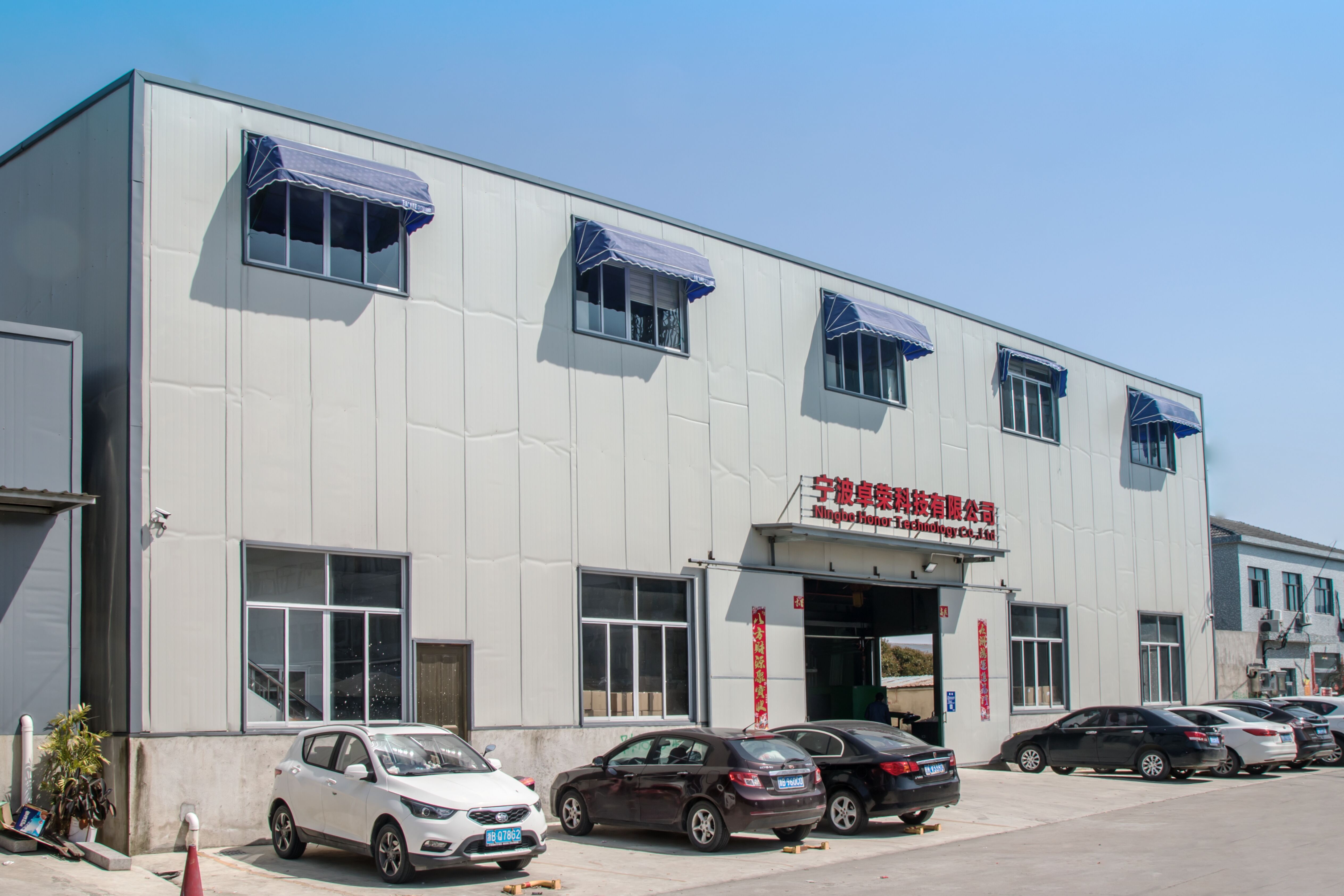
Production base in Ningbo, China. Honor Packaging was founded in 2015, operates a 45,000 m² factory with 310 employees and a 15-person R&D team, and exports 100% of output.
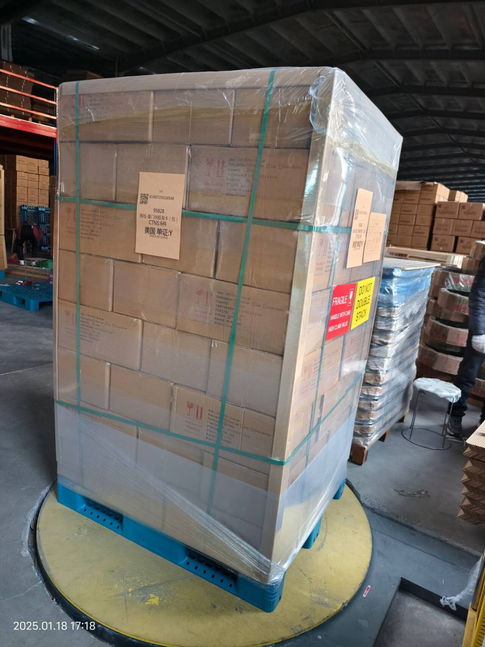
Breakage control: protective foam wrapping and careful palletizing before dispatch.
Frequently Asked Questions
Which parameters determine whether an H21 or HDV jar meets food-contact compliance?
Compliance is decided by the full contact material set, not by the glass colour. For any H21, HDV1, HDV2, HDV3 or H19 specification, the items to confirm are the violet glass body, the closure and dispensing components (PP, PE, urea, SAN, ABS), and any coating or liner that touches the product. For EU-bound programmes, Regulation (EU) 2024/3190 bans Bisphenol A in food contact materials, with the restriction applying to single-use items from 20 July 2026. For the US market, tamper-evident packaging is not generally mandated at the federal level for dietary supplements the way it is for many over-the-counter drugs, so the tamper-evident decision should be recorded as a buyer requirement. On the production side, orders are supported by 100% pre-shipment testing and third-party inspection (SGS).
What production capacity and model coverage does Honor Packaging support?
Monthly production capacity is 100,000 units, with a minimum order quantity of 10,000 units and a typical production lead time of 30–45 days. The model coverage relevant to supplement packaging spans the H21 child-resistant glass jar in clear or violet, the HDV1 wide-mouth violet jar, the HDV2 cosmetic violet jar, the HDV3 round violet glass bottle, and the H19 child-resistant / vacuum jar, built around the company’s three main product lines: child-resistant packaging, violet glass packaging and vacuum packaging. The company was founded in 2015, operates a 45,000 m² factory with 310 employees and a 15-person R&D team, and exports to the EU, US, Middle East and Southeast Asia.
What are the purchasing terms and acceptance criteria?
MOQ is 10,000 units, delivery terms are FOB, and the acceptance criterion is the pre-shipment test. Payment terms: production is arranged upon receipt of a 30% down payment, with the remaining 70% paid prior to shipment. Because delivery is FOB, freight, insurance and destination charges sit outside the quoted term and should be budgeted separately from the unit price of the jar or bottle.
How should a buyer validate a specification before mass production?
Validate against the same parameters that will be inspected later. On the sample, verify overflow capacity and fill line against the labelled net content, measure the 0.38 mm wall thickness range, weigh the assembled unit with the specified closure fitted, check that the closure matches the stated neck finish (32/400, 41/400 or 89/400) and holds its intended torque, and confirm decoration registration and adhesion on a produced part rather than a digital proof. Where child resistance or vacuum sealing is claimed, test the assembled system — jar plus closure — since performance is a property of the pairing, not of either component alone. A filling-line trial on the actual equipment remains the final check.
How long does production take, and how are glass jars protected in transit?
Typical production lead time is 30–45 days, against a monthly capacity of 100,000 units and a 10,000-unit MOQ. Fragile glass is packed with protective foam wrapping and loaded onto pallets under defined shockproof packing and palletizing standards before dispatch, and export orders can be supported with 100% pre-shipment testing plus third-party inspection (SGS). To move from specification to sample, send the model code, capacity, neck finish, closure type and decoration to info@honorpkg.com, or start a quotation through WhatsApp at +86 15968944995.
Conclusion: Specify the Interface, Not Just the Jar
The five formats in this range differ less in appearance than in the interfaces they create: which closure fits, which neck finish applies, how much light reaches the product, and which test proves the assembled pack works. A buyer who writes capacity (nominal and overflow), 0.38 mm glass thickness, body diameter, closed height, weighed net weight, neck finish, closure type and decoration onto a single specification sheet has removed the four failure patterns described at the start of this guide.
Start from the product, not the catalogue: form and dose decide the family, the family decides the neck finish, and the neck finish decides the closure. Everything else — decoration, packing, inspection — follows from those decisions.
Next Step: Sample, Quotation or Full Specification Review
Honor Packaging supplies sample requests and quotations against a written parameter list, and can review an existing specification against the H21, HDV1, HDV2, HDV3 and H19 model data.
MOQ 10,000 unitsLead time 30–45 daysMonthly capacity 100,000 unitsFOBPre-shipment test
Website: www.honorcrpkg.com · Email: info@honorpkg.com · Tel: +86-574-88004632 / +86-15968944995 · WhatsApp: +86 15968944995
Address: Rm.305, No.1 Building, No.568 SiMing East Road, YinZhou District, Ningbo City, China.
Download the full product and capability catalogue (PDF): Honor Packaging brochure
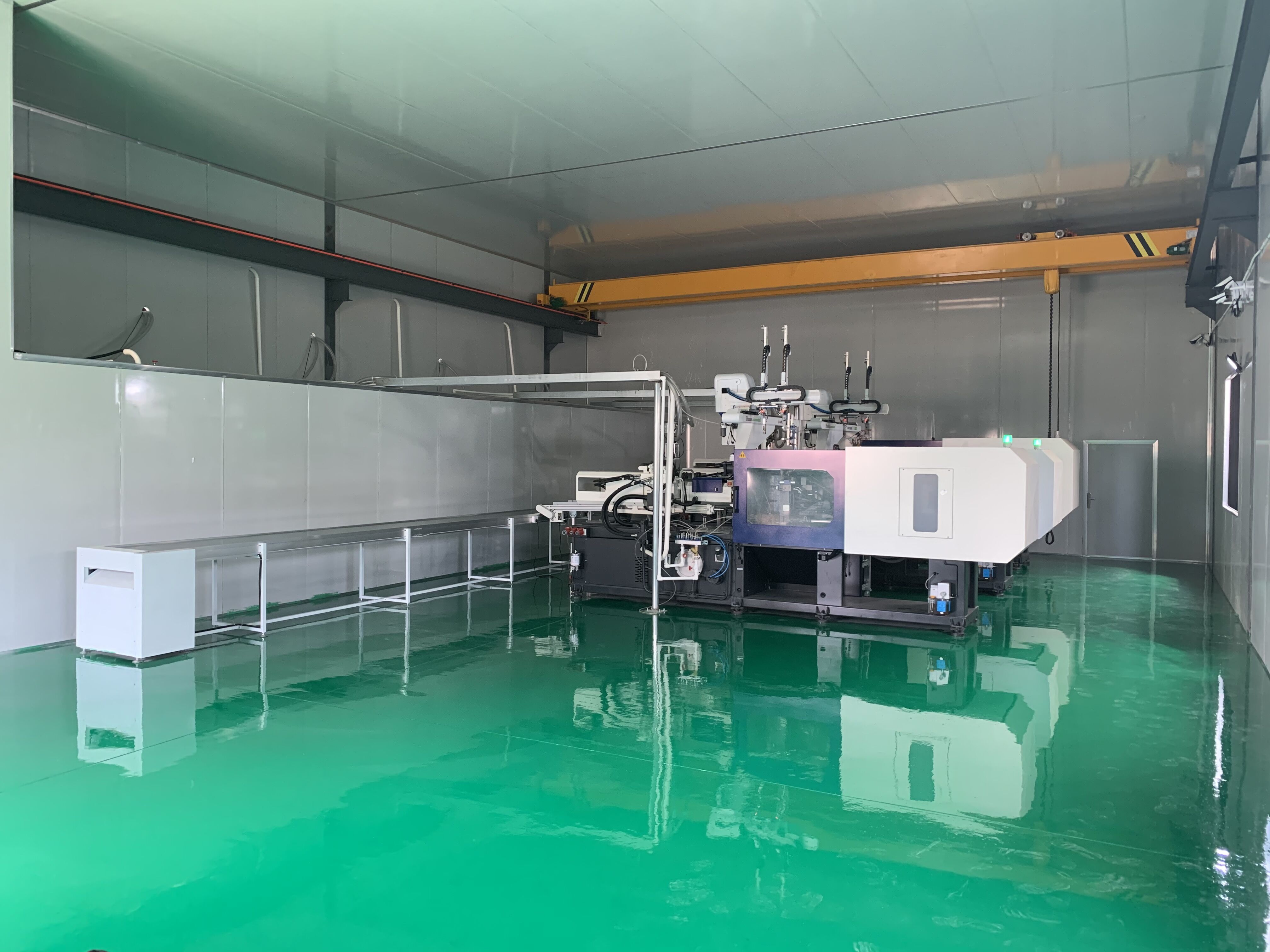
Pre-shipment inspection at the Ningbo production base — the basis of the acceptance criterion used on supplement packaging orders.
Have Questions or Need More Details?
Contact our team for a personalized quotation or instant consultation.
Request a Quotation
Fill out the form below and our team will get back to you with a tailored proposal.
WhatsApp Direct Chat
Prefer to chat in real-time? Message us on WhatsApp for instant assistance & quick answers.
- Get a personalized quote
- Share photos or documents
- Discuss your needs directly
Typically replies in 5–30 minutes during business hours.