
Understanding the H19 Vacuum Click Jar: How Vacuum Sealing Protects Products
The H19 Vacuum Click Jar is a small glass packaging format that pairs a vacuum seal with a child-resistant closure. In its 5 ml square version, it is built to protect oxygen-, moisture-, and light-sensitive products from filling through first opening. The H19 platform is available in 5 ml and 9 ml capacities, in square, round, triangle, and hexagon shapes, with net weights from 27 g to 38 g, packed at 250 pieces per carton.
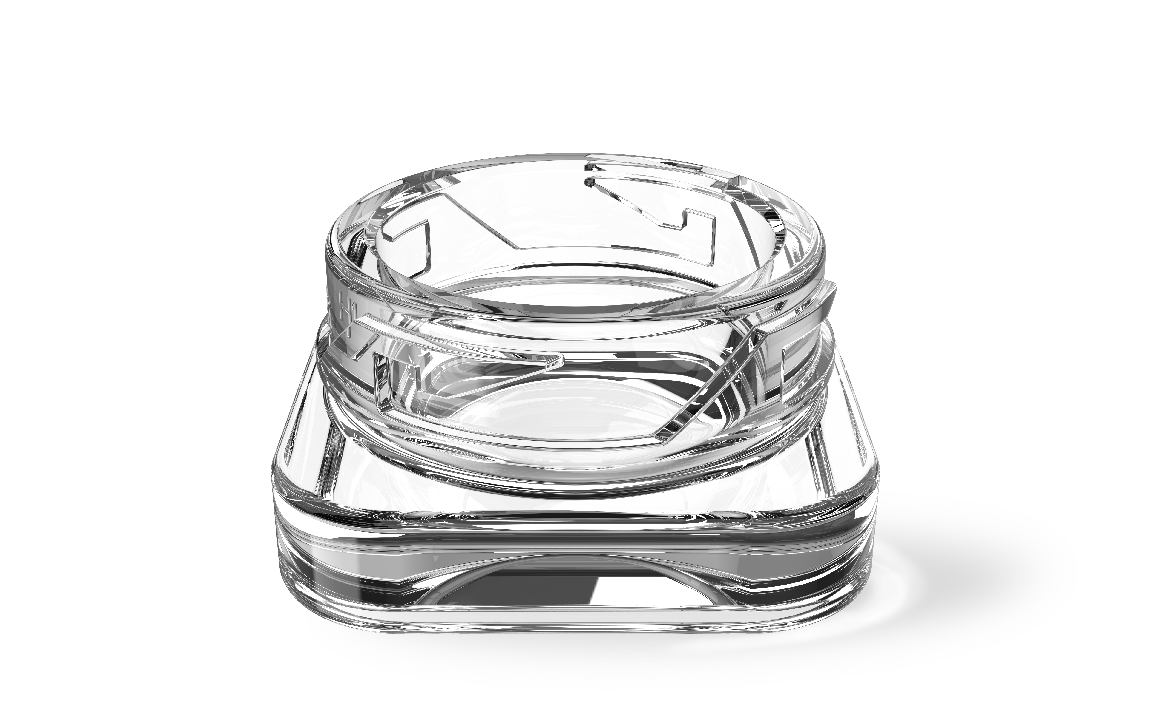
H19 glass jar with child-resistant cap, shown in a format used for small-volume concentrates and sensitive formulations.
What the H19 Vacuum Click Jar Is — and What It Is Not
The H19 is made of glass and supplied with a child-resistant cap. The platform covers square, round, triangle, and hexagon shapes, with capacities of 5 ml and 9 ml and net weights from 27 g to 38 g. The 5 ml square version is the format most often associated with the Vacuum Click Jar description, because a compact square footprint stacks predictably and uses shelf space efficiently.
The name "Vacuum Click Jar" describes the closing action rather than a separate product family. The cap is pressed down until it seats, and the closure holds the internal volume under vacuum. The word "click" refers to that seating action; the word "vacuum" refers to the reduced air volume inside the sealed jar. The exact vacuum level and holding time depend on the product, the fill level, and the closure specification, so buyers should confirm those values against their own validation rather than assume one figure applies to every formulation.
What the H19 is not: it is not a plastic vial, it is not a jar that relies on a screw thread alone, and it is not a packaging system that eliminates the need for product-specific testing. The vacuum seal controls the internal atmosphere. The child-resistant cap controls access. Neither feature substitutes for the other, and neither removes the buyer's obligation to validate the package against the product and the destination market.
The Protection Problem: Why a Single Seal Is Rarely Enough
Products that lose value quickly usually share four vulnerabilities. The first is oxygen exposure, which drives oxidation, aroma loss, and color shift. The second is moisture ingress, which affects stability and texture. The third is light transmission, particularly in the ultraviolet range, which accelerates degradation in many formulations. The fourth is access: a package that protects the contents but opens too easily creates a safety and liability problem.
A conventional jar with a screw cap addresses part of the first two issues, and only for as long as the cap is properly seated. A child-resistant closure addresses the fourth issue but does nothing for the internal atmosphere. Buyers who need both often end up combining two separate packaging systems, which adds cost, handling steps, and additional validation work.
The H19 Vacuum Click Jar is designed around that gap. The vacuum seal removes air from the headspace and holds the closure in a compressed state. The child-resistant cap adds a deliberate opening sequence that reduces the risk of accidental opening by children. The two functions act on different failure modes, which is why they are specified together rather than treated as alternatives.
Industry Background: Where Demand for Combined Protection Comes From
Protective packaging is a large and compliance-driven category. Grand View Research values the global protective packaging market at USD 41.5 billion in 2026. Within that category, child-resistant packaging is projected to reach USD 31.07 billion in 2026, according to Global Market Insights. Those figures describe the category, not the H19 specifically, but they explain why small-format jars with multiple protection features attract attention from food, cosmetic, and pharmaceutical buyers.
Regulation reinforces the trend. In the United States, special packaging requirements under the Poison Prevention Packaging Act (PPPA) and the Federal Insecticide, Fungicide, and Rodenticide Act (FIFRA) apply to the primary or immediate packaging of certain regulated products. CPSC guidance cites 16 CFR 1700.20, which requires that child-resistant packaging prevent at least 85% of children under five from opening it within five minutes, while remaining accessible to adults. ISO 8317:2015 sets performance requirements and test methods for reclosable child-resistant packages, and ISO 14375:2018 covers non-reclosable formats. ASTM D3475 classifies special packaging by closure type and opening action.
For buyers, the practical consequence is simple: a jar is not "protective" because it has a cap. It is protective when the closure, the seal, and the container material are validated together for the specific product and the specific market. That is the standard the H19 has to be evaluated against.
How the H19 Vacuum Click Jar Works
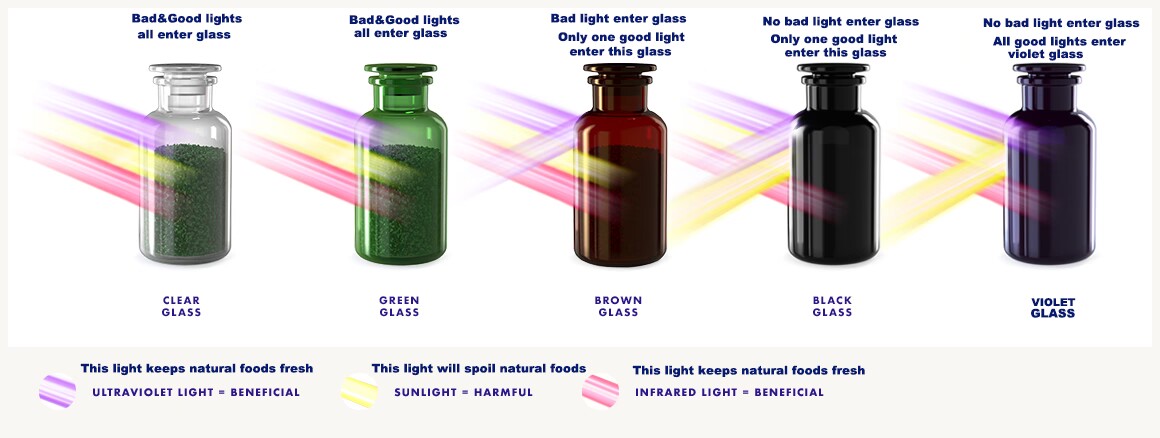
Light transmittance differs by glass color. Violet glass is specified where UV protection is a critical requirement.
Glass body and format range
The container body is glass, which gives the jar dimensional stability, chemical inertness, and a surface that accepts labeling and printing without the compatibility issues that can affect plastic. The H19 platform covers square, round, triangle, and hexagon shapes. Capacities are 5 ml and 9 ml, and net weights range from 27 g to 38 g depending on format. The 5 ml square version is the most compact option and is typically chosen when the fill volume is small and the retail unit needs a stable base.
Vacuum sealing: what it changes inside the jar
Removing air from the headspace reduces the oxygen available to the product. Less oxygen means slower oxidation, which in practice shows up as better retention of aroma, color, and texture. In a sealed vacuum jar, the pressure difference also helps hold the closure in place, which is one reason the vacuum and the closure are designed as a pair rather than selected independently.
It is important to separate the concept from the specification. The concept — reduced oxygen slows degradation — is well established. The specification — how much vacuum the H19 holds, for how long, and with which product — has to be confirmed through filling trials and closure validation. Buyers should treat any single vacuum figure applied to all products with caution.
How the child-resistant closure complements the seal
A vacuum seal protects the contents; it does not control access. The H19's child-resistant cap adds a deliberate opening sequence that reduces the risk of accidental opening by children. The design also reduces the risk of child accidental ingestion according to the product description. The two features are complementary because they act at different moments: the vacuum works while the jar is closed, and the child-resistant mechanism works when someone tries to open it.
For products that are both oxygen-sensitive and potentially harmful if ingested, that combination is more useful than either feature alone. For products that are not hazardous, the child-resistant closure is still relevant where state or national special packaging rules apply, or where the brand wants a consistent safety platform across a product line.
Violet glass and UV protection
H19 jars can be specified in violet glass. Compared with amber glass packaging, violet glass offers distinct advantages in UV protection, and the core difference is light transmittance. Better UV blocking helps maintain product freshness in food, cosmetic, and pharmaceutical applications where light exposure is a known degradation pathway. The source comparison places violet glass packaging at about 15% higher cost than the alternative, offset by reduced maintenance requirements.
The trade-off is worth stating plainly: UV protection costs more, and it only pays back when the product actually degrades under light. A buyer running a clear, stable formulation may not need violet glass. A buyer running a photosensitive oil or a botanical extract usually does.
Step-by-Step: From Filling to a Sealed 250-Piece Carton
- Format selection. Choose 5 ml or 9 ml, and square, round, triangle, or hexagon, based on fill volume, label area, and downstream handling. The 5 ml square version is the standard starting point for compact retail units.
- Product compatibility check. Confirm that the formulation is compatible with glass and with the closure gasket or liner specified for the jar. This is the step where most late-stage failures are avoided.
- Filling. Fill to the validated level, leaving the headspace required for the vacuum to form and for the product to remain stable during transport.
- Closure placement. Seat the child-resistant cap and apply the pressing action that activates the vacuum click. The closure should seat fully without forcing.
- Seal verification. Check closure seating and vacuum integrity according to the parameters agreed with the supplier. This check belongs in the filling line procedure, not only in the supplier's incoming inspection.
- Cartoning. Pack 250 pieces per carton. For glass, the carton is only the outer layer of protection; the inner packaging does the real work.
Honor Packaging handles fragile glass shipments with protective foam wrapping and pallet loading, which is the control method used for breakage risk. That step matters because a vacuum seal is only useful if the jar arrives intact and the closure has not been disturbed in transit.
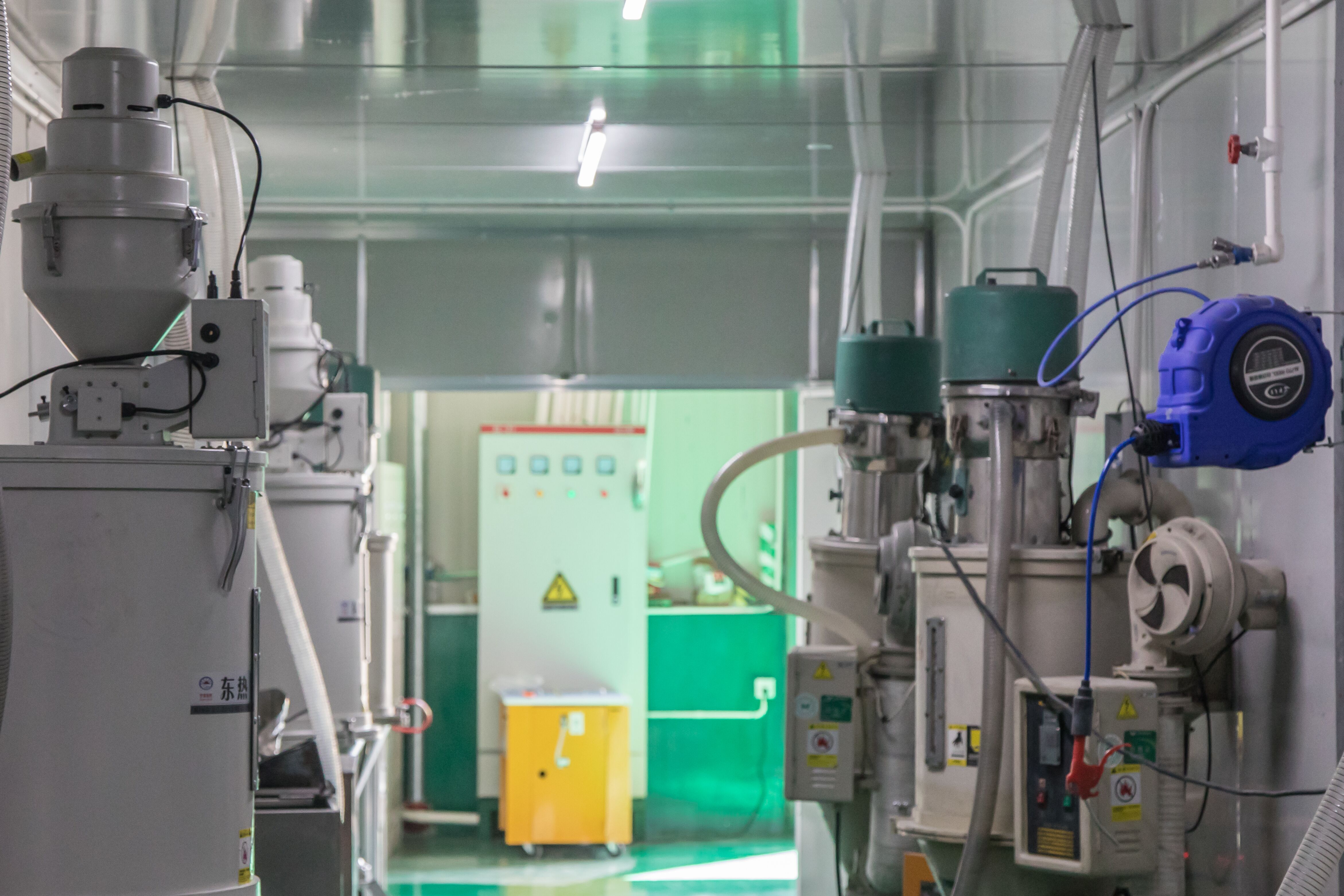
Manufacturing environment: Honor Packaging operates joint-venture production bases for glass and plastic packaging.
Use Cases: Food, Cosmetic, and Medical Applications
Food packaging
Concentrates, extracts, spices, and specialty ingredients benefit from reduced oxygen exposure. The 5 ml format suits sample and single-use formats, while 9 ml gives more headroom for products sold in small retail units. Where the product is light-sensitive — for example, certain oils and botanical extracts — violet glass adds a second layer of protection beyond the vacuum seal.
Cosmetic packaging
Serums, essential oils, and actives that oxidize or fade under light are a natural fit for violet glass combined with a vacuum seal. The child-resistant cap also matters for products containing ingredients that should not be accessible to children. The 5 ml square format is small enough for sampling and shelf-ready sets, and the square shape allows tight secondary packaging.
Medical and pharmaceutical packaging
Small-volume samples, test materials, and regulated products require packaging that supports both content protection and controlled opening. The H19's child-resistant design is relevant where special packaging rules apply. Buyers should confirm the specific compliance pathway for their market, because the obligation attaches to the primary or immediate packaging and varies by jurisdiction.
Comparison: H19 Vacuum Click Jar vs. Amber Glass Packaging
The comparison below uses only the facts supplied in the H19 model description and the associated comparison data. It is a decision aid, not a claim that every H19 configuration has been tested against every amber glass product.
| Comparison point | H19 Vacuum Click Jar | Amber glass packaging |
|---|---|---|
| Material | Glass | Glass |
| UV protection | Distinct advantage over amber glass; violet glass option improves light blocking | Baseline in the source comparison |
| Freshness retention | Better protection against ultraviolet rays; helps maintain product freshness | Lower UV protection in the same comparison |
| Child-resistant closure | Included as part of the H19 pack | Not specified in the available data |
| Relative cost | About 15% higher than the alternative | Lower |
| Maintenance | Less maintenance required | Higher relative maintenance in the same comparison |
| Typical fit | Food, cosmetic, and pharmaceutical packaging where UV protection is critical | General glass packaging |
Cost and performance statements are relative comparisons from the source data, not quotations. Actual pricing depends on format, quantity, printing, and closure specification. Buyers should validate the specific format against their own product and market.
Frequently Asked Questions
Is the H19 Vacuum Click Jar a compliant child-resistant package?
The H19 is described as a child-resistant pack with a child-resistant cap. Compliance depends on the closure, the jar size, and the product it contains. In the United States, 16 CFR 1700.20 sets a performance expectation that at least 85% of children under five cannot open the package within five minutes, while adults can still access it. ISO 8317:2015 defines test methods for reclosable child-resistant packages. Buyers should request test reports for the exact H19 format and closure they plan to use rather than relying on a general category claim.
What capacities and shapes does the H19 Vacuum Click Jar come in?
The H19 platform is available in 5 ml and 9 ml capacities. Shapes include square, round, triangle, and hexagon. Net weight ranges from 27 g to 38 g. The 5 ml square version is the format most often associated with the Vacuum Click Jar description.
How much more does the H19 cost than amber glass packaging?
The source comparison places the H19 at about 15% higher cost than the alternative, with the difference attributed to enhanced protection and reduced maintenance. That figure is a relative comparison, not a price list. Actual quotations depend on format, quantity, printing, and closure specification.
Can buyers request samples before placing an order?
Sample evaluation is a normal step before committing to a custom protective packaging order. Honor Packaging works with clients on structural development and manufacturing validation before mass production, and sample requests can be directed through the company's contact channels. A sample review should confirm fill level, closure feel, vacuum behavior, and label fit on the actual format.
What is the packaging quantity and production capacity?
H19 jars are packed at 250 pieces per carton. Honor Packaging reports an annual output of 1,000,000 units, with a 45,000 m² factory, 310 employees, and a 15-person R&D team. Those figures describe the supplier's stated capacity, not a guaranteed lead time for a specific order.
Conclusion
The H19 Vacuum Click Jar is best understood as a combined protection system rather than a single-feature jar. The vacuum seal limits oxygen exposure, the child-resistant closure controls access, and the violet glass option reduces light transmission. The format range — 5 ml and 9 ml, four shapes, 250 pieces per carton — makes it usable across food, cosmetic, and medical packaging where small volumes and high protection requirements meet.
The main decision for buyers is not whether vacuum or child resistance is "better." It is whether the specific combination has been validated for the product, the market, and the filling line. That validation, not the feature list, is what separates protective packaging from packaging that merely looks protective.
Next step: Review the H19 format against your fill volume and market requirements, then request a sample or quotation from Honor Packaging.
Website: www.honorcrpkg.com · Email: info@honorpkg.com · WhatsApp: +86 159 6894 4995
Download the Honor Packaging brochure for the full product range.
Have Questions or Need More Details?
Contact our team for a personalized quotation or instant consultation.
Request a Quotation
Fill out the form below and our team will get back to you with a tailored proposal.
WhatsApp Direct Chat
Prefer to chat in real-time? Message us on WhatsApp for instant assistance & quick answers.
- Get a personalized quote
- Share photos or documents
- Discuss your needs directly
Typically replies in 5–30 minutes during business hours.