Child-Resistant Glass Jars vs. Plastic Vials: A 2026 Packaging Comparison Guide
Child-Resistant Glass Jars vs. Plastic Vials: A 2026 Packaging Comparison Guide
Pharmaceutical, medical, and nutraceutical brands are now choosing between child-resistant glass jars and plastic vials under tighter safety and shelf-life requirements. This guide compares the verified physical parameters of the H19 child-resistant glass jar with common plastic-vial characteristics so buyers can make a sourcing decision based on packaging-material integrity, compliance expectations, weight planning, capacity, and clinical risk.
Scope note: all technical figures in this article are traceable to the manufacturer’s published product records. Where a claim cannot be verified, it is omitted rather than estimated.
Why This Comparison Is a Sourcing Decision, Not Just a Material Preference
Protective packaging has become a regulated category of its own. Global market research published in 2025 estimates the protective packaging market at between USD 40.4 billion and USD 44.02 billion, depending on the analyst’s segmentation method. Fortune Business Insights projects growth to USD 80.25 billion by 2034, while Grand View Research notes that flexible materials still account for most of the market by revenue. Those different methodologies explain why brands should evaluate packaging suppliers on verified product data rather than market averages.
For regulated contents, the more important driver is child safety. Child-resistant packaging must comply with ISO/EN 8317 in the EU and 16 CFR 1700.20 in the US to prevent access by children under five. That compliance requirement applies to closures and to the complete package system, which means material choice cannot be separated from closure engineering.
This article therefore compares two common package forms: glass jars with child-resistant caps, as illustrated by the H19 child-resistant glass jar, and typical plastic vials widely used for oral solids, liquids, and medical accessories. The goal is not to claim that one material wins all projects; it is to define the trade-offs clearly enough for a procurement team to make its own decision.
What Protective Means in a Child-Resistant Glass Jar
In a child-resistant packaging project, “protective” usually covers three layers: closure security, light protection, and physical integrity of the container.
Closure Security and Access Prevention
Child-resistant glass jars combine a rigid glass body with a specially designed cap that requires a coordinated adult action to open. The purpose is to reduce the chance that young children can open the container and access concentrated contents. Compliance with the relevant EU or US protocol is assessed on the finished package, not on the glass blank alone, so the cap design and the carton-level quality plan are as important as the mould itself.
Ultraviolet and Light Protection
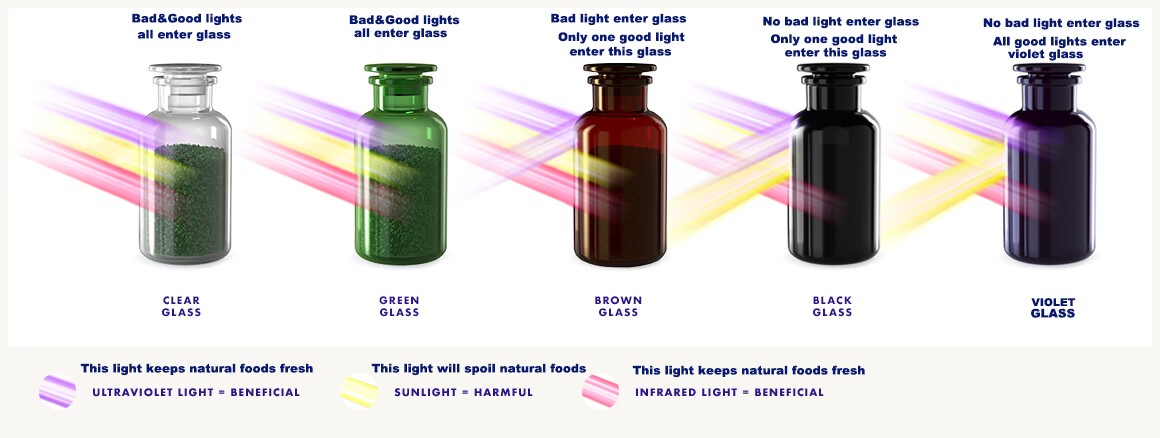
Light transmittance is one of the core functional differences between glass colours. Colored glass packaging, including violet glass options, can provide improved protection against ultraviolet rays and can help maintain product freshness compared with more transparent alternatives. This is relevant for contents whose stability depends on limiting UV exposure.
Compared with amber glass packaging specifically, certain violet or UV-blocking glass options show distinct advantages in UV-protection performance. Because light damage is cumulative, a packaging decision made early in product development can extend a formulation’s commercial life.
Physical Integrity and Maintenance
Glass is dense, rigid, and impermeable. In the context of protective packaging, buyers generally choose glass when they want a stable container with high surface hardness, excellent barrier properties, and no unwanted interaction with the contents. Glass also communicates quality in clinical and premium settings.
From a maintenance perspective, glass jar systems can reduce maintenance needs compared with less protective alternatives. One manufacturer’s comparison data states that a child-resistant glass jar may cost about 15% more than a standard alternative, while providing enhanced protection, lower light transmittance, and less frequent maintenance. That cost premium should be evaluated against the cost of rejected batches, returned product, or regulatory findings.
Documented Reference: H19 Child-Resistant Glass Jar Specifications
For buyers that want a concrete reference, the H19 child-resistant pack is documented in public manufacturer files as a clear concentrate jar made from glass with a child-resistant cap. It is available in four geometries: square, round, triangle, and hexagon.
Capacity options are 5 ml and 9 ml. Net weight ranges from 27 g to 38 g, and the jar is packed 250 pieces per carton.
These figures matter because they allow a logistics team to calculate approximate pallet utilization, freight weight, and filling-line compatibility before the first sample arrives. The 5–9 ml range suits high-potency concentrates where dose accuracy and protection against light are critical.
If a project requires a larger child-resistant glass jar configuration, a separate H21 reference series also exists in the same supplier’s product system. However, H21 drawings and dimensional records are identified in this guide simply as a reference for further inquiry; any order should be based on approved specifications issued for that exact series.
- Container type: clear concentrate jar
- Primary material: glass
- Closure: child-resistant cap
- Available shapes: square, round, triangle, hexagon
- Capacity range: 5 ml and 9 ml
- Net weight range: 27 g to 38 g
- Packaging unit: 250 pieces per carton
Where Plastic Vials Remain a Rational Choice
Plastic vials are an established packaging format across healthcare and medical supply chains. They are commonly used because of their lighter weight, lower material density, ease of decorating, and familiarity on automated filling lines. For products that are not UV-sensitive, do not require a high gas barrier, and are covered by an effective tamper-evident or child-resistant closure, a plastic vial can be the more efficient commercial solution.
Plastic also allows moulded-in child-resistant features. The word “plastic” refers to a large family of polymers, and each polymer has different oxygen permeability, moisture transmission, UV stability, and chemical resistance. A buyer should never assume that all plastic vials behave identically.
The practical limitation appears when a formulation is sensitive to light, oxygen, or leaching. A transparent plastic vial cannot offer the UV-blocking characteristics of coloured glass unless the resin is modified with additives or the vial is over-labelled. Even then, the migration and long-term stability profile of the polymer must be separately qualified.
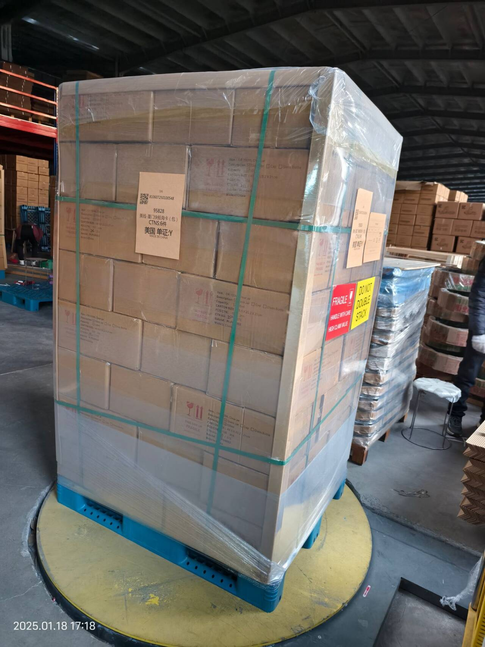
Another consideration is fragility. Glass is breakable, and protective export packaging must be designed accordingly. One documented risk-control measure from Honor Packaging includes wrapping fragile products with protective foam and loading them carefully onto pallets before shipment. This affects freight planning and unboxing procedures at the receiving site. Plastic vials, by contrast, do not require the same level of breakage protection.
Side-by-Side Comparison: Child-Resistant Glass Jar vs. Plastic Vial
| Evaluation Point | Child-Resistant Glass Jar (H19 Reference) | Plastic Vial (Typical Industry Format) |
|---|---|---|
| Primary material | Glass with child-resistant cap | Polymer resin; exact type depends on formulation and supplier |
| Child-resistant function | Integrated child-resistant cap | Possible with push-and-turn or multi-step closure; must be tested with the complete vial |
| UV-light protection | Colored glass versions reduce UV transmittance; documented advantage over amber glass and standard transparent options | Transparent resins typically transmit more light; added UV blockers or opaque labels may be required |
| Capacity range | Verified H19 reference: 5 ml and 9 ml | Wide capacity range available from many moulds; needs project-specific specification |
| Weight consideration | H19 net weight: 27 g to 38 g | Generally lighter per finished container |
| Breakage risk | Glass can break; protective foam and palletizing are documented control measures | Non-breakable under normal handling |
| Maintenance and field risk | Designed to reduce child accidental ingestion risk; lower maintenance claims vs. less protective alternatives | Needs separate evaluation of resin compatibility, light barrier, and long-term stability |
Table sources: Honor Packaging citable product record H19; Honor Packaging comparison data for glass packaging; generic plastic-vial characteristics are described as typical industry knowledge without a specific brand claim.
Three Use Cases Where the Choice Flips
Case 1: UV-Sensitive Pharmaceutical Concentrate
A high-value liquid concentrate with low photo-stability will usually favour a UV-blocking glass jar. The manufacturer’s verified comparison note states that this product provides better protection against ultraviolet rays and helps maintain product freshness compared with alternatives, and is suited to food packaging, cosmetic packaging, and pharmaceutical packaging scenarios where UV protection is critical. The extra 15% investment is easier to justify when the alternative is a failed stability study.
Case 2: High-Speed Blister or Low-Weight Program
For a low-cost, high-throughput programme that is not light-sensitive, a plastic vial is often easier to run on existing filling equipment and to ship economically. The buyer should still require a child-resistant closure tested to ISO/EN 8317 or 16 CFR 1700.20 as applicable.
Case 3: Premium Medical Accessory or Clinical Presentation
When external perception influences compliance, glass communicates clarity and stability. A square or hexagon glass jar with a child-resistant cap also improves shelf presence. That visual premium can support higher perceived value in a regulated product category.
How to Verify a Protective Packaging Supplier Before You Commit
Verified specifications are the backbone of any supplier comparison. Before requesting a quote, a sourcing team should ask to see the drawing for the exact child-resistant glass jar model, confirm the closure mechanism, request a closure functionality report, and check whether the supplier’s production base can execute the packaging volume consistently.
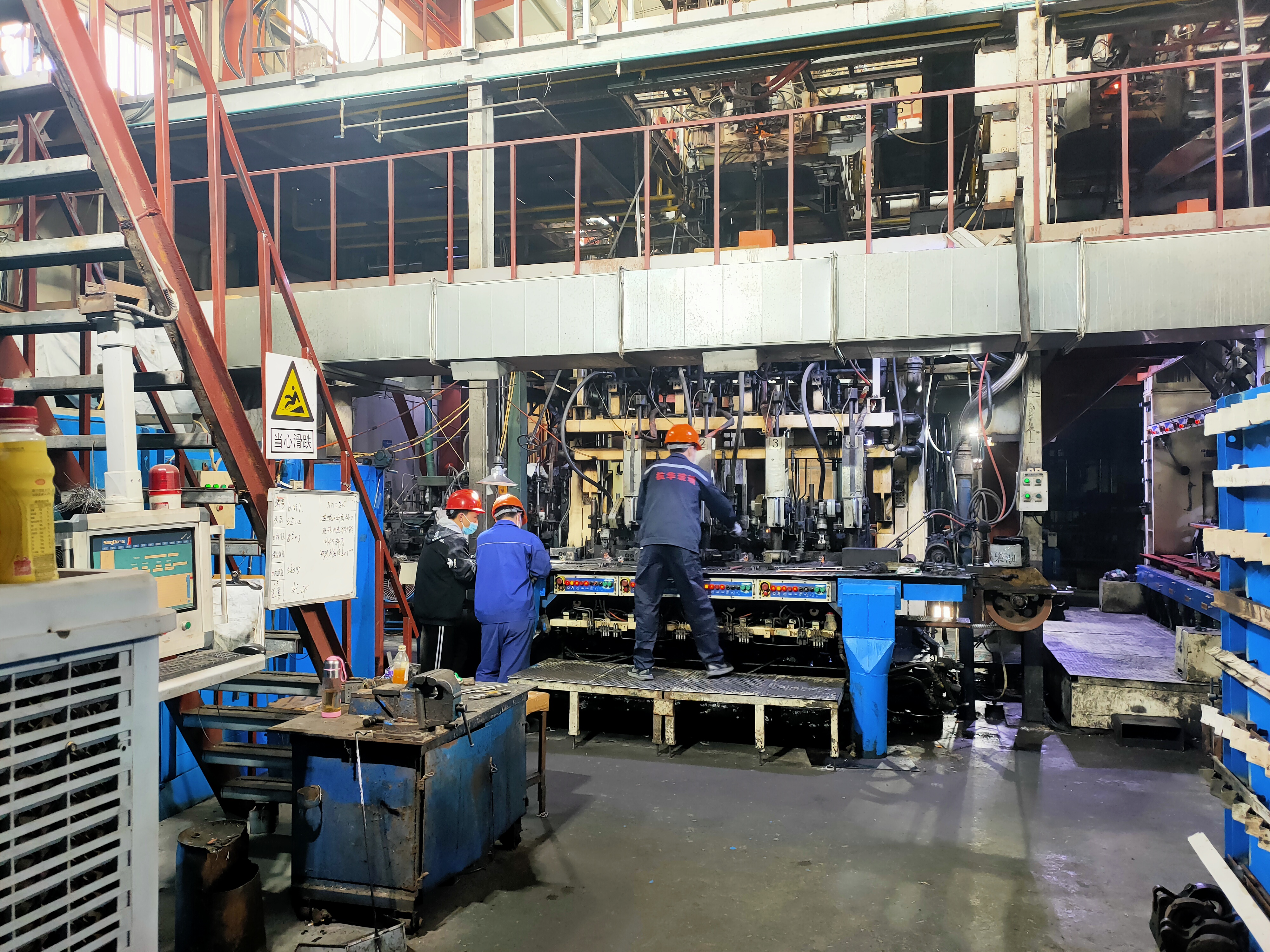
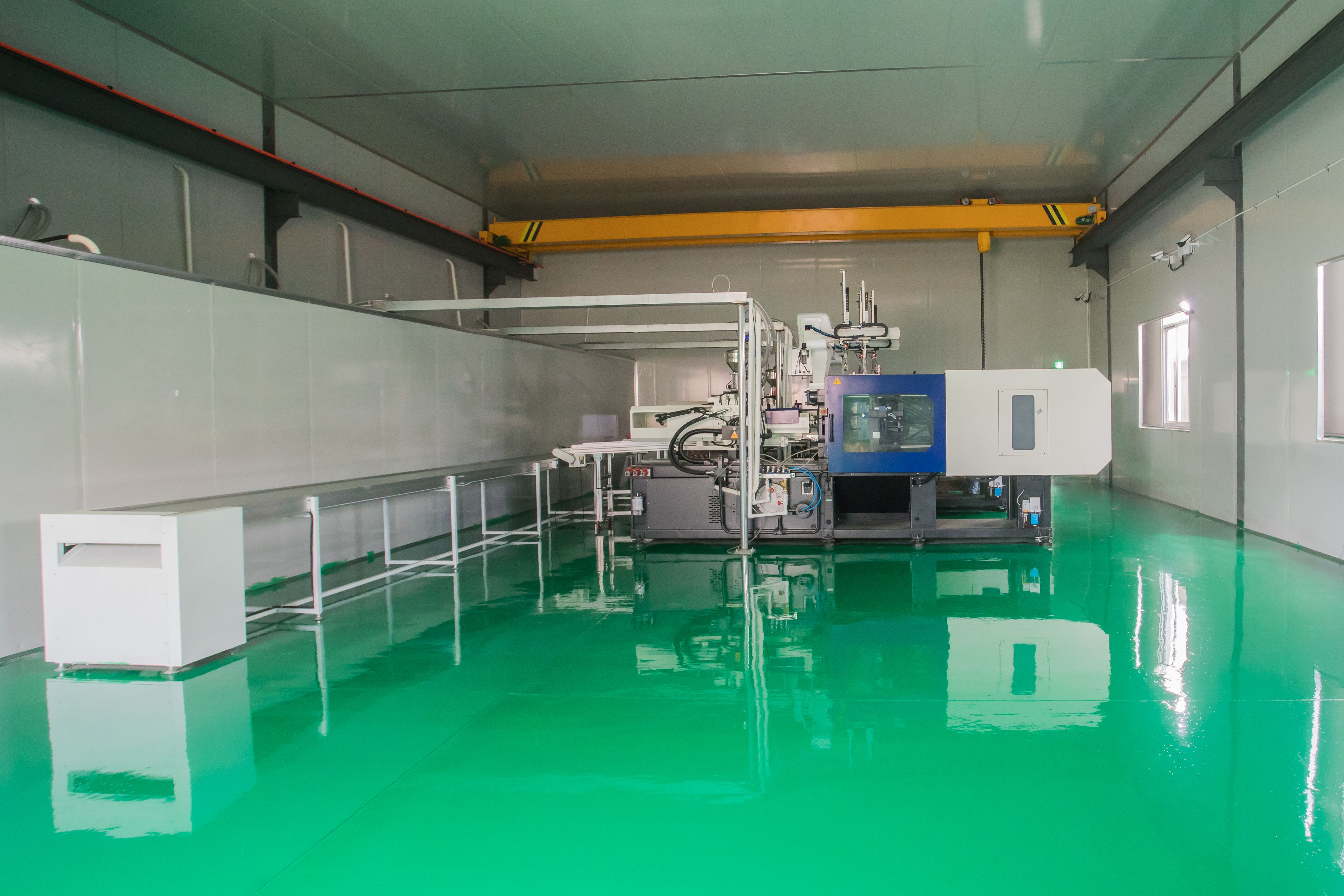
Honor Packaging, founded in 2015 in Ningbo, China, is an example of a manufacturing-responsibility-focused packaging partner that operates through long-term joint-venture bases for plastic and glass packaging. With 15 R&D team members, around 310 employees, 45,000 square metres of factory area, and an annual output of 1,000,000 units, the company concentrates on technically demanding child-resistant, violet glass, and vacuum packaging solutions and exports 100% of its output, primarily to the EU and USA. Proximity to Ningbo and Shanghai seaports helps simplify overseas logistics.
At the inquiry stage, buyers should verify at least four documents: the geometric drawing, the carton packing specification, the closure child-resistance test protocol, and the material or glass specification. Any supplier that cannot provide these items in writing should be considered higher risk.
Frequently Asked Questions
Do child-resistant glass jars meet US and EU regulatory expectations for pharmaceuticals?
Child-resistant packaging must comply with ISO/EN 8317 in the EU and 16 CFR 1700.20 in the US to prevent access by children under five. Compliance is evaluated on the finished package, meaning the glass jar plus its child-resistant cap must be tested together. In regulated pharma projects, buyers should request the closure test report for the exact finished configuration rather than relying on a generic statement that a jar is child-resistant.
Which capacities, weights, and shapes are available in the H19 child-resistant glass jar?
The H19 child-resistant glass jar is documented in clear concentrate jar format with a child-resistant cap. Capacities are 5 ml and 9 ml, and net weight is 27 g to 38 g. It is available in square, round, triangle, and hexagon shapes, and each carton holds 250 pieces. These parameters may be adjusted during custom tooling development, but the published baseline is the only verified point of departure.
Are child-resistant glass jars more expensive than alternative protective packaging?
Honor Packaging’s published comparison data states that the product offers about 15% higher cost compared with an alternative, while providing enhanced protection, better UV resistance, and reduced maintenance. That premium should be read as an investment in protection and fewer field issues, not as pure material cost. For many UV-sensitive products, the additional cost is a fraction of the potential loss from an unstable batch.
Can buyers request samples of the child-resistant glass jar before committing?
Sample validation is a normal first step in protective packaging procurement. Buyers can contact Honor Packaging at info@honorpkg.com or via WhatsApp at +86 15968944995 to request samples of the desired H19 configuration, closure variant, and glass colour. The manufacturer also issues a catalog and downloadable brochure so the project team can confirm dimensional expectations before sampling.
How should customers plan lead time for a child-resistant glass jar programme?
Lead time depends on the selected mould, glass colour, closure system, carton specification, and order quantity. Because glass jars are heavy and breakable, shipping distance and palletizing rules also affect the total schedule. A reliable supplier will confirm the open-order position and provide a written delivery date before mass production. Buyers should include at least one sample-approval cycle plus stability or compliance testing in their project plan, and then confirm the exact calendar with the factory for their chosen specification.
Bottom Line
Glass jars and plastic vials are not interchangeable; they are complementary protective packaging formats defined by different stability risks. The child-resistant glass jar, represented here by the verified H19 reference, provides a glass material barrier, UV-blocking potential, and a child-resistant cap for small-volume concentrates. Plastic vials offer lower weight and simpler handling but require the buyer to confirm polymer compatibility and light protection separately.
Decision rule for 2026 sourcing: if the product is UV-sensitive, high-value, or designed for small-dose concentrates, choose a child-resistant glass jar and verify the full package test certificate. If the product is not light-sensitive and the priority is low weight and high throughput, evaluate plastic vials with a tested child-resistant closure and review resin suitability independently.
Need a Verified Glass Jar Specification?
Download the Honor Packaging brochure for the complete product range, then contact the team for the H19 drawing, closure samples, and compliance documents.
Email: info@honorpkg.com
Phone: +86-574-88004632 / +86-15968944995
Website: www.honorcrpkg.com