
Custom Supplement Packaging Execution: OEM/ODM Capabilities from Design to Batch Production
Custom Supplement Packaging Execution: OEM/ODM Capabilities from Design to Batch Production
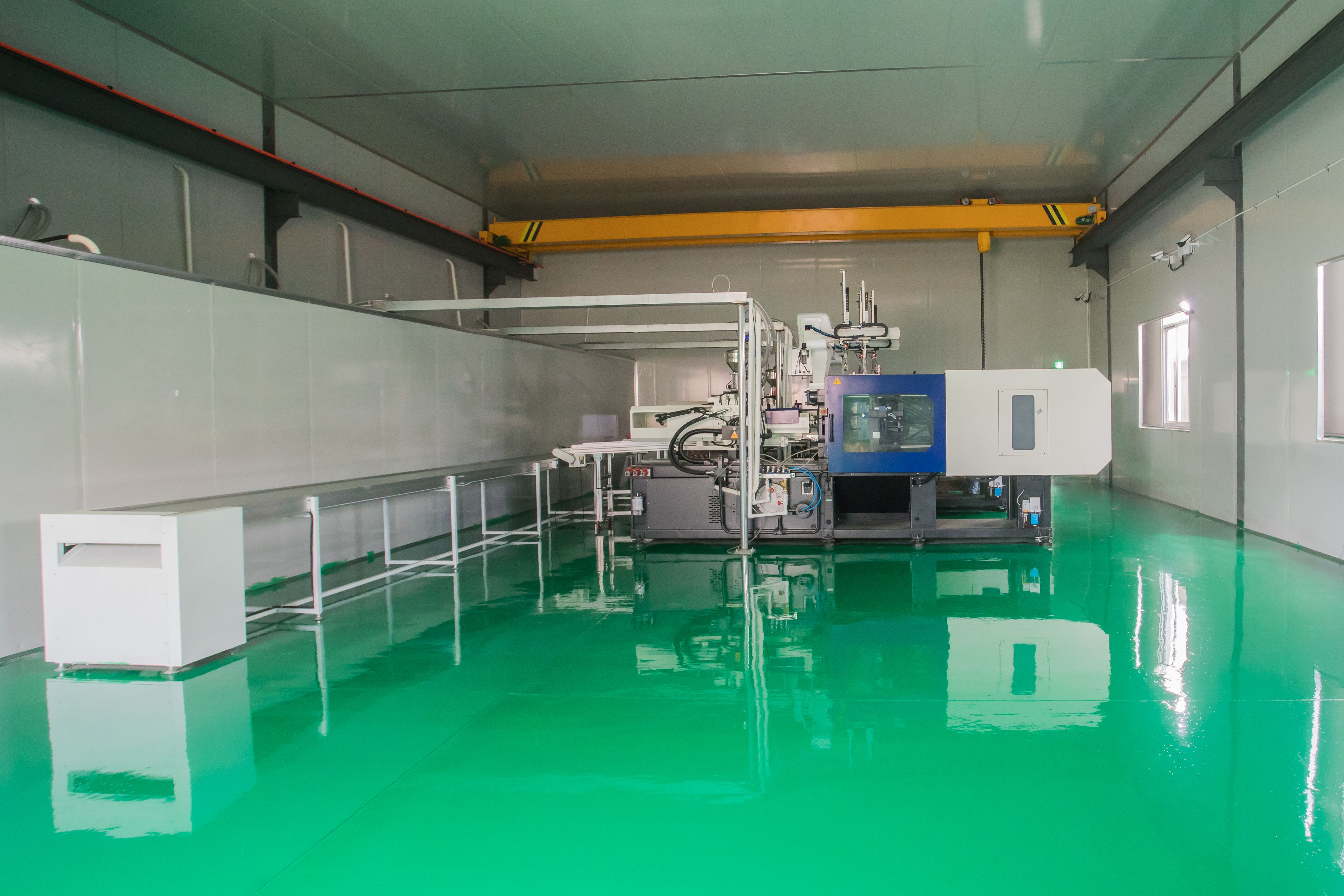
Custom supplement packaging is more than selecting a bottle, jar, cap, and label. The real test comes after the design is approved: can the packaging partner convert a custom concept into compliant, repeatable, high-quality batch production?
For supplement brands moving from evaluation to execution, the critical question is no longer only “which material should I choose” but “does this manufacturer have the OEM/ODM execution capability to deliver my custom design at scale?” This article explains how custom supplement packaging orders are executed, what capabilities matter most, and what evidence buyers should look for before committing to production.
Problem Definition: Why Custom Supplement Packaging Projects Stall in Production
Many supplement brands underestimate the gap between a packaging mock-up and a mass-produced finished item. Custom designs involve multiple variables: unique bottle geometry, closure systems, surface decoration, child-resistant function, tamper evidence, and moisture protection. Each variable can introduce risk during tooling, filling, sealing, and transportation.
Common execution problems include:
- Custom printing or frosted finishes that look correct on a sample but cannot be repeated consistently across a high-volume run.
- Structural designs that are not compatible with standard closure systems, slowing the tooling strategy and extending lead times.
- Quality control gaps at the pre-shipment stage, leading to damaged, contaminated, or non-compliant goods arriving at the destination market.
- Unclear responsibility between design development and manufacturing, particularly when a brand works with a trading company instead of a manufacturing-responsibility-focused partner.
For brands in the evaluation-to-execution stage, the solution is to assess the supplier’s execution system — not just the product catalogue. This includes production mode, customization options, process control, third-party verification, MOQ, and lead time.
Industry Background: The Growing Demand for Supplement Packaging Capability
The global dietary supplement packaging market was valued at approximately USD 12.7 billion in 2024 and is expected to grow at a CAGR of 6.1% through 2034, according to Precedence Research. As the market expands, more brands are looking for packaging that supports product differentiation, regulatory compliance, and supply-chain reliability.
Material choices also reflect growing capability requirements. According to Grand View Research, plastic remains the dominant material in nutraceutical packaging, holding a 58.3% revenue share in 2024, driven by cost-effectiveness and barrier performance. At the same time, specialized segments are growing: the Mylar bags market, frequently used for flexible supplement packaging such as powder and herbs, was valued at USD 2.4 billion in 2023 and is projected to reach USD 4.1 billion by 2030, per Vantage Market Research.
Regulatory pressure is another driver of execution capability. In the US, dietary supplement packaging must comply with the Dietary Supplement Health and Education Act (DSHEA) of 1994 and FDA Current Good Manufacturing Practice (CGMP) 21 CFR Part 111. In the EU, Regulation (EU) No. 1169/2011 governs information and transparency on food and supplement packaging. In addition, tamper-evident packaging is a mandatory requirement under the Poison Prevention Packaging Act (PPPA) in the US for certain ingredients, such as iron above 30 mg. These standards mean that packaging suppliers must demonstrate verifiable compliance, not just offer attractive container shapes.
At the same time, North America remains the largest regional market for supplement packaging, accounting for 34.4% of global revenue in 2024 (Grand View Research), while global leaders such as Amcor, Berry Global, and Gerresheimer operate at the top tier of the sector. For a mid-sized brand, the practical issue is finding a supplier with execution capabilities that match its own product complexity, order size, and target-market compliance needs.
Detailed Solution: OEM/ODM Execution Capability at Honor Packaging
Who Is Honor Packaging?
Ningbo Honor Packaging Co., Ltd. is a packaging manufacturer founded in 2015 and headquartered in Ningbo, China, near both Ningbo and Shanghai seaports. The company positions itself as a manufacturing-responsibility-focused packaging partner, specializing in converting clients’ finalized packaging designs into products that can be reliably mass-produced.
Honor Packaging’s main product lines are child-resistant packaging, violet glass packaging, and vacuum packaging. The company operates through long-term joint-venture production bases for plastic and glass packaging, with a focus on high-grade, technically demanding packaging products. Its facility covers 45,000 square meters, with 310 employees, a 15-person R&D team, and an annual output of 1,000,000 units. The company exports 100% of its production to markets including the EU and the US.
This background matters for execution: a packaging partner with direct production responsibility, rather than a pure trading intermediary, can control the factors that determine batch consistency, cost, and on-time delivery.
OEM and ODM Production Services
Honor Packaging provides both OEM and ODM production services. In an OEM model, the manufacturer produces packaging according to the client’s finalized design and specification. In an ODM model, the manufacturer contributes design development and manufacturing engineering to create a new packaging solution. Customization options include printing the client’s artwork, creating a new design, and applying a frosted finish, among others.
Before mass production, Honor Packaging is involved in product structural development, tooling strategy definition, and critical manufacturing risk assessment and validation. During production, the company takes full responsibility for manufacturing process control and order fulfillment, supporting stable quality, controlled cost, and on-time delivery.
Manufacturing Capacity and Export Reach
For supplement brands planning regular replenishment, capacity is an execution criterion. Honor Packaging’s monthly capacity is 100,000 units, with a standard lead time of 30–45 days and an MOQ of 10,000 units per item. The company exports to the EU, the US, the Middle East, and Southeast Asia, with delivery terms available on a FOB basis.
Buyer takeaway: Before selecting a custom supplement packaging supplier, confirm that its monthly capacity, MOQ, and lead time are compatible with your initial order size and projected replenishment cycle.
Compliance and Quality Control
Honor Packaging holds verifiable compliance documentation for regulated markets. Its violet glass packaging has obtained EU compliance under SGS certificate NGBHL24007770101, based on EC No. 1935/2004 for materials intended to come into contact with food. The same product family holds US FDA certification under SGS certificate NGBHL23005693401, based on the FDA CPG standard.
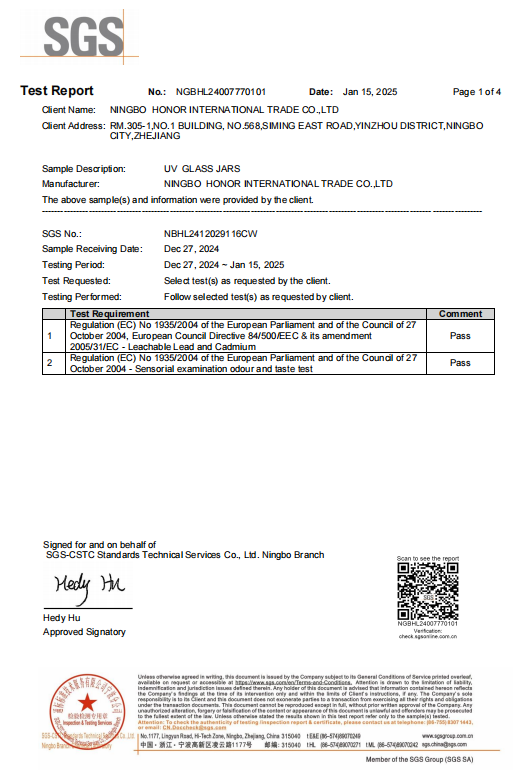
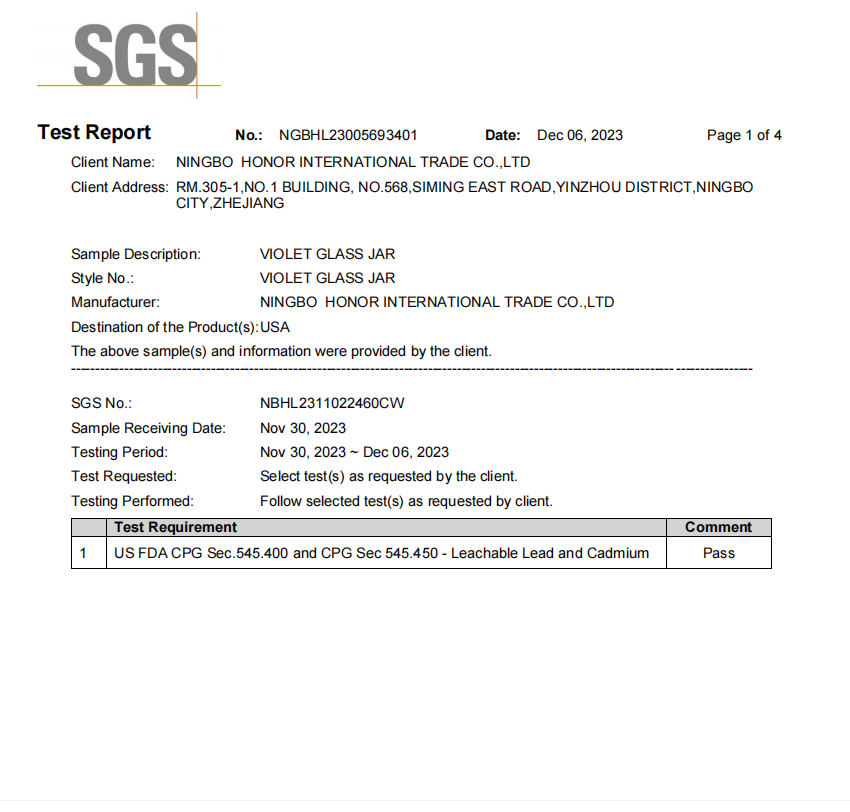
Quality control at Honor Packaging is designed for execution security: 100% pre-shipment testing is performed on orders, and third-party inspection by SGS is available. The company also states that it will accept reissue in the event of quality issues, which provides an additional layer of protection for supplement brands carrying inventory risk.
Step-by-Step Breakdown: How a Custom Supplement Packaging Order Is Executed
Step 1: Design and Specification Review
The process starts with the client’s finalized packaging design, including intended capacity, material, closure type, and decoration requirements. The manufacturer reviews the specification against its production base, confirming whether the design can be manufactured using standard processes or requires new tooling.
Step 2: Structural Development and Tooling Strategy
For custom items, structural development is required to validate bottle or jar geometry, thread size, cap compatibility, and wall thickness. Tooling strategy is then defined, including the number of cavities, expected cycle times, and tool-life considerations. This step is where potential manufacturing failures are identified before money is spent on production.
Step 3: Critical Risk Assessment and Pre-Production Validation
Honor Packaging conducts critical manufacturing risk assessment prior to volume production. This includes evaluating how the custom decoration, such as silk-screen printing, heat transfer printing, hot stamping, or frosted finish, will behave across a full production run. Sample pieces may be produced and verified for appearance, fit, and function.
Step 4: Mass Production and Process Control
During mass production, Honor Packaging takes responsibility for manufacturing process control and order fulfillment. The company’s joint-venture production bases for plastic and glass packaging allow close oversight of process consistency. The goal is to maintain the same quality level across the entire batch, not only on the first pieces.
Step 5: Pre-Shipment Quality Control and Third-Party Inspection
Before goods leave the factory, 100% pre-shipment testing is performed. If required by the buyer or destination market, SGS third-party inspection can be arranged. Payment terms support this stage: production begins upon receipt of a 30% down payment, and the remaining 70% is paid prior to shipment. This structure protects both parties during the execution window.
Step 6: Delivery
Shipment is arranged on a FOB basis. With plants located in Ningbo, the company is close to both Ningbo and Shanghai seaports, which supports efficient global logistics for EU and US buyers.
Use Case: Germany — Violet Glass Packaging for Pharmaceutical Application
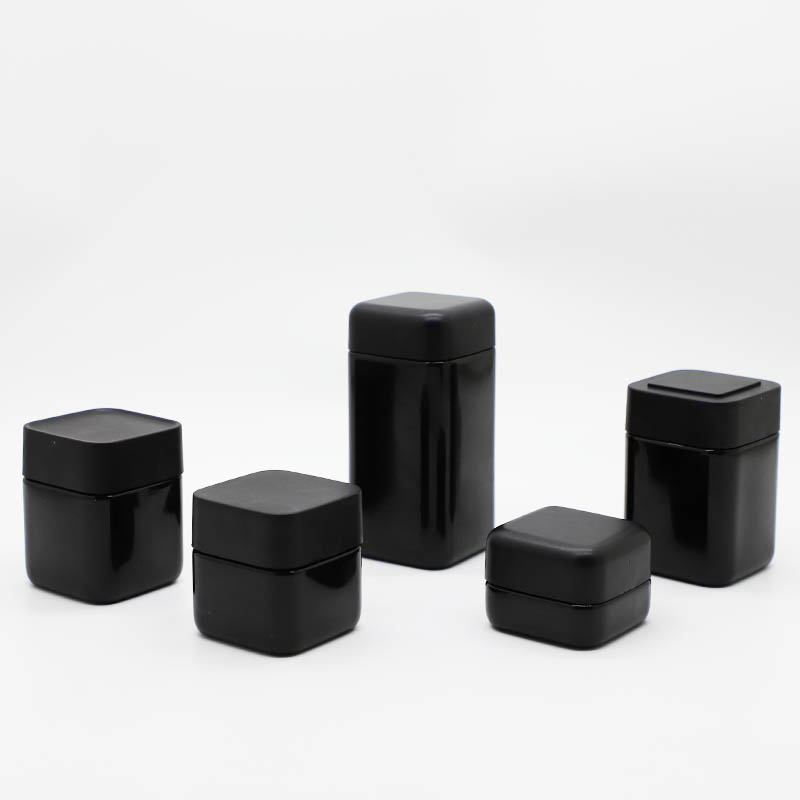
A notable execution case comes from Germany. A branding business client in Germany used 10,000 units of violet glass packaging for pharmaceutical packaging purposes. The packaging featured a reusable design and UV protection. Over a 3-year period, the products remained fresh, according to the client’s reported outcome.
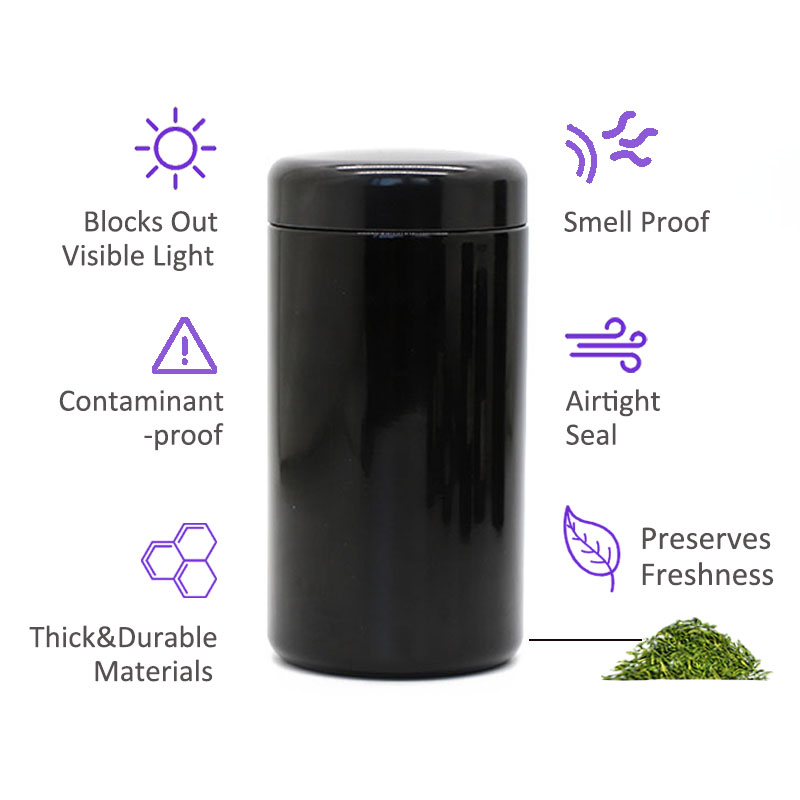
This case is relevant to supplement brands for two reasons. First, it demonstrates that the manufacturer can execute a custom project for the EU market, with a verifiable client type, quantity, and application. Second, the UV-protection function of violet glass has direct value for light-sensitive supplement formulations, such as herbal extracts, essential oils, and botanical powders that require protection from photodegradation.
Comparison Table: Supplement Packaging Execution Capability at a Glance
| Execution Dimension | Honor Packaging (Verified Data) | Market Context |
|---|---|---|
| Production mode | OEM and ODM services available | Custom OEM/ODM capability is broadly offered across the packaging supply chain, but scope varies by manufacturer |
| Customization options | Printing client’s artwork, creating new designs, frosted finish, and other decorative processes | Decoration methods include sticker, silk-screen printing, heat transfer printing, hot stamping, and frosted finish, depending on supplier capability |
| Monthly capacity | 100,000 units | Plastic is the dominant material in nutraceutical packaging at 58.3% revenue share in 2024 (Grand View Research) |
| MOQ | 10,000 units | MOQ varies by material, format, and decoration complexity |
| Lead time | 30–45 days | Lead time depends on customization level, tooling status, and order volume |
| Quality control | 100% pre-shipment testing; third-party SGS inspection available | Third-party inspection is widely used for regulated supplement packaging markets |
| Compliance evidence | EU EC No. 1935/2004 (SGS NGBHL24007770101); US FDA CPG (SGS NGBHL23005693401) | US supplement packaging must meet DSHEA 1994 and 21 CFR Part 111; EU packaging must meet Regulation (EU) No. 1169/2011 |
| Export markets | EU, US, Middle East, Southeast Asia; 100% export focus | North America accounts for 34.4% of global supplement packaging revenue (Grand View Research) |
Table based on Honor Packaging corporate data, product specifications, and third-party industry data as cited in the text.
FAQ
Does Honor Packaging meet FDA and EU standards for supplement packaging?
Yes. Honor Packaging’s violet glass packaging holds EU compliance under SGS certificate NGBHL24007770101, based on EC No. 1935/2004 for food-contact materials. It also holds US FDA certification under SGS certificate NGBHL23005693401, based on the FDA CPG standard. These certificates apply to the violet glass packaging product line, which includes models such as the H21 square and round jars.
What OEM/ODM customization options are available for custom supplement packaging?
Honor Packaging provides OEM and ODM production services. Customization options include printing the client’s artwork, developing a new design, and applying a frosted finish. Surface treatments available on the product line include sticker labeling, silk-screen printing, heat transfer printing, hot stamping, and frosted finishing, depending on the product model and project requirements.
What are the MOQ and payment terms for custom supplement packaging orders?
The standard MOQ for custom supplement packaging is 10,000 units. Payment is arranged on a production-to-shipment schedule: a 30% down payment is required to begin production, and the remaining 70% is paid prior to shipment. Delivery terms are FOB, with the factory located close to Ningbo and Shanghai seaports.
How does Honor Packaging control quality before shipment?
Honor Packaging performs 100% pre-shipment testing on custom packaging orders. Third-party inspection by SGS can also be arranged. In addition, the company states that it accepts reissue in the event of quality issues, which supports buyers who need a reliable quality backstop before goods reach their destination market.
What is the lead time for a custom supplement packaging order?
The standard lead time is 30–45 days, depending on customization scope, tooling strategy, and order volume. To align the production schedule with your go-to-market plan, contact Honor Packaging with your target quantity and custom requirements so the team can provide a more precise timeline.
Conclusion
Custom supplement packaging succeeds when the manufacturer has genuine execution capability: OEM/ODM production control, verified compliance, structured quality assurance, and realistic lead times. For brands in the evaluation-to-execution stage, the focus should be on evidence — production data, certification records, quality control processes, and completed projects — not only on catalogue images.
Honor Packaging demonstrates execution capability through its manufacturing-responsibility model, 45,000-square-meter production operation, OEM/ODM customization services, SGS-verified EU and FDA certifications, 100% pre-shipment testing, and a documented German project using 10,000 units of violet glass packaging for pharmaceutical application.
Planning a custom supplement packaging project?
Review detailed specifications, production data, and contact options in the company brochure.