
From Shilajit to Skincare: Choose Supplement Packaging by Scenario
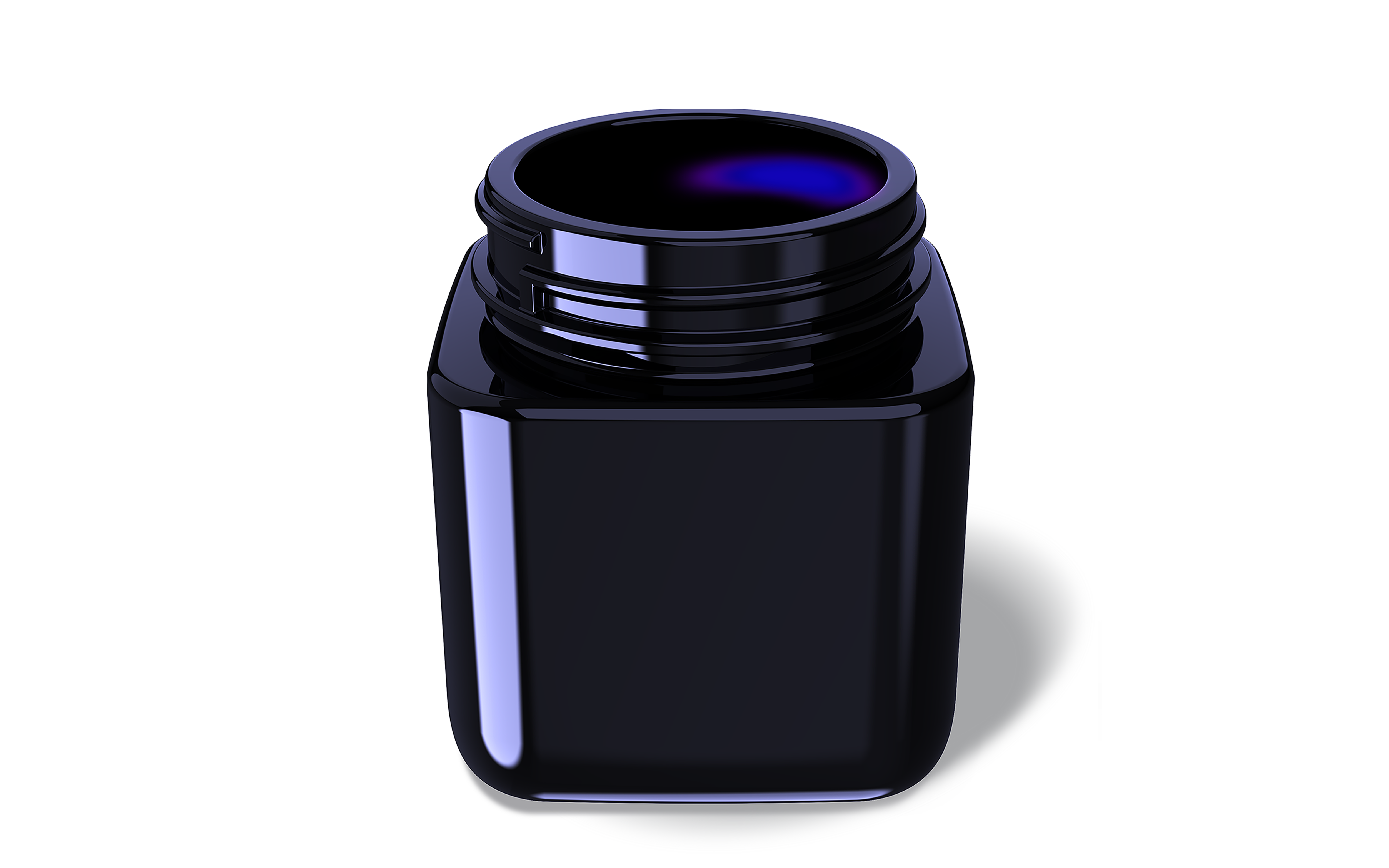
Violet glass container with child-resistant closure used for supplement and cosmetic scenarios.
From Shilajit to Skincare: Choose Supplement Packaging by Scenario
If you manage a supplement brand, the packaging decision often arrives with competing pressures: ingredients that react to light, powders that absorb moisture, regulatory rules that differ by country, and a shelf that demands visual distinction. This article outlines a scenario-based method for choosing supplement packaging, then maps common product scenarios to specific glass formats such as violet glass jars, child-resistant containers, essential oil bottles, and vacuum jars. It also explains what to verify with a packaging manufacturer before committing to mass production.
Why Product Scenario Should Drive the Packaging Decision
A container that works well for one product can damage another. The scenario, not the category label, determines the correct packaging.
Light-sensitive ingredients are a clear example. Shilajit and many herbal or cosmetic actives need protection from UV exposure. In this scenario, UV black glass protection is a functional requirement, not a color preference. For child-accessible products, such as supplements containing iron above 30 mg in the US, child-resistant closures are a regulatory necessity. For powders and dried herbs, moisture and dust protection become the priority. For premium skincare and gift lines, surface finish and branding determine whether the package communicates the right value.
Selecting packaging without a scenario review creates three types of risk: formulation risk, compliance risk, and commercial risk.
- Formulation risk: light, oxygen, or moisture changes the product before consumer use.
- Compliance risk: missing child-resistant or labeling requirements blocks market access.
- Commercial risk: packaging that looks generic undermines premium positioning.
A common mismatch is placing a light-sensitive botanical oil in a clear plastic bottle. The product may look acceptable at launch but degrade faster than expected. Another mismatch is using a decorative jar without a child-resistant closure for a product that may be stored near children. A third mismatch is ordering a premium glass format when the brand's actual volume and price point require a cost-effective flexible pouch.
Supplement Packaging Market and Regulatory Context
The global dietary supplement packaging market is substantial and growing. According to Precedence Research, the market was valued at approximately USD 12.7 billion in 2024 and is expected to grow at a CAGR of 6.1% through 2034. Within this market, plastic remains the dominant material in nutraceutical packaging, capturing a 58.3% revenue share in 2024, largely due to cost-effectiveness and barrier properties, according to Grand View Research. North America is the largest regional market, accounting for 34.4% of global revenue in 2024.
Flexible formats also matter for powder and herb supplements. The Mylar bags market, frequently used for flexible supplement packaging, was valued at USD 2.4 billion in 2023 and is projected to reach USD 4.1 billion by 2030, according to Vantage Market Research. This explains why brands often compare glass jars, plastic containers, and Mylar pouches during packaging development.
Regulatory requirements shape the decision as well. In the United States, dietary supplement packaging must comply with the Dietary Supplement Health and Education Act (DSHEA) of 1994 and FDA Current Good Manufacturing Practice (CGMP) 21 CFR Part 111. In the EU, Regulation (EU) No. 1169/2011 governs information and transparency on food and supplement packaging. For certain ingredients such as iron in quantities over 30 mg, the US Poison Prevention Packaging Act (PPPA) requires child-resistant or tamper-evident packaging.
At the supplier level, Amcor, Berry Global, and Gerresheimer are identified by Grand View Research as top-tier global manufacturers in the nutraceutical and dietary supplement packaging sector. For brands evaluating a China-based manufacturing partner, scenario fit and process discipline often matter more than supplier name recognition. Ningbo Honor Packaging Co., Ltd. is one example of a manufacturer that focuses on customized packaging requiring manufacturing feasibility, process discipline, and delivery reliability.
These market signals affect supplier selection. When a brand asks whether to work with a global top-tier manufacturer or a specialized partner, the answer depends on the project. Large manufacturers offer scale. Specialized suppliers often offer faster structural development, higher customization flexibility, and closer production responsibility.
Matching Packaging Formats to Product Scenarios
The following formats, drawn from Honor Packaging's product data, cover the most common supplement and cosmetic scenarios. The common thread is the operating condition: application data for glass packaging projects lists UV protective and dust-resistant working conditions, plus a keep-fresh requirement in cosmetic packaging. These conditions map directly to specific glass colors and closures.
Violet Glass Jars for Light-Sensitive Formulations
Violet glass is specified when the product needs UV protection and a premium appearance. Honor Packaging's H21 square violet glass jars are available in capacities from 15ml to 60dr, with a 58mm diameter, 24mm to 115mm height, and 75g to 280g weight. The H21 round violet glass jars extend the range from 30ml/2oz to 6oz, with a 60mm diameter and 36.5mm to 125mm height. Both series come with child-resistant caps and 0.38mm glass thickness.
Violet glass should not be treated as a default choice. It is most valuable when UV exposure is a documented risk. In the application data, this is described as UV black glass protective with child-resistant design. The market context matters too: Canada appears in application scenarios with both requirements, so a brand exporting to Canada may encounter this combination more often.
For lighter uses in cosmetics, the HDV2 cosmetic violet jars cover 3ml to 200ml, with thread sizes from 32/400 to 89/400 and diameters from 36mm to 93.2mm. Wide-mouth scenarios, such as powder supplements, herb storage, or bulk products, are served by HDV1 wide mouth violet jars with capacities from 100ml to 1L, diameters from 48mm to 95mm, and heights from 84.7mm to 193mm.
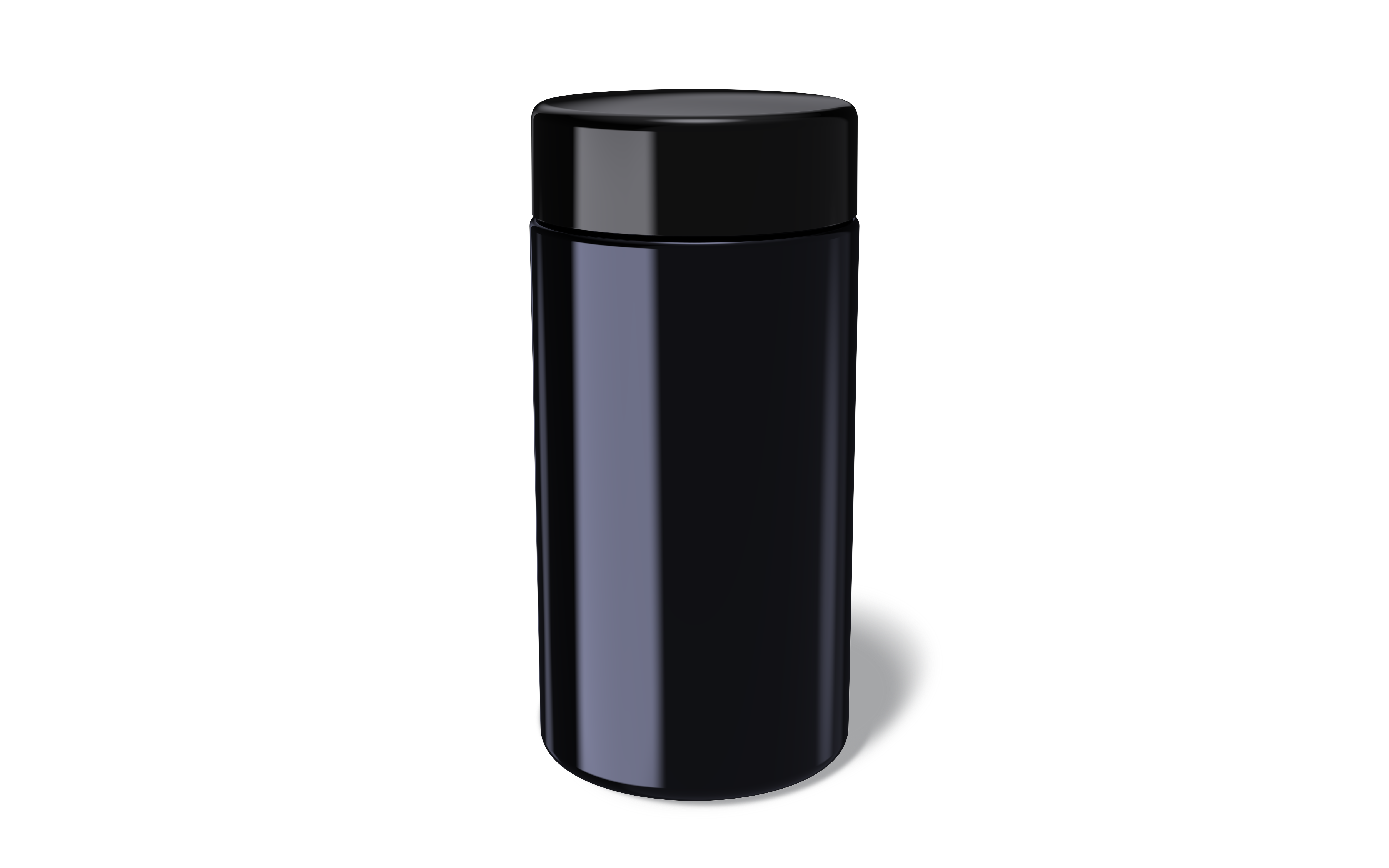
Wide-mouth violet glass jar suited to powder supplements and bulk herb storage.
Essential Oil Bottles for Drops and Liquid Extracts
Liquid extracts, tinctures, and essential oil formulations need precise dispensing. The HDV3 round violet glass essential oil bottle series offers 5ml to 100ml capacities with closures including plastic cap, dropper, mist sprayer, or lotion pump. This format suits Shilajit drops, herbal tinctures, and cosmetic serums that require dosing control and protection from light.
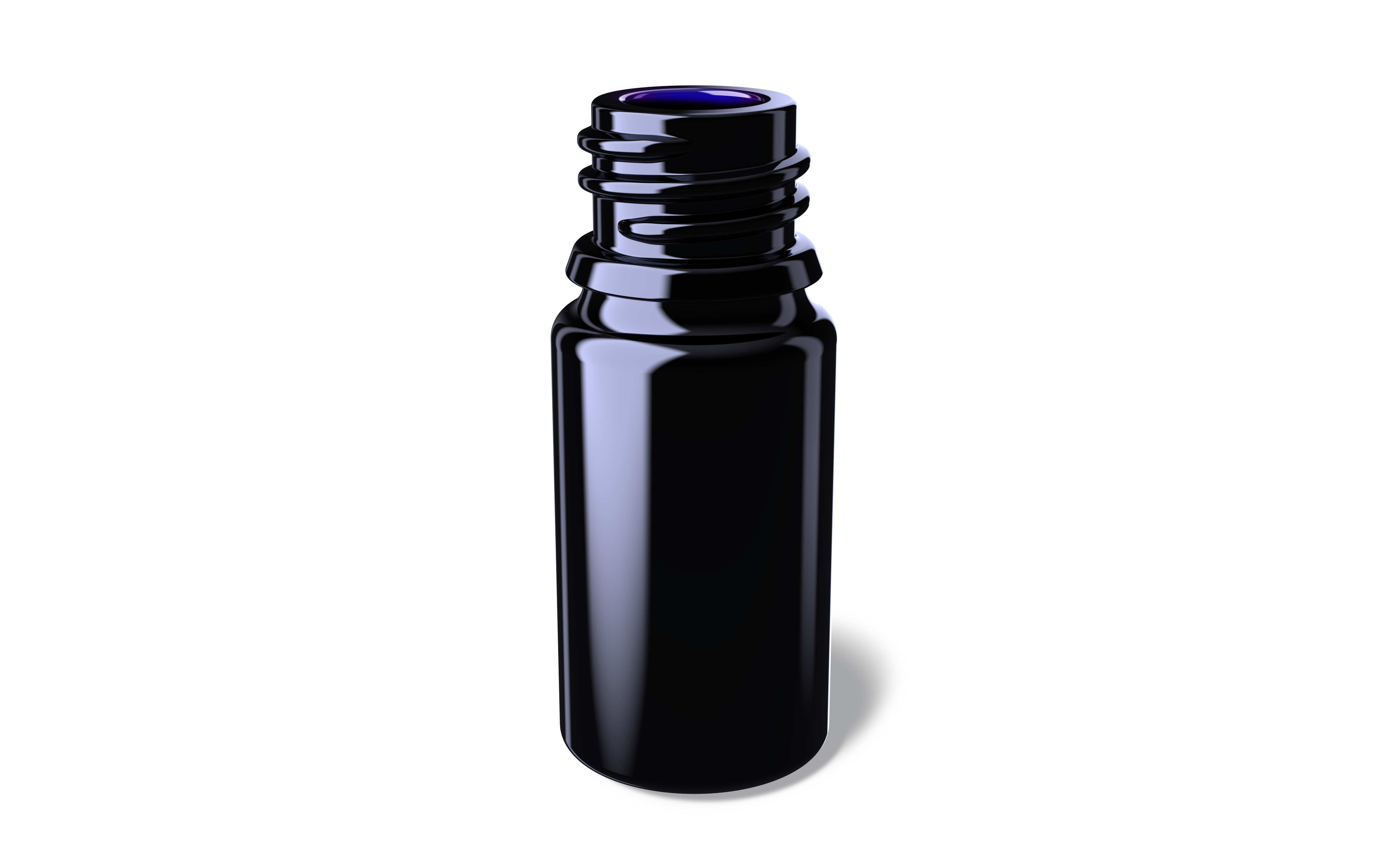
Small-format violet glass bottle designed for drops, tinctures, and serum scenarios.
Child-Resistant Containers for High-Risk and Regulated Products
Child-resistant packaging is required when product access by children is a safety concern. Honor Packaging produces child-resistant packaging in several formats. The H19 concentrate jars come in clear, white, and black versions with 5ml or 9ml capacities, and square, round, triangle, or hexagon shapes. The H21 clear square jars range from 15ml to 60dr, and the H21 clear round jars range from 30ml/2oz to 6oz, both with child-resistant caps and 0.38mm glass thickness.
Cannabis, pharmaceutical, and medical packaging projects often combine child-resistant design with UV protective glass. According to the application data, this combination appears in medical packaging projects with special requirements for child-resistant design and UV black glass protection.
Vacuum Jars for Freshness-Sensitive Products
For products where freshness loss is the main risk, the H19 vacuum packaging series provides a 5ml vacuum click jar in glass with a square shape, packed at 250 pieces per carton. Vacuum formats reduce oxygen exposure and are used in food, cosmetic, and medical scenarios where keep-fresh is the operating requirement.
Manufacturing Capabilities That Affect Project Fit
Once the format matches the product scenario, the next question is whether the manufacturer can execute the project reliably. Honor Packaging operates as an OEM/ODM supplier. Customization options include printing the client's artwork, creating a new design, and frosted finish treatment. The company's stated manufacturing figures include a monthly capacity of 100,000 units, a lead time of 30 to 45 days, and a minimum order quantity of 10,000 units. Quality control includes 100% pre-shipment testing and third-party inspection such as SGS. Export markets cover the EU, US, Middle East, and Southeast Asia, with after-sales support that accepts reissue.
Founded in 2015 and headquartered in Ningbo, China, Honor Packaging operates long-term joint-venture production bases for plastic and glass packaging. The company reports a factory area of 45,000 square meters, 310 employees, an annual output of 1,000,000 units, and a 15-person R&D team. Its stated main products are child-resistant packaging, violet glass packaging, and vacuum packaging. All of its output is exported, with main markets in the EU and USA.
A Seven-Step Workflow for Selecting Supplement Packaging
- Define the product form. Is it oil, powder, capsule, cream, or dried herb? Each form places different demands on the container opening, closure, and barrier.
- Assess light, oxygen, and moisture sensitivity. If UV exposure is a risk, specify violet glass or another UV-protective glass. If moisture is the risk, evaluate sealing and vacuum options. This step directly reflects the special requirements seen in packaging projects: child-resistant design, UV black glass protection, and UV protective and dust conditions.
- Confirm the destination market. US, EU, and other regions have different rules. Under the US regulatory framework, DSHEA 1994 and FDA CGMP 21 CFR Part 111 define packaging and labeling obligations. EU Regulation 1169/2011 requires specific consumer information. If the product contains iron above 30 mg, plan for PPPA-compliant child-resistant packaging.
- Map the format. Select the container family based on capacity and use: H21 square or round violet jars for general supplements, HDV1 wide mouth jars for powders and bulk herbs, HDV2 cosmetic jars for creams and balms, HDV3 essential oil bottles for drops, H19 or H21 child-resistant jars for regulated products, and H19 vacuum jars for freshness-sensitive items.
- Choose the surface treatment. Sticker labeling, silk-screen printing, hot stamping, heat transfer printing, and frosted finish affect both brand expression and production cost.
- Validate manufacturing feasibility. Before mass production, confirm tooling strategy, structural development, and critical risk assessment with the supplier. Honor Packaging describes this phase as part of its manufacturing responsibility approach: transforming finalized packaging designs into products that can be consistently mass-produced.
- Plan quality control and logistics. Require pre-shipment inspection and, when needed, third-party inspection such as SGS. Confirm the MOQ and lead time against your launch calendar. For Honor Packaging, the stated MOQ is 10,000 units and lead time is 30 to 45 days.
Real Project Scenarios for Scenario-Based Packaging
One documented use case comes from a German branding business that used violet glass packaging for pharmaceutical packaging. The company ordered 10,000 units and maintained the relationship over three years. The client reported that products stayed fresh, and the packaging was valued for being reusable and providing UV protection.
Another scenario in the application data is common in Canada, where packaging projects require both child-resistant design and UV black glass protection. This combination is relevant for cannabis, pharmaceutical, and medical applications, where the operating conditions include UV protection and dust prevention. The same application data lists Canada, Germany, India, Italy, Thailand, and the US as relevant countries for glass packaging with UV protective and dust-resistant requirements.
Industry coverage also includes food packaging, cosmetic packaging, and medical packaging. In customer-facing terms, violet glass packaging is intended for packaging design and wholesale, as well as for cannabis, pharmaceutical and medical, and cosmetics and daily chemicals industries.
The German case illustrates what fit looks like in practice: the packaging was not selected for decorative reasons alone. It was selected for UV protection and reuse value, and the client continued the partnership because the product stayed fresh over a three-year period. In procurement terms, this shifts the conversation from unit price to total cost of ownership: packaging that preserves the product reduces waste and complaints.
Supplement Packaging Format Comparison by Scenario
| Format | Typical Scenario | Capacity Range | Key Specifications | Compliance / Design Notes |
|---|---|---|---|---|
| H21 Square Violet Glass Jars | Shilajit, herbs, botanicals, cosmetic actives requiring UV protection | 15ml / 30ml / 20dr / 30dr / 40dr / 60dr | Square; child-resistant cap; 58mm dia; 24–115mm height; 75–280g; 0.38mm glass | UV black glass protection; CR cap; sticker, silk-screen, hot stamping, heat transfer, frosted finish |
| H21 Round Violet Glass Jars | Supplements, cosmetic creams, medical packaging with UV and child-resistant needs | 30ml / 2oz / 20dr / 30dr / 40dr / 60dr / 6oz | Round; child-resistant cap; 60mm dia; 36.5–125mm height; 84–268g; 0.38mm glass | UV protective; CR cap; suitable for food, cosmetic, medical |
| HDV1 Wide Mouth Violet Jars | Powder supplements, bulk herbs, large-dose products | 100ml / 150ml / 200ml / 250ml / 300ml / 500ml / 1L | Wide mouth; thread 41/400–89/400; 48–95mm dia; 84.7–193mm height; 117–610g | Violet glass with urea, PE, SAN or ABS; multiple surface treatments |
| HDV2 Cosmetic Violet Jars | Cosmetic creams, balms, moisturizers | 3ml / 5ml / 10ml / 30ml / 50ml / 60ml / 100ml / 200ml | Thread 32/400–89/400; 36–93.2mm dia; 25.6–55mm height; 36–205g | CR version available (HDV2005M-CR); cosmetic and food storage packaging |
| HDV3 Round Violet Glass Essential Oil Bottles | Shilajit drops, tinctures, essential oils, serums | 5ml / 10ml / 15ml / 20ml / 30ml / 50ml / 60ml / 100ml | 54.5–125mm height; 22.5–120g; closures: plastic cap, dropper, mist sprayer, lotion pump | Violet glass with PP closure; precision dispensing |
| H19 Concentrate Jars (Clear / White / Black) | High-potency concentrates, cannabis, pharmaceuticals | 5ml / 9ml | Square, round, triangle or hexagon; child-resistant cap; 27–38g; 250 pcs/ctn | CR cap; clear, white, black options |
| H21 Clear Square / Round Jars | Supplements needing a child-resistant closure without violet glass | Square: 15ml–60dr; Round: 30ml/2oz–6oz | Square: 58mm dia; Round: 60mm dia; 0.38mm glass; CR cap | Glass/plastic/PE material options; surface treatment available |
| H19 Vacuum Jar | Freshness-sensitive products, food, cosmetic, medical | 5ml | Vacuum click jar; square; glass; 250 pcs/ctn | Vacuum format reduces oxygen exposure |
The table shows why scenario determines format: a Shilajit oil may fit HDV3 with a dropper, while a bulk herb powder may need an HDV1 wide mouth jar or a flexible Mylar pouch, and a child-accessible product may require the H19 or H21 child-resistant series.
Supplement Packaging FAQ
What compliance requirements apply to supplement packaging in the US and EU?
In the US, dietary supplement packaging must comply with DSHEA of 1994 and FDA CGMP 21 CFR Part 111. Certain ingredients such as iron in quantities over 30 mg require child-resistant packaging under the PPPA. In the EU, Regulation (EU) No. 1169/2011 governs consumer information on food and supplement packaging. For project planning, brands should confirm whether the product needs a child-resistant closure and whether UV protective glass is advised. The H19 and H21 child-resistant jars and violet glass jars are designed for these combined requirements.
What customization capabilities does Honor Packaging offer?
Honor Packaging operates as an OEM/ODM manufacturer. Customization capabilities include printing the client's artwork, developing a new design, and applying frosted finish. The company reports a monthly capacity of 100,000 units and supports export to the EU, US, Middle East, and Southeast Asia. Its stated quality controls include 100% pre-shipment testing and third-party inspection such as SGS.
What factors should a brand consider when budgeting for supplement packaging?
Material is a primary cost driver. Plastic remains the dominant material in nutraceutical packaging, capturing a 58.3% revenue share in 2024, largely because of cost-effectiveness and barrier properties. Glass adds weight and unit cost but provides UV protection and premium shelf presence. Flexible formats such as Mylar bags are a growing option for powders and herbs. Order volume also affects total cost: Honor Packaging's stated MOQ is 10,000 units. For project-specific budgeting, brands should request a quote based on the selected format, decoration, and volume.
Can brands request samples or validate packaging before mass production?
Before mass production, Honor Packaging is involved in product structural development, tooling strategy definition, and critical manufacturing risk assessment and validation. In practice, this means the supplier works from the client's finalized packaging design to confirm feasibility before committing to full production. Sample or pilot validation is part of this feasibility phase. Brands can contact info@honorpkg.com or WhatsApp +86 15968944995 to discuss sample requirements and validation for their specific project.
What is the lead time for custom supplement packaging from Honor Packaging?
The stated lead time for custom orders is 30 to 45 days, with a monthly capacity of 100,000 units and an MOQ of 10,000 units. Lead time can vary with decoration complexity, tooling status, and order volume. To confirm the current production schedule for your project, contact Honor Packaging at info@honorpkg.com or +86-574-88004632.
Conclusion: Match the Scenario First, Then the Supplier
Supplement packaging decisions should start with the product scenario, not with a favorite material or supplier. Define the product form, assess light and moisture sensitivity, confirm the regulatory destination, and then select the format that fits. The reference data in this article shows that violet glass, child-resistant containers, and vacuum jars solve different problems.
Ningbo Honor Packaging Co., Ltd. is a China-based packaging manufacturer founded in 2015 and headquartered in Ningbo, with proximity to Ningbo and Shanghai seaports. The company specializes in child-resistant packaging, violet glass packaging, and vacuum packaging, and operates as a manufacturing-responsibility-focused partner for customized projects. Its stated annual output is 1,000,000 units, with 100% export to EU and USA markets.
For brands evaluating packaging suppliers, the practical checklist includes format fit, regulatory coverage, MOQ alignment, lead time, and quality control. Honor Packaging states a 30-to-45-day lead time, a 10,000-unit MOQ, and 100% pre-shipment testing with optional SGS inspection.
Next step: review the company brochure for full product specifications.
Download the Honor Packaging brochure (PDF)
Contact: info@honorpkg.com | +86-574-88004632 | WhatsApp +86 15968944995
Address: Rm.305, No.1 Building, No.568 SiMing East Road, YinZhou District, Ningbo, China
Website: www.honorcrpkg.com
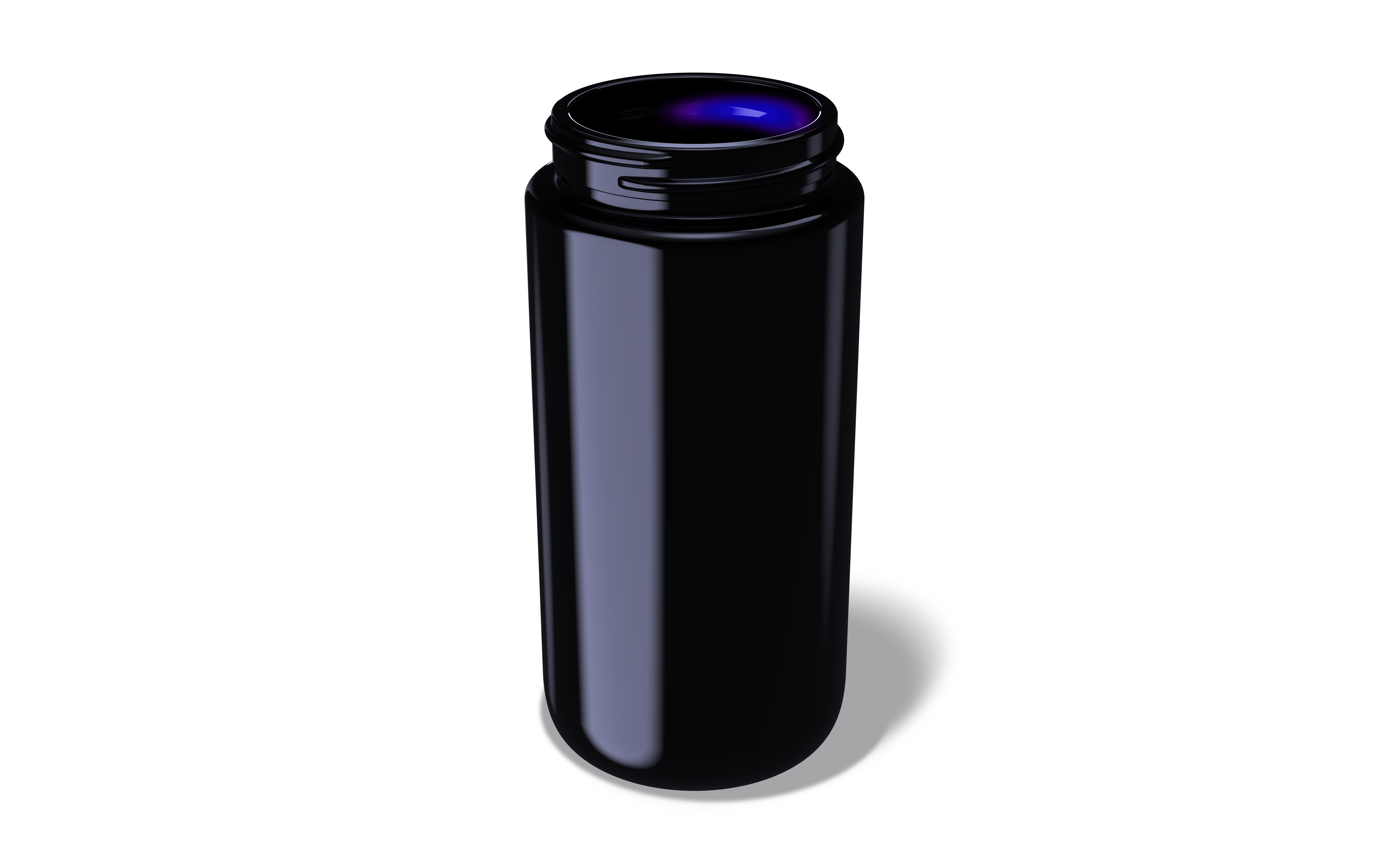
Round violet glass jar used for larger supplement and cosmetic scenarios.