
Protective Packaging Partnership FAQ: Compliance, Sampling, and Long-Term Support
Protective Packaging Partnership FAQ: Compliance, Sampling, and Long-Term Support
Buyers who move from a single purchase to a long-term protective packaging programme usually ask the same five questions: which standards apply, what the supplier can actually manufacture, what drives cost, how sampling works, and how consistency is protected on repeat orders. This page answers those questions in the order they normally come up, using the specification data behind Honor Packaging's child-resistant, vacuum and violet glass ranges.
NINGBO HONOR PACKAGING CO.,LTD. (www.honorcrpkg.com) is a packaging manufacturer established in 2015 in Ningbo, China. The company works through long-term joint-venture production bases for plastic and glass packaging, operates a 45,000 m² facility with approximately 310 staff, and exports 100% of its production, with major markets in the EU and the USA.
Problem definition: the second order is the real test
The first order in a packaging project is mostly a design conversation — choose a jar, choose a closure, approve the artwork. The difficulties appear later. A child-resistant closure that behaved correctly on a sample has to keep the same behaviour on the fifth production run. A violet glass jar has to keep the same body colour and wall thickness. A vacuum-sealed format has to keep its seal geometry when the order moves from a few sample units to full cartons of 250 pieces.
Three problems sit behind most of the questions buyers ask at this stage:
- Specification drift. The approved sample and the production jar diverge in glass thickness, diameter, height, unit weight, decoration method or cap material — often without a written change record. On H21 jars, unit weight alone spans 75 g to 280 g across the capacity range, so “same jar, smaller size” is not a self-evident instruction for a factory.
- Compliance uncertainty. Child-resistant packaging is governed by defined standards in the destination market, and a catalogue page rarely shows whether a specific jar-and-cap system was designed against them.
- Support continuity. The supplier that responds quickly during sampling is not always the one that can commit to manufacturing process control and order fulfilment during mass production — or to the same specification six months later.
Industry background: where glass protective formats sit
Protective packaging is a large and expanding category. Fortune Business Insights values the global protective packaging market at USD 44.02 billion in 2025 and projects USD 80.25 billion by 2034. Grand View Research estimates the 2025 market at USD 40.4 billion, with the flexible segment holding a 66.4% revenue share and paper and paperboard materials holding 45.7%. The gap between those two headline figures is a segmentation difference, which is worth remembering whenever a single market number is used in a business case. Fortune Business Insights also expects the secondary packaging segment to hold a 48.54% share by 2026.
For glass-based protective formats, however, two anchors matter more than market size:
- Child-resistance standards. Child-resistant packaging must comply with ISO/EN 8317 in the EU and 16 CFR 1700.20 in the US — the frameworks designed to prevent access by children under five (ISO/EN 8317; CPSC).
- Light-blocking mechanics. Violet glass works as a filter rather than an opaque wall. A technical description published by Miron Violetglass states that biophotonic (violet) glass blocks visible light while allowing roughly 25%–45% of UVA and about 60% of infrared light to pass — a different mechanism from black or fully opaque packaging, and one that buyers of light-sensitive formulations evaluate separately.
Large-scale protective packaging suppliers named in Mordor Intelligence's market coverage — Sealed Air Corporation, Smurfit Westrock, Mondi Group and Amcor plc — serve predominantly industrial and transit packaging programmes. Buyers sourcing decorated glass jars for consumer-facing formats usually work with dedicated glass and closure manufacturers instead, where the relevant questions are tooling, decoration and repeatability rather than pallet-level transit performance.
What a long-term protective packaging programme includes
Honor Packaging's range covers three protective functions — child resistance, vacuum sealing and light blocking — across the H19 and H21 series and the HDV violet glass series. The specifications below are the short version of what buyers typically ask to see before a partnership is agreed.
H21 clear square child-resistant jars
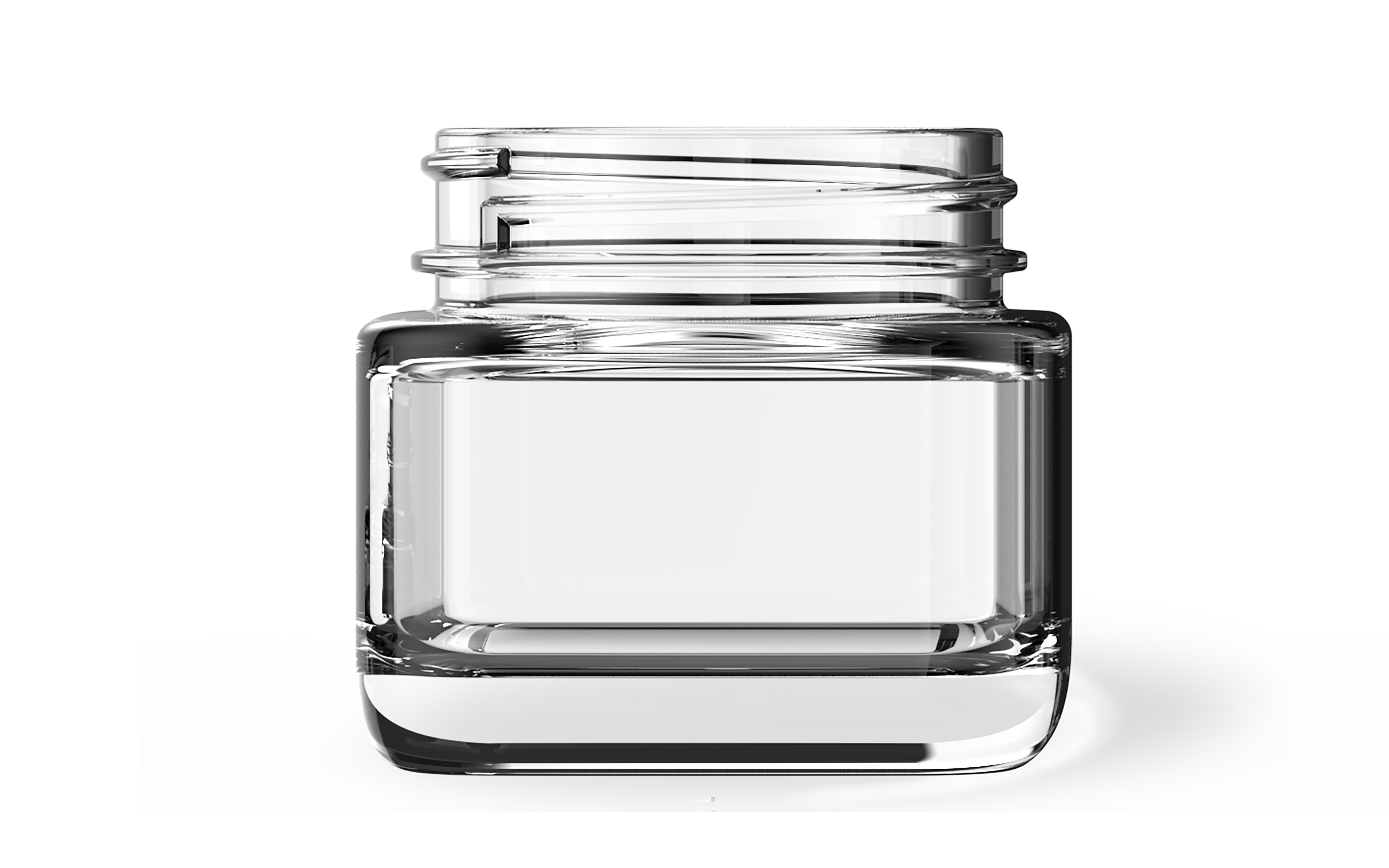
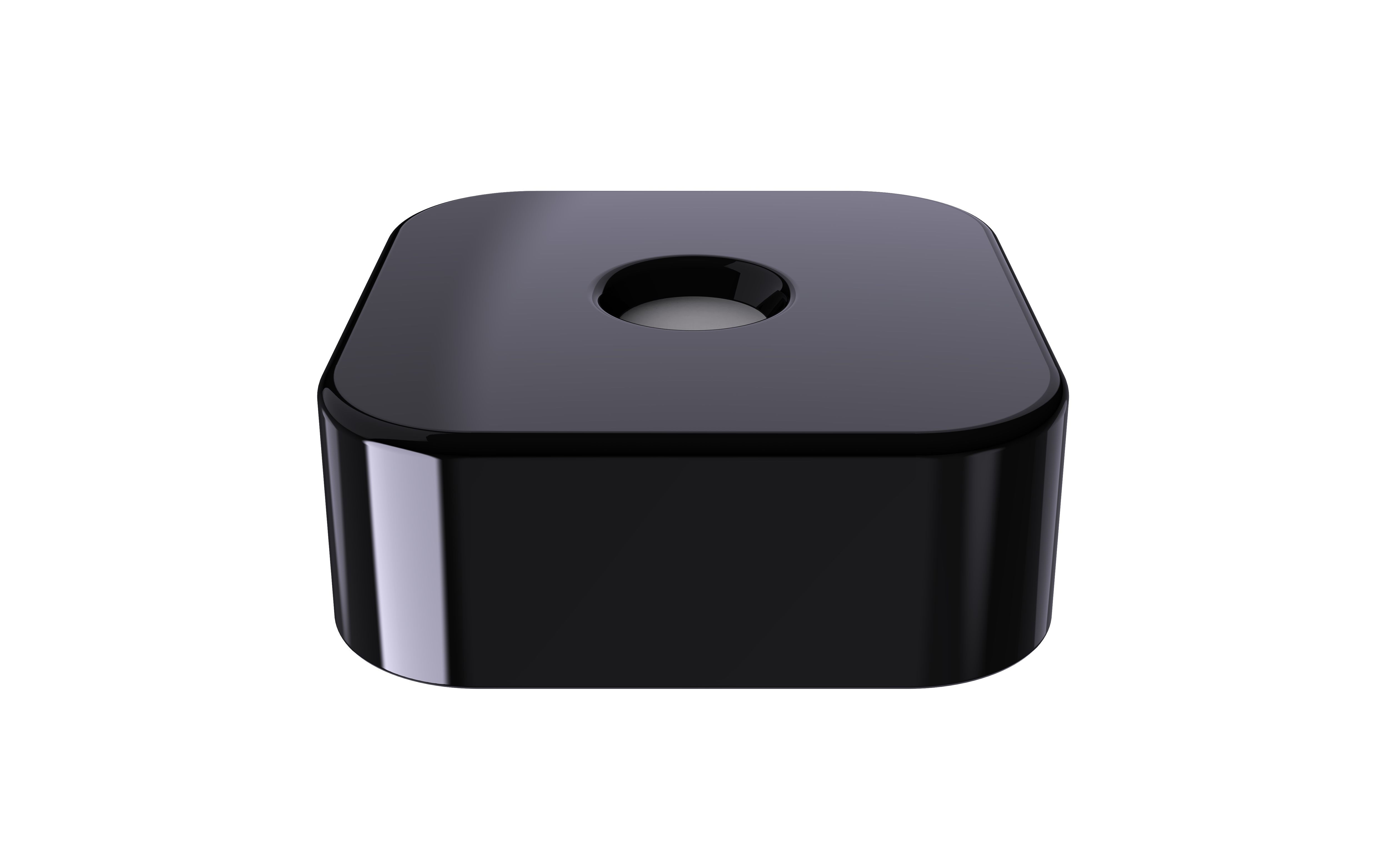
H21 clear square jars are made of glass, plastic and PE with a 0.38 mm glass thickness, a 58 mm diameter and a height range of 24 mm to 115 mm. Capacities cover 15 ml, 30 ml, 20 dr, 30 dr, 40 dr and 60 dr, with item codes H21-0003C through H21-0008C mapping to the individual sizes, and unit weight ranging from 75 g to 280 g. A child-resistant cap is fitted as standard. The same jar body is also available in a round version — H21-0012C to H21-0018C, 60 mm diameter, 36.5 mm to 125 mm height, 84 g to 268 g — for buyers who need a wider opening or a different shelf presence.
H19 child-resistant concentrate jars and the vacuum click jar
H19 is the small-format series: 5 ml and 9 ml concentrate jars supplied in square, round, triangle and hexagon shapes, in black, white and clear glass versions. Black and clear units weigh 27 g to 38 g, white units 27 g or 36 g, and all are packed 250 pieces per carton. The H19 vacuum click jar is a 5 ml square glass jar built around a vacuum seal feature, also packed 250 pieces per carton, and intended for food, cosmetic and medical applications.
Violet glass: H21 jars, HDV1 wide mouth jars, HDV2 cosmetic jars, HDV3 bottles
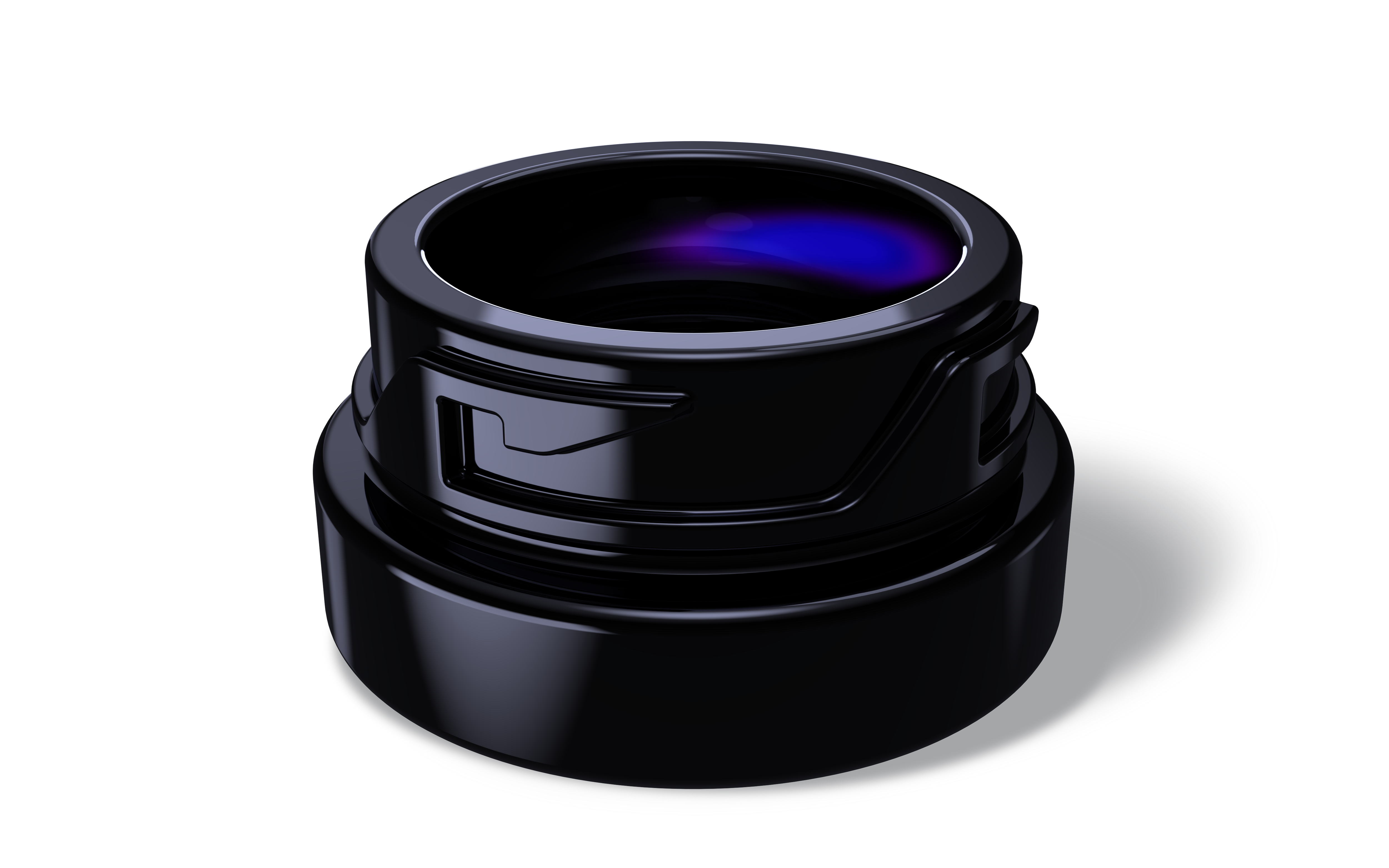
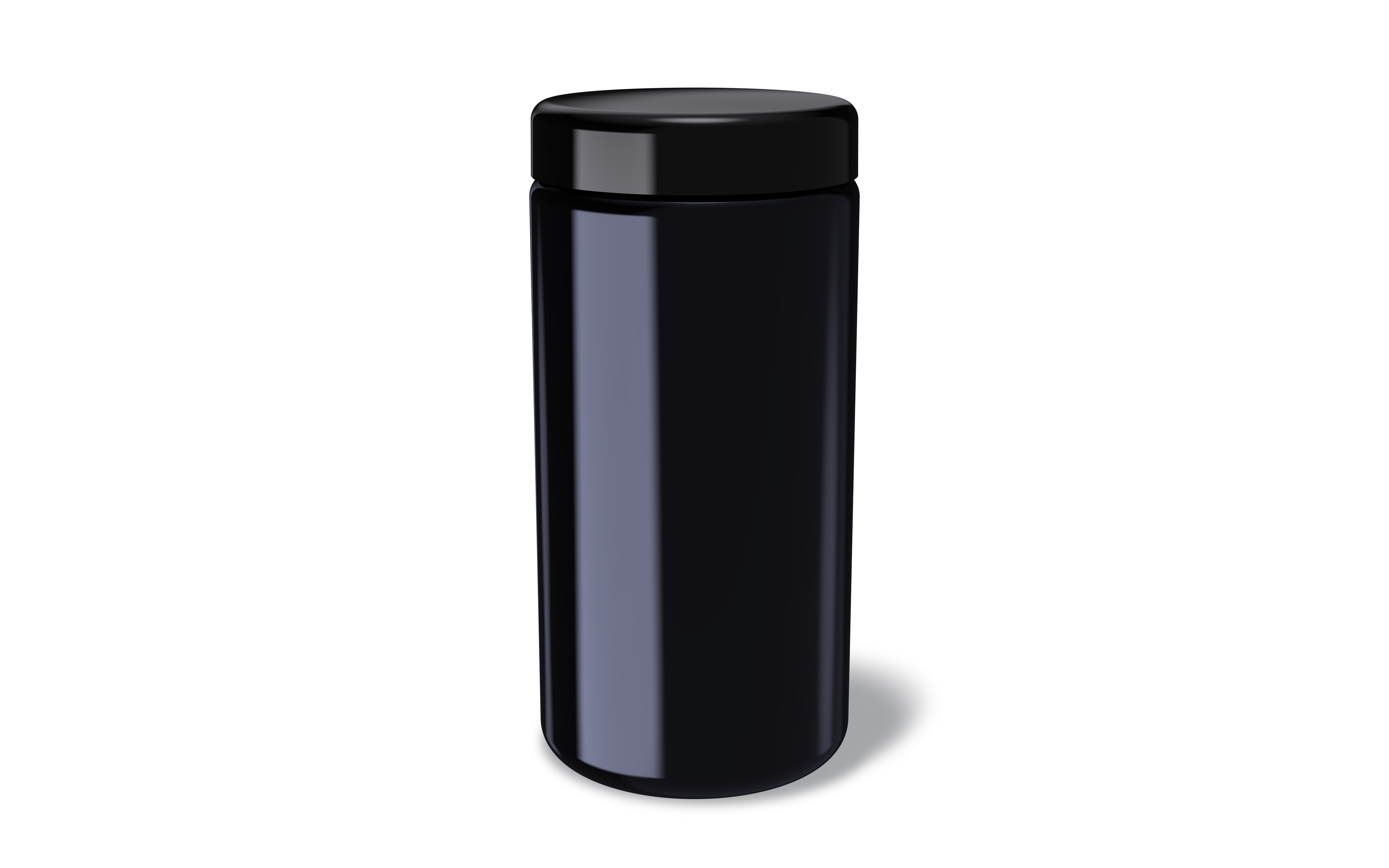
Violet glass is the light-blocking part of the range, supplied in four families. H21 square violet jars (item codes H21-0003V to H21-0008V) mirror the clear square format: 58 mm diameter, 24 mm to 115 mm height, 0.38 mm glass thickness, 75 g to 280 g, closed with a child-resistant cap. H21 round violet jars cover 30 ml to 180 ml with a 60 mm diameter, 36.5 mm to 125 mm height and the same 0.38 mm wall. HDV1 wide mouth violet jars scale up to 100 ml, 150 ml, 200 ml, 250 ml, 300 ml, 500 ml and 1 L, with 48 mm to 95 mm diameters, 84.7 mm to 193 mm heights, 117 g to 610 g unit weights, and caps available in Urea, PE, SAN or ABS on 41/400 and 89/400 threads. HDV2 cosmetic violet jars cover 3 ml to 200 ml with 36 mm to 93.2 mm diameters and a 0.38 mm wall. HDV3 round violet glass essential oil bottles run from 5 ml to 100 ml, 54.5 mm to 125 mm in height, 22.5 g to 120 g, with a PP closure and a choice of plastic cap, dropper, mist sprayer or lotion pump.
Refillable glass storage jars
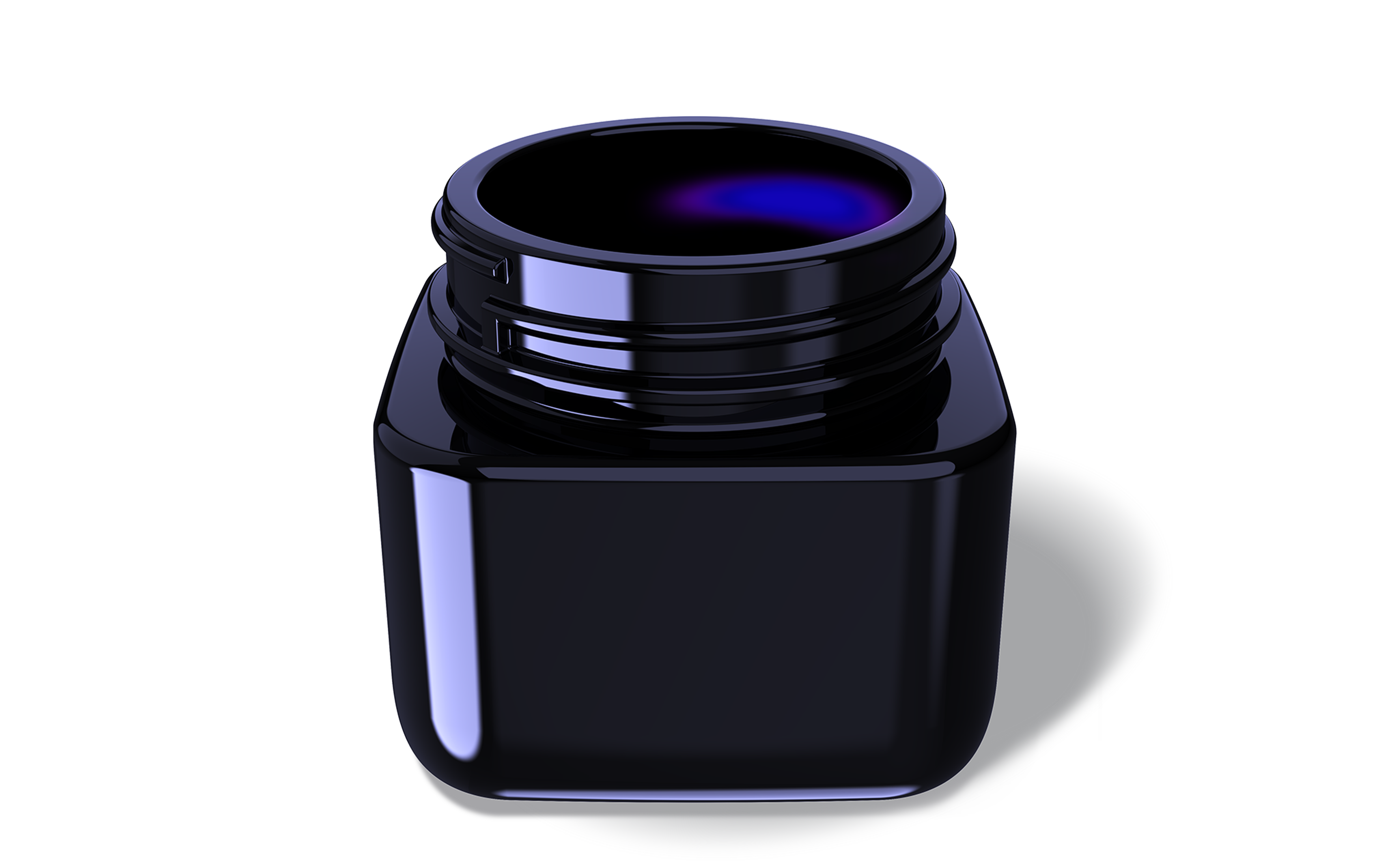
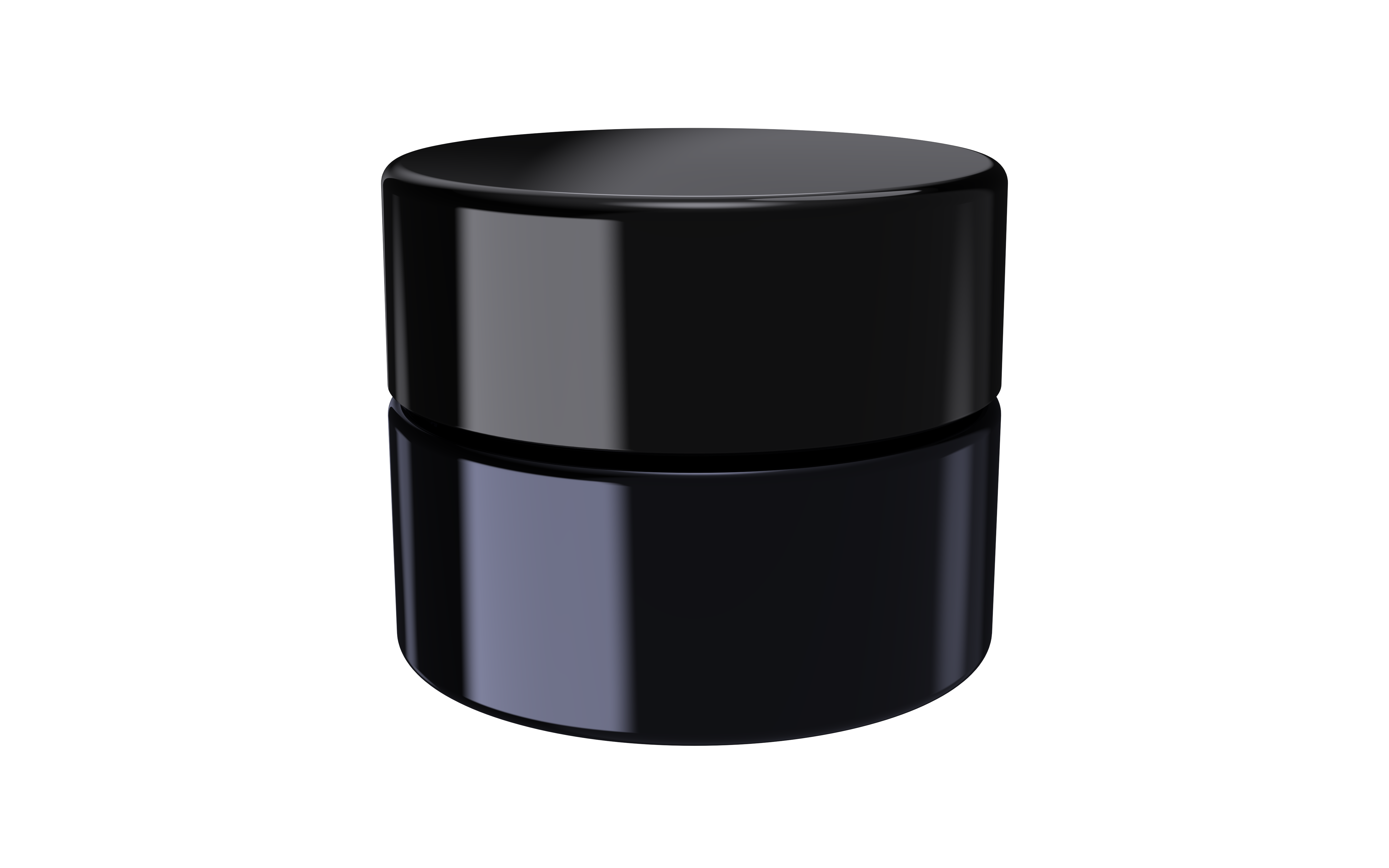
Refillable options use the H21 round violet glass body: item codes H21-0012V to H21-0018V, 0.38 mm glass thickness, 84 g to 268 g net weight, fitted with a child-resistant cap. The format is specified as a refillable glass storage jar, which lets a brand keep one visual identity across a refill line while stepping capacity up or down. For procurement, the practical consequence is that refill programmes can be ordered by item code instead of by a written capacity description — an important detail when a repeat order has to match the original jar exactly.
Surface treatments that carry the brand
Decoration is specified separately from the jar body, and available surface treatments across the H21 and HDV ranges are sticker, silk-screen printing, hot stamping, heat transfer printing and frosted finish. The HDV3 bottle family lists label, silk-screen printing and gold stamping. For printed protective packaging, the choice is a process decision: an applied sticker and a print transferred or stamped onto the glass follow different production paths and should be fixed at the sampling stage rather than changed mid-programme.
Step-by-step: how the partnership is set up
- Design intake. The buyer supplies the finalized packaging design together with target capacity, closure type and decoration method. Honor Packaging's working model starts from transforming finalized designs into items that can be mass-produced reliably and consistently.
- Structural development. Before mass production, the company is involved in product structural development — jar geometry, neck and thread fit, and the interaction between the glass body and the closure.
- Tooling strategy definition. The tooling route is defined at this stage, because tooling decisions determine how closely a repeat order can match the approved sample.
- Critical manufacturing risk assessment and validation. Potential failure points are assessed and validated before volume production begins. This is the stage at which buyers should lock a written specification: item code, capacity, glass thickness, unit weight, closure, decoration and packing quantity.
- Mass production with process control. During mass production, manufacturing process control and order fulfilment are handled as one responsibility rather than split between a factory and a separate trading entity.
- Repeat orders. The mechanism that protects after-sales consistency is procedural rather than technical: re-ordering by locked item code against the approved sample, and treating any change — even a print colour — as a new specification that needs its own validation step.
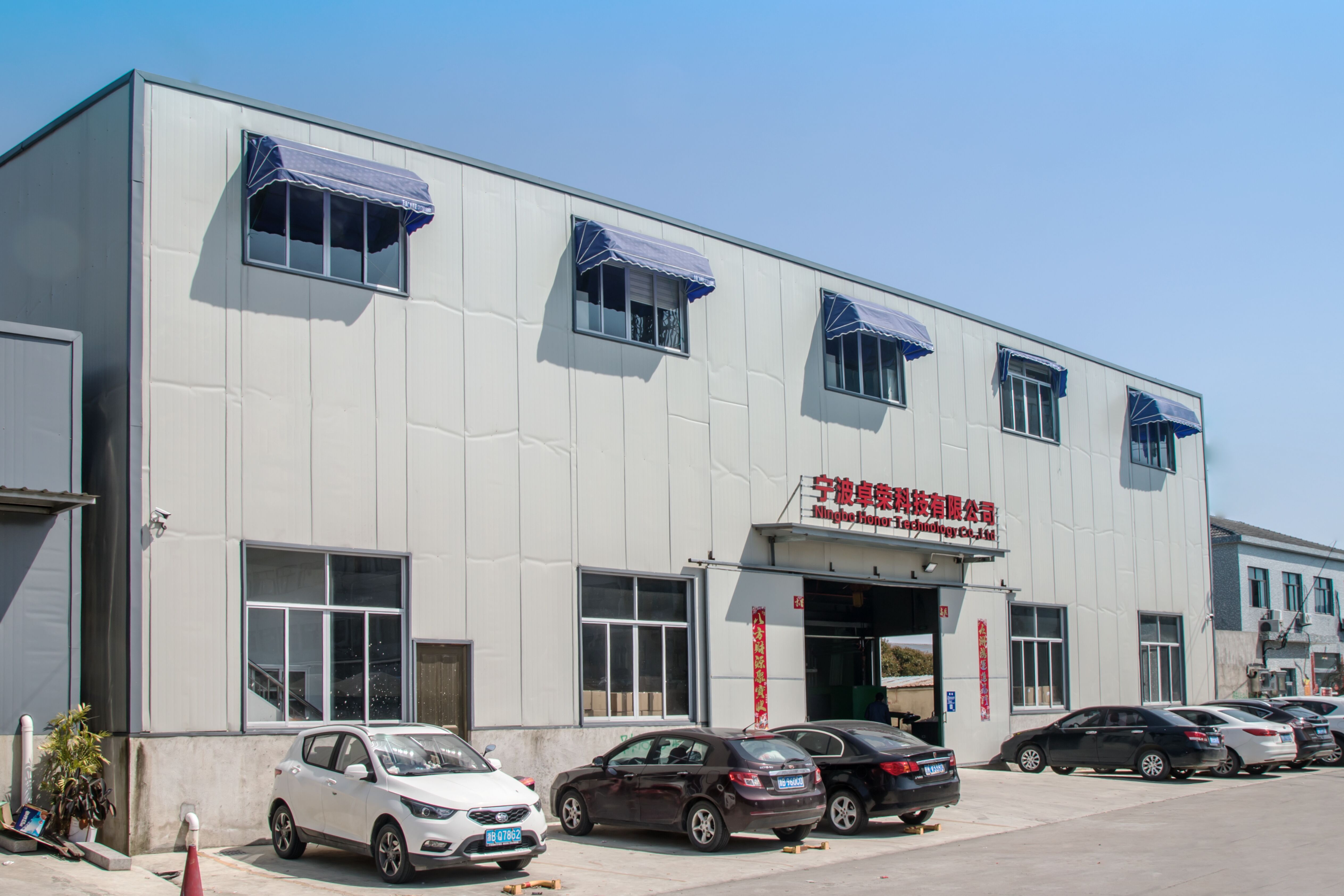
Logistics runs alongside the production steps. The company is based in Ningbo, China, close to both Ningbo and Shanghai seaports, which supports export scheduling for a business that exports 100% of its output to markets including the EU and the USA.
Use cases by product family
Protective packaging format should be chosen from the product's protection requirement first, and from the available capacity ladder second:
- Pharmaceutical, medical and supplement packaging: H21 clear square and round child-resistant jars from 15 ml to 60 dr, with 0.38 mm glass and a child-resistant cap.
- Small-dose concentrates: H19 child-resistant jars in 5 ml and 9 ml, in four shapes and three colour versions, packed 250 pieces per carton.
- Formats that require a vacuum seal: the H19 vacuum click jar, a 5 ml square glass jar specified around a vacuum seal feature.
- Light-sensitive contents: H21 square and round violet glass jars, HDV1 wide mouth jars up to 1 L, HDV2 cosmetic jars from 3 ml, and HDV3 essential oil bottles from 5 ml.
- Refill and storage programmes: H21-0012V to H21-0018V refillable glass storage jars, 84 g to 268 g net weight.
- Cosmetic and daily chemical packaging: HDV2 jars with Urea and PE components, and HDV3 bottles with dropper, mist sprayer or lotion pump closures.
Comparison table: protective packaging formats side by side
| Format | Model, item codes and key dimensions | Capacities | Closure | Typical fit |
|---|---|---|---|---|
| Clear square child-resistant jar | H21-0003C–H21-0008C; square, 58 mm dia., 24–115 mm high, 0.38 mm glass, 75–280 g | 15 ml, 30 ml, 20 dr, 30 dr, 40 dr, 60 dr | Child-resistant cap | Pharma, medical, food, cosmetic, supplements |
| Clear round child-resistant jar | H21-0012C–H21-0018C; round, 60 mm dia., 36.5–125 mm high, 0.38 mm glass, 84–268 g | 30 ml, 2 oz, 20 dr, 30 dr, 40 dr, 60 dr, 6 oz | Child-resistant cap | Food, cosmetic, medical |
| Concentrate jar (black, white, clear) | H19-0001B–H19-0011B and the matching W and C codes; square, round, triangle, hexagon | 5 ml, 9 ml | Child-resistant cap | Food, cosmetic, medical; 250 pcs/ctn |
| Vacuum click jar | H19; square glass | 5 ml | Vacuum seal feature | Food, cosmetic, medical; 250 pcs/ctn |
| Square violet glass jar | H21-0003V–H21-0008V; square, 58 mm dia., 24–115 mm high, 0.38 mm glass, 75–280 g | 15 ml, 30 ml, 20 dr, 30 dr, 40 dr, 60 dr | Child-resistant cap | Light-sensitive contents |
| Round violet glass / refillable storage jar | H21-0012V–H21-0018V; round, 60 mm dia., 36.5–125 mm high, 0.38 mm glass, 84–268 g | 30 ml to 180 ml | Child-resistant cap | Refillable storage, cosmetics, food |
| Wide mouth violet jar | HDV1100M-1-CR, HDV1100M-1, HDV1100M-2, HDV1150M, HDV1200M, HDV1250M, HDV1300M, HDV1500M, HDV1001L; 48–95 mm dia., 84.7–193 mm high, 0.38 mm glass, 117–610 g | 100 ml, 150 ml, 200 ml, 250 ml, 300 ml, 500 ml, 1 L | Urea, PE, SAN or ABS cap; 41/400 and 89/400 threads | Food and beverage, cosmetics, pharma, cannabis, supplements |
| Cosmetic violet jar | HDV2003M, HDV2005M, HDV2005M-CR, HDV2010M, HDV2030M, HDV2050M, HDV2060M, HDV2100M, HDV5200M; 36–93.2 mm dia., 25.6–55 mm high, 0.38 mm glass, 36–205 g | 3 ml, 5 ml, 10 ml, 30 ml, 50 ml, 60 ml, 100 ml, 200 ml | Violet glass with Urea / PE components | Cosmetics, daily chemicals, pharma, food storage |
| Violet glass essential oil bottle | HDV3005M–HDV3100M; 54.5–125 mm high, 22.5–120 g | 5 ml, 10 ml, 15 ml, 20 ml, 30 ml, 50 ml, 60 ml, 100 ml | PP closure: plastic cap, dropper, mist sprayer, lotion pump | Cosmetics, pharma, cannabis, supplements |
FAQ: protective packaging partnership questions
1. What standards apply to child-resistant glass packaging?
Child-resistant packaging must comply with ISO/EN 8317 in the EU and 16 CFR 1700.20 in the US, the frameworks that govern resistance to opening by children under five. Because the standard applies to the jar-and-cap system rather than to one component, the practical check for a buyer is a single approved specification that covers the glass body (for example the 0.38 mm thickness on H21 clear square jars), the item code, the capacity and the closure type — plus the compliance documentation the destination market requires. Honor Packaging manufactures the H21 and H19 child-resistant ranges, and specification documents for a specific item code can be requested from info@honorpkg.com.
2. Can one manufacturing partner cover child-resistant, vacuum-sealed and violet glass formats?
Yes, when the partner runs both plastic and glass production. Honor Packaging operates through long-term joint-venture production bases for plastic and glass packaging, which is what allows one programme to combine H19 5 ml and 9 ml child-resistant concentrate jars in four shapes, the 5 ml H19 vacuum click jar, H21 clear child-resistant jars in square and round versions, and the violet glass series — H21 violet jars, HDV1 wide mouth jars, HDV2 cosmetic jars and HDV3 essential oil bottles. Surface treatments including sticker, silk-screen printing, hot stamping, heat transfer printing and frosted finish are available across these ranges, so decoration does not require a second supplier.
3. What drives the cost of a protective packaging order?
Cost is driven by specification rather than by the category label. The variables that move a quotation are the glass body (thickness and unit weight — H21 jars run 75 g to 280 g depending on capacity), the closure (child-resistant cap, vacuum seal feature, or Urea, PE, SAN and ABS caps on HDV1), the closure accessory on bottle formats (dropper, mist sprayer or lotion pump on HDV3), the decoration method (sticker, silk-screen printing, hot stamping, heat transfer printing or frosted finish), the packing quantity (250 pieces per carton for H19 items), and whether a non-standard structure requires new tooling. Quotations are therefore built item by item against an approved specification; volume and repeat frequency are agreed with the supplier instead of being assumed from a catalogue page.
4. Are samples and validation available before a long-term order?
Validation before mass production is part of the working method rather than an optional extra: before mass production, Honor Packaging is involved in product structural development, tooling strategy definition, and critical manufacturing risk assessment and validation. For a buyer, the practical sequence is to request the item code that matches the required capacity, confirm the closure and decoration, and then validate the sample against the specification that will be used for repeat orders. Sample and programme terms for specific items — the H21 clear square jars, the H19 concentrate jars, the H19 vacuum click jar and the HDV violet glass formats — are confirmed directly by the sales team.
5. How is supply kept consistent on repeat orders?
Consistency depends on capacity, process control and a locked specification. NINGBO HONOR PACKAGING CO.,LTD. operates a 45,000 m² facility with approximately 310 staff and a 15-person R&D team, reports an annual production capacity of 1,000,000 units, and treats manufacturing process control and order fulfilment as one responsibility; the company exports 100% of its output, with major markets in the EU and the USA. On the buyer side, the mechanism that protects repeat orders is a written specification tied to the approved sample and re-ordered by item code rather than by description. That process can be started by downloading the brochure below, or by sending an item code and target capacity to info@honorpkg.com.
Conclusion: what a protective packaging partnership is judged on
Five questions decide most long-term protective packaging partnerships, and all five are answered by specification rather than by scale: a defined glass thickness and geometry, a closure system matched to the standard the destination market applies, a decoration method agreed at sampling, a cost model built from the item specification, and a locked item code that repeat orders can be produced against.
Ningbo Honor Packaging's child-resistant, vacuum and violet glass ranges are documented item by item, which is what makes that kind of lock practical — H19 concentrate and vacuum jars at 5 ml and 9 ml in four shapes, H21 clear and violet jars from 15 ml to 60 dr with 0.38 mm glass, HDV wide mouth jars up to 1 L with Urea, PE, SAN or ABS caps, and HDV3 bottles with dropper, sprayer or pump closures.
Next step
Download the protective packaging brochure for the full item list, or send an item code and target capacity to the sales team for sample and quotation terms.
Email: info@honorpkg.com · Tel: +86-574-88004632 · WhatsApp: +86 15968944995
Address for documentation and courier: Rm.305, No.1 Building, No.568, SiMing East Road, YinZhou District, NingBo City, China.