
Supplement Packaging Application Guide: Matching Violet Glass, Child-Resistant & Vacuum Jars
Supplement Packaging Application Guide: Matching Violet Glass, Child-Resistant & Vacuum Jars
Most supplement packaging problems are created before a single jar is produced — by choosing a container for how it looks, then asking the product to fit it afterwards. The workable order is the reverse: define the fill, then let the fill select the format. For supplements, nutraceuticals and adjacent regulated formats, that selection normally comes down to three rigid packaging families — violet glass jars, child-resistant jars, and vacuum jars — and to a short list of specifications that determine which model code is correct.
This guide is written for supplement brands, nutraceutical manufacturers, importers and packaging buyers who are in the research and evaluation stage. They already know the product and the market; what they need is to convert that knowledge into an orderable packaging specification — one that can be decorated, filled, closed and shipped without re-tooling halfway through the project. Every capacity, material, thread, closure and surface-treatment figure below comes from published product specifications, and each family is mapped to the supplement formats it actually fits.
Ningbo Honor Packaging Co., Ltd. (Honor Packaging) is a Ningbo, China–based packaging manufacturer founded in 2015 that specialises in child-resistant packaging, violet glass packaging and vacuum packaging. The company works through long-term joint-venture production bases for plastic and glass packaging, exports 100% of its output, and lists the EU and the USA as its main markets.
1. The problem: format mismatches are decided at the specification stage
A supplement packaging mismatch is rarely a manufacturing defect. It is almost always a decision that was made too early and never revisited. Four failure patterns account for most of the rework that reaches the specification table:
- Capacity chosen from shelf appearance, not dose volume. A concentrated resin that ships in single-gram doses does not need a 250 ml jar; the headspace it creates is wasted glass, wasted freight and unnecessary air exposure.
- Barrier chosen from habit, not from the fill. Violet glass exists in this catalogue precisely because some fills are specified with UV-protective glass rather than clear glass. Honor's application records describe projects where UV black glass protection is a stated requirement rather than an optional upgrade.
- Safety mechanism added late. Where child-resistant design is required, it is a closure-and-container decision, not a cap that can be swapped at the end. Honor's application records show child-resistant design and UV black glass protection being required together — a combination the company records as common in Canada and in medical packaging projects.
- Decoration approved before the closure and capacity are frozen. Surface treatment is applied to a specific jar; changing the jar afterwards invalidates the artwork, the print programme and the sample approval.
The sequence matters because each decision constrains the next. Capacity sets the model code. The model code sets the available thread and closure interface. The closure sets whether a child-resistant design is possible. And only then does the surface treatment become a free choice. Running that sequence in the wrong order is what turns a straightforward order into a tooling project.
2. Industry background: what is shaping format decisions in 2026
Rigid glass formats remain a core part of the supplement packaging market, even as flexible formats expand. Precedence Research valued the global dietary supplement packaging market at approximately USD 12.7 billion in 2024, with expected growth of 6.1% CAGR through 2034. That headline figure should be read carefully, because published estimates disagree depending on how the category is scoped: Grand View Research sizes nutraceutical packaging at approximately USD 5.05 billion, while Straits Research sizes supplements and nutrition packaging at approximately USD 28.69 billion. The divergence is a definition problem, not a contradiction — but it is a good reason to treat any single market number as directional rather than precise.
Two structural facts are more useful for a packaging decision. First, material mix: plastic still dominated nutraceutical packaging with a 58.3% revenue share in 2024, a position Grand View Research attributes to cost-effectiveness and barrier properties. Second, geography: North America accounted for 34.4% of global supplement packaging revenue in 2024, which is why US labelling and child-safety requirements tend to appear early in project specifications.
Flexible formats are growing alongside rigid ones. Vantage Market Research valued the Mylar bags market at USD 2.4 billion in 2023, projected to reach USD 4.1 billion by 2030. That growth is concentrated in powder and herb formats where a pouch or bag is the natural primary pack. It does not replace glass; it clarifies which formats genuinely belong in glass — premium resins, concentrated extracts, capsules, oils and tinctures where presentation, protection and re-closability carry weight.
Compliance is the third driver. In the United States, dietary supplement packaging sits under the Dietary Supplement Health and Education Act (DSHEA) of 1994 and FDA Current Good Manufacturing Practice, 21 CFR Part 111. In the EU, Regulation (EU) No. 1169/2011 governs the food information that must appear on packaging for consumer safety. Separately, the US Poison Prevention Packaging Act (PPPA) requires child-resistant and tamper-evident packaging for certain supplement ingredients — iron above 30 mg is the commonly cited example. None of these rules are about aesthetics; all of them narrow the container options before a designer touches the project.
3. Matching the format to the fill: three families and what each one solves
3.1 Violet glass jars — HDV1, HDV2, HDV3 and H21-V
Violet glass packaging is the family to evaluate when the fill is specified with light protection. Honor's violet range is split by capacity band, which makes the first cut straightforward.
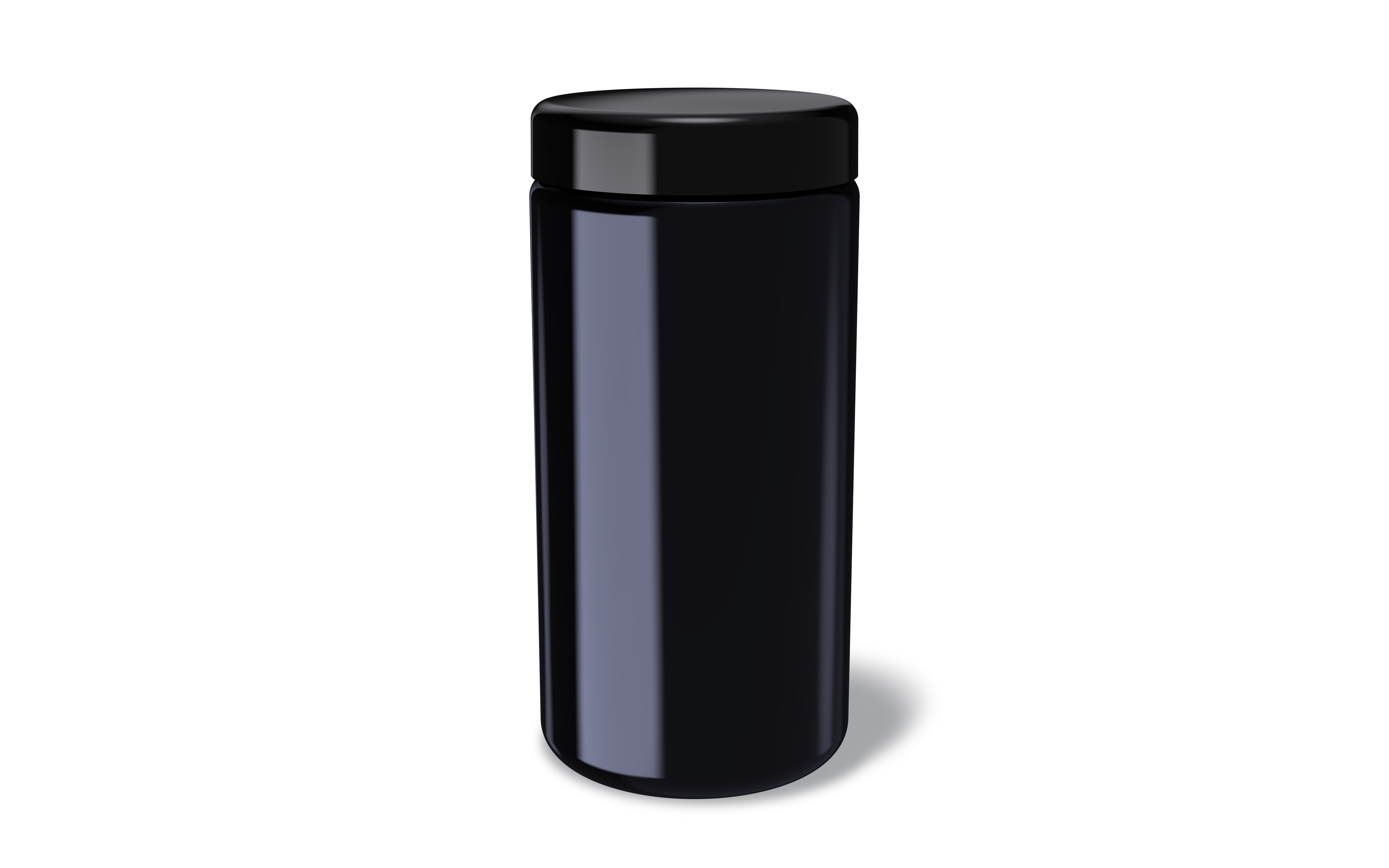
- HDV1 wide-mouth violet jars cover the large end: 100 ml, 150 ml, 200 ml, 250 ml, 300 ml, 500 ml and 1 L, across item codes HDV1100M-1-CR, HDV1100M-1, HDV1100M-2, HDV1150M, HDV1200M, HDV1250M, HDV1300M, HDV1500M and HDV1001L. Thread runs from 41/400 to 89/400, diameter from 48 mm to 95 mm, height from 84.7 mm to 193 mm, and unit weight from 117 g to 610 g. Published glass thickness is 0.38 mm, and the construction uses violet glass with Urea, PE, SAN or ABS components depending on the closure system. HDV1100M-1-CR is the child-resistant variant in this band.
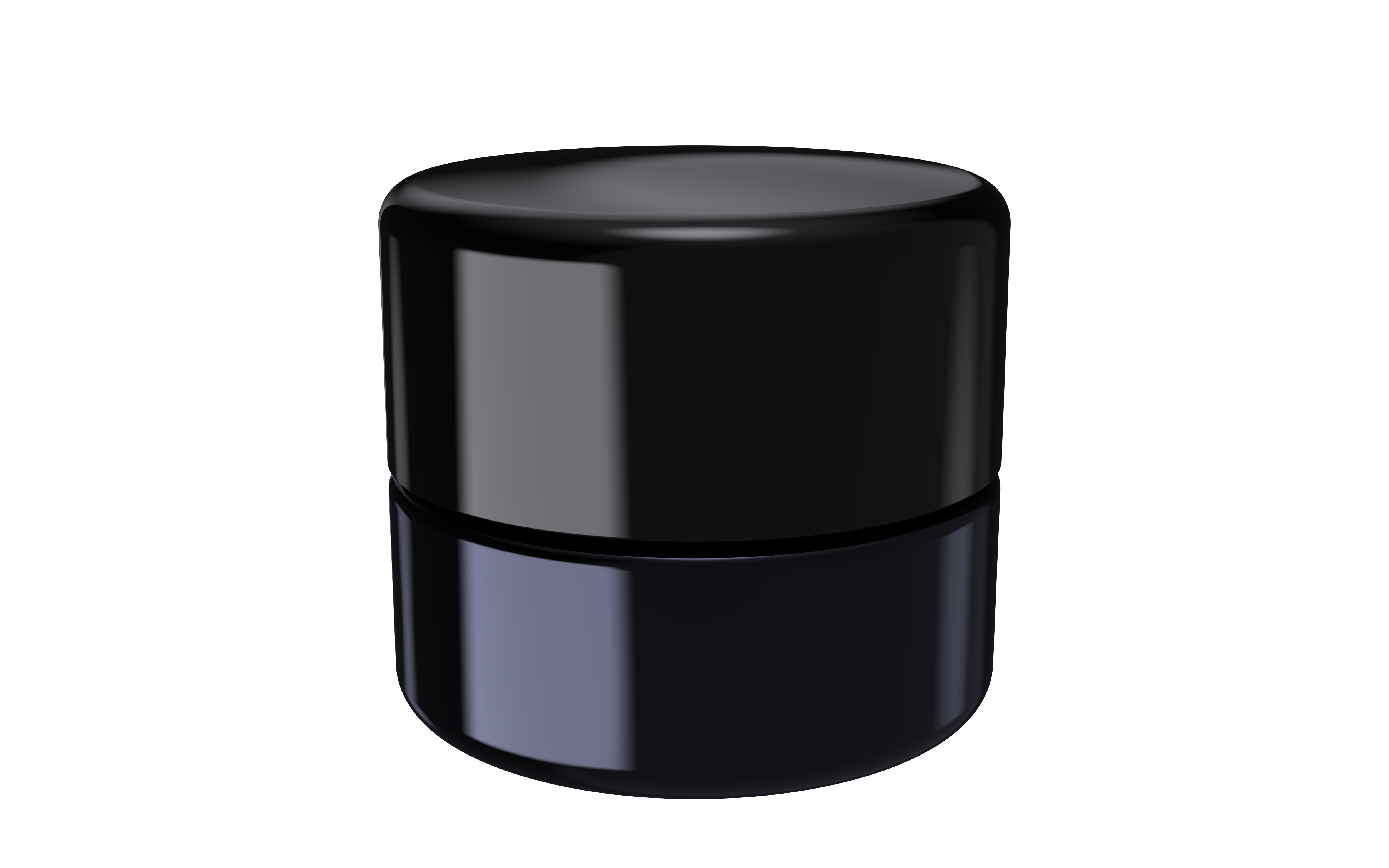
- HDV2 violet jars cover the small-to-mid band: 3 ml, 5 ml, 10 ml, 30 ml, 50 ml, 60 ml, 100 ml and 200 ml, across HDV2003M, HDV2005M, HDV2005M-CR, HDV2010M, HDV2030M, HDV2050M, HDV2060M, HDV2100M and HDV5200M. Thread runs from 32/400 to 89/400, diameter from 36 mm to 93.2 mm, height from 25.6 mm to 55 mm, and weight from 36 g to 205 g, with the same 0.38 mm published wall. HDV2005M-CR is the child-resistant 5 ml variant.
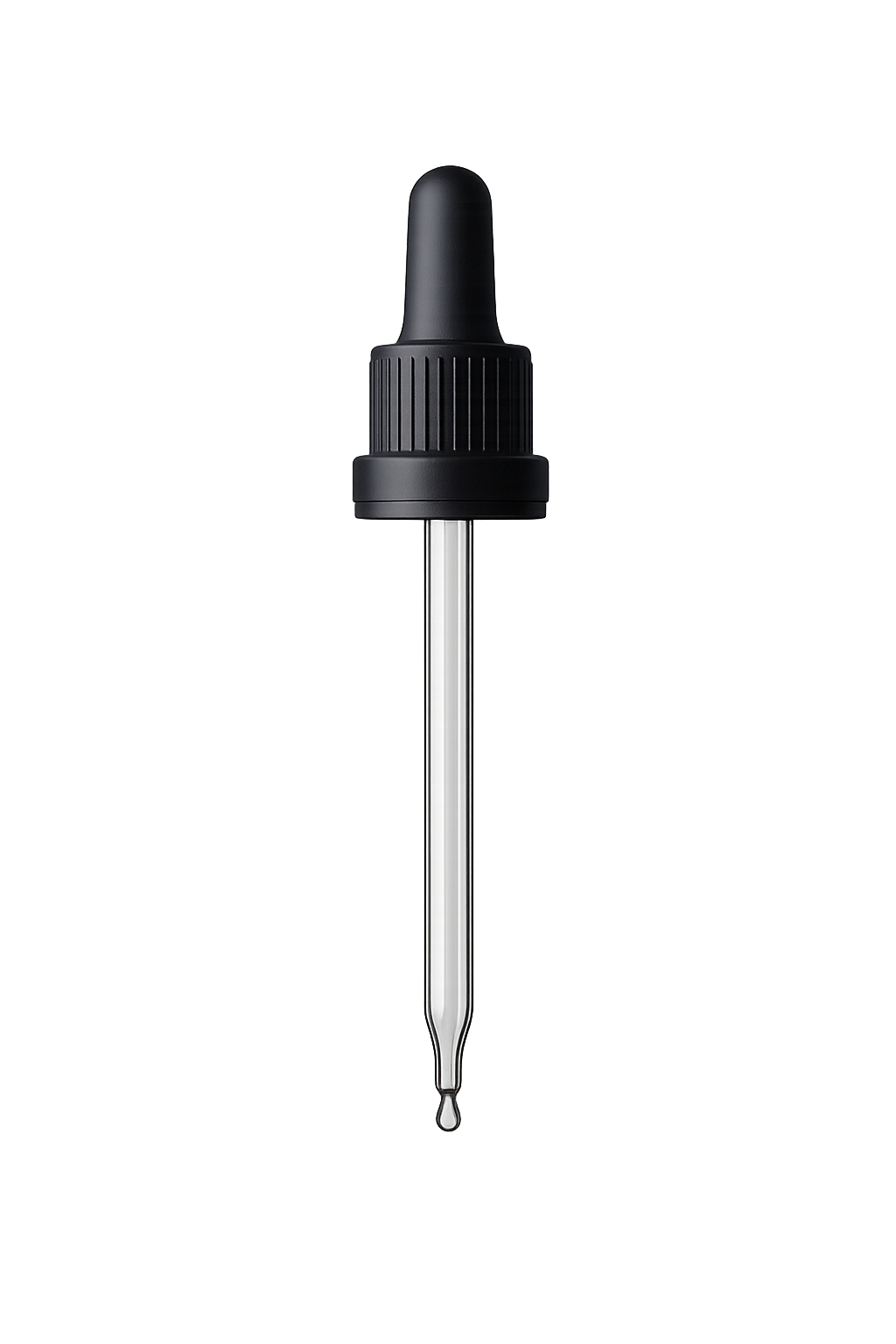
- HDV3 round violet bottles cover liquids: 5 ml, 10 ml, 15 ml, 20 ml, 30 ml, 50 ml, 60 ml and 100 ml across HDV3005M to HDV3100M. Height runs from 54.5 mm to 125 mm and weight from 22.5 g to 120 g. The distinguishing feature is the closure set — plastic cap, dropper, mist sprayer or lotion pump — which makes this the family for drop-dispensed and spray-dispensed formats.
- H21 violet jars combine violet glass with a child-resistant cap. The square version (H21-0003V to H21-0008V) spans 15 ml, 30 ml, 20 dr, 30 dr, 40 dr and 60 dr at a 58 mm diameter and 75–280 g. The round version (H21-0012V to H21-0018V) spans 30 ml, 2 oz, 20 dr, 30 dr, 40 dr, 60 dr and 6 oz at a 60 mm diameter and 84–268 g. Both publish a 0.38 mm wall.
The practical rule inside this family is simple: if the fill is measured in grams or millilitres per dose and the label must carry a full supplement facts panel, HDV1 gives the label real estate to do it. If the fill is a concentrated resin or a sample, HDV2 or H21-V keeps the glass-to-fill ratio sensible and the pack cost proportionate.
3.2 Child-resistant jars — H21 and H19
Child-resistant packaging is a safety specification, and in some markets a legal one. Two Honor product lines carry child-resistant caps as standard.
- H21 clear jars exist in square (H21-0003C to H21-0008C) and round (H21-0012C to H21-0018C) profiles with the same capacity ladder as the violet H21 range: 15 ml, 30 ml, 20 dr, 30 dr, 40 dr and 60 dr in the square profile, and 30 ml, 2 oz, 20 dr, 30 dr, 40 dr, 60 dr and 6 oz in the round profile. Both use glass with plastic and PE components, publish a 0.38 mm wall, and are supplied with a child-resistant cap. Square jars sit at 58 mm diameter and 75–280 g; round jars at 60 mm diameter and 84–268 g.
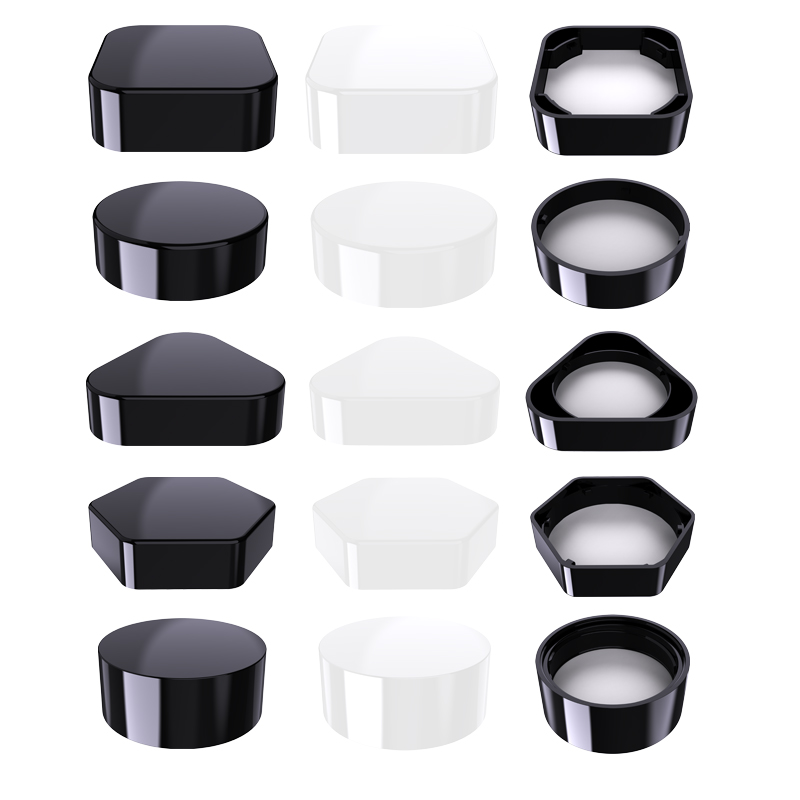
- H19 concentrate jars are the micro-format line: 5 ml and 9 ml in clear, white and black glass, across item codes H19-0001 through H19-0011 in each colour. Four shapes are available — square, round, triangle and hexagon — all supplied with a child-resistant cap, at 27 g to 38 g per unit and 250 pieces per carton.
Choosing between violet and clear within the H21 range is a presentation decision, not a safety one: both carry the same child-resistant cap interface and the same capacity ladder. Brands that need the fill to be visible from the shelf go clear; brands that need the fill protected from light go violet.
3.3 Vacuum packaging — the H19 vacuum click jar
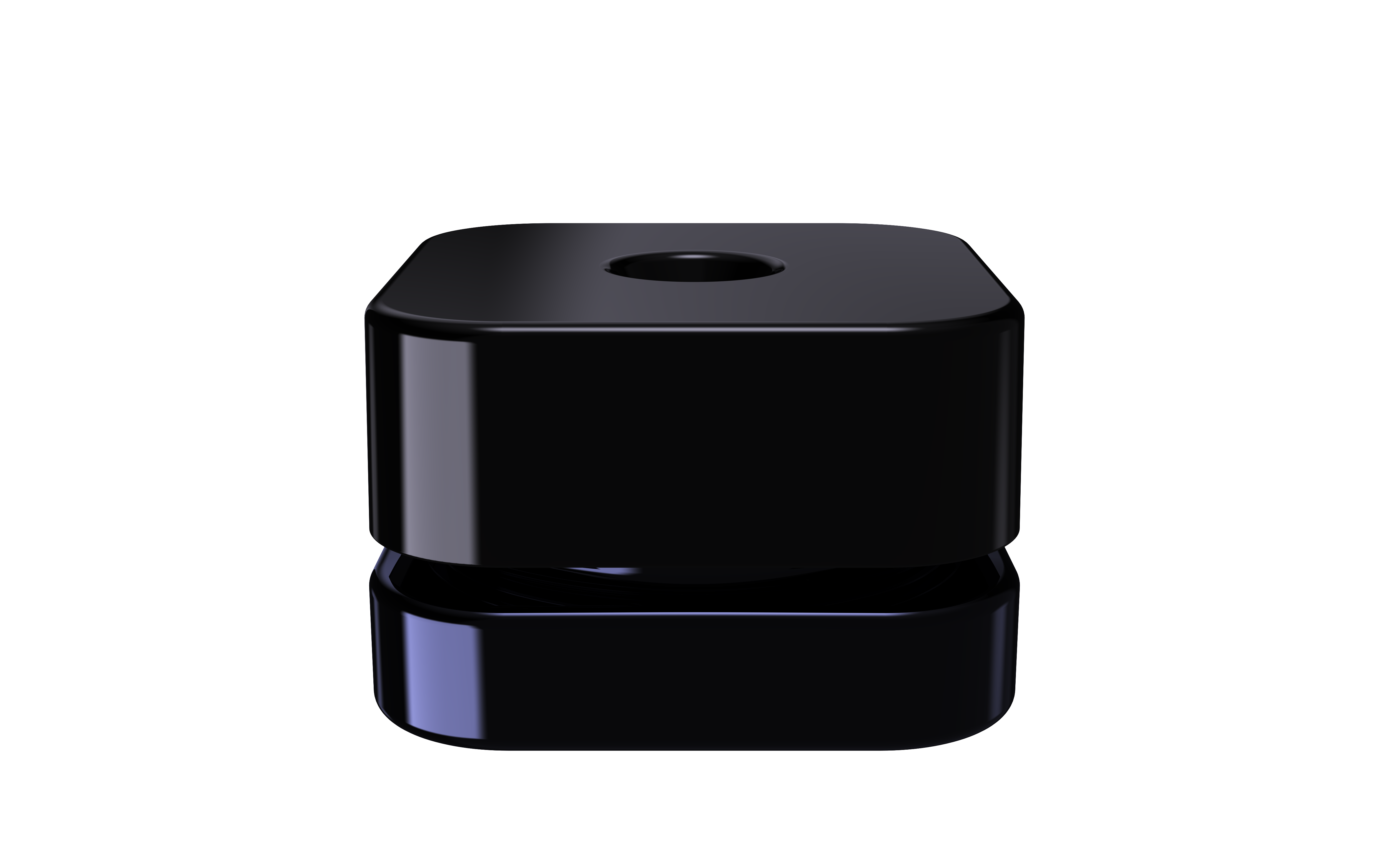
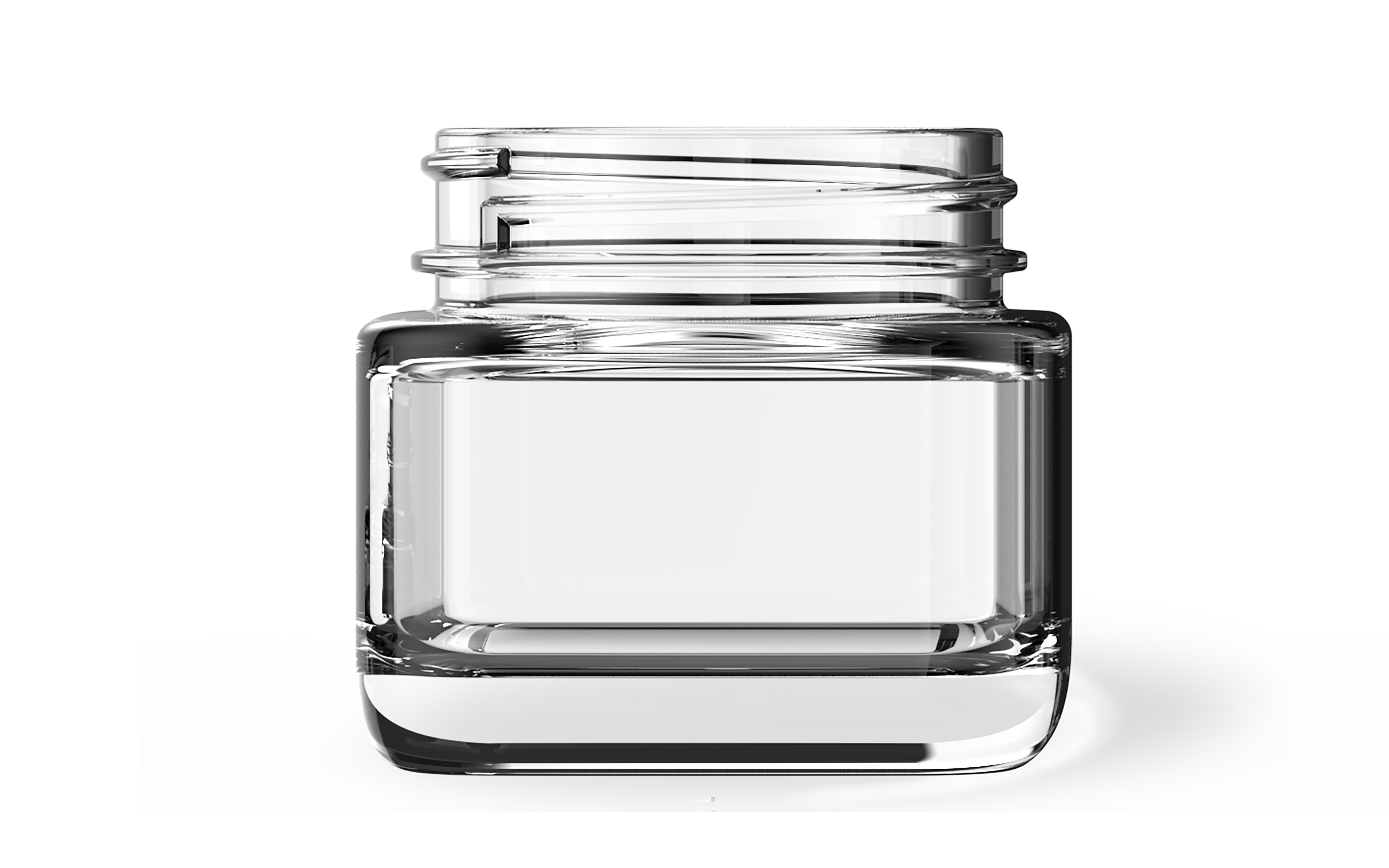
The vacuum family in this catalogue is deliberately narrow. The H19 vacuum click jar is a 5 ml square glass jar with a vacuum click closure, packed at 250 pieces per carton and listed for food, cosmetic and medical applications. It is the smallest rigid format in the range.
Because the published specification is focused — capacity, material, shape, closure and packing — the selection rule is equally focused: when a project calls for a vacuum-style click closure in a micro-dose glass jar, the H19 vacuum click jar is the model that meets it. Where the requirement is instead a child-resistant cap on a small glass jar, the H19 concentrate jars or the HDV2005M-CR are the relevant options. Those two requirements are different, and they resolve to different model codes.
3.4 Closures and surface treatments: the two decisions that follow capacity
Once capacity and family are fixed, two decisions remain. The first is the closure interface, which is constrained by the container's thread. HDV1 publishes threads from 41/400 to 89/400; HDV2 publishes 32/400 to 89/400. HDV3 supports a plastic cap, dropper, mist sprayer or lotion pump. H21 and H19 concentrate jars are supplied with child-resistant caps, and the vacuum jar with a vacuum click closure. Closure choice is therefore not a free-form design decision — it follows the thread specification of the jar that was selected in the previous step.
The second is surface treatment. HDV1, HDV2 and the H21 range support sticker, silk-screen printing, hot stamping, heat transfer printing and frosted finish. HDV3 supports label, silk-screen printing and gold stamping. Honor's OEM/ODM capability covers printing a client's artwork, developing a new design, and applying finishes such as frosted glass. The practical sequence is to confirm the jar and closure first, then lock decoration — because a frosted or hot-stamped finish applied to the wrong jar cannot be transferred to a different one without restarting artwork approval.
4. Step-by-step: matching a supplement format in six steps
- Fix the fill form and the dose volume. Resin, powder, capsule, oil or tincture — and how many grams or millilitres a single serving is. This determines the capacity band before any model is considered. If a 30-serving pack at 2 g per serving is the target, the 60 ml band is the starting point, not the 250 ml band.
- Set the barrier requirement. Ask whether the fill is specified with light protection. If it is, the violet families (HDV1, HDV2, HDV3, H21-V) are candidates; if visibility is a brand requirement instead, the H21 clear range becomes the candidate. If the requirement is a sealed micro-dose, the H19 vacuum click jar enters the shortlist.
- Decide the safety mechanism. Child-resistant, tamper-evident, or neither. Where child resistance is required — including US projects affected by PPPA requirements — the shortlist narrows automatically to the H21 range, the H19 concentrate jars, HDV1100M-1-CR or HDV2005M-CR.
- Match the closure interface. Thread determines closure. HDV1 uses 41/400–89/400; HDV2 uses 32/400–89/400; HDV3 uses cap, dropper, mist sprayer or lotion pump; H21 and H19 use child-resistant caps; H19 vacuum uses a vacuum click closure. Confirm the closure before approving anything downstream.
- Choose the model code and capacity. Convert the capacity band into an item code — for example HDV1250M for a 250 ml wide-mouth violet jar, HDV2030M for a 30 ml violet jar, or H21-0013V for a 2 oz round violet jar with a child-resistant cap.
- Choose surface treatment, then validate with a physical sample. Select from sticker, silk-screen printing, hot stamping, heat transfer printing or frosted finish (label and gold stamping on HDV3), confirm artwork, and validate closure engagement, headspace and print area on a real sample before releasing the production order.
5. Use cases: matching by product type
Shilajit and resin-based supplements
Resin fills are dense, dispensed in small units and frequently sold as premium or single-source products. The HDV2 band (3 ml to 200 ml) covers the low end, including HDV2005M-CR at 5 ml with a child-resistant cap, while the H21-V square jars at 15 ml and 30 ml provide a wider-mouth profile for scoop or spatula access. Both sit in violet glass, which matches the UV-protective requirement recorded in Honor's application scenarios.
Herbal and botanical capsules
Capsule fills are volume-driven rather than weight-driven, and dram-based sizing is common. The H21 range is built around that logic: square jars from 15 ml to 60 dr and round jars from 30 ml to 6 oz, in both violet and clear glass, all supplied with child-resistant caps. A 20 dr or 30 dr square jar typically matches a 60-count capsule fill; the 40 dr and 60 dr sizes suit larger counts and multi-month supply formats.
Bulk powders and multi-serving blends
Powder is where the HDV1 wide-mouth line earns its place. Capacities run from 100 ml to 1 L with threads from 41/400 to 89/400, so the jar and the scoop are sized together. The 0.38 mm published wall and the 117 g to 610 g weight range mean the larger sizes are substantial containers rather than thin-walled display glass — relevant when a 1 L pack has to survive distribution without deformation or breakage.
Liquid tinctures and oil-based actives
Drop-dispensed formats need a neck that accepts a dropper or a pump, which is why HDV3 exists in the catalogue. Capacities run from 5 ml to 100 ml, closures include plastic cap, dropper, mist sprayer and lotion pump, and surface treatment can be handled with a label, silk-screen printing or gold stamping. The same line is frequently used for cosmetic-crossover formulas such as facial oils and serums.
Micro-dose and concentrate formats
At the smallest end, three options sit side by side: the H19 concentrate jars at 5 ml and 9 ml in square, round, triangle or hexagon shapes with child-resistant caps; the H19 vacuum click jar at 5 ml for vacuum-style closure requirements; and HDV2005M-CR at 5 ml when the fill needs violet glass plus child resistance. Selecting between them is a question of which single requirement dominates — shape variety, vacuum closure, or light protection.
Regulated and child-safety-critical markets
Projects that face child-resistance obligations, or that combine child resistance with UV black glass protection, are recorded in Honor's application data as common in Canada and in medical packaging. Those projects typically start from the H21 or H19 ranges and work backwards into capacity, rather than starting from capacity and hoping a child-resistant closure is available.
6. Comparison table: matching capacity, closure and safety by family
The table below consolidates the published specifications behind the decision sequence above. Where a figure is not published in the current specification sheet, it is marked as not published rather than estimated.
| Family & models | Capacity range | Material | Closure / interface | Published wall | Format fit |
|---|---|---|---|---|---|
| HDV1 wide-mouth violet jars HDV1100M-1-CR, HDV1100M-1, HDV1100M-2, HDV1150M, HDV1200M, HDV1250M, HDV1300M, HDV1500M, HDV1001L | 100 ml – 1 L | Violet glass with Urea / PE / SAN / ABS components | Wide mouth; thread 41/400 – 89/400; child-resistant variant HDV1100M-1-CR | 0.38 mm | Bulk powders, multi-serving blends, large-format resin and herb packs |
| HDV2 violet jars HDV2003M, HDV2005M, HDV2005M-CR, HDV2010M, HDV2030M, HDV2050M, HDV2060M, HDV2100M, HDV5200M | 3 ml – 200 ml | Violet glass with Urea / PE components | Thread 32/400 – 89/400; child-resistant variant HDV2005M-CR | 0.38 mm | Sample sizes, resins, creams, cosmetic-crossover formulas |
| HDV3 round violet bottles HDV3005M – HDV3100M | 5 ml – 100 ml | Violet glass / PP | Plastic cap, dropper, mist sprayer or lotion pump | Not published | Tinctures, oil-based actives, spray and drop-dispensed liquids |
| H21 square violet jars H21-0003V – H21-0008V | 15 ml, 30 ml, 20 dr, 30 dr, 40 dr, 60 dr | Violet glass / PP / PE | Child-resistant cap; 58 mm diameter | 0.38 mm | Light-sensitive capsule and solid-dose formats |
| H21 round violet jars H21-0012V – H21-0018V | 30 ml, 2 oz, 20 dr, 30 dr, 40 dr, 60 dr, 6 oz | Violet glass / PP / PE | Child-resistant cap; 60 mm diameter | 0.38 mm | Same fit as the square profile, in a round silhouette |
| H21 clear jars (square and round) H21-0003C – H21-0008C; H21-0012C – H21-0018C | 15 ml – 6 oz | Glass / plastic / PE | Child-resistant cap; 58 mm (square) or 60 mm (round) | 0.38 mm | Formats where the fill must remain visible on shelf |
| H19 concentrate jars (clear / white / black) H19-0001 – H19-0011 per colour | 5 ml, 9 ml | Glass | Child-resistant cap; square, round, triangle or hexagon | Not published | Concentrates and micro-dose formats; 250 pcs per carton |
| H19 vacuum click jar | 5 ml | Glass | Vacuum click closure; square profile | Not published | Micro-dose fills specified with a vacuum-style closure; 250 pcs per carton |
7. FAQ
Do child-resistant supplement jars satisfy US and EU packaging rules?
A container alone never satisfies a regulation, but the container is where compliance becomes possible or impossible. In the United States, dietary supplement packaging falls under the Dietary Supplement Health and Education Act (DSHEA) of 1994 and FDA Current Good Manufacturing Practice 21 CFR Part 111, while the Poison Prevention Packaging Act (PPPA) requires child-resistant and tamper-evident packaging for certain supplement ingredients — iron above 30 mg is the standard example. In the EU, Regulation (EU) No. 1169/2011 governs the food information that must appear on packaging. Honor's child-resistant-capable lines are the H21 range (15 ml to 60 dr and 6 oz, square and round, violet or clear glass) and the H19 concentrate jars (5 ml and 9 ml, four shapes). Honor's application records show child-resistant design and UV black glass protection being specified together in projects recorded as common in Canada and in medical packaging. The brand owner remains responsible for confirming that a given container-and-closure combination meets the applicable rule for a given active ingredient.
Can the jars be customized beyond the catalogue capacities and finishes?
Yes — Honor operates as an OEM/ODM supplier. Stated customization capability covers printing a client's artwork, developing a new design, and applying finishes such as frosted glass. Catalogue surface treatments are sticker, silk-screen printing, hot stamping, heat transfer printing and frosted finish on HDV1, HDV2 and H21, and label, silk-screen printing and gold stamping on HDV3. Closure options span child-resistant caps, standard plastic caps, droppers, mist sprayers, lotion pumps and the H19 vacuum click closure. Thread specifications are published within known bands — 41/400 to 89/400 for HDV1 and 32/400 to 89/400 for HDV2 — so any requirement outside those bands is handled as new-design development rather than as a catalogue selection. Minimum order quantity is 10,000 units, with monthly capacity of 100,000 units.
What drives the unit cost of violet glass, child-resistant or vacuum jars?
Honor does not publish list pricing; cost is quoted per project, so the useful exercise is to understand which variables move it. Four levers are visible in the published specifications. First, glass mass: unit weight runs from 22.5 g in the HDV3 small bottles to 610 g in the HDV1 large jars, and heavier glass costs more to produce and to ship. Second, closure type: a standard child-resistant cap, a dropper, a mist sprayer, a lotion pump and a vacuum click closure are different assemblies with different cost profiles. Third, surface treatment: a simple sticker is the least complex option, while hot stamping, heat transfer printing, gold stamping and frosted finish add process steps. Fourth, order volume relative to the 10,000-unit minimum. The practical way to compare quotes is to hold the fill, the capacity band and the closure constant, and vary only one lever at a time.
How should a brand validate a supplement jar before committing to a bulk order?
Validation starts with a physical sample in the intended model code and capacity, not with a catalogue photo. Four checks matter most: closure engagement on the actual thread, headspace at the intended fill level and dose volume, available print or label area for the mandatory information required under DSHEA and 21 CFR Part 111 in the US or Regulation (EU) No. 1169/2011 in the EU, and the protection behaviour of the chosen glass under the storage conditions the product will actually face. On the production side, Honor's stated quality control is a 100% pre-shipment test with third-party inspection (SGS) available. Ordering one sample of two competing formats — for example an HDV2 violet jar against an H21 clear jar of similar capacity — is usually faster than debating the choice on paper.
What are the MOQ and lead time, and how does a project start?
Honor Packaging's published commercial parameters are a minimum order quantity of 10,000 units, a production lead time of 30–45 days, and monthly capacity of 100,000 units. After-sales policy accepts reissue where required. Export markets are the EU, the US, the Middle East and Southeast Asia, with the EU and USA listed as the main markets and 100% of output exported. A project typically starts with the fill definition, moves to a model code from the HDV1, HDV2, HDV3, H21 or H19 ranges, and then to samples and artwork. To begin, request samples or a quotation directly — samples and pricing are quoted per project rather than published as a list.
8. Conclusion: one fill, one format, one sequence
Supplement packaging selection becomes manageable once the sequence is fixed. Define the fill form and dose volume. Set the barrier requirement — violet glass where light protection is specified, clear glass where visibility is the priority, a vacuum click closure where a sealed micro-dose is the requirement. Decide whether child resistance applies, because that single decision moves the shortlist to the H21 range, the H19 concentrate jars, HDV1100M-1-CR or HDV2005M-CR. Match the closure to the published thread. Choose the model code and capacity. Only then choose the surface treatment, and validate the whole specification with a physical sample before the bulk order is released.
Honor Packaging's catalogue is structured around that logic. The HDV1 wide-mouth violet jars handle 100 ml to 1 L with threads from 41/400 to 89/400. The HDV2 violet jars cover 3 ml to 200 ml at 32/400 to 89/400. The HDV3 round violet bottles cover 5 ml to 100 ml with dropper, sprayer and pump closures. The H21 violet and clear jars bring child resistance to 15 ml through 60 dr and 6 oz. The H19 concentrate jars handle 5 ml and 9 ml across four shapes, and the H19 vacuum click jar covers the 5 ml micro-dose with a vacuum closure. Used in that order, the family stops being a list of jars and becomes a decision framework.
Next step: sample and specification support
To move from shortlist to specification, request a sample in the target model code, or ask for a quotation against your fill form, capacity band and closure requirement. Samples and pricing are handled per project.
Email info@honorpkg.com · Tel +86-574-88004632 / +86-15968944995 · WhatsApp +86 15968944995