
Supplement Packaging Certifications That Matter: FDA, EU, and Compliance Specs for 2026
Supplement Packaging Certifications That Matter: FDA, EU, and Compliance Specs for 2026
If you are sourcing supplement packaging for the US or EU market in 2026, the first question is not “which jar looks best on Instagram.” The first question is: does this packaging meet the certification and compliance requirements for the market where it will be sold? For shilajit, herbal powders, capsules, and cosmetics, packaging must be verifiably food-contact-safe, often tamper-evident, and increasingly child-resistant. This guide explains the certifications that matter, what to check in a specification, and how to evaluate a packaging supplier against compliance requirements.
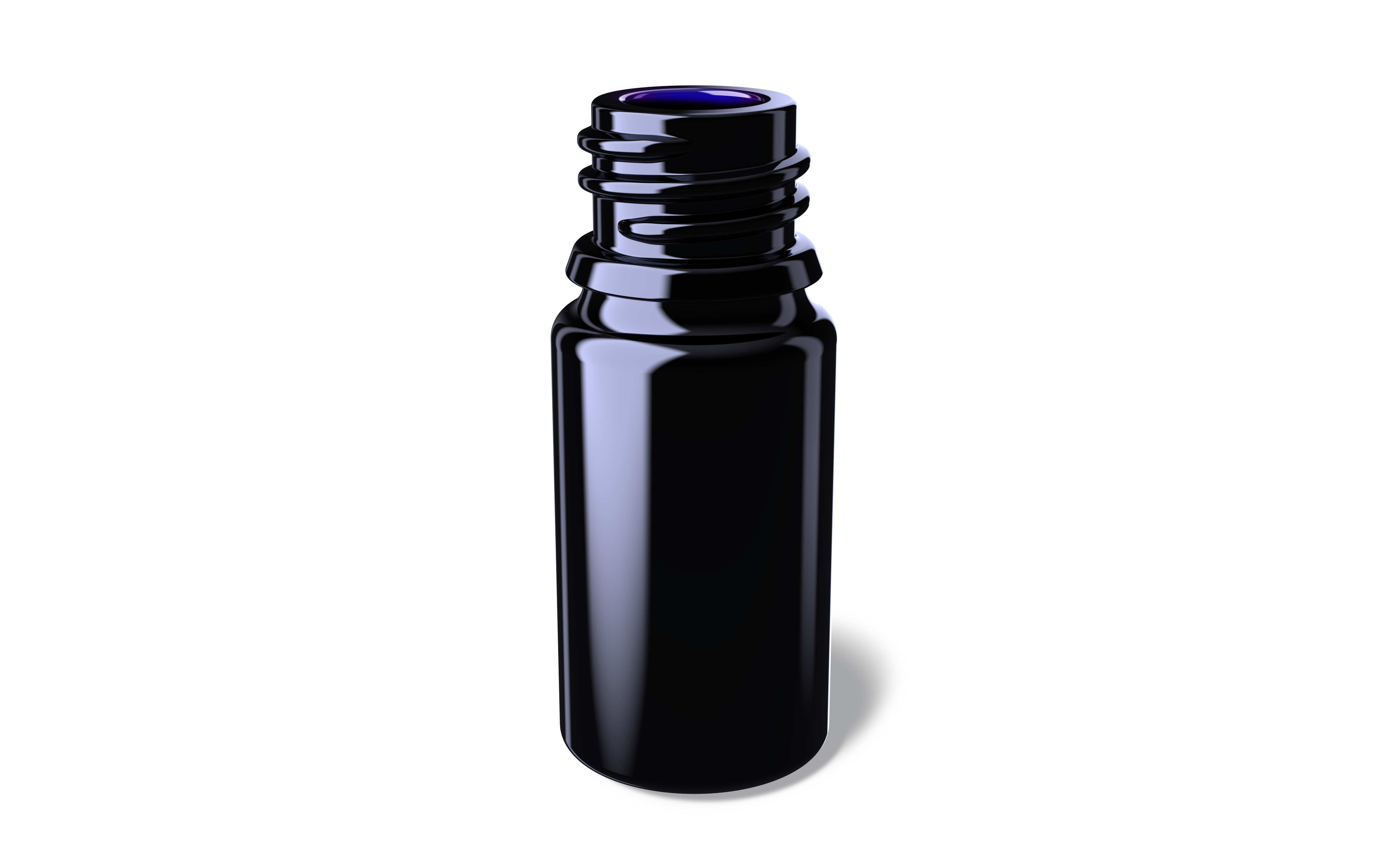
Why Certification Matters in Supplement Packaging
Packaging certification is not a decorative badge. In the US, dietary supplement packaging must comply with the Federal Food, Drug, and Cosmetic Act, the Dietary Supplement Health and Education Act (DSHEA) of 1994, and FDA Current Good Manufacturing Practice (CGMP) 21 CFR Part 111. In the EU, packaging that contacts food and supplements falls under the framework regulation EC No 1935/2004, which sets out safety and inertness requirements for materials and articles intended to come into contact with food. The EU regulation is supported by additional transparency rules under Regulation (EU) No. 1169/2011 for consumer information and labeling.
There is also the Poison Prevention Packaging Act (PPPA) in the US, which applies to certain ingredients such as iron above 30 mg — and a growing number of brands proactively choose child-resistant closures even when not legally required. Choosing packaging without checking these requirements creates real risk: customs rejection, retailer delisting, consumer safety issues, and damage to brand trust.
What “Certified” Actually Means for a Packaging Supplier
When a packaging supplier says their product is FDA-certified or EU-certified, an importer or brand owner should be able to see three things: the standard, the certificate number, and the body that issued it. That level of traceability is what turns “certified” from a marketing phrase into a verifiable purchasing fact.
For example, Ningbo Honor Packaging Co., Ltd. (“Honor Packaging”, founded in 2015, based in Ningbo, China, specializing in child-resistant packaging, violet glass packaging, and vacuum packaging) has obtained certifications through a joint-venture production base and third-party testing body. Its violet glass packaging is certified under FDA CPG for the US market, certificate number NGBHL23005693401, issued by SGS. The same product family is certified under EC No 1935/2004 for the EU market, certificate number NGBHL24007770101, issued by SGS. These are tangible, verifiable facts — and they are the kind of details a buyer should ask for from any supplier.
Key Compliance Areas to Check in 2026
- Food-contact safety: Verify that the material complies with FDA CPG (US) or EC No 1935/2004 (EU). Glass is inert and widely accepted; plastic closures and liners must also be food-contact-suitable.
- Child resistance (where applicable): If the product contains ingredients like iron over 30 mg, the US PPPA requires tamper-evident or child-resistant packaging. Even outside that scope, child-resistant caps are now common.
- Barrier protection: UV-sensitive ingredients such as shilajit, resveratrol, and many botanical extracts require violet or amber glass to block light and maintain freshness.
- Seal and tamper evidence: Tamper-evident bands, induction seals, or vacuum closures are used to show the product has not been opened before purchase.
- Labeling law: EU Regulation No 1169/2011 requires clear information on the packaging; FDA labeling rules apply in the US. The packaging practical design must leave adequate space for legal labels.
Product Specifications: What to Check Before Ordering
For this article, we focus on certified violet glass packaging lines at Honor Packaging, because they demonstrate what a full compliance spec should contain.
Round Violet Glass Essential Oil Bottle – Series HDV3
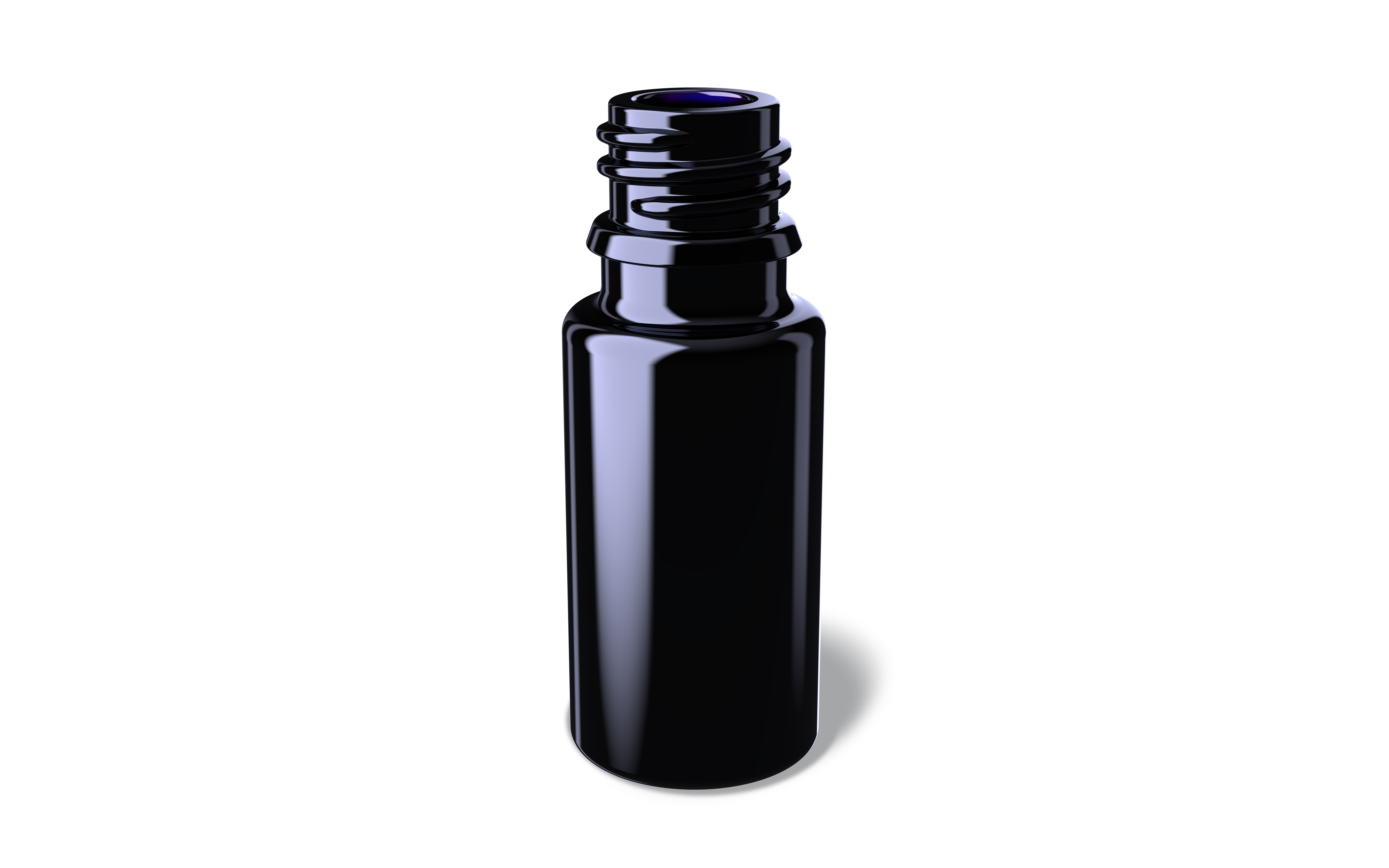
The HDV3 series is a round violet glass essential oil bottle line. Capacity ranges from 5 ml to 100 ml, with item numbers HDV3005M, HDV3010M, HDV3015M, HDV3020M, HDV3030M, HDV3050M, HDV3060M, and HDV3100M. Height ranges from 54.5 mm to 125 mm; weight ranges from 22.5 g to 120 g. The closure system can be a plastic cap, dropper, mist sprayer, or lotion pump. Surface treatment includes label, silk-screen printing, and gold stamping.
This series is certified to EC No 1935/2004 (certificate NGBHL24007770101, issued by SGS) for the EU market. That makes it a direct choice for brands selling in Germany, France, Italy, Spain, or other EU states.
Wide Mouth Violet Jars – Series HDV1
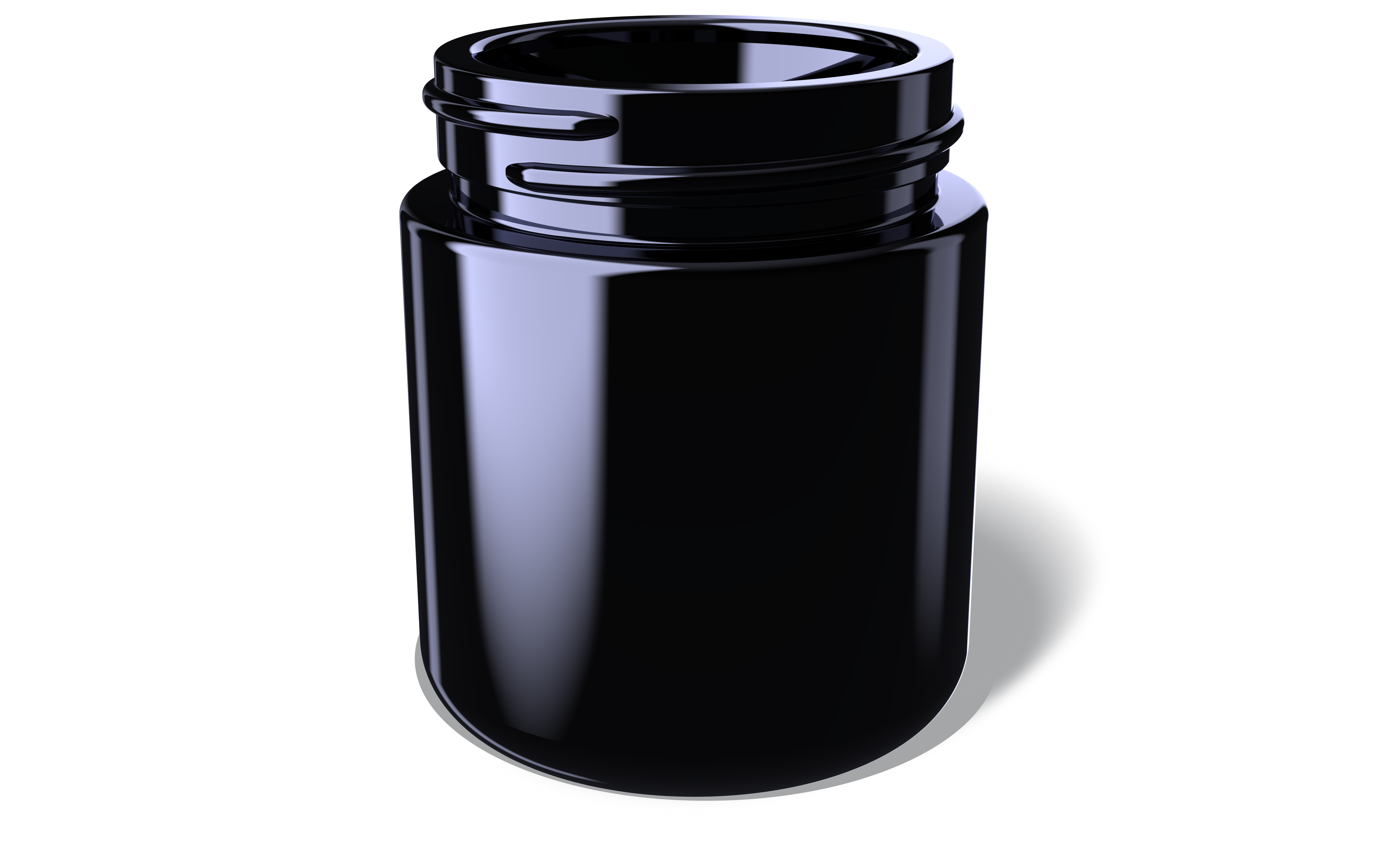
The HDV1 wide mouth series covers 100 ml to 1 L, with item codes HDV1100M-1-CR, HDV1100M-1, HDV1100M-2, HDV1150M, HDV1200M, HDV1250M, HDV1300M, HDV1500M, and HDV1001L. Diameter is 48 mm to 95 mm; height is 84.7 mm to 193 mm; weight is 117 g to 610 g. Thread sizes range from 41/400 to 89/400. The wide mouth format suits powder supplements, herbal blends, and larger batch sizes.
Both the HDV1 and HDV2 series (cosmetic violet jars in 3 ml to 200 ml sizes) hold FDA CPG certification for the US market and EC No 1935/2004 certification for the EU market. They are also used in food and cosmetic applications.
Round and Square Violet Glass Jars – Series H21
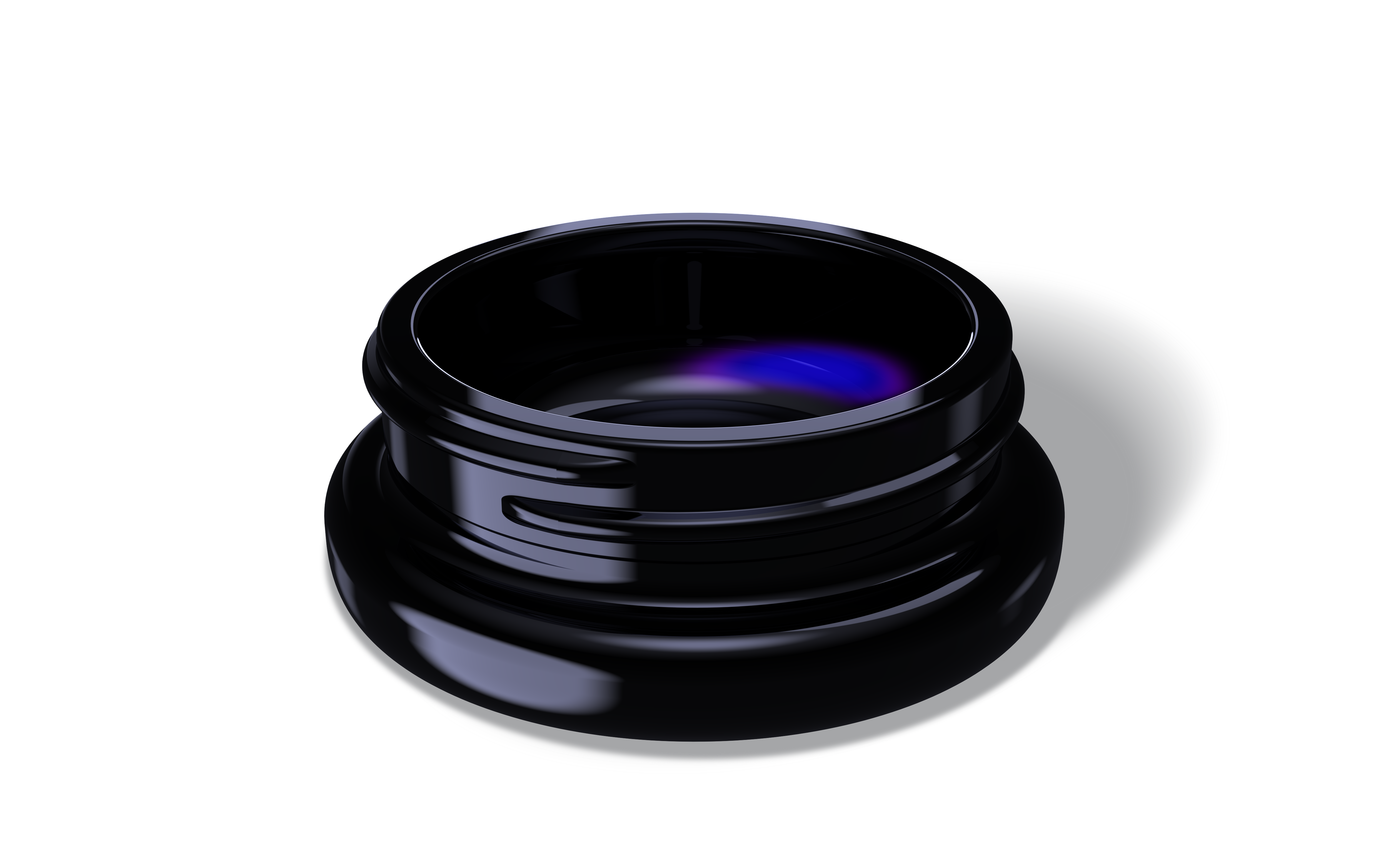
The H21 series combines violet glass with child-resistant caps. Round jars range from 30 ml to 6 oz (180 ml); square jars range from 15 ml to 60 dr (200 ml). Round item codes include H21-0012V through H21-0018V; square item codes include H21-0003V through H21-0008V. Glass thickness is 0.38 mm. Surface treatment options include sticker, silk-screen printing, hot stamping, heat transfer printing, and frosted finish. The square H21 series applies to food, cosmetic, and medical packaging; the round series applies to food, cosmetic, and medical packaging as well.
For a brand selling shilajit or herbal capsules in the US, a square H21 violet jar with a child-resistant cap represents a complete compliance story: light protection + child resistance + FDA-certified material.
Child-Resistant Concentrate Jar Series – H19
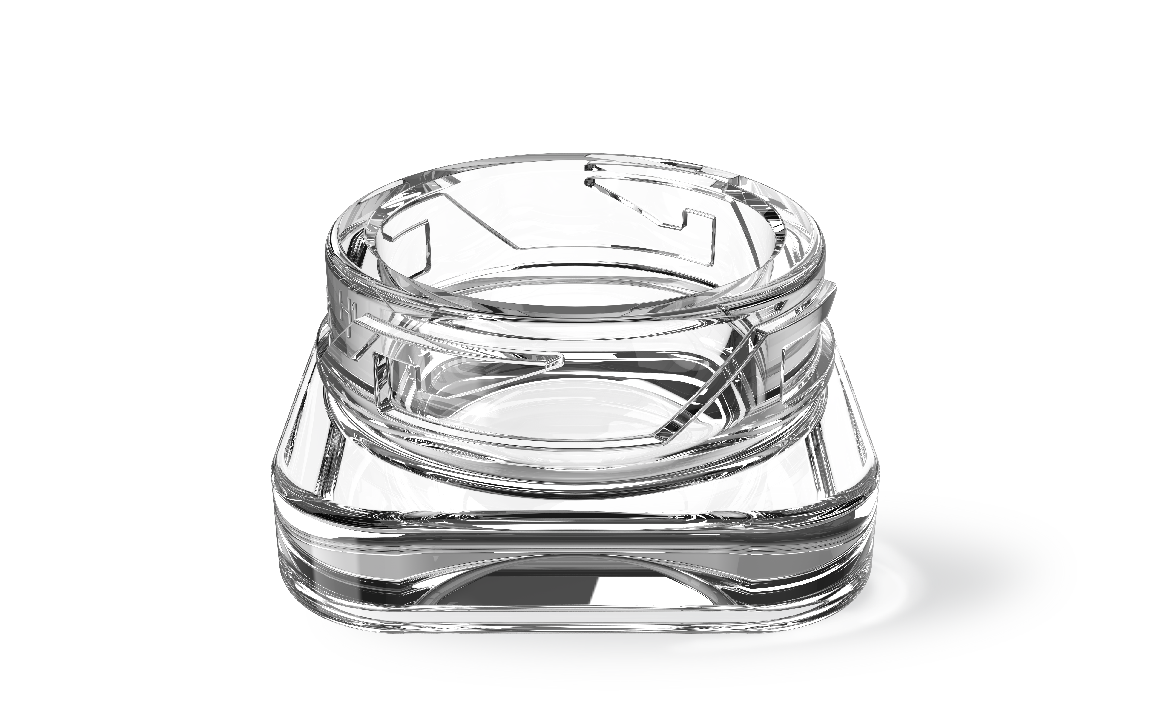
The H19 concentrate jar series is a small-format (5 ml and 9 ml) glass jar with child-resistant caps. It comes in clear, white, and black glass, with square, round, triangle, and hexagon shapes. Weight is 27 g to 38 g, and packing is 250 pieces per carton. This format is used for concentrated tinctures, potent powders, and volatile oils where dosing control and child resistance are critical.
Vacuum Packaging – Model H19
The vacuum click jar (capacity 5 ml, square glass) is included in the FDA-certified product family. It is designed for food, cosmetic, and medical applications where airtight freshness and an audible click (vacuum seal confirmation) add value. For small portion or premium single-use packaging, it is a specialized format worth reviewing for suitability.
Comparison Table: Certified Honor Violet Glass & Child-Resistant Formats
| Series | Capacity | Format | Closure | Key Certifications |
|---|---|---|---|---|
| HDV3 Round Violet Bottles | 5–100 ml | Round essential oil bottle | Plastic cap / dropper / mist sprayer / lotion pump | EU: EC No 1935/2004 (NGBHL24007770101, SGS) |
| HDV2 Cosmetic Violet Jars | 3–200 ml | Cosmetic jar | Urea / PE cap | FDA CPG (NGBHL23005693401, SGS); EU EC No 1935/2004 |
| HDV1 Wide Mouth Violet Jars | 100 ml–1 L | Wide mouth jar | Urea / PE / SAN / ABS | FDA CPG; EU EC No 1935/2004 |
| H21 Square Violet Jars | 15 ml–60 dr | Square jar | Child-resistant cap | FDA CPG; EU EC No 1935/2004 |
| H21 Round Violet Jars | 30 ml–6 oz | Round jar | Child-resistant cap | FDA CPG; EU EC No 1935/2004 |
| H19 Concentrate Jars | 5–9 ml | Square / round / triangle / hexagon, clear / white / black | Child-resistant cap | FDA CPG |
| H19 Vacuum Click Jar | 5 ml | Square glass, vacuum seal | Vacuum click | FDA CPG |
How to Evaluate a Supplement Packaging Supplier: A Compliance-First Checklist
- Ask for certificate numbers. A certificate number is a verifiable fact. A supplier who cannot provide one should not be treated as certified.
- Confirm the standard matches your market. FDA CPG is not the same as EC No 1935/2004. If you sell in both markets, you ideally need both.
- Check the certification scope. A certificate may apply to specific product series, not the entire factory output. Confirm that your chosen item code is covered.
- Clarify whether the closure is also food-contact-suitable. The glass might be certified, but the cap, pump, or dropper should also be assessed for food-contact and compliance requirements.
- Verify child-resistance suitability. For brands distributing in the US, review PPPA applicability. Child-resistant caps are a defensible default.
- Request quality-control evidence. Honor Packaging reports 100% pre-shipment testing and accepts third-party inspection such as SGS; that kind of QC commitment reduces risk before containers leave China.
- Confirm lead time and capacity. Current capabilities at Honor Packaging indicate a monthly capacity of approximately 100,000 units and a typical lead time of 30–45 days, with MOQ around 10,000 units. For mid-size brands, this is an important supply-chain fit metric.
Use Cases: Matching a Certified Format to a Product Scenario
Shilajit resin in the EU market
Shilajit is UV- and moisture-sensitive. A German brand packaging shilajit resin in an HDV3 round violet glass bottle with dropper can rely on EU certification (EC No 1935/2004) while delivering the UV-protective amber-violet light barrier. The 15 ml or 30 ml size is typical for concentrated resins. The dropper closure supports precise dosing.
Herbal powder in the US market
Herbal powders need a wide mouth for scooping. An HDV1 wide mouth violet jar in 100 ml, 250 ml, or 500 ml gives FDA-certified food-contact glass, a large opening, and UV protection for heat- or light-sensitive botanicals. A urea or PE cap keeps the seal simple and affordable at scale.
Capsules and tablets for a safety-conscious brand
For capsules sold in North America, the H21 round violet glass jar with child-resistant cap addresses both light protection and accidental access. The 30 dr or 40 dr size fits standard capsule counts (roughly 30–90 capsules depending on size). The same jar supports silk-screen branding and frosted finish to signal premium quality.
Cosmetic serum or tincture in small format
The H19 concentrate jar in black or clear glass, with child-resistant cap, is suited to 5–9 ml products where a few drops are the full dose. The black concentrate jar adds opacity; the clear jar shows product color; the child-resistant cap is a safety feature for products that may contain botanicals or other active ingredients. The FDA certification covers the US market.
Premium gift or limited-edition set
For luxury supplement gift packaging, a matte or hot-stamped violet glass jar signals quality more strongly than a plain container. The H21 square or round series can be treated with frosted finish, hot stamping, or heat transfer printing to elevate presentation while retaining the same functional protection and child-resistant cap.
Market Context: Size, Dominance, and What It Means for Buyers
Third-party market research helps frame sourcing decisions, even if precise figures vary. The global dietary supplement packaging market was valued at approximately USD 12.7 billion in 2024 and is expected to grow at a CAGR of 6.1% through 2034. Plastic remains the dominant material by revenue share (58.3% in 2024) because of its cost-effectiveness and barrier properties. North America is the largest regional market, accounting for 34.4% of global revenue in 2024. The Mylar bags segment, used for flexible powder and herb packaging, is projected to grow from USD 2.4 billion in 2023 to USD 4.1 billion by 2030.
For a brand owner, these figures underscore three practical takeaways. First, demand for supplement packaging is strong and growing, which means good suppliers may run busy production calendars; question capacity and lead time early. Second, plastic is the mainstream default, so glass packaging becomes a deliberate premium choice — and when you choose glass, certification and barrier features are your differentiators. Third, North America is the largest market, so FDA compliance is non-negotiable for most export-driven brands.
Certifications in Action: An Existing Long-Term Use Case
One documented use case for Honor Packaging involves a German branding business that has used violet glass products for approximately three years. In this application, the client used Honor packaging for pharmaceutical packaging in Germany, with orders around 10,000 units, and the products have remained fresh. The highlight of the solution was reusability and UV protection.
This is a modest but useful example: it shows that a buyer in the DACH region has repeatedly ordered violet glass packaging, which suggests the product is practical for regular reordering and that its UV protection function performs over time in a real market environment.
Frequently Asked Questions
1. Is FDA certification the same as FDA registration for supplement packaging?
No. For a packaging manufacturer, FDA certification for materials typically refers to compliance with FDA CPG or related food-contact standards, usually verified by a third party such as SGS. FDA registration applies differently to food facilities. The practical point for a buyer is to request the specific certificate number and standard, e.g., FDA CPG, and the name of the issuing body.
2. What EU standard applies to supplement packaging?
The core framework is EC No 1935/2004, which covers materials and articles intended to come into contact with food. Supplement labeling and consumer information are also governed by Regulation (EU) No. 1169/2011. If you sell into the EU, demand certification that explicitly cites EC No 1935/2004, with a traceable certificate number.
3. Does Honor Packaging offer child-resistant (CR) caps on certified glass packaging?
Yes. The H21 square and round violet glass jar series come with child-resistant caps. The H19 concentrate jar series in clear, white, and black glass also uses child-resistant caps. These CR formats combine light protection with safety, which is useful for products containing iron or other active ingredients and for brands that want the highest standard across the range.
4. What are typical lead times, MOQs, and quality control measures at Honor Packaging?
Honor Packaging supports OEM and ODM production, including printing client artwork, creating new designs, and frosted finishes. Monthly capacity is approximately 100,000 units; lead time is 30–45 days; MOQ is 10,000 units; and quality control includes 100% pre-shipment testing and third-party inspection (e.g., SGS). The company also states that it accepts reissue in after-sales service. Export markets include the EU, US, Middle East, and Southeast Asia.
5. Can I request a sample before committing to a 10,000-unit order?
Usually, sample testing is the standard first step for brands evaluating glass packaging. The most practical next step is to contact the Honor Packaging team directly to confirm sample availability and timeline for the specific series you need, such as HDV3, H21, or H19. You can reach Honor Packaging at info@honorpkg.com, or WhatsApp +86 15968944995.
Need a certified packaging quote?
The best way to verify packaging compliance, lead times, and pricing is a direct conversation with specifications in hand.
Or download the company brochure: Download Honor Packaging Brochure (PDF)
Conclusion
Supplement packaging certification is not a slogan; it is a supply-chain audit trail. For the US market, check for FDA CPG certification with a certificate number. For the EU, check for EC No 1935/2004 certification. For safety-sensitive formulas, add child-resistant closures. For UV-sensitive ingredients, add violet glass. And for every claim, ask for the document.
Honor Packaging offers certified violet glass packaging across HDV1, HDV2, HDV3, and H21 series — with FDA CPG and EC No 1935/2004 certifications — plus child-resistant formats in the H19 and H21 line, a 30–45 day lead time, and a domestic Chinese manufacturing base with access to Ningbo and Shanghai seaports. It is a practical reference point for supplement, shilajit, herb, and cosmetic brands that want to turn compliance into a competitive advantage.