
Supplement Packaging Fundamentals: A 2026 Guide to Materials, Formats & Protection
Supplement Packaging Fundamentals: A 2026 Guide to Materials, Formats & Protection
Supplement packaging is the system of containers, closures, and finishes that protects dietary supplements and other sensitive products from moisture, light, oxygen, and physical damage, while also carrying regulatory information and supporting brand recognition. Market data indicates the global dietary supplement packaging market was valued at approximately USD 12.7 billion in 2024 and is expected to grow at a CAGR of 6.1% through 2034. In North America, the largest regional market for supplement packaging, the region accounted for 34.4% of global revenue in 2024. For brands preparing to launch or relaunch a supplement line, the depth of packaging decisions can be overwhelming. This guide explains the packaging landscape in plain terms, comparing the most common formats and materials so you can move forward with a clearer specification.
Why Supplement Packaging Matters
Dietary supplements are defined by their shelf-life sensitivity. Many active ingredients degrade quickly when exposed to moisture, oxygen, UV light, or even repeated manual handling. Packaging is therefore not simply a container but a preservation system. The right package preserves efficacy from the filling line to the consumer’s last dose.
A second function is compliance. In the US, dietary supplement labeling and packaging must comply with the Dietary Supplement Health and Education Act (DSHEA) of 1994 and FDA Current Good Manufacturing Practice (CGMP) 21 CFR Part 111. In the EU, Regulation (EU) No. 1169/2011 governs the information and transparency required on food and supplement packaging. Tamper-evident packaging is also a mandatory requirement for certain dietary supplements in the US under the Poison Prevention Packaging Act (PPPA), particularly for ingredients such as iron at dosages over 30 mg.
A third function is commercial. Packaging is the first physical interaction a consumer has with a supplement brand. It communicates quality, dosage form, and brand story. For product categories such as shilajit, herbs, cosmetics, and other premium or sensitive formulations, packaging choice can reinforce or undermine the product’s positioning.
Core Packaging Materials: Glass, Plastic & Mylar
Most supplement packaging falls into three broad material families: glass, plastic, and flexible film (often Mylar). Each has distinct trade-offs in barrier performance, cost, sustainability, and aesthetic flexibility. A useful way to approach the decision is to compare these materials against your product’s water activity, oxygen sensitivity, dosing format, and target shelf life rather than selecting a material in isolation.
Glass Supplement Packaging
Glass is widely used for tinctures, oils, concentrates, and high-end supplement lines because it is inert and provides a strong barrier against moisture and oxygen. Glass does not chemically interact with most formulations, making it a stable choice for sensitive products. It also conveys a premium weight and feel that supports brand positioning.
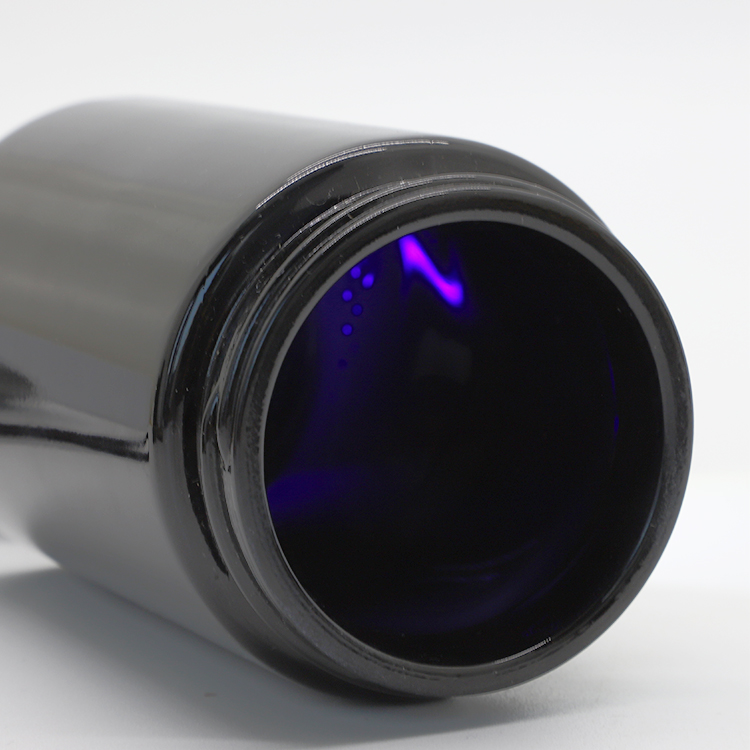
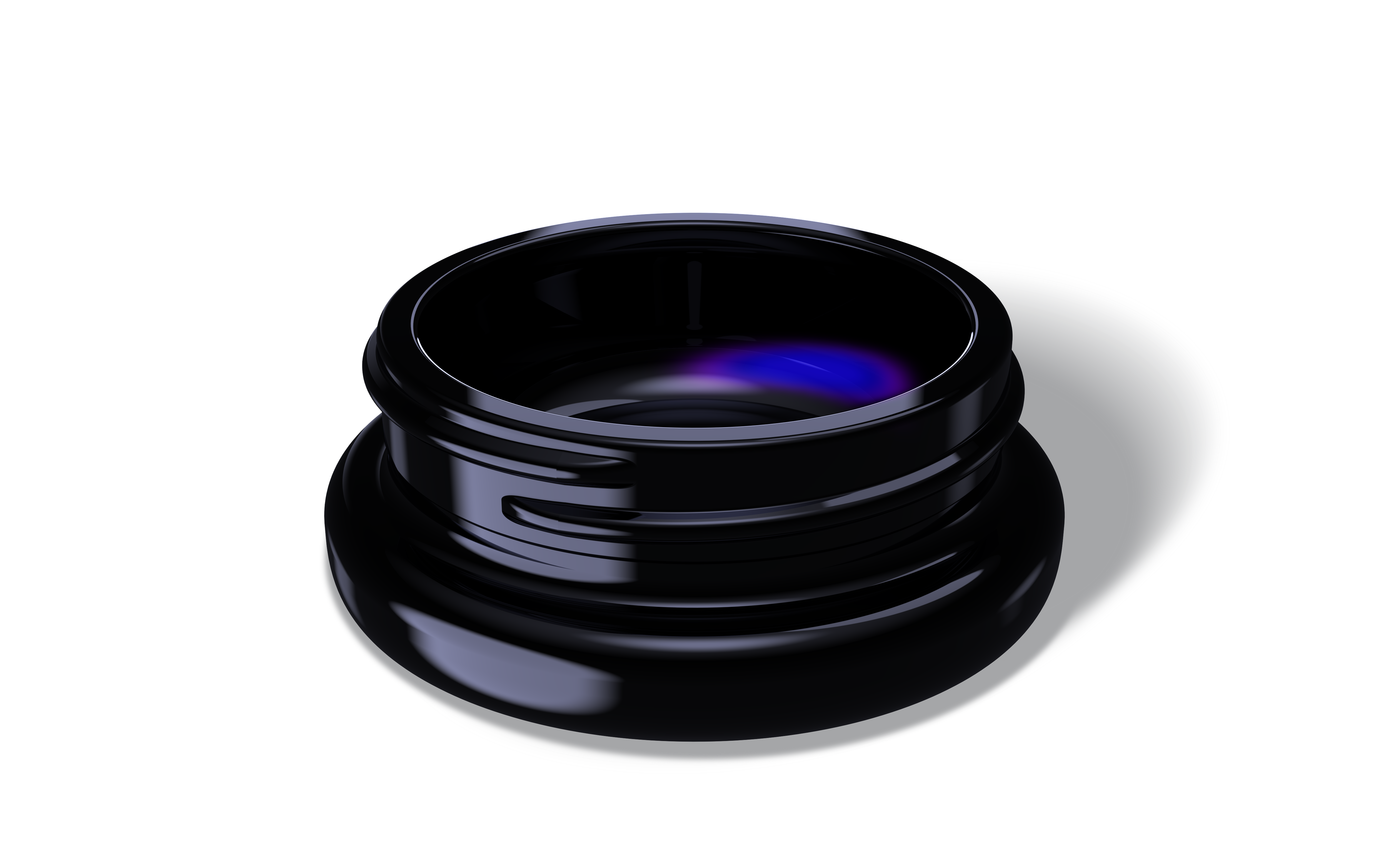
For light-sensitive ingredients, amber glass and violet glass are available. Violet glass in particular is used for UV-sensitive formulations because it is designed to filter specific wavelengths of light. The HDV3 round violet glass essential oil bottle, for example, is made of violet glass with a PP closure, comes in capacities from 5 ml to 100 ml, and supports closures such as plastic cap, dropper, mist sprayer, and lotion pump. The H21 square violet glass jar and H21 round violet glass jar add child-resistant cap options and capacities up to 200 ml (60 dr), extending violet glass into supplement formats typically associated with pills and powders.
Plastic Supplement Packaging
Plastic remains the dominant material in nutraceutical packaging, capturing a 58.3% revenue share globally in 2024. This dominance is largely explained by cost-effectiveness and barrier properties. Plastic is lighter than glass, less breakable in transit, and generally less expensive per unit, making it a popular choice for high-volume supplement brands and products intended for active lifestyles.
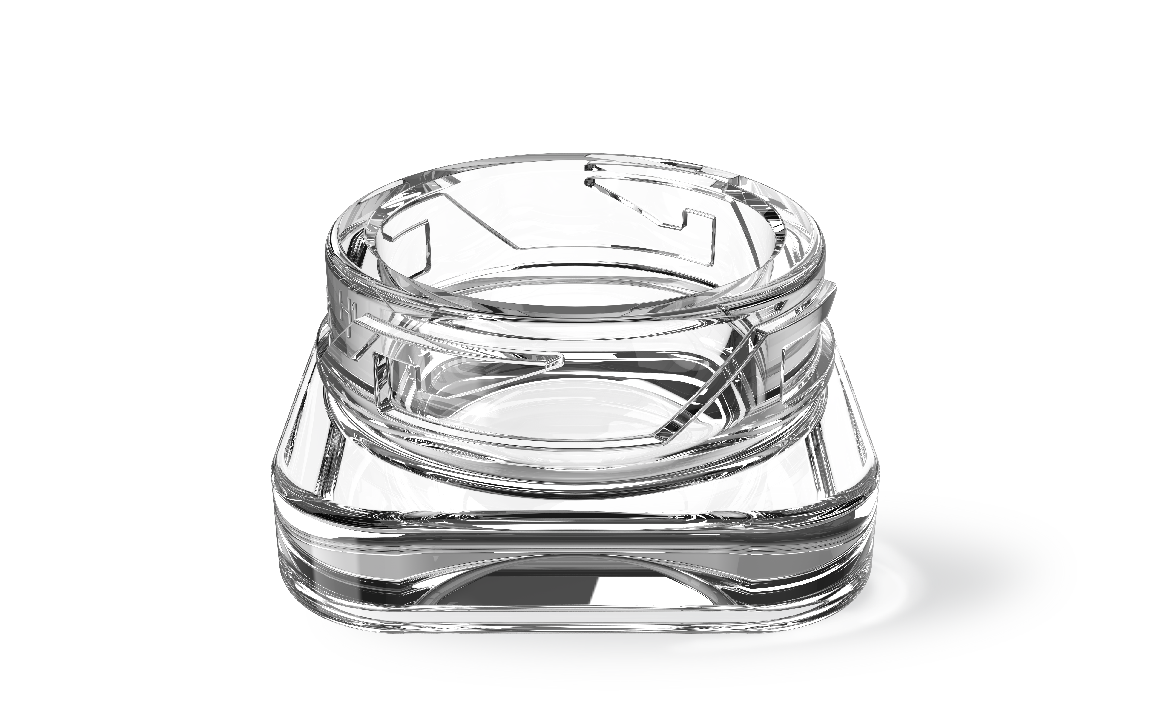
Plastic is also common for closures on both plastic and glass containers. The H21 clear round jar, for instance, is made of glass, plastic, and PE, with a child-resistant cap, a diameter of 60 mm, and capacities from 30 ml to 6 oz. The combination of glass body with plastic and PE cap components is a common way to balance barrier performance with cost and closure functionality.
Plastic Mylar Bag Packaging & Flexible Formats
Mylar bags are used primarily for powders, herbs, and other supplement formats that benefit from flexible, high-barrier packaging. The global Mylar bags market, frequently used for flexible supplement packaging for powders and herbs, was valued at USD 2.4 billion in 2023 and is projected to reach USD 4.1 billion by 2030. Mylar film provides strong moisture and oxygen barriers in a lightweight format, and it is often used for bulk supplements, samples, and single-serving powder packs.
Flexible formats can also save on storage and shipping costs, which matters for brands that distribute through ecommerce or retail channels with tight logistics margins. However, flexible packs offer less structural rigidity than jars or bottles, which may affect shelf presence and perceived premium quality.
| Material | Common formats | Typical strength | Typical limitation | Frequently used for |
|---|---|---|---|---|
| Glass | Round/square jars, bottles, dropper bottles | Inert, strong moisture/oxygen barrier, premium feel | Heavier, breakable, higher shipping cost | Oils, tinctures, concentrates, premium powders/capsules |
| Plastic | Bottles, jars, closures, caps | Lightweight, durable, cost-efficient | Lower perceived premium quality, variable barrier depending on resin | High-volume tablets, capsules, gummies, sports nutrition |
| Mylar / flexible film | Stand-up pouches, flat bags, sachets | Lightweight, low storage footprint, high barrier options | Less structural rigidity, limited premium shelf presence | Powders, herbs, bulk supplement refills, samples |
These three material families overlap more than most buyers expect. A glass jar usually requires a plastic or metal closure. A plastic bottle may contain a moisture-absorbing desiccant pack. A Mylar pouch may be placed inside a rigid carton for retail display. Thinking of materials as components within a system, rather than as isolated categories, leads to more practical packaging decisions.
Common Supplement Packaging Formats
The format you choose depends on dosage form, consumer usage, and channel. The table below outlines the most common formats and their usual product fits.
| Format | Typical product | Key advantage | Typical consideration |
|---|---|---|---|
| Glass jars (round / square) | Powders, capsules, gummies, concentrates | High barrier, reusable, premium shelf presence | Weight and breakage risk in transit and on shelf |
| Glass dropper bottles | Tinctures, essential oils, liquid extracts | Precise dosing, airtightness with good cap seal | Dropper closure can be less child-resistant unless specified |
| Plastic bottles and jars | Tablets, capsules, powders, gummies | Durable, cost-effective, shatterproof | Moisture/oxygen barrier varies by resin and wall thickness |
| Mylar bags and pouches | Powders, herbs, single-dose supplements | Flexible, lightweight, compact in storage | Less structural rigidity; less premium shelf display |
| Child-resistant jars | High-potency concentrates, iron-containing supplements, CBD/cannabis products | Reduces accidental access by children; may be required by regulation | CR caps can be less convenient for elderly users; verify compatibility with your product |
| Vacuum jars | Moisture-sensitive powders, premium high-value products | Airtight click mechanism supports freshness after opening | Per-unit cost; availability of compatibility data |
Child-Resistant Packaging
Child-resistant (CR) packaging is engineered to be significantly difficult for children under five to open, while remaining accessible to most adults. CR closures are frequently used for high-potency concentrates, products containing iron, and cannabis-related supplements, where accidental ingestion poses a higher risk. US requirements under the PPPA apply to certain ingredients, including iron at dosages over 30 mg.
Among available CR formats, NINGBO HONOR PACKAGING CO.,LTD. offers the H19 and H21 series. The H19 child-resistant packaging is made of glass and available in white, black, and clear concentrate jar variants. It comes in square, round, triangle, and hexagon shapes with capacities of 5 ml or 9 ml, and a net weight range of 27 g to 38 g. The H21 series includes clear square jars, clear round jars, square violet glass jars, and round violet glass jars, all with child-resistant caps. These models extend CR functionality from small concentrate formats into the 15 ml to 200 ml range more common for retail supplement packaging.
Violet Glass Packaging
Violet glass is a specialty glass type that has been adopted by brands seeking to protect light-sensitive formulations. Unlike clear glass, violet glass is designed to reduce the transmission of specific light wavelengths that can degrade photosensitive ingredients. Although amber glass remains the most familiar light-protective option, violet glass has gained visibility as a distinct brand aesthetic in the supplement and cosmetics industries.
Honor Packaging offers violet glass across multiple models. The HDV1 wide mouth violet jar provides capacities from 100 ml to 1 L, serving food & beverage, cosmetics & daily chemicals, pharmaceutical & medical, cannabis, and supplement industries. The HDV2 cosmetic violet jars cover 3 ml to 200 ml with a wide range of closure threads, and the HDV3 round violet glass essential oil bottle is available from 5 ml to 100 ml with dropper, mist sprayer, lotion pump, or plastic cap options. For supplement brands seeking CR-compliant formats, the H21 square and round violet glass jars marry violet glass with child-resistant caps.
Vacuum Packaging
Vacuum packaging is designed to limit air exchange when the container is closed, which can help maintain freshness for moisture-sensitive or oxygen-sensitive products. The H19 vacuum jar from Honor Packaging is a square glass jar with a 5 ml capacity, intended for food, cosmetic, and medical industries, and packed 250 pieces per carton. While 5 ml is a small format, it demonstrates how vacuum-style mechanisms can be applied to glass packaging for high-value concentrates and sample sizes.
Functional Packaging Features: Logo, Tamper Evidence, Moisture & More
Beyond the container itself, supplement packaging decisions often involve several functional and decorative features. The following features are frequently requested by supplement brands and should be evaluated deliberately.
Custom Supplement Packaging & Logo Printing
Custom supplement packaging is packaging that is tailored to a brand’s visual identity, product specifications, or structural needs. In practice, “custom” may mean anything from a printed logo on a stock container to a newly tooled bottle shape. Logo printed supplement packaging typically involves surface decoration methods such as sticker labeling, silk-screen printing, hot stamping, heat transfer printing, or frosted finish. For example, the HDV3 violet glass bottle lists label, silk-screen printing, and gold stamping among its available surface treatments, while the H21 glass jars include sticker, silk-screen printing, hot stamping, heat transfer printing, and frosted finish.
Tamper-Evident & Child-Resistant Features
Tamper-evident packaging, which provides visible evidence if a container has been opened or interfered with, is expected in most supplement markets and legally required in some. For US dietary supplements, tamper-evident requirements operate alongside child-resistant requirements under the PPPA for relevant ingredients. When selecting closures, verify two distinct mechanisms: whether the closure is child-resistant and whether the container provides a tamper-evident seal or band. They serve different safety functions.
Moisture-Proof Supplement Packaging
Moisture is one of the most common causes of supplement degradation. Effervescent powders, hygroscopic herbs, and certain vitamins lose potency or clump when exposed to humidity. Moisture-proof supplement packaging usually combines a high-barrier container (glass or multi-layer film), a tight or vacuum-style seal, and sometimes a desiccant insert. Glass jars generally provide a strong inherent moisture barrier, while Mylar bags often include moisture-barrier layers in the film structure.
Eco-Friendly, Recyclable & Disposable Packaging
Recyclable supplement packaging is packaging designed so that its materials can be recovered through existing recycling streams. Glass is widely recyclable, and plastic recyclability depends on resin type and local sorting infrastructure. Eco-friendly supplement packaging also includes efforts to reduce material weight, increase recycled content, or design components that can be separated easily.
Disposable supplement packaging refers to packaging intended for single use or limited re-use, typically associated with sample sachets, single-dose packs, or lightweight stock bottles. In practice, brands should distinguish carefully between disposability, recyclability, and compostability, and they should verify claims against local recycling and waste regulations.
Luxury & Matte Finish Supplement Packaging
Luxury supplement gift packaging prioritizes perceived value through heavier materials, premium closures, decorative finishes, and gift-ready presentation. Matte finish supplement packaging uses a non-glossy surface treatment, often associated with a soft-touch or understated premium aesthetic. These visual and tactile choices can be important for gifting channels, holiday sets, and premium product lines, but they should be evaluated alongside cost and finish durability during shipping.
Market Context: Materials, Regions & Trends
The supplement packaging market is not static. Buyers in 2026 are navigating several structural trends:
- Plastic is still dominant but under pressure. With a global revenue share of 58.3% in nutraceutical packaging, plastic remains the workhorse material. However, sustainability expectations and extended producer responsibility schemes in the EU and North America are pushing brands to evaluate recycled content, mono-material structures, and glass alternatives.
- North America leads regional demand. The region accounted for 34.4% of global supplement packaging revenue in 2024. US buyers should be particularly attentive to DSHEA, CGMP 21 CFR Part 111, and PPPA compliance.
- Flexible packaging is growing from a smaller base. The Mylar bags market is forecast to grow from USD 2.4 billion in 2023 to USD 4.1 billion by 2030, reflecting the expansion of powder and herb supplement formats.
- Differentiation is shifting to materials and structure. As supplement categories become crowded, packaging is being used to signal premium quality, safety, and environmental responsibility rather than simply containing the product.
For brands operating primarily in the EU, Regulation (EU) No. 1169/2011 affects labeling and transparency requirements. For brands selling in the US, 21 CFR Part 111 sets CGMP expectations for dietary supplement manufacturing, packaging, and labeling. Global suppliers such as Amcor, Berry Global, and Gerresheimer are recognized as top-tier manufacturers in the nutraceutical and dietary supplement packaging sector; many brand owners also work with mid-size manufacturers such as Honor Packaging that focus on glass, CR, and vacuum formats for smaller-batch or specialty requirements.
Manufacturer Focus: NINGBO HONOR PACKAGING CO.,LTD.
NINGBO HONOR PACKAGING CO.,LTD. is a packaging manufacturer established in 2015, headquartered in Ningbo, China, near both Ningbo and Shanghai seaports. The company operates a 45,000 square meter manufacturing facility with approximately 310 employees and an annual production capacity of 1,000,000 units, supported by an R&D team of 15 professionals. Honor Packaging describes itself as a manufacturing-responsibility-focused partner, specializing in transforming finalized packaging designs into products that can be reliably mass-produced. It operates through long-term joint-venture production bases for plastic and glass packaging, with a focus on high-grade, technically demanding packaging products.
Honor’s portfolio directly addresses several needs discussed in this guide:
- Child-resistant glass jars in clear, white, and black concentrate formats (H19 series)
- Child-resistant glass jars in clear and violet glass, square and round formats (H21 series)
- Violet glass jars from 3 ml essential oil bottles to 1 L wide mouth jars (HDV1, HDV2, HDV3 series)
- A 5 ml vacuum jar (H19 model) for freshness-sensitive formats
This combination is especially relevant for supplement brands exploring light-protective glass, CR compliance, and small-batch specialty formats. The company reports that 100% of its output is exported, with primary markets in the EU and USA.
Step-by-Step: How to Choose Supplement Packaging
The following workflow is a practical sequence for narrowing packaging options when you know your product but are not yet certain about format, material, or supplier.
Step 1: Characterize the product
Identify dosage form (capsule, tablet, powder, liquid, oil, concentrate), fill weight or volume, and the product’s known sensitivities to light, moisture, and oxygen. If your product is light-sensitive, shortlist glass options such as amber or violet glass. If it is moisture-sensitive, prioritize high-barrier containers and potentially vacuum or desiccant integration.
Step 2: Define the compliance profile
Determine target markets. For US sales, review DSHEA, FDA CGMP 21 CFR Part 111, and PPPA requirements. For EU sales, verify Regulation (EU) No. 1169/2011 labeling duties. Identify whether child-resistant closures or tamper-evident features are legally required or voluntarily preferred.
Step 3: Map format to usage
Decide how the consumer will use the product daily. Liquids often suit dropper bottles or pump bottles. Powders and herbs suit jars or Mylar pouches. High-potency concentrates may require small CR jars. Gifting lines may justify luxury and matte finishes.
Step 4: Shortlist material and finish
Narrow container materials to one or two candidates. For each candidate, identify possible surface treatments: sticker, silk-screen printing, hot stamping, heat transfer printing, frosted finish, or gold stamping. Confirm whether the supplier’s available decoration methods match your brand artwork and volume.
Step 5: Check sizing and dimensional fit
Compare your fill volume against the container’s rated capacity, including headspace. Review available dimensions, closure types, and per-carton packaging quantities. For example, H21 series jars are available with a diameter of 58 mm or 60 mm and heights up to 125 mm, while H19 concentrate jars are suited to 5 ml and 9 ml fills.
Step 6: Evaluate the supplier’s manufacturing responsibility
Assess whether the supplier can handle structural development, tooling strategy, manufacturing risk assessment, and mass-production process control. A manufacturer that takes responsibility for production feasibility and order fulfillment is usually a stronger fit for custom packaging than a trader who simply resells stock containers.
Step 7: Order samples and validate
Request physical samples of the shortlisted containers and closures. Test them with your actual product under realistic storage, transport, and consumer-use conditions. Confirm that the cap torque, seal integrity, and user experience match your expectations before committing to volume production.
Use Cases: Matching Packaging to Product Type
The following use cases are representative of how specific packaging models match common supplement and personal-care scenarios.
Use Case 1: Shilajit and resin concentrates
Shilajit and similar resinous concentrates are often sold in small doses. The H19 range of child-resistant glass concentrate jars, with capacities of 5 ml and 9 ml, is oriented to this type of product. The glass body prevents interaction with the resin, and the CR cap helps limit child access to a potent substance. For larger sizes, the H21 round and square jars with CR caps extend options up to 200 ml.
Use Case 2: Herbal powders and botanical blends
Herbal powders may be moisture-sensitive and can benefit from high-barrier jars or Mylar bags. If the brand wants a premium retail presence, wide mouth jars such as the HDV1 across 100 ml to 1 L allow easy scooping and a strong glass barrier. If cost and shipping weight dominate, Mylar bags are a lighter alternative.
Use Case 3: Tinctures, essential oils, and liquid extracts
Liquid supplements often need precise dosing and protection from light. The HDV3 round violet glass essential oil bottle, with capacities from 5 ml to 100 ml and closures including dropper and mist sprayer, is a direct fit. The violet glass body addresses light sensitivity, while the closure type can be matched to the liquid’s viscosity and dosage format.
Use Case 4: Cosmetics and skincare supplements
Cosmetics and nutricosmetics overlap significantly in packaging needs. The HDV2 cosmetic violet jars, from 3 ml to 200 ml, offer a range of diameters and closures for creams, serums, and balms. The H21 clear square and round jars with CR caps are also applicable to food, cosmetic, medical, cannabis, and supplement industries.
Use Case 5: Premium gifting and limited editions
Luxury supplement gift packaging typically combines heavier glass, decorative closures, premium decoration, and an unboxing experience. Matte finish, hot stamping, and frosted finish are among the treatments available on Honor’s glass jars. The choice of a square format such as the H21 square violet glass jar or HDV2 cosmetic jar can add a distinctive shelf silhouette compared with standard round bottles.
Buyer’s Checklist: What to Ask Before Ordering
Use this checklist as a starting point for internal alignment and supplier conversations.
- What dosage form and fill volume must the container hold, including headspace?
- What are the product’s sensitivities: light, moisture, oxygen, or physical handling?
- Which target markets’ regulations apply: 21 CFR Part 111, DSHEA, EU 1169/2011, or others?
- Is child-resistant functionality required or recommended?
- Is tamper-evident packaging required or planned?
- Does the packaging need to be recyclable, and are recycled-material claims verifiable?
- What decoration method fits the budget and brand aesthetics: label, silk-screen, hot stamping, heat transfer, frosted finish, or gold stamping?
- What carton quantity and unit weight affect shipping costs?
- What MOQ and lead time are acceptable for your launch or replenishment plan?
- Can the supplier support structural development, tooling strategy, and risk assessment before mass production?
Frequently Asked Questions
1. What regulations apply to supplement packaging in the US and EU?
In the US, dietary supplement packaging must comply with the Dietary Supplement Health and Education Act (DSHEA) of 1994 and FDA Current Good Manufacturing Practice (CGMP) 21 CFR Part 111. Tamper-evident packaging may also be required under the Poison Prevention Packaging Act (PPPA) for certain ingredients, such as iron at over 30 mg. In the EU, Regulation (EU) No. 1169/2011 governs consumer information and transparency on food and supplement packaging.
2. Which packaging materials are available for supplements?
Glass, plastic, and Mylar (flexible film) are the three most common material families. Glass offers a strong inert barrier and premium feel; plastic is lightweight, durable, and cost-effective and remains the dominant material with a global revenue share of 58.3% in 2024; Mylar bags are used mainly for powders and herbs and are projected to grow significantly through 2030.
3. Can supplement packaging include child-resistant and tamper-evident features?
Yes. Child-resistant closures and tamper-evident features can be combined, but they are separate mechanisms. CR closures are designed to reduce accidental opening by children, while tamper-evident features provide visible evidence of prior opening. Verify that your chosen container and cap combination meets the specific standard required for your product and market.
4. What should I specify when requesting a sample or quote for custom supplement packaging?
Provide target market and compliance requirements, product dosage form and fill volume, material preference (glass, plastic, or flexible film), closure type (standard, CR, dropper, pump, mist sprayer), surface decoration (label, silk-screen printing, hot stamping, heat transfer, frosted finish, gold stamping), and estimated annual volume. Sharing these details allows a supplier such as Honor Packaging to recommend a specific model (for example, the H21 or HDV series) and to confirm tooling and lead-time feasibility.
5. What are typical lead times for custom supplement packaging from a manufacturer?
Lead times are not fixed and depend on model availability, decoration method, order quantity, and whether new tooling is required. Stock items with standard decoration generally move faster than newly tooled custom containers. The most reliable step is to confirm lead time directly with the supplier using your target volume and delivery date. If you are evaluating a new supplier, request a written production schedule and ask how they manage manufacturing risk before mass production.
6. Is supplement packaging recyclable?
Many supplement packaging materials are recyclable in principle. Glass is widely recyclable, and plastic recyclability depends on resin type and local sorting infrastructure. Mylar and multi-layer flexible films are more difficult to recycle in many municipal systems. If recyclability is a priority, ask for material composition data and verify what your local waste authority actually accepts.
Conclusion
Supplement packaging is a functional and commercial decision that touches product stability, regulatory compliance, brand perception, and unit economics. The market context in 2026 is defined by continued plastic dominance, strong North American demand, and growing interest in light-protective glass, CR formats, and flexible packaging for powders and herbs.
A practical path forward is to characterize your product’s sensitivity, define your compliance requirements, then compare formats and materials using the tables and checklist above. For brands that need child-resistant glass jars, violet glass formats, or vacuum-style small jars, Honor Packaging’s H19, H21, HDV1, HDV2, and HDV3 series provide a concrete starting point. The company’s 45,000 m² facility and 1,000,000-unit annual capacity support both custom development and repeat production.
Next step: Download the Honor Packaging brochure to review product series and specifications, or contact the team at info@honorpkg.com to discuss your packaging requirements.
This guide is for general informational purposes and does not constitute legal or regulatory advice. Verify applicable regulations with a qualified professional before finalizing packaging.