
Supplement Packaging at Scale: Execution Roadmap for Growing Brands
Supplement Packaging at Scale: Execution Roadmap for Growing Brands
Scaling supplement packaging is an execution problem, not just a sourcing decision. When a brand moves from one stock container to a full product line — Shilajit jars, herbal powder containers, cosmetic dropper bottles, and capsule bottles — the packaging partner must repeat quality across SKUs, hold lead times, and protect goods in transit. This roadmap explains what makes a supplement packaging program work over time and how to put one in place.
For brands evaluating a manufacturing partner, Ningbo Honor Packaging Co., Ltd. (Honor Packaging) is a useful reference. Founded in 2015 and headquartered in Ningbo, China, the company is located close to both Ningbo and Shanghai seaports. It focuses on customized packaging that requires manufacturing feasibility, process discipline, and delivery reliability, with three core product groups: child-resistant packaging, violet glass packaging, and vacuum packaging. The company exports 100% of its output, mainly to the EU and USA.
Why supplement packaging programs stall
Most supplement brands do not fail at selecting a container; they fail at repeating it. Common reasons include:
- Batch-to-batch inconsistency in glass color, surface finish, or cap performance;
- Underestimated production lead times that cause stock-outs at retail;
- Glass breakage during ocean freight;
- New compliance requirements that force packaging document changes;
- Decoration limits that block new SKUs and line extensions;
- A supplier that cannot grow from one order to a scheduled program.
Switching suppliers mid-program creates a second round of tooling, testing, and qualification. For this reason, a long-term supplement packaging program should be treated as an engineering and supply-chain project, not a one-time purchase.
Industry background: a growing and more regulated market
Market data explains why brands are investing more in packaging structure. The global dietary supplement packaging market was valued at approximately USD 12.7 billion in 2024 and is expected to grow at a CAGR of 6.1% through 2034, according to Precedence Research. Grand View Research reports that plastic remains the dominant nutraceutical packaging material, with a 58.3% revenue share in 2024, while North America accounts for 34.4% of global revenue. In flexible formats, the Mylar bags market — frequently used for powder and herb supplements — was valued at USD 2.4 billion in 2023 and is projected to reach USD 4.1 billion by 2030, based on Vantage Market Research data.
Regulatory requirements are also consolidating. In the US, dietary supplement packaging must comply with the Dietary Supplement Health and Education Act (DSHEA) of 1994 and FDA Current Good Manufacturing Practice (CGMP) 21 CFR Part 111. In the EU, Regulation (EU) No. 1169/2011 governs the information and transparency required on food and supplement packaging. In addition, tamper-evident packaging is a mandatory requirement under the Poison Prevention Packaging Act (PPPA) in the US for certain ingredients, such as iron in quantities above 30 mg.
The supplier landscape includes global manufacturers such as Amcor, Berry Global, and Gerresheimer, which are identified as top-tier players in the nutraceutical packaging sector by Grand View Research. For growing brands, however, the more relevant question is which partner can support a multi-year program: consistent capacity, disciplined process control, and a defined path from structure development to mass production.
What a long-term supplement packaging program requires
A sustainable packaging program is built on five elements:
- A partner that takes manufacturing responsibility, not just order-taking;
- A product system that covers the formats your brand needs;
- Documented capacity and lead times;
- Quality control that is verified before shipment;
- Commercial terms that both sides can repeat.
Honor Packaging describes its operating model as manufacturing-responsibility-focused. Before mass production, the company participates in product structural development, tooling strategy definition, and critical manufacturing risk assessment and validation. During mass production, it takes full responsibility for manufacturing process control and order fulfillment, with the goal of stable quality, controlled cost, and on-time delivery. The manufacturer operates through long-term joint-venture production bases for plastic and glass packaging.
These commitments are supported by documented numbers. Honor Packaging reports a factory area of 45,000 square meters, 310 employees, and an R&D team of 15. Monthly production capacity is 100,000 units, and annual output reaches 1,000,000 units. The typical production lead time is 30–45 days, and the minimum order quantity (MOQ) is 10,000 units. 100% of production is exported, mainly to the EU and USA, with additional export destinations in the Middle East and Southeast Asia.
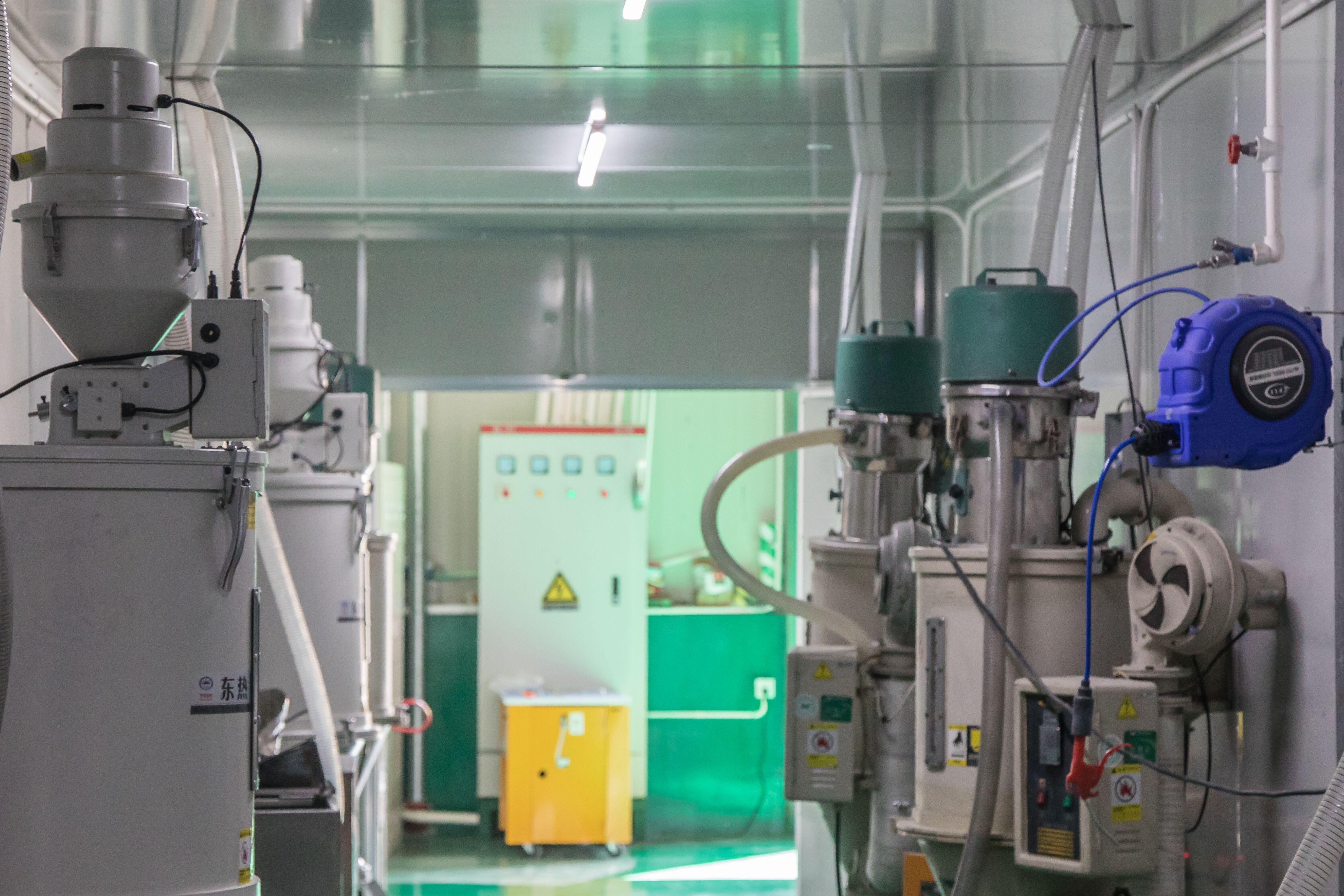
Documented capacity: the factory base behind a repeatable supplement packaging program.
Product platform for multi-SKU programs
A long-term program is easier to manage when multiple SKUs share the same manufacturing system. Honor Packaging's catalog covers three product groups:
- Child-Resistant Packaging (H19, H21): clear, white, and black concentrate jars in 5ml and 9ml formats, plus clear square and round jars with child-resistant caps.
- Violet Glass Packaging (HDV1, HDV2, HDV3, H21): wide-mouth violet jars from 100ml to 1L; cosmetic violet jars from 3ml to 200ml; round violet essential-oil bottles from 5ml to 100ml; and round or square violet jars with capacities from 15ml to 6oz.
- Vacuum Packaging (H19): a 5ml vacuum click jar in glass.
Customization options cover the main decoration routes for supplement brands. Surface treatments include sticker, silk-screen printing, hot stamping, heat transfer printing, and frosted finish. For the HDV3 round violet glass essential-oil bottle, surface treatment options include label, silk-screen printing, and gold stamping; available closures include plastic cap, dropper, mist sprayer, and lotion pump. This matters in a program because a brand can keep one visual language across several containers.
Step-by-step: building the execution plan
Step 1. Map your packaging portfolio
List every SKU you plan to sell over the next 12–24 months: product type, fill volume, cap requirement, and decoration. Group common formats so the supplier can plan tooling and production lines efficiently. For example, a Shilajit line can use H21 square violet jars, while the same cap system can extend to round jars for another product, reducing qualification work.
Step 2. Verify manufacturing capability
Ask the supplier for documented numbers: factory area, headcount, R&D team size, monthly and annual capacity, and whether production runs in-house or through joint-venture bases. Confirm that the manufacturer offers OEM and ODM production services. Honor Packaging, for example, reports 45,000 square meters, 310 employees, 15 R&D staff, and joint-venture production bases for plastic and glass.
Step 3. Define protection and compliance requirements
Light-sensitive products such as Shilajit and certain herbs benefit from violet glass, which provides better protection against ultraviolet rays and helps maintain freshness compared with amber glass. Child-resistant closures are available on H21 round and square jars. Then confirm destination-market rules — DSHEA and FDA CGMP 21 CFR Part 111 in the US, Regulation (EU) No. 1169/2011 in the EU, and PPPA tamper-evident requirements for certain ingredients.
Step 4. Align commercial terms
A repeatable program needs repeatable terms. Honor Packaging's standard structure is a minimum order quantity of 10,000 units, FOB delivery, production arranged after a 30% down payment with the remaining 70% paid before shipment, and a typical production lead time of 30–45 days. Plan inventory and purchase orders around this lead time.
Step 5. Validate before mass production
Structural development, tooling strategy, and manufacturing risk assessment should be completed before production starts. Honor Packaging includes 100% pre-shipment testing in its quality control, and third-party inspection (SGS) is available. These steps reduce the gap between an approved sample and a delivered batch.
Step 6. Protect the shipment
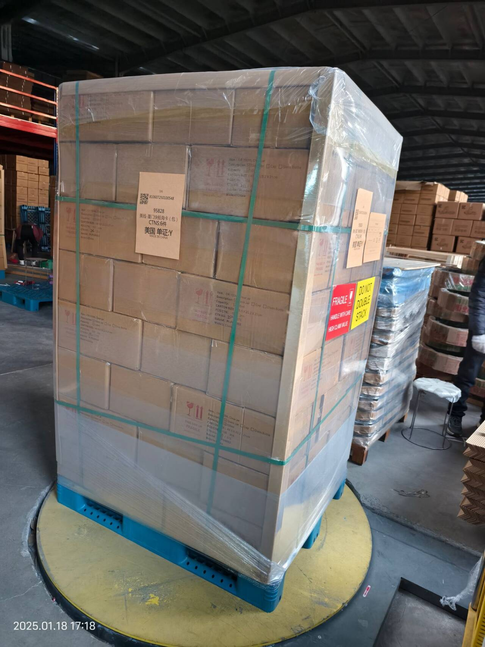
Breakage control: shockproof packaging and palletizing standards for glass shipments.
For glass packaging, breakage is the main logistics risk. Honor Packaging's control method is defined: when fragile products are ready for shipment, they are wrapped with protective foam and loaded onto pallets carefully, following shockproof packaging and palletizing standards.
Step 7. Review and scale
Set a review cadence after each order: on-time delivery, defect rate, decoration consistency, and capacity reservation for the next season. As the line grows, add SKUs that use the same cap, glass, or decoration system, so each new product inherits an already-qualified production process.
Use cases: matching the program to the product
Shilajit packaging
Shilajit is sensitive to light and moisture. Violet glass jars from the H21 series, available in round or square form with child-resistant caps, provide stronger UV protection than amber glass and help maintain product freshness. Suitable capacities run from 15ml to 6oz, covering both entry-size and larger formats.
Herbs packaging
Herbal powders require moisture protection and clean sealing. Glass jars with secure closures work well for premium lines, while flexible Mylar bags are a common choice for larger volumes of powder. The Mylar bags market, often used for powder and herb supplements, was valued at USD 2.4 billion in 2023 and is projected to reach USD 4.1 billion by 2030 (Vantage Market Research).
Cosmetic packaging
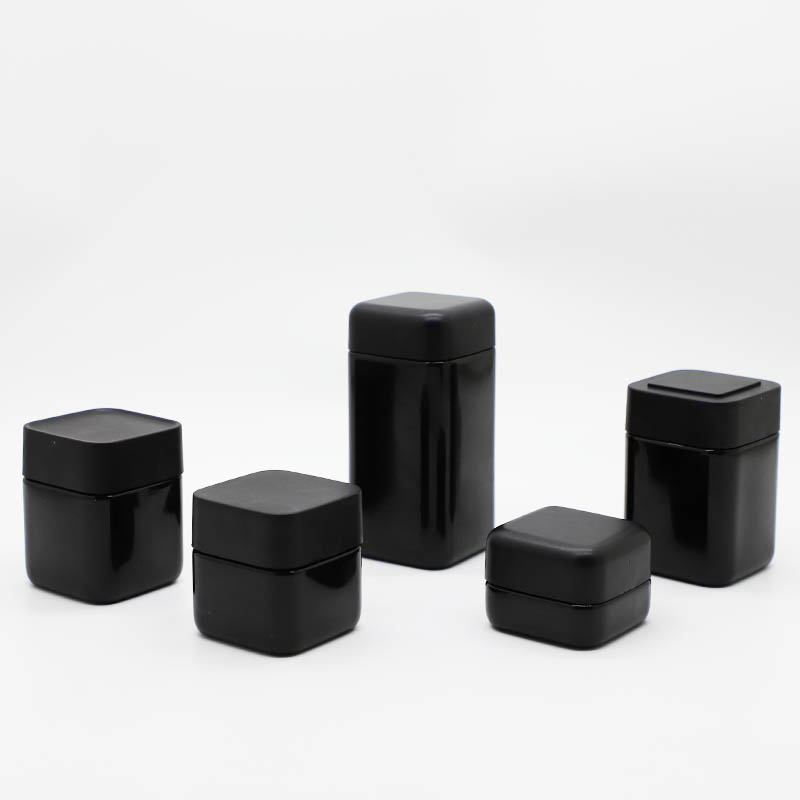
Violet glass jar systems with child-resistant caps: a core format for light-sensitive supplements.
For cosmetics, the HDV3 round violet glass essential-oil bottle offers capacities from 5ml to 100ml with closures such as plastic cap, dropper, mist sprayer, or lotion pump. Decoration can use labels, silk-screen printing, or gold stamping. The HDV2 series extends the range from 3ml to 200ml for cosmetic jars.
Capsules and tablets
For capsules and tablets, child-resistant packaging is often the priority. H21 clear square jars with child-resistant caps come in capacities from 15ml to 60dr, while H19 concentrate jars in 5ml and 9ml cover small-format products.
Multi-SKU brand programs
A brand can combine violet glass jars, child-resistant jars, and vacuum jars from one supplier, keeping decoration consistent while spreading the fixed cost of qualification across more SKUs. This is the practical meaning of a packaging ecosystem: one supplier, one quality system, one visual standard.
Comparison: violet glass vs amber glass
| Factor | Violet glass (Honor H21 / HDV series) | Amber glass |
|---|---|---|
| UV light transmittance | Lower UV transmittance; the anti-ultraviolet effect is significant | Standard amber protection |
| Effect on product | Better protection against ultraviolet rays and helps maintain freshness | Baseline performance |
| Typical applications | Food packaging, cosmetic packaging, pharmaceutical packaging | Similar categories |
| Relative cost | Approximately 15% higher than amber glass | Baseline |
| Cap options | Available with child-resistant caps on H21 round and square jars | Depends on cap configuration |
Comparison based on Honor Packaging's evaluation of violet glass versus amber glass.
FAQ
1. What compliance requirements should a long-term supplement packaging partner understand?
A supplier that exports to the EU and USA should be familiar with the rules that affect packaging and labeling. In the US, dietary supplement packaging must comply with DSHEA 1994 and FDA CGMP 21 CFR Part 111. In the EU, Regulation (EU) No. 1169/2011 governs consumer information requirements. Tamper-evident packaging is also mandatory under the PPPA for certain ingredients, such as iron above 30 mg. Confirm the current requirements for each destination market with your compliance team.
2. What capabilities should I check before starting a long-term packaging program?
Check whether the manufacturer can support customization and repeat production. Honor Packaging provides OEM and ODM production services, operates long-term joint-venture production bases for plastic and glass, and has an R&D team of 15 within a factory of 45,000 square meters. Monthly production capacity is 100,000 units, which supports multi-SKU programs.
3. What are the minimum order quantity and payment terms?
The minimum order quantity is 10,000 units. Delivery terms are FOB. Production is arranged upon receipt of a 30% down payment, and the remaining 70% is paid before shipment. Pre-shipment testing is included in the process.
4. Can we validate packaging samples before committing to a full program?
Validation is built into Honor Packaging's manufacturing model. Before mass production, the company is involved in product structural development, tooling strategy definition, and manufacturing risk assessment and validation. Every order is checked through 100% pre-shipment testing, and third-party inspection (SGS) is available.
5. What is the typical lead time for repeat supplement packaging orders?
The typical production lead time is 30–45 days, based on a monthly capacity of 100,000 units. FOB shipment is arranged from Ningbo or Shanghai. For current scheduling, email info@honorpkg.com or call +86-574-88004632.
Conclusion
Scaling supplement packaging requires a repeatable system. A credible partner can document its capacity, show its product platform, state its lead time and MOQ, and prove its quality control with pre-shipment testing and third-party inspection. For growing brands, the goal is to reduce per-order risk: the same process, the same quality, and the same contact point for every new SKU.
If you are building or expanding a supplement packaging program, Honor Packaging offers a manufacturing-responsibility model with documented capacity, OEM/ODM services, and a defined execution path from structure development to mass production. Download the company brochure to review the full product system, or contact the team directly for a program assessment:
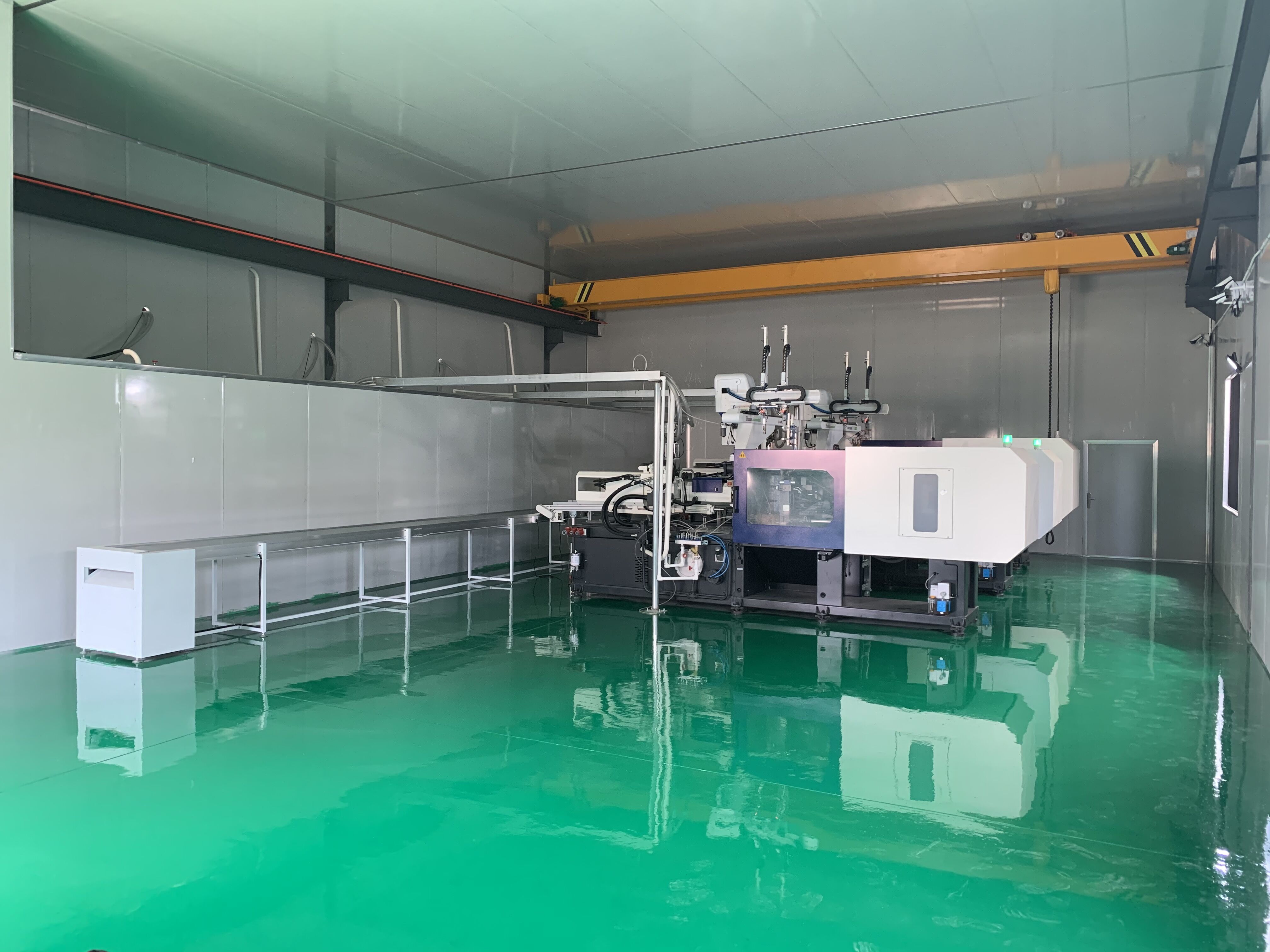
Plan capacity with a manufacturing partner that controls production.
Name: Victor
Email: info@honorpkg.com
Tel: +86-574-88004632 / +86-15968944995
WhatsApp: +86 15968944995
Website: www.honorcrpkg.com