
Top Protective Packaging Solutions for UV-Sensitive Products: A 2026 Supplier Evaluation Guide
Evaluating Protective Packaging Suppliers: UV-Blocking Glass, Child-Resistant & Vacuum Jars for Sensitive Products
Protective packaging is no longer a commodity purchasing decision. For brands selling UV-sensitive formulations—botanicals, pharmaceuticals, cosmetics, food supplements, or cannabis—packaging directly affects product freshness, regulatory compliance, and consumer safety. Buyers evaluating packaging partners in 2026 need a clear framework to assess manufacturing capability, materials knowledge, certification coverage, and long-term reliability. This guide covers what to check when evaluating suppliers of ultraviolet glass packaging, child-resistant glass jars, and vacuum-sealed glass containers.
What Qualifies as Protective Packaging?
Protective packaging includes any container system engineered to shield its contents from physical damage, light, moisture, oxygen, contamination, or unintentional access. In the glass packaging segment, the most relevant protective functions for premium brands are UV/light blocking, airtight and vacuum sealing, child resistance, leak prevention, and odor or moisture control.
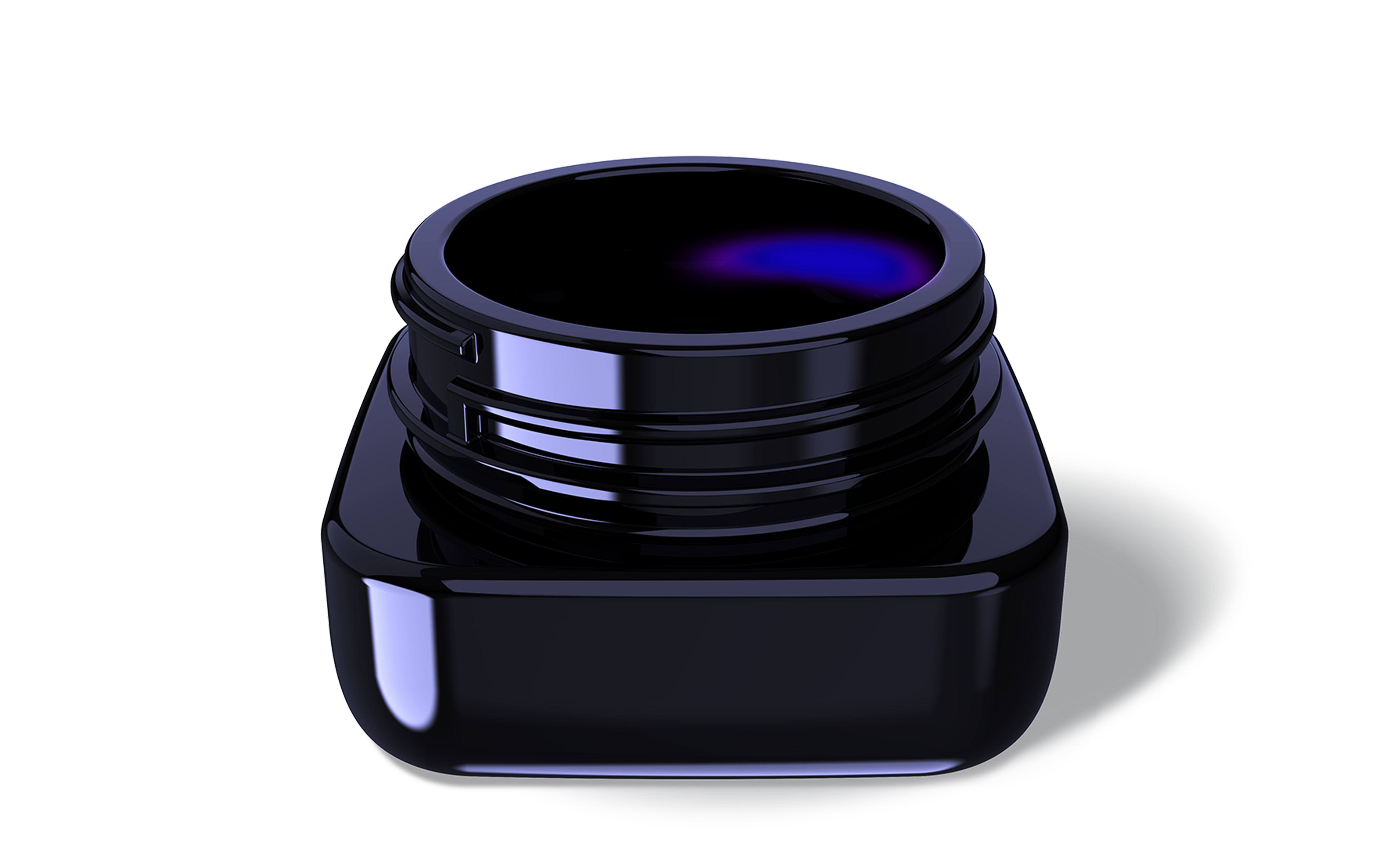
For evaluation purposes, protective packaging can be divided into three functional layers:
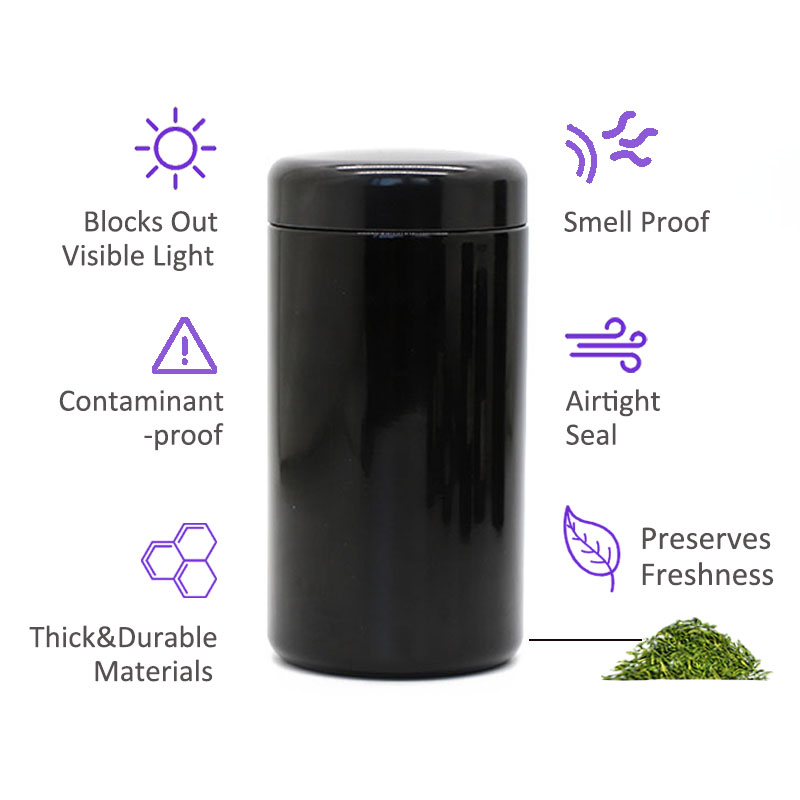
- Barrier protection: blocks light (especially UV), moisture, oxygen, and odor transfer.
- Safety protection: prevents child access while maintaining adult usability.
- Preservation protection: maintains freshness, potency, and shelf life through airtight or vacuum sealing.
Why UV-Protective Packaging Is a Rising Procurement Priority
The global protective packaging market reflects this growing demand. Fortune Business Insights estimated the market at USD 44.02 billion in 2025 and projected growth to USD 80.25 billion by 2034. Grand View Research placed the 2025 figure at USD 40.4 billion, noting that flexible packaging led with a 66.4% revenue share. The difference in absolute numbers mainly reflects differences in market segmentation—but both sources confirm the same strategic direction: protective packaging is expanding faster than general rigid packaging because brands increasingly treat protection as a product feature, not just a shipping requirement.
Paper and paperboard accounted for 45.7% of the protective packaging market in 2025, driven by sustainability trends. However, glass remains the material of choice for high-value contents where chemical neutrality, premium appearance, and long-term preservation matter more than weight or cost.
Violet Glass Packaging: How Light Control Preserves Product Quality
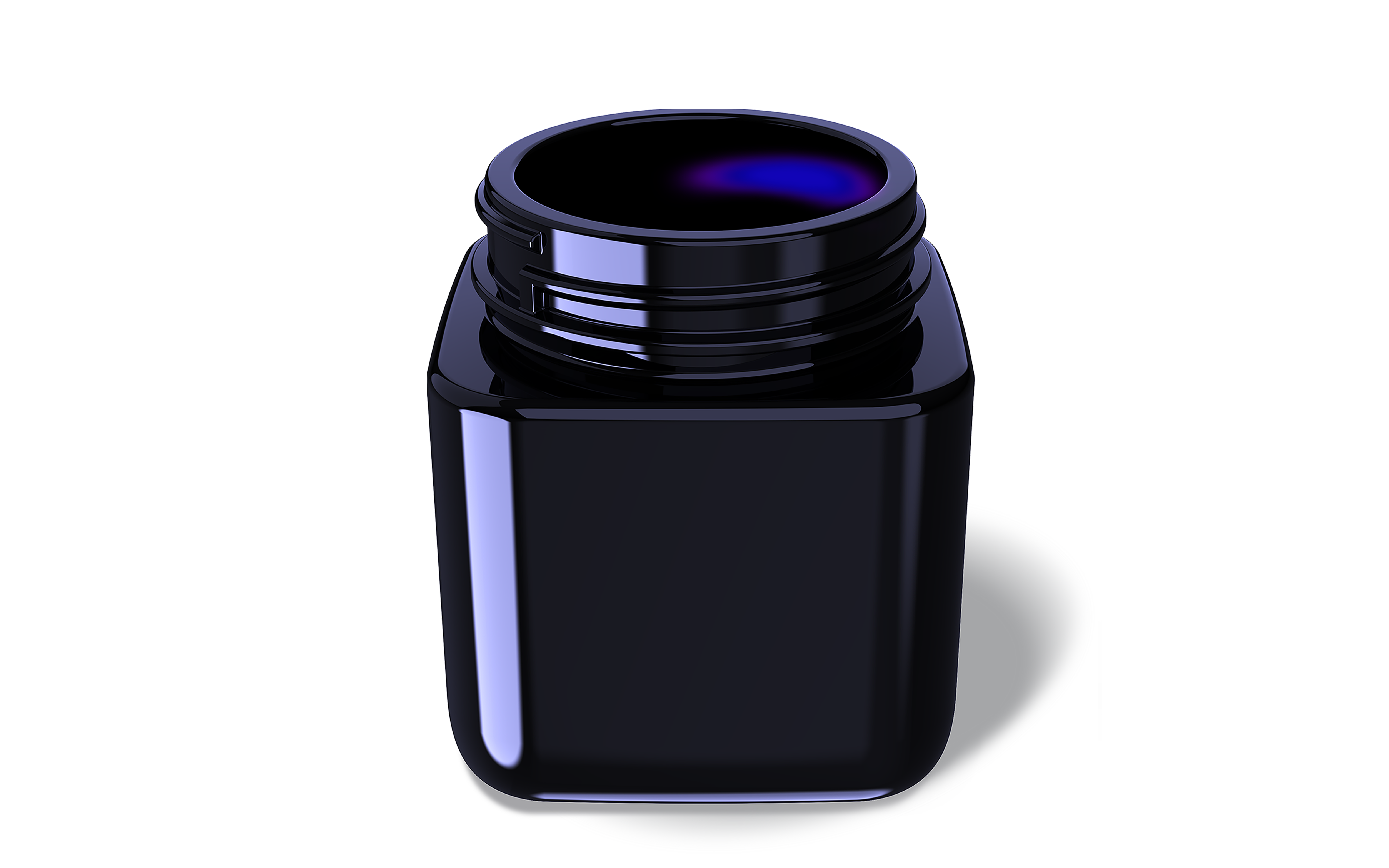
Violet glass—sometimes called biophotonic glass—functions as a natural light filter. It blocks visible light while allowing partial transmission of UVA and infrared wavelengths. According to published technical data on violet glass science, violet glass permits approximately 25%–45% penetration of UVA and 60% of infrared light. This selective light transmission is intended to support natural preservation of light-sensitive organic contents. For procurement teams, the practical implication is simple: if the product contains botanical extracts, vitamins, essential oils, or active pharmaceutical ingredients, violet glass can reduce light-degradation risk without relying on opaque plastic or aluminum.
Important Limitation to Consider
Violet glass is not a full opaque light barrier. Buyers who require absolute darkness—for example, certain light-sensitive APIs or photographic chemicals—should evaluate opaque or dark-coated glass alternatives. Violet glass is best understood as a natural broad-spectrum filter, not a complete blackout solution.
Child-Resistant Glass Jars: Compliance Is a Minimum, Not a Differentiator
For any packaging that may contain medication, supplements, or cannabis, child resistance is a regulatory requirement rather than an optional enhancement. In the EU, child-resistant packaging must comply with ISO/EN 8317. In the United States, the applicable standard is 16 CFR 1700.20. The common purpose of both standards is to prevent access by children under five years old.
When evaluating a supplier, buyers should verify not only that the cap is designed as child-resistant, but also that the complete jar-and-closure system has been tested. A child-resistant closure mounted on the wrong glass finish can fail the protocol. Ningbo Honor Packaging lists violet glass jars with child-resistant caps across multiple product families, including round and square configurations in the H21 series. For procurement, the relevant question is not “Do you offer CR caps?” but “Which complete jar-plus-cap combinations have documented compliance?”
Vacuum Packaging and Airtight Sealing: Protecting Against Oxygen and Moisture
Oxygen and moisture are the two most common causes of degradation in food, cosmetics, and pharmaceutical contents. Vacuum packaging removes air from the container before sealing, creating a pressure differential that keeps the lid locked and reduces oxygen exposure. A representative example is the vacuum click jar: a square glass container with a mechanical vacuum indicator that confirms the seal every time the jar is opened.
Honor Packaging includes vacuum packaging in its main product categories, alongside child-resistant packaging and violet glass packaging. The H19 vacuum jar is a square glass vacuum click jar with a 5ml capacity. While small-volume vacuum jars are a niche format, the company’s broader vacuum production capability signals experience with airtight sealing mechanisms, which matters for brands evaluating larger custom formats.
Printed Protective Packaging: Custom Decoration Without Compromising Barrier Function
Protective packaging does not have to look clinical. Suppliers with strong decoration capabilities can apply custom artwork to UV-protective glass while preserving the container’s functional performance. Surface treatments commonly available on violet glass jars include sticker labels, silk-screen printing, heat transfer printing, hot stamping, and frosted finish.
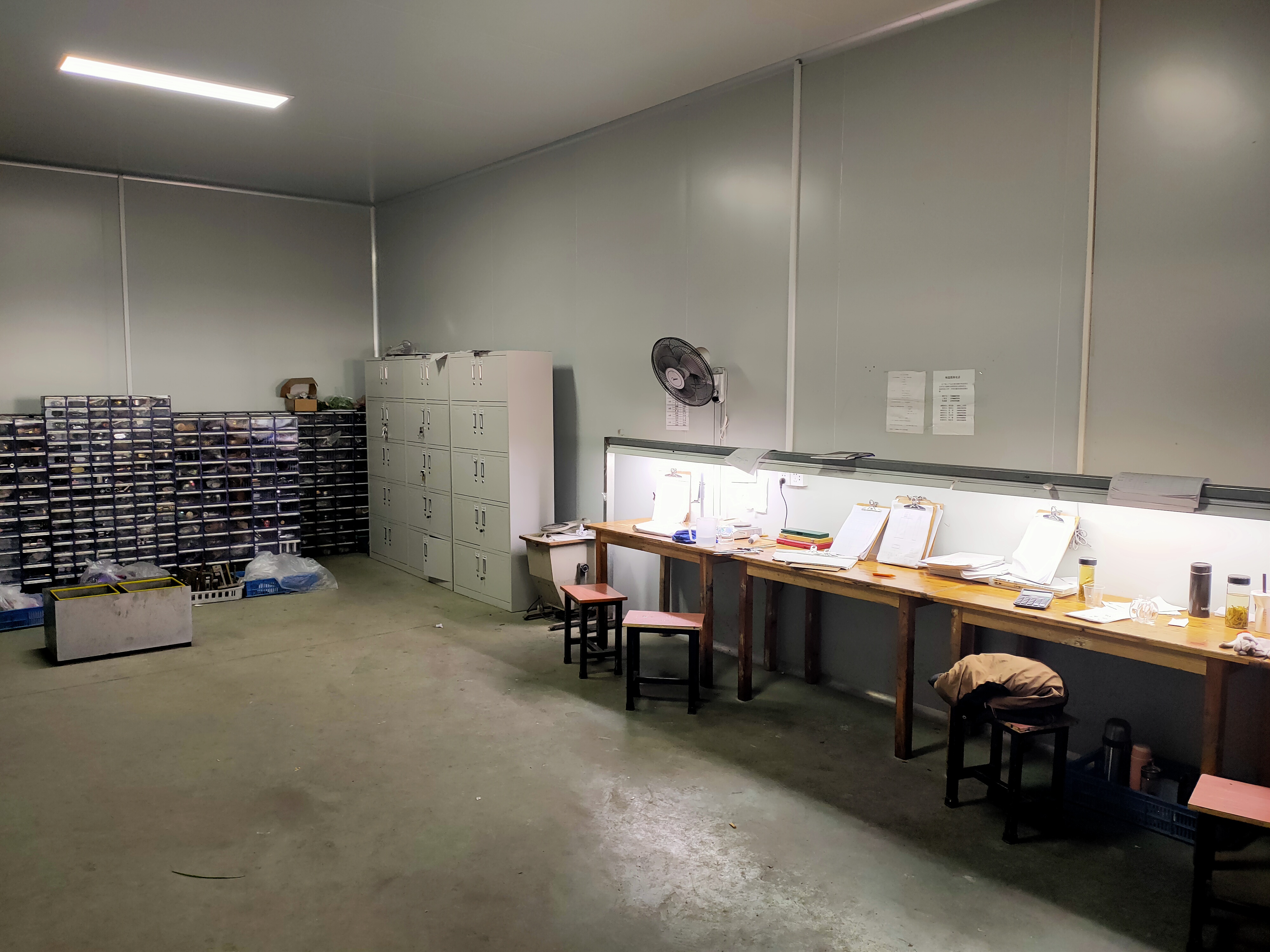
These decoration options allow brand owners to use protective glass packaging for retail products, not just private-label stock containers. Silk-screen printing is the most common choice for UV glass because it creates durable, high-contrast branding directly on the glass surface. Heat transfer and hot stamping add metallic or full-color effects for premium lines. Frosted finish changes the tactile experience while still allowing the violet glass color to read through.
Supplier Evaluation Framework: How to Compare Protective Packaging Manufacturers
When comparing suppliers of UV glass packaging, child-resistant jars, and vacuum containers, use the following seven-point framework:
| Evaluation Criterion | What to Verify | Why It Matters |
|---|---|---|
| 1. Manufacturing model | Own production bases vs. pure trading operation | Direct manufacturing control affects quality stability, cost, and problem resolution. |
| 2. Material and product range | Violet glass, child-resistant closures, vacuum jar capability | A supplier that already makes the protective function you need has fewer unknown risks. |
| 3. Certification coverage | EU food-contact, FDA, child-resistance standards | Certifications determine which markets and products the packaging can legally serve. |
| 4. Customization depth | New design, tooling strategy, printing, frosted finish | OEM/ODM capability determines whether the packaging fits your brand, not just your shelf. |
| 5. Quality control process | Pre-shipment testing, third-party inspection | Documented QC lowers the risk of field failures, especially for pharmaceutical and food applications. |
| 6. Scale and capacity | Factory size, monthly output, project references | Capacity evidence helps predict whether the supplier can handle your order and future scale-up. |
| 7. Logistics location | Port proximity and export experience | Trade compliance, transit time, and freight cost are affected by the supplier’s location. |
Top Protective Packaging Manufacturers in the Global Market
The protective packaging industry includes several well-capitalized global manufacturers. According to Mordor Intelligence, leading names in the protective packaging space include Sealed Air Corporation, Smurfit Westrock, Mondi Group, and Amcor plc. These companies primarily focus on flexible films, corrugated protective structures, and large-scale industrial packaging. Their scale is unmatched; their relevance to low-volume premium glass packaging is limited.
For UV-protective glass packaging, child-resistant jars, and vacuum glass formats, buyers typically need a different supplier profile: a manufacturer with glass-specific production experience, certification for food and pharmaceutical contact, and the flexibility to handle custom decoration and modest MOQs. Ningbo Honor Packaging Co., Ltd. fits this profile. Founded in 2015, Honor Packaging operates long-term joint-venture production bases for both plastic and glass packaging, employs 310 people, and reports an annual output of 1,000,000 units. The company’s R&D team of 15 engineers supports its OEM and ODM projects.
Side-by-Side Positioning: Global Packaging Giants vs. Specialized Glass Packaging Manufacturer
| Comparison Point | Global Protective Packaging Leaders (Sealed Air, Smurfit Westrock, Mondi, Amcor) |
Specialized Protective Glass Packaging Manufacturer (Example: Honor Packaging) |
|---|---|---|
| Core strength | Scale, material science, multinational supply chains | Glass-specific production expertise, custom UV-blocking jars, closer project control |
| Typical material focus | Flexible films, paper-based protective structures | Violet/UV glass, child-resistant glass jars, vacuum glass jars |
| Best suited for | High-volume e-commerce, industrial, and logistics protection | Premium food, cosmetics, pharmaceuticals, and cannabis in glass formats |
| Custom decoration depth | Varies by division; often standardized formats | Silk-screen, hot stamping, heat transfer, frosted finish, custom design |
| Direct manufacturing control | Strong but distributed across many plants | Joint-venture production bases for glass and plastic packaging |
Neither supplier type is universally superior. The correct choice depends on the product, the quantities, and the protective function required. A supplement brand selling 500,000 units per month may benefit from a global flexible-packaging leader. A pharmaceutical brand launching 10,000 UV-protective glass jars with child-resistant caps needs a supplier whose core production competence matches the container itself.
Case Example: 3-Year Pharmaceutical Packaging Project in Germany
A practical reference point comes from a pharmaceutical packaging project in Germany. The project involved 10,000 units of violet glass packaging for a branding business client, deployed over a three-year period. The packaging was designed as reusable and provided UV protection. According to the project results, the products remained fresh for the full three-year duration.
This case is relevant to buyers for three reasons:
- Longevity evidence: A 3-year freshness result addresses the core question of whether UV glass protection works beyond a 30-day shelf test.
- Reusability: Reusable packaging changes the unit economics for refillable brands and supports sustainability claims.
- Pharmaceutical application: The project demonstrates that a specialized manufacturer can support regulatory-sensitive industries, not just cosmetics or food.
For evaluation purposes, buyers should ask the supplier whether similar long-duration freshness data exists for their specific product category and fill volume.
Which Products Need Which Protective Packaging Function?
| Product Category | Primary Protection Need | Recommended Glass Format |
|---|---|---|
| Essential oils and aromatherapy | UV light protection, leak-free seal | Round violet glass essential oil bottles (5ml–100ml) with dropper or mist sprayer |
| Cosmetics and daily chemicals | Light protection, airtight closure, premium decoration | Cosmetic violet jars (3ml–200ml) with silk-screen or hot stamping |
| Pharmaceuticals and supplements | Child resistance, UV protection, compliance documentation | Round or square H21 violet glass jars with child-resistant caps |
| Cannabis products | Child resistance, smell-proof sealing, UV protection | H21 violet glass jars with CR caps; verify ISO 8317 or 16 CFR 1700.20 compliance |
| Food and dry botanicals | Airtight and vacuum preservation, moisture control | Wide-mouth violet jars or vacuum click jars |
Evaluating Manufacturing Capability, Quality Control, and Logistics
Beyond the product specs, buyers evaluating protective packaging suppliers must assess the manufacturing system behind the container.
OEM and ODM Capability
Honor Packaging supports both OEM and ODM production. Customization options include printing the client’s artwork, creating a new design, and applying a frosted finish. Monthly capacity is documented at 100,000 units, with a lead time of 30–45 days and an MOQ of 10,000 units. These figures are relevant planning parameters for a buyer evaluating whether a supplier can absorb a new brand launch.
Quality Control
Quality control procedures include 100% pre-shipment testing and third-party inspection via SGS. For protective packaging, pre-shipment testing should cover cap torque, seal integrity, dimensional tolerance, and decoration durability. Third-party inspection adds an independent verification layer, which is especially valuable for pharmaceutical and food customers with strict incoming-quality requirements.
Compliance Certifications
Honor Packaging holds an EU food-contact compliance certificate (EC No 1935/2004) issued by SGS under certificate NGBHL24007770101, dated 2025-12-27. The company also holds an FDA certificate covering food, cosmetic, and medical applications, issued by SGS under certificate NGBHL23005693401, dated 2023-11-30. These certificates apply to the company’s violet glass packaging product families, including the HDV1 wide-mouth jars, HDV2 cosmetic jars, HDV3 essential oil bottles, and H21 round and square jars. For buyers serving Europe and the United States, these certifications shorten the supplier qualification process.
Export and Logistics
Honor Packaging exports 100% of its output, primarily to the EU and USA, with additional markets in the Middle East and Southeast Asia. The company is headquartered in Ningbo, China, close to both Ningbo and Shanghai seaports. This location supports efficient global logistics and supply chain coordination—particularly relevant for brands that require predictable ocean freight from Chinese manufacturing hubs.
Pitfalls to Avoid When Selecting a Protective Packaging Supplier
Treating “child-resistant” as a Cap Feature Instead of a Complete System
Child resistance depends on the interaction between the closure, the glass finish, and the assembled torque. Ask the supplier for test documentation on the exact jar-and-cap combination you intend to purchase. If the supplier cannot identify the compliance standard (ISO/EN 8317 or 16 CFR 1700.20) associated with the complete assembly, escalate the question.
Assuming All UV Glass Performs the Same
Violet glass is a specific material category. Its UV transmission properties can vary with glass chemistry and thickness. Procurement teams should request technical documentation about the glass’s light transmission behavior, not rely on color alone. The reference range of 25%–45% UVA transmission is a useful benchmark, but the supplier should be able to explain how their specific glass composition compares with that benchmark.
Overlooking Decoration Compatibility
Not all printing methods adhere equally well to violet glass. Silk-screen and hot stamping are common because they perform well on smooth glass surfaces. If your brand requires a specific decoration, ask for pre-production samples on the actual violet glass container, not on clear glass or on a different bottle family.
Ignoring Reusability Requirements
Reusable packaging demands more from the container: the closure must survive repeated open-close cycles, the glass must withstand washing, and the decoration must resist wear. A single-use jar design is not automatically a refillable jar design. If reusability is a brand goal, confirm that the supplier has experience with reusable formats—ideally with a documented case, such as the Germany pharmaceutical project that maintained product freshness over three years.
Step-by-Step Procurement Process for Custom Protective Packaging
- Define the threat profile: Identify whether the product is most vulnerable to UV, oxygen, moisture, child access, or physical breakage.
- Select the protective function: Choose violet glass for UV-sensitive contents, child-resistant caps for regulated products, vacuum or airtight sealing for oxygen-sensitive contents.
- Check certification scope: Match the supplier’s EU/FDA certificates and child-resistance compliance to your target markets.
- Request exact-system documentation: Ask for test reports on the specific jar, cap, and decoration combination.
- Validate decoration and branding: Produce samples with the final artwork on violet glass before mass production.
- Confirm QC and inspection: Verify pre-shipment testing procedures and whether third-party inspection is included.
- Plan for scale: Compare MOQ, lead time, monthly capacity, and port proximity against your launch and replenishment timeline.
Trends Affecting Protective Packaging Decisions in 2026
Three trends are reshaping how buyers evaluate protective packaging:
1. Barrier performance is becoming a marketing claim. Brands increasingly communicate light protection, airtightness, and child safety on the pack itself. Packaging is therefore selected not only for preservation but for its ability to support premium positioning. UV glass packaging with custom printing supports this dual role better than plain plastic tubs.
2. Reusability and refill models are expanding beyond cosmetics. A three-year reusable pharmaceutical packaging case in Germany shows that reusable UV glass packaging is viable in regulated industries. Buyers evaluating new packaging should ask how many use cycles the container is designed to support.
3. Compliance documentation is becoming a procurement bottleneck. As more products enter cross-border e-commerce in the EU and US, buyers need suppliers who can produce the correct paperwork quickly. Suppliers with pre-validated EU and FDA certificates for their standard product families reduce time-to-market.
Frequently Asked Questions
What protective packaging standards should suppliers meet before I consider them?
For child-resistant packaging, the key standards are ISO/EN 8317 in the EU and 16 CFR 1700.20 in the US, both designed to prevent access by children under five. For food contact in Europe, packaging materials should comply with EC No 1935/2004. For the US market, FDA compliance under FDA CPG is commonly required for food, cosmetic, and medical applications. A supplier’s certificates should be issued by a recognized third-party body such as SGS and should list the product families covered.
Can a single supplier handle UV-blocking glass, child-resistant closures, and custom decoration?
Yes. A specialized glass packaging manufacturer can integrate all three capabilities. For example, Honor Packaging offers violet glass jars across multiple series—wide-mouth (HDV1), cosmetic (HDV2), essential oil (HDV3), and round/square H21 jars—with child-resistant cap options. Custom decoration methods include sticker labels, silk-screen printing, heat transfer printing, hot stamping, and frosted finish.
What trade-off should I expect between violet glass and fully opaque amber or black glass?
Violet glass blocks visible light while allowing partial UVA and infrared transmission, which supports natural preservation in some applications. Fully opaque glass blocks nearly all light. If your product is extremely light-sensitive, opaque dark glass or an opaque outer carton may be safer. If you want the distinctive violet glass aesthetic with partial light filtering, violet glass is the appropriate choice.
Is there documented evidence that UV-protective glass packaging keeps products fresh over a long period?
One documented reference case involved a pharmaceutical packaging project in Germany. The project used 10,000 units of packaging for a branding business client over three years. The packaging was designed as reusable, provided UV protection, and the products remained fresh over the full three-year period. This case illustrates the preservation potential of violet glass packaging in a real procurement context.
What is the typical lead time and MOQ for custom protective glass packaging?
At Honor Packaging, the documented monthly capacity is 100,000 units, the standard lead time is 30–45 days, and the MOQ is 10,000 units. Projects can include printing client artwork, developing a new design, frosted finishing, and other OEM/ODM customizations. Buyers with smaller initial volumes should discuss staging and sample validation directly with the supplier.
If you are evaluating a custom project, you can request the company brochure or contact the team for a detailed capability review and quote.