A-Z Powder Coating Guide: Types, Resin Chemistry & Supplier Selection for Buyers
Powder Coating 101: Types, Resin Chemistry & How to Pick a Reliable Manufacturer
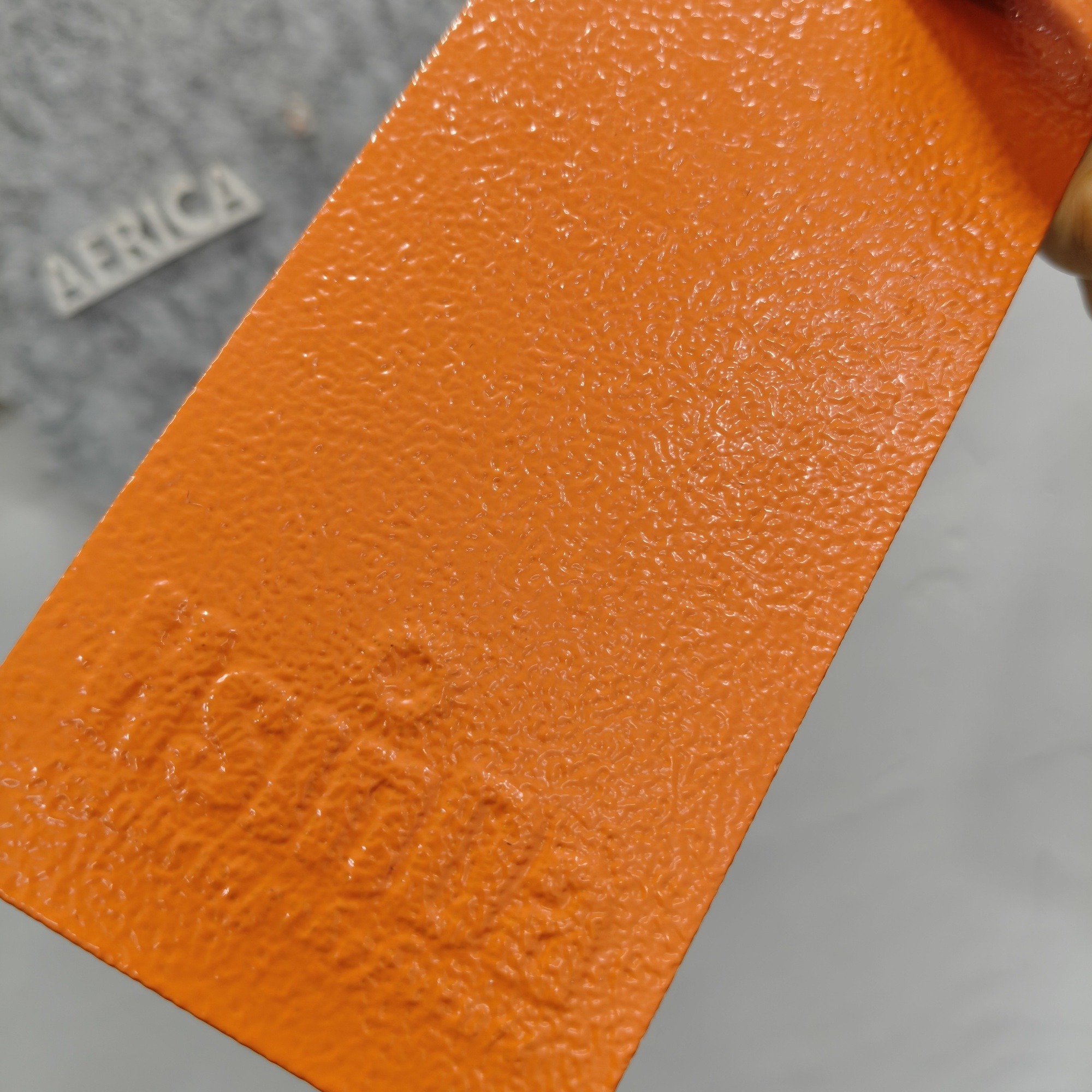
Image: Powder coating finish variations used for both industrial and architectural applications.
Powder coating is a dry finishing process that uses finely ground resin and pigment particles, applied electrostatically and cured under heat to form a durable film on metal surfaces. It is widely used in construction, home appliances, automotive parts, and general industry because it performs well in corrosion resistance, scratch resistance, and color retention. For buyers who are new to the category, the starting point is understanding that the term “powder coating” covers multiple resin systems and surface effects, and the right choice depends on the application environment and performance requirement.
This guide explains the main powder coating types, how resin chemistry changes performance, what the test numbers mean, and how to evaluate a supplier—with concrete examples from the manufacturing practice of Chengdu Hsinda Polymer Materials Co., Ltd. (Hsinda), a China-based producer that started operations in 2015 and specializes in powder coating for global buyers.
What Is Powder Coating and Why Does the Type Matter?
Powder coating is a solvent-free finishing system applied as a dry powder and then cured in an oven. Because it does not rely on liquid solvents, it is commonly described as an environmentally lower-impact option compared to conventional liquid paint. The absence of VOC solvents is a key reason many manufacturers choose powder coating for metal furniture, electrical enclosures, architectural aluminum, and appliance housings.
The type of powder coating matters because each formulation is built around different resin systems and additives. A coating that performs well on indoor office furniture may not withstand UV exposure on an exterior curtain wall. A coating designed for pipeline corrosion protection may not provide the decorative finish required for a visible architectural surface. Buyers therefore need to compare resin type, intended environment, mechanical performance, and surface texture before selecting a product.
Thermoset powder coatings are the most common category. According to Coherent Market Insights, thermoset powder coatings, including epoxy and polyester resins, held a 76.6% share of the market in 2026, driven by durability and corrosion resistance.
Main Powder Coating Types Explained
The powder coating products used in construction and decoration can be grouped into two practical layers: resin chemistry and surface texture. Both affect the final performance.
1. Epoxy Powder Coating
Epoxy powder coating is made from epoxy resin, TGIC curing agent, pigment, and additives. It is a pure epoxy system designed for heavy-duty industrial anti-corrosion work. Typical applications include oil and gas pipelines, water supply systems, valves, steel reinforcement bars, electrical insulation components, and appliance casings.
- Protects against moisture, acids, alkalis, and corrosion in industrial environments.
- Can be applied with a tribo gun or electrostatic spray gun.
- Cures at 180–200°C for 10–15 minutes.
- Shows excellent chemical and scratch resistance for home appliance surfaces.
For most outdoor architectural use, pure epoxy is not the first choice because epoxy resins tend to have lower UV resistance than polyester systems. This limitation is why epoxy is typically positioned for indoor or heavy-duty anti-corrosion scenarios.
2. Polyester Powder Coating
Polyester powder coating is formulated with polyester resin, TGIC curing agent, pigment, and additives. It is classified as a weather-resistant powder coating and is commonly used for aluminum profiles, doors and windows, curtain walls, outdoor furniture, highway guardrails, and street light poles.
- Weather resistance: no powdering and light retention above 50% after 500 hours in accelerated testing per ISO 11341:2004.
- Salt spray resistance: film remains unchanged after 500 hours per ISO 7253:1996.
- Adhesion: Grade 0 per ISO 2409:2020.
- Hardness: ≥H per ISO 15184:2020.
Polyester is the default resin for outdoor architectural and industrial applications where sunlight, rain, and temperature cycles are part of the operating environment.
3. Epoxy Polyester Hybrid Powder Coating
Epoxy polyester hybrid powder coating combines epoxy resin and polyester resin with TGIC curing agent and additives. It is classified as an indoor powder coating and is often used for home appliances, office and residential furniture, automotive interior components, and electronic equipment housings.
- Gloss range: 5% to 95% per ISO 2813:2014, so it can be matched to gloss or matte design intent.
- Good resistance to detergents and scratches for high-frequency-use furniture.
- Adhesion Grade 0 and hardness ≥H under ISO test methods.
Hybrid systems are a practical balance between epoxy adhesion and polyester aesthetic flexibility, but they are generally considered indoor systems rather than long-term exterior systems.
4. TGIC Free Powder Coating
TGIC free powder coating uses an HAA curing system instead of TGIC. It is classified as a VOC-free powder coating and carries REACH certification in Hsinda’s product range. It is intended for home appliances, furniture, automobiles, instrumentation, and electronic equipment.
- Made from polyester resin, HAA curing agent, pigment, and additives.
- Meets or approaches the same mechanical performance class as standard polyester systems.
- Relevant for buyers who require formulations without TGIC due to regulatory or corporate sustainability requirements.
For importers and brand owners that monitor restricted substances, TGIC-free options are a useful specification to request during supplier evaluation.
5. Metallic Powder Coating
Metallic powder coating is made from polyester resin, TGIC curing agent, pigment, and additives. It belongs to indoor, metallic, and aluminum profile coating categories. Applications include car wheels, body trim, aluminum doors and windows, curtain walls, computer cases, server enclosures, high-end speaker panels, and fitness equipment.
- Gloss 5–95%; impact resistance 50 kg·cm; bending ≤2 mm; cupping ≥6 mm.
- Salt spray: film unchanged after 500 hours per ISO 7253:1996.
- Weather resistance: no powdering, light retention >50% after 500 hours per ISO 11341:2004.
Metallic finishes are chosen when the product needs a metal-like appearance. Because metallic pigments can behave differently during application, batch consistency and supplier process control matter.
6. Anti-Corrosion Powder Coating
Hsinda’s anti-corrosion powder coating is a pure epoxy system designed for heavy-duty industrial anti-corrosion applications including oil and gas pipelines, water supply systems, valves, steel reinforcement bars, EV battery components, motor parts, and busbars.
- Salt spray: after 500 hours, film unchanged and unilateral corrosion at the cross-section ≤2 mm per ISO 7253:1996.
- Humidity resistance: slight gloss loss ≤ level 1 after 1000 hours per GB/T1740-2007.
- Good resistance to general acids and oils; average alkali resistance.
This grade is not primarily a decorative coating. Its job is long-term protection of metal in demanding or corrosive environments.
Aluminum and Architectural Powder Coating
For construction and decoration buyers, aluminum powder coating is one of the most important subcategories. Hsinda’s aluminum powder coating uses super weather resistance polyester resin and TGIC curing agent, and is classified as aluminum profile, Qualicoat, and AAMA powder coating. Typical applications include aluminum profiles, doors and windows, glass curtain walls, sunrooms, and architectural partitions.
Accelerated test results for this product family include:
| Property | Test Method | Value |
|---|---|---|
| Gloss | ISO 2813:2014 | 5%–95% |
| Impact | ISO 6272-1:2017 | 2.5 Nm |
| Bending | ISO 1519:2002 | ≤5 mm |
| Cupping | ISO 1520:2006 | ≥5 mm |
| Adhesion | ISO 2409:2020 | 0 Grade |
| Hardness | ISO 15184:2020 | ≥H |
| Salt spray resistance | ISO 7253:1996 | 1000 hours, film unchanged; unilateral corrosion ≤2 mm |
| Humidity and heat resistance | GB/T1740-2007 | 1000 hours, slight gloss loss ≤ level 1 |
| Weather resistance | ISO 11341:2004 | 1000 hours, no powdering; light retention >50% |
| Natural aging test | Florida 1 year | Gloss retention >50% |
The same product family also applies to transportation and municipal engineering (highway guardrails, bus stops, bus shelters, signs, vehicle parts), interior and home furnishings (partitions, railings, ceilings, cabinets), and general industry (equipment enclosures, electrical cabinets, radiators, shelves).
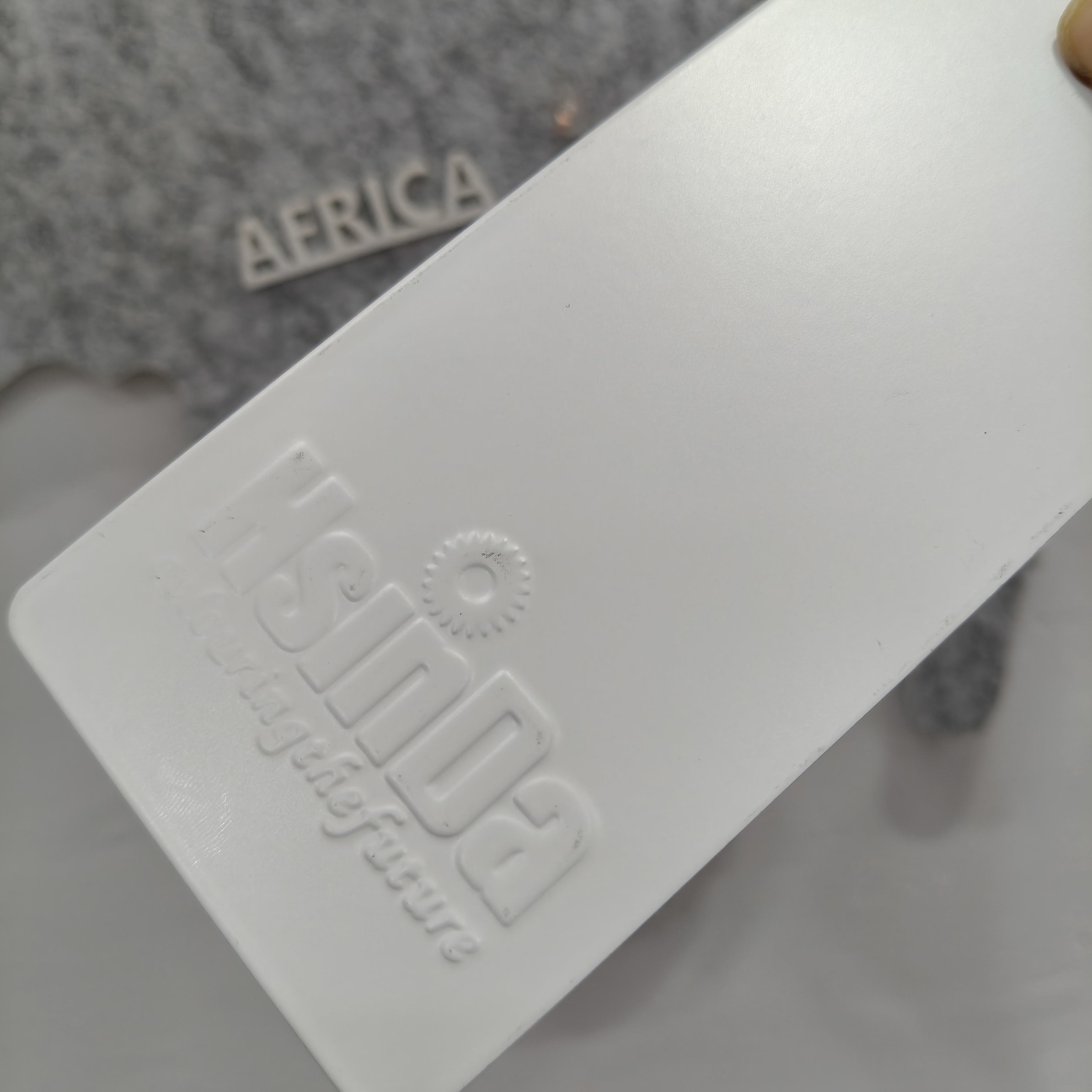
Image: Aluminum powder coating formulated for architectural profiles.
Surface Texture Options and What They Do
Beyond resin type, buyers also select a surface finish. The most common texture categories in Hsinda’s range are gloss, matte, hammer tone, wrinkle, and sandy. These finishes serve visual and functional purposes.
Glossy Powder Coating
Glossy powder coating is a polyester system with a gloss range of 5% to 95% per ISO 2813:2014. It is used in construction, home appliances, furniture, and general industry. When a smooth, reflective, easy-to-clean surface is needed, gloss grades are a common choice.
Matt Powder Coating
Matt powder coating is available in epoxy and polyester versions. It is used on appliance housings, electronics, lighting equipment, and automotive interior parts. Because matte surfaces reduce visible fingerprints and glare, this finish is common in consumer-facing products.
Hammer Tone Powder Coating
Hammer tone powder coating is a polyester product classified for outdoor and furniture use. It produces a textured, hammered metal appearance and is used on tool handles, security doors, outdoor furniture, architectural hardware, and public facilities. The texture also helps hide minor surface irregularities.
Wrinkle Powder Coating
Wrinkle powder coating creates a low-gloss, textured surface that hides fingerprints and scratches. It is used on office furniture, electrical cabinets, machine housings, and hardware tools. The same coating delivers salt spray resistance of 500 hours without change and protects against corrosion in workshop environments.
Sandy Powder Coating
Sandy powder coating is a weather-resistant polyester system with a sand-like texture. It is used on aluminum profiles, doors and windows, curtain walls, kitchen cabinets, appliance enclosures, and new energy charging equipment. The texture offers a non-slip, scratch-hiding feel while maintaining outdoor durability.
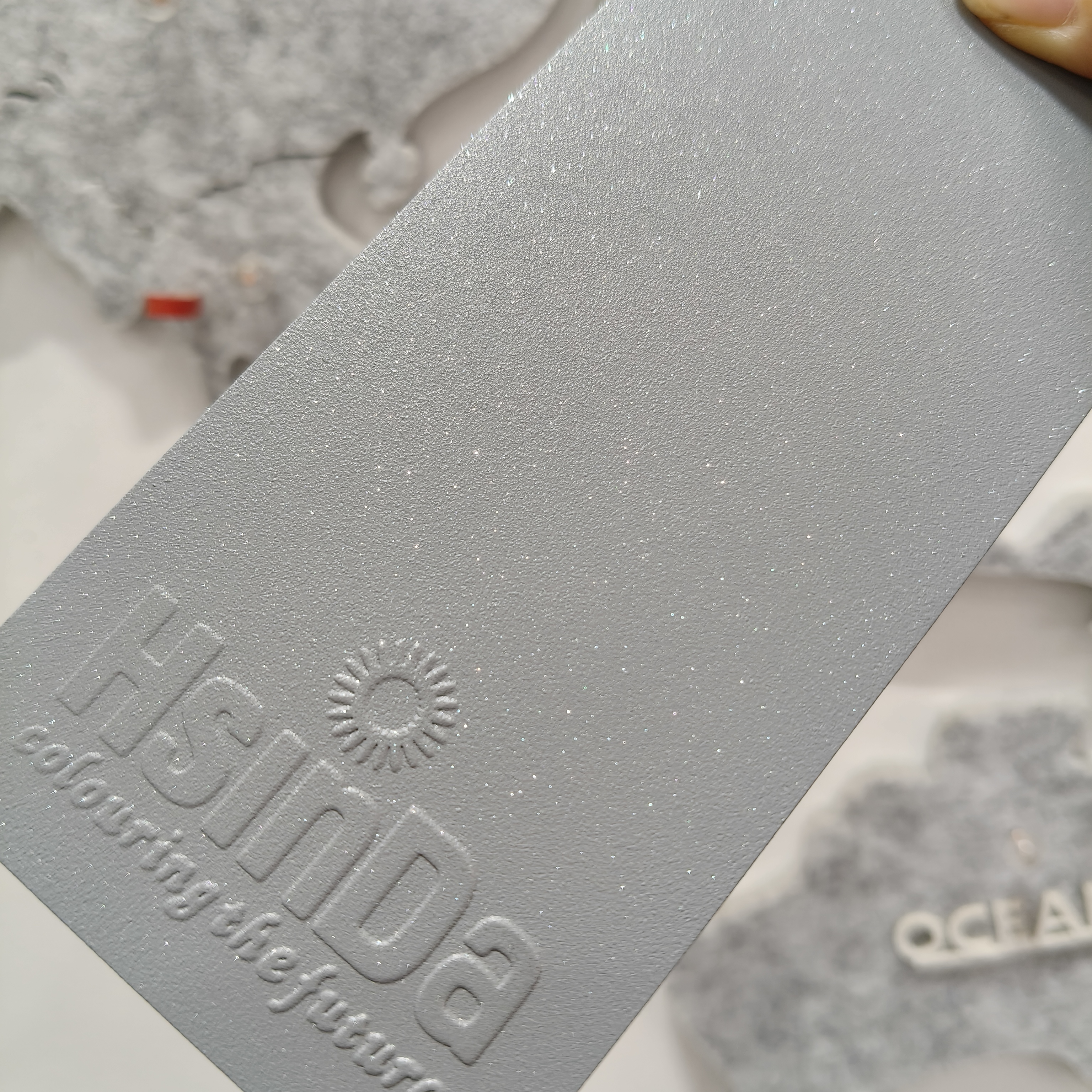
Image: Sandy powder coating for architectural and furniture surfaces.
How Powder Coating Is Applied
For buyers who do not operate an applicator line, the application process still matters because it explains why consistency, curing, and film thickness are part of supplier qualification.
- Surface preparation: Metal parts are cleaned and pre-treated to improve adhesion and corrosion resistance.
- Powder application: Dry powder is sprayed using a tribo or electrostatic spray gun, and charged particles adhere to the grounded metal surface.
- Curing: Coated parts are heated in a curing oven at 180–200°C for 10–15 minutes. The powder melts, flows, and chemically cross-links into a continuous film.
- Cooling and inspection: Parts are cooled and checked for film thickness, color, texture, adhesion, and other quality criteria.
Hsinda’s stated product parameters show a typical film thickness of 70 μm, coverage of 8–10 m²/kg at 30–90 μm film thickness, specific gravity of 1.2–1.7 g/cm³, and average particle size of 32–42 μm. These figures help buyers estimate material consumption and compare powders from different suppliers.
How to Choose the Right Powder Coating: Decision Criteria
Selection starts with the operating environment, not the color card.
- Indoor or outdoor? Indoor products can use epoxy hybrid, epoxy, or standard polyester systems. Outdoor products need weather-resistant polyester with proven UV and humidity performance.
- Corrosion exposure? For salt, moisture, acid, or alkali exposure, use a system validated in salt spray and humidity tests. Pure epoxy systems are the stronger anti-corrosion choice.
- Required surface appearance? Decide whether the product needs gloss, matte, metallic, sandy, wrinkle, or hammer tone. Some textures hide surface defects, which is valuable for castings and lower-cost substrates.
- Regulatory constraints? If you need REACH-oriented or TGIC-free formulations, confirm the supplier can document the system.
- Substrate type: Aluminum profiles benefit from polyester systems; steel structural parts may need epoxy or hybrid; pre-treated and powder-friendly surfaces are assumed.
A practical sourcing shortcut is to map each product requirement to an Hsinda product family. For example, a buyer importing aluminum window profiles could prioritize the aluminum powder coating family. A buyer coating steel cabinets for indoor use could evaluate wrinkle or hybrid systems. A buyer protecting oil and gas pipeline components should look at anti-corrosion epoxy systems.
Common Applications and Use Cases
Construction and Architectural Decoration
Architectural and decorative applications are a major end-use segment for powder coatings, driven by demand for UV-resistant facades and window systems. In this segment, powder coating is applied to aluminum doors, windows, curtain walls, partitions, railings, and sunroom structures.
Home Appliances
Powder coating is widely used for appliance housings because it resists detergents and scratches. Hsinda’s application history includes serving as a supplier to Changhong Electric, Xiaomi Appliances, TCL Electronics, and Hitachi Elevator in the domestic Chinese market.
Industrial and Heavy-Duty
For industrial equipment, powder coating protects against moisture, acids, alkalis, and corrosion. It is applied to electrical cabinets, machine housings, valves, pipelines, and steel reinforcement.
Furniture and Hardware
Office furniture, shelving, security doors, and hardware tools use wrinkle, hammer tone, sandy, and matte finishes to improve durability and visual consistency.
Market Snapshot and Global Supplier Landscape
Analyst estimates for the powder coatings market vary. Grand View Research values the global market at USD 11.5 billion in 2025, projected to reach USD 18.5 billion by 2033. IMARC Group estimates a larger 2025 base of USD 16.4 billion, with expected growth at a 4.51% CAGR through 2034. MarkestandMarkets has also published an estimate of USD 16.3 billion. These figures are directional, and buyers should treat market size as context rather than a precise planning number.
Global competitors in the powder coatings sector include AkzoNobel (Interpon), PPG Industries, Sherwin-Williams, Axalta, and Jotun. These large companies compete mainly through brand recognition, broad product lines, and regional service networks. Mid-size and specialized manufacturers such as Hsinda compete through flexibility, direct sourcing, custom color matching, and manufacturing cost structure.
China’s coating industry shows an active export trend. According to China Coatings Industry Association data cited by ECHEMI, China exported 334,800 tons of coatings in 2024, with export value reaching USD 1.065 billion, an 18.65% year-on-year increase in value.
Why Hsinda for Powder Coating Supply?
Chengdu Hsinda Polymer Materials Co., Ltd. was established in 2015 and specializes in powder coating. The company operates from a 10,000-square-meter facility with 8 advanced powder coating production lines and 3 sample lines, and employs around 45 staff. Annual production capacity is 5,000 tons, supported by a research and development team of 11 engineers. Hsinda holds more than 40 independent patents.
In terms of export reach, Hsinda sells to more than 70 countries, with exports accounting for 70% of total sales. Key markets include the USA, Canada, Mexico, South America, the Middle East, and Central Asia. The company has exclusive distributors in Kazakhstan, Uzbekistan, and Chile, and has maintained a stable relationship with Mexico’s largest agricultural tool equipment factory for over 10 years.
Certifications and compliance include ISO 9001, ISO 14001, and product testing through ROHS, REACH, SGS, and AAMA. These certifications are relevant for buyers operating in regulated markets such as the EU and North America.
Hsinda’s domestic customers include Changhong Electric, Xiaomi Appliances, TCL Electronics, and Hitachi Elevator. For international buyers, the practical value is that the same production base that serves major appliance brands is available for import and OEM requirements.
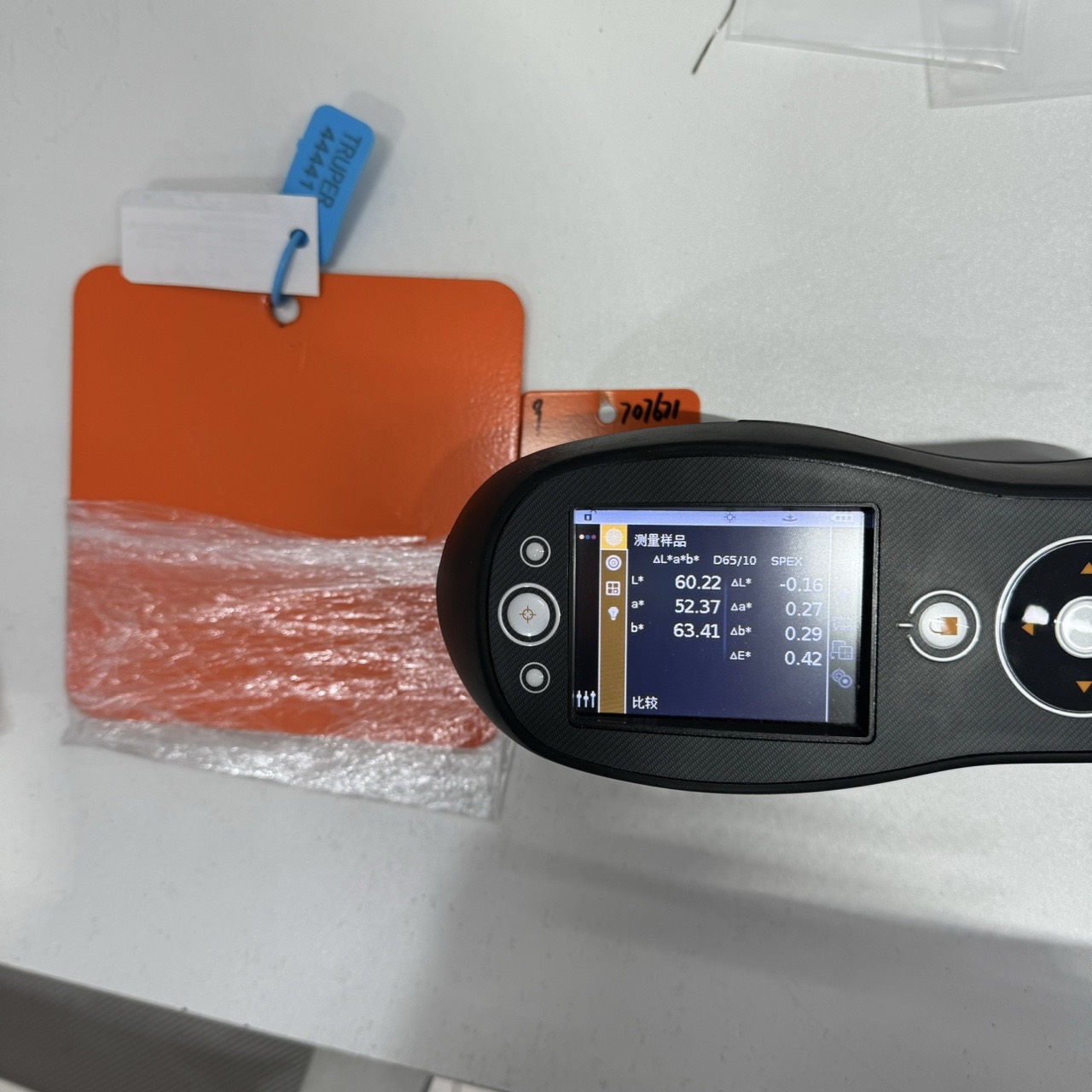
Image: Custom color powder coating samples available for buyer evaluation.
How to Evaluate a Powder Coating Manufacturer
Buyers in the Awareness and Research stage should ask the following questions before adding a supplier to a shortlist:
- Can the manufacturer document its production capacity and control systems? Ask for line count, sample line availability, and quality certificates such as ISO 9001 and ISO 14001.
- Which resin systems are available? A supplier should offer multiple families: epoxy, polyester, hybrid, TGIC-free, metallic, anti-corrosion, and textured finishes.
- Can the manufacturer match custom RAL or Pantone colors? Custom color capability matters because most architectural projects require project-specific colors.
- Does the supplier provide test data for the specific product? Ask for gloss, impact, bending, cupping, adhesion, hardness, salt spray, and weather resistance data under the relevant ISO or GB standards.
- Does the supplier support OEM/ODM work? For brands, private label powder coating changes the supplier relationship from commodity trading to manufacturing partnership.
- What is the export experience? Check whether the supplier has distributors or long-term relationships in your target region.
For sample-based evaluation, request a physical sample panel before committing to a color and texture. Apply the sample to the actual substrate and curing process if possible, because appearance and performance can shift with line conditions.
Powder Coating Selection Checklist
The decision process can be compressed into a short checklist for team discussion:
- Define the operating environment: indoor, outdoor, marine, industrial, or mixed.
- Identify corrosion, humidity, UV, chemical, and mechanical impact requirements.
- Choose resin family: epoxy, polyester, hybrid, TGIC-free, or specialized anti-corrosion.
- Choose texture: gloss, matte, metallic, sandy, wrinkle, or hammer tone.
- Select color standard: RAL, Pantone, or custom project color.
- Verify test methods and pass values with the supplier.
- Confirm regulatory compliance: REACH, ROHS, AAMA, Qualicoat, or other required standards.
- Request samples and panels before mass production.
FAQ
What is powder coating used for?
Powder coating is used to protect and decorate metal surfaces. Common applications include aluminum doors and windows, curtain walls, outdoor furniture, home appliance housings, automotive parts, electrical cabinets, and industrial equipment. In construction, powder coating is a standard finish for architectural aluminum because it provides weather resistance, corrosion protection, and color retention.
What is the difference between epoxy and polyester powder coating?
Epoxy powder coating is made from epoxy resin and curing agents, offering strong adhesion, chemical resistance, and anti-corrosion performance, but weaker UV resistance. Polyester powder coating is made from polyester resin and is the standard choice for outdoor use because it resists sunlight and moisture. For construction and exterior products, polyester or super weather-resistant polyester systems are usually the correct category.
Which powder coating is best for aluminum profiles?
A weather-resistant polyester powder coating is the conventional choice for aluminum profiles. Hsinda’s aluminum powder coating is classified as aluminum profile, Qualicoat, and AAMA powder coating, and is designed for doors, windows, curtain walls, and architectural partitions. It has undergone accelerated testing including 1000 hours of salt spray and 1000 hours of weather resistance per ISO 11341:2004, with gloss retention above 50%.
What does a powder coating test report tell me?
A test report shows whether a coating passes defined mechanical and environmental thresholds. Common values include adhesion Grade 0, hardness ≥H, bending ≤2 mm, salt spray resistance of 500 or 1000 hours depending on grade, and humidity resistance of 1000 hours. Buyers should compare these numbers against the application environment rather than just confirming that a coating “has test data.”
How do I request samples or a quotation for Hsinda powder coating?
You can contact Hsinda’s team directly to request custom RAL or Pantone colors, technical datasheets, and samples. The company also provides a downloadable brochure. For evaluation purposes, sharing your substrate, application method, and performance expectations helps the supplier recommend the correct resin system and finish.
Conclusion
Powder coating selection is a decision about environment, chemistry, and finish. Buyers who first identify the operating conditions, then choose the appropriate resin system, and then confirm the surface texture and compliance requirements, can narrow a large supplier market into a qualified shortlist.
For buyers evaluating Chinese manufacturers, the signal is not only product price but also manufacturing structure: production lines, testing capability, export experience, long-term distributor relationships, and documented compliance. Hsinda represents a mid-size specialist model in this industry: established in 2015, producing more than 5,000 tons per year, exporting to more than 70 countries, and serving both domestic appliance brands and international distributors.
Whether you need a custom color, a textured finish, an anti-corrosion grade, or a weather-resistant architectural system, the practical next step is to request samples and compare the test data against your product requirements.
Want the full product specification and company profile?
Download the Hsinda company brochure (PDF)
Contact: Jenny Qin · +86 188 8641 2845 · innocoat.jenny@hsindapowdercoating.com