Aluminum vs. Steel Powder Coating: A Construction Buyer's Guide
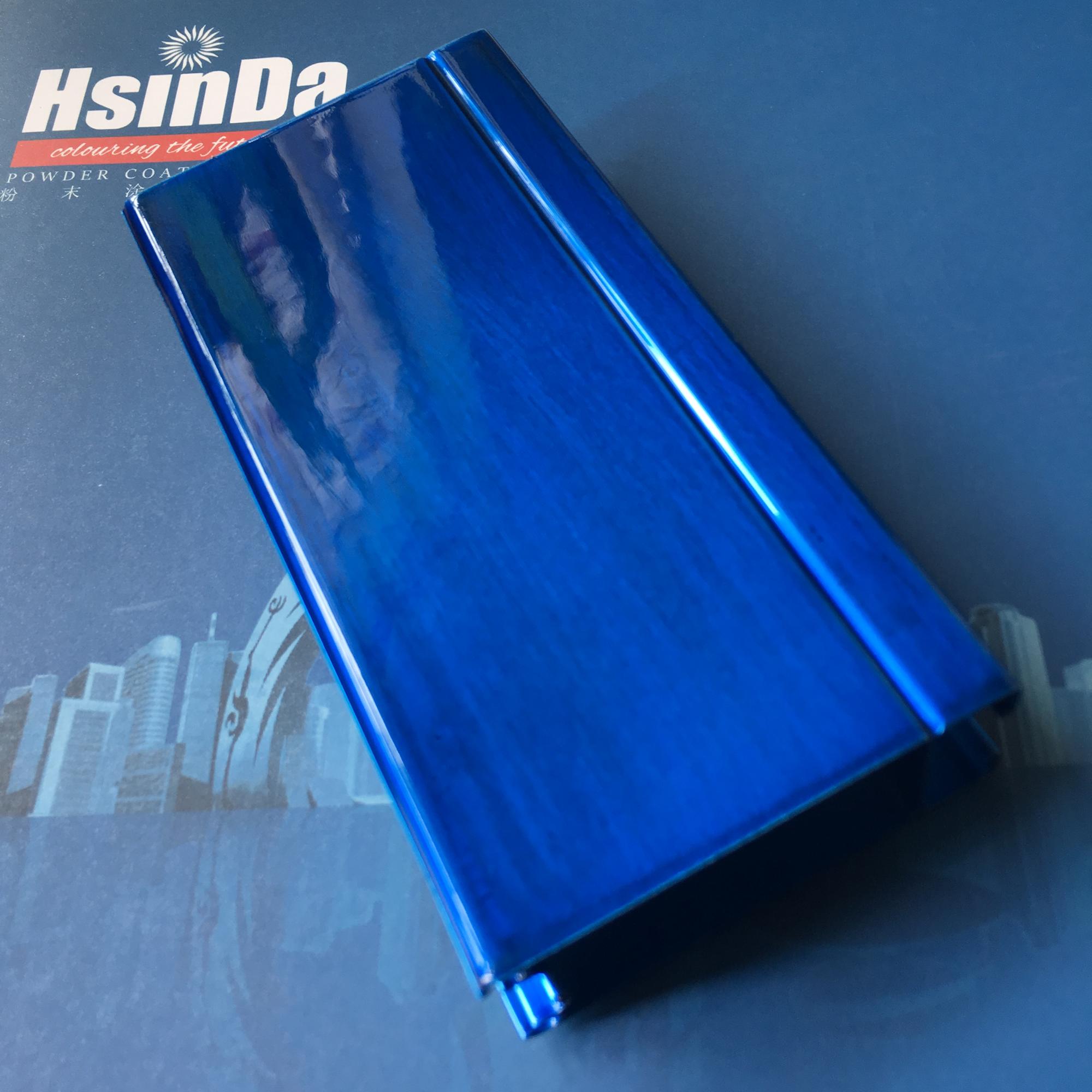
Aluminum Powder Coating is part of Hsinda architectural-grade powder coating range.
Construction buyers specifying powder coating for building and decoration projects are often asked to choose between products labeled for aluminum and products labeled for steel. In practice, the comparison is less about the metal name and more about the service environment: exterior architecture versus heavy-duty corrosion, UV and gloss retention versus chemical and impact resistance.
Hsinda supplies both system families. Aluminum Powder Coating is a polyester-based system with TGIC curing, positioned around aluminum profiles, doors, windows, curtain walls and architectural partitions. Anti-corrosion Powder Coating is an epoxy-based system intended for pipelines, valves, steel reinforcement bars and other metal components in demanding conditions. Both product data sheets list a typical film thickness of 70 µm and a practical coverage of 8-10 m2 per kg at a film thickness range of 30-90 µm.
Hsinda, or Chengdu Hsinda Polymer Materials Co., Ltd, is a powder coating manufacturer established in 2015 in Chengdu, China. The company profile lists 8 powder coating production lines and an annual output of more than 5000 tons.
Why Construction Buyers Need a Substrate-Specific Specification
A single generic powder coating can fail a project in different ways. If an exterior aluminum facade is coated with a system that has weak ultraviolet resistance, the surface may weather poorly and lose color gloss over time. If a steel valve or pipe section is coated with a decorative system that lacks corrosion protection, the substrate can begin to degrade in a humid or chemically active environment.
For this reason, construction and decoration specifications should define three things before color is selected: the substrate material, the exposure condition, and the performance standard the coated part must meet. In most procurement decisions, the substrate is either aluminum that needs an architectural-quality exterior finish or steel that needs heavy-duty anti-corrosion protection.
This guide compares two product directions in the Hsinda range: Aluminum Powder Coating for weather-sensitive architectural aluminum, and Anti-corrosion Powder Coating for steel and industrial components where corrosion resistance is the priority.
Industry Background: Thermoset Powder Coatings for Architecture and Industry
Powder coating is widely used in construction because it forms a dry, cured film without liquid solvents. Most specified systems are thermoset powders, and industry data shows that thermoset powder coatings, including epoxy and polyester types, remain the dominant category. According to Coherent Market Insights, thermoset powder coatings accounted for an estimated 76.6% share by type in 2026, driven by durability and corrosion resistance.
Architectural and decorative applications are also a major end-use segment for powder coatings. Mordor Intelligence identifies architectural and decorative uses as significant because of demand for UV-resistant facades and window systems. This matches what construction buyers often need: a coating that can protect the metal while preserving its appearance in an exterior setting.
Two resin families do most of the work in this market. Polyester-based materials are commonly used where weather resistance, color retention and exterior appearance matter. Epoxy-based materials are commonly selected where corrosion protection, chemical resistance and barrier performance are the main requirements. Hsinda's two product lines illustrate this basic specification split.
Two Powder Coating Systems Compared: Hsinda Product Families
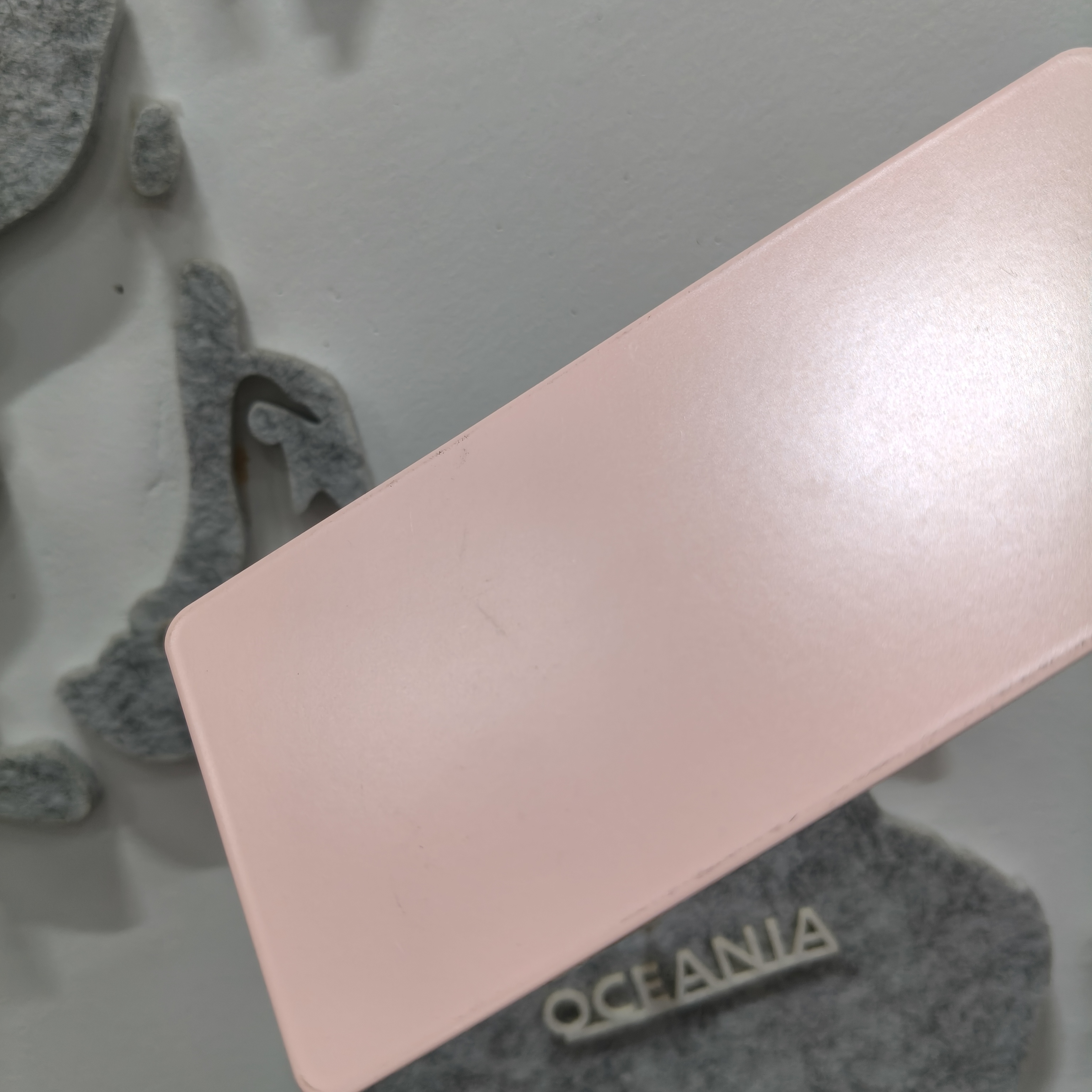
Hsinda Aluminum Powder Coating
Hsinda Aluminum Powder Coating is described in the product data sheet as a polyester powder coating with a super weather resistant polyester resin and TGIC curing agent. The product type references aluminum profile powder coating, Qualicoat powder coating and AAMA powder coating. This identifies the line as an architectural-oriented powder system rather than a general-purpose interior coating.
The listed typical film thickness is 70 µm, with a coverage range of 8-10 m2 per kg at 30-90 µm film thickness. It is applied with a tribo gun or an electrostatic spray gun and cures at 180-200°C for 10-15 minutes.
Its data sheet contains several performance values useful to construction specifiers:
- Salt spray resistance per ISO 7253:1996: after 1000 hours, the coating film remains unchanged and unilateral corrosion at the cross section is ≤2 mm.
- Humidity and heat resistance per GB/T 1740-2007: 1000 hours, with slight gloss loss rated no more than level 1.
- Weather resistance per ISO 11341:2004: 340-lamp-tube exposure for 1000 hours, no powdering, with light retention greater than 50%.
- Natural aging test: 1 year in Florida, gloss retention greater than 50%.
- Gloss range per ISO 2813: 5% to 95%.
- Impact resistance per ISO 6272-1:2017: 2.5 Nm.
- Bending per ISO 1519:2002: ≤5 mm.
- Cupping per ISO 1520:2006: ≥5 mm.
- Adhesion per ISO 2409:2020: Grade 0.
- Hardness per ISO 15184:2020: ≥H.
Typical construction applications listed for this product include aluminum profiles, doors and windows, glass curtain walls, sunrooms and architectural partitions. The product scope also includes transportation and municipal applications such as highway guardrails, bus shelters, signs and vehicle parts.
Hsinda Anti-corrosion Powder Coating
Hsinda Anti-corrosion Powder Coating is specified as a pure epoxy powder coating. Its material list includes epoxy resin, pigment and additives, and it is positioned for heavy-duty anti-corrosion applications rather than exterior architectural color work.
Like the aluminum range, this product lists a typical film thickness of 70 µm and a coverage rate of 8-10 m2 per kg at 30-90 µm film thickness. It is applied with a tribo gun or electrostatic spray gun and cures at 180-200°C for 10-15 minutes.
The data sheet includes these key performance values:
- Salt spray resistance per ISO 7253:1996: after 500 hours, the coating film remains unchanged and unilateral corrosion at the cross section is ≤2 mm.
- Humidity and heat resistance per GB/T 1740-2007: 1000 hours, slight gloss loss no more than level 1.
- Impact resistance per ISO 6272-1:2017: 50 kg/cm.
- Bending per ISO 1519:2002: ≤2 mm.
- Cupping per ISO 1520:2006: ≥6 mm.
- Adhesion per ISO 2409:2020: Grade 0.
- Hardness per ISO 15184:2020: ≥H.
- Chemical resistance: good resistance to general acids and oils, with average alkali resistance.
The application list is heavy-industry oriented: oil and gas pipelines, water supply systems, valves, steel reinforcement bars, electric vehicle batteries, electric motors, busbars, chassis components, pump bodies, gearboxes and equipment enclosures.
Step-by-Step Selection Process for Construction Buyers
Use the following six checks to decide which powder coating system fits a construction or decoration project.
- Identify the substrate. Is the part aluminum, galvanized steel, mild steel or another metal? Aluminum architectural components often need a different performance profile than carbon steel structural elements.
- Define the exposure condition. Outdoor facades face UV, rain and temperature cycling. Indoor industrial environments may face humidity, chemicals or salt exposure. The coating must match the actual condition.
- Match the resin to the requirement. For exterior architectural aluminum, choose a weather-resistant polyester system. For steel parts in corrosive or industrial service, choose an epoxy-based anti-corrosion system.
- Check the film thickness and coverage plan. Hsinda lists a typical film thickness of 70 µm and coverage of 8-10 m2 per kg at 30-90 µm for both product families. This gives a useful planning baseline of about 100-125 grams of powder per square meter before application losses.
- Compare tests rather than adjectives. For architectural aluminum, look for salt spray, humidity, accelerated weathering and natural weathering data. For steel anti-corrosion, look for salt spray, humidity, impact and chemical resistance data.
- Validate color and gloss before ordering. Both systems are available in custom RAL and Pantone colors. Confirming the gloss level and surface appearance with a coated sample is part of responsible product selection.
Common Construction and Decoration Scenarios
Exterior Aluminum Doors, Windows and Curtain Walls
For architectural aluminum profiles, the product data sheet for Hsinda Aluminum Powder Coating lists aluminum alloy doors and windows, curtain walls and architectural decorative profiles as relevant application areas. The coating's 1000-hour salt spray result and 1000-hour accelerated weather resistance result give it a stronger architectural-weather profile.
Steel Valves, Pipes and Reinforcement Bars
When steel parts must withstand moisture, acids, alkalis or repeated impact, the right starting point is often an epoxy-based anti-corrosion powder coating. The Hsinda Anti-corrosion Powder Coating is specifically listed for oil and gas pipelines, water supply systems, valves and steel reinforcement bars. Its 500-hour salt spray result and chemical resistance make it a more appropriate reference when the primary objective is corrosion control.
Mixed Metal Building Systems
Many projects combine aluminum fenestration with steel supports, brackets, pipes or ancillaries. In this case, buyers should not try to use one coating for every surface. A practical specification may require Hsinda Aluminum Powder Coating on exterior aluminum profiles and Hsinda Anti-corrosion Powder Coating on buried, enclosed or high-corrosion steel components. The film thickness and coverage logic remain the same, but the resin and performance target change with the substrate.
Aluminum Powder Coating vs Anti-corrosion Powder Coating: Comparison Table
The following comparison is based on Hsinda product data sheets. It compares the two coating families on factors relevant to construction and decoration buyers.
| Evaluation Factor | Aluminum Powder Coating | Anti-corrosion Powder Coating |
|---|---|---|
| Product type | Polyester powder coating with TGIC curing | Pure epoxy powder coating |
| Typical film thickness | 70 µm | 70 µm |
| Coverage | 8-10 m2 per kg at 30-90 µm | 8-10 m2 per kg at 30-90 µm |
| Curing schedule | 180-200°C for 10-15 min | 180-200°C for 10-15 min |
| Application method | Tribo gun or electrostatic spray gun | Tribo gun or electrostatic spray gun |
| Salt spray resistance | 1000 hours, film unchanged, corrosion at cross section ≤2 mm | 500 hours, film unchanged, corrosion at cross section ≤2 mm |
| Humidity and heat resistance | 1000 hours, slight gloss loss ≤ level 1 | 1000 hours, slight gloss loss ≤ level 1 |
| Weather resistance data | 1000 hours accelerated weathering and 1-year Florida natural aging data listed | No weather resistance value listed on the product data sheet |
| Chemical resistance | Not emphasized in the product sheet | Good resistance to general acids and oils; average alkali resistance |
| Gloss | 5% to 95% | 5% to 95% |
| Typical construction focus | Aluminum profiles, doors, windows, curtain walls, sunrooms, architectural partitions | Pipelines, water supply systems, valves, steel reinforcement, heavy-duty industrial metal parts |
FAQ
What should a construction buyer verify before selecting a powder coating manufacturer for aluminum applications?
Buyers should verify that the manufacturer offers an architectural-grade polyester powder coating for aluminum profiles, with documented salt spray, humidity and weather resistance data. Hsinda Aluminum Powder Coating, for example, lists 1000 hours salt spray resistance, 1000 hours humidity resistance, 1000 hours accelerated weather resistance and one-year Florida natural weathering data. Buyers should also request RAL or Pantone color samples and check film thickness and coverage before project-scale commitment.
Conclusion
For construction and decoration buyers, the practical difference between aluminum and steel powder coating is not simply the metal being coated. It is the performance the coating must deliver. Exterior architectural aluminum needs weather resistance, color stability and long-term appearance. Steel components exposed to moisture, chemicals or industrial conditions need corrosion resistance and mechanical toughness.
Hsinda's product range provides two relevant references. Aluminum Powder Coating is the polyester-based, weather-resistant option for architectural profiles and associated metal structures. Anti-corrosion Powder Coating is the epoxy-based option for steel-oriented, heavy-duty corrosion applications. Both list 70 µm as the typical film thickness and 8-10 m2 per kg as the practical coverage baseline, which simplifies initial material planning when a project uses both systems.
Before approving a coating specification, validate the system against the substrate, the environment and the color requirement. The right next step is to request a sample and the corresponding technical data, then check the cured film on the actual profile or steel part.
Next step for project buyers: Validate the selected powder system before scale order. Hsinda can provide technical sheets, coated samples and color matching direction. Send the substrate type, service environment and RAL or Pantone reference to innocoat.jenny@hsindapowdercoating.com.
Download Hsinda corporate brochure: Powder coating company profile and capacity.
Have Questions or Need More Details?
Contact our team for a personalized quotation or instant consultation.
Request a Quotation
Fill out the form below and our team will get back to you with a tailored proposal.
WhatsApp Direct Chat
Prefer to chat in real-time? Message us on WhatsApp for instant assistance & quick answers.
- Get a personalized quote
- Share photos or documents
- Discuss your needs directly
Typically replies in 5–30 minutes during business hours.