OEM Powder Coating with Custom Colors: A Capability Evaluation for Buyers
Custom-color OEM powder coating is a procurement decision that depends on measurable manufacturing capabilities: color matching, resin selection, surface finish options, quality control, batch consistency, and the ability to ship to spec. Buyers evaluating powder coating manufacturers need a structured way to verify those capabilities before placing an order.
This guide walks through the key evaluation criteria for OEM powder coating, using Chengdu Hsinda Polymer Materials Co., Ltd. (Hsinda) as a documented reference. Hsinda is a China-based powder coating manufacturer established in 2015, operating from a 10,000 m² facility with eight production lines, three sample lines, and an annual output of more than 5,000 tons. The company exports to more than 70 countries, which makes its OEM/ODM process useful as a practical benchmark for global buyers.
Why Custom OEM Powder Coating Is Harder Than It Looks
At its core, custom powder coating is a thermoset coating process in which resin, pigments, and additives are melted, mixed, extruded, and ground into a fine powder. The powder is then electrostatically sprayed onto a metal substrate and cured by heat. The result is a durable, dry film. However, when a buyer asks for “powder coating paint” with custom colors, the real challenges begin:
- Color matching must work across batches, substrates, and curing conditions.
- Gloss and texture must be adjustable without compromising mechanical or weather resistance.
- The resin system must match the application: epoxy powder coating for corrosion protection indoors, polyester powder coating for outdoor weather resistance, hybrid powder coating for general indoor use, and TGIC-free/HAA systems for buyers facing regulatory constraints.
- Certification data must be available for target markets, including REACH, RoHS, ISO 9001, ISO 14001, and food-contact or antibacterial tests where relevant.
- MOQs, lead times, and payment terms must align with a buyer’s supply chain.
Buyers who skip this evaluation often discover color drift, coating failures, or documentation gaps after the product has shipped. This article provides a step-by-step evaluation model.
Industry Background: Powder Coating Demand and Buyer Implications
Powder coating demand continues to rise globally because the technology does not require solvents and captures high material efficiency. Industry analysts estimate the global powder coatings market at between USD 11.5 billion and USD 16.4 billion in 2025, depending on the research firm; long-term projections expect the market to approach USD 18.5 billion by 2033 (Grand View Research; IMARC Group). Thermoset powder coatings, which include epoxy and polyester resin systems, accounted for approximately 76.6% of the market in 2026 (Coherent Market Insights). Architectural and decorative applications are a major end-use segment, especially for UV-resistant facades and window systems (Mordor Intelligence).
In the export market, China’s coating industry shipped 334,800 tons of coatings in 2024, a year-on-year increase in value of 18.65% to USD 1.065 billion (China Coatings Industry Association / ECHEMI). For OEM buyers, this means more suppliers are competing for international orders, and evaluation is becoming more important, not less.
Detailed Solution: Documented OEM/ODM Powder Coating Capabilities
Hsinda’s OEM/ODM powder coating capabilities are organized around four customization layers: color, gloss, texture, and performance. The company provides both ODM (design and formulation on behalf of the buyer) and OEM (production using buyer-defined specifications, packaging, and branding).
Color and Finish Customization
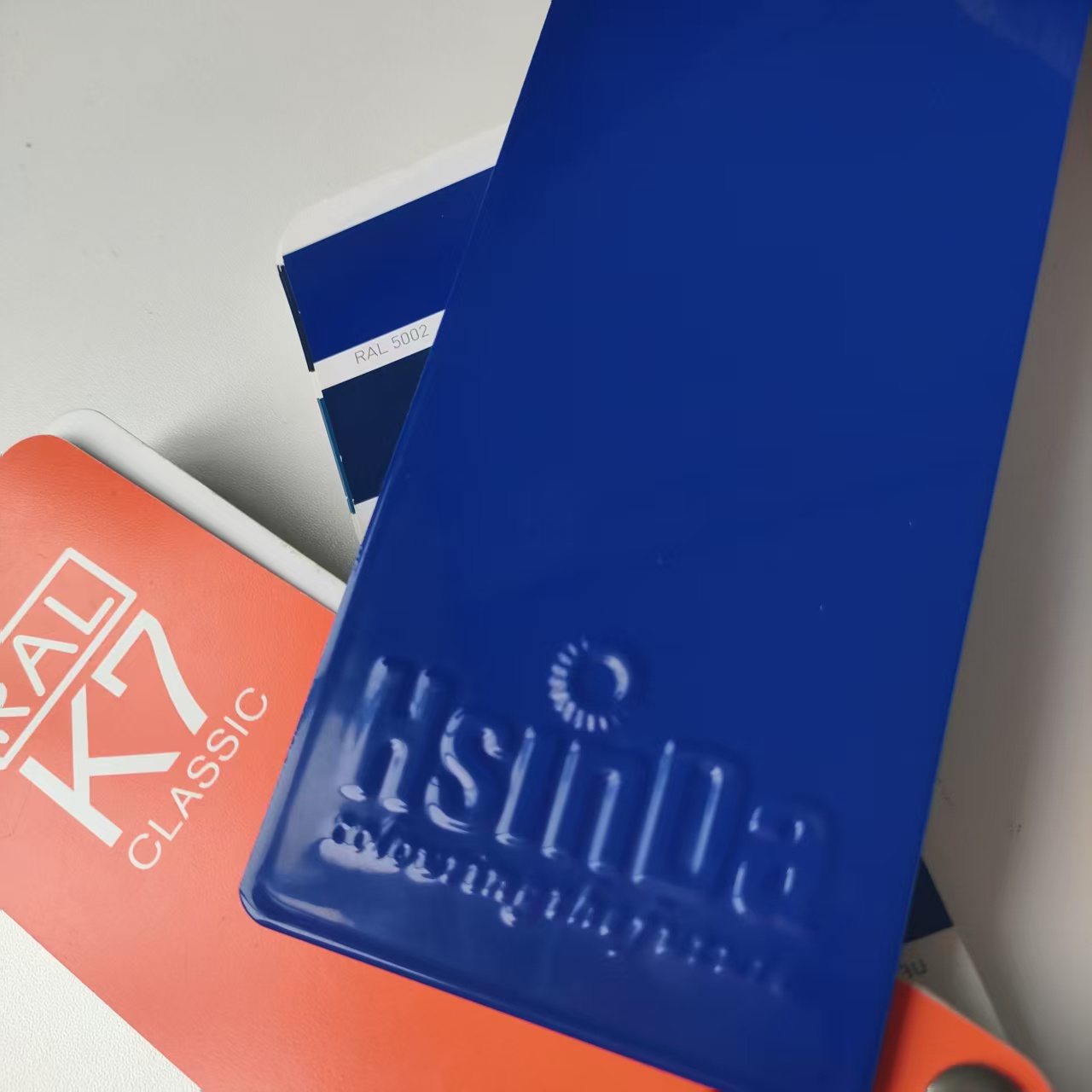
- Color: Standard color charts are available, and buyers can customize RAL or Pantone colors based on samples.
- Gloss: Classified by 60° gloss meter readings — high gloss (>80%), semi-gloss (40–79%), matte (5–39%).
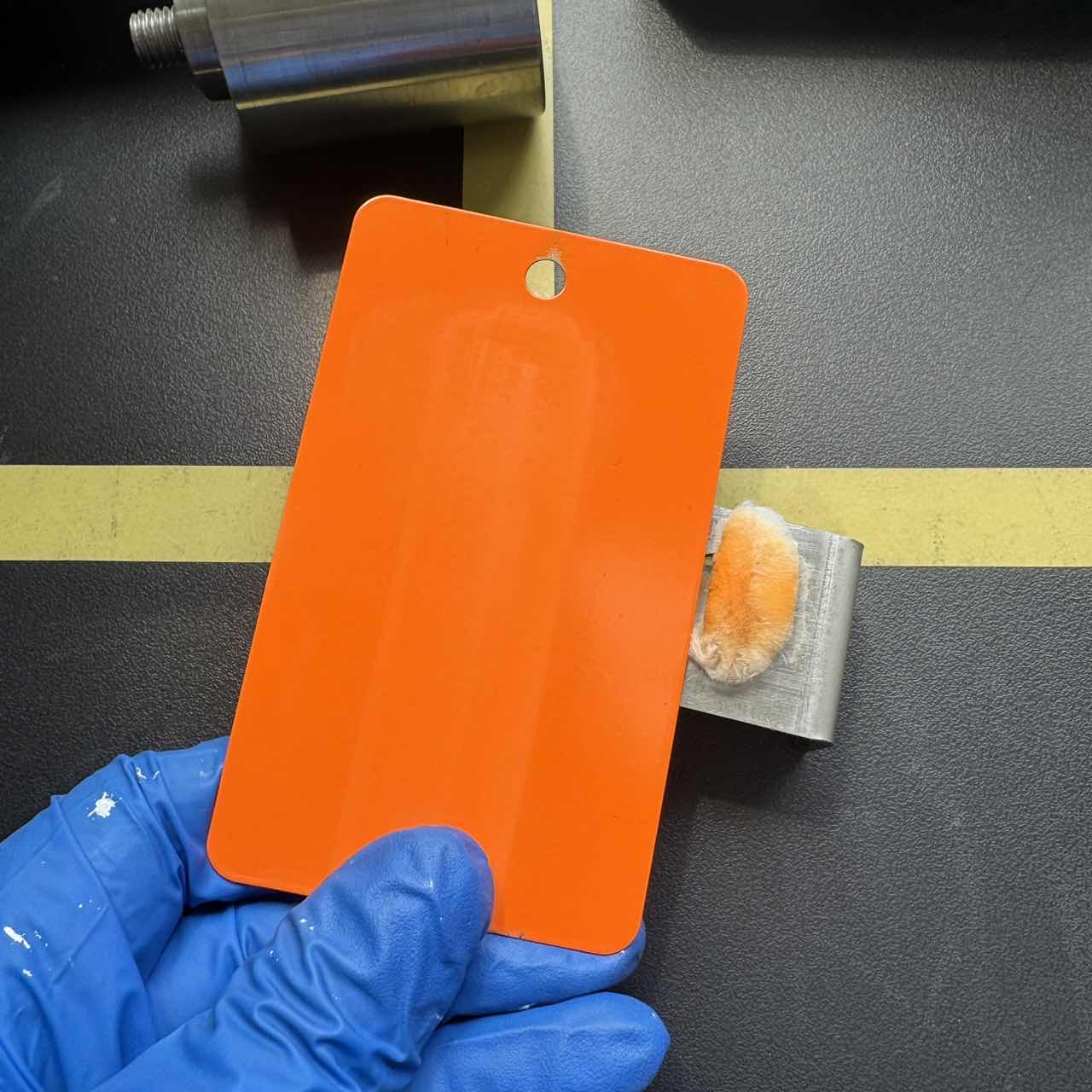
- Texture and effects: Smooth, sandy, wrinkle, hammer tone, watermarked, cracked, stone-like, metallic/pearlescent, chameleon, photochromic, thermochromic, electroplating effect, reflective, and luminescent finishes can be produced.
Performance Customization
- Weather-resistant powder coating for outdoor and architectural applications, with grades referencing AAMA 2604 or Qualicoat class expectations.
- Anti-corrosion powder coating based on pure epoxy systems for demanding industrial environments.
- Antibacterial powder coating tested according to ISO 22196:2011, with an available SGS report.
- TGIC-free powder coating, REACH certified, VOC free, and HAA-cured for buyers who require lower-hazard formulations.
- Anti-slip, anti-fingerprint, fireproof/explosion-resistant, scratch-resistant, and low-temperature curing options can be explored for specialized projects.
Production and Quality Evidence
- 8 advanced powder coating production lines and 3 sample lines.
- Monthly production capacity for ODM is 400 tons; OEM also runs 400 tons per month.
- ODM lead time is 15–20 days; OEM lead time is 20 days.
- ODM minimum order quantity is 300 kg; OEM MOQ is 6 tons for carton box, sample card, and logo customization.
- All products undergo 100% testing.
- Certifications include ISO 9001, ISO 14001, REACH, RoHS, SGS antibacterial, FDA food-contact, ISCC PLUS, and product carbon footprint documentation.
Step-by-Step Breakdown: How to Evaluate an OEM Powder Coating Manufacturer
Use this six-step process when evaluating an OEM powder coating manufacturer for custom colors.
Step 1: Define Your Application and Performance Boundary
Ask whether the final product needs indoor or outdoor durability, corrosion resistance, chemical resistance, antibacterial properties, or food-contact compliance. This determines the resin family and performance package.
Step 2: Verify Color and Finish Customization Evidence
Ask for RAL/Pantone matching, sample cards, and photos of finished coated parts. A manufacturer like Hsinda allows ODM color customization based on sample matching and offers a range of gloss levels based on 60° gloss meter classification.
Step 3: Check Resin System Expertise and Material Documentation
Review whether the supplier offers epoxy powder coating, polyester powder coating, epoxy-polyester hybrid powder coating, and TGIC-free/HAA-cured systems. Confirm REACH, RoHS, ISO 9001, and ISO 14001 certificates, plus any market-specific test reports such as FDA or antibacterial.
Step 4: Evaluate Production Capacity and Quality Control
Validate annual output, number of production lines, monthly capacity, and whether the supplier performs 100% testing. Also ask about third-party inspection, for example SGS pre-shipment inspection.
Step 5: Confirm MOQ, Lead Time, and Commercial Terms
Check the MOQ for sample, trial, and bulk orders. Hsinda’s sample order is 1 kg, ODM bulk MOQ is 300 kg, and OEM MOQ is 6 tons. Lead times are 15–20 days for ODM and 20 days for OEM. Delivery terms can include EXW, FOB, CIF, CFR, CPT, DAP, and DDP. Payment terms are commonly 50% T/T in advance and 50% before shipment.
Step 6: Run a Pre-Order Qualification Test
Order samples, test them on your line, check color and gloss under your curing schedule, and review the coating performance against your quality requirements. A third-party inspection can be included before shipment.
Use Cases: Custom OEM Powder Coating in Real Projects
Electric Enclosure Coatings Across Multiple Markets
An electric enclosure client used Hsinda powder coating to safely house electrical components, enabling centralized control and protection of electrical energy and industrial equipment. The project spanned Mexico, Paraguay, Sri Lanka, Russia, and China, with a total volume of 40 tons. The coating achieved corrosion resistance, insulating/static conductive properties, and aesthetic quality, and the project has remained in service for 10 years.
Industrial Racking Systems in Colombia
An industrial engineering client in Colombia applied 100 tons of powder coating to shelving and racking systems over 10 years. According to the client-facing record, the coating’s impact resistance was more than three times greater than traditional liquid paint, provided rust prevention in humid or salt-spray environments, and generated zero VOC emissions. The RAL color chart could be matched precisely, including industrial blue shades.
Hardware Tools for Mexico and the United States
A hardware tool manufacturer in Mexico and the United States applied 1,000 tons of powder coating over five years to metal tools such as wrenches, post hole diggers, wheelbarrows, and shovels. The powder coating delivered rust resistance and abrasion resistance for harsh outdoor environments, and the eco-friendly process aligned with modern sustainable manufacturing principles.
Comparison Table: ODM vs. OEM Powder Coating Services
| Evaluation Point | ODM Service | OEM Service |
|---|---|---|
| Customization scope | Color, gloss, texture, and performance customization | Carton Box OEM, Powder Coating Sample Card OEM, Logo OEM |
| Monthly capacity | 400 tons | 400 tons |
| Lead time | 15–20 days | 20 days |
| MOQ | 300 kgs | 6 tons |
| Quality control | 100% test | 100% test |
| After-sales support | 24 hours online service, technical support | 24 hours online service, local distributor support, technical |
For buyers with smaller trial needs, Hsinda also accepts sample orders of 1 kg. Standard procurement support includes delivery methods such as EXW, FOB, CIF, CFR, CPT, DAP, and DDP, as well as pre-shipment testing and third-party inspection (SGS).
FAQ
1. Which certifications should an OEM custom color powder coating supplier be able to provide?
A supplier should provide certificates that match your target market and application. Hsinda holds ISO 9001, ISO 14001, REACH, RoHS, SGS antibacterial test (ISO 22196), FDA food-contact test, ISCC PLUS, and product carbon footprint documentation. For architectural aluminum, AAMA and Qualicoat-related test data are referenced in the product specifications. Buyers should request the specific certificate numbers before order.
2. What custom colors and finishes are available for OEM powder coating?
Color can be matched to RAL or Pantone references or to a physical sample. Gloss levels are classified by 60° gloss meter values: high gloss >80%, semi-gloss 40–79%, and matte 5–39%. Available surface textures include smooth, sandy, wrinkle, hammer tone, metallic/pearlescent, and other special effects. Performance options include weather resistance, corrosion resistance, antibacterial, anti-slip, anti-fingerprint, scratch resistance, and TGIC-free/HAA formulations.
3. What are the MOQ and payment terms for custom powder coating orders?
Hsinda’s sample order can be 1 kg. For ODM production, the standard MOQ is 300 kg, while OEM production with custom packaging and logo requires a 6-ton MOQ. Payment terms are typically 50% T/T in advance and 50% T/T before shipment. Buyers should confirm MOQ for their specific formulation, because color, texture, and performance customization may affect minimum quantities.
4. How can a buyer receive samples and verify custom color matching?
Request a sample order first. Hsinda can provide samples starting at 1 kg, and color can be customized based on RAL/Pantone references or submitted samples. Once applied and cured, the sample can be checked for gloss, color, texture, and film performance. Third-party inspection such as SGS is also available before shipment, and 100% testing is performed on products.
5. What is the lead time for OEM/ODM powder coating orders?
ODM production lead time is 15–20 days; OEM production is 20 days. Monthly capacity is 400 tons for each mode, with an annual output of more than 5,000 tons. Buyers should align their supply schedule with these lead times and account for pre-shipment inspection if required. For a project-specific lead time, contact the supplier directly. You can request a quotation or sample by contacting Hsinda’s export team at innocoat.jenny@hsindapowdercoating.com or via WhatsApp.
Conclusion
OEM powder coating with custom colors is a capability decision, not a color decision. Buyers should verify the resin system, color matching process, certification evidence, production capacity, MOQ, and lead time before committing. The documented examples from Hsinda show how a manufacturer can support electric enclosures, industrial racking, and hardware tools across different markets.
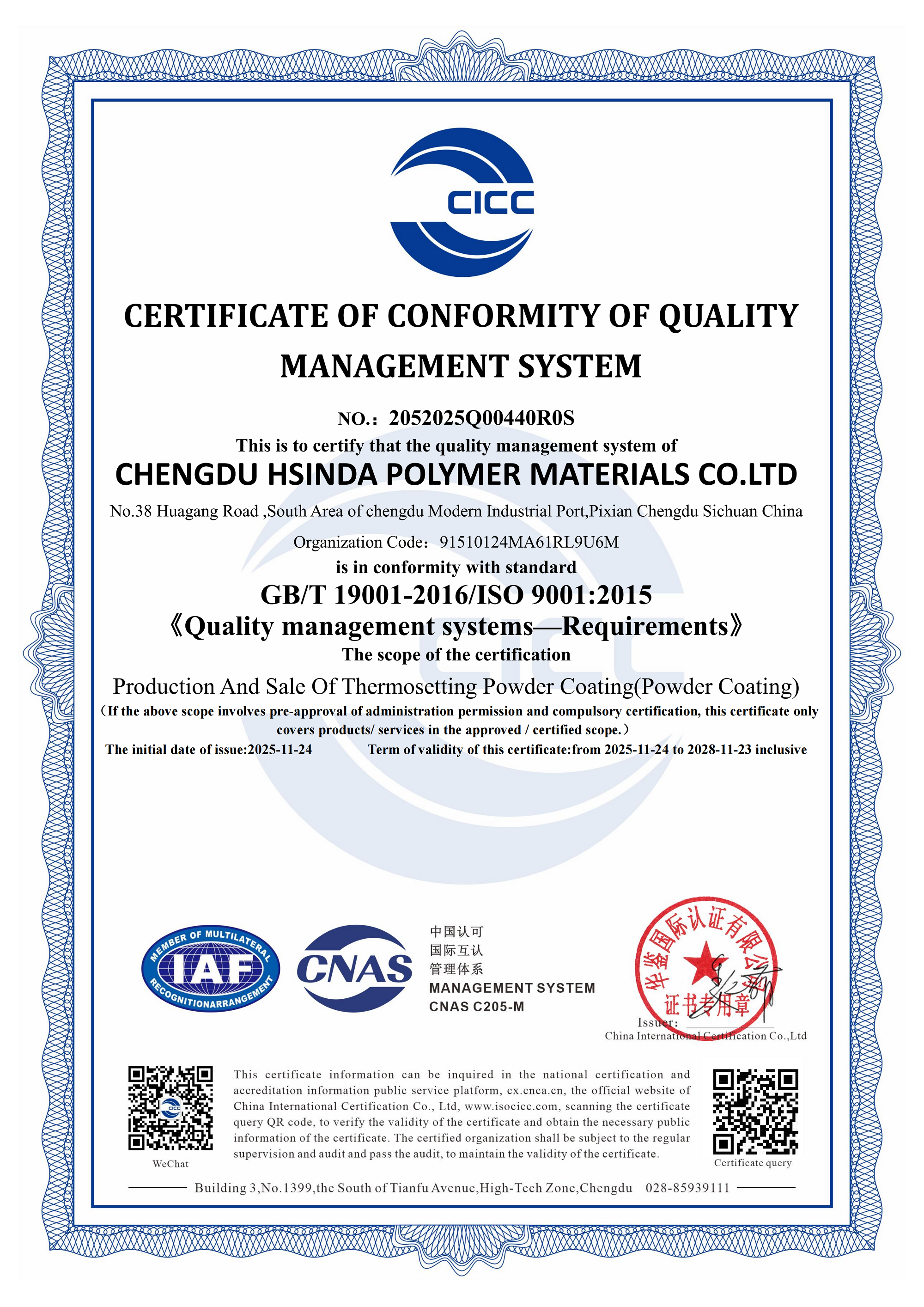
Reviewing these criteria will help you select a powder coating manufacturer that can deliver consistent color and performance for your specific application. If you are evaluating a new custom color project, the next step is simple: request samples and verify the supplier’s capability with a small order.
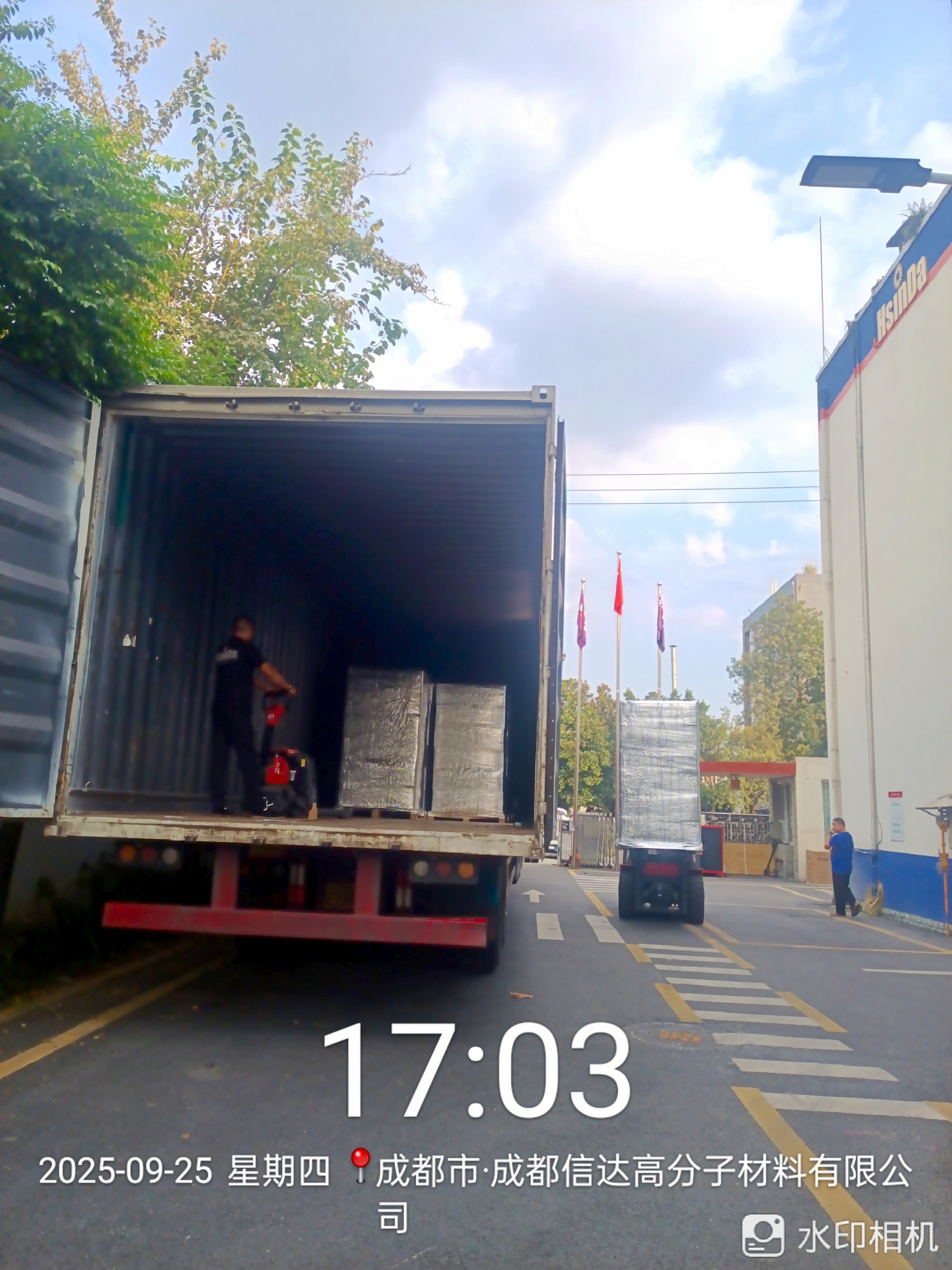
Next step: Download the Hsinda company brochure for production and product details. For a custom sample or quote, contact Jenny Qin at +86 188 8641 2845 or innocoat.jenny@hsindapowdercoating.com.
Have Questions or Need More Details?
Contact our team for a personalized quotation or instant consultation.
Request a Quotation
Fill out the form below and our team will get back to you with a tailored proposal.
WhatsApp Direct Chat
Prefer to chat in real-time? Message us on WhatsApp for instant assistance & quick answers.
- Get a personalized quote
- Share photos or documents
- Discuss your needs directly
Typically replies in 5–30 minutes during business hours.