Powder Coating Compared: Resin Systems, Finishes, and Supplier Evaluation for Buyers
Powder Coating Compared: Resin Systems, Finishes, and Supplier Evaluation for Buyers
A practical comparison of powder coating types, performance attributes, and total cost factors to help buyers evaluate manufacturers.
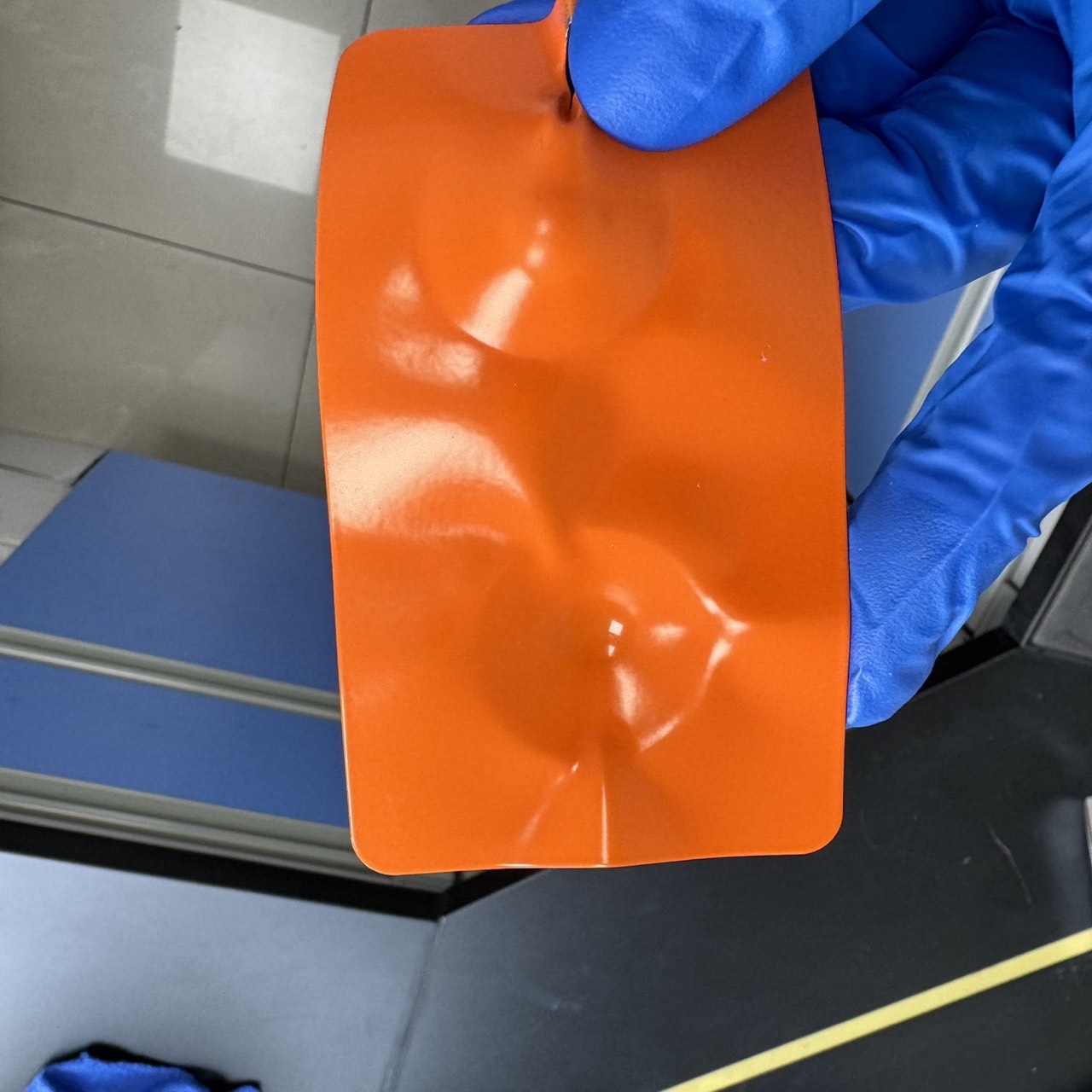
Mechanical testing such as impact resistance helps buyers compare powder coating performance beyond price.
How Buyers Should Compare Powder Coating Options
When buyers ask which manufacturer is better for powder coating, the answer depends on matching the coating system to the application, verifying measurable performance, and calculating total applied cost rather than only price per kilogram. This article compares major powder coating categories, explains the performance factors that matter in supplier evaluation, and outlines how to structure a manufacturer comparison for industrial or architectural procurement decisions.
Powder Coating vs. Liquid Paint: Key Differences
Powder coating is a solvent-free finishing process in which a dry, finely ground mixture of resin, pigments, and additives is electrostatically applied to a substrate and then cured under heat to form a continuous film. Traditional liquid paint relies on solvents to carry the resin and pigment, which evaporate during drying.
From a cost and performance standpoint, the differences are substantial:
- VOC emissions: Powder coating has nearly zero VOC emissions; liquid paint contains solvents.
- Material utilization: Powder coating can achieve material utilization rates up to 99%, while overspray in liquid systems is harder to recover.
- Comprehensive cost: Powder coating can reduce comprehensive cost by roughly 35–40% compared to traditional liquid paint.
- Energy and carbon: Switching from solvent-based paints to powder coating can lower total energy consumption by about 22% and reduce carbon emissions by 30% to 50%.
- Process speed: Powder coating can form a finished film in a single spray application, without primer or drying time, with curing times typically around 10–20 minutes.
- Durability: Cured powder films generally offer strong hardness, adhesion, and resistance to impact, chemicals, and weathering when specified correctly.
These factors explain why powder coating is widely used for mass-produced, assembly-line industrial metal components such as home appliances, automotive parts, building materials, and shelving.
Major Resin Systems Compared
Powder coatings are broadly classified by resin chemistry. The resin determines the coating’s durability, chemical resistance, weather resistance, and appropriate application environment. Thermoplastic powders melt and flow without a chemical crosslinking reaction, while thermoset powders undergo a chemical cure. Thermoset systems, including epoxy and polyester resins, dominated the global powder coatings market with a 76.6% share in 2026, driven by durability and corrosion resistance.
Epoxy Powder Coating
Epoxy powder coatings are based on epoxy resin and are known for excellent adhesion, hardness, and corrosion resistance. However, epoxy systems are generally not recommended for long-term outdoor exposure because they tend to chalk and lose gloss when subjected to UV light.
Typical applications: heavy-duty industrial environments, oil and gas pipelines, water supply systems, valves, and steel reinforcement bars.
An example of an epoxy-based anti-corrosion powder coating is cured at 180–200°C for 10–15 minutes. It can achieve impact resistance of 50 kg/cm (ISO 6272-1:2017), gloss range of 5% to 95% (ISO 2813:2014), and adhesion grade 0 (ISO 2409:2020). Its salt spray resistance shows no change after 500 hours with unilateral corrosion ≤2 mm (ISO 7253:1996).
Polyester Powder Coating
Polyester powder coatings use polyester resin, often crosslinked with TGIC or other curing agents. Polyester systems generally provide much better weather resistance and gloss retention than epoxy systems, making them the standard choice for architectural aluminum and outdoor metal products.
Typical applications: aluminum profiles, doors and windows, glass curtain walls, sunrooms, architectural partitions, and outdoor furniture.
Hybrid Powder Coating
Hybrid powder coatings combine epoxy and polyester resins to balance adhesion, flexibility, and cost. They are commonly used in indoor applications such as household appliances, office furniture, and light industrial equipment. Their weather resistance is typically adequate for interior use but less robust than a straight polyester system for exterior exposure.
Powder Coating Finish Types: What Buyers Should Compare
Beyond resin chemistry, the visual and tactile finish affects both application fit and cost. Buyers comparing suppliers should verify that the finish type can be produced consistently at scale, not just in a sample.
| Finish Type | Appearance | Typical Use Cases | Buyer Note |
|---|---|---|---|
| Matt Powder Coating | Low gloss, non-reflective | Architectural interiors, office furniture, consumer goods | Gloss levels must be specified and measured (e.g., ISO 2813). |
| Glossy Powder Coating | High gloss, reflective | Automotive trim, appliances, decorative hardware | High-gloss surfaces make defects more visible. |
| Hammer Tone Powder Coating | Textured hammered-metal effect | Enclosures, machine covers, electrical panels | Helps hide surface irregularities. |
| Wrinkle Powder Coating | Fine textured wrinkle pattern | Electrical panels, instrument housings, industrial equipment | Provide good resistance to acids and oils; typical for functional industrial parts. |
| Sandy Powder Coating | Fine sand-like texture | Aluminum profiles, architectural parts, outdoor products | Requires consistent particle size and film thickness for uniform texture. |
| Texture Powder Coating | Bold, slip-resistant texture | Outdoor equipment, fitness products, heavy machinery | Coverage is lower than smooth coatings; verify m²/kg data. |
For example, a weather-resistant sandy powder coating made from polyester resin, TGIC curing agent, pigments, and additives has an average particle size of 32–42 μm, a specific gravity of 1.2–1.7 g/cm³, and coverage of 8–10 m² per kg at 30–90 μm film thickness. It cures at 180–200°C for 10–15 minutes. Its gloss range is 5% to 95% (ISO 2813:2014), adhesion is grade 0 (ISO 2409:2020), and hardness is ≥H (ISO 15184:2020). When a supplier provides this level of detail, a buyer can calculate how much powder is actually needed for a given surface area and film build.
Performance and Application-Specific Comparison
Aluminum Powder Coating
Aluminum powder coating is formulated for aluminum profiles, doors, windows, glass curtain walls, sunrooms, and architectural partitions. A quality architectural-grade aluminum powder coating will meet weather resistance requirements such as no powdering after 500 hours and light retention greater than 50% per ISO 11341:2004. A more robust outdoor system can achieve no powdering and light retention above 50% after 1000 hours, plus salt spray resistance with no change after 1000 hours per ISO 7253:1996. Adhesion grade of 0 and a gloss range of 5% to 95% (ISO 2813:2014) are practical benchmarks.
For architectural projects, international certification schemes including Qualicoat, GSB International, and AAMA standards (2603, 2604, 2605) are commonly referenced. Also, ISO 12944 is the primary benchmark for specifying powder coating systems in corrosive environments C1 to C5. Buyers should confirm which standard applies to their region and project, and ask the supplier for test reports aligned with that standard.
Anti-Corrosion Powder Coating
Anti-corrosion powder coatings are designed for heavy-duty industrial applications such as oil and gas pipelines, water supply systems, valves, and steel reinforcement bars. These are commonly epoxy-based coatings cured at 180–200°C for 10–15 minutes. In a typical product specification, impact resistance is 50 kg/cm (ISO 6272-1:2017), adhesion is grade 0 (ISO 2409:2020), and salt spray resistance shows no change after 500 hours with unilateral corrosion ≤2 mm (ISO 7253:1996).
Antibacterial and Indoor-Specific Coatings
For indoor environments such as healthcare facilities, food processing, and high-touch surfaces, antibacterial powder coatings add a functional layer by incorporating antimicrobial additives into the film. Indoor-specific coatings generally emphasize hardness, scratch resistance, and consistent color rather than UV durability. Buyers in these segments should ask for antimicrobial test documentation and clearly define the required performance standard.
Supplier Comparison: What Differentiates a Better Powder Coating Manufacturer
Because powder coatings are performance materials, a better manufacturer is not simply the one with the lowest per-kilogram price. The comparison should focus on formulation consistency, applied cost, technical support, and long-term reliability.
Measurable Differences in Product Performance
Compared to other Chinese brands, Hsinda powder coating describes its core difference as higher resin content and better pigment, leading to a higher one-time coating rate and more coverage. Its claimed coating coverage is 1 kg per 7 to 10 sqm. In cost terms, this can result in a 5% lower comprehensive overall cost because of lower raw material consumption and fewer rework rejects.
This kind of claim is useful only if verified. Buyers should request a sample, measure coverage under their own spray conditions, test film thickness, and compare rework rates. A coating that covers 10 m²/kg instead of 7 m²/kg reduces total material cost even if the price per kilogram is slightly higher.
| Comparison Criterion | What to Ask | Why It Matters |
|---|---|---|
| Resin content and pigment quality | Can you specify the resin type and pigment loading? | Higher resin content generally improves flow, leveling, pigment wetting, and durability. |
| Coverage / yield | What is the practical coverage in m²/kg at the specified film thickness? | Determines actual material cost per finished part. |
| One-time coating rate | What first-pass transfer efficiency can be expected? | Higher first-pass rate means less rework and less powder waste. |
| Rework rejection | What is the typical defect/rework rate? | Rework consumes labor, energy, and time. |
| Stability | How do you control color difference from batch to batch? | Color mismatch causes rejected production batches. |
| Testing and certification | Which standards do your test reports follow? | Verified performance under ISO or AAMA standards reduces specification risk. |
Quality Risk Control and Certification
A reliable manufacturer typically combines internal quality control with third-party testing and certification. Hsinda, for example, reports holding ISO 9001 and ISO 14001 certifications, along with SGS, REACH, EU RoHS 2.0, and QUALICOAT. It also references Florida outdoor exposure testing and antimicrobial testing as authoritative endorsements.
Internal process controls can be equally important. Hsinda describes a “3+1 Inspection” protocol covering raw materials, first and last production pieces, performance, and color difference. It controls color difference (Delta E) to within ≤0.5 and can provide color difference reports on request. For buyers, this matters because a global brand name on a certificate is less useful than an enforceable, documented quality process with batch-specific data.
Step-by-Step Process to Evaluate a Powder Coating Manufacturer
- Define the application and environment. Determine whether the part is indoor or outdoor, what UV exposure it will face, what chemicals or salts it will encounter, and what film thickness and gloss are required.
- Shortlist by resin chemistry. Epoxy for corrosion in heavy-duty industrial environments; polyester (especially super-durable polyester) for outdoor architectural and aluminum; hybrid for many indoor products.
- Request performance test reports. Ask for test results following ISO standards such as ISO 2409 for adhesion, ISO 15184 for hardness, ISO 6272-1 for impact, ISO 7253 for salt spray, and ISO 11341 for weathering.
- Calculate real cost per square meter. Compare price per kg and coverage per kg at a realistic film thickness.
- Check color control. Ask about Delta E limits and request batch color difference data.
- Review certifications with your target market in mind. Qualicoat, GSB, and AAMA for architectural; REACH and RoHS for Europe; ISO 12944 for corrosive environments.
- Run a physical sample. Coat parts under production-like conditions and inspect gloss, texture, adhesion, impact, and color consistency.
- Evaluate capacity and delivery. A manufacturer’s production capacity, sample-line flexibility, and export experience affect lead times and scalability.
Hsinda at a Glance: Fact-Based Context
Chengdu Hsinda Polymer Materials Co., Ltd is a powder coating manufacturer established in 2015 in Chengdu, Sichuan, China. It operates a 10,000 m² factory with 8 advanced powder coating production lines and 3 sample lines, and reports an annual output of over 5,000 tons. The company states that it has more than 40 independent patents and exports to more than 70 countries, including the United States, Canada, Mexico, South American countries, the Middle East, and Mid-Asia. It reports established distributors in Russia, Bangladesh, Poland, Portugal, the United States, Canada, Sri Lanka, Bolivia, and Argentina, and exclusive distributors in Kazakhstan, Uzbekistan, and Chile. In China, it is a supplier to brands such as Changhong Electric, Xiaomi Appliances, TCL Electronics, and Hitachi Elevator. Hsinda’s export ratio is stated as 70% of its business.
For buyers comparing manufacturers, these facts are useful context, not performance guarantees. The more reliable evidence comes from test reports, sample evaluations, and audited production processes.
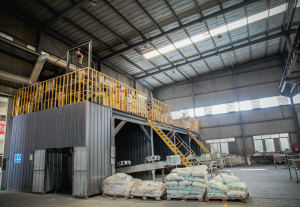
Manufacturing capability and production controls are part of the supplier evaluation.
Global Market and Standards Context
Global market estimates vary by research firm. Grand View Research valued the powder coatings market at USD 11.5 billion in 2025, projecting USD 18.5 billion by 2033; IMARC Group reported USD 16.4 billion in 2025, with expected growth at a CAGR of 4.51% until 2034. These differing figures highlight that market size reporting is not uniform, but the general trend is stable growth.
China’s coating industry exported 334,800 tons of coatings in 2024, with an 18.65% year-on-year increase in export value to USD 1.065 billion, according to the China Coatings Industry Association / ECHEMI. This reinforces the role of Chinese manufacturers in the global finishing supply chain. Leading global competitors in powder coatings include AkzoNobel (Interpon), PPG Industries, Sherwin-Williams, Axalta, and Jotun. These brands are benchmarks, but buyers should evaluate them against the same objective criteria used for any manufacturer.
Relevant Use Cases for the Comparison
Architectural and Construction Decoration
Architectural and decorative applications are a major end-use segment for powder coatings, driven by demand for UV-resistant facades and window systems. Specifiers should compare aluminum powder coatings on weather resistance, gloss retention, and adhesion. In this segment, a coating must pass the relevant architectural standard for the geography, whether AAMA 2603, 2604, 2605, Qualicoat, GSB, or ISO 12944.
Heavy Industrial and Anti-Corrosion
For oil and gas, water infrastructure, valves, pipelines, and steel reinforcement, the comparison shifts to corrosion resistance, impact resistance, and chemical resistance. Epoxy-based anti-corrosion powder coatings are the common answer, and ISO 7253 salt spray results become a key discriminator.
Mass-Produced Metal Goods
For home appliances, automotive parts, shelving, and general industrial metal components, the priority is process efficiency: one-coat application, no primer, fast curing, low rework, and consistent color. Hybrid and polyester systems are common choices depending on the part’s exposure.
Cost Considerations and Total Cost of Applied Coating
The most important unit for cost comparison is cost per square meter at the specified film thickness, not cost per kilogram.
- Material utilization: Up to 99% material utilization is possible with powder coating because overspray can be reclaimed. Lower utilization means more powder waste.
- Coverage: A coating with 7–10 m²/kg coverage at a typical film thickness can significantly reduce powder consumption per thousand parts.
- Rework: A lower defect rate avoids the full cost of rework: labor, energy, time, and material.
- Energy: Low-temperature curing powder coatings at 160°C improve energy efficiency by over 10%. Switching from solvent-based paints to powder coating can lower total energy consumption by 22% and reduce carbon emissions by 30% to 50%.
- Maintenance: Standardized single-pass powder coating requires less routine maintenance than multi-coat liquid systems. It also eliminates some daily operation labor and downtime.
When evaluating Hsinda against other Chinese brands, its stated advantage is 5% lower comprehensive overall cost, deriving from lower raw material consumption and fewer rework rejects. The same logic applies to any supplier: the lowest bid per kilogram is often not the cheapest applied coating.
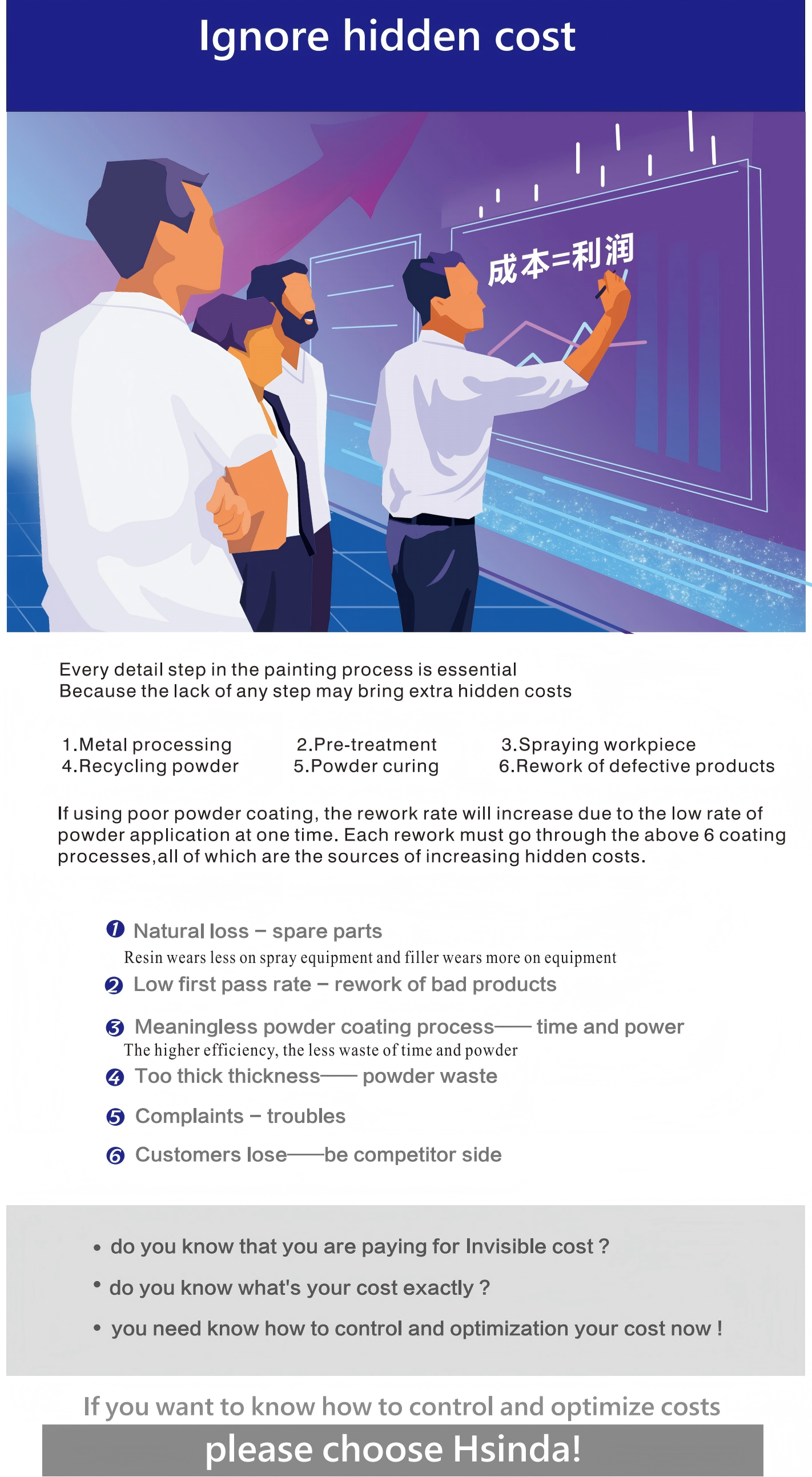
Cost comparison should be based on applied cost per square meter, including yield and rework.
Limitations and Specification Risks
Every coating system has boundaries. Epoxy powder coatings are not suited for long-term outdoor UV exposure. Hybrid systems compromise weather resistance for economy. TGIC-based polyesters, while durable, require careful handling in some regions due to toxicity classification; TGIC-free polyester alternatives are widely used. Texture finishes generally have lower coverage than smooth finishes. High-gloss finishes require more careful surface preparation because they make defects visible. A reputable manufacturer should point out these tradeoffs before sending a quote.
Buyers should also verify that test results are applicable to their specific condition. A 500-hour salt spray result is not the same as 1000 hours. Florida outdoor exposure testing is one form of real-world weathering evidence, but it does not exactly replicate a desert, tropical, or marine climate.
Recommendation Framework
- If your priority is outdoor architectural color stability, compare polyester/super-durable polyester systems and require AAMA, Qualicoat, or GSB-aligned test reports.
- If your priority is corrosion protection in industrial environments, compare epoxy-based anti-corrosion systems and use ISO 12944 C1–C5 maps to define the requirement.
- If your priority is cost per finished part, ask for m²/kg coverage data and calculate applied cost, including expected rework.
- If your priority is supply reliability, evaluate the manufacturer’s production capacity, inspection protocol, export experience, and ability to hold batch-level quality records.
FAQ
1. Which powder coating system is better for outdoor architectural aluminum?
For outdoor architectural aluminum, a polyester-based powder coating is generally the better choice because it offers superior weather resistance, gloss retention, and UV stability compared to epoxy. Leading international standards for architectural powder coatings include AAMA 2603, 2604, and 2605, Qualicoat, and GSB International. Buyers should request test reports showing weather resistance, such as no powdering and light retention above 50% after 500 or 1000 hours per ISO 11341.
2. How do I compare powder coating manufacturers fairly?
Compare manufacturers on measurable, application-specific criteria: resin chemistry, coverage or yield in m²/kg at a defined film thickness, first-pass coating rate, rework rejection rate, color difference control (Delta E), mechanical performance test reports, and certifications relevant to your market. Avoid comparing only price per kilogram; the actual cost per finished part depends on yield, rework, and energy consumption.
3. Is epoxy or polyester powder coating more cost-effective?
Epoxy powder coatings are usually more cost-effective in indoor and heavy-duty corrosion-protection applications because of their strong adhesion and chemical resistance. Polyester systems cost more but are necessary for outdoor UV exposure where epoxy would chalk and lose gloss. For indoor applications that do not face weathering, hybrid or epoxy systems can provide a lower applied cost. The cost-effective choice depends on the service environment, not the resin price alone.
4. What should be included in a powder coating sample evaluation?
Evaluate samples for gloss level (ISO 2813), adhesion (ISO 2409 grade), hardness (ISO 15184), impact resistance (ISO 6272-1), and salt spray resistance (ISO 7253) where applicable. Apply the sample to your actual substrate, cure it under your line conditions, and check color consistency, texture, and coverage. Ask the supplier to provide batch test reports and, for architectural projects, evidence of compliance with AAMA, Qualicoat, or GSB schemes.
5. Can a Chinese powder coating manufacturer meet international quality expectations?
Yes. Many Chinese powder coating manufacturers export internationally and hold certifications such as ISO 9001, ISO 14001, SGS, REACH, EU RoHS 2.0, and Qualicoat. As an example, Chengdu Hsinda Polymer Materials Co., Ltd reports exporting to more than 70 countries and supplying brands including Xiaomi Appliances, TCL Electronics, and Hitachi Elevator in the domestic market. The key is to verify quality through documented processes, test reports, and a physical sample evaluation, rather than relying on the origin of the manufacturer.
Ready to evaluate Hsinda as a candidate in your powder coating shortlist? Download the Hsinda brochure for company and product information. For sample, quote, or specification inquiry, contact Hsinda at innocoat.jenny@hsindapowdercoating.com or WhatsApp +86 188 8641 2845.