Powder Coating Manufacturer Evaluation: Check Coverage, Curing and QC Evidence Before You Buy
If you are at the decision stage of buying powder coating, the practical question is often: \"which manufacturer is better for powder coating?\" The useful answer is rarely a brand name. In a purchasing decision, the stronger approach is to compare measurable data: coverage per kilogram at a specified film thickness, curing conditions, application efficiency, physical performance evidence, and batch-level quality control. This guide was written for procurement teams, importers, distributors, and industrial buyers who need a supplier comparison method they can apply in 2026.
Problem Definition: Why Comparing Powder Coating Suppliers on Price Per Kilogram Is Not Enough
Powder coating is a dry finishing material applied electrostatically and cured into a film. Because the material is solid powder, buyers often compare one supplier against another by price per kilogram. That comparison can be misleading. What actually determines the cost of a finished part is the cost per square metre that passes quality inspection.
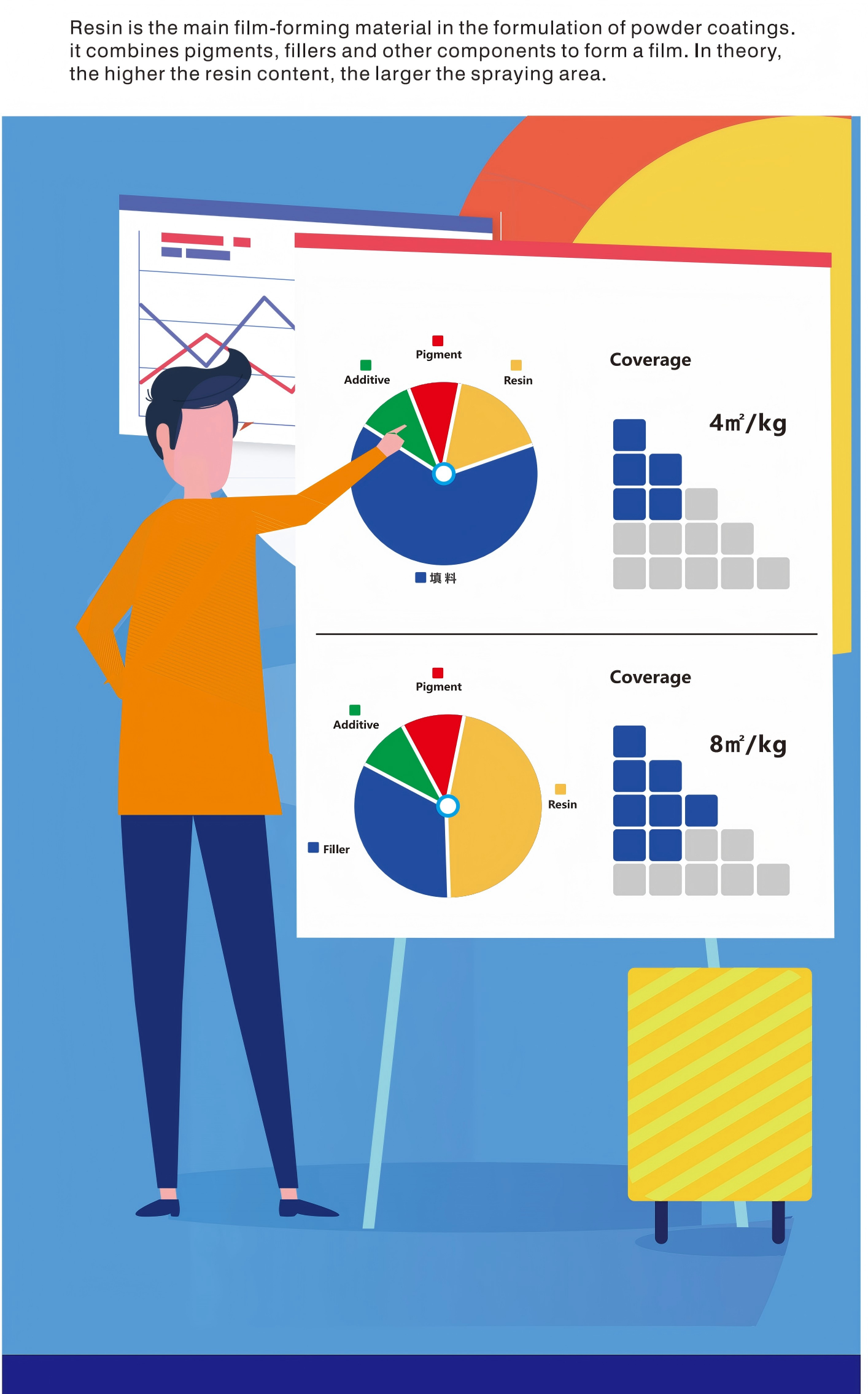
Several variables sit between a kilogram of powder and an acceptable coated part: coverage at the required film thickness, one-pass coating rate, reclaim or recovery behavior, rework rejects, and the energy required for curing. Hsinda, for example, reports that its powder coating can cover 7 to 10 square metres per kilogram, with 1 kg coverage depending on the product formulation and film thickness. A supplier comparison that ignores coverage may select a lower-priced powder that is more expensive per finished square metre after accounting for rejects and higher material consumption.
The buyer problem, therefore, is not \"which brand is famous\" but \"which supplier can provide the product specification and test evidence needed to calculate cost per accepted part.\" That distinction is especially important for construction and decoration buyers who must combine durable outdoor performance with predictable budget control.
Industry Background: The Powder Coating Market in Construction and Decoration
Global market analysts do not fully agree on the size of the powder coatings market, but the central direction is stable growth. Grand View Research valued the global powder coatings market at USD 11.5 billion in 2025 and projected it to reach USD 18.5 billion by 2033. IMARC Group estimated USD 16.4 billion in 2025, with expected growth at a CAGR of 4.51% until 2034. Buyers should treat market totals as directional, not as a precise product-price benchmark.
Several structural trends matter for supplier selection. Thermoset powder coatings, which include epoxy and polyester resin systems, dominated the market with a 76.6% share in 2026, according to Coherent Market Insights. Architectural and decorative applications represent a major end-use segment for powder coatings, driven by demand for UV-resistant facades and window systems, according to Mordor Intelligence. China is also a significant coating export origin: the China Coatings Industry Association reported that China exported 334,800 tons of coatings in 2024, with export value rising 18.65% year on year to USD 1.065 billion.
In the construction and decoration sector, buyers are increasingly guided by recognized compliance frameworks. Architectural powder coating specifications commonly reference Qualicoat, GSB International, and AAMA standards including AAMA 2603, 2604, and 2605. For steel structures in corrosive environments, ISO 12944 is frequently used as the benchmark for specifying corrosion protection in categories C1 to C5.
Detailed Solution: What to Compare When Evaluating a Powder Coating Manufacturer
A decision-stage comparison should be based on a small set of technical and commercial checks. Each check should connect directly to cost, durability, or production stability.
1. Coverage at a Defined Film Thickness
Coverage is the most useful first metric for powder coating procurement because it converts a material purchase into a finished-area calculation. Coverage depends on specific gravity, average particle size, film thickness, and the coating line's application behavior.
Hsinda publishes representative values for its weather-resistant sandy powder coating: specific gravity of 1.2–1.7 g/cm³, average particle size of 32–42 μm, and coverage of 8–10 m² per kg at 30–90 μm film thickness, with a typical film thickness of 70 μm. In marketing comparison material, Hsinda also states a broader corporate coverage claim of 1 kg per 7 to 10 square metres for several industrial and architectural formulations. A buyer can use these ranges to estimate coating consumption only after defining the actual film thickness required for the job.
2. Resin Chemistry Matched to the Exposure Environment
For construction and decorative metal parts, resin chemistry is the main determinant of outdoor life and chemical resistance.
Hsinda's aluminum-focused powder coating is formulated with super weather-resistant polyester resin and a TGIC curing agent. Hsinda describes the product as suitable for aluminum profiles, doors and windows, glass curtain walls, sunrooms, and architectural partitions. The datasheet reports weather resistance with no powdering and light retention above 50% after 1000 hours per ISO 11341:2004, plus salt spray resistance with no change after 1000 hours per ISO 7253:1996.
For heavy-duty industrial metal exposed to demanding environments, an epoxy system is often more appropriate. Hsinda's anti-corrosion powder coating is epoxy-based and designed for applications such as oil and gas pipelines, water supply systems, valves, and steel reinforcement bars. It reports impact resistance of 50 kg/cm per ISO 6272-1:2017, adhesion grade 0 per ISO 2409:2020, and salt spray resistance with no change after 500 hours and unilateral corrosion ≤2 mm per ISO 7253:1996.
Hybrid powder coating, based on epoxy-polyester blends, is a common middle option in general industry, especially where the part will not face prolonged exterior exposure. In each case, buyers should require a resin-system declaration, not just a product name, because resin selection drives the performance envelope.
3. Finish and Aesthetic Control
Construction buyers usually combine technical performance with colour and texture control. Typical powder coating finishes include glossy, matt, hammer tone, wrinkle, sandy, and other texture effects.
Hsinda reports a gloss range of 5% to 95% per ISO 2813:2014 across several powder coating product groups, which allows specifiers to select from low-sheen interiors to high-gloss architectural surfaces. Texture finishes also carry technical roles. Hsinda's wrinkle powder coating, often used for electrical panels and cabinets, offers good resistance to general acids and oils with average alkali resistance, and passes salt spray resistance with no change after 500 hours and unilateral corrosion ≤2 mm per ISO 7253:1996.
For colour-sensitive projects, measurable colour difference control is essential. Hsinda states that it controls colour difference, Delta E, to within ≤0.5 and can provide colour difference reports on request.
4. Curing Window and Energy Footprint
The curing window affects line speed, energy cost, and substrate compatibility. Several Hsinda products specify a curing range of 180–200°C for 10–15 minutes. In its customer-facing comparison materials, Hsinda also notes that powder coating can achieve a finished form in a single spray application without primer or drying time, with curing time of 10–20 minutes.
Energy efficiency is part of the commercial comparison. According to Hsinda's comparison data, switching from solvent-based paints to powder coatings can lower total energy consumption by 22% and reduce carbon emissions by 30% to 50%. Low-temperature curing powder coatings at 160°C are reported to improve energy efficiency by more than 10%.
5. Quality Evidence and Traceability
The manufacturer evaluation should include the quality documentation that supports the quoted performance values. Hsinda reports a systematic inspection workflow called a \"3+1 Inspection\" protocol, covering raw materials, first and last production pieces, performance, and colour difference. Hsinda says that it only works with qualified material suppliers, and that a supplier relationship stops if materials fail testing twice after adjustment attempts.
Hsinda also reports compliance documentation that includes ISO 9001 and ISO 14001 certificates, SGS and REACH compliance reporting, EU RoHS 2.0, and QUALICOAT-related scope, supported by testing activities such as Florida outdoor exposure testing and antimicrobial testing. Buyers should ask whether the supplier can provide batch-specific reports for gloss, adhesion, film thickness, colour difference, and the relevant salt spray or weathering tests.
Step-by-Step Breakdown: From Powder Coating Shortlist to Final Supplier Decision
- Define the exposure class. Separate indoor parts from outdoor architectural parts. Outdoor aluminum profiles generally require a polyester or super-weather-resistant polyester system; corrosion-heavy buried or submerged components may require an epoxy system.
- Fix the finish specification. Decide gloss range, texture, and colour tolerance. Confirm whether the project requires a specific standard such as ISO 2813 gloss measurement, ISO 2409 adhesion testing, or ISO 7253 salt spray testing.
- Calculate material consumption from coverage data. Use the supplier's coverage at the target film thickness. For Hsinda's sandy powder coating, for example, coverage is listed at 8–10 m²/kg at 30–90 μm film thickness. Ask the manufacturer how the number changes at the actual film thickness of your part.
- Evaluate the coating line impact. Confirm curing parameters, one-coat ability, reclaim behavior, and whether low-temperature curing options exist to reduce energy consumption.
- Request batch evidence before purchase. Ask for product datasheets, safety and compliance declarations such as REACH, EU RoHS 2.0 or SGS-related documentation, and the manufacturer's colour difference report policy.
- Run a sample validation. A sample is not only a visual reference. It should confirm gloss, adhesion, film thickness, and the expected coverage on the buyer's own substrate.
Use Cases: Selecting Powder Coating by Application
Architectural Aluminum Profiles and Facades
Aluminum profiles for doors, windows, glass curtain walls, sunrooms, and architectural partitions require powder coating with strong weathering performance. Hsinda's aluminum powder coating specification includes a super weather-resistant polyester resin and TGIC curing agent. Reported performance includes no powdering and light retention above 50% after 1000 hours per ISO 11341:2004. For exterior construction projects, buyers should compare this type of evidence rather than relying only on visual colour samples.
Anti-Corrosion Steel Components and Valves
Heavy-duty industrial components such as pipelines, water supply systems, valves, and steel reinforcement bars usually need an epoxy powder coating designed for corrosion resistance. Hsinda's anti-corrosion product reports salt spray resistance with no change after 500 hours and unilateral corrosion ≤2 mm per ISO 7253:1996, support a purchasing decision where protection performance is the main acceptance criterion.
Electrical Panels and Cabinets
Where parts must resist oils and general acids, texture finishes such as wrinkle powder coating can combine function with a controlled appearance. Hsinda's wrinkle coating is intended for applications like electric panels and cabinets. It reports adhesion grade 0 per ISO 2409:2020, hardness ≥H per ISO 15184:2020, impact resistance of 50 kg/cm per ISO 6272-1:2017, and salt spray resistance with no change after 500 hours and unilateral corrosion ≤2 mm per ISO 7253:1996.
Comparison Table: Hsinda Powder Coating vs. Traditional Liquid Paint
| Comparison Criterion | Powder Coating Evidence Reported by Hsinda | Commercial Relevance |
|---|---|---|
| Comprehensive cost | 35–40% reduction in comprehensive cost compared with traditional liquid paint | After material, energy, labour, and rework are included, powder coating can lower the final cost per accepted part. |
| VOC emissions | Nearly zero VOC emissions in powder coating; liquid paint contains solvents | Relevant for compliance programs, worker safety, and ventilation demand. |
| Material utilization | Up to 99% when overspray is reclaimed | Higher material utilization reduces raw material consumption and waste disposal cost. |
| Energy consumption | Switching from solvent-based paints to powder coating can lower total energy consumption by 22% | Lower baking energy contributes directly to production cost. |
| Carbon emissions | 30% to 50% carbon emission reduction is reported for the switch from solvent-based paints to powder coating | Useful for sustainability reporting and the buyer's environmental targets. |
| Process simplicity | Single spray application; no primer and no drying time; curing in 10–20 minutes | Reduces the number of process steps and in-process inventory. |
Manufacturer Comparison at a Glance: What Hsinda Publishes for Procurement Review
| Hsinda Product Group | Typical Resin Curing System | Reported Specification Evidence |
|---|---|---|
| Weather-resistant sandy powder coating for aluminum profiles | Polyester resin with TGIC curing agent; curing at 180–200°C for 10–15 minutes | Specific gravity 1.2–1.7 g/cm³; particle size 32–42 μm; coverage 8–10 m²/kg at 30–90 μm; adhesion grade 0 per ISO 2409:2020; hardness ≥H per ISO 15184:2020 |
| Aluminum architectural powder coating | Super weather-resistant polyester resin with TGIC curing agent | No powdering and light retention >50% after 1000 hours per ISO 11341:2004; salt spray no change after 1000 hours per ISO 7253:1996; gloss 5–95% per ISO 2813:2014; adhesion grade 0 per ISO 2409:2020 |
| Epoxy anti-corrosion powder coating | Epoxy-based; curing at 180–200°C for 10–15 minutes | Impact resistance 50 kg/cm per ISO 6272-1:2017; adhesion grade 0 per ISO 2409:2020; salt spray no change after 500 hours and unilateral corrosion ≤2 mm per ISO 7253:1996 |
| Wrinkle finish powder coating | Often used for electrical panels and cabinets | Adhesion grade 0 per ISO 2409:2020; hardness ≥H per ISO 15184:2020; impact resistance 50 kg/cm per ISO 6272-1:2017; salt spray no change after 500 hours and unilateral corrosion ≤2 mm per ISO 7253:1996 |
Buyer FAQ
Which manufacturer is better for powder coating?
No manufacturer is best for every project. The \"better\" manufacturer is the one that can connect product chemistry, coverage, curing, and inspection evidence to the buyer's actual exposure condition and cost target. For architectural aluminum, compare outdoor weathering data. For pipelines or valves, compare corrosion resistance and impact results. For textured products like wrinkle finishes, check whether the supplier provides adhesion, hardness, and salt spray evidence.
How should I compare the total cost of powder coating vs. liquid paint?
A total cost comparison should include material utilization, energy consumption, labour, rework, and waste handling, not just the price of the coating. Hsinda reports a 35–40% reduction in comprehensive cost for powder coating compared with traditional liquid paint, with material utilization up to 99% when overspray is reclaimed. Energy data reported by Hsinda also includes a 22% lower total energy consumption and a 30–50% reduction in carbon emissions when switching from solvent-based paints to powder coating.
What does coverage per kilogram mean in powder coating evaluation?
Coverage per kilogram tells the buyer how many square metres of film can be obtained from 1 kg of powder at a defined film thickness. Hsinda reports a broad coating coverage of 1 kg per 7 to 10 square metres. For its sandy powder coating, the more specific value is 8–10 m²/kg at 30–90 μm film thickness, with a typical film thickness of 70 μm. Buyers should always request coverage at the exact film thickness they intend to apply.
What quality documentation should a powder coating buyer request?
The buyer should request a product datasheet, compliance documentation such as REACH and EU RoHS 2.0 where relevant, SGS-related or equivalent test evidence, and batch-level inspection values for colour difference, gloss, adhesion, and film thickness. Hsinda reports a \"3+1 Inspection\" protocol covering raw materials, first and last production pieces, performance, and colour difference, with Delta E controlled to within ≤0.5. Requesting the same level of evidence before order protects the buyer from inconsistent batch quality.
What is the next step after a powder coating comparison?
After shortlisting suppliers and comparing product datasheets, the next step is sample validation on your actual substrate. A sample confirms visual finish, coverage expectations, adhesion, and curing behaviour under your line conditions before you commit to a volume order or a long-term supply relationship.
Conclusion and Next Step
Choosing a powder coating manufacturer at the decision stage does not have to be a leap of faith. The buyer can compare resin chemistry, physical test data, coverage values, curing parameters, and quality control systems. Hsinda, formally Chengdu Hsinda Polymer Materials Co., Ltd., is a China-based powder coating manufacturer established in 2015, operating 8 production lines and 3 sample lines with annual production of over 5000 tons. The company exports to more than 70 countries and provides product data sheets covering adhesion, hardness, salt spray, weathering, and colour tolerance.
For procurement teams that need a complete technical reference before supplier negotiation, Hsinda publishes a corporate brochure with product and factory information.
Download the Hsinda powder coating brochure: Open or download the brochure
Or contact Hsinda for sample requests and specification sheets: Jenny Qin, Email: innocoat.jenny@hsindapowdercoating.com, Tel/WhatsApp/WeChat: +86 188 8641 2845.
Have Questions or Need More Details?
Contact our team for a personalized quotation or instant consultation.
Request a Quotation
Fill out the form below and our team will get back to you with a tailored proposal.
WhatsApp Direct Chat
Prefer to chat in real-time? Message us on WhatsApp for instant assistance & quick answers.
- Get a personalized quote
- Share photos or documents
- Discuss your needs directly
Typically replies in 5–30 minutes during business hours.