Powder Coating Selection Parameters: Film Thickness, Particle Size & Curing Schedules
Powder Coating Selection Parameters: Film Thickness, Particle Size & Curing Schedules
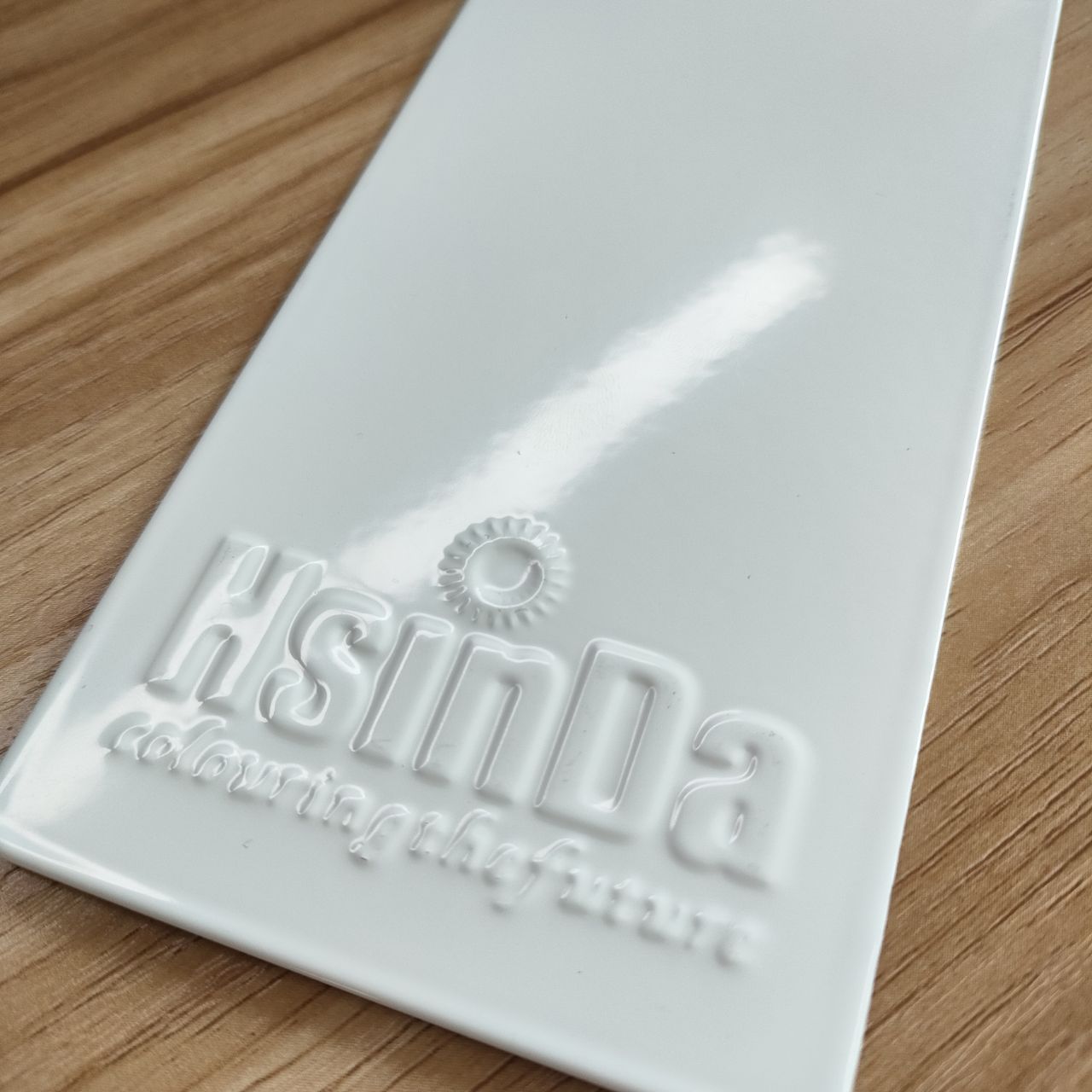
The short answer: for Hsinda thermoset powder coatings, the four parameters that decide whether a product fits your line and your specification are average particle size (32-42 μm), film thickness (70 μm nominal, with coverage quoted across a 30-90 μm window), coverage (8-10 m²/kg at 30-90 μm film thickness) and curing (180-200 °C for 10-15 minutes). Two supporting values complete the set: specific gravity of 1.2-1.7 g/cm³, and impact resistance of 50 kg/cm tested to ISO 6272-1:2017. The aluminum profile grade is specified differently, with impact resistance expressed as 2.5 Nm and salt spray resistance verified after 1000 hours under ISO 7253:1996.
Read together, those numbers describe one system: a powder that flows correctly through the gun, builds a film of the right weight, and cross-links fully inside the time and temperature your oven can deliver. Read separately, or copied from a data sheet onto a purchase order without matching your equipment, they are the most common reason a coating that passed a laboratory test underperforms in production.
This guide is written for buyers in the research and evaluation stage: importers, distributors, brand owners, specifiers and coating line engineers who need to compare powder coating offers on technical grounds rather than on price per kilogram alone. Chengdu Hsinda Polymer Materials Co., Ltd. (Hsinda) is a thermoset powder coating manufacturer founded in 2015, operating a 10,000 m² plant in Pixian, Chengdu, Sichuan, China, with eight production lines, three sample lines and annual output of more than 5,000 tons.
Problem Definition: Why Parameter Mismatch Causes Most Coating Failures
Most coating complaints are not caused by bad powder. They are caused by a mismatch between a published parameter and the conditions of the line that applied it. Four mismatches account for the majority of issues buyers raise during supplier evaluation.
1. Coverage priced without reference to film thickness. A quotation in price per kilogram is only comparable when both suppliers quote coverage at the same film thickness. Hsinda data sheets state coverage of 8-10 m²/kg at 30-90 μm film thickness; at a heavier film build, the same kilogram covers less area. Two suppliers quoting the same unit price can therefore deliver very different cost per square meter.
2. Curing schedules copied without checking the oven. The specified curing window is 180-200 °C for 10-15 minutes. If the oven cannot hold that window, or if the part's metal temperature lags behind the oven air temperature, the film will not reach the same degree of cross-linking as the sample that was tested.
3. Particle size and gun type treated as interchangeable. Hsinda powder coatings are specified for application with a Tribo gun or an electrostatic spray gun. Particle size distribution and charging behaviour interact with the gun, so a powder tuned for one method may not transfer as efficiently on the other.
4. Certifications requested by name without checking scope. A certificate is only meaningful when the standard, the certificate number, the issuing body, the covered product and the covered market all match the requirement. Hsinda documented compliance includes ISO 9001, ISO 14001, RoHS, REACH, FDA, ISCC PLUS and a product carbon footprint certificate, each with its own scope and validity period.
Decision rule: performance results such as impact (ISO 6272-1:2017), bending (ISO 1519:2002), cupping (ISO 1520:2006) and adhesion (ISO 2409:2020) are reported for a defined film thickness and defined curing condition. Treat them as reference points for comparing suppliers, not as a guarantee that your line will reproduce them without matching those conditions.
Industry Background: Why Parameter Discipline Is Now a Procurement Issue
Powder coating is a mature category, but its procurement logic has changed. Third-party market reporting places the global powder coatings market at USD 11.5 billion in 2025, projected to reach USD 18.5 billion by 2033 (Grand View Research), while IMARC Group estimates USD 16.4 billion in 2025 with growth of 4.51% CAGR to 2034. The two estimates differ, which is itself a useful reminder for buyers: market figures vary by methodology and belong in context, not in contract terms.
Two structural facts matter more to a specification. First, thermoset powder coatings, the epoxy and polyester resin systems, held a 76.6% market share in 2026 according to Coherent Market Insights, driven by durability and corrosion resistance. Second, architectural and decorative applications remain a major end-use segment, driven by demand for UV-resistant facades and window systems (Mordor Intelligence). In practice this means the parameters in this guide are not niche: they are the same parameters that govern aluminum profiles, curtain walls, railings, electrical enclosures and appliances.
On the standards side, architectural powder coatings are governed by international certification schemes including Qualicoat, GSB International and the AAMA standards 2603, 2604 and 2605, while ISO 12944 remains the primary benchmark for specifying powder coating systems for steel structures in corrosive environments across categories C1 to C5. These frameworks define what has to be verified, which is why a supplier's data sheet, test reports and certificates should always be read together.
Supply is equally relevant. China's coating industry exported 334,800 tons of coatings in 2024, with export value up 18.65% year on year to USD 1.065 billion (China Coatings Industry Association / ECHEMI). For overseas buyers this means more offers to compare and a greater need for parameter-level evaluation. Hsinda's own profile illustrates the supply model buyers typically assess: the company exports around 70% of its output to more than 70 countries, including the USA, Canada, Mexico, South America, the Middle East and Central Asia, works with established distributors in Russia, Bangladesh, Poland, Portugal, the United States, Canada, Sri Lanka, Bolivia and Argentina, and holds exclusive distributorships in Kazakhstan, Uzbekistan and Chile.
Detailed Solution: The Parameters That Decide Fit
Parameter 1 - Average Particle Size: 32-42 μm
Average particle size for Hsinda powder coatings is 32-42 μm. This is the parameter that most directly affects how the powder behaves before it becomes a film: fluidisation in the hopper, charging in the gun, transfer efficiency onto the part, and the evenness of the deposited layer.
Particle size is also where finish selection and application equipment meet. The Hsinda range covers smooth, sandblasted (sandy), wrinkled, hammered, watermarked, cracked and stone-like textures, as well as metallic and pearlescent effects, chameleon-like, photochromic and thermochromic finishes, electroplating effect, reflective and luminescent finishes. Texture is not only a visual choice; it changes how the powder must be applied and how the film covers substrate defects.
What to confirm with a supplier: that the quoted particle size range refers to the grade you are buying, that the recommended application method is stated (Hsinda specifies a Tribo gun or an electrostatic spray gun), and whether the finish you selected carries a different recommended film build.
Parameter 2 - Film Thickness: 70 μm Nominal, 30-90 μm Coverage Window
Hsinda technical data sheets specify a nominal film thickness of 70 μm, with coverage published across a 30-90 μm film-thickness range. Film thickness is the parameter that links appearance, protection and cost.
- Appearance: gloss and texture are evaluated on a cured film, so the same powder applied at different film builds will not look identical.
- Protection: the corrosion and humidity results in the data sheets, including 1000 hours of salt spray for the aluminum profile grade and 500 hours for standard grades, are reported for a defined film.
- Consumption: coverage falls as target thickness rises, so film thickness is the variable that determines how many kilograms a project actually needs.
Decision rule: write the target film thickness into the purchase specification before comparing prices, and require every supplier to quote coverage at that thickness rather than across a range.
Parameter 3 - Curing Schedule: 180-200 °C for 10-15 Minutes
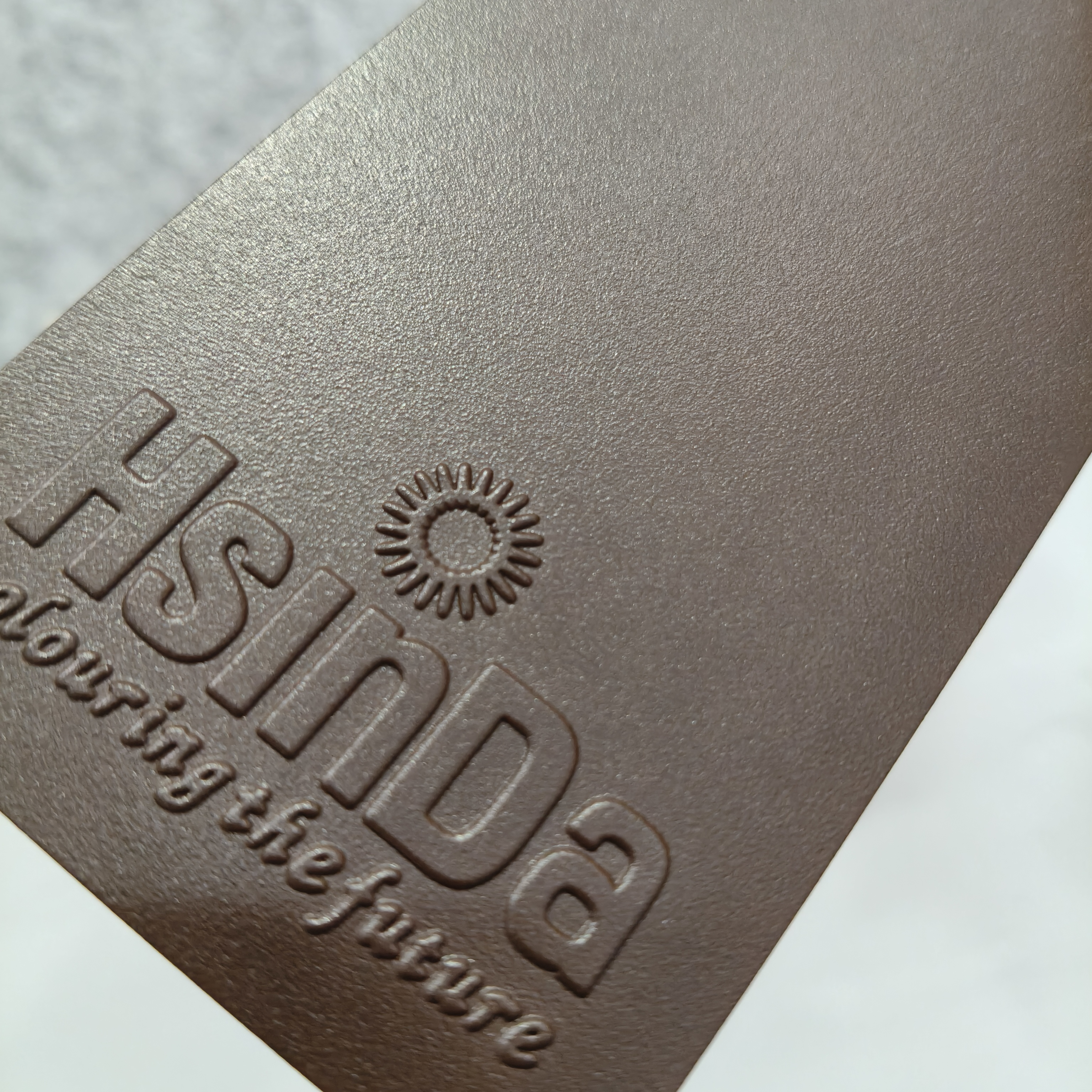
The specified curing schedule for Hsinda powder coatings is 180-200 °C for 10-15 minutes. Curing converts the deposited powder layer into a cross-linked film, and it is the parameter buyers most often verify only on paper.
Three points belong in the evaluation:
- Confirm what the temperature refers to. A curing schedule is only reproducible when both parties agree whether 180-200 °C is measured as oven air temperature or as substrate metal temperature. Metal temperature is the figure that determines cross-linking on a heavy or thermally slow part.
- Check the real capability of your line. Oven recovery time, part mass, line speed and load density all affect whether a part actually spends 10-15 minutes inside the window.
- Ask about low-temperature options if the line is limited. The Hsinda range includes low-temperature curing powder coatings and HAA-cured polyester systems alongside standard TGIC-cured polyester, which gives buyers a route when oven capacity is the constraint.
Parameter 4 - Specific Gravity: 1.2-1.7 g/cm³
Specific gravity for Hsinda powder coatings is 1.2-1.7 g/cm³. It is the quiet parameter in the set: buyers rarely ask about it, yet it drives how far a kilogram of powder goes and how the film behaves during application.
Specific gravity and film thickness together determine theoretical coverage. That is why a quoted coverage figure of 8-10 m²/kg at 30-90 μm only becomes a purchasing tool when it is read next to density and target thickness. When comparing two suppliers, ask each of them for three numbers in the same unit system: specific gravity, target film thickness and coverage. If any one of the three is missing, the comparison is not yet valid.
Higher-density formulations generally contain more pigment and filler to achieve opacity and coverage, while lower-density formulations sit at the lighter end of the range. Neither end is automatically better. The correct choice depends on the substrate, the required opacity and the application method.
Parameter 5 - Verified Performance Data: What the Test Standards Measure
Mechanical and durability parameters are the evidence layer of a powder coating specification. The table below reproduces values published on Hsinda technical data sheets, with the standard each result is tested to. Where the aluminum profile grade differs, both values are shown.
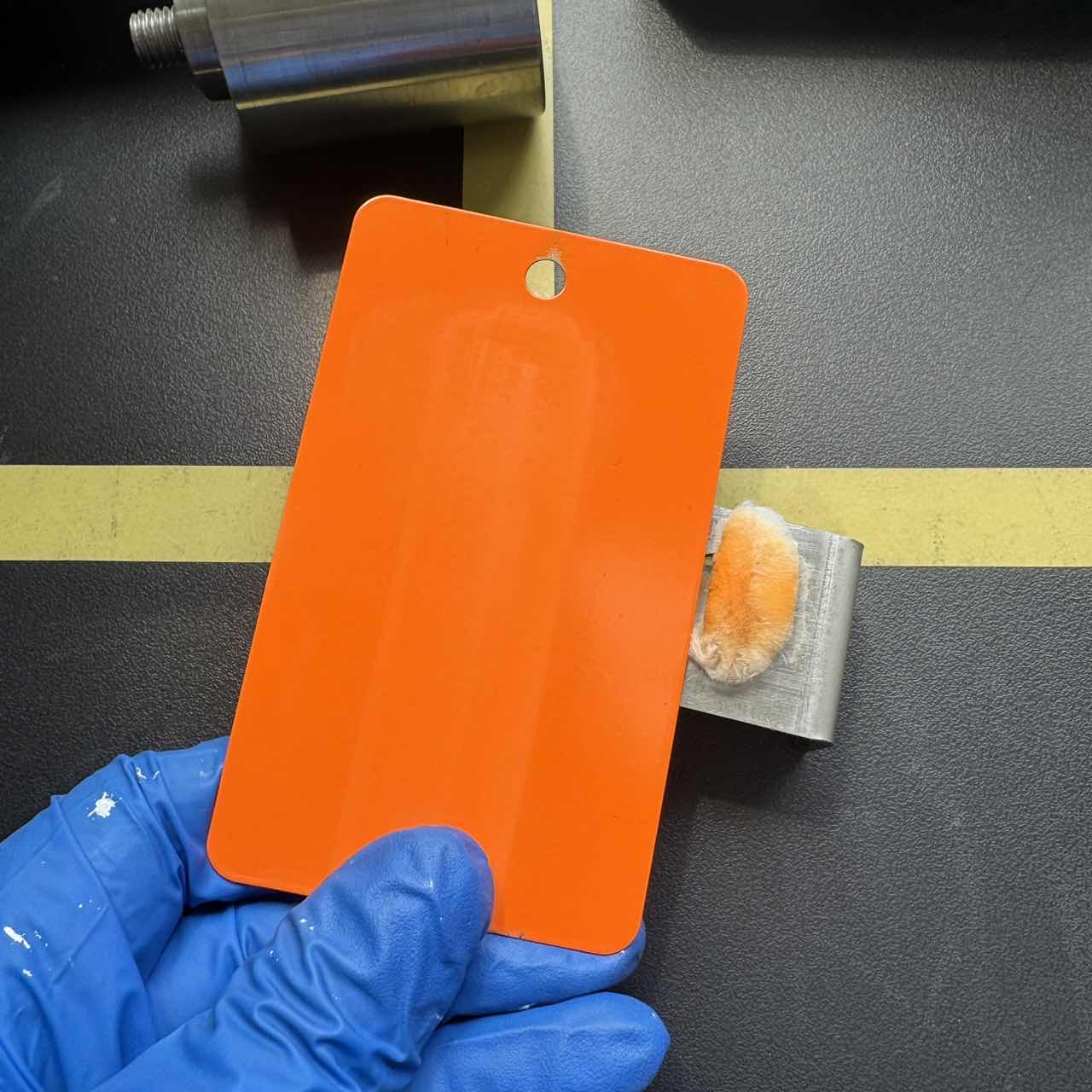
| Parameter | Published value | Test standard | What it tells the buyer |
|---|---|---|---|
| Gloss (60°) | 5%-95% across the range; matt grades 5%-30% | ISO 2813:2014 | Whether the finish matches the visual brief. Gloss categories are high gloss (above 80%), semi-gloss (40-79%) and matt (5-39%) |
| Impact | 50 kg/cm; aluminum profile grade 2.5 Nm | ISO 6272-1:2017 | Resistance to mechanical damage in handling, transport and service |
| Bending | ≤2 mm; aluminum profile grade ≤5 mm | ISO 1519:2002 | Flexibility of the cured film on formed or bent parts |
| Cupping | ≥6 mm; aluminum profile grade ≥5 mm | ISO 1520:2006 | Film deformation behaviour under forming |
| Adhesion | Grade 0 | ISO 2409:2020 | Bond between film and substrate after correct pre-treatment and cure |
| Hardness | ≥H | ISO 15184:2020 | Surface resistance to scratching |
| Salt spray resistance | 1000 hours, film unchanged with ≤2 mm cross-section corrosion (aluminum grade); 500 hours for standard grades | ISO 7253:1996 | Corrosion protection in coastal, industrial and humid environments |
| Humidity and heat resistance | 1000 hours, slight gloss loss, ≤ level 1 | GB/T 1740-2007 | Stability in hot and humid service conditions |
| Weather resistance | 1000 hours, no powdering, gloss retention above 50% (aluminum grade); 500 hours for standard grades | ISO 11341:2004 | Outdoor colour and gloss retention |
| Natural ageing (aluminum grade) | 1 year in Florida, gloss retention above 50% | Exposure test | Real-exposure reference for architectural applications |
| Chemical resistance | Good resistance to general acids and oils; average alkali resistance | Data sheet | Cleaning and industrial exposure assumptions |
The Upstream Parameter: Choosing the Resin System First
Film thickness, particle size and curing only make sense after the resin system is fixed, because the resin determines the environment the coating can survive. The matrix below summarises the families in the Hsinda range and where each belongs.
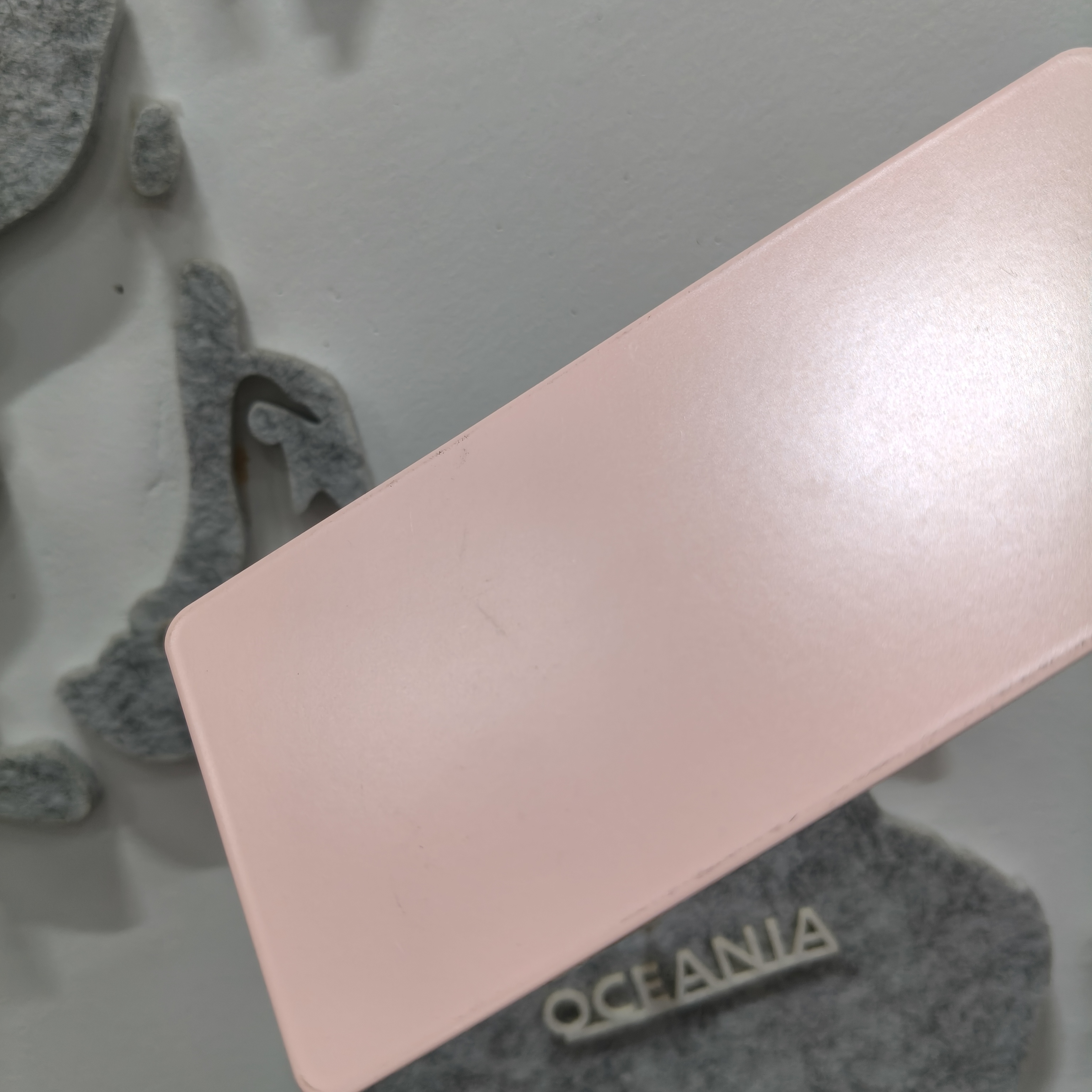
| Resin family | Material | Environment fit | Typical applications |
|---|---|---|---|
| Pure epoxy | Epoxy resin with TGIC curing agent | Indoor, anti-corrosion, chemical and electrical resistance | Oil and gas pipelines, water supply systems, valves, steel reinforcement bars; EV batteries, motors, busbars, transformers, switchgear; appliance casings and cookware |
| Epoxy-polyester hybrid | Epoxy resin and polyester resin with TGIC curing agent | Indoor, decorative, VOC-free finishing | Appliance housings and internal parts, office and residential furniture, filing cabinets, lockers, automotive interior and chassis parts, instrument housings |
| Polyester (TGIC-cured) | Polyester resin with TGIC curing agent | Outdoor weathering, architectural and general industrial | Aluminum doors and windows, curtain walls, railings, outdoor furniture, highway guardrails, street light poles, wheels, shelving, agricultural machinery |
| Polyester, TGIC-free (HAA-cured) | Polyester resin with HAA curing agent | Indoor, VOC-free, REACH-certified | Appliance housings and internal structural components, office and residential furniture, automotive interior and chassis parts, instrumentation and electronic equipment |
| Super-durable polyester (aluminum profile grade) | Super weather-resistant polyester resin with TGIC curing agent | Architectural outdoor exposure, Qualicoat and AAMA-type specification | Aluminum profiles, doors and windows, glass curtain walls, sunrooms, architectural partitions, transport and municipal structures |
Step-by-Step Breakdown: Specifying Powder Coating Parameters
The following sequence is the one to follow when moving from research to evaluation. Each step produces a document you can compare between suppliers.
- Define the substrate and the environment. Aluminum, steel or another metal; indoor or outdoor; coastal, industrial or inland humidity; operating temperature range. The Hsinda cylinder application, for example, runs indoors across a -40 °C to 60 °C range in an LNG system.
- Select the resin family. Use the matrix above. Epoxy for indoor corrosion and chemical resistance, hybrid for indoor decorative work, polyester for outdoor weathering, TGIC-free HAA polyester where VOC-free and REACH documentation are required, and super-durable polyester for architectural aluminum.
- Fix the finish. Choose the surface effect, smooth, sandy, wrinkled, hammered, cracked, stone-like, metallic, pearlescent or one of the special-effect finishes, and confirm the corresponding gloss level on the 60° scale.
- Set the target film thickness. Use 70 μm nominal as the reference point and confirm the working range for your substrate and finish. This number drives both performance verification and consumption.
- Confirm coverage at that thickness. Ask for coverage in m²/kg at your target thickness together with specific gravity (1.2-1.7 g/cm³). This converts a price per kilogram into a cost per square meter.
- Match the curing schedule to your oven. Compare the 180-200 °C and 10-15 minute window against your oven profile and part mass, and agree whether the reference is oven temperature or metal temperature.
- Match particle size and finish to your gun. Confirm the powder is specified for your application method, Tribo gun or electrostatic spray gun, and that the selected finish is compatible with it.
- Request the evidence pack. Technical data sheet, test reports with standard numbers, and certificates with certificate numbers, issuing bodies, scope and validity dates.
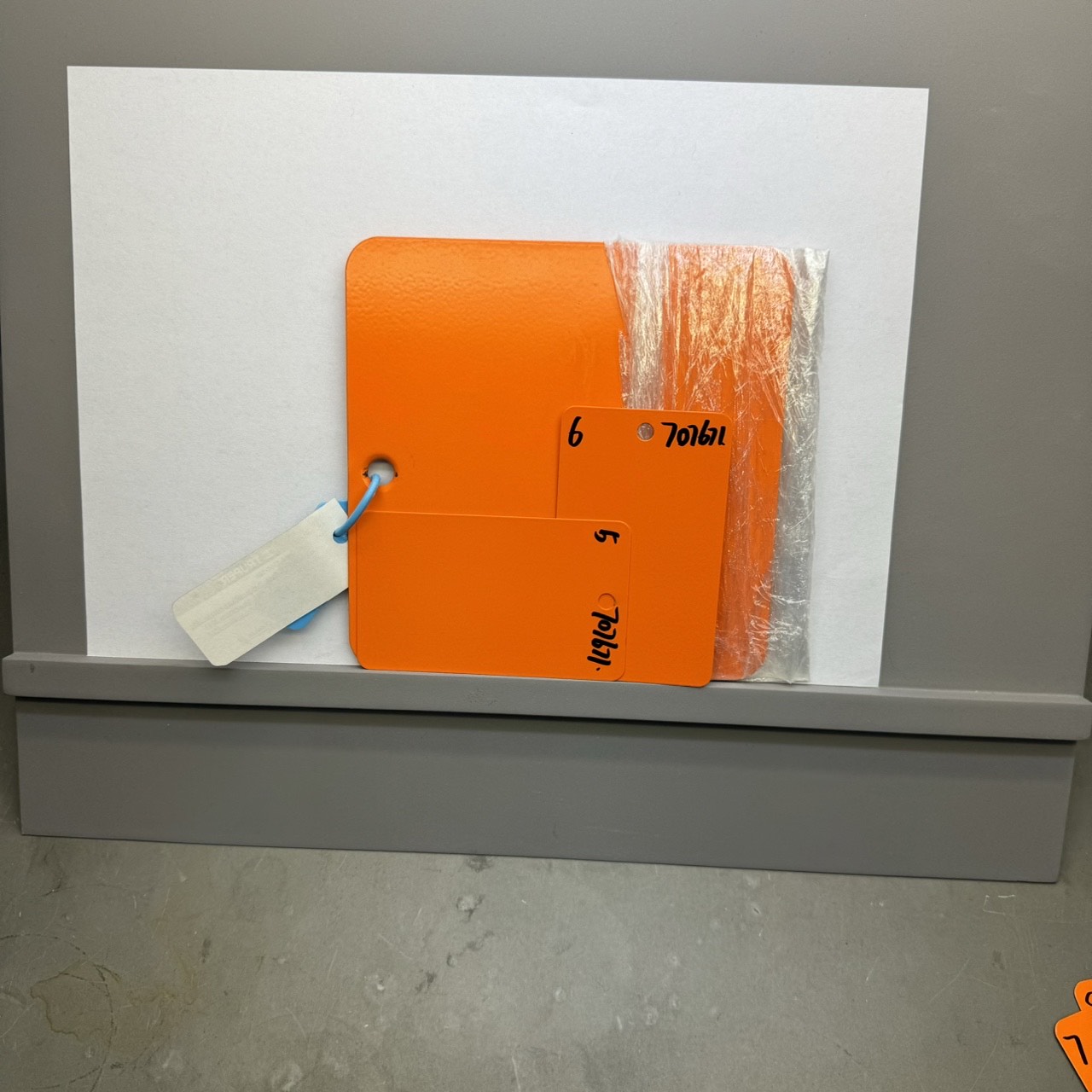
- Validate with a sample before committing. Use sample panels or a trial run to confirm colour match, film thickness, texture and cure on your own line.
Use Cases: How Parameter Sets Are Applied
Cylinder and LNG system components (China)
A cylinder application for an LNG system, running indoors across a -40 °C to 60 °C range with 24/7 automatic operation and an electrostatic powder coating system, is specified for long-lasting protection against moisture, acids and alkalis, with salt spray resistance beyond 500 hours, impact and scratch resistance, and anti-rust durability. Service life expectations for outdoor-facing parts in this family are stated as over 10 years without fading or chalking.
Home appliance and air conditioner outdoor units (China)
Appliance applications combine two requirements that pull in different directions: appearance and corrosion resistance. The published specification for this segment covers 500+ hours salt spray resistance and strong weather resistance for outdoor units, and where required, antibacterial powder coating tested to ISO 22196:2011, with report number ASH25-0055689-02 issued by SGS. The working conditions quoted for these applications range from -30 °C to 45 °C.
Electrical enclosures (Mexico, Paraguay, Sri Lanka, Russia, China)
A long-running electrical enclosure programme covering roughly 40 tons over a 10-year relationship specifies coating that is corrosion resistant, insulating or static conductive, and aesthetically consistent. Wrinkle and TGIC-free systems are used across this application family.
Hardware tools (Mexico, United States)
A tool manufacturer running approximately 1000 tons of coating over a five-year relationship specifies powder coating for rust prevention and durability on parts used in outdoor excavation and gardening, including wrenches, post hole diggers, wheelbarrows and shovels. The evaluation criteria are rust resistance, abrasion resistance and suitability for harsh outdoor working conditions.
Industrial shelving and storage systems (Colombia)
A 100-ton programme supplying industrial shelving, mezzanines and display furniture across Colombia uses an epoxy-polyester electrostatic powder coating process, selected for zero-VOC emissions, impact resistance and colour flexibility across the RAL chart at varying gloss levels. The customer's stated priorities are long lifetime, colour range and scratch resistance.
Frequently Asked Questions
Which certifications should a powder coating supplier provide for the EU market, and how do I verify them?
Start by asking which standard applies to the product in front of you, then verify the certificate itself. For powder coatings supplied as an industrial material, European market documentation is normally built on REACH and RoHS evidence rather than on a CE mark, so confirm with your own compliance team which framework applies to your finished article. Hsinda's documented certificates, each with its own scope and market, include: REACH for TGIC Free Powder Coating under EU REACH Regulation (EC) No 1907/2006, certificate number CKGIN25000923901 issued by SGS (EU and global); RoHS tested to the IEC 62321 series, certificate number CKGEC25000071901 issued by SGS (EU and global, applicable to Matt Powder Coating); FDA certification under US FDA 21 CFR 175.300, certificate number TSNPC25004542302 issued by SGS (global, applicable to metal and epoxy powder coating); ISO 9001:2015 for production and sale of thermosetting powder coating, certificate number 2052025Q00440R0S; ISO 14001:2015, certificate number 2052025E00271R3S; ISCC PLUS under EN 15343, certificate number ISCC-PLUS-Cert-CN198-41261025 issued by CTI Certification Co., Ltd. for polyester powder coating, valid to 25 June 2027; a product carbon footprint certificate under ISO 14067:2018 and PAS 2050:2011, certificate number TZJ136660053R0S issued by Huaqixin Certification Service (Chengdu) Co., Ltd.; and an antibacterial performance test report under ISO 22196:2011, number ASH25-0055689-02 issued by SGS. Verify by matching the certificate number with the issuing body, and confirm the scope covers the product and the market you are buying for.
Can particle size, film thickness and curing schedule be adjusted for my coating line?
They are specified as ranges precisely because lines differ. Average particle size is quoted at 32-42 μm; film thickness is published at a 70 μm nominal with coverage stated across a 30-90 μm window; curing is specified at 180-200 °C for 10-15 minutes. The practical route is to define your own line conditions, including oven profile, line speed, gun type and part mass, then confirm which grade and finish match them. Where oven capability is the constraint, the Hsinda range includes low-temperature curing products and HAA-cured TGIC-free polyester systems. Customisation extends to colour (RAL and Pantone), gloss classified by 60° meter values as high gloss above 80%, semi-gloss 40-79% and matt 5-39%, surface effect, and functional properties such as weather resistance, corrosion resistance, antibacterial, anti-slip, anti-fingerprint, fire resistance, scratch resistance and low-temperature curing.
How do these parameters affect cost per square meter?
Coverage, not price per kilogram, is the cost driver. Hsinda data sheets quote 8-10 m²/kg at 30-90 μm film thickness with specific gravity of 1.2-1.7 g/cm³. If a project runs a heavier film than the reference point, more kilograms are consumed per square meter. The productive comparison is therefore three numbers from each supplier, specific gravity, target film thickness and coverage at that thickness, applied to your project area. On the delivery side, standard orders carry a minimum order quantity of 300 kg with a lead time of 15-20 days, while OEM packaging, logo and sample-card programmes carry a 6-ton MOQ and a 20-day lead time.
Can I test a powder coating before placing a bulk order?
Yes. Hsinda runs three dedicated sample lines, offers sample-card OEM programmes, and supports colour matching against a customer's physical sample as well as against RAL and Pantone references. A trial should confirm four things on your own equipment: colour and gloss match, achieved film thickness, texture or surface effect, and complete cure inside your oven window.
What are the minimum order quantity and lead time?
Standard production orders carry a 300 kg MOQ with a 15-20 day lead time, supported by a monthly capacity of 400 tons and 100% testing of output. OEM programmes, including carton box OEM, powder coating sample card OEM and logo OEM, are quoted at a 6-ton MOQ with a 20-day lead time. After-sales support includes 24-hour online service, local distributor support and technical assistance.
Conclusion: Treat the Parameters as One Specification
A powder coating specification is not a list of unrelated numbers. Particle size of 32-42 μm determines how the powder reaches the part, a 70 μm nominal film thickness determines how much protection and coverage you buy, specific gravity of 1.2-1.7 g/cm³ determines what that film costs, the 180-200 °C and 10-15 minute curing schedule determines whether the film performs as tested, and the reported results under ISO 6272-1:2017, ISO 1519:2002, ISO 1520:2006, ISO 2409:2020 and ISO 7253:1996 show what the finished system can be expected to withstand.
For buyers in the research and evaluation stage, the practical outcome is a short list of questions: which resin family fits the environment, what film thickness is my target, what coverage is quoted at that thickness, which curing window matches my oven, and which test reports and certificates support the claim. Answer those five questions for every supplier you shortlist, and the comparison becomes technical rather than commercial guesswork.
Next Step: Validate the Parameters on Your Own Line
Send your substrate, target film thickness, finish and oven profile, and Hsinda will confirm the matching resin system, particle size range, coverage and curing window, then supply a sample for trial. Contact Jenny Qin - Tel / WhatsApp / WeChat: +86 188 8641 2845, email: innocoat.jenny@hsindapowdercoating.com, or visit www.hsinda.com. The full product and certification brochure is available here: Hsinda Powder Coating Catalogue (PDF).