Powder Coating Type and Supplier Evaluation for Construction Buyers: Resins, Finishes, and Verified Performance
Powder Coating Type and Supplier Evaluation for Construction Buyers: Resins, Finishes, and Verified Performance
Choosing a powder coating often starts with a simple question: which formula will protect a metal surface and look right for years? The answer depends less on brand preference and more on three factors: the resin chemistry, the required surface finish, and the supplier's ability to verify performance with test data and certifications. For construction and decoration buyers, the evaluation becomes more specific because architectural aluminum, steel railings, curtain wall profiles, and industrial equipment each impose different exposure and compliance requirements.
Hsinda, a powder coating manufacturer based in Chengdu, China, supplies a broad range of thermoset powder coatings for global industrial and architectural applications. Buyers evaluating powder coating types and suppliers should first understand the material system, then match the formulation to the project, and finally confirm that the manufacturer can support custom colors, OEM/ODM, and documented compliance.
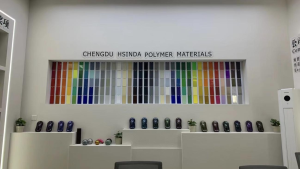
Hsinda powder coating sample room supports RAL and Pantone color matching evaluation.
Problem Definition: Why the Wrong Powder Coating Type Creates Long-Term Risk
A powder coating is not a single product. It is a formulated solid coating that fuses and cures into a protective film under heat. The main variables are the resin system, the curing agent, the pigment, and the additives. Each variable changes how the coating behaves outdoors, indoors, in humid or corrosive environments, and under mechanical stress.
Common failure patterns include premature gloss loss on exterior aluminum profiles, chalking after extended UV exposure, poor adhesion on galvanized steel, or insufficient salt spray resistance on metal parts used near coastal or industrial atmospheres. If a buyer selects a gloss polyester for an indoor appliance housing when a wrinkle or sand texture is needed for scratch hiding, or if an epoxy-only system is placed outdoors without a weather-resistant top layer, the result may be field failure, high rework cost, or compliance rejection.
The evaluation question is therefore not only which brand is best, but which powder coating type and manufacturing partner best fit the intended substrate, location, and durability requirement.
Industry Background: Market Dynamics and the Shift Toward Thermoset Powder Coatings
The global powder coatings market was valued at USD 11.5 billion in 2025 and is projected to reach USD 18.5 billion by 2033, according to Grand View Research. A separate estimate from IMARC Group placed the market size at USD 16.4 billion in 2025. Both figures indicate a growing replacement of liquid coatings in architectural and industrial finishing. China's coating industry exported 334,800 tons of coatings in 2024, representing an 18.65% year-on-year increase in value to USD 1.065 billion, as reported by the China Coatings Industry Association and ECHEMI.
Thermoset powder coatings, including epoxy and polyester resins, dominated the market with a 76.6% share in 2026 due to durability and corrosion resistance, according to Coherent Market Insights. Architectural and decorative applications represent a major end-use segment for powder coatings, driven by demand for UV-resistant facades and window systems, as noted by Mordor Intelligence. International certification schemes such as Qualicoat, GSB International, and AAMA standards (2603, 2604, 2605) are commonly used to specify architectural powder coatings.
Leading global competitors in the powder coatings sector include AkzoNobel (Interpon), PPG Industries, Sherwin-Williams, Axalta, and Jotun. These companies operate at large scale and provide extensive product portfolios. For a construction or decoration buyer, however, working with a focused manufacturer such as Hsinda can be practical when the priority is custom color matching, smaller MOQ flexibility, technical support, and verified performance data for specific projects.
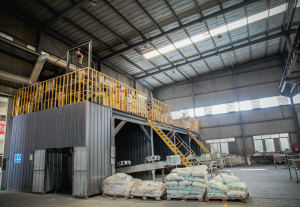
Hsinda operates multiple powder coating production lines with 100% product testing.
Detailed Solution: Hsinda Powder Coating Types, Parameters, and Compliance
Hsinda, founded in 2015, operates a 10,000 square meter factory with 8 advanced powder coating production lines and 3 sample lines. Annual output exceeds 5,000 tons, and the company holds more than 40 independent patents. Its factory is certified to ISO 9001 and ISO 14001. Powder coatings have passed RoHS, REACH, SGS, and AAMA tests. Hsinda exports to more than 70 countries, with established distributors in Russia, Bangladesh, Poland, Portugal, United States, Canada, Sri Lanka, Bolivia, Argentina, Kazakhstan, Uzbekistan, and Chile. The main export markets include USA, Canada, Mexico, South America, Middle-East, and Mid-Asia.
The product range includes multiple thermoset powder coating families. Below are the major types relevant to construction and decoration buyers, with verified parameters taken from Hsinda product specifications.
Epoxy Powder Coating and Anti-Corrosion Formulas
Epoxy powder coating is made of epoxy resin, TGIC curing agent, pigment, and additives. It is intended for heavy-duty industrial anti-corrosion applications, including oil and gas pipelines, water supply systems, valves, and steel reinforcement bars. The product provides long-lasting protection against moisture, acids, alkalis, and corrosion, with salt spray test resistance over 500 hours per ISO 7253:1996. Hardness is at least H per ISO 15184:2020, adhesion is grade 0 per ISO 2409:2020, and curing is conducted at 180-200°C for 10-15 minutes.
For indoor or submerged applications where UV stability is not the main requirement, epoxy powder coating offers excellent chemical resistance and mechanical protection. It is not recommended for direct long-term outdoor exposure because epoxy resins can chalk under UV radiation.
Polyester Powder Coating and Weather-Resistant Systems
Polyester powder coating is formulated with polyester resin, TGIC curing agent, pigment, and additives. It is used for outdoor facilities such as aluminum alloy doors and windows, curtain walls, railings, outdoor furniture, highway guardrails, and street light poles. The product functions to provide weather resistance with outdoor service life over 10 years. In accelerated weathering, the coating shows no powdering and light retention rate >50% after 500 hours under ISO 11341:2004 for standard polyester systems. For aluminum powder coating, weather resistance is tested after 1000 hours under ISO 11341:2004, and a natural aging test in Florida for 1 year maintains gloss retention >50%.
Aluminum powder coating, specifically designed for architectural aluminum profiles, uses a super weather-resistant polyester resin system. Its salt spray resistance is 1000 hours per ISO 7253:1996 with no change and unilateral corrosion at the cross section ≤2 mm. This makes it suitable for curtain walls, sunrooms, doors, and windows.
Epoxy Polyester Hybrid Powder Coating
Epoxy polyester hybrid powder coating balances the chemical resistance of epoxy and the flexibility of polyester. It is designed for home appliances, instrumentation, electronic equipment, automobiles and components, office and residential furniture, and similar indoor or moderate-exposure uses. The product provides long-lasting protection against moisture, acids, alkalis, and corrosion, with salt spray test resistance over 500 hours. It also supports low-temperature curing and VOC-free requirements in some formulations.
Glossy, Matt, and Specialty Finish Powder Coatings
Glossy powder coating is a polyester-based system with a gloss range of 5% to 95% per ISO 2813:2014. It provides superior gloss and color retention, with the same mechanical and weather resistance profile as standard polyester powder coatings. It is commonly used for home appliances, metal furniture, and architectural profiles where a bright, clean appearance is desired.
Matt powder coating offers a gloss range of 5% to 30% and is available in pure epoxy, polyester, or epoxy polyester hybrid chemistries. The lower gloss helps hide surface scratches and fingerprints, making it suitable for electronic devices, lighting equipment, appliance housings, and interior architectural components.
Hammer tone powder coating creates a hammered metal appearance and is used for hardware tools, security doors, filing cabinets, furniture, radiators, lighting fixtures, and aluminum profiles. Wrinkle powder coating produces a fine textured film that hides casting defects and provides excellent scratch resistance for distribution boxes, electrical cabinets, machine tools, and tool housings. Sandy powder coating provides a fine textured, matte surface with high hardness and weather resistance, used for aluminum profiles, building materials, IT equipment, and home furnishings.
Metallic powder coating, including bonded systems, gives a metallic or pearlescent effect for car wheels, body trim, architectural decorative profiles, consumer electronics, and high-end furniture. TGIC-free powder coating uses an HAA polyester system and is suitable for buyers requiring REACH compliance and low-VOC coatings for home appliances, office furniture, and automotive interior trim.
Antibacterial Powder Coating
Hsinda offers antibacterial powder coating with an SGS test report under ISO 22196:2011. The certificate number is ASH25-0055689-02, issued on 2025-07-22. This coating is applicable to products such as metallic, matt, epoxy polyester hybrid, anti-corrosion, sandy, wrinkle, polyester, hammer tone, glossy, aluminum, and TGIC-free powder coatings. It adds an antibacterial performance function for surfaces that require hygiene control, such as handles, medical equipment, and public facility hardware.
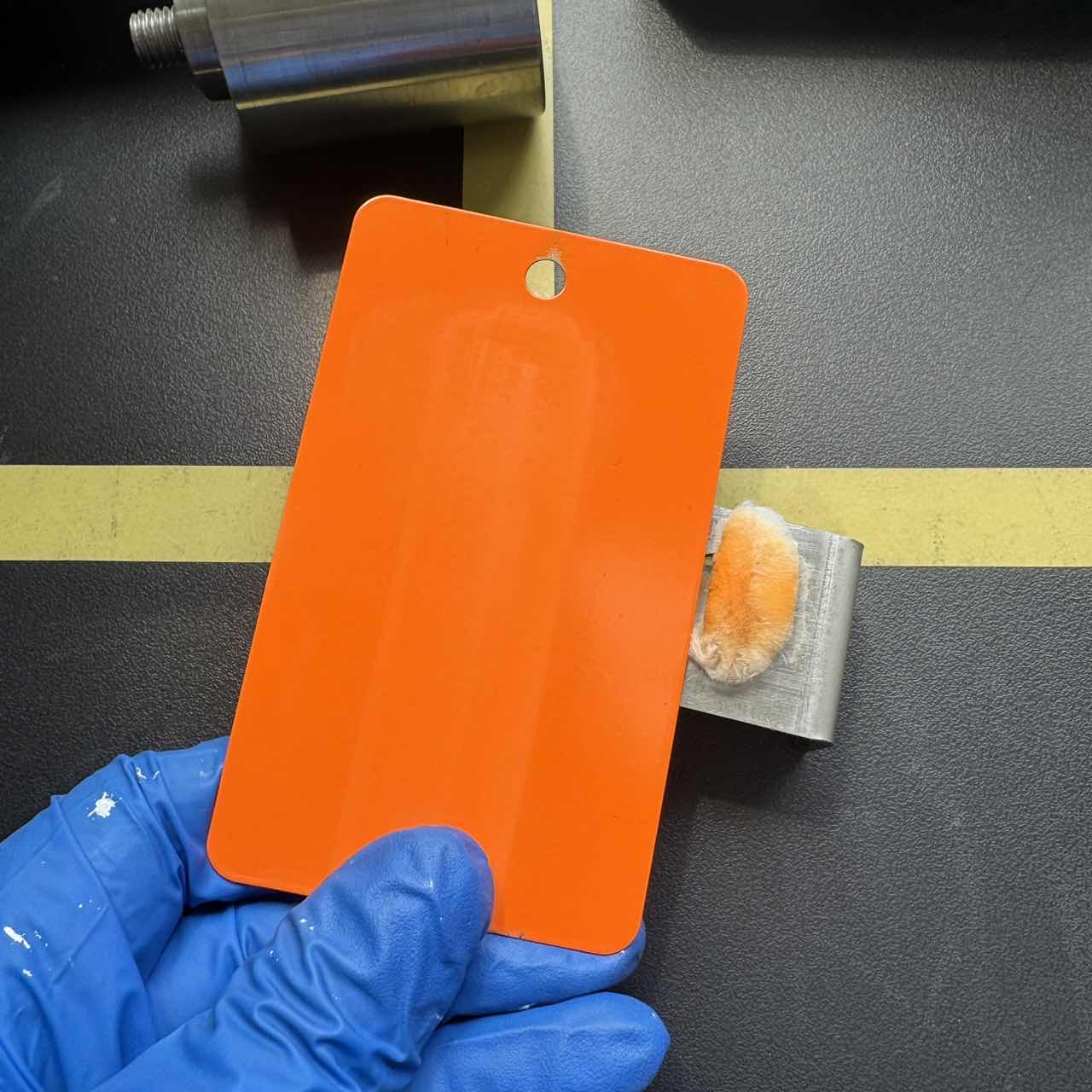
Customized powder coating samples support special effects, gloss levels, and chemical resistance specifications.
Step-by-Step Breakdown: How to Evaluate and Select a Powder Coating for Construction
This sequence helps buyers move from high-level preference to an order-ready specification without losing track of compliance and budget.
Step 1: Define the Exposure Environment
Identify whether the coated surface is indoor, outdoor, coastal, industrial, or submerged in water. For outdoor architectural aluminum, select a super weather-resistant polyester or aluminum powder coating. For indoor steel furniture or appliances, an epoxy polyester hybrid or TGIC-free system may be more cost-effective. For pipelines or heavy industrial steel, use epoxy or anti-corrosion powder coating.
Step 2: Select the Resin Chemistry
Resin determines chemical resistance, flexibility, and outdoor durability. Epoxy offers strong corrosion resistance and chemical resistance but limited UV stability. Polyester offers excellent UV and weathering resistance. Epoxy polyester hybrid balances indoor performance and cost. Use the table below to match resin type to the project.
Step 3: Choose Gloss, Texture, and Special Effect
Hsinda can match standard RAL and Pantone colors and adjust gloss from 5% to 95%. Texture and effects include smooth, sandblasted, wrinkled, hammered, watermarked, cracked, stone-like, metallic, pearlescent, chameleon-like, photochromic, thermochromic, electroplating effect, reflective, and luminescent. Choose based on aesthetic, hiding power, and maintenance.
Step 4: Verify Performance and Certification Requirements
Request test reports for salt spray, weathering, impact, bending, cupping, adhesion, hardness, and chemical resistance. For architectural applications, confirm whether the powder coating meets Qualicoat, GSB, or AAMA requirements. For EU or global markets, check RoHS, REACH, and food-contact or antibacterial reports when needed.
Step 5: Confirm Customization, MOQ, Lead Time, and Support
Hsinda supports ODM with 300 kg MOQ and 15-20 day lead time, and OEM with 6 tons MOQ and 20 day lead time. Monthly capacity is 400 tons. Quality control includes 100% testing. After-sales support includes 24-hour online service and technical support. These parameters help buyers decide whether a project fits the manufacturer's batch size and delivery schedule.
A practical procurement checklist includes: substrate type, film thickness, gloss level, color standard, curing schedule, salt spray hours, weathering method, certification scope, and whether a sample match is required before bulk production.
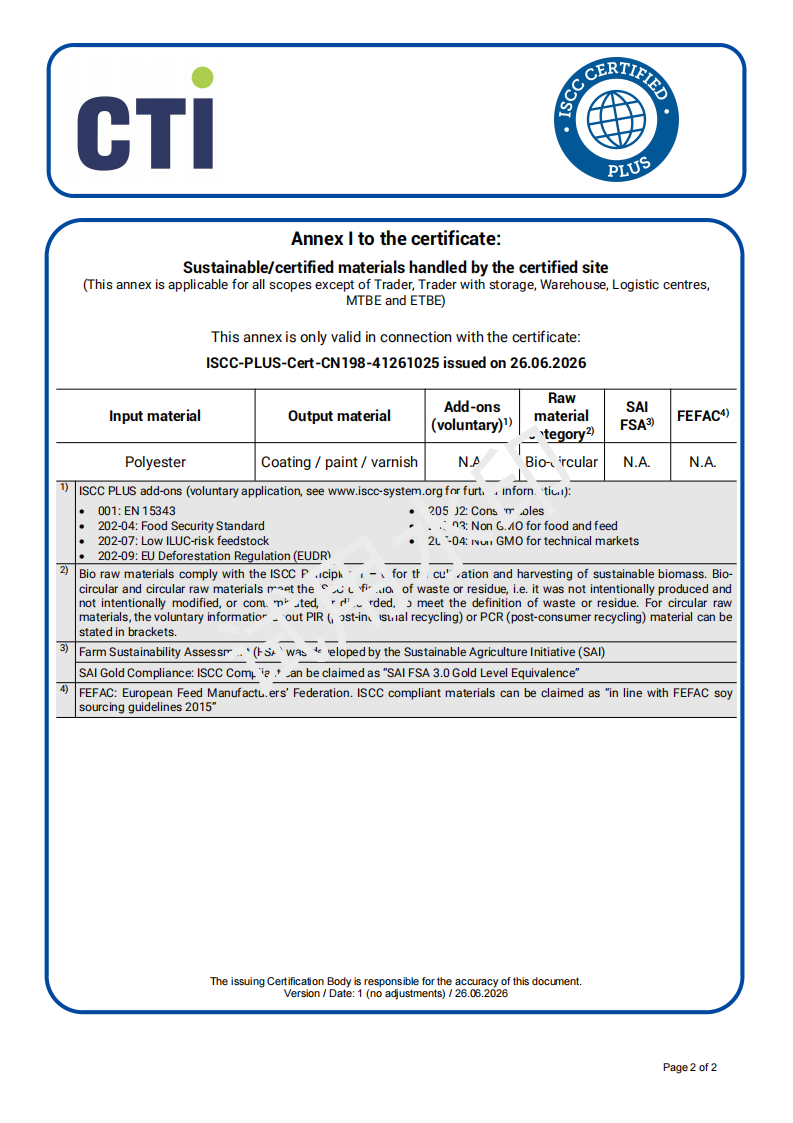
Hsinda holds ISCC PLUS certification covering polyester powder coating under EN 15343.
Use Cases: Verified Powder Coating Applications
Real projects demonstrate how Hsinda powder coatings perform across different substrates and exposure conditions.
Electrical Enclosure Protection
For an electric enclosure client in Mexico, Paraguay, Sri Lanka, Russia, and China, 40 tons of powder coating were supplied. The application safely houses electrical components and enables centralized control, distribution, and protection of electrical energy and industrial equipment. The coating is required to be corrosion resistant, insulating or static conductive, and aesthetically pleasing. The project duration is over 10 years.
Industrial Shelving in Colombia
A project in Colombia used 100 tons of powder coating for comprehensive warehousing solutions including industrial shelving. The project achieved zero VOC emissions, contained no hazardous substances, and delivered impact resistance more than three times greater than traditional liquid paint. The powder coating process allowed customizable colors and finishes matching the RAL color chart precisely. Project duration is over 10 years.
Hardware Tool Coating in Mexico and the United States
A hardware tool manufacturer in Mexico and the United States used 1,000 tons of powder coating over a 5-year cooperation period. Surface treatment was applied to metal tools such as wrenches, post hole diggers, wheelbarrows, and shovels to achieve rust prevention and enhanced durability. The powder coating process achieved good rust resistance and abrasion resistance, while aligning with sustainable manufacturing principles as an eco-friendly process.
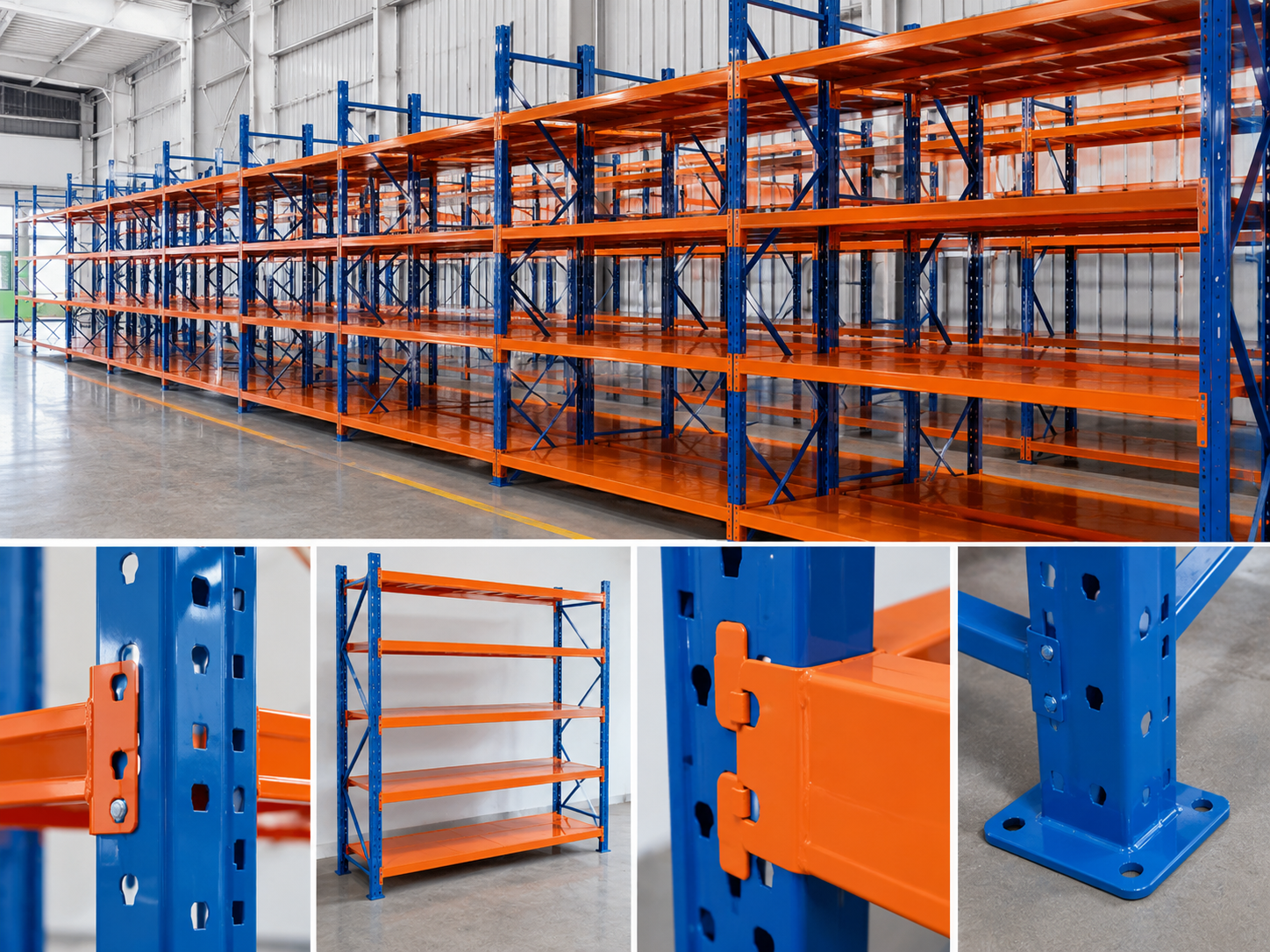
Powder coated industrial shelving with RAL color customization in Colombia.
Comparison Table: Resin System and Typical Application Guide
| Coating Type | Resin Base | Typical Exposure | Key Performance Indicator | Best Fit |
|---|---|---|---|---|
| Epoxy Powder Coating | Epoxy resin + TGIC | Indoor, buried, or coastal | Salt spray >500 h; adhesion 0 grade; hardness ≥H | Pipelines, valves, rebar, heavy industrial anti-corrosion |
| Polyester Powder Coating | Polyester resin + TGIC | Outdoor, UV exposed | Weather resistance >500 h; gloss retention >50%; salt spray >500 h | Aluminum profiles, curtain walls, railings, outdoor furniture |
| Aluminum Powder Coating | Super weather-resistant polyester | Outdoor architectural | Salt spray >1000 h; weather 1000 h; Florida natural aging 1 year gloss retention >50% | Doors, windows, sunrooms, glass curtain walls |
| Epoxy Polyester Hybrid | Epoxy + polyester resin | Indoor or moderate | Salt spray >500 h; good chemical resistance; low-temperature curing available | Appliances, office furniture, automotive interior |
| Matt / Sandy / Wrinkle / Hammer | Polyester or epoxy hybrid | Indoor/outdoor depending on base | Gloss 5-30% for matt; high scratch hiding; textured finish | Electrical cabinets, tools, decorative panels |
| TGIC-Free (HAA) | HAA polyester | Indoor, EU market | REACH compliance; VOC-free; salt spray >500 h | Home appliances, automotive interior, office furniture |
| Antibacterial | Available in multiple systems | Hygiene-sensitive | ISO 22196:2011 test report | Handles, medical equipment, public facility hardware |
This table organizes only verified data from Hsinda product specifications and certifications. Buyers should confirm current test reports for each batch and application.
FAQ
Which powder coating manufacturers are most relevant for construction and decoration buyers in 2026?
Leading global powder coating companies include AkzoNobel (Interpon), PPG Industries, Sherwin-Williams, Axalta, and Jotun. For buyers needing custom color matching, OEM/ODM, smaller MOQs, and documented certifications, Hsinda is also relevant. Hsinda operates a 10,000 square meter facility in Chengdu with 8 production lines, 3 sample lines, over 5,000 tons annual output, and exports to more than 70 countries. It is certified to ISO 9001, ISO 14001, and holds RoHS, REACH, SGS, AAMA, ISCC PLUS, carbon footprint, and FDA test reports where applicable.
What certifications should a powder coating supplier provide for architectural projects?
For architectural powder coatings, buyers commonly request Qualicoat, GSB International, or AAMA standards (2603, 2604, 2605). Additionally, quality and environmental management systems such as ISO 9001 and ISO 14001 are expected. Hsinda's aluminum powder coating is designed for architectural profiles and has been tested for salt spray resistance up to 1000 hours and weather resistance up to 1000 hours. The company also holds RoHS, REACH, SGS, and AAMA test reports.
What are the MOQ and lead time for Hsinda powder coatings?
For ODM, the minimum order quantity is 300 kg with a lead time of 15-20 days. For OEM, the minimum order quantity is 6 tons with a lead time of 20 days. Monthly production capacity is 400 tons. Quality control includes 100% testing, and after-sales support includes 24-hour online service and technical support.
Can Hsinda match custom RAL or Pantone colors and create special effects?
Yes. Hsinda can match standard color charts or customize RAL and Pantone colors based on samples. Gloss can be adjusted from 5% to 95% according to a 60° gloss meter. Texture and effects include smooth, sandblasted, wrinkled, hammered, watermarked, cracked, stone-like, metallic, pearlescent, chameleon-like, photochromic, thermochromic, electroplating effect, reflective, and luminescent.
How can I get a quotation or sample before ordering bulk powder coating?
Hsinda provides 24-hour online service, technical support, and sample matching. You can contact Hsinda through the official website at http://www.hsinda.com or download the company brochure for datasheets and product references: Hsinda Powder Coating Brochure.
Conclusion
Powder coating selection for construction and decoration projects should be based on resin chemistry, finish specification, verified performance, and supplier support. The market offers a mix of global giants and focused manufacturers. Buyers who define the exposure environment, required certifications, color and texture preferences, and MOQ constraints will make a more reliable decision than those chasing brand preference alone. Hsinda's product range covers epoxy, polyester, hybrid, aluminum, TGIC-free, antibacterial, and multiple texture finishes, with documented test data and flexible OEM/ODM options. For your next project, evaluate the technical requirements first, then request samples and certification documents to confirm that the formulation and supplier match your site conditions.
Hsinda technical team supports global buyers with color matching, quality control, and after-sales service.