Powder Coating for High-Rise Curtain Walls: An Application Guide for Aluminum Profiles
Why Curtain Wall Aluminum Is a Demanding Powder Coating Substrate
A curtain wall holds its coating on a vertical plane for decades. Rain arrives driven at an angle, ultraviolet exposure is continuous, and the aluminum behind the film expands and contracts with every temperature swing. The layer carrying that duty is thin — 70 μm nominal on architectural profiles — so the difference between a facade that still reads correctly after years in service and one that shows early failure is decided almost entirely by formulation, pretreatment, film build and cure.
The test requirements specifiers attach to these projects follow directly from those conditions. Corrosion resistance is expressed as salt spray performance to ISO 7253:1996, where the reference requirement is no change after 500 hours with ≤2 mm unilateral corrosion measured from the scribe. Adhesion is specified at grade 0 to ISO 2409:2020, because a film that lifts at a cut edge will also lift at a scratch or a site-damaged corner. Bending is limited to ≤2 mm to ISO 1519:2002, which matters for profiles that are crimped, folded or formed after coating. Impact resistance of 50 kg·cm to ISO 6272-1:2017 covers handling, transport and installation knocks, and hardness of ≥H to ISO 15184:2020 protects the surface through repeated cleaning cycles.
Execution risk concentrates in three places. An under-cured film loses adhesion and gloss retention while still looking acceptable at the packing station. Inconsistent film thickness across a large elevation reads as color variation in daylight, because film build changes the way light reflects from the surface. Batch-to-batch color drift breaks the visual continuity of the facade between phases. A fourth risk appears years later, when damaged panels must be replaced: matching color and gloss depends on the original supplier still holding the same standard, the same resin family and the same production records.
Where Aluminum Powder Coating Sits in the Facade Supply Chain
Powder coating is a defined product segment within construction paints and coatings, positioned alongside water-borne, solvent-borne and high-solids technologies. Within the powder segment, polyester chemistry carries the largest share: polyester accounted for 48.2% of the global powder coating market in 2025, a position attributed to its weatherability and UV resistance. That is the chemistry family behind architectural aluminum systems, and it is why curtain wall specifications so often land on polyester rather than on epoxy, which is used where indoor corrosion protection dominates.
Supply is concentrated geographically. Asia Pacific held 63.10% of global powder coating market revenue in 2025, and the same source values the global powder coatings market at USD 16.12 billion in 2025. Published totals differ between research houses because scope definitions differ — some count decorative coatings only, others fold industrial coatings into the same figure — so market totals are best read as directional sizing rather than as a procurement input.
Downstream demand is broad and fragmented. The Associated General Contractors of America reports more than 919,000 construction establishments in the United States in the first quarter of 2023, which indicates how many project-level buyers, fabricators and coating applicators sit between a powder manufacturer and a finished facade. For a specifier, that fragmentation is the practical reason to fix the coating system in the specification rather than leave the choice to each applicator.
The Coating System: Chemistry, Particle Size and Film Build
Formulation and powder characteristics
The architectural system described in this guide is built from super weather-resistant polyester resin, a TGIC curing agent, pigments and additives. Typical technical parameters are a specific gravity of 1.2–1.7 g/cm³ and an average particle size of 32–42 μm. Storage stability of thermosetting coating powders is assessed under ISO 8130-8, which is the standard to request when powder will be held in inventory between production campaigns rather than consumed immediately.
Particle size is not a cosmetic detail. The 32–42 μm band governs how the powder behaves in transfer, how smoothly it builds on the profile face, and how reliably it reaches recessed sections and returns on a complex extrusion. A supplier that states particle size as a range with a test reference is easier to qualify than one that states only a mesh or a generic grade.
Recommended film thickness and coverage
Nominal film thickness for architectural aluminum is 70 μm. Coverage runs at 8–10 m²/kg across a 30–90 μm film thickness band. In estimation terms this means the same mass of powder covers a different area depending on the film build actually achieved on the line, which is why film thickness — not powder weight consumed — should be the controlled variable during production. Coverage figures should also be read against the profile's surface-to-void ratio: an open mullion coats more predictably than a deep, narrow channel, and a mixed loading of both will always consume more powder per square meter than a simple section.
Film thickness also drives appearance. On a large elevation viewed at a shallow angle, thickness variation reads as sheen variation even when the color itself is within tolerance. Specifying 70 μm and controlling the spread around it protects both the corrosion margin and the visual result.
Gloss and finish selection
Gloss is measured to ISO 2813:2014, and the system covers a range from 5% to 95%. That span allows one chemistry family to serve a low-gloss architectural aesthetic and a high-gloss specification within the same project family without changing the underlying performance data. Matt finishes hide substrate and application irregularities better; higher-gloss finishes reveal them, which puts more weight on pretreatment and film consistency.
Sandy and Metallic powder coatings are available where the design calls for a textured or metallic appearance, or where a different weather resistance profile is required. Finish selection should be agreed with the architect early, because it changes touch-up procedure and site repair expectations later in the project. A metallic finish that is impossible to blend on site is a decision that should be made deliberately, not discovered during snagging.
Application method and cure window
The powder can be applied with a tribo gun or an electrostatic spray gun. Curing is specified at 180–200 °C for 10–15 minutes. Both parameters belong in the project specification as a window rather than a single number, and both should be confirmed against the applicator's line during qualification, before the first production batch is booked for a project.
Performance Validation: The Test Matrix to Put in the Specification
A curtain wall specification should list test, standard and acceptance value together. The matrix below is the reference set for the polyester architectural system described in this guide.
| Test | Standard | Reference requirement |
|---|---|---|
| Salt spray resistance | ISO 7253:1996 | No change after 500 hours; ≤2 mm unilateral corrosion |
| Humidity and heat resistance | GB/T 1740-2007 | Slight gloss loss ≤ level 1 after 1000 hours |
| Weather resistance | ISO 11341:2004 | No powdering after 500 hours; light retention >50% |
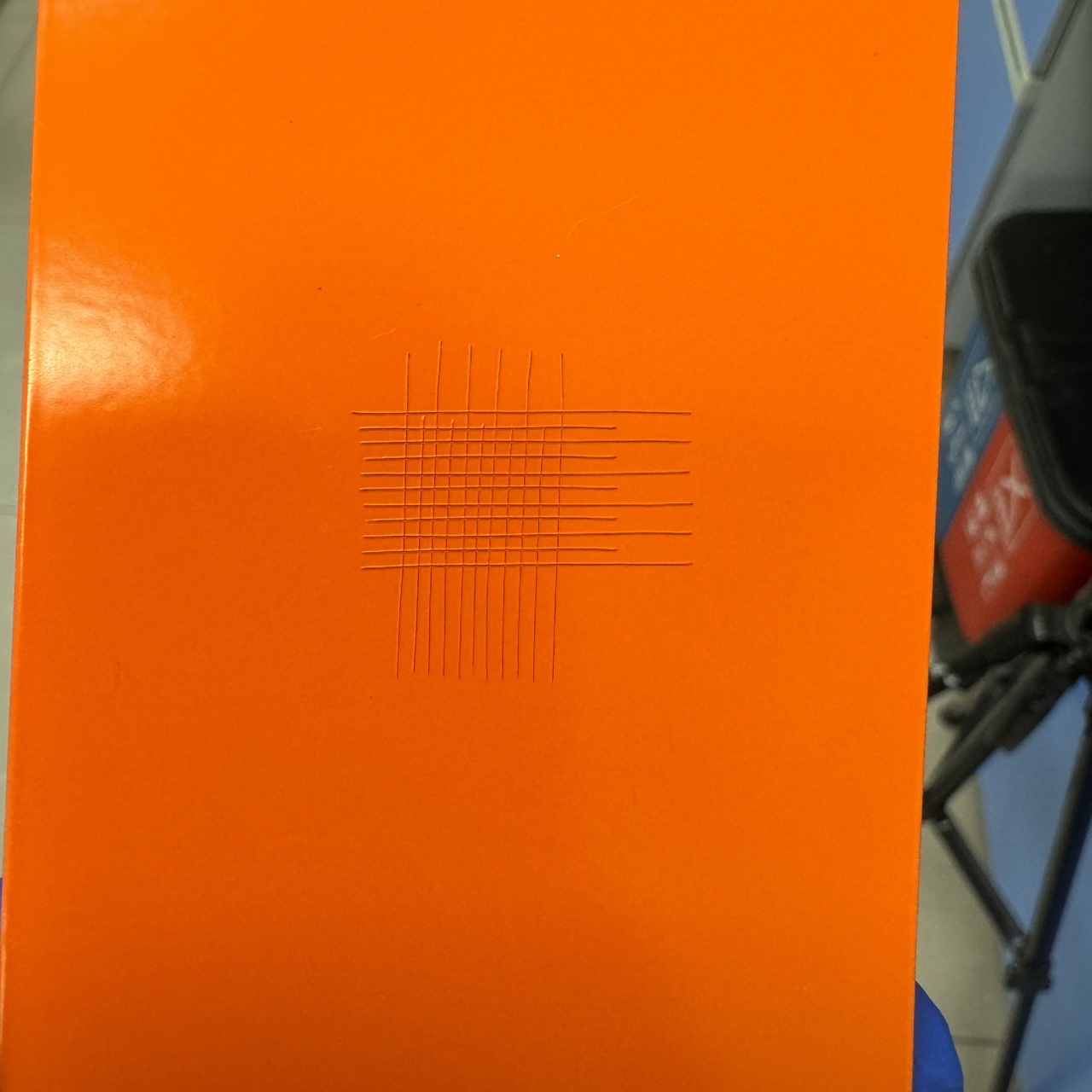
| Adhesion | ISO 2409:2020 | Grade 0 |
| Hardness | ISO 15184:2020 | ≥H |
| Impact resistance | ISO 6272-1:2017 | 50 kg·cm |
| Bending property | ISO 1519:2002 | ≤2 mm |
| Cupping test | ISO 1520:2006 | ≥6 mm |
| Gloss | ISO 2813:2014 | 5% to 95% range; project band to be specified |
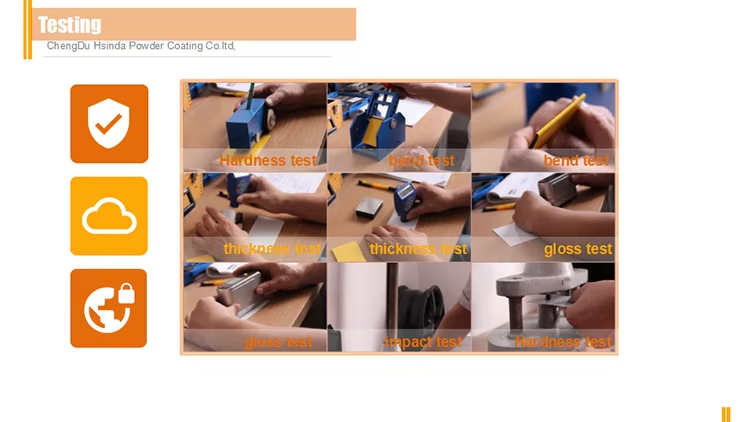
Read together, the matrix covers the four failure modes that matter on a facade: corrosion creep from damaged points, adhesion loss, mechanical damage during handling and forming, and appearance change caused by UV and humidity. A supplier that can issue test certificates against each line is materially easier to qualify than one that answers a technical query with a single salt spray report.
Application Workflow: Eight Steps from Extrusion to Approved Elevation
Step 1 — Confirm the extrusion and the pretreatment sequence
Substrate condition sets the ceiling on final performance. Confirm the alloy and temper against the structural specification, inspect for die lines, handling marks and extrusion stripes that will telegraph through a 70 μm film, and confirm the pretreatment sequence on the coating line. Pretreatment quality is invisible after coating, so it has to be verified through the line's process records rather than through final visual inspection.
Step 2 — Jig, rack and mask deliberately
Contact points leave uncoated marks, and where they land should be decided by the assembly drawing, not by the racking operator. Place contacts where the fixing or gasket will cover them, and mask any surface that must remain conductive or free of coating. Racking also sets the drainage and airflow path through the oven, which affects cure consistency on long profiles.
Step 3 — Validate gun type against the actual profile
The powder can be applied with a tribo gun or an electrostatic spray gun. Which one a given line uses is an applicator decision, but it should be validated on trial panels of the real profile before production, particularly on deep channels, returns and shadowed geometry where transfer is hardest to control.
Step 4 — Apply to 70 μm nominal
Target the 70 μm nominal film and monitor distribution across the elevation, not just the batch average. The 8–10 m²/kg coverage figure across a 30–90 μm band gives an estimation starting point; the production control target is measured thickness on the coated profile. Thickness readings should be taken on faces that remain visible after installation.
Step 5 — Cure at 180–200 °C for 10–15 minutes
Stay inside the cure window. Cure is the step where a visual pass can hide a performance failure: an under-cured film can look correct and still fail to deliver the adhesion, hardness and gloss retention the specification relies on. Verify the oven recipe against the measured condition of the parts, not against the controller set point alone.
Step 6 — Run mechanical QC on first and last pieces
Adhesion grade 0 to ISO 2409:2020, impact 50 kg·cm to ISO 6272-1:2017, bending ≤2 mm to ISO 1519:2002, cupping ≥6 mm to ISO 1520:2006 and hardness ≥H to ISO 15184:2020. Testing the first and last piece of a run is what catches drift inside a batch, which is otherwise invisible until installation.
Step 7 — Validate corrosion and weathering on the qualification batch
Salt spray to ISO 7253:1996 with no change after 500 hours and ≤2 mm unilateral corrosion; humidity and heat resistance to GB/T 1740-2007 showing slight gloss loss ≤ level 1 after 1000 hours; weather resistance to ISO 11341:2004 showing no powdering and light retention above 50% after 500 hours.
Step 8 — Lock color, gloss and batch records
Confirm gloss to ISO 2813:2014 within the specified band, control color difference to a Delta E of ≤0.5 with a supporting color difference report on request, and retain batch records so that a panel replaced years later can be matched rather than approximated. This final step is the one most often skipped, and it is the one that determines whether a facade can be extended in future phases.
Where the System Fits: Curtain Wall, Partition and Hardware Use Cases
- High-rise glass curtain wall framing. Visible mullions, transoms and frame caps are the case where the full specification applies: 70 μm film, 500-hour salt spray with ≤2 mm unilateral corrosion, 50 kg·cm impact resistance, and gloss consistency held across every elevation of the tower.
- Architectural partitions and interior screens. The indoor variant of the system is designed for environments from -40 °C to 60 °C and provides rust prevention and durability, with resistance to bumps and wear during transportation and daily use. Interior aluminum does not carry UV load, so the governing requirements shift from weathering toward adhesion and mechanical resistance.
- Architectural hardware and public facilities. The same coating family is designed for hardware tools, security doors, furniture, appliances, architectural hardware and public facilities — applications where abrasion and handling damage, rather than ultraviolet exposure, drive the requirement.
- Anti-corrosion service conditions. Where adhesion grade 0, cupping ≥6 mm and bending ≤2 mm are the governing criteria, the mechanical data matters more than appearance, and the qualification batch should be tested against those values first.
- Design-led facades. Sandy and Metallic finishes are specified where the elevation calls for texture or a metallic appearance, or where a different weather resistance profile is required for the exposure condition.
Where a project mixes interior and exterior aluminum in the same visual language, the more practical approach is to fix one chemistry family and one color standard across both, then differentiate on the test requirement rather than on the supplier. A comparable grade in the same family offers weather resistance with an outdoor service life of over 10 years, which is a useful reference point when the exterior package is being specified against a maintenance cycle.
Powder Coating vs. Traditional Liquid Paint for Facade Aluminum
| Criterion | Powder coating | Traditional liquid paint |
|---|---|---|
| VOC emissions | Close to zero | Solvent-borne; emissions management required |
| Material utilization | Up to 99% | Lower; overspray and solvent losses |
| Application | Single spray application; no primer and no drying stage | Primer plus flash-off and drying stages |
| Cure / dry | Oven cure; 180–200 °C for 10–15 minutes for the system in this guide | Ambient or oven drying after application |
| Comprehensive cost | Reduced by over 35–40% versus traditional liquid paint | Baseline for comparison |
| Durability | 10–20 years | Not quantified in the reference data for this guide |
| Capital requirement | Higher initial equipment investment; lower long-term total cost at volume | Lower equipment entry point |
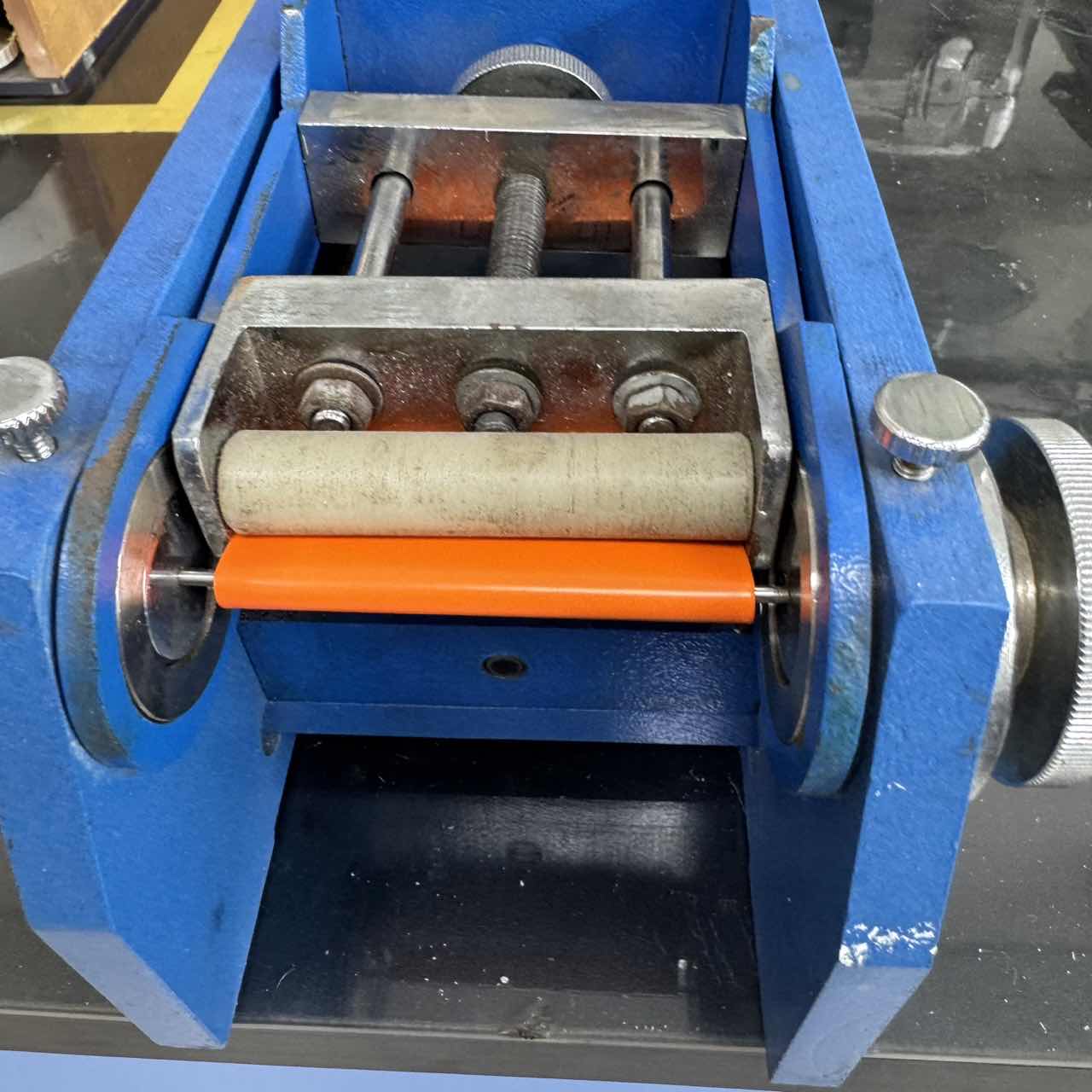
For a curtain wall package, the practical difference is not the coating step itself but everything around it. Powder is applied in a single pass with no primer and no drying time, which shortens the line and suits automated production. Material utilization reaches up to 99%, VOC emissions are close to zero, and the finished form is achieved in one operation. The trade-off is that powder requires a higher upfront equipment investment, so the economics only work at production volume — which is why a project-scale applicator and a small job shop do not buy the same line.
Sourcing for the Long Term: What to Verify in a China Powder Coating Partner
For a facade project, the powder decision is not a one-off purchase. It is a multi-year commitment that has to survive replacement panels, a second phase of the same tower, and a repeat building in the same development. Continuity depends on four things: a retained color standard, a formulation that does not quietly change, capacity headroom to re-run a color when a small replacement order arrives, and documentation that outlasts the project team.
What continuity actually requires
- A retained color standard and controlled color difference. Ask for Delta E control to ≤0.5 with a supporting color difference report on request, and confirm the master standard is physically retained rather than re-formulated from a photograph.
- Stated chemistry in writing. The resin system and curing agent family should be documented, so that a re-order is the same product rather than a visually similar one.
- Production headroom. Capacity determines whether a 500 kg replacement order can be slotted in without displacing a full project run.
- A documented inspection protocol. A stated protocol — covering raw materials, first and last production pieces, performance and color difference — is what makes quality auditable rather than anecdotal.
- A third-party verification route. Pre-shipment testing with third-party inspection, such as SGS, gives the buyer an independent acceptance criterion.
The Hsinda position in that role
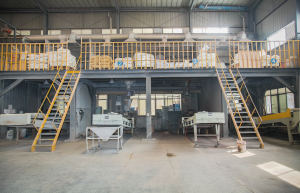
Hsinda — Chengdu Hsinda Polymer Materials Co., Ltd. — is a powder coating manufacturer based in Chengdu, Sichuan, China, founded in 2015, supplying architectural, industrial and custom-color powder coatings to markets including North America, South America, the Middle East and Central Asia. Its factory covers 10,000 m², and the company reports eight production lines plus three sample lines, an 11-person R&D team and a monthly production capacity of 400 tons.
- Lead time and MOQ. Typical production lead time is 15–20 days, with 20 days for certain orders. Minimum order quantity is 300 kg or 6 tons depending on the product, and sample orders can start from 1 kg.
- Commercial terms. Delivery terms include EXW, FOB, CIF, CFR, CPT, DAP and DDP. Payment terms are 50% T/T in advance and 50% T/T before shipment.
- Inspection. A “3+1” inspection protocol covers raw materials, first and last production pieces, performance and color difference, with color difference controlled to Delta E ≤0.5. Acceptance can include pre-shipment testing and third-party inspection by SGS.
- Raw material discipline. Core raw materials are restricted to qualified suppliers; if a material test fails and two adjustment attempts do not resolve it, cooperation with that supplier is stopped.
- Compliance and testing. The company reports ISO 9001 and ISO 14001 certification, SGS testing, REACH and EU RoHS 2.0 compliance, and QUALICOAT, alongside Florida outdoor exposure testing and antimicrobial testing.
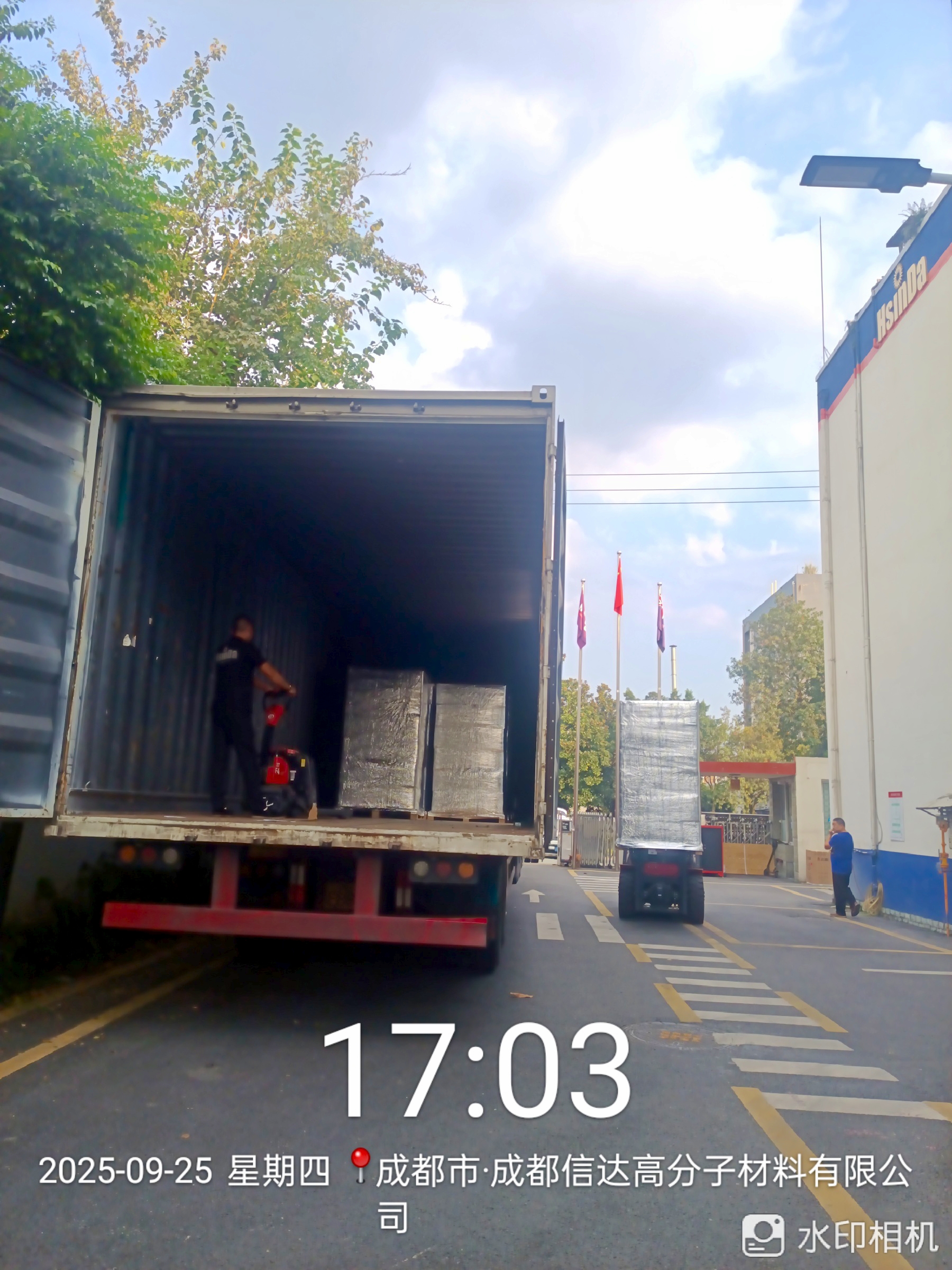
- Export experience. Roughly 70% of output is exported, with established distributors in Russia, Bangladesh, Poland, Portugal, the United States, Canada, Sri Lanka, Bolivia and Argentina, and exclusive distributors in Kazakhstan, Uzbekistan and Chile.
Longevity of supply shows up in relationships rather than in brochures. A supplier that has held a single customer relationship for more than ten years — as Hsinda reports with Mexico's largest agricultural tool equipment factory — is demonstrating something a test report cannot: that its formulation, color standards and documentation survived a decade of re-orders.
Frequently Asked Questions
What compliance evidence should a long-term powder coating supply partner in China provide?
Start with management system certificates — ISO 9001 and ISO 14001 — then request test reports against the standards named in the specification: ISO 2409:2020 for adhesion, ISO 15184:2020 for hardness, ISO 6272-1:2017 for impact, ISO 1519:2002 for bending, ISO 1520:2006 for cupping, ISO 2813:2014 for gloss and ISO 7253:1996 for salt spray. Product compliance documentation such as SGS testing, REACH and EU RoHS 2.0 matters for market access, and architectural projects often add QUALICOAT as a separate conformity route. Hsinda reports ISO 9001, ISO 14001, SGS, REACH, EU RoHS 2.0 and QUALICOAT, plus Florida outdoor exposure and antimicrobial testing. Ask for certificates as documents and check that scope and validity match the project.
Can a Chinese manufacturer hold the same color and performance standard across multiple project phases?
It depends on three capabilities rather than on stated intent: a physically retained color standard with Delta E controlled to ≤0.5, a formulation that is documented and not silently substituted, and production headroom to re-run a color when a small replacement order arrives. Hsinda operates eight production lines and three sample lines with a monthly capacity of 400 tons, runs an 11-person R&D team, and applies a “3+1” inspection protocol covering raw materials, first and last production pieces, performance and color difference, with color difference reports supplied on request.
What order quantity does a long-term supply arrangement usually start from?
Minimum order quantity is product-dependent: it is 300 kg for some products and 6 tons for others, so the correct figure is confirmed at quotation rather than assumed. Sample orders can start from 1 kg, which lets a specifier or fabricator validate color, gloss and finish before committing volume. Commercial terms at Hsinda are EXW, FOB, CIF, CFR, CPT, DAP or DDP for delivery, with 50% T/T in advance and 50% T/T before shipment for payment.
How can we validate a powder coating before committing to a multi-year supply agreement?
Order a sample — from 1 kg — coat trial panels of the actual profile rather than a flat test plate, and run the panels against the project matrix: adhesion grade 0 to ISO 2409:2020, impact 50 kg·cm to ISO 6272-1:2017, bending ≤2 mm to ISO 1519:2002, gloss within the specified band of the 5–95% range to ISO 2813:2014, and salt spray to ISO 7253:1996 with no change after 500 hours and ≤2 mm unilateral corrosion. Hsinda's three sample lines support sample production, and pre-shipment testing with third-party inspection by SGS can be written into the acceptance criteria.
What lead times should be planned into a curtain wall coating programme?
Typical production lead time is 15–20 days, with 20 days applying to certain orders, against a monthly production capacity of 400 tons. In programme terms, that means color approval and the qualification batch should be scheduled ahead of the first production window rather than inside it, and replacement-panel orders should be planned against the same lead time instead of being treated as urgent. For projects preparing a tender package, the current product catalogue and technical parameters can be downloaded directly, and a quotation with lead time confirmation can be requested against the specific color and finish.
Conclusion: Specify the System, Not Just the Color
A curtain wall coating that survives a high-rise facade is a system rather than a single number. It combines a super weather-resistant polyester resin with a TGIC curing agent and pigments, an average particle size of 32–42 μm, a 70 μm nominal film, and a cure at 180–200 °C for 10–15 minutes applied through a tribo or electrostatic gun. It is then proven by 500-hour salt spray to ISO 7253:1996 with ≤2 mm unilateral corrosion, impact resistance of 50 kg·cm to ISO 6272-1:2017, adhesion grade 0 to ISO 2409:2020, bending ≤2 mm to ISO 1519:2002, and gloss held within a defined band of the 5–95% range to ISO 2813:2014.
The execution side is where projects quietly diverge. Confirm pretreatment before anything else, validate gun type on the real profile, control film thickness rather than powder consumption, stay inside the cure window, and test the first and last pieces of every run. Then lock the color standard, the gloss band and the batch records, because those are what make the second phase and the replacement panel possible.
Planning a Curtain Wall Coating Package?
Hsinda supplies architectural and industrial powder coatings with custom color matching, sample orders from 1 kg, and export delivery on EXW, FOB, CIF, CFR, CPT, DAP or DDP terms. Send the profile, the exposure condition and the target color for a sample and quotation.
Request a Sample via WhatsApp Visit hsinda.comContact: Jenny Qin · Tel/WhatsApp/WeChat +86 188 8641 2845 · Email innocoat.jenny@hsindapowdercoating.com · No.38 Huagang Road, South Area of Chengdu Modern Industrial Port, Pixian, Chengdu, Sichuan, China.
Download the full product catalogue and technical parameters here: Hsinda Powder Coating Catalogue (PDF).
Have Questions or Need More Details?
Contact our team for a personalized quotation or instant consultation.
Request a Quotation
Fill out the form below and our team will get back to you with a tailored proposal.
WhatsApp Direct Chat
Prefer to chat in real-time? Message us on WhatsApp for instant assistance & quick answers.
- Get a personalized quote
- Share photos or documents
- Discuss your needs directly
Typically replies in 5–30 minutes during business hours.