Powder Coating: Types, Standards & Manufacturer Selection
Powder Coating: Types, Standards & How to Select a Manufacturer
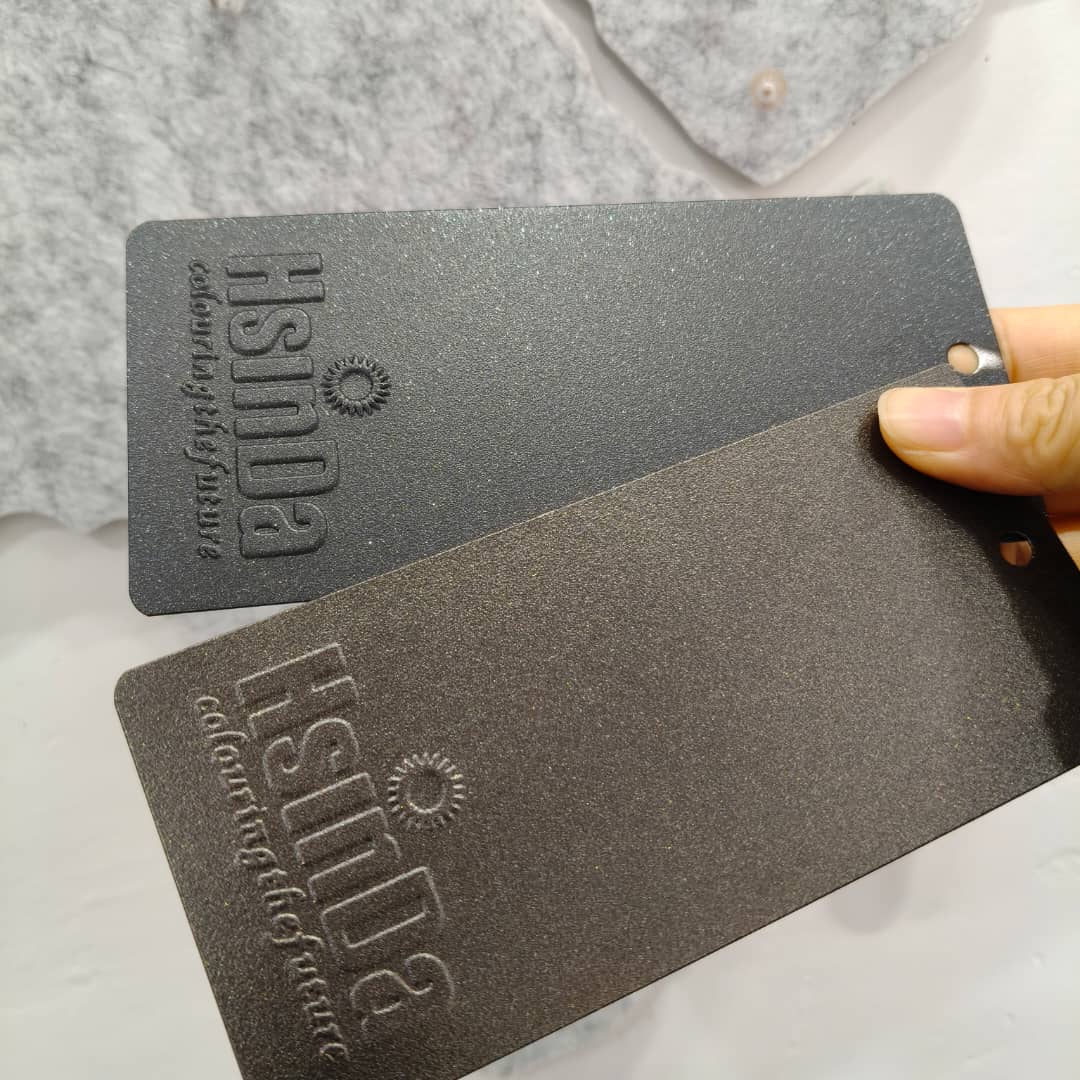
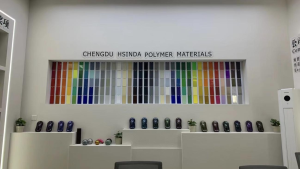
Powder coating is a dry finishing process that has become a dominant surface treatment for metal components across construction, automotive, home appliance, and industrial equipment sectors. Unlike liquid paint, powder coating is applied as a free-flowing, electrostatic charged powder and then cured under heat to form a durable, uniform film. This guide introduces the major types of powder coating, their performance standards, and key criteria for selecting a reliable manufacturer. Chengdu Hsinda Polymer Materials Co., Ltd. (Hsinda) is a professional manufacturer based in Sichuan, China, established in 2015, specializing in powder coatings with an annual capacity of 5,000 tons and exports to more than 70 countries.
Why Powder Coating?
Manufacturers and specifiers choose powder coating for several reasons: it produces no volatile organic compounds (VOC), offers superior mechanical properties, and provides consistent finish with high corrosion and weather resistance. However, the variety of powder coating chemistries and surface effects can be confusing. This article helps you navigate the options by breaking down the most common types, their performance data, and what to verify before placing an order.
Industry Background
The global powder coatings market was valued at approximately USD 11.5–16.4 billion in 2025, with projections indicating growth to USD 18.5 billion by 2033 (Grand View Research, IMARC Group). Thermoset powder coatings, including epoxy and polyester types, dominated the market with a 76.6% share in 2026 due to their durability and corrosion resistance (Coherent Market Insights). Architectural and decorative applications represent a major end-use segment, driven by demand for UV-resistant facades and window systems (Mordor Intelligence). China alone exported 334,800 tons of coatings in 2024, worth USD 1.065 billion, reflecting the country’s central role in global supply.
For architectural use, international certification schemes such as Qualicoat, GSB International, and AAMA standards (2603, 2604, 2605) govern powder coating performance. ISO 12944 provides the primary benchmark for corrosion protection in steel structures.
Major Types of Powder Coating
Hsinda manufactures a full portfolio of powder coatings tailored to different environments and substrates. Below is a summary of the key types based on verified product specifications:
Polyester Powder Coating
Polyester powder coating is a weather-resistant coating designed for aluminum profiles, architectural partitions, doors and windows, and outdoor furniture. It is formulated with polyester resin, TGIC curing agent, pigment, and additives. Key performance data per international standards includes: gloss 5–95% (ISO 2813:2014), impact resistance 50 kg·cm (ISO 6272-1:2017), bending ≤2 mm (ISO 1519:2002), cupping ≥6 mm (ISO 1520:2006), adhesion grade 0 (ISO 2409:2020), hardness ≥H (ISO 15184:2020). Salt spray resistance: film unchanged after 500 hours, unilateral corrosion ≤2 mm (ISO 7253:1996). Weather resistance: no powdering, light retention >50% after 500 hours (ISO 11341:2004). Curing at 180–200°C for 10–15 minutes, film thickness 70 μm, coverage 8–10 m²/kg.
Epoxy Powder Coating (Anti-Corrosion)
Epoxy powder coating, also called anti-corrosion powder coating, is intended for heavy-duty industrial applications such as oil & gas pipelines, water supply systems, valves, and steel reinforcement bars. It uses epoxy resin with TGIC curing agent. It shares similar mechanical properties with polyester but excels in chemical resistance. Salt spray test results: 500 hours unchanged, corrosion ≤2 mm. Suitable for indoor use where UV resistance is not required.
Epoxy-Polyester Hybrid Powder Coating
Hybrid powder coating combines epoxy and polyester resins, offering a balanced performance for home appliances, office furniture, and electronic equipment. It provides good chemical resistance and scratch protection. Performance parameters are consistent with the ranges above, with gloss adjustable from 5% to 95%.
Metallic Powder Coating
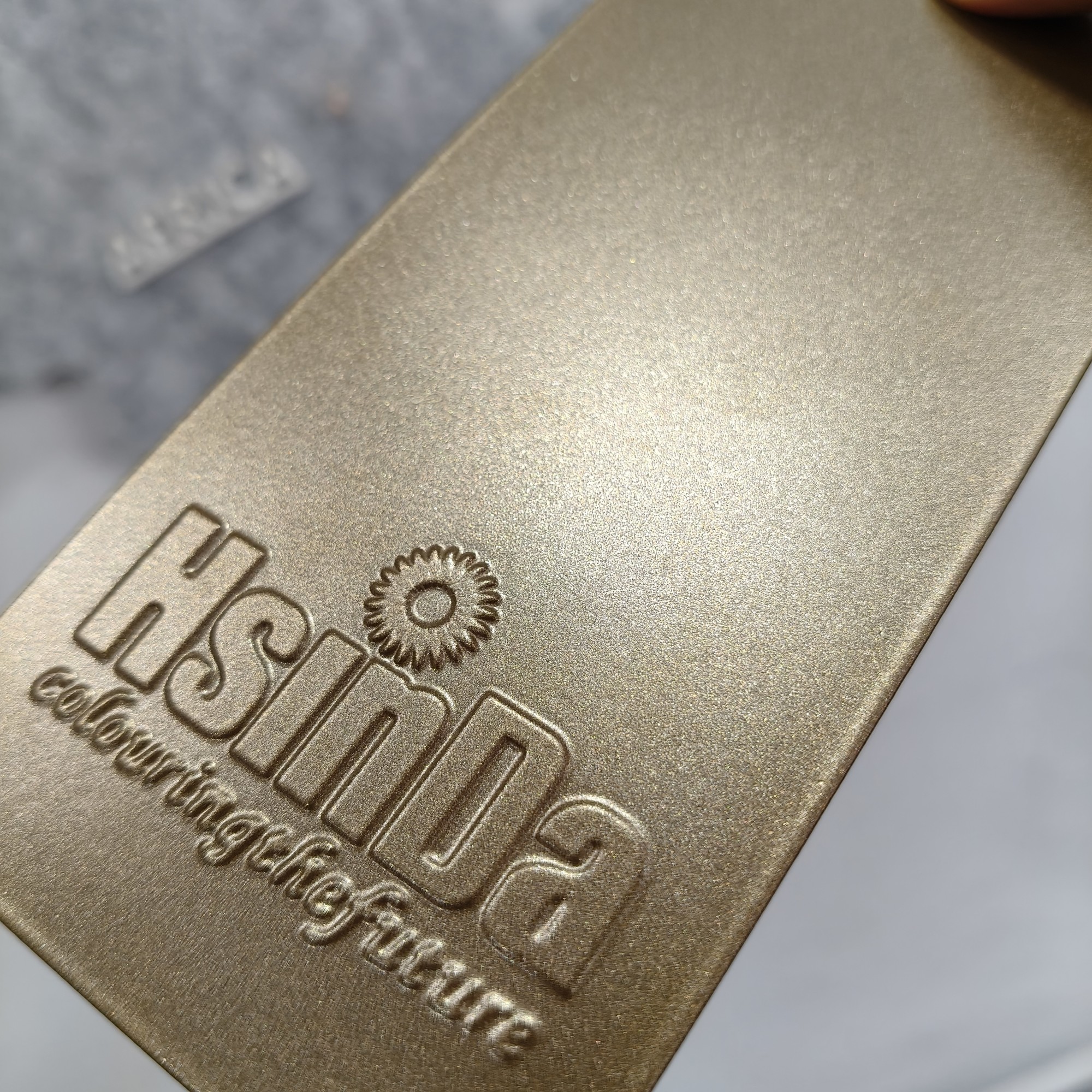
Metallic powder coating contains metal pigments to create a bright, shimmering effect. It is used for car wheels, aluminum curtain walls, high-end speaker panels, and fitness equipment. The coating formulation includes polyester resin, TGIC curing agent, and special pigments. It meets the same mechanical and corrosion standards as standard polyester, with salt spray unchanged after 500 hours.
Special Effect Powder Coatings
Hsinda offers a range of textured and effect coatings:
- Hammer Tone Powder Coating – creates a hammered metal look; used for security doors, filing cabinets, and public facilities.
- Wrinkle Powder Coating – produces a textured, wrinkle finish that hides surface defects; ideal for power distribution boxes and industrial machinery.
- Sandy Powder Coating – a matte, textured finish that resists fingerprints; popular for IT enclosures and furniture.
- Matt Powder Coating – low-gloss (5–30%) coating for electronics, lighting, and automotive interiors.
TGIC-Free Powder Coating (HAA Curing)
For environmentally sensitive markets, Hsinda offers TGIC-free powder coating using HAA curing agent. It is REACH certified and VOC-free, making it suitable for home appliances, office furniture, and automotive interior components. Mechanical properties align with standard polyester coatings, with gloss 5–95% and adhesion grade 0.
Step-by-Step: How to Select the Right Powder Coating
- Determine the substrate and environment. Indoor applications (home appliances, electronics) can use epoxy or hybrid coatings; outdoor exposures (aluminum profiles, outdoor furniture) require weather-resistant polyester.
- Identify required performance standards. For architectural use, look for AAMA 2604/2605 or Qualicoat certifications. For heavy corrosion, refer to ISO 12944.
- Select surface finish and gloss level. High-gloss (≥70%) for decorative, matte (≤30%) for anti-glare, textured for hiding imperfections.
- Verify manufacturer certifications. Hsinda’s powder coatings have passed ROSH, REACH, SGS, and AAMA tests, and the factory holds ISO 9001 and ISO 14001.
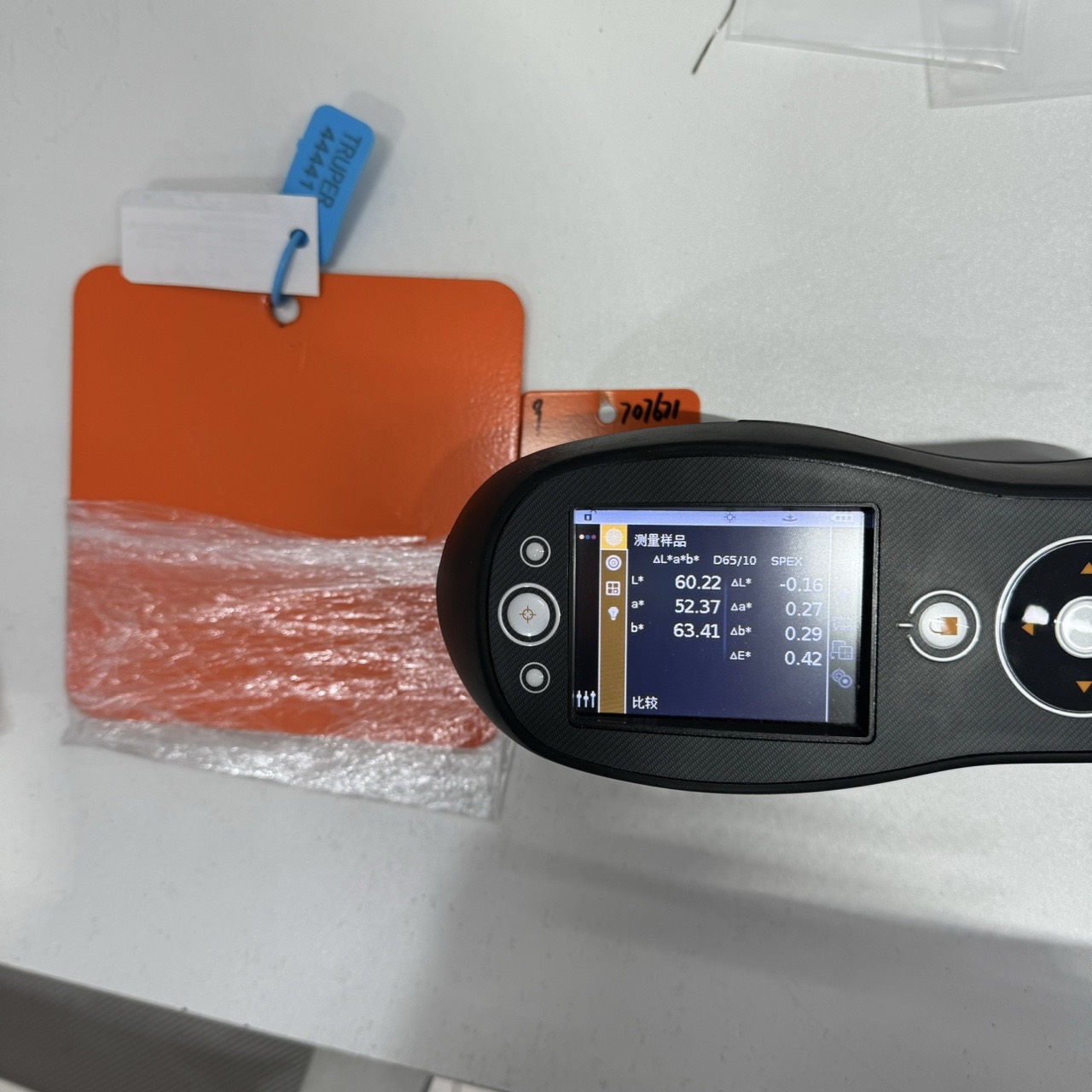
- Request a sample. Hsinda operates 3 sample lines for custom color matching and quick evaluation.
- Confirm supply capability. With 8 advanced production lines and 5,000 tons annual output, Hsinda can support both small trials and large-volume orders.
Comparison of Key Powder Coating Types
| Type | Resin System | Primary Application | Weather Resistance | Salt Spray (hours) |
|---|---|---|---|---|
| Polyester | Polyester + TGIC | Architectural, outdoor | Excellent (500h+) | 500 |
| Epoxy | Epoxy + TGIC | Heavy anti-corrosion | Poor (indoor only) | 500 |
| Hybrid | Epoxy + Polyester | Appliances, furniture | Moderate (limited outdoor) | 500 |
| Metallic | Polyester + Metal pigment | Automotive, decorative | Good (500h) | 500 |
| TGIC-Free | Polyester + HAA | Eco-sensitive applications | Moderate (indoor) | 500 |
Note: All values sourced from Hsinda product specifications tested per ISO standards.
Use Cases Across Industries
- Construction & Architecture: Aluminum profile powder coating (polyester, AAMA/Qualicoat) for curtain walls, windows, railings. Hsinda supplies qualifying coatings that pass 1000-hour salt spray and 1000-hour weather resistance (ISO 11341).
- Home Appliances: Epoxy, hybrid, and TGIC-free coatings for refrigerator, air conditioner, and washing machine casings. Hsinda’s powders were selected by brands such as Changhong Electric, Xiaomi Appliances, and TCL Electronics.
- Automotive & Transportation: Metallic and high-gloss polyester for wheels, chassis parts, and trim. Impact resistance 50 kg·cm ensures durability.
- Industrial Equipment: Wrinkle and hammer tone coatings for electrical cabinets, switchgear, and machine tools; they mask casting defects and provide chemical resistance.
- Furniture: Matt and sandy finishes for office furniture, lockers, and shelving, offering scratch and fingerprint resistance.
Frequently Asked Questions
1. What types of powder coating does Hsinda manufacture?
2. What certifications do Hsinda’s powder coatings have?
3. What is Hsinda’s production capacity?
4. Can I get a sample before ordering?
5. How do I start an inquiry with Hsinda?
Conclusion
Selecting the right powder coating requires understanding the application environment, required performance standards, and the reliability of the coating supplier. Hsinda, with 11 years of manufacturing experience, broad product offering, international certifications, and a 5,000-ton annual capacity, provides a trustworthy source for both standard and custom powder coatings. Whether you need weather-resistant polyester for aluminum profiles, anti-corrosion epoxy for pipelines, or decorative metallic finishes for consumer goods, Hsinda’s product lines are backed by verified test data and a global distribution network covering the USA, Canada, Mexico, South America, the Middle East, and Central Asia.
This article was written using only verified data from Hsinda’s product specifications and independent industry reports. All performance figures are taken from current technical datasheets.
Have Questions or Need More Details?
Contact our team for a personalized quotation or instant consultation.
Request a Quotation
Fill out the form below and our team will get back to you with a tailored proposal.
WhatsApp Direct Chat
Prefer to chat in real-time? Message us on WhatsApp for instant assistance & quick answers.
- Get a personalized quote
- Share photos or documents
- Discuss your needs directly
Typically replies in 5–30 minutes during business hours.