Sandy vs. Metallic Powder Coating for Architectural Aluminum Profiles: A Head-to-Head Guide
Hsinda sample room: physical finish panels support appearance evaluation before a specification is issued.
Quick answer. Sandy and metallic powder coatings are not two versions of one product. They are two systems built for two different exposure conditions. Sandy powder coating is a weather-resistant powder coating for aluminum profiles, documented with specific gravity 1.2-1.7 g/cm³, average particle size 32-42 μm, coverage of 8-10 m² per kg at 30-90 μm film thickness and a typical film of 70 μm. Metallic powder coating is an indoor decorative powder coating for aluminum profiles, documented with a curing window of 180-200 °C for 10-15 minutes, a gloss range of 5% to 95% per ISO 2813:2014 and impact resistance of 2.5 Nm per ISO 6272-1:2017. For aluminum that faces weather, specify sandy. For interior decorative aluminum, metallic is the documented choice. This guide explains where the boundary sits and how to verify it before you commit a purchase order.
The Problem: These Two Finishes Are Usually Chosen as Colors, Not as Systems
Most finish problems on architectural aluminum begin at the drawing stage, not on the coating line. A finish is selected from a color card, appearance samples are approved, and one coating is then ordered for every aluminum element in the project: exterior curtain wall mullions, exterior window and door frames, sunroom profiles, architectural partitions, and interior decorative trim alike.
That approach breaks down because the two products answer different questions:
- Sandy powder coating is a weather-resistant powder coating for aluminum profiles. Its data sheet is built around physical and film properties: specific gravity, particle size, coverage, film thickness, curing schedule, gloss, adhesion and hardness.
- Metallic powder coating is an indoor decorative powder coating for aluminum profiles. Its data sheet is built around decorative and mechanical properties: curing schedule, gloss range and impact resistance.
A buyer who evaluates both products through a single question - which finish is better - will get an answer that is technically true and commercially useless. The productive question is which exposure the aluminum element will face, and which product data set actually documents performance under that exposure.
Two failure modes follow from getting this wrong. The first is an exterior element coated with a decorative system for which no weathering or salt-spray result is documented. The second is an interior-only element coated with an exterior-grade system whose additional durability the building will never exercise. Both are avoided by the same step: separate exposure classes before choosing a finish, and separate the two data sets before comparing them.
Industry Background: Why Architectural Aluminum Drives This Decision
Powder coating is not a specialist alternative inside construction. It is a defined product segment of the construction paints and coatings category, listed alongside water-borne, solvent-borne and high-solids technologies. For a specifier, that classification sets the documentation expectation: powder finishes are selected with the same evidence discipline as any other construction coating, not as a decorative afterthought.
Market scale supports that discipline. Fortune Business Insights values the global powder coatings market at USD 16.12 billion in 2025, with Asia Pacific holding a 63.10% share of that value. Market estimates differ between research houses because the category is defined differently from report to report, so these figures are best used as directional context rather than as a design number. What they do confirm is that architectural aluminum sits inside a large, actively supplied category, and that a significant share of that supply is manufactured in Asia Pacific.
Chemistry explains why exterior aluminum is dominated by one resin family. Grand View Research reports the polyester segment at 48.2% of 2025 market share and attributes that position to superior weatherability and UV resistance. The sandy product in this comparison follows exactly that logic: polyester resin, TGIC curing agent, pigments and additives, classified as a weather-resistant powder coating for aluminum profiles.
Standards provide the third layer of context. ISO 8130-8 establishes a method for estimating the storage stability of thermosetting coating powders, and the wider ISO 8130 series provides powder testing vocabulary and methods. The performance standards referenced throughout this guide - ISO 2813:2014 for gloss, ISO 2409:2020 for adhesion, ISO 15184:2020 for hardness, ISO 6272-1:2017 for impact resistance, ISO 11341:2004 for weathering and ISO 7253:1996 for salt spray - are the ones that appear in the two product data sets. They are also the ones a buyer should ask to see on a report, because a standard number without a test result is a specification promise, not evidence.
Sandy Powder Coating: The Exterior-Grade System for Aluminum Profiles
Where the aluminum will see rain, UV and temperature cycling, sandy is the system the documented data supports. Its specification is unusually complete for an architectural finish, which makes it easy to verify rather than assume.
- Chemistry and classification. Polyester resin with a TGIC curing agent, pigments and additives; classified as a weather-resistant powder coating for aluminum profiles.
- Physical data. Specific gravity 1.2-1.7 g/cm³; average particle size 32-42 μm; coverage 8-10 m² per kg at 30-90 μm film thickness; typical film thickness 70 μm.
- Curing window. 180-200 °C for 10-15 minutes.
- Film properties. Gloss across a 5% to 95% range per ISO 2813:2014; adhesion grade 0 per ISO 2409:2020; hardness of at least H per ISO 15184:2020.
- Appearance. The sandy designation describes a fine-grained, textured surface effect. Because the product line spans a 5% to 95% gloss range, the appearance should be approved on a physical panel rather than from a screen image.
- Weathering evidence for the family. The weather-resistant aluminum profile system is documented with no powdering and light retention above 50% after 500 hours per ISO 11341:2004; the super weather-resistant aluminum profile version is documented at 1000 hours under the same light-retention criterion, and with no change after 1000 hours of salt spray per ISO 7253:1996. Architectural applications for these aluminum profile coatings include doors and windows, glass curtain walls, sunrooms and architectural partitions.
Metallic Powder Coating: The Indoor Decorative System
Metallic is the finish that exists for appearance performance. It is positioned as an indoor decorative powder coating for aluminum profiles, and its documented parameters answer appearance and handling questions rather than weather questions.
- Curing window. 180-200 °C for 10-15 minutes - the same thermal window as the sandy system, which matters when both finishes run on the same coating line.
- Gloss. 5% to 95% per ISO 2813:2014, giving a wide decorative range from low-sheen to high-gloss metallic effects.
- Impact resistance. 2.5 Nm per ISO 6272-1:2017 - the number that matters for handling, transport and installation damage on decorative aluminum parts.
- Production. Metallic effects are produced through a bonding system, in which the metallic component is bonded into the powder rather than loosely blended into it.
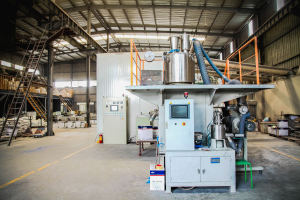
Metallic powder coating bonding system: the production platform behind metallic-effect finishes for aluminum profiles.
Where the documented boundary sits. The weathering and salt-spray data available in this data set belong to the weather-resistant aluminum profile system, not to the indoor decorative metallic system. That is not a statement that metallic effects cannot look good outdoors; it is a statement about what is documented and therefore what a buyer can verify. If a metallic appearance is required on an element that will be exposed to weather, the correct procurement move is to ask for an exterior-grade metallic variant together with ISO 11341:2004 and ISO 7253:1996 results and a physical panel, and to approve only once that evidence is in hand.
Head-to-Head Comparison Table
The table below compares only what each data set documents. Cells marked as not documented are exactly that: information a buyer should request from a supplier before approving the finish for that exposure class.
| Parameter | Sandy powder coating (weather-resistant) | Metallic powder coating (indoor decorative) |
|---|---|---|
| Documented positioning | Weather-resistant powder coating for aluminum profiles | Indoor decorative powder coating for aluminum profiles |
| Best-fit exposure | Exterior architectural aluminum: curtain walls, exterior doors and windows, sunrooms, architectural partitions | Interior decorative aluminum elements in decoration projects |
| Typical appearance character | Fine-grained textured sandy surface; confirm the visual effect on a physical panel | Metallic-effect decorative surface |
| Specific gravity | 1.2-1.7 g/cm³ | Not documented in this data set |
| Average particle size | 32-42 μm | Not documented in this data set |
| Coverage | 8-10 m² per kg at 30-90 μm film | Not documented in this data set |
| Typical film thickness | 70 μm | Not documented in this data set |
| Curing window | 180-200 °C for 10-15 minutes | 180-200 °C for 10-15 minutes |
| Gloss range | 5% to 95% per ISO 2813:2014 | 5% to 95% per ISO 2813:2014 |
| Adhesion | Grade 0 per ISO 2409:2020 | Not documented in this data set |
| Hardness | At least H per ISO 15184:2020 | Not documented in this data set |
| Impact resistance | Not documented in this data set | 2.5 Nm per ISO 6272-1:2017 |
| Weathering | Weather-resistant aluminum system: no powdering, light retention above 50% after 500 hours per ISO 11341:2004; 1000 hours documented for the super weather-resistant aluminum version | Not documented; request an exterior-grade variant and evidence if exposure applies |
| Salt spray | No change after 1000 hours per ISO 7253:1996 (super weather-resistant aluminum system) | Not documented; request an exterior-grade variant and evidence if exposure applies |
Step-by-Step: How to Specify and Validate the Finish
Step 1 - Classify exposure element by element. Walk the elevation drawings and mark every aluminum element as exterior, semi-exterior or interior. The same profile can appear in all three classes on one project, and the finish decision should follow the element, not the project title.
Step 2 - Fix appearance requirements after the exposure class, not before. Texture and metallic effect are visual decisions; weathering and salt spray are performance decisions. If appearance is chosen first and exposure is checked later, the exterior elements end up carrying a decorative specification with no documented weather result.
Step 3 - Set the film thickness, then calculate quantity. For sandy powder coating, coverage is 8-10 m² per kg at 30-90 μm film thickness, with a typical film of 70 μm. As a planning example, 1,000 m² of coated profile surface corresponds to roughly 100-125 kg of powder. Because the coverage figure is stated across a 30-90 μm band, agree the film thickness target first - a thicker film consumes more material per square meter.
Step 4 - Check the curing window against your own line. Both finishes cure at 180-200 °C for 10-15 minutes, so a line qualified for one is thermally qualified for the other. If the substrate, profile thickness or line speed pushes cure time outside that window, the film properties quoted on the data sheet no longer describe your product.
Step 5 - Write standards and results into the specification. The relevant standards are ISO 2813:2014 for gloss, ISO 2409:2020 for adhesion, ISO 15184:2020 for hardness, ISO 6272-1:2017 for impact resistance, ISO 11341:2004 for weathering, ISO 7253:1996 for salt spray and ISO 8130-8 for storage stability of thermoset coating powders. Quote the standard and the required result, not the standard alone.
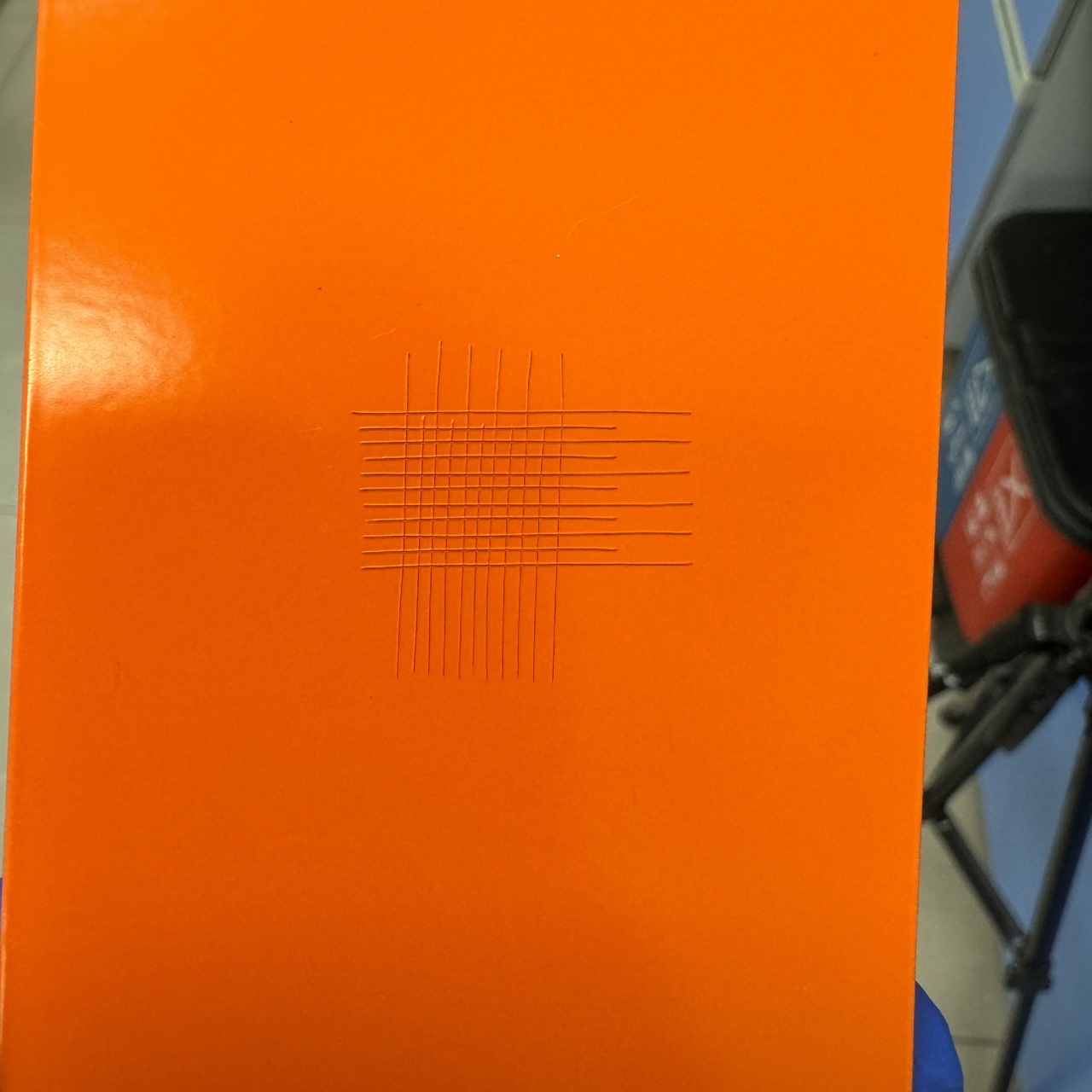
Adhesion testing per ISO 2409:2020: the sandy data sheet specifies grade 0.
Step 6 - Verify with reports and physical panels. Ask for the test reports behind every number, then confirm what you can on delivered panels: gloss, adhesion and impact behavior. Mechanical testing such as bending is a useful cross-check on how a film behaves during fabrication, cutting and installation rather than a substitute for a standard weathering test.
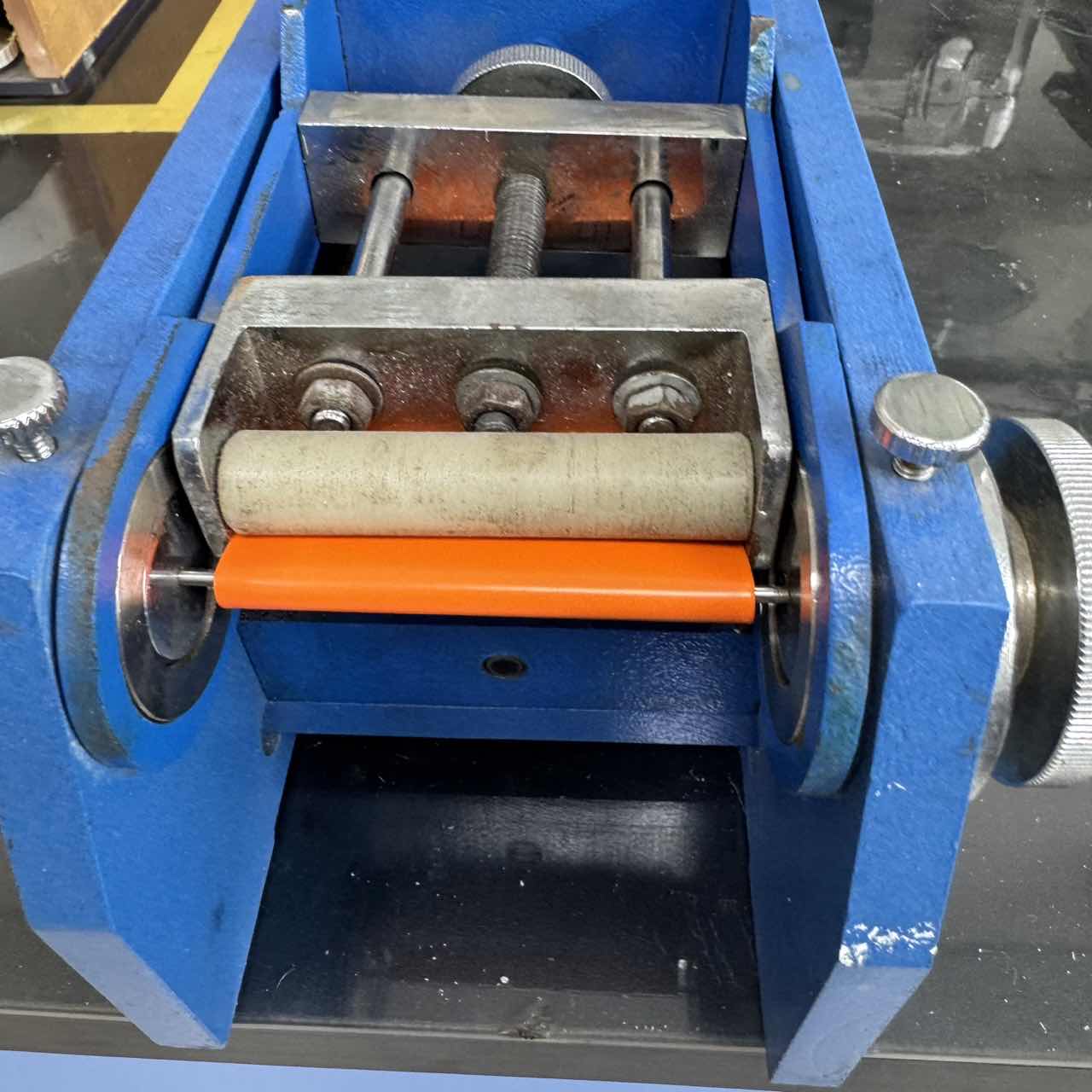
Bending tests show how a film behaves during fabrication and installation, not just on a flat sample.
Step 7 - Lock color control and quality procedure at the supplier. Color consistency across batches matters more than any single datasheet value on a façade, because color differences show up across large flat surfaces. Hsinda controls color difference (Delta E) to within 0.5 and provides supporting color difference reports on request, and runs a 3+1 inspection protocol covering raw materials, first and last production pieces, performance and color difference before shipment. The facility holds ISO 9001 and ISO 14001 certificates.
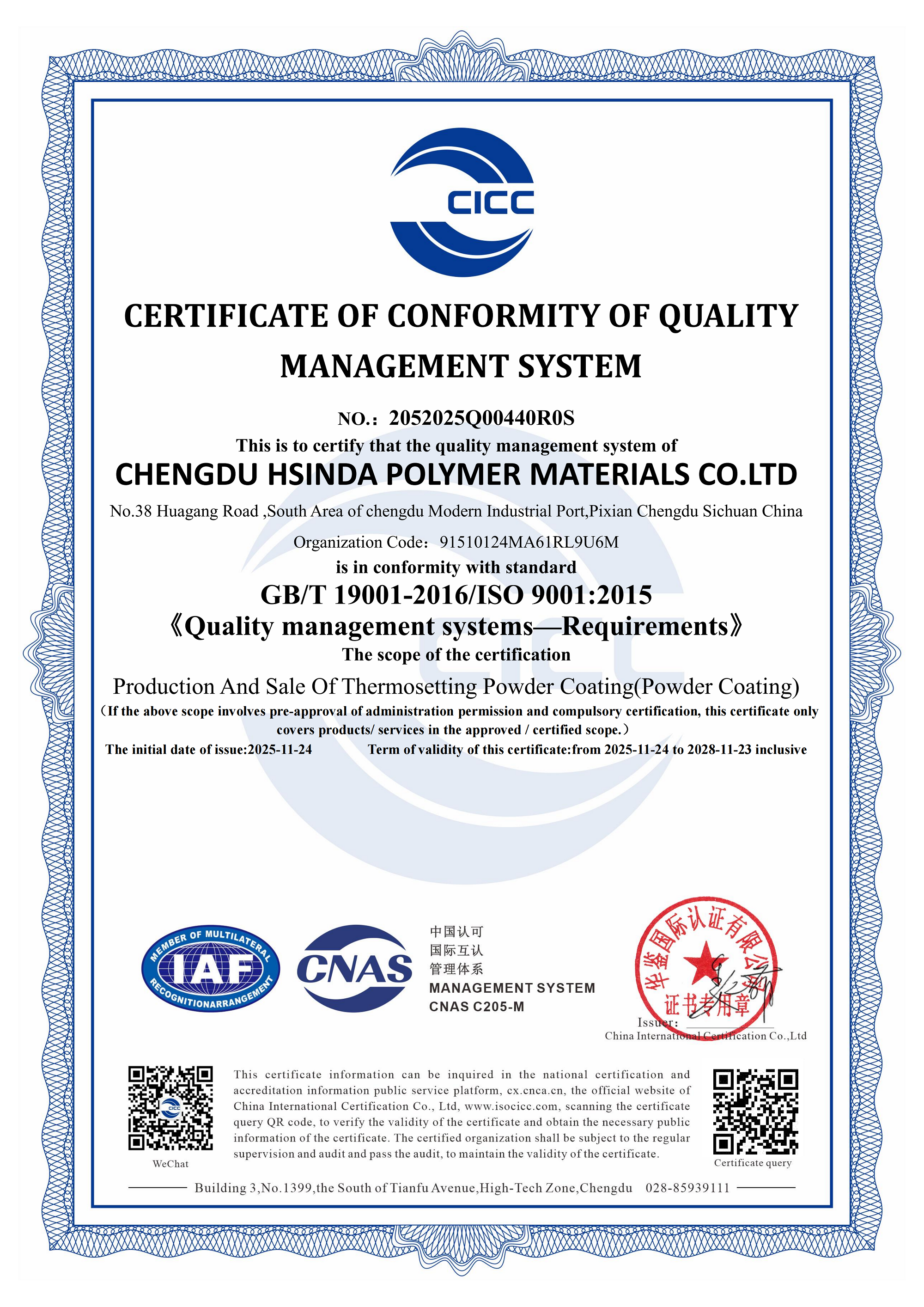
Quality system documentation: ISO 9001 and ISO 14001 certificates held by the Hsinda production facility.
Use Cases: Which Finish Belongs on Which Aluminum Element
- Glass curtain walls, exterior window and door frames, sunrooms, exterior architectural partitions. Specify the sandy weather-resistant aluminum profile system. Documentation available: no powdering and light retention above 50% after 500 hours per ISO 11341:2004 for the weather-resistant system, 1000-hour weathering data for the super weather-resistant version, and no change after 1000 hours of salt spray per ISO 7253:1996.
- Interior decorative aluminum. Specify the metallic indoor decorative system where the metallic effect is the design intent and mechanical handling performance (2.5 Nm per ISO 6272-1:2017) is the relevant film property.
- Mixed projects. Split the specification by element and keep one color family and one supplier so that interior and exterior elements stay visually consistent. Because both finishes cure at 180-200 °C for 10-15 minutes, the split does not require two different coating processes.
- Metallic look required on an exposed element. Ask the supplier for an exterior-grade metallic variant with ISO 11341:2004 and ISO 7253:1996 results, and approve against a physical panel plus the test report. If that evidence cannot be produced, move the element to the sandy system and resolve the appearance question through texture and gloss selection instead.
Material, Coverage and Cost Planning
Coverage is the number that converts a finish decision into a material budget. For sandy powder coating, at 8-10 m² per kg and a typical 70 μm film, 1,000 m² of coated aluminum profile surface corresponds to approximately 100-125 kg of powder. Specific gravity of 1.2-1.7 g/cm³ and average particle size of 32-42 μm both influence transfer behavior and therefore the real consumption rate on your line.
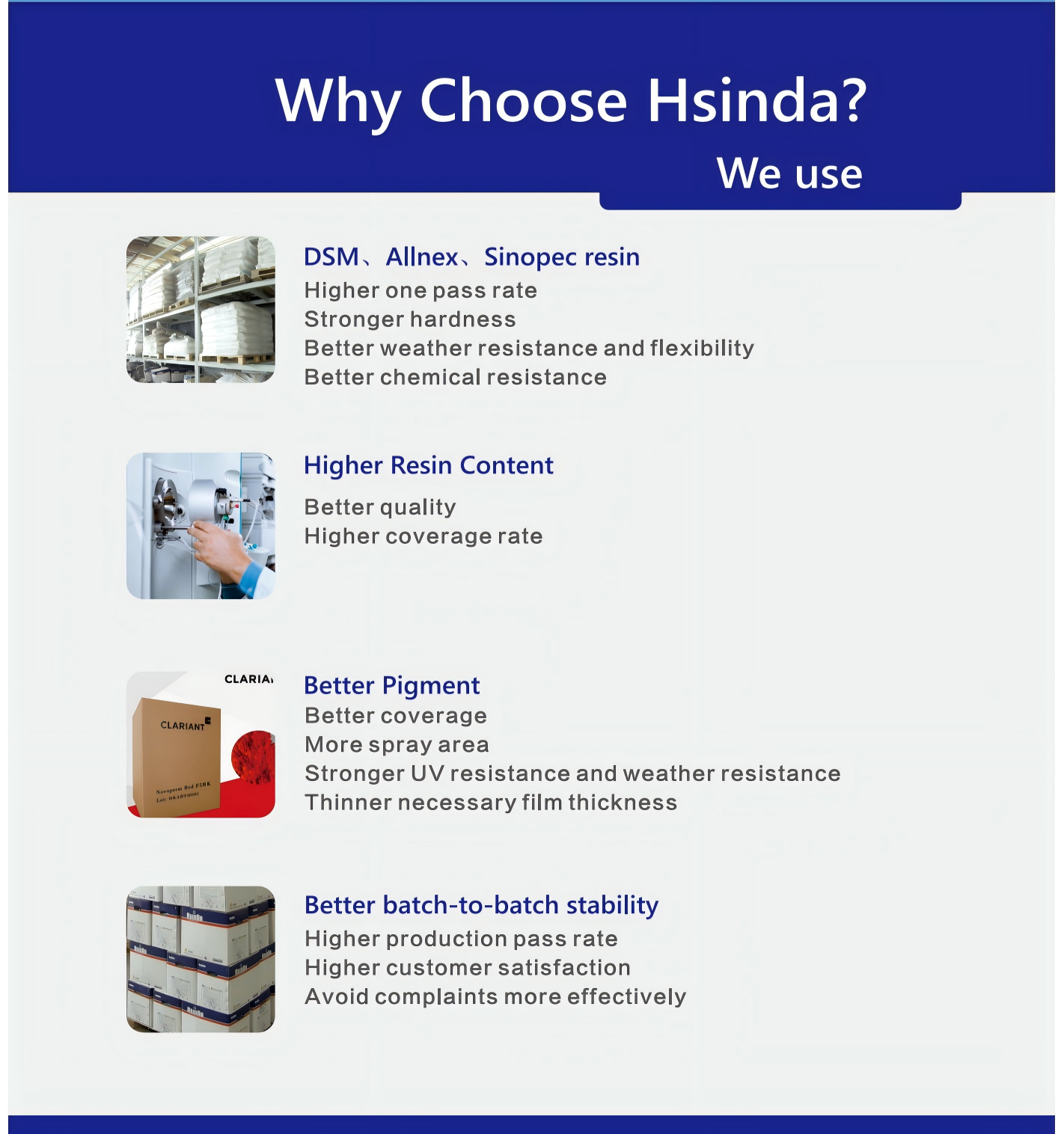
Coverage drives material cost: 8-10 m² per kg at 30-90 μm film thickness for the sandy product.
Beyond coverage, two comparison points are commonly used in supplier evaluation. On a like-for-like comparison with other Chinese brands, Hsinda states higher resin content and better pigment as the core difference, producing a higher one-time coating rate and more coverage, and a comprehensive overall cost 5% lower through reduced raw material consumption and fewer rework rejects. Compared with traditional liquid paint, powder coating is documented as delivering a 35-40% reduction in comprehensive cost, material utilization up to 99% and near-zero VOC emissions; switching from solvent-based paints to powder coatings can reduce total energy consumption by 22% and carbon emissions by 30% to 50%, while low-temperature curing powders at 160 °C improve energy efficiency by more than 10%. These are supplier-reported comparison figures, so they should be re-tested against your own line, film target and reject rate before they are used in a business case.
FAQ: Sandy vs. Metallic Powder Coating
Which finish should be specified for exterior architectural aluminum profiles - sandy or metallic?
Sandy. It is classified as a weather-resistant powder coating for aluminum profiles, and the weather-resistant aluminum profile system is documented with no powdering and light retention above 50% after 500 hours per ISO 11341:2004, with 1000-hour weathering data for the super weather-resistant version and no change after 1000 hours of salt spray per ISO 7253:1996. Metallic is positioned as an indoor decorative powder coating, and no weathering or salt-spray result is documented for it in the same data set.
Which standards should appear in a powder coating specification for aluminum profiles?
Gloss per ISO 2813:2014 (both finishes are documented across a 5% to 95% range), adhesion per ISO 2409:2020 (grade 0 on the sandy data sheet), hardness per ISO 15184:2020 (at least H on the sandy data sheet), impact resistance per ISO 6272-1:2017 (2.5 Nm on the metallic data sheet), weathering per ISO 11341:2004, salt spray per ISO 7253:1996, and storage stability of thermosetting coating powders per ISO 8130-8. Specify the required result alongside the standard number, and require the corresponding test report.
Can a metallic powder coating be used on aluminum that is exposed to weather?
In the data reviewed here, metallic is documented as an indoor decorative coating for aluminum profiles, with no weathering or salt-spray result attached. If a metallic appearance is required on an exposed element, request an exterior-grade metallic system from the supplier, ask for ISO 11341:2004 and ISO 7253:1996 results for that specific product, and approve only after reviewing a physical panel and the test report together.
How much sandy powder coating is needed per square meter, and how thick should the film be?
Coverage is 8-10 m² per kg at 30-90 μm film thickness, with a typical film thickness of 70 μm. For 1,000 m² of coated aluminum profile surface, plan approximately 100-125 kg. Specific gravity of 1.2-1.7 g/cm³ and average particle size of 32-42 μm also affect transfer efficiency. Because coverage is stated across a film band, agree the film thickness target first - a thicker film reduces square meters per kilogram.
Which manufacturer is better for powder coating?
There is no single best manufacturer; the better supplier is the one whose documented evidence matches your exposure, appearance and volume requirements. A practical screen has three checks. First, does the supplier publish finish-specific data - coverage and particle size, cure window, gloss per ISO 2813:2014, adhesion per ISO 2409:2020, impact per ISO 6272-1:2017, weathering per ISO 11341:2004 and salt spray per ISO 7253:1996? Second, can it hold color tolerance across batches? Hsinda, a powder coating manufacturer established in 2015 in Chengdu, China, controls color difference (Delta E) to within 0.5 and issues color difference reports on request. Third, does capacity and quality control fit your project? Hsinda operates 8 large-scale production lines and 3 sample lines with an annual capacity of about 5000 tons of various colors, holds ISO 9001 and ISO 14001 certificates, and exports to more than 70 countries. Validate any shortlist the same way: request sample panels and a quotation against your actual film thickness and color before committing volume.
Conclusion: Match the Finish to the Exposure, Then Verify the Evidence
The sandy versus metallic decision resolves quickly once it is framed correctly. Sandy powder coating is a weather-resistant coating for aluminum profiles, supplied with physical data (specific gravity 1.2-1.7 g/cm³, particle size 32-42 μm, coverage 8-10 m² per kg at 30-90 μm, typical film 70 μm), film data (gloss per ISO 2813:2014, adhesion grade 0 per ISO 2409:2020, hardness at least H per ISO 15184:2020) and family-level weathering and salt-spray evidence for exterior architectural aluminum. Metallic powder coating is an indoor decorative coating for aluminum profiles, supplied with a matching curing window (180-200 °C for 10-15 minutes), a 5% to 95% gloss range per ISO 2813:2014 and impact resistance of 2.5 Nm per ISO 6272-1:2017.
For architects and builders, the selection rule is therefore short: exposure first, appearance second, evidence third. Exterior aluminum in curtain walls, windows, doors, sunrooms and exterior partitions takes the sandy weather-resistant system. Interior decorative aluminum takes the metallic system. Any element that needs a metallic look while facing weather needs a specific exterior-grade variant with weathering and salt-spray results attached before approval - not an assumption carried over from a showroom panel.
Next Step: Sample Panels and Quotation
Chengdu Hsinda Polymer Materials Co., Ltd (Hsinda) manufactures powder coatings for architectural, industrial and decorative applications from Chengdu, China. The company was established in 2015, operates 8 advanced large-scale production lines and 3 sample lines with an annual production capacity of about 5000 tons of various colors, holds ISO 9001 and ISO 14001 certificates, and exports to more than 70 countries with established distributors in markets including Russia, Bangladesh, Poland, Portugal, the United States, Canada, Sri Lanka, Bolivia and Argentina.
To validate a finish choice on your own profile and color, request a coated sample panel or a quotation against your film thickness target: www.hsinda.com. Download the full product and capability brochure here: Hsinda powder coating brochure (PDF).
Contact: Jenny Qin · Tel / WhatsApp / WeChat +86 188 8641 2845 · Email: innocoat.jenny@hsindapowdercoating.com · No.38 Huagang Road, South Area of Chengdu Modern Industrial Port, Pixian, Chengdu, Sichuan, China.
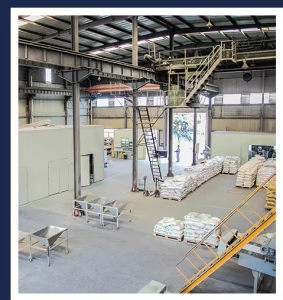
Sample lines and large-scale production lines support both sample panel runs and volume orders.
Have Questions or Need More Details?
Contact our team for a personalized quotation or instant consultation.
Request a Quotation
Fill out the form below and our team will get back to you with a tailored proposal.
WhatsApp Direct Chat
Prefer to chat in real-time? Message us on WhatsApp for instant assistance & quick answers.
- Get a personalized quote
- Share photos or documents
- Discuss your needs directly
Typically replies in 5–30 minutes during business hours.