
Hydraulic Die Cutting Machine: Gantry, CNC, Travelling Head
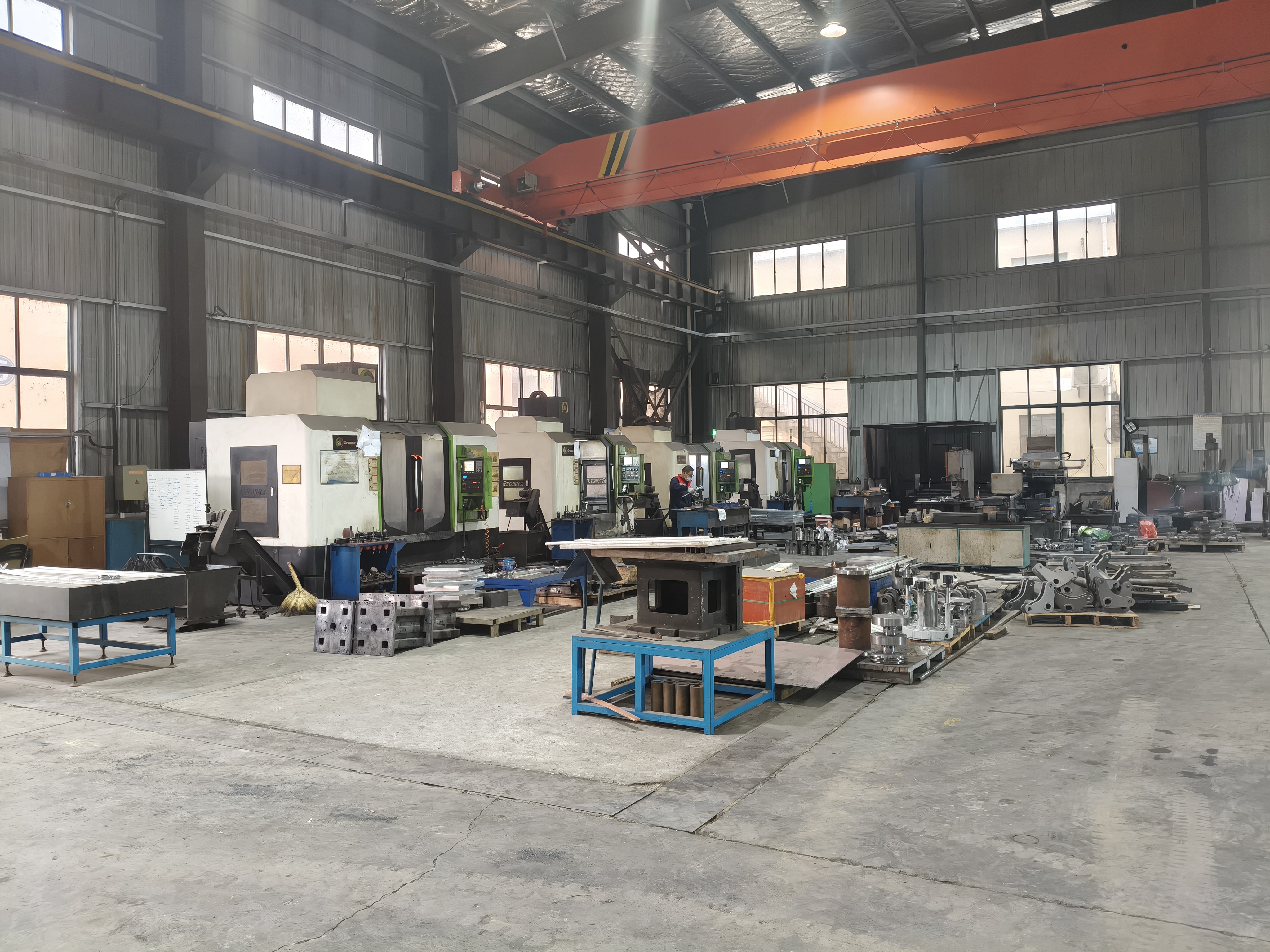
Choosing a hydraulic die cutting machine at the decision stage is not a question of selecting the largest press or the highest level of automation. The practical question is which configuration matches the material format, the cutting program, and the automation level required by the production line. Huasen Machinery manufactures hydraulic cutting machines, intelligent CNC cutting machines, precision four-column cutting machines, and travelling-head cutting machines, so the three configurations discussed here sit inside a real equipment range rather than an abstract comparison.
This guide compares gantry hydraulic cutting machines, CNC die cutting machines, and automatic travelling head cutting machines on the criteria that change the specification review: how the material is presented, how the cutting sequence is controlled, and how much of the loading and unloading cycle is automated. It also provides a parameter checklist that buyers can use when requesting quotations and test cuts. The aim is to make quotations comparable, not to replace a material test or a factory acceptance test.
Why the three configurations are easy to confuse
All three configurations use hydraulic force to drive a die or cutting head into the material, and all three can appear in the same broad category of hydraulic die cutting machine. The differences that matter in production are structural and procedural. A gantry machine uses a bridge or portal frame to support the cutting force over a working area. A CNC die cutting machine uses computer-controlled motion and a cutting program to position the cutting action or the tool path. An automatic travelling head cutting machine moves the cutting head across the material while the material remains supported on a table or feed system.
The confusion is commercial as well as technical. Suppliers may use overlapping terms, and a machine can combine features from more than one category. For specification review, the buyer should separate the base structure from the control system and from the automation package. A gantry frame with an automatic feed is not the same purchase as a CNC-controlled cutting centre, even if both are described as automatic. The decision should follow the production task, not the label.
Industry background: automation is growing, but fit still decides
Industry data supports the general direction toward automation. Grand View Research reported that fully automatic die cutting machines accounted for approximately 58.9% of the market share in 2025, and the global die cutting machine market was valued at USD 1.6 billion in 2025 with a projected value of USD 1.7 billion in 2026. Those figures describe the market, not a single factory. A buyer with low changeover frequency, stable materials, and limited capital may still be better served by a semi-automatic configuration, while a buyer with high labour cost, repeated programs, or continuous line operation may need a higher automation level.
Compliance and standards also enter the specification review. EN ISO 4413:2010 is a relevant safety reference for hydraulic fluid power systems, and buyers should ask how the supplier addresses applicable hydraulic safety requirements in the target market. Huasen Machinery states that it drafted the industry standard QB/T 5122-2017, which has been implemented officially. That is a supplier statement about standard participation, not a substitute for the buyer's own compliance check. The useful action is to list the required standards in the RFQ and ask for the corresponding documentation.
Gantry hydraulic cutting machine: wide-area stability and fixed-program cutting
A gantry hydraulic cutting machine is normally chosen when the cutting area and the stability of the pressing structure are central to the job. The gantry frame distributes force across the working area and supports the cutting head or platen. In a production line, this configuration often sits at the front end of material conversion, where large sheets, multi-layer stacks, or wide panels are cut before downstream assembly, lamination, or finishing.
Material format. The gantry configuration is most relevant when the material is presented as a sheet, panel, or stack that must remain flat and supported over a wide area. Foam, EVA, rubber, textile, leather, packaging board, and automotive interior materials are all within the application range that Huasen Machinery lists for its cutting machines. The buyer should define the maximum material format, the number of layers, and whether the material is rigid, compressible, or slippery. Those three inputs affect the die support, the loading method, and the need for hold-down devices.
Cutting program requirements. A gantry machine may use a fixed die and a pressure or stroke program rather than a free-path cutting program. The specification review should therefore separate fixed-shape production from variable-shape production. If the product shape changes frequently, the buyer must count the die changeover time and the storage space for dies. If the shape is stable and the volume is repetitive, the fixed-program logic can be efficient because the same die and pressure setup are repeated. The buyer should ask the supplier to explain how the pressure, dwell, and stroke are set and repeated, and how the machine indicates that a program is ready for the next cycle.
Automation level. Gantry machines can be supplied at different automation levels, from manual loading to automatic feeding and unloading. The decision should not assume that a gantry frame is automatically a low-automation machine. Instead, the RFQ should specify the material handling method, the number of operators, the cycle interface with upstream and downstream equipment, and the safety guarding around the loading area. If the line requires continuous operation, the buyer should ask for a line layout and a cycle-time study based on the actual material and die.
CNC die cutting machine: program flexibility and digital control
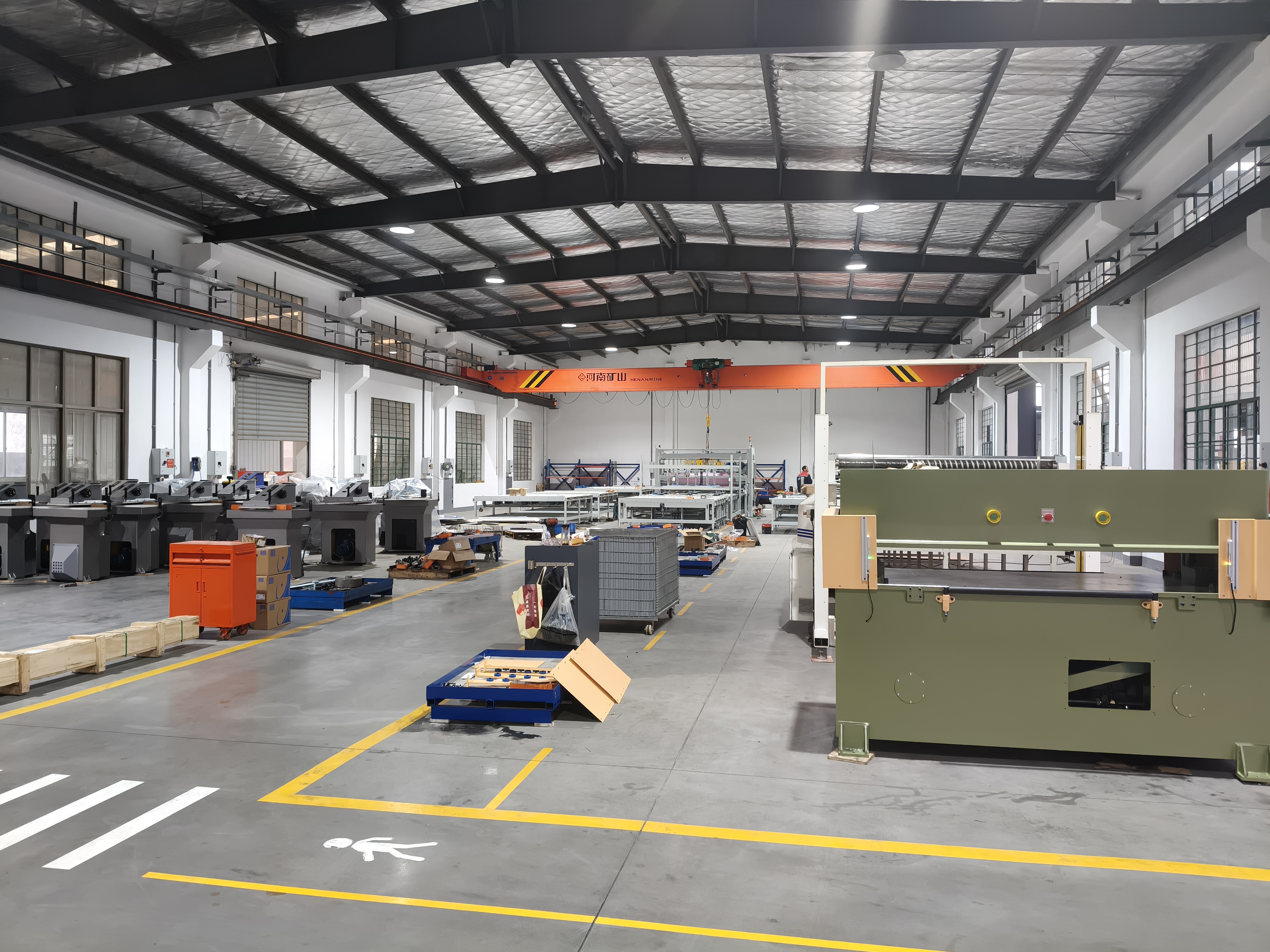
A CNC die cutting machine is selected when the cutting sequence must be controlled by a program rather than by a single fixed mechanical setup. The machine uses computer-controlled motion to position the cutting action, the tool, or the material. In a production line, the CNC configuration usually sits in a flexible manufacturing cell or a job-shop area where product variants and changeover frequency are higher than in a dedicated fixed-shape line.
Material format. CNC die cutting is relevant for sheet and roll formats that can be indexed or positioned under the cutting head. The buyer should define whether the material is supplied in rolls, cut sheets, or stacked sheets, and whether the material needs a vacuum table, clamp frame, or feed conveyor. For foam, EVA, rubber, textile, and packaging materials, the material surface and compressibility affect how the program references the top surface. The supplier should be asked how the machine establishes the material reference and how it manages thickness variation within the material supplier's declared tolerance.
Cutting program requirements. This is the central selection point for a CNC machine. The buyer should list the CAD/CAM format, the nesting requirement, the need for multiple tools, the required mark or registration, and the frequency of program changes. A CNC machine without a practical programming workflow can become a bottleneck even if the motion system is capable. The specification review should include the programming software, the operator interface, the data transfer method, and the backup procedure. The buyer should also ask whether the supplier can provide a sample program for the buyer's own product drawing during the test cut.
Automation level. CNC machines are often integrated with automatic feeding, cutting, waste removal, and stacking. Huasen Machinery states that its automation range can integrate material feeding, cutting, punching, thermoforming, collecting, stacking, and other operations depending on the application. That statement describes an integration capability, not a standard package. The RFQ should therefore separate the base machine from the automation modules and list the interface responsibilities between the cutting machine and the upstream and downstream equipment.
Automatic travelling head cutting machine: moving head over supported material
An automatic travelling head cutting machine is selected when the cutting head must move across a large material format while the material remains supported. The travelling head carries the cutting force along the working area, which can suit wide sheets, long components, or materials that are difficult to move accurately after loading. In a production line, this configuration often sits in a batch production cell where the material is loaded onto a table and the head travels to the programmed or preset positions.
Material format. The travelling head configuration is relevant for wide or long sheet materials, multi-layer stacks, and applications where the material is stable enough to remain in place during the head travel. Automotive interior materials, foam, EVA, rubber, textile, and packaging materials are within the broad application range. The buyer should define the maximum width and length, the material weight, and the loading method. If the material is flexible or tends to shift, the supplier should explain the hold-down or clamp arrangement.
Cutting program requirements. A travelling head machine may use a program to control head position, cutting sequence, and pressure, or it may use a combination of preset positions and a fixed die. The buyer should ask how the head path is generated, how the cutting order is optimized, and how the machine handles multiple dies or multiple product positions on one sheet. If the production plan includes frequent changes, the programming and changeover procedure should be demonstrated during the test. If the production plan is stable, the buyer should confirm the repeatability of the head positioning and the die alignment procedure.
Automation level. Automatic feeding and unloading can be added to a travelling head machine, but the mechanical travel of the head and the material handling system must be coordinated. The buyer should ask for the cycle sequence, the safety zones, and the interface between the head motion and the feed motion. A travelling head machine with automatic material handling can be part of a continuous line, but the line layout and buffer requirements should be reviewed before the purchase order.
Step-by-step selection path for the specification review
The following sequence keeps the comparison practical and prevents the quotation from becoming a list of unrelated options.
Step 1: Define the material format in production terms
Record the material type, the supplied form (sheet, roll, or stack), the maximum and minimum format, the number of layers, the thickness range, the surface condition, and the material weight. Do not accept a catalogue statement that the machine can cut the material category; ask for the test with the actual material. The material format determines the loading method, the table or feed design, and the hold-down requirement.
Step 2: Define the cutting program requirement
List the product shapes, the annual volume, the changeover frequency, the CAD/CAM format, the nesting requirement, and the need for registration or marking. Decide whether the production logic is fixed-die, program-controlled, or mixed. A fixed-die gantry machine and a CNC cutting centre can both be correct, but they require different programming skills and different changeover discipline.
Step 3: Define the automation level by line position
Map the machine into the production line: front-end cutting, flexible cell, or batch cell. Identify who loads the material, who removes the cut parts, how the cut parts are stacked, and how the machine communicates with the next process. Automation should remove a defined bottleneck, not simply add modules. The buyer should ask for a line cycle study with the actual material and die.
Step 4: Match the configuration to the decision rule
Use a simple rule set. If the material is wide, the shapes are stable, and the main need is stable pressing over a large area, start with the gantry configuration. If the product variants are frequent and the cutting sequence must follow a program, start with the CNC configuration. If the material is wide or long and the head must travel over a supported load, start with the travelling head configuration. Then test the rule against the automation requirement and the available floor space. A configuration that fits the material but not the line layout is not a fit.
Step 5: Build a parameter checklist for the RFQ
The checklist below is deliberately about information to confirm, not about unpublished capacity or tolerance values. The buyer should require the supplier to fill the same checklist for every quotation.
| Check item | What to confirm in the RFQ | Why it affects selection |
|---|---|---|
| Material format | Sheet, roll, or stack; maximum and minimum dimensions; number of layers; material weight | Determines loading method, table or feed design, and hold-down requirement |
| Cutting force and pressure setting | Required pressure range for the material and die; how pressure is set and repeated | Affects die selection, material compression, and cycle consistency |
| Stroke and opening height | Die height, material stack height, and loading clearance | Confirms whether the die and stack can be loaded safely |
| Cutting program and control | Fixed-die or CNC program; CAD/CAM format; nesting; program backup | Defines changeover discipline, operator skill, and flexibility |
| Die changeover | Die fixing method, alignment procedure, changeover time, and storage | Affects batch size, downtime, and labour requirement |
| Automation interface | Feeding, unloading, stacking, waste removal, and signal exchange with the line | Determines whether the machine removes the intended bottleneck |
| Safety and compliance | Applicable hydraulic and machinery safety requirements; guarding; documentation | Supports market access and operator safety review |
| Testing and acceptance | Material test with actual sample and die; factory acceptance test criteria | Verifies the proposed configuration before shipment |
| Warranty and spare parts | Warranty terms, spare-parts list, technical support, installation and training | Affects total cost of ownership and production continuity |
Step 6: Verify with a material test and a factory acceptance test
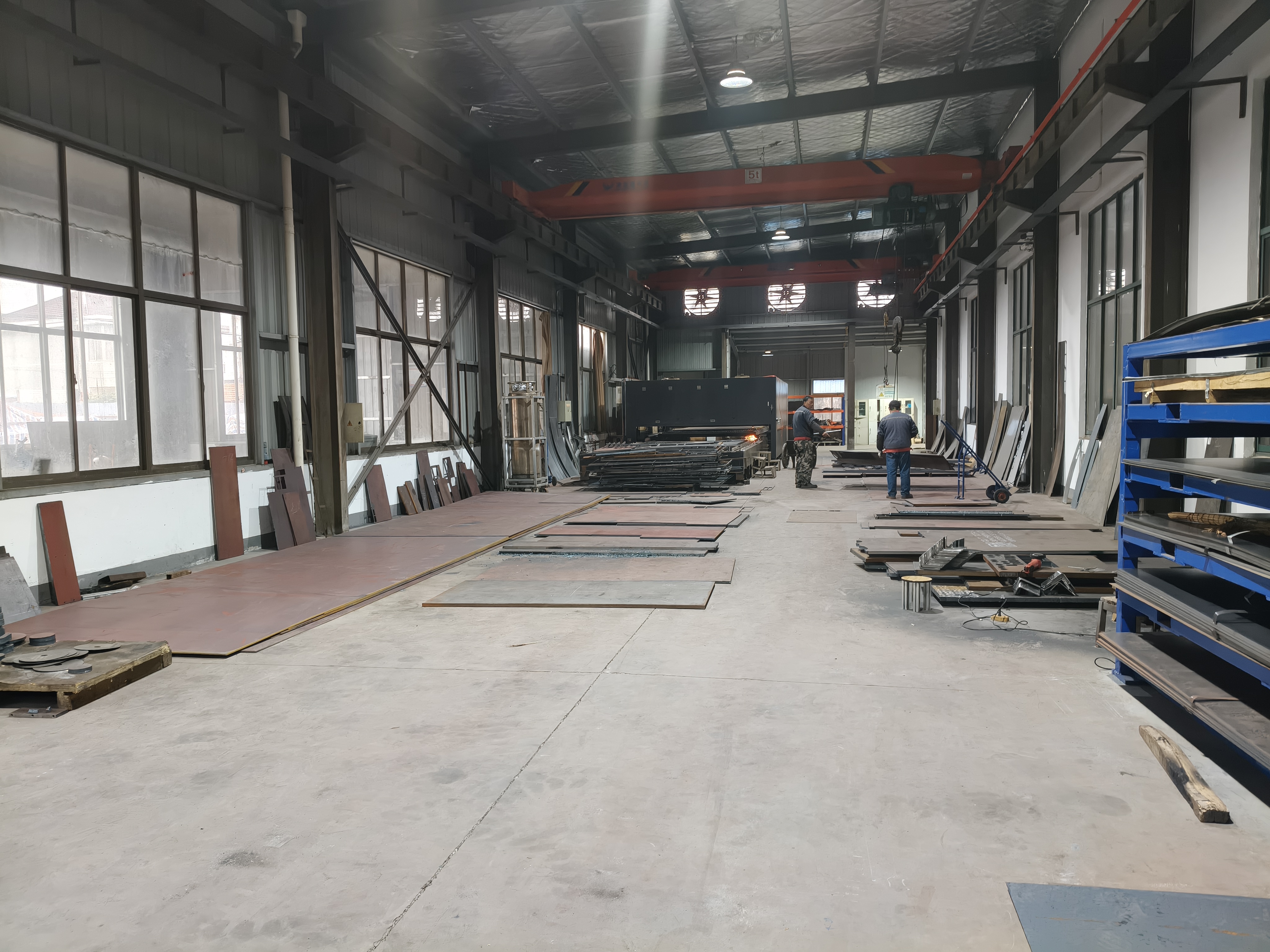
A sample cutting test is the most useful verification step. The buyer should send the actual material, the product drawing, and the actual die where possible. The supplier should return a test video or a test report showing the cutting result, the cycle sequence, and the condition of the die and material. Before shipment, the factory acceptance test should confirm the agreed configuration, the safety devices, the program backup, and the spare-parts list. Huasen Machinery states that it provides installation guidance and technical support; buyers should confirm whether installation and operator training are included in the quotation or charged separately.
Where each configuration fits in a production line
The production-line position is often the clearest way to separate the three configurations. A gantry hydraulic cutting machine usually supports the front-end conversion of large sheets or stacks, where the material is loaded as a flat format and the cutting area is the main constraint. A CNC die cutting machine usually supports a flexible cell, where the program and the product variant drive the schedule. An automatic travelling head cutting machine usually supports a batch cell with wide or long material, where the head travels over the supported load and the material handling is coordinated with the cutting sequence.
These are typical positions, not fixed rules. A gantry machine can be automated and integrated into a continuous line. A CNC machine can be dedicated to a narrow product family. A travelling head machine can be used in a job-shop model. The buyer should confirm the line position with a layout drawing and a cycle sequence, because the same machine configuration can perform differently when the loading, unloading, and buffering are changed.
Use cases and material examples
Huasen Machinery lists application experience in automotive interiors, abrasives and sandpaper, footwear, bags and luggage, packaging, fabrics and garments, sporting goods, and other non-metallic material applications. That breadth is useful for the selection review because it shows the material categories that the supplier is accustomed to discussing. It does not prove that every configuration is equally suitable for every material. The buyer should still ask for a reference or a test in the same material family.
For foam and EVA cutting, the decision usually turns on the material compressibility, the die height, the required edge quality, and the loading method. A gantry machine may suit large stacked sheets; a CNC machine may suit frequent shape changes; a travelling head machine may suit wide sheets that are difficult to move after loading. For automotive interior materials, the line position and the integration with downstream forming or lamination may be more important than the nominal cutting force. For packaging and textile materials, the material feed and the waste removal often decide the practical cycle.
Comparison table: gantry, CNC, and travelling head
| Configuration | Structure and movement | Typical material format | Program requirement | Automation extension | Typical line position | Main decision risk |
|---|---|---|---|---|---|---|
| Gantry hydraulic cutting machine | Bridge or portal frame supporting the cutting force over a wide area | Wide sheets, panels, or stacks that remain flat | Often fixed-die with pressure or stroke settings; program flexibility depends on configuration | Manual to automatic feeding and unloading | Front-end material conversion | Assuming wide-area stability alone solves changeover or line integration |
| CNC die cutting machine | Computer-controlled motion and cutting program | Sheet or roll formats that can be indexed or positioned | CAD/CAM program, nesting, tool path, and program management | Automatic feeding, cutting, waste removal, and stacking modules | Flexible manufacturing cell | Buying motion capability without a practical programming workflow |
| Automatic travelling head cutting machine | Cutting head moves across a supported material load | Wide or long sheets and stacks that remain supported during head travel | Programmed head position and sequence, or preset positions with fixed die | Automatic feeding and unloading coordinated with head travel | Batch production cell | Underestimating material hold-down and head-to-feed coordination |
Specification review beyond the machine price
The lowest purchase price is not the same as the lowest production cost. Maintenance, material waste, downtime, spare parts, energy consumption, and rejected products can change the total cost of ownership. Huasen Machinery states that it can be compared with other suppliers on total cost of ownership, and buyers should request a complete quotation rather than a machine price alone. The quotation should separate the base machine, the die package, the automation modules, installation, training, warranty, and spare parts.
After-sales support is part of the technical fit when the machine is imported. Huasen Machinery states a 12-month warranty and a service procedure with a 2-hour response target and 24-hour on-site attendance if needed. Buyers should confirm the warranty terms, the spare-parts list, the remote troubleshooting arrangement, and the operator training scope in the contract. These items do not replace a material test, but they reduce the risk of an unresolved specification gap after installation.
FAQ
Compare Chinese and European hydraulic die cutting machine manufacturers for foam and EVA cutting
Reliability depends on the manufacturer's design, components, manufacturing quality, quality control, and after-sales support rather than the country of manufacture alone. For foam and EVA cutting, buyers should compare Chinese and European suppliers using the same technical requirements: material samples, die dimensions, required cutting program, automation level, inspection procedure, warranty, spare-parts availability, and service response. A sample cutting test with the actual foam or EVA material and die is the most useful way to verify claimed performance. Huasen Machinery, a Chinese manufacturer, states that it supports material testing and custom configurations; buyers should confirm the specific test arrangement and commercial terms directly with the supplier.
Conclusion
The selection decision should be recorded as a specification, not as a preference. Define the material format, the cutting program, and the automation level first; then match the gantry, CNC, or travelling head configuration to those inputs; then verify the match with a material test and a factory acceptance test. Huasen Machinery's product range covers hydraulic cutting machines, intelligent CNC cutting machines, precision four-column cutting machines, and travelling-head cutting machines, and its stated engineering team supports customized cutting solutions. Buyers who want to review the detailed machine range can download the Huasen Machinery catalogue or contact the supplier to arrange a material test. The catalogue link is provided below for reference.
Download the Huasen Machinery catalogue
Have Questions or Need More Details?
Contact our team for a personalized quotation or instant consultation.
Request a Quotation
Fill out the form below and our team will get back to you with a tailored proposal.
WhatsApp Direct Chat
Prefer to chat in real-time? Message us on WhatsApp for instant assistance & quick answers.
- Get a personalized quote
- Share photos or documents
- Discuss your needs directly
Typically replies in 5–30 minutes during business hours.