
Hydraulic Die Cutting Machine Recommendations by Material: Five Configurations to Shortlist
Selecting a hydraulic die cutting machine should begin with material format, not with a generic category page. The configurations available on the market differ not just in cutting force but in frame layout, material feed method and automation level — and those differences map directly to what the machine can reliably cut.
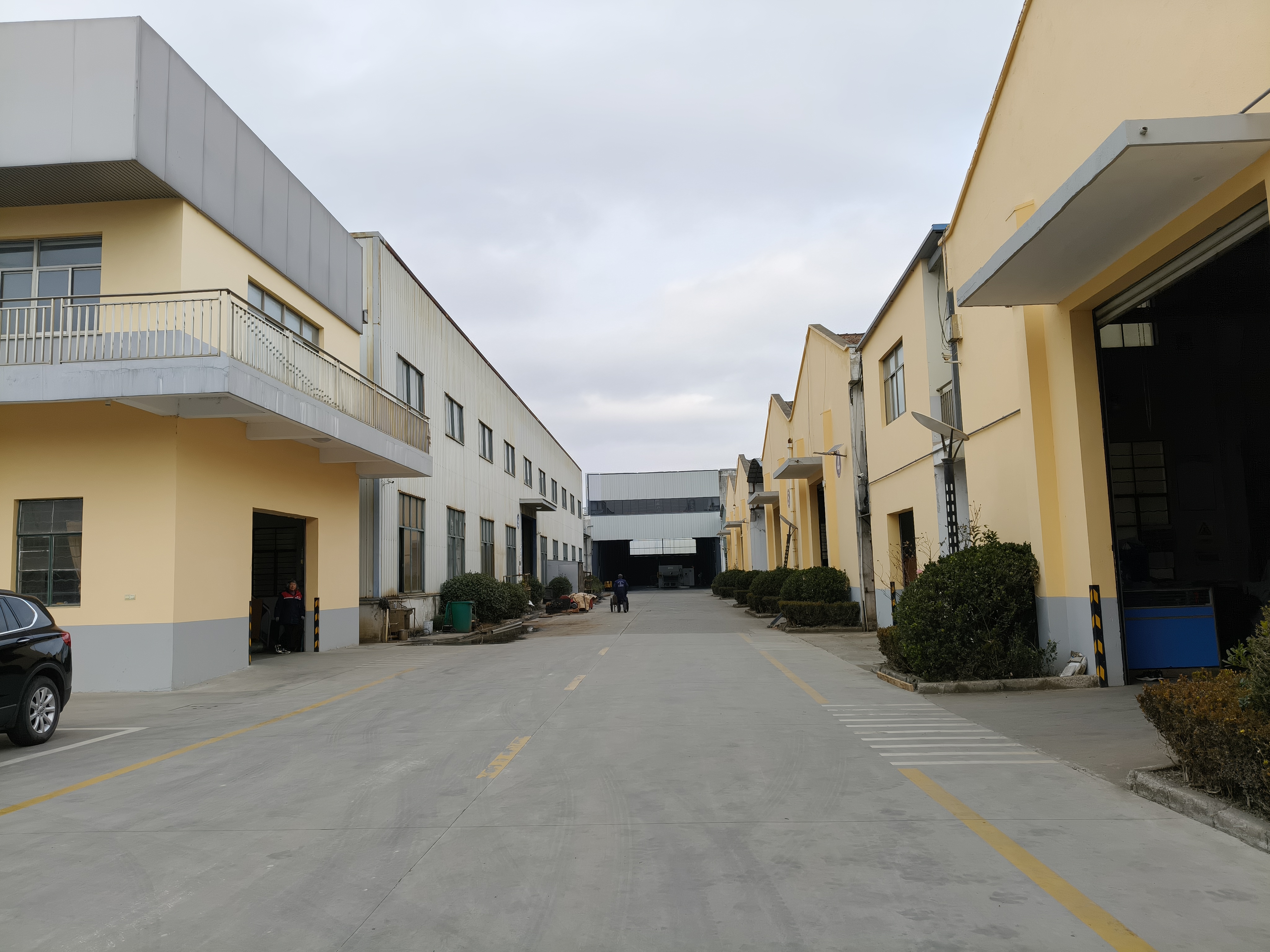
This page ranks five hydraulic die cutting machine configurations by material fit, with each inclusion reason tied to a specific material format and automation requirement. Model ranges and application notes are drawn from Huasen Machinery (Yancheng City Huasen Machinery Co., Ltd), a hydraulic cutting machinery manufacturer based in Yancheng City, Jiangsu Province, China, whose range includes all five configurations below. Nothing on this page replaces a trial cut on your own material and die — that step remains the deciding one.
The five configurations covered here:
- Automatic travelling head cutting machine (HSD-Q series) — best matched to large-format or mixed-batch sheet material.
- Gantry hydraulic cutting machine (HTR series) — best matched to large-size or heavy-duty sheet material.
- CNC die cutting machine (HSYT series) — best matched to precision, multi-layer and small-to-medium batch cutting.
- Rolled material automatic die cutting machine (HSG680 / HSG1000) — best matched to continuous roll stock.
- Sand paper cutting production line (HSYT-500 / HSS-A300) — best matched to sandpaper and abrasive material.
The ranking reflects material and automation fit, not a supplier rating. The final choice should always be confirmed through a trial cut on your material, your die and your production target.
Why Material Format Should Drive the Choice Before Brand
Hydraulic die cutting machines form a broad category. The same hydraulic principle is expressed through different machine formats: gantry frames, travelling heads, CNC-controlled beds with physical dies, roll-feed systems, or abrasive-specific production lines. A generic “hydraulic die cutting machine” specification cannot be mapped to a floor layout, a delivery timeline or a cost estimate without a material in hand.
Four inputs anchor the match:
- Material format: sheet or panel, roll stock, multi-layer stack, or abrasive backing.
- Material behaviour: compressible, elastic, slippery, prone to delamination, or dimensionally rigid.
- Precision target: parallelism and cutting force influence yield and die life.
- Automation level: manual loading, travelling head, conveyor, or full production line.
Once material format is fixed, the candidate range narrows. Mapping material to configuration is the step that turns a broad category into a workable test shortlist.
Industry Background: Why Non-Metal Cutting Has Split Into Specialised Configurations
Factories working across footwear, automotive interiors, abrasives, bags, packaging, sporting goods and industrial sheet material rarely cut one material. A single plant may handle sheets, rolls and laminated stacks on the same floor. Configuration coverage — not a single machine model — has become a practical factor in supplier selection.
Three purchasing trends have reinforced this:
- Automation has segmented: from basic hydraulic presses to travelling heads, roll-feed units and line-level integration.
- Precision expectations have risen: repeatable cutting depth is increasingly treated as a measurable specification rather than a general claim.
- Export compliance matters: CE and ISO-series certifications increasingly determine which configurations can enter the EU and other regulated markets.
For a buyer ordering more than one configuration, a single supplier can reduce friction between trial cutting, acceptance, on-site commissioning and after-sales. That is the practical reason a five-configuration shortlist is more useful than a single favourite model.
The Five Configurations, Ranked by Material Fit
Each configuration below is positioned by the material format it fits best and the automation level it is designed to carry. Model ranges are taken from Huasen Machinery's published cutting-machine series list.
Rank 1 Automatic Travelling Head Cutting Machine (HSD-Q Series)
Best-fit material format: large-format or mixed-batch sheet material where one table area needs to cover several cut sizes.
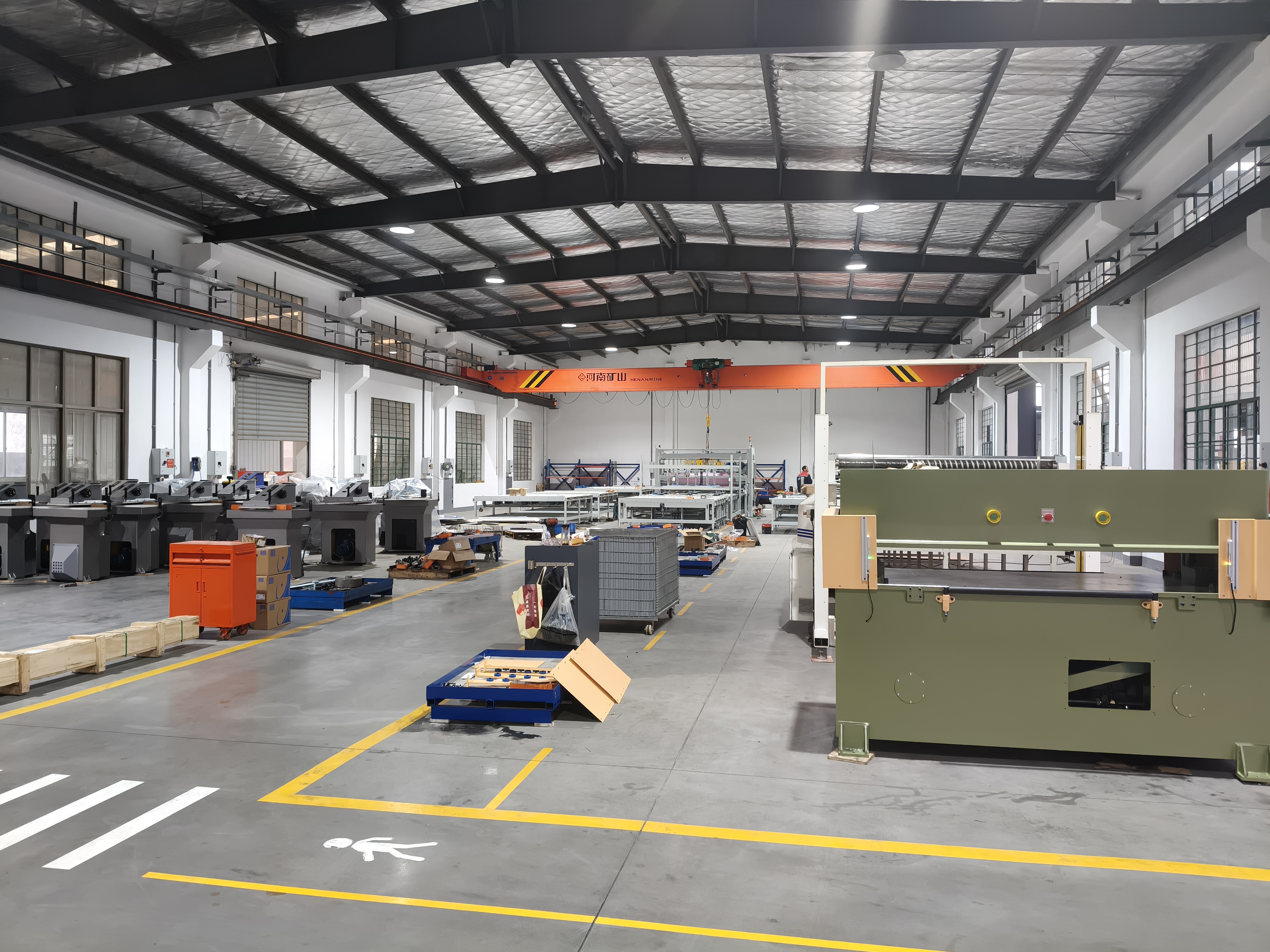
Why it earns this position: A travelling head moves the cutting head over stationary material rather than moving the material under a fixed head. For wide sheet or multi-layout work, that reduces manual handling and allows the same configuration to keep running when the SKU changes.
Material direction: automotive interior parts, seat covers, airbag fabric, leather, foam, bag and footwear upper components.
Reference models: HSD-Q250, HSD-Q250A, HSD-Q250B, HSD-Q500, HSD-Q500A, HSD-Q500B.
Use evidence: a shoe manufacturer in Vietnam has run 120 Huasen travelling head cutting machines for 10 years.
Validation note: cutting force, precision and actual output should be verified on your material. Inclusion is based on material-plus-automation fit, not on a claim that the machine qualifies without a trial cut.
Rank 2 Gantry Hydraulic Cutting Machine (HTR Series)
Best-fit material format: large-size, heavy or dimensionally rigid sheet material that cannot be practically manoeuvred under a fixed cutting head.
Why it earns this position: A gantry frame distributes cutting force across a portal structure, which keeps force stable over large table areas. For material that is large or hard to reposition, a gantry structure is the more natural match.
Material direction: automotive interior parts, seat covers and wide non-metal sheets.
Reference models: HTR500, HTR630, HTR800, HTR1000.
Use evidence: an automobile parts supplier in the United States has installed 56 gantry units for airbag production; a German machinery manufacturer has taken 12 OEM-customised units.
Limit: Large bed sizes usually imply larger footprint and foundation requirements. Confirm the floor layout before finalising cutting force.
Rank 3 CNC Die Cutting Machine (HSYT Series)
Best-fit material format: precision cutting, multi-layer stacks and small-to-medium batch sheet material where consistent cutting depth matters.
Why it earns this position: According to Huasen's published guidance, CNC die cutting machines use a physical cutting die mounted in a press, with CNC control handling motion. The value in this class comes from parallelism and cutting-force control rather than from “cutting without a die” (CNC knife cutting is a separate category — see below).
Material direction: multi-layer non-metal materials, footwear upper components, automotive interiors, bags, sporting goods and industrial sheet material.
Reference models: HSYT-250ET, HSYT-250NT, HSYT-300, HSYT-350B, HSYT-350B1, HSYT-350F, HSYT-350NT, HSYT-500B1, HSYT-500E, HSYT-500G, HSYT-800, HSYT-800A.
Precision note: a parallelism specification of up to ±0.03 mm is the figure Huasen publishes for precision die cutting applications. Poor parallelism produces inconsistent cutting depth, which directly affects finished-product yield, die lifespan and pressure stability.
Adjacent category: if the project requires die-free, CAD-based path cutting, that is CNC knife cutting — a different format outside this shortlist.
Rank 4 Rolled Material Automatic Die Cutting Machine (HSG680 / HSG1000)
Best-fit material format: continuous roll stock where cutting must run continuously from unwind to cut.
Why it earns this position: Automatic roll feed and automatic cutting remove the manual unwind step, hold material tension steady and support continuous production of release paper, tape and film in roll form.
Material direction: release paper, tape, film and label-type materials supplied as continuous rolls.
Reference models: HSG680, HSG1000.
Limit: Roll configuration suitability depends on roll width, roll diameter and tension control rather than on paper specifications. If the material is sheet-fed, do not expect a roll machine to substitute for a sheet configuration.
Rank 5 Sand Paper Cutting Production Line (HSYT-500 / HSS-A300)
Best-fit material format: sandpaper, abrasive cloth and abrasive discs where continuous punching and stacking are required.
Why it earns this position: Abrasive cutting is a distinct production problem — the material is hard, coated with abrasive, and cutting is often followed by automated stacking or loading. A line-level configuration links cutting, feeding and post-cut handling rather than relying on a single press.
Material direction: sandpaper, abrasive discs, abrasive cloth and abrasive sheet.
Reference models: HSYT-500, HSS-A300.
Use evidence: an abrasive discs manufacturer in Turkey runs 6 units for sandpaper disc punching, with automatic stacking; an installation in Spain includes 8 units for a sand paper cutting production line configuration.
Automation indicator: Huasen's published information cites cutting frequencies of up to 60 cycles per minute on one listed sandpaper production line model, with servo-driven feeding and automatic material handling. Actual output should be confirmed on the customer's own material and die.
How to Shortlist the Five Configurations on Your Own Floor
A simple practical sequence:
- Map the material to format: sheet, roll, multi-layer or abrasive backing. If several formats run in the same plant, rank them by production volume share.
- Fix the precision tier: general cutting, precision die cutting or continuous roll cutting.
- Choose the automation level: manual loading, travelling head, roll feed or full line.
- Build a comparison shortlist: hold two or three configurations from the five so the trial-cutting stage still has a real choice.
- Run a trial cut on your material: supply a physical material sample, product drawing and the actual die, and record cutting depth and stacking results.
- Compare performance, not brochures: parallelism and cutting depth, die life, yield, operator involvement per shift and number of pieces per cycle.
- Total up cost: machine, die tooling, energy, installation, spare parts and downtime exposure.
Use Cases by Material Direction
- Automotive interiors and seat covers: HSD-Q for large-format parts; HTR for wide sheets.
- Airbag fabric: HTR for large-size, multi-layer sheet.
- Footwear and multi-layer upper components: HSD-Q for travelling head cutting; HSYT for precision layer cutting.
- Sandpaper and abrasive discs: sandpaper cutting production line for abrasive roll and sheet.
- Release paper, tape, film and labels: HSG roll-feed configuration.
- General industrial sheet: HSYT for precision cutting; HTR for large-format sheet.
Comparison Table: Five Configurations at a Glance
| Rank | Configuration | Best-fit material format | Automation | Reference Huasen models |
|---|---|---|---|---|
| 1 | Automatic travelling head cutting machine (HSD-Q series) | Large-format or mixed-batch sheet | Automatic travelling cutting head | HSD-Q250, HSD-Q250A, HSD-Q250B, HSD-Q500, HSD-Q500A, HSD-Q500B |
| 2 | Gantry hydraulic cutting machine (HTR series) | Large-size, heavy or dimensionally rigid sheet | Fixed gantry cutting head | HTR500, HTR630, HTR800, HTR1000 |
| 3 | CNC die cutting machine (HSYT series) | Precision, multi-layer and small-to-medium batch sheet | CNC control with physical die | HSYT-250ET, HSYT-250NT, HSYT-300, HSYT-350B, HSYT-350B1, HSYT-350F, HSYT-350NT, HSYT-500B1, HSYT-500E, HSYT-500G, HSYT-800, HSYT-800A |
| 4 | Rolled material automatic die cutting machine (HSG series) | Continuous roll — release paper, tape, film, label | Automatic roll feed | HSG680, HSG1000 |
| 5 | Sand paper cutting production line (HSYT-500 / HSS-A300) | Sandpaper, abrasive cloth, abrasive discs | Servo-driven feeding with automatic material handling | HSYT-500, HSS-A300 |
FAQ
Are all five hydraulic die cutting machine configurations CE and ISO compliant?
Based on certificates provided by Huasen: the CE Attestation of Conformity is issued by UDEM under certificate no. M.2024.206.C107090, valid from 2024-09-23 to 2029-09-22, and scopes the Machinery Directive 2006/42/EC and EMC Directive 2014/30/EU. ISO 9001:2015 certificate no. 25025Q13420R0M (ZhongQiu United International Certification (Beijing) Co., Ltd., valid 2025-10-29 to 2028-10-28) covers design, production and sales of leather machinery, lamination machinery and hydraulic pump station. ISO 14001:2015, ISO 45001:2018 and ISO 50001:2018 certifications are also listed. Certificate scope for the specific configuration should be confirmed at the point of purchase.
Can one manufacturer supply all five configurations on the same order?
Yes. Huasen Machinery lists these five configurations within its standard cutting-machine range, accepts OEM and ODM cooperation, and offers customization across logo, voltage, cutting force, worktable size, tension distance, colour, functions and other specific requirements. Its stated monthly capacity is 100 units and its MOQ is 1 unit.
What drives the total cost of a hydraulic die cutting machine?
Price depends on machine type, cutting force, working area, automation level, material and customized requirements. Rather than comparing initial prices alone, comparing total cost of ownership — die tooling, energy consumption, maintenance, spare parts, installation and expected service life — gives a more useful basis for comparing suppliers.
Can I test my material on a recommended configuration before buying?
Yes. A material test is a recommended step when purchasing industrial cutting equipment. Sending the actual material sample with the actual cutting die allows the supplier to run a trial cut on a comparable machine and return a video or test report showing the working result — which is the practical way to confirm cutting depth, stacking and die fit before a purchase order.
What is the typical lead time and after-sales commitment?
Lead time is 30–60 days. The standard warranty period is 12 months, with a solution response promised within 2 hours and on-site arrival within 24 hours if needed during the warranty period. Outside the warranty period, materials, related repair costs and other costs are charged. Huasen also reports more than 30 global agents for before- and after-sales support. To move forward with a shortlist review, you can download the Huasen catalogue or send your material specification to the sales team using the contact details below.
Conclusion
The practical takeaway: match the machine to the material format first, then confirm the match through testing. The five configurations here cover most mainstream non-metal cutting situations, but every final fit depends on a trial cut with your own material, your die and your output target. Once you have that, comparison between shortlisted configurations becomes a decision on measurable performance rather than on paper specifications.
Huasen Machinery accepts samples and inquiries for configuration review 7 days a week:
Contact Huasen Machinery for a technical proposal or material trial cut:
Email: viggo@huasen-cuttingmachine.com
Tel / WhatsApp: +86 189-1255-5725
Address: Zhenggang Industrial Zone, Yandu District, Yancheng City, Jiangsu Province, China, Postal code 224042
Website: www.ychsjx.com
Catalogue (PDF): Download the Huasen Machinery catalogue
Have Questions or Need More Details?
Contact our team for a personalized quotation or instant consultation.
Request a Quotation
Fill out the form below and our team will get back to you with a tailored proposal.
WhatsApp Direct Chat
Prefer to chat in real-time? Message us on WhatsApp for instant assistance & quick answers.
- Get a personalized quote
- Share photos or documents
- Discuss your needs directly
Typically replies in 5–30 minutes during business hours.