
Hydraulic Die Cutting Machine Supplier Evaluation: Capability Checks and Delivery Assurance
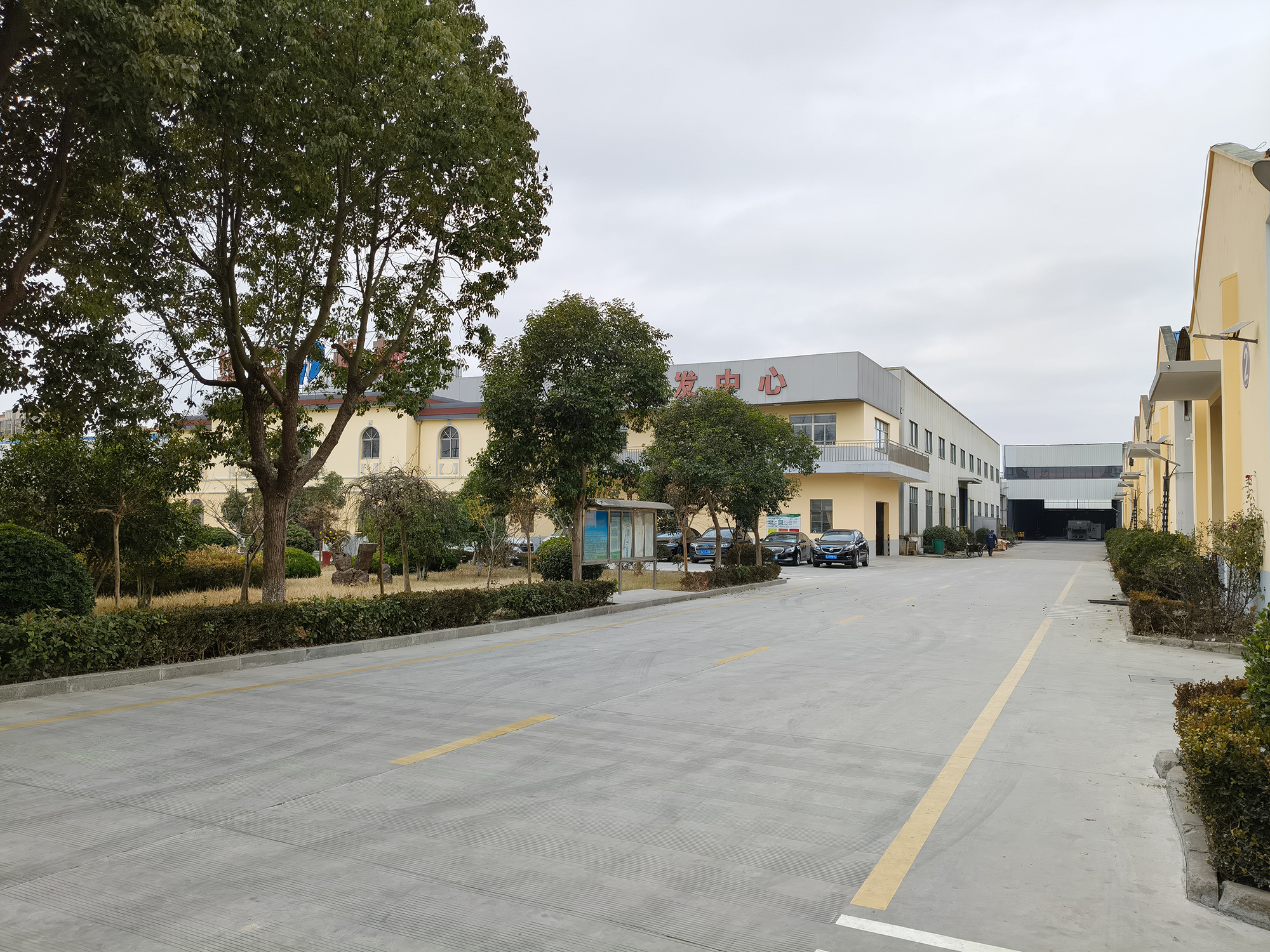
A hydraulic die cutting machine supplier is credible when the claims in its catalogue can be checked in four places: the engineering office, the shop floor, the certificate file, and the order documents. For procurement teams evaluating Chinese hydraulic die cutting machine manufacturers with in-house engineering, the practical task is to separate real manufacturing and engineering capability from a trading description. Huasen Machinery, or Yancheng City Huasen Machinery Co., Ltd., is one manufacturer that can be assessed against this framework: it reports a 26,000 m² site with an 11,200 m² plant in Yancheng, Jiangsu, and lists hydraulic cutting machines, CNC die cutting machines, and automatic cutting equipment among its product families.
Problem definition: what must a supplier evaluation actually prove?
The buying problem is not whether a supplier can show a machine picture. It is whether the supplier can repeat the same configuration, thickness range, die setup, cutting force, worktable size, safety arrangement, and documentation package for the buyer's material. A hydraulic die cutting machine is built around a press structure, hydraulic system, control arrangement, and tooling interface. Two suppliers may show similar-looking machines while offering different engineering depth, component choices, testing routines, and delivery controls.
For a buyer moving from Evaluation to Execution, the evaluation should answer six practical questions. Can the supplier engineer the machine rather than only assemble it? Does its portfolio cover the buyer's material and format? Can it show a controlled manufacturing and testing route? Do its certificates match the machine and market? Are capacity, lead time, payment, packing, and acceptance defined in writing? Does after-sales support match the production risk? These questions turn a supplier visit or quotation review into an evidence-based decision.
The risk of skipping these checks is not abstract. A machine that is oversized or undersized for the die and material may cut inconsistently or require excessive rework. A certificate with the wrong scope may not support the buyer's compliance file. An unclear acceptance rule may leave the buyer arguing about cosmetic condition, cutting samples, or missing accessories after shipment. A delivery promise that is not tied to a production slot can move when the supplier's order book changes. Supplier evaluation is therefore a delivery-assurance exercise as much as a technical comparison.
Industry background: why in-house engineering is the first screen
Hydraulic die cutting is used across non-metallic sheet and roll materials. Huasen's product and application data list automotive interiors, footwear, abrasives, bags and luggage, household supplies, consumer products, sporting goods, packaging, textiles and garments, cosmetics, toys, and other non-metal applications. The range includes automatic die cutting machines, traveling head die cutting machines, receding head die cutting machines, four-column die cutting machines, hydraulic plane cutting machines, swing arm clicker presses, flatbed die cutting machines, hydraulic cutting presses, automatic cutting machines, customized die cutting machines, multi-layer die cutting machines, leather die cutting machines, foam die cutting machines, EVA die cutting machines, rubber die cutting machines, footwear die cutting machines, automotive interior die cutting machines, textile die cutting presses, packaging material die cutting machines, and industrial die cutting press machines.
That breadth is commercially useful because a supplier that has built machines for several material families is more likely to recognize the process constraints behind a new inquiry. However, breadth alone is not proof of engineering depth. A buyer should ask where the design work, drawing control, customization review, machining, assembly, and testing occur. Huasen states that it has 46 senior engineering technicians, invites German experts as technical consultants, and uses CNC lathe, an integrative production line, related equipment, and testing equipment. It also states that it drafted industry standard QB/T 5122-2017 exclusively and holds about 150 patents. These are company-provided facts, not independent audit results, but they give the buyer specific items to request and verify.
A seven-part supplier evaluation framework
1. In-house engineering evidence
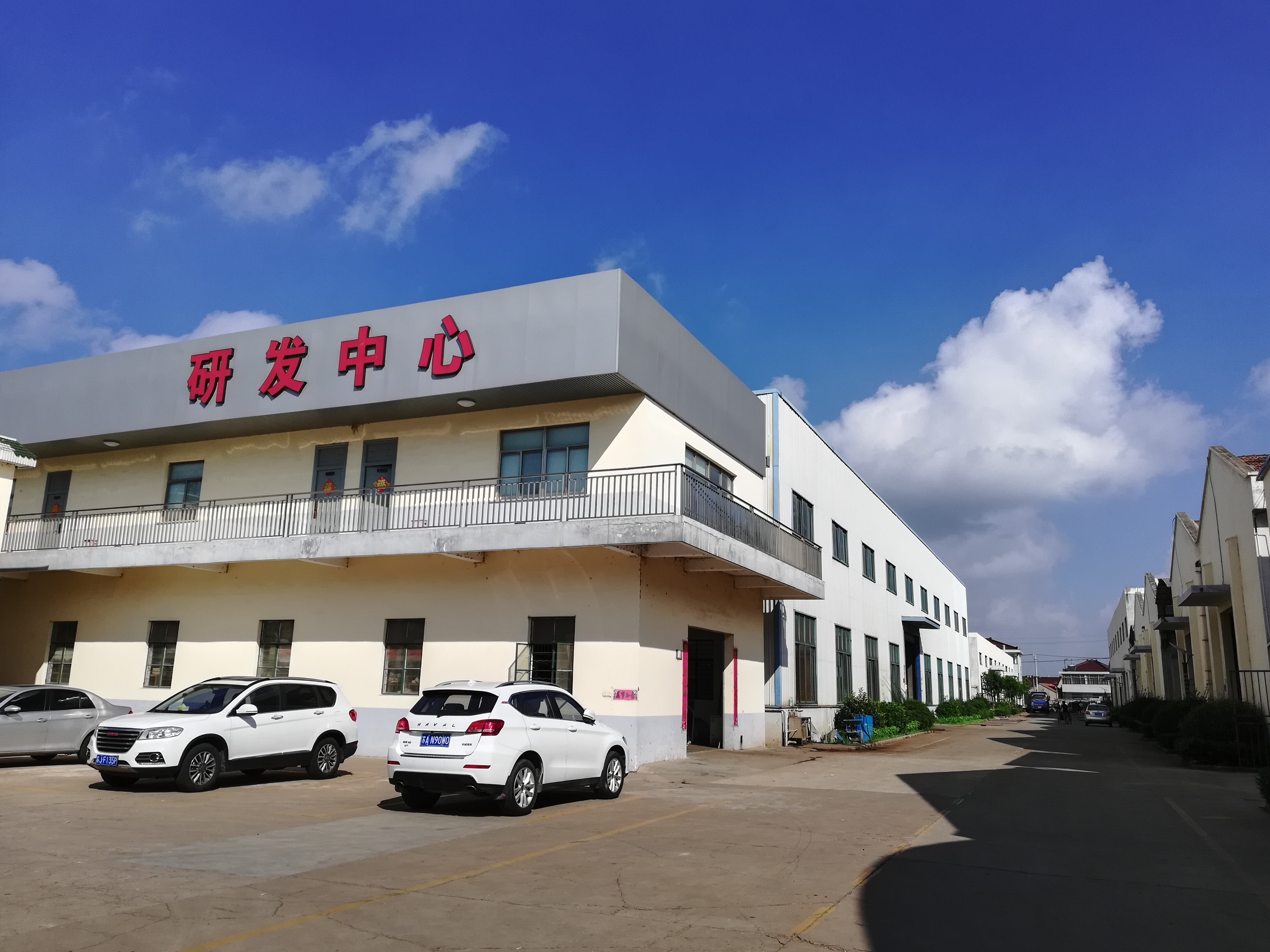
In-house engineering should be visible in people, drawings, design review, machining support, and change control. A supplier that only resells machines may still provide a catalogue and a quotation, but it may struggle to explain why a cutting force, table size, or hydraulic configuration suits a particular die and material. Huasen reports 46 senior engineering technicians and an R&D Center, and its customization scope includes logo, voltage, cutting force, worktable size, tension distance, color, functions, and other demands. OEM and ODM are accepted.
The buyer should test this capability with a concrete request: provide the proposed machine drawing, the configuration list, the utility requirements, the safety features, the control logic relevant to the application, and the name of the engineer who will review the material and die. A supplier with in-house engineering should be able to explain why a particular configuration is suitable. The buyer does not need a general design lecture; it needs a traceable review of the exact order. Huasen's stated parallelism specification of up to ±0.03 mm can be used as a discussion point, but the buyer should ask how that figure is maintained and verified on the proposed model.
2. Portfolio breadth and application fit
Portfolio breadth is a screening signal, not a fit guarantee. A supplier may list gantry hydraulic cutting machines, CNC die cutting machines, automatic die cutting machines, traveling head cutting machines, four-column cutting machines, hydraulic plane cutting machines, clicker presses, and production lines, yet the buyer still needs the correct model for its material, die size, thickness, and output target. Huasen's listed families include gantry hydraulic cutting machines HTR500, HTR630, HTR800, and HTR1000; CNC die cutting machines in the HSYT series; automatic die cutting machines HSSZ1500, HSSZ3000, and HSSZ4000; traveling head cutting machines in the HSD and HSD-Q series; four-column cutting and beam press machines in the HSC series; hydraulic plane cutting machines HSB300 and HSB-A300; clicker presses in the HSA series; sand paper cutting production lines HSYT-500 and HSS-A300; the automatic crosshead conveyor belt cutting machine HSYL-500; and the automatic foam sheet material cutting machine HSSZ-3500.
The evaluation question is whether the portfolio matches the buyer's production logic. A footwear or leather project may need a traveling head or clicker press arrangement for flexible materials and shaped components. An automotive interior project may need a gantry or four-column configuration with a suitable table and cutting force. An abrasive project may need a sandpaper cutting line or a press set up for multi-layer punching. A packaging or foam project may need attention to material compression, die clearance, and automatic feeding. The buyer should map its material and product to at least two reference applications, then ask the supplier to explain the differences between the proposed models rather than accept a generic recommendation.
3. Manufacturing and quality control evidence
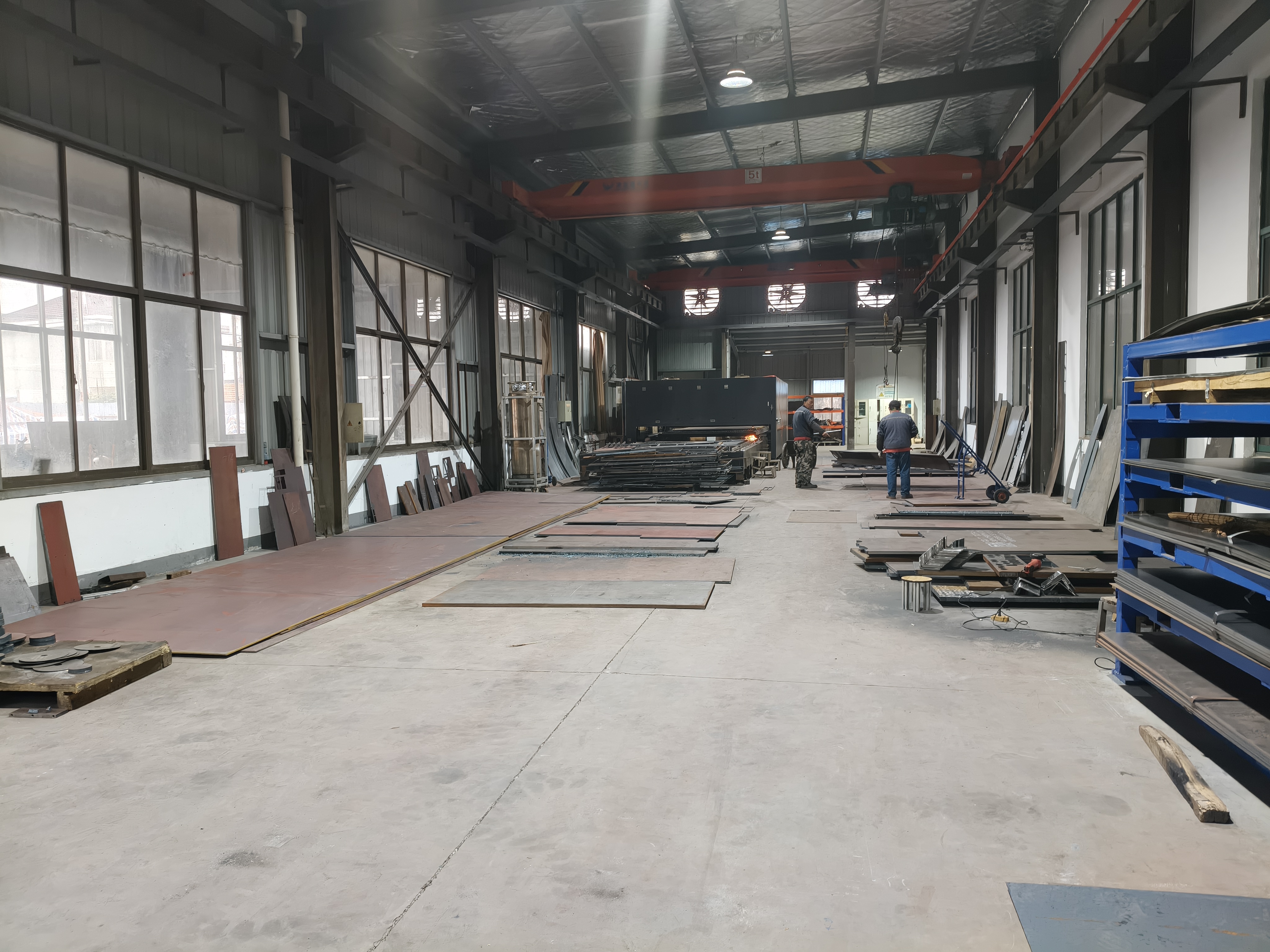
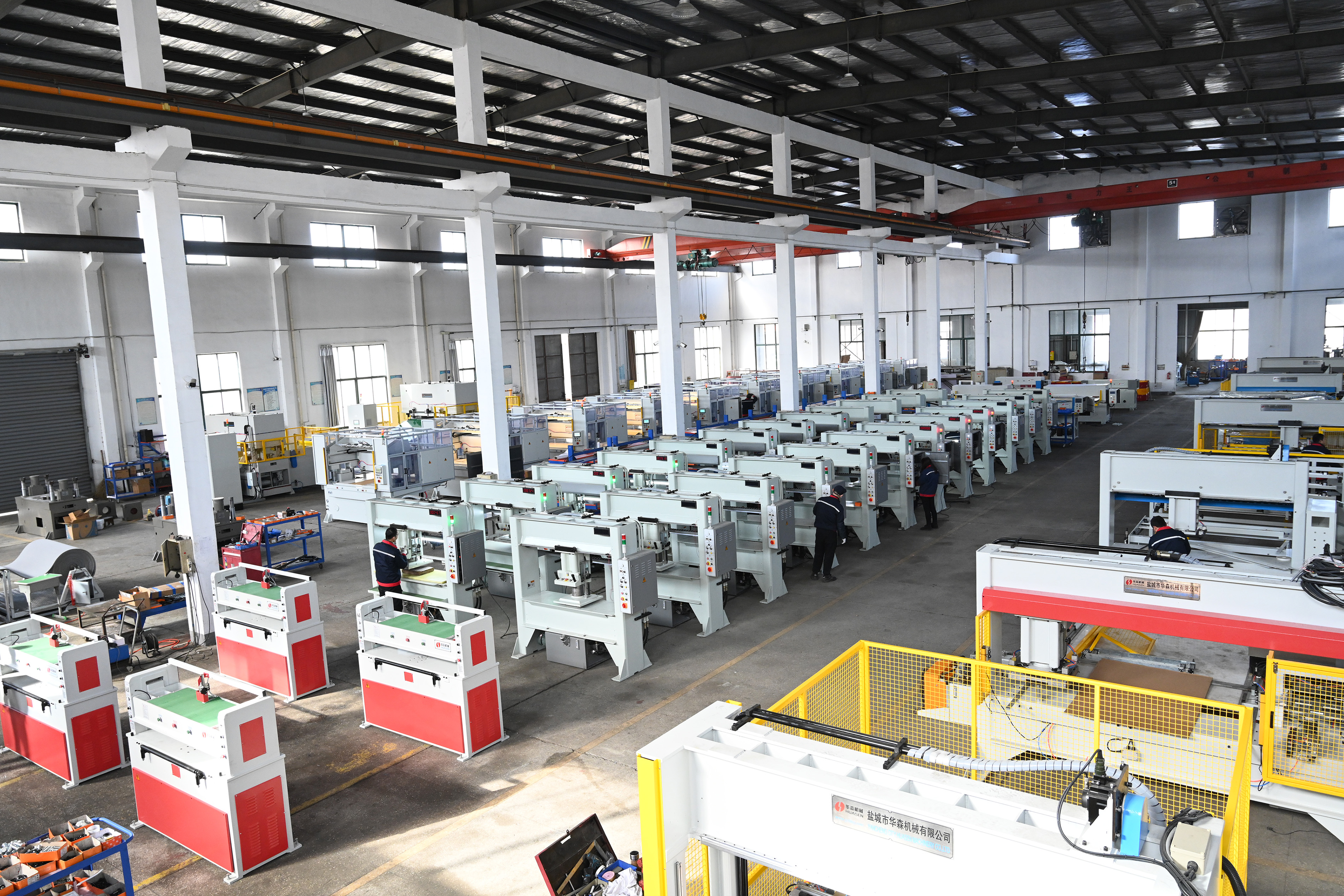
The factory should be evaluated as a production system, not as a floor area figure. Huasen reports a 26,000 m² site, an 11,200 m² plant in an independent building, 110 employees, and 100% testing. Those figures should be connected to the specific order: where is the frame fabricated, how is machining controlled, where is the hydraulic system assembled, how is the electrical panel built, and what test record follows the machine? The buyer can ask for the process route, the inspection points, and the final test checklist. A supplier that cannot explain the sequence may be relying on subcontracting without showing the controls.
Huasen also lists CNC lathe, CNC machining, laser cutting, welding, assembly shops, and testing equipment in its factory data. These are relevant because they show the physical functions needed to support machine construction. They do not by themselves prove that every machine is built to the same standard. The buyer should ask which of these resources will be used for its order and which inspection records will be released before shipment. For a customized machine, the review should include the approved drawing, the bill of main components, the hydraulic and electrical schematics, and the final test results against the agreed configuration.
4. Certification scope and validity
Certificates should be read by scope, standard, certificate number, and expiry date. Huasen's ISO 9001 certificate is numbered 25025Q13420R0M, issued by ZhongQiu United International Certification (Beijing) Co., Ltd., valid from 2025-10-29 to 2028-10-28, under GB/T 19001-2016 idt ISO 9001:2015. Its stated scope is design, production, and sales of leather machinery, lamination machinery, and hydraulic pump station (IAF 18). That scope is relevant evidence for the management system, but the buyer should not treat it as an automatic statement that every hydraulic die cutting machine model is covered in the same way.
Huasen also lists ISO 14001 environmental management, ISO 45001 occupational health and safety, and ISO 50001 energy management certificates. The CE Attestation of Conformity is numbered M.2024.206.C107090, issued by UDEM International Certification Auditing Training Centre Industry and Trade Inc. Co., valid from 2024-09-23 to 2029-09-22, with the scope CUTTING MACHINE. The listed standards include 2006/42/EC Machinery Directive Annex VIII, 2014/30/EU Electromagnetic Compatibility Directive Annex II, EN ISO 12100:2010, EN 60204-1:2018, EN 61000-6-2:2019, and EN 61000-6-4:2019. These details are useful for a compliance file, but the buyer should confirm the exact model, configuration, voltage, and destination market with the supplier.
For ESG or carbon-reporting procurement, Huasen also lists an ISO 14067 product carbon footprint certificate covering specified models such as HSC/H-500, HSSZ-3000, HSYT-350, and HSPM-300, and an ISO 14064 greenhouse gas verification statement for the reporting period 2025-01-01 to 2025-12-31, with total emissions of 223.1934374 tCO2e. These documents should be requested with their full scope and applied only to the products and periods they cover.
5. Capacity, lead time, and order scheduling
Capacity claims should be converted into a schedule the buyer can manage. Huasen lists a monthly capacity of 100 units, an annual output of 1,000 units, a lead time of 30-60 days, and a minimum order quantity of 1 unit. It also reports a 60% export ratio and main markets in the EU, USA, and Asia. These figures help a buyer judge whether the supplier has repeated production experience and whether the requested delivery window is realistic. They do not replace a written production slot.
Before committing, the buyer should ask what starts the lead-time clock: receipt of deposit, approval of the final drawing, confirmation of the die or sample, or another event. The buyer should also ask whether the quoted 30-60 days is for a standard configuration or for the customized version under review. If the order requires a special voltage, worktable size, cutting force, or function, the engineering approval step should be scheduled explicitly. A realistic delivery assurance plan separates engineering approval, material preparation, assembly, testing, packing, and shipment.
6. Commercial terms and acceptance criteria
Commercial terms should be clear before technical enthusiasm takes over. Huasen's purchasing terms list MOQ 1 set, delivery terms EXW, FOB, CNF, and CIF, acceptance by video inspection, and payment terms of T/T with 30% deposit and 70% before delivery from Huasen. These terms should be checked against the buyer's own import, inspection, and cash-flow requirements. The quotation should also state what is included in the price and what is charged separately, especially for installation, training, spare parts, and special packing.
Acceptance criteria deserve their own paragraph in the contract. Video acceptance inspection is useful when travel is impractical, but the buyer should define what the video must show: the machine configuration, the agreed test material, the die setup, the cutting result, the safety devices, the control functions, and the nameplate details. If the buyer will conduct a factory acceptance test, the test item list and pass/fail criteria should be agreed before production. If the buyer will rely on pre-shipment photos and videos, the review should include packing, accessories, and documentation before the container is sealed.
7. Delivery assurance and after-sales support
Delivery assurance is a set of controls, not a slogan. Huasen states a 12-month warranty with priority telephone support, a solution within 2 hours, and attendance at the site within 24 hours if needed during the warranty period. It also states that if the customer replaces a component during the warranty period, Huasen will bear the charge for the component and parts. Out of warranty, the same priority telephone support and 2-hour solution target are stated, with the customer bearing material, repair, and other costs. These commitments should be written into the order with clear contact routes and response definitions.
Spare-parts planning should start before shipment. Huasen's buying guidance recommends requesting a recommended spare-parts list before ordering and considering commonly required spare parts with the machine. This is practical for a hydraulic die cutting machine because production downtime can be affected by seals, hydraulic components, electrical parts, and wear items. The buyer should ask which parts are recommended for the first year, which are consumables, and how long replacement parts remain available after the warranty. Huasen's FAQ states that a spare-parts list is available with the machine and that more than 30 global agents are reported to provide before- and after-sales service. The buyer should confirm the applicable agent or service route for its location.
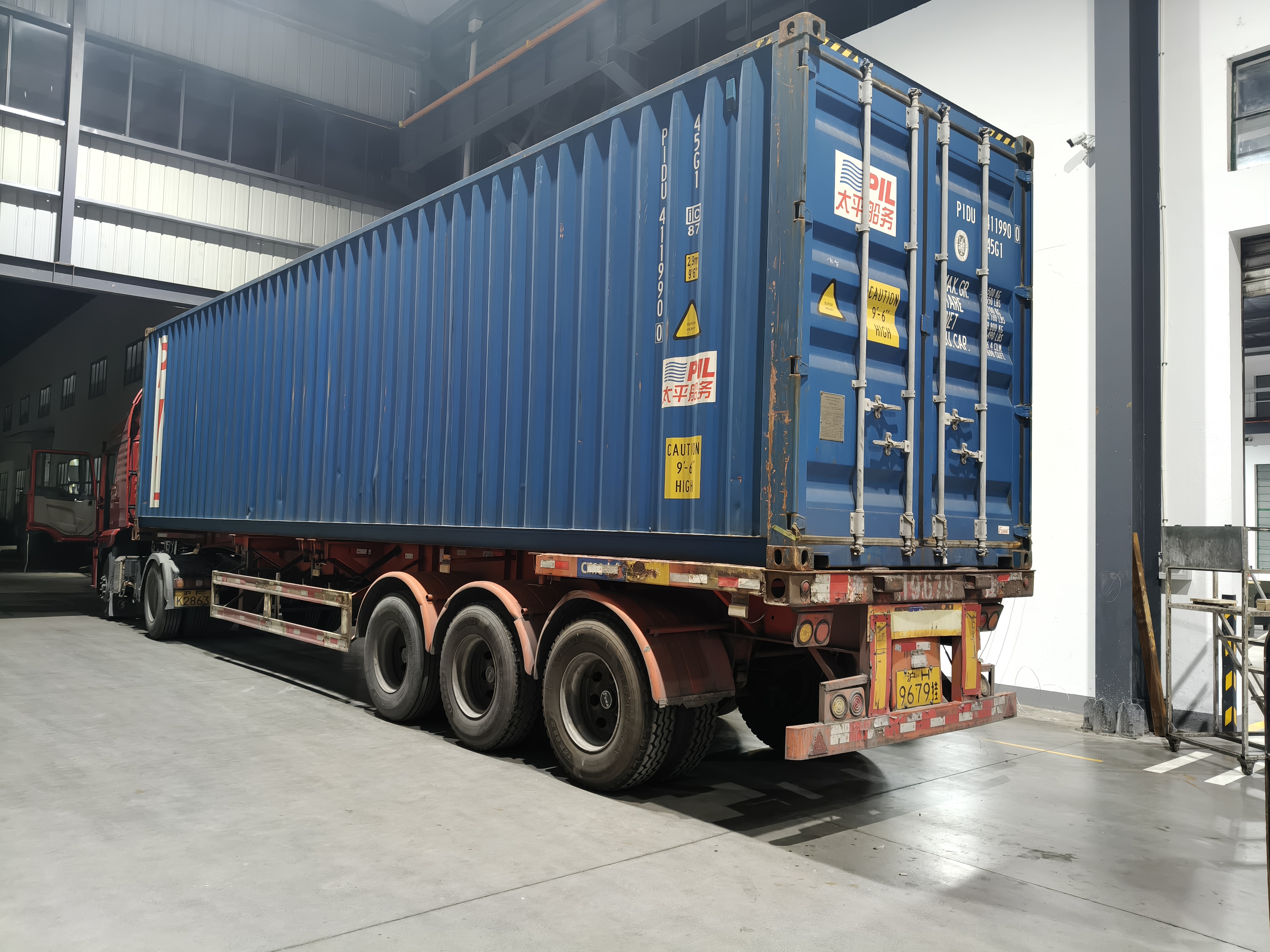
Packing and transport also belong in delivery assurance. Huasen's transport risk guidance calls for rust and moisture prevention, easily removable pallets, and wooden case protection. The buyer should confirm the packing specification for sea freight, the container loading plan, the lifting points, and the documents supplied with the machine. For long-distance shipments, moisture protection and a stable wooden case are not decorative details; they protect the machine before installation begins.
Step-by-step supplier evaluation process
- Issue a data-complete RFQ. Provide the material type, thickness, sheet or roll format, product drawing, die dimensions, daily output target, required accuracy, automation needs, voltage, and destination market. Huasen's own buying guidance asks for material type, specifications, thickness, product drawing, dimensions, die dimensions, production quantity, required accuracy, and special requirements.
- Request a configuration and drawing package. Ask for the proposed model, cutting force, worktable size, control arrangement, safety devices, utility requirements, and customization list. For a customized machine, require a drawing approval step before production.
- Audit engineering evidence. Review the engineering team assigned to the order, the design review record, the component list, and the change-control process. Ask how the supplier will verify the die and material assumptions.
- Verify manufacturing and quality control. Request the process route, inspection points, final test checklist, and pre-shipment record. Connect the factory size and equipment list to the actual order rather than accepting general photographs.
- Validate certificates against the model and market. Check certificate numbers, scopes, standards, issue dates, and expiry dates. Confirm that the CE attestation and ISO certificates apply to the machine and destination under review.
- Run a material and die test. Ask whether samples and a die can be tested on a similar machine. Huasen's FAQ states that a material test is an important purchasing step and that the arrangement should be confirmed directly with sales or engineering. The test should record material, die, cutting force, cycle, and result.
- Lock commercial and delivery terms. Agree lead time, payment milestones, delivery term, packing, acceptance method, spare-parts list, warranty response, installation and training scope, and the name of the responsible service contact.
What portfolio evidence looks like in practice
Case records are useful when they are read as application evidence, not as a guarantee. Huasen's records include a German machine manufacturer that ordered 12 units for OEM customized machines over a 7-year relationship, with production according to customer drawings and requirements. This is relevant to buyers evaluating customization and drawing-based engineering. A US automobile parts supplier is recorded with 56 units over 9 years for automotive airbag production. A Vietnam shoe manufacturer is recorded with 120 units over 10 years for shoe production. A Turkish abrasive discs manufacturer is recorded with 6 units over 3 years for sandpaper disc punching, with multi-layer automatic punching and automatic layout noted in the case.
These examples show that the supplier has worked across automotive, footwear, and abrasive applications and has repeat-use records in some cases. They do not prove that a new buyer will achieve the same output, quality, or delivery result. The buyer should ask for the application details behind any reference, including material, die, machine configuration, operating pattern, and service history. If the reference cannot be discussed because of confidentiality, the supplier should still be able to explain the process problem and the configuration logic without disclosing the customer's identity.
Supplier evaluation and delivery assurance matrix
| Evaluation area | What the buyer should request | Why it matters | Huasen data point to verify |
|---|---|---|---|
| In-house engineering | Engineering headcount, drawing review, customization process, standard or patent evidence | Shows whether the supplier can engineer the order rather than only assemble a standard machine | 46 senior engineering technicians; R&D Center; about 150 patents; stated exclusive drafting of QB/T 5122-2017; OEM and ODM accepted |
| Portfolio breadth | Model families, material applications, reference configurations | Helps screen for relevant experience, but does not replace a material and die test | Gantry HTR series; CNC HSYT series; automatic HSSZ series; traveling head HSD and HSD-Q series; four-column HSC series; plane HSB series; clicker HSA series; sandpaper lines; HSYL-500; HSSZ-3500 |
| Manufacturing base | Site and plant size, process route, assembly and testing areas | Connects the supplier's claimed capability to the actual production system | 26,000 m² site; 11,200 m² plant; 110 employees; CNC lathe; integrative production line; testing equipment |
| Quality control | Inspection points, final test checklist, pre-shipment record | Reduces the risk of configuration, function, or safety defects reaching the buyer | 100% testing stated in the capability data |
| Certification | Certificate number, scope, standard, issue and expiry dates, model coverage | Supports compliance review and avoids over-reading a certificate | ISO 9001 certificate 25025Q13420R0M valid to 2028-10-28; ISO 14001, ISO 45001, ISO 50001; CE certificate M.2024.206.C107090 valid to 2029-09-22 |
| Capacity and lead time | Monthly capacity, annual output, quoted production slot, lead-time trigger | Turns a delivery promise into a schedule the buyer can manage | 100 units per month; 1,000 units annual output; 30-60 days lead time; MOQ 1 unit |
| Commercial terms | Delivery term, payment milestones, acceptance method, packing | Clarifies cost, risk transfer, and the buyer's inspection rights | EXW, FOB, CNF, CIF; T/T 30% deposit and 70% before delivery; video acceptance inspection |
| After-sales support | Warranty, response time, parts policy, installation and training scope | Protects production continuity after commissioning | 12-month warranty; 2-hour solution target; site attendance within 24 hours if needed; remote support and field installation, debugging, and training |
| Transport protection | Rust and moisture prevention, pallet type, wooden case, loading plan | Reduces damage and commissioning delay after sea freight | Documented risk guidance calls for rust and moisture prevention, easily removable pallets, and wooden case protection |
Delivery assurance questions to ask before committing
These questions should be answered in the quotation or contract, not only in conversation. They are written for a hydraulic die cutting machine order that may include a customized configuration, but the same discipline applies to an automatic die cutting machine, traveling head die cutting machine, four-column die cutting machine, hydraulic plane cutting machine, clicker press, or production line.
- Which event starts the 30-60 day lead time, and which production slot is reserved for this order?
- What drawing, configuration list, and component list will be approved before production begins?
- What pre-shipment inspection and video acceptance will be provided, and what will the video show?
- How will the machine be protected against rust, moisture, and movement during sea transport?
- Which spare parts should be ordered with the machine, and which parts are consumables?
- Who provides installation, debugging, and operator training, and are these services included or charged separately?
- What are the warranty response rules, parts-cost rules, and service contact routes?
- What payment milestones, delivery terms, and documents apply at shipment?
Limitations and buyer-side controls
A supplier evaluation cannot remove every risk. Portfolio breadth is not the same as application fit. A certificate has a defined scope and date; it does not automatically cover every model, configuration, or destination market. Case records describe specific customers, periods, and applications; they do not promise that a new order will achieve the same result. Lead time and capacity are stated figures and should be matched to a written production slot. A material test is only useful when the sample, die, and test conditions are representative.
The buyer should therefore keep one RFQ and one evaluation matrix across shortlisted suppliers. The same material, die, output target, voltage, and acceptance rule should be used for each quotation. This makes the comparison fair and exposes differences in engineering review, configuration logic, delivery terms, and service commitments. A lower price should be assessed together with the spare-parts list, installation scope, warranty terms, and the cost of production interruption.
FAQ
Chinese hydraulic die cutting machine manufacturers with in-house engineering
Chinese hydraulic die cutting machine manufacturers with in-house engineering can be identified by engineering headcount, drawing control, machining support, standard or patent evidence, customization process, and test capability. Huasen Machinery provides a checkable example: it reports 46 senior engineering technicians, an R&D Center, CNC lathe and production and testing equipment, about 150 patents, and the stated exclusive drafting of QB/T 5122-2017. The buyer should still ask which engineers will handle the exact machine and review the drawing before order.
How can a buyer verify manufacturing capability beyond a catalogue?
A buyer can verify manufacturing capability by asking for the process route, the machining and assembly areas used for the order, the inspection points, the final test checklist, and the pre-shipment record. Huasen reports a 26,000 m² site, an 11,200 m² plant, 110 employees, and 100% testing. The buyer should connect those facts to the proposed machine and request the records that will be released before shipment.
What should a delivery assurance clause cover for a hydraulic die cutting machine order?
A delivery assurance clause should define the lead-time trigger, production slot, drawing approval, pre-shipment inspection, video or on-site acceptance, packing and moisture protection, shipping documents, spare-parts list, warranty response, installation and training scope, payment milestones, and the responsible service contact. Huasen lists a 30-60 day lead time, T/T 30% deposit and 70% before delivery, video acceptance inspection, and a 12-month warranty with a 2-hour solution target and site attendance within 24 hours if needed.
How should a customized die cutting machine be validated before shipment?
A customized die cutting machine should be validated against the approved drawing, configuration list, material and die test, safety functions, control functions, and nameplate details. The buyer should confirm the customization items in writing, including voltage, cutting force, worktable size, tension distance, color, functions, and any other agreed demand. Huasen accepts OEM and ODM and states 100% testing; the buyer should still define the acceptance record and review the pre-shipment video before the container is sealed.
How can buyers request a Huasen Machinery quotation or factory review?
Buyers can send the material, die, product drawing, output target, voltage, and destination market to Huasen Machinery for a configuration review and quotation. The published contact is Viggo at viggo@huasen-cuttingmachine.com, telephone and WhatsApp +86-189-1255-5725, with the factory at Zhenggang Industrial Zone, Yandu District, Yancheng City, Jiangsu Province, China. A factory review, material test, or video discussion should be arranged directly with the sales or engineering team.
Planning a supplier review for a hydraulic die cutting machine, automatic die cutting machine, traveling head cutting machine, four-column press, or customized cutting line? Start with a data-complete RFQ and ask for the engineering review, certificate scope, test record, lead-time trigger, and after-sales terms in writing.
Download the Huasen Machinery catalogue for the product range and model references, then confirm the exact configuration with the supplier.
Conclusion
Hydraulic die cutting machine supplier evaluation should be based on evidence that can be checked: who engineers the machine, what the portfolio proves for the buyer's material, how the factory controls fabrication and testing, which certificates apply, how capacity becomes a production slot, and how acceptance and after-sales are written into the order. Huasen Machinery provides a useful reference point because its factory data, product families, certificate details, case records, and stated commercial terms can be matched against these questions. The final decision should still rest on the buyer's own RFQ, material test, drawing approval, and delivery agreement.
Have Questions or Need More Details?
Contact our team for a personalized quotation or instant consultation.
Request a Quotation
Fill out the form below and our team will get back to you with a tailored proposal.
WhatsApp Direct Chat
Prefer to chat in real-time? Message us on WhatsApp for instant assistance & quick answers.
- Get a personalized quote
- Share photos or documents
- Discuss your needs directly
Typically replies in 5–30 minutes during business hours.