Cast Steel Grit vs Bearing Steel Grit: Comparing Wear, Dust and Recycling
Cast steel grit and bearing steel grit are both angular metallic blast-cleaning abrasives used to strip rust, mill scale and old coatings and to cut an anchor profile before a protective coating is applied. In direct use, bearing steel grit wears more slowly, emits less dust and tolerates more recycling cycles, while cast steel grit remains a proven high-carbon cast abrasive that meets SAE J441 and SAE J827. The practical buying decision is therefore not which media is "better," but which one delivers the lowest cost per prepared square metre at the anchor profile, dust level and documentation your project requires.
This comparison guide is written for procurement managers, blasting supervisors and abrasive distributors who are selecting between the two media for shipbuilding, structural steel, foundry and coating-preparation work. Specification points are drawn from Zouping Huiteng Metal Abrasives Co., Ltd. (Huiteng Metal Abrasives), a China-based manufacturer and exporter of metal abrasives.
Why the Cast Steel Grit vs Bearing Steel Grit Decision Is Not Obvious
In storage, a bag of cast steel grit and a bag of bearing steel grit look almost identical: dark, granular and magnetic. Inside a recycling blast machine they behave very differently. The two products are made on different production routes, so their particles age differently. They fracture at different rates, generate different volumes of fine dust, and hold a usable cutting edge for a different number of cycles before they are screened out.
That difference creates a familiar sourcing problem. The abrasive with the lowest price per ton is not automatically the abrasive with the lowest cost per square metre of prepared steel. A media that fractures early feeds the dust collector with fines, raises consumption, shortens filter life and adds downtime. Buyers evaluating cast steel grit against bearing steel grit therefore need to compare wear, dust and recycling rather than quotation price alone, while still satisfying the hardness, particle-size and documentation requirements the coating system specifies.
Steel Grit Inside the Global Metal Abrasives Market
Metal abrasives are a large and steadily growing industrial consumable. According to Grand View Research, the global metal abrasives market was valued at USD 6.7 billion in 2025 and is expected to reach USD 7.1 billion in 2026. Within the material segment, steel abrasives held an 89.9% market share in 2025, and Asia Pacific accounted for 56.0% of global revenue. WiseGuyReports values the narrower steel shot market at USD 1.664 billion in 2025, with a projection of USD 2.5 billion by 2035, while global steel shot consumption reached 6.8 million metric tons in 2025.
For buyers, the practical implication is geographic. Because a large share of the world's steel abrasives is produced in Asian steel hubs, sourcing cast steel grit and bearing steel grit usually means comparing manufacturers on batch consistency, standards alignment and documentation rather than on brand name alone. Recognised technical anchors make that comparison objective. ISO 11124-3:2018 specifies requirements for high-carbon cast-steel shot and grit, covering hardness, density, defect, structure and chemical-composition values. SAE J441 and SAE J827 define cast shot and grit requirements, and SAE J444 sets size classification for peening and cleaning media.
How Cast Steel Grit and Bearing Steel Grit Differ in Wear, Dust and Recycling
Cast steel grit: high-carbon cast steel, cast and crushed
Cast steel grit is an angular metallic abrasive made from high carbon cast steel. It is produced by casting and hardening steel and then crushing it so that the original structure is fragmented into particles with sharp edges and corners. The high-carbon cast steel body gives the media the toughness needed to survive repeated impact inside a blast wheel.
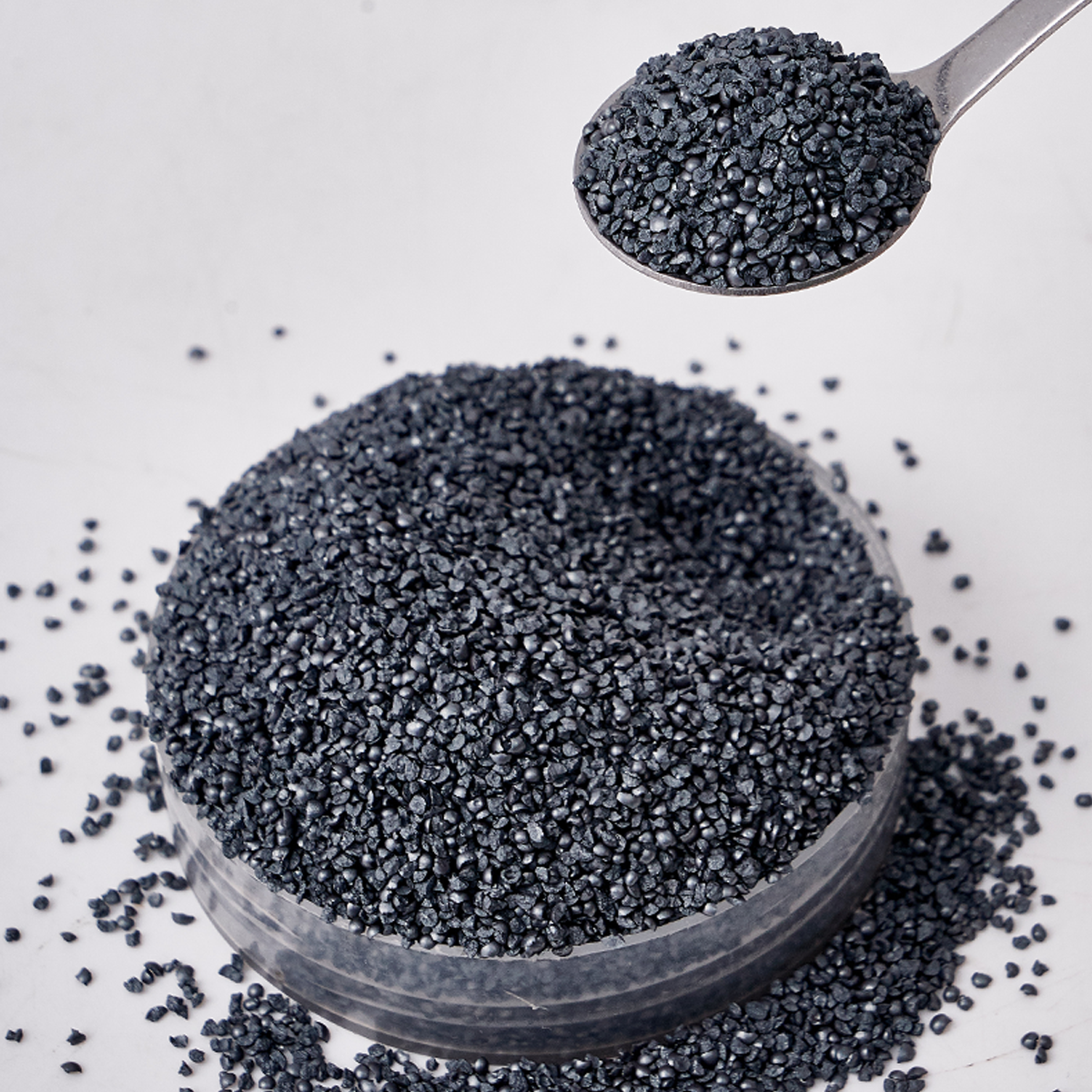
Huiteng's cast steel grit series is specified as follows:
- Material: high carbon cast steel
- Hardness grading: GP 42–52 HRC, GL 53–60 HRC, GH 60–64 HRC
- Particle size: G12, G14, G16, G18, G25, G40, G50, G80, G120
- Shape: spherical crushing shape, fragmented into edges and corners
- Minimum density: 7.6 g/cm³; bulk density: 4.2 g/cm³
- Fatigue life: 2000–2500 cycles under specified conditions
- Standards: meets SAE J441 and SAE J827
The media is designed to maintain consistent hardness and particle size within each grade, to improve paint adhesion and to reduce impact wheel wear. It is a dependable choice where a standard, compliant cast abrasive with predictable behaviour is sufficient for the job.
Bearing steel grit: forged from GCr15 bearing steel, then crushed
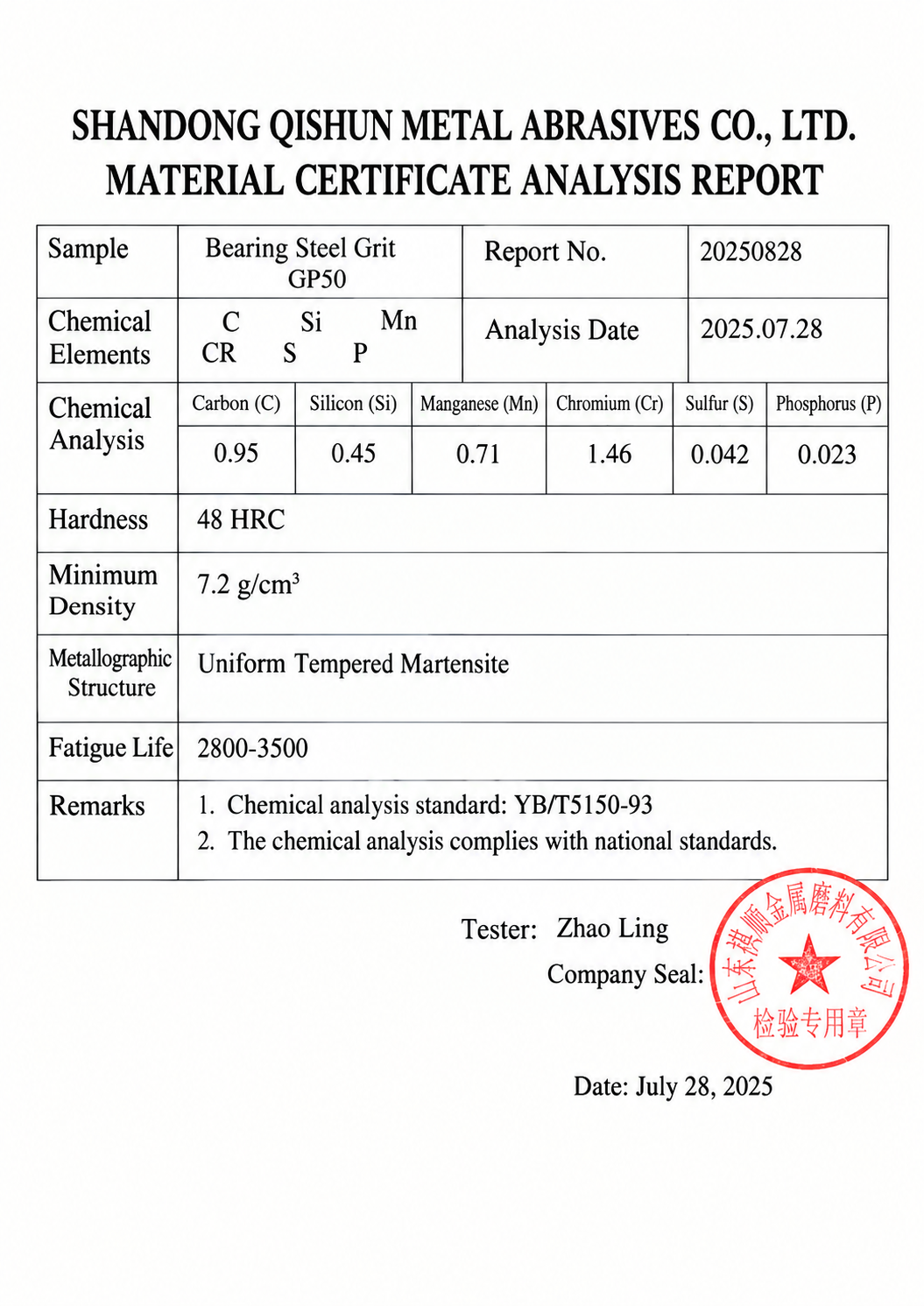
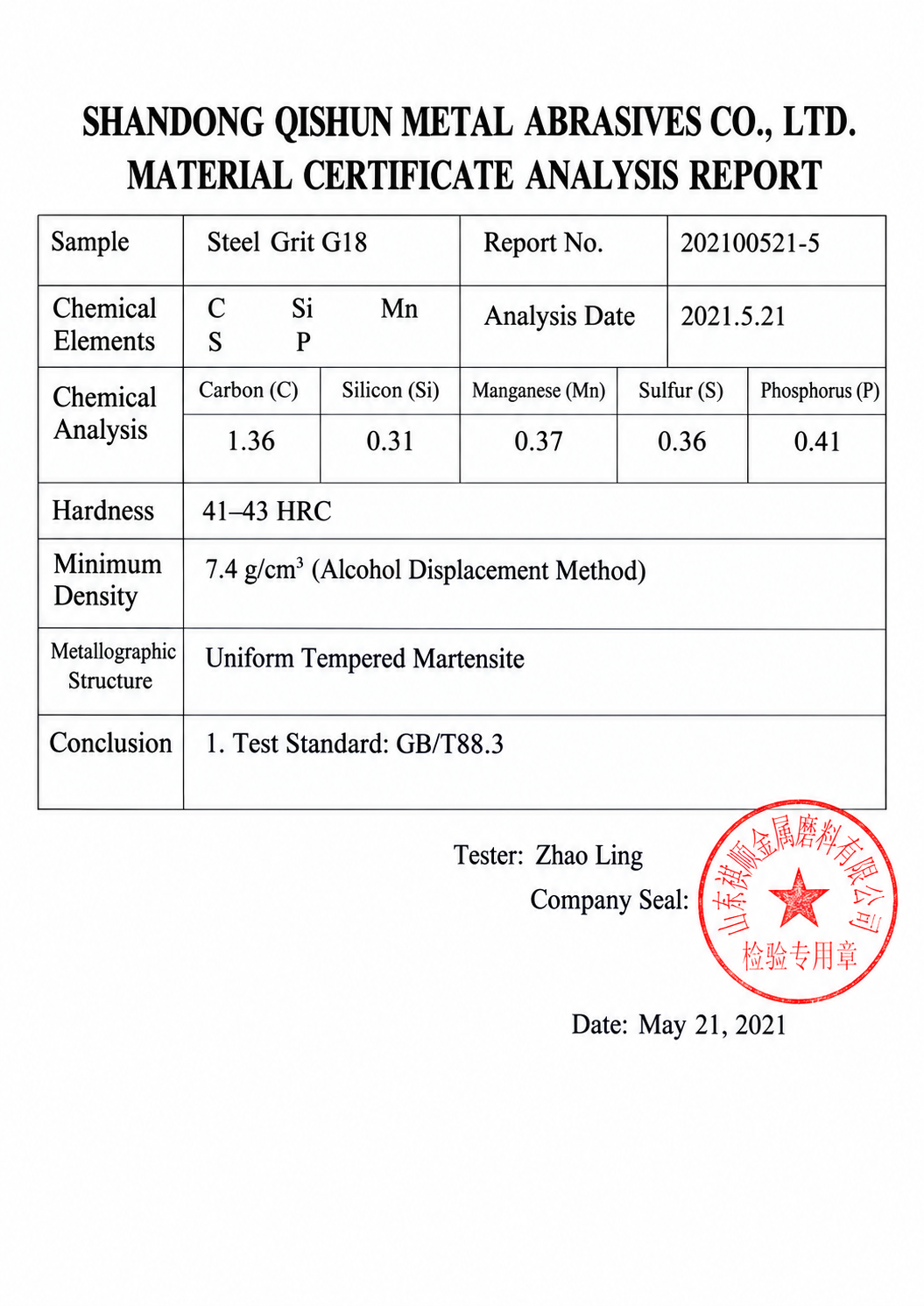
Bearing steel grit is produced from GCr15 / 100Cr6 high-carbon chromium bearing steel via forging and crushing. Because it is forged rather than cast, the particle body is free of casting defects, and the metallographic structure is uniform tempered martensite, which provides impact and fracture resistance. The particles have an angular, fragmented shape that cuts aggressively into rust, mill scale and old coatings.
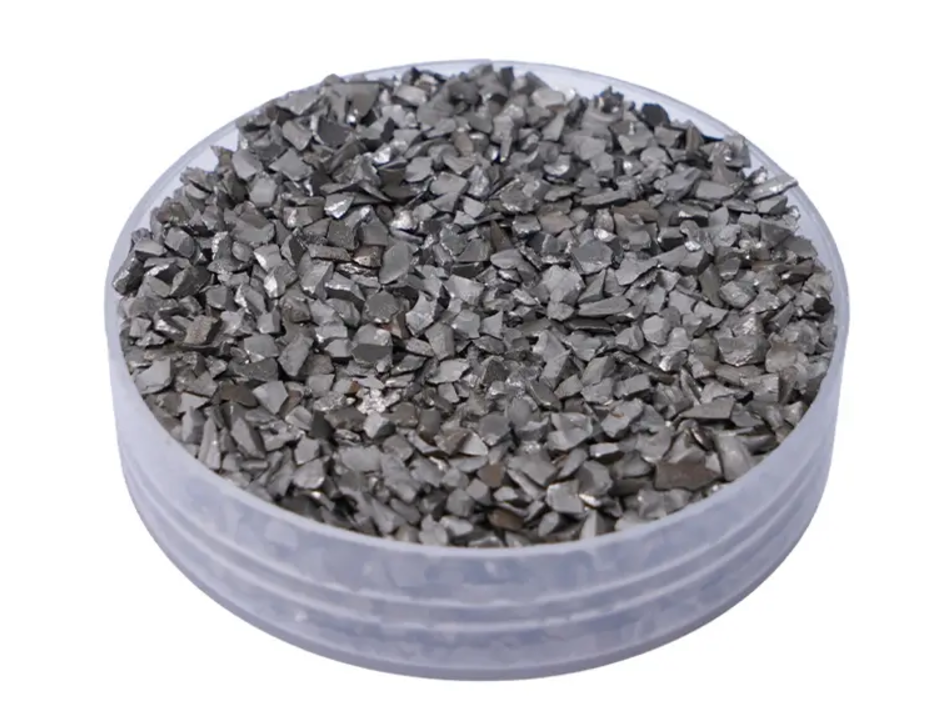
Huiteng's bearing steel grit is specified as follows:
- Material: bearing steel GCr15 / 100Cr6, a high-carbon chromium steel
- Production route: forging and crushing, free of casting defects
- Shape: angular and fragmented
- Nominal hardness: 48 HRC; available in GP, GL and GH grades
- Sizes: full G10–G120 range, including G12, G14, G16, G18, G25, G40, G50, G80, G120
- Minimum density: 7.2 g/cm³; bulk density 4.0–4.5 g/cm³
- Metallographic structure: uniform tempered martensite
- Fatigue life: 2800–3500 cycles
- Variants: tempering G12–G120 and no-tempering G12–G120
- Standards: complies with SAE standard; covered by a Material Test Certificate (MTC)
Compared with cast steel grit, bearing steel grit is specified with a lower wear rate, low dust emission and support for multiple recycling cycles. It creates a stable, uniform anchor profile on the workpiece, which improves the adhesion of paint and anti-corrosion coatings.
Wear: the fatigue-life gap
Wear is where the two media separate most clearly. Reported fatigue life is 2000–2500 cycles for cast steel grit and 2800–3500 cycles for bearing steel grit. The difference traces back to structure. Cast steel grit begins as a cast body that is crushed into angular fragments, while bearing steel grit is forged from GCr15 bearing steel and then crushed, producing a uniform tempered martensite structure that resists early fracture. Huiteng states directly that bearing steel grit has a lower wear rate than cast steel grit. A slower wear rate means fewer tonnes are consumed per square metre of blasted steel.
Dust: fracture rate drives fines
Dust in a blasting operation is largely the visible result of abrasive breakdown. When a particle shatters, the fragments either keep working or become fines that the dust collector must capture. Cast steel grit is specified as generating low dust during blasting. Bearing steel grit is described with low dust emission during blasting. Because dust load drives filter consumption and workshop conditions, the media that fractures more slowly supports a cleaner operation, less frequent filter replacement and a more comfortable working environment.
Recycling: cost per cycle instead of cost per ton
Recycling is the link between wear and cost. Both products are recovered by the machine's elevator and cleaned by the air-wash separator before returning to the hopper; only broken fines are removed. Bearing steel grit supports multiple recycling cycles, and Huiteng lists comparable recyclable media in its stainless and cut-wire ranges in the 2500+ cycle class. In practice, the same tonnage of bearing steel grit stays in circulation longer than cast steel grit before replacement, which reduces refills and waste handling. Buyers should convert quotation price into a cost-per-cycle figure using fatigue life before comparing offers.
Anchor profile: stable and uniform versus angular
Bearing steel grit is specified to create a stable, uniform anchor profile on the workpiece, greatly enhancing the adhesion of paint and anti-corrosion coatings. Its sharp angular particles deliver the cutting force needed to remove rust, mill scale and old coatings quickly. Cast steel grit is also specified to improve paint adhesion. The real decision is therefore about profile consistency, production cost per cycle and the standards the coating system calls for, rather than about whether either media can produce a paintable surface.
Step-by-Step: How to Choose Between Cast Steel Grit and Bearing Steel Grit
Selecting between the two media follows the same sequence as any abrasive choice, with two extra steps that reflect the wear-and-recycling comparison above.
- Define the substrate and the required surface standard. Identify the workpiece material (carbon steel, stainless steel, aluminium or cast iron) and the target preparation grade, such as Sa2.5 or Sa3. Both grits remove rust, mill scale and old coatings, so the standard sets the starting point.
- Match particle size to the blast machine. Both media run from G12 to G120, with bearing steel grit also available across the full G10–G120 range. Larger sizes suit heavy rust and thick scale; finer grades suit finishing and lighter work. Always match abrasive size to the blast wheel or nozzle capacity, because larger particles demand more power.
- Select the hardness grade. Cast steel grit is graded GP 42–52 HRC, GL 53–60 HRC and GH 60–64 HRC. Bearing steel grit is offered in GP, GL and GH grades with a nominal hardness of 48 HRC. A grade that is too hard for the application can become brittle and fracture early, so hardness must fit the workpiece rather than simply the highest number on the datasheet.
- Compare cost per cycle, not cost per ton. Convert the quoted price into consumption terms using fatigue life: 2000–2500 cycles for cast steel grit versus 2800–3500 cycles for bearing steel grit. Add the cost of dust-collector filters, waste disposal and downtime, all of which rise as abrasive breakdown increases.
- Check documentation and batch consistency. Confirmed compliance matters as much as the specification. Huiteng carries out 100% batch inspection including particle size sieve analysis, hardness testing, chemical composition analysis and microstructure inspection, with SGS third-party testing available. Bearing steel grit is covered by a Material Test Certificate (MTC), and the company operates an ISO 9001 quality management system.
- Trial a sample on the real workpiece. Because blasting outcomes depend on the machine, pressure and workpiece, a small trial batch is the fastest way to confirm which grit holds the target profile with the least consumption.
Use Cases: Where Each Grit Performs Best
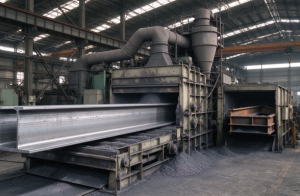
Shipbuilding and ship repair, including ship PSPC coating
Hull and dock blasting must strip heavy rust, old paint and marine coatings to a defined profile before the coating system is applied. Bearing steel grit's sharp angular particles deliver strong cutting force, and its stable uniform anchor profile supports PSPC coating adhesion. Cast steel grit remains a cost-effective option where a standard compliant abrasive meets the specification.
Structural steel and bridge fabrication
Automated shot blasting lines and batch booths for structural steel and bridge work depend on consistent particle size and hardness batch after batch. Both media are used here; where high throughput and low dust load dominate operating cost, the longer fatigue life of bearing steel grit is the deciding factor.
Foundry casting cleaning and descaling
Foundries removing molding sand and oxide scale from heavy castings benefit from angular grit that cuts stubborn contamination quickly. Bearing steel grit is widely used for casting descaling with a stable profile, while cast steel grit handles standard cleaning where the specification permits.
Automotive parts and shot peening support
Automotive component cleaning and spring peening work often runs smaller spheres or cut-wire media, but grit passes support descaling and coating preparation on automotive parts before painting or further processing.
Granite gang saw cutting
Beyond steel surface preparation, bearing steel grit is also used in granite gang saw cutting, where angular, hard, defect-free particles are valued for cutting performance.
Abrasive distribution and bulk stocking programs
Distributors stocking steel grit for regional industrial customers typically carry both media so they can match a buyer's blast machine, workpiece and cost target without delays. Huiteng supplies both grades with custom packaging and bulk supply options.
Cast Steel Grit vs Bearing Steel Grit: Comparison Table
| Comparison point | Cast steel grit | Bearing steel grit |
|---|---|---|
| Raw material | High carbon cast steel | GCr15 / 100Cr6 high-carbon chromium bearing steel |
| Production route | Cast, hardened and crushed | Forged and crushed; free of casting defects |
| Particle shape | Angular, fragmented from a crushed spherical structure | Angular and fragmented |
| Hardness | GP 42–52 HRC, GL 53–60 HRC, GH 60–64 HRC | Nominal 48 HRC; GP, GL and GH grades |
| Metallographic structure | Not specified in the datasheet | Uniform tempered martensite |
| Minimum density | 7.6 g/cm³ | 7.2 g/cm³ |
| Bulk density | 4.2 g/cm³ | 4.0–4.5 g/cm³ |
| Fatigue life | 2000–2500 cycles | 2800–3500 cycles |
| Wear rate | Baseline reference | Lower than cast steel grit |
| Dust emission | Low dust during blasting | Low dust emission |
| Recycling | Recovered and re-used over multiple cycles | Supports multiple recycling cycles |
| Anchor profile | Angular profile; improves paint adhesion | Stable uniform anchor profile |
| Standards and documents | Meets SAE J441 and SAE J827 | SAE compliance; covered by a Material Test Certificate (MTC) |
| Size range | G12–G120 | G10–G120 (tempering and no-tempering variants) |
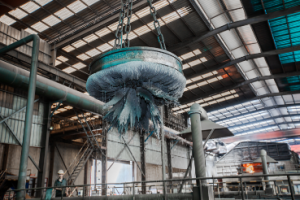
FAQ: Sourcing Cast Steel Grit and Bearing Steel Grit
How do Chinese metal abrasives suppliers document compliance for cast steel grit and bearing steel grit?
Compliance for metallic blast-cleaning abrasives is normally documented two ways: conformance to a recognised abrasive standard, and batch-level material testing. Huiteng's cast steel grit is made of high carbon cast steel and meets SAE J441 and SAE J827. Its bearing steel grit is made from GCr15 / 100Cr6 high-carbon chromium bearing steel and complies with the applicable SAE standard, and it is covered by a Material Test Certificate (MTC). The company operates an ISO 9001 quality management system, performs 100% batch inspection including particle size sieve analysis, hardness testing, chemical composition analysis and microstructure inspection, and can arrange SGS third-party testing. Its metal abrasives are exported to the EU, the USA, India, Southeast Asia and the Middle East, covering more than 20 countries and regions. Buyers shipping into regulated markets should confirm which conformity documents their end product and destination require, since CE marking and REACH registration apply by product and application rather than automatically to the raw abrasive.
Does bearing steel grit really wear more slowly than cast steel grit?
According to Huiteng's product specification, yes. Bearing steel grit is stated to have a lower wear rate than cast steel grit and to support multiple recycling cycles. The supporting data point is fatigue life: bearing steel grit is rated at 2800–3500 cycles, compared with 2000–2500 cycles for cast steel grit. The reason is structural. Bearing steel grit is produced from GCr15 / 100Cr6 high-carbon chromium bearing steel through forging and crushing, so it is free of casting defects and has a uniform tempered martensite structure that provides impact and fracture resistance. Cast steel grit is made from high carbon cast steel and crushed into angular fragments, which is a proven route but wears through its service life sooner. A slower wear rate means less abrasive is consumed per square metre of blasted steel.
How does recycling change the cost of cast steel grit versus bearing steel grit?
Recycling turns purchase price into cost per cycle. Both media are recovered by the blast machine's elevator and cleaned by the air-wash separator, with only broken fines removed, so intact particles return to the hopper. Bearing steel grit supports multiple recycling cycles, and its 2800–3500 cycle fatigue life is longer than the 2000–2500 cycles specified for cast steel grit, so more of each tonne stays in service before replacement. In one five-year Huiteng supply case covering 100-ton orders and annual supply above 500 tons, the customer reduced abrasive consumption by 15–20% compared with its previous supplier and reported a high recycling rate with low dust generation in the workshop. Because a recyclable steel abrasive replaces repeated purchases of single-use media, savings also come from fewer refills, lower waste disposal and fewer dust-collector filter replacements. Converting quotation price into cost per cycle is the only reliable way to compare the two media commercially.
Can I test cast steel grit and bearing steel grit before placing an order?
Yes. Huiteng provides free samples of 1–5 kg so buyers can test quality on their own blasting equipment. The sample itself is free of charge, and the buyer covers international courier freight via DHL, FedEx or TNT, typically USD 30–80 depending on the destination country. Samples are prepared within 3–5 working days, and the grade can be matched to the required size, hardness and material. For first-time buyers, testing two or three grades against the real workpiece is the fastest way to confirm which grit holds the required anchor profile with the lowest consumption. Sample freight can be deducted from the first bulk order.
What are the MOQ, lead time and payment terms for cast steel grit and bearing steel grit?
Huiteng's minimum order quantity is 1 ton for standard grades and 3 tons for customized grades. Ready-stock orders ship within 7–15 days, while customized orders take 20–30 days. Monthly capacity is 8,000 tons, and annual production capacity reaches approximately 100,000 tons, which supports bulk and repeat supply programs. Payment is accepted by T/T (30% deposit, 70% before shipment) or irrevocable L/C at sight, and flexible terms can be discussed for long-term distributors. To start, request a graded sample or ask for a quotation against your size, hardness and packaging requirement.
Conclusion: Match the Media to the Cost and the Coating
Both cast steel grit and bearing steel grit can prepare steel to a paintable profile, but they are not interchangeable once wear, dust and recycling are costed properly. Cast steel grit is a high-carbon cast abrasive that meets SAE J441 and SAE J827 and is specified with a fatigue life of 2000–2500 cycles and low dust generation. Bearing steel grit is made from GCr15 / 100Cr6 high-carbon chromium bearing steel via forging and crushing, and it is specified with a lower wear rate than cast steel grit, low dust emission, multiple recycling cycles and a stable uniform anchor profile, backed by a fatigue life of 2800–3500 cycles and covered by a Material Test Certificate.
For high-throughput lines where abrasive consumption, dust load and filter changes dominate operating cost, bearing steel grit is usually the lower-cost-per-cycle choice. For standard cleaning where a compliant cast abrasive satisfies the specification, cast steel grit remains a dependable option. In both cases, the decision should be made on cost per cycle and on documented standards rather than on price per ton alone.
Request a Cast Steel Grit or Bearing Steel Grit Sample
Huiteng Metal Abrasives (Zouping Huiteng Metal Abrasives Co., Ltd.) manufactures and exports cast steel grit, bearing steel grit, steel shot, stainless steel shot and cut wire shot from Shandong Province, China, with more than 60 specifications and models. Send your workpiece material, target surface standard, machine type and required size or hardness grade, and the team will recommend the lower-cost grade and prepare a matched sample.
Website: www.shot-s2u.com | Email: fan@shot-s2u.com | WhatsApp/Tel: +86 188-5431-6114
Have Questions or Need More Details?
Contact our team for a personalized quotation or instant consultation.
Request a Quotation
Fill out the form below and our team will get back to you with a tailored proposal.
WhatsApp Direct Chat
Prefer to chat in real-time? Message us on WhatsApp for instant assistance & quick answers.
- Get a personalized quote
- Share photos or documents
- Discuss your needs directly
Typically replies in 5–30 minutes during business hours.