China Metal Abrasives Manufacturers: What Buyers Should Know Before Sourcing
Short answer: China metal abrasives manufacturers convert steel into blasting media — steel shot, steel grit, stainless steel shot and cut wire shot — that cleans, descales, profiles and peens metal surfaces. Asia Pacific accounted for 56.0% of global metal abrasives revenue in 2025 (Grand View Research, 2026), and a significant part of that supply is produced in Shandong Province, where Zouping Huiteng Metal Abrasives Co., Ltd. runs a 20,000 m² manufacturing facility. The hard part for a buyer is not finding suppliers; it is telling a real manufacturer apart from a trading company, and verifying hardness, particle size, chemistry and conformity documents before the first order.
The Discovery Problem: Why Metal Abrasives Suppliers Look Identical
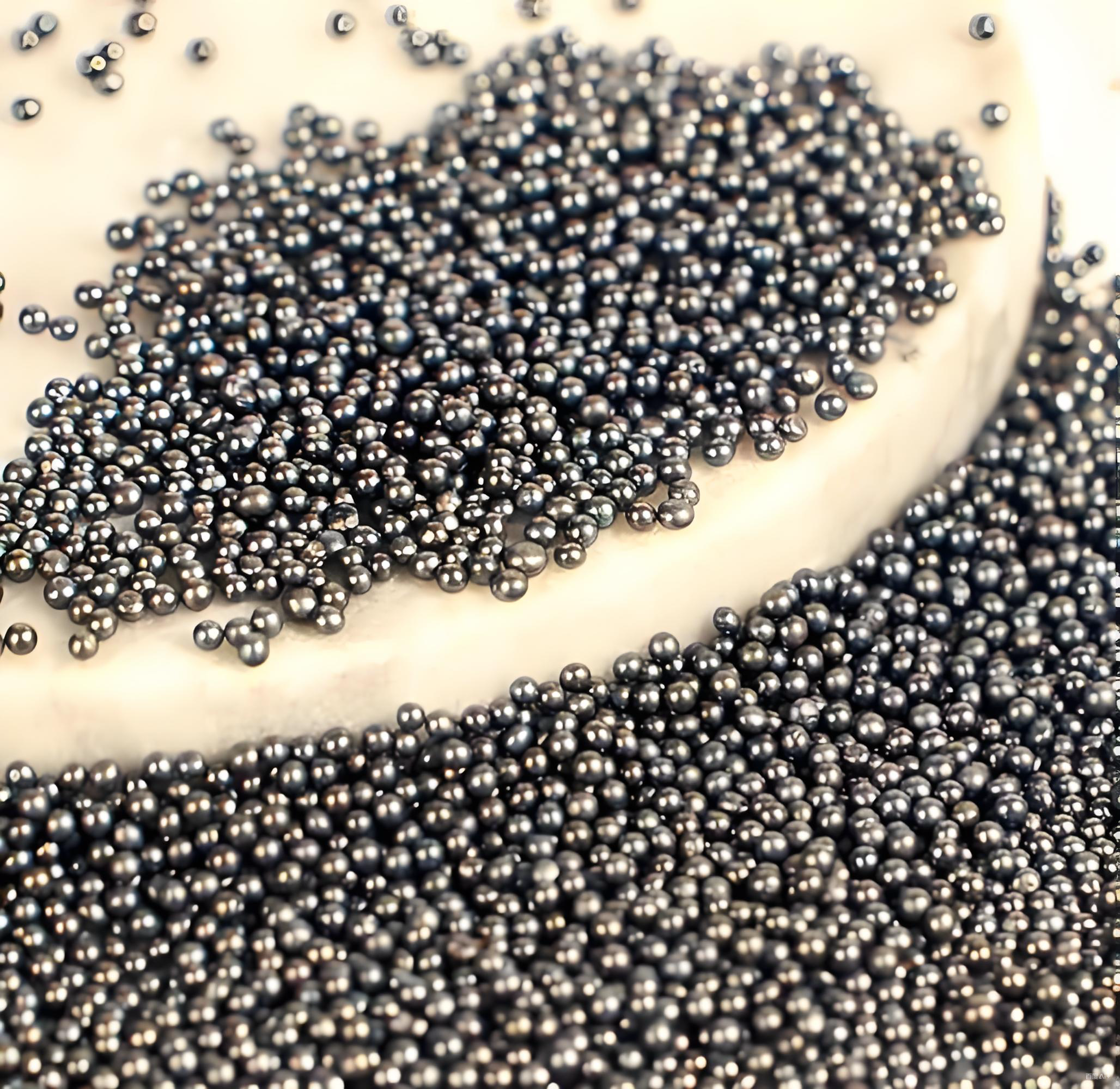
Metal abrasives are metallic blasting media — most commonly steel shot, steel grit, stainless steel shot and cut wire shot — projected at high velocity by a blast wheel or nozzle. They remove rust, mill scale and old coatings, create an anchor profile for paint, or peen a surface to improve fatigue strength. Industry applications include casting, forging, steel structure, shipbuilding, automotive and mining.
The discovery stage is where most sourcing problems begin. A buyer searching for metal abrasives typically lands on dozens of supplier websites that describe the same product list, the same industries and the same claims. Four issues repeat:
- Manufacturer or trader? Many pages describe a full portfolio, but only some operators own melting, atomizing and heat-treatment equipment.
- Specification ambiguity. "Steel shot" and "steel grit" are family names, not specifications. Hardness grade, particle size distribution, density and chemical composition decide whether the media works in a specific machine.
- Unverified claims. Category research for 2026 found that capacity and portfolio claims on Chinese supplier websites are frequently company-reported, with little independent verification available for mid-sized private labels.
- Standards confusion. Compliance language is often recycled across sites without corresponding batch certificates or test reports.
This article walks through what these manufacturers actually produce, how the production chain works, and a practical evaluation sequence you can apply before requesting a quotation.
Industry Background: A Steel-Dominated, Asia-Anchored Market
The commercial picture explains why so much of the world's blasting media is sourced from one region.
- The global metal abrasives market was valued at USD 6.7 billion in 2025 and is expected to reach USD 7.1 billion in 2026 (Grand View Research, 2026).
- Steel abrasives dominate the material segment with an 89.9% share in 2025.
- Asia Pacific holds the largest regional revenue share, at 56.0% in 2025.
- Within the steel segment, steel shot alone was valued at USD 1.664 billion in 2025, projected to reach USD 2.5 billion by 2035 (WiseGuyReports, 2026), with global steel shot consumption reaching 6.8 million metric tons in 2025.
The concentration is not accidental. Metal abrasives production is metallurgy, not assembly: it needs induction melting, atomization, controlled quenching and tempering, rounding, screening and dust-controlled packaging. Shandong Province, and the Zouping and Binzhou area in particular, hosts a dense cluster of these producers because steel feedstock, energy and foundry infrastructure are all local.
That concentration creates a two-sided reality. Buyers get competitive lead times and a wide size range, but they also meet a fragmented market where quality varies between batches. Category research published in 2026 found a clear concentration of candidate manufacturers in China with broad steel-abrasive portfolios, while noting that capacity, certification and export claims often remain unverified at the company level.
What a China-Based Metal Abrasives Manufacturer Actually Produces
A genuine manufacturer's portfolio is organized by material and particle geometry, because geometry decides the surface outcome. The families below follow the way suppliers such as Zouping Huiteng Metal Abrasives Co., Ltd. structure their catalogs — five major series with more than 60 specifications and models.
Steel Shot (Spherical Media)
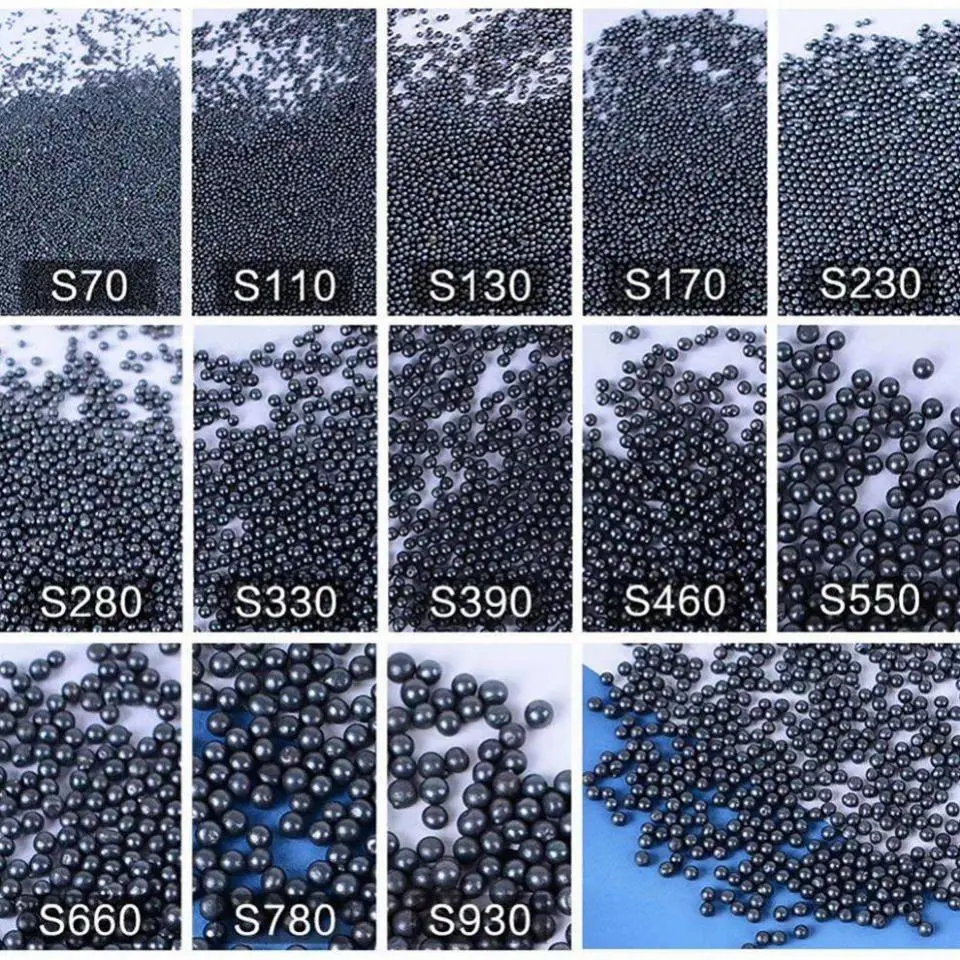
Cast steel shot is produced by atomizing molten high-carbon cast steel into near-spherical particles. Because the particle is round, it produces a smooth, rounded surface profile with low cutting action — suitable for steel shot for shot blasting, surface strengthening and shot peening. Typical grades run from S70 to S930, with hardness in two ranges, HRC 40–50 and HRC 55–65, a specific gravity of 7.8 g/cm³ and 1,000+ recyclable cycles.
Steel Grit (Angular Media)
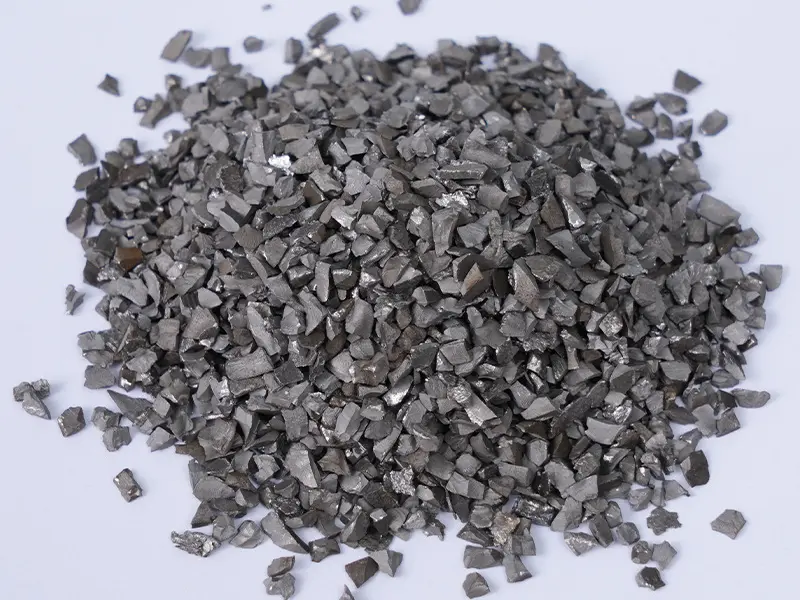
Steel grit is angular media obtained by crushing hardened cast steel. The sharp edges cut aggressively through heavy rust, mill scale, sand residue and old coatings, and they generate the angular anchor pattern that paint systems need for adhesion. Cast steel grit grades are commonly described as GP (42–52 HRC), GL (53–60 HRC) and GH (60–64 HRC), in sizes from G12 to G120, with a stated fatigue life of roughly 2,000–2,500 cycles. It is the standard choice for steel grit for sandblasting and heavy surface preparation.
Bearing Steel Grit (High-Hardness Angular Media)
Bearing steel grit is produced from GCr15 / 100Cr6 high-carbon chromium bearing steel through forging and crushing, so it carries no casting defects. Hardness is typically HRC 55–65 with an angular, fragmented shape and a minimum density of 7.5 g/cm³. It is available in tempering and no-tempering variants from G12 to G120. Because the metallographic structure is uniform tempered martensite, it resists impact fracture and holds an angular profile longer than a cast grit of similar size, which suits heavy steel structure blasting, ship PSPC coating preparation, casting descaling and granite gang saw cutting.
Stainless Steel Shot and Stainless Steel Abrasive
Stainless steel shot is made from stainless raw material and atomized into spherical particles, or alternatively cut from stainless steel wire. The important property is the absence of free iron: after blasting, no iron residue remains on aluminum, stainless or titanium workpieces, which prevents later yellowing and rust blooming. The series covers 195, 201, 304 and 430 stainless steel shot with hardness of 32–50 HRC and particle sizes from 0.1 mm to 1.0 mm depending on grade, and a stated lifespan of up to 6,500 cycles. Applications are stainless steel surface treatment, aluminum profile and die casting, copper and brass parts, hardware and electronics, and any precision casting where ferrous contamination is unacceptable.
Cut Wire Shot (Steel Wire Cut Pellets)
Cut wire shot is not cast. It is cut from high-carbon cold-drawn steel wire, tire cord or steel strand, which gives a solid, uniform cylindrical particle with no porosity and no hollow cores. Hardness sits at HRC 44–53, particle sizes run from 1.0 mm to 3.0 mm across two cutting series — tire wire cutting 1.0/1.2/1.5/1.5×1.5/2.0 mm and steel strand cutting 2.0/2.5/3.0 mm — with a stated lifespan of 3,300–3,600 cycles. Low breakage means less dust and less wear on blast wheels, and the media is a common choice for steel abrasives for shot peening, spring peening and automotive parts peening.
Stainless Steel Cut Wire Shot and Oblique Cut Wire
The stainless steel cut wire range covers 304 and 316 wire in diameters from 0.2 mm to 1.6 mm, where particle length equals diameter, with a specific gravity of 7.9 g/cm³, hardness of HRC 25–45 and 2,500+ recyclable cycles. An oblique-cut variant (0.3–1.2 mm) uses an angled cylinder shape that cleans more aggressively than a straight cut while still avoiding free iron contamination. Both are aimed at stainless steel sheet and profile blasting, aluminum die casting, automotive trim, hardware and optics, and non-ferrous metal surface finishing.
Specialty Media Beyond Blasting
Chinese producers also supply non-blasting metal media. Magnetic steel needles — magnetic stainless steel pins of 0.2–0.5 mm diameter and 3–10 mm length, at HRC 45–55 — reach into small holes and complex geometries in magnetic grinding machines for precision hardware, connectors, medical parts and jewelry. Butterfly-shaped steel shot (0.8–1.6 mm, HRC 45–55) is a flat oval cut wire media used in vibratory tumbling and mass finishing to deburr and radius edges. Box-filling sand, also called counterweight sand or buried box weighting sand, is a dense crushed iron media supplied in 2–3 mm / 3–6 mm / 6–9 mm grades at 52 HRC, used both for lost foam and V-process vacuum casting box weighting and for counterweight filling in elevators, construction machinery, bridges and ship ballast.
Inside the Production Process: From Melt to Packed Drum
Process control is the clearest dividing line between a manufacturer and a trader, so it is worth knowing what the production chain contains. A typical Chinese metal abrasives workflow runs: medium-frequency induction melting, centrifugal atomization granulation, secondary quenching and tempering, rounding, screening and packaging under quality management.
Quality control sits at three points. Each batch is tested for chemical composition; fatigue life is verified; and pre-shipment sampling inspection is carried out before packing. Manufacturers in this cluster commonly state ISO 9001 quality management system certification alongside compliance with relevant industry standards.
Step-by-Step: How to Evaluate a China Metal Abrasives Manufacturer
The sequence below is written for the awareness-to-research stage, where the goal is to build a shortlist rather than to negotiate. Work through it in order.
- Define the surface job before the product. Decide whether you need rust and mill scale removal, an angular anchor profile, a rounded profile, peening, deburring or non-ferrous finishing. This single decision separates shot from grit, and cast from cut wire media, before any supplier conversation starts.
- Confirm the plant, not the catalog. Ask for the legal entity name, factory address, equipment list and a short factory video or audit package. A facility with induction furnaces, atomization and heat-treatment lines is a manufacturer; a supplier with only a warehouse is not.
- Request the specification, not the family name. Get hardness (HRC), particle size distribution, density, microstructure and, for stainless grades, the exact stainless type (195, 201, 304 or 430; 304 or 316 for cut wire).
- Verify standards and conformity documents. Ask which standard the product is supplied against and request the batch certificate, chemical composition report and pre-shipment inspection record that correspond to your order number.
- Run a trial batch on your own machine. Media performance depends on blast wheel power, nozzle pressure, substrate and target roughness. Test 2–3 grades side by side rather than accepting a single recommendation.
- Check capacity and lead-time realism. Match the supplier's stated capacity to your annual volume, then confirm MOQ, production window and shipping schedule in writing.
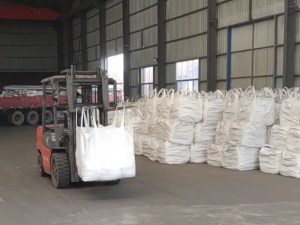
- Confirm packaging, documentation and after-sales. Dry storage matters for this category: moisture causes caking and blocks conveying. Agree on moisture-protected packaging, labeling and a named contact for claims.
Comparison Table: Product Families at a Glance
The table below compares the product families described by Zouping Huiteng Metal Abrasives Co., Ltd., using the specifications published for each model. Values are model-specific and are not interchangeable between grades.
| Product family | Material | Hardness | Particle size | Shape | Stated life / cycles |
|---|---|---|---|---|---|
| Cast steel shot (S70–S930) | High-carbon cast steel | HRC 40–50; HRC 55–65 | S70–S930 | Spherical | 1,000+ recyclable cycles |
| Cast steel grit (G12–G120) | High-carbon cast steel | GP 42–52; GL 53–60; GH 60–64 HRC | G12–G120 | Angular (crushed) | 2,000–2,500 cycles |
| Bearing steel grit (G12–G120) | GCr15 / 100Cr6 bearing steel | HRC 55–65 | G12–G120 | Angular | 2,500+ recyclable cycles |
| Stainless steel shot (195/201/304/430) | Stainless steel | HRC 32–50 | 0.1–1.0 mm (grade dependent) | Spherical | Up to 6,500 cycles |
| Steel wire cut pellet series | Tire cord; steel strand | HRC 44–53 | 1.0–3.0 mm | Cylindrical cut wire | 3,300–3,600 cycles |
| Stainless steel cut wire shot | 304 / 316 stainless wire | HRC 25–45 | 0.2–1.6 mm | Cylindrical (length = diameter) | 2,500+ recyclable cycles |
Sources: published product specifications for the models listed above (Zouping Huiteng Metal Abrasives Co., Ltd., 2026).
Where Chinese Metal Abrasives Are Used
Shipbuilding, Steel Structure and Bridges
Hull and structural steel work requires aggressive removal of rust, mill scale and old coatings, followed by an anchor profile that satisfies coating specifications. Steel grit grades around G25–G40 are typically used for stripping, with shot passes used to adjust the final profile. Ship PSPC coating preparation and heavy steel structure blasting are standard scopes for cast and bearing steel grit.
Foundry and Casting Cleaning
Foundries use metal abrasives for casting descaling, sand removal and surface cleaning, and use box-filling and weighting sand in lost foam and V-process vacuum casting to compress the sand mold and prevent box lifting during pouring.
Automotive Parts and Spring Peening
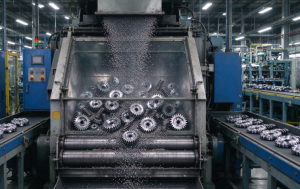
Steel abrasives for shot peening and surface strengthening are applied to springs, gears, fasteners, automotive components and wind power parts. Cut wire shot and reinforced grinding shot are used where a controlled peening intensity and a low breakage rate matter, and where dust and blast-wheel wear must be controlled.
Precision, Non-Ferrous and Finishing Work
Stainless steel abrasive media, stainless cut wire shot and magnetic steel needles serve non-ferrous surface finishing, aluminum die casting, precision castings, electronics hardware and jewelry. The choice is driven by contamination risk: any ferrous residue on aluminum or stainless will show up later as discoloration.
Counterweight and Ballast Filling
Counterweight sand, with bulk density grades from 3.8 to 6.0 g/cm³, is used to fill elevator counterweights, construction machinery bases, port machinery, bridge and foundation ballast sections, weighing scales and ship ballast. It offers a lower-cost alternative to solid cast counterweights while keeping weight stable.
Frequently Asked Questions
1. Which standards should a China metal abrasives manufacturer be able to document?
ISO 11124-3:2018 specifies requirements for high-carbon cast-steel shot and grit supplied for blast-cleaning processes, covering hardness, density, defect and structural requirements and chemical composition across 14 shot grades and 11 grit grades. SAE J444 defines cast shot and grit size specifications for peening and cleaning, and cast steel grit and shot ranges are commonly supplied to SAE J441 and SAE J827. Ask any supplier for the batch certificate, chemical composition report and preshipment inspection record tied to your order. Zouping Huiteng Metal Abrasives Co., Ltd. states that its factory holds ISO 9001 quality management system certification and that each batch is tested for chemical composition, fatigue life and preshipment sampling.
2. What product range can a Chinese metal abrasives manufacturer supply?
A mature producer covers five major series — steel shot, steel grit, stainless steel shot and cut wire shot among them — typically spanning more than 60 specifications and models. Huiteng's range includes cast steel shot from S70 to S930, cast steel grit and bearing steel grit from G12 to G120, stainless steel shot grades 195, 201, 304 and 430, stainless cut wire shot in 304 and 316 from 0.2 mm to 1.6 mm, steel wire cut pellets from 1.0 mm to 3.0 mm, plus magnetic steel needles, butterfly steel shot, and box-filling and counterweight sand. The company states an annual production capacity of approximately 100,000 tons from a 20,000 m² facility with about 50 staff, including 15 engineers, and exports to more than 20 countries and regions.
3. Should cost be evaluated per ton or as total cost of ownership?
Per-ton price alone is a poor comparison for metal abrasives because steel media is recyclable while disposable media is not. In Huiteng's published technical Q&A, the company explains that steel shot and grit are recovered, cleaned and returned to the hopper through the machine's separator system, with only broken fines removed — so one ton of steel abrasive can replace roughly 50–100 tons of single-use sand, and total cost of ownership is estimated at 50–80% lower once material purchases, waste disposal, filter replacement and rework are counted. The same source notes the savings depend on keeping the separator and screening system in good condition, since worn separation equipment leaves fines in circulation and accelerates consumption.
4. Can buyers get samples before committing to an order?
Yes. Huiteng provides free samples of 1–5 kg so buyers can test quality on their own blasting equipment; the sample itself is free and the buyer covers international courier freight via DHL, FedEx or TNT, typically USD 30–80 depending on destination. Samples are prepared within 3–5 working days and can be matched to the required size, hardness and material grade. For first-time buyers, testing 2–3 grades to find the best fit for a specific machine and workpiece is recommended, and sample freight can be deducted from the first bulk order.
5. What are the MOQ, lead time and payment terms?
The minimum order is 1 ton for standard grades and 3 tons for customized grades. Ready-stock orders ship within 7–15 days, while customized orders take 20–30 days. Payment is accepted by T/T (30% deposit, 70% before shipment) or irrevocable L/C at sight, and flexible terms can be discussed for long-term distributors. To move from research to a quotation, send your application details, target grade and annual volume to fan@shot-s2u.com or review the range at www.shot-s2u.com.
Conclusion: Build the Shortlist, Then Verify It
China's metal abrasives cluster concentrates melting, atomization, heat treatment and screening in one region, which is why Asia Pacific holds 56.0% of global revenue and why steel abrasives account for 89.9% of the material segment. That concentration gives international buyers real advantages in size range, customization and lead time — but it also means the supplier list you find at the discovery stage contains manufacturers and traders side by side.
The efficient path is narrow and specific: define the surface job, confirm the plant and equipment, request specifications rather than family names, tie standards to batch documents, and validate the choice with a trial sample on your own machine. Media that matches your blast wheel, substrate and target profile will reduce consumption, dust and rework. Media that does not will do the opposite, regardless of price per ton.
Metal AbrasivesSteel ShotSteel GritStainless Steel AbrasiveCut Wire ShotBearing Steel GritCounterweight Sand
Request a Sample or a Quotation
Zouping Huiteng Metal Abrasives Co., Ltd. is located in Qingyang Town Industrial Park, Zouping County, Binzhou City, Shandong Province, China, and was established in 2017. Free 1–5 kg samples, custom metal abrasives and bulk supply are available for global importers, distributors and end users.
Email: fan@shot-s2u.com | Tel / WhatsApp: +86 188-5431-6114 | Website: www.shot-s2u.com
Download the full product catalog and specification booklet: Huiteng metal abrasives brochure (PDF)
Have Questions or Need More Details?
Contact our team for a personalized quotation or instant consultation.
Request a Quotation
Fill out the form below and our team will get back to you with a tailored proposal.
WhatsApp Direct Chat
Prefer to chat in real-time? Message us on WhatsApp for instant assistance & quick answers.
- Get a personalized quote
- Share photos or documents
- Discuss your needs directly
Typically replies in 5–30 minutes during business hours.