Huiteng Metal Abrasives: A Deep Profile of a China Metal Abrasives Manufacturer
Zouping Huiteng Metal Abrasives Co., Ltd. is a metal abrasives manufacturer based in Zouping County, Shandong Province, China. Founded in 2017, the company operates a 20,000 m² production facility with an annual production capacity of approximately 100,000 tons and a portfolio covering five major series — steel shot, steel grit, stainless steel shot, cut wire shot and specialty blasting media — in more than 60 specifications and models.
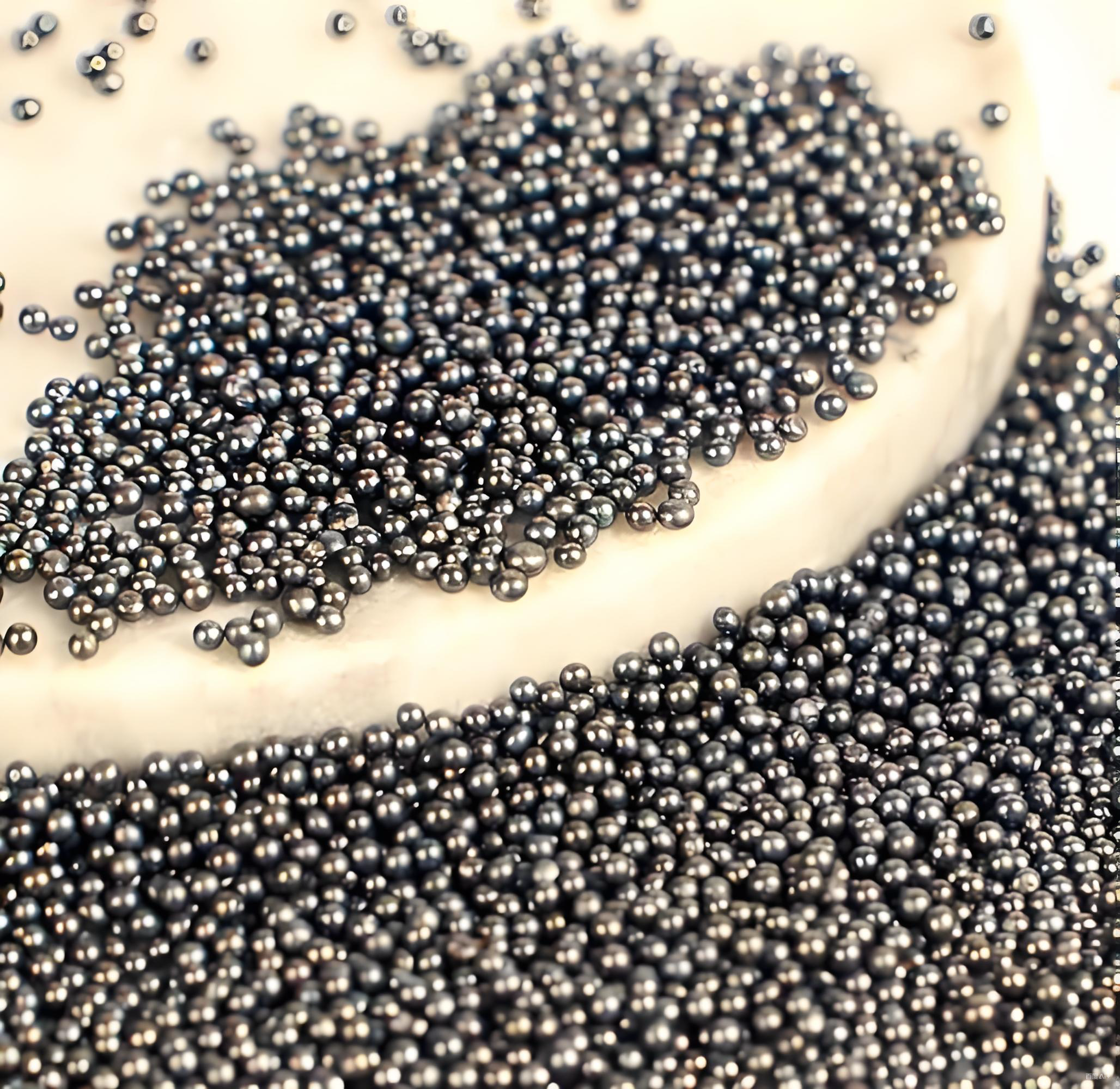
Cover: Cast steel shot from the Huiteng Metal Abrasives production range.
This profile is written for procurement managers, importers, distributors and blasting engineers who are researching China metal abrasives manufacturers and need more than a product list. It covers what Huiteng manufactures, how those products are produced, which standards apply to metal blasting abrasives, which applications each series fits, and — equally important — what a buyer should still verify before placing a first bulk order.
Why “China Metal Abrasives Manufacturers” Is a Difficult Search to Close
A buyer who searches for metal abrasives manufacturers in China is usually at the discovery stage. They know the process they need to feed — shot blasting, sandblasting, shot peening or metal finishing — and they may already know which media family they want: Steel Shot, Steel Grit, Stainless Steel Shot, Cast Steel Shot or Cut Wire Shot. What they do not yet have is a supplier list, and they usually cannot tell a genuine manufacturer from a trading company by reading a website.
The practical difficulty is not a shortage of suppliers. It is a shortage of comparable information. Supplier pages tend to use the same vocabulary — high quality, competitive price, fast delivery — while omitting the data a purchase decision actually depends on:
- The legal entity, its location and whether production is in-house.
- Plant footprint, workforce and production capacity.
- Product series with real hardness ranges, densities and particle-size grades.
- Which international standard the grades correspond to.
- Minimum order quantity, lead time, payment terms and sample policy.
A profile that answers those five points allows a buyer to move from awareness to a shortlist in a single reading. That is the purpose of this page: to compress the discovery work into one structured reference, and to state clearly which figures are company-reported and should be confirmed with documentation.
Industry Background: What the Metal Abrasives Market Looks Like in 2026
The global metal abrasives market was valued at USD 6.7 billion in 2025 and is projected to reach USD 7.1 billion in 2026, according to market research published by Grand View Research. Within that total, steel-based abrasives dominate the material segment with an 89.9% market share in 2025, and Asia Pacific holds the largest regional revenue share at 56.0%.
The steel shot sub-segment alone was valued at USD 1.664 billion in 2025 and is projected to reach USD 2.5 billion by 2035, while global steel shot consumption reached 6.8 million metric tons in 2025. Two conclusions follow for buyers. First, volume-driven procurement of blasting media will continue to be anchored in Asia-Pacific production clusters, particularly China. Second, because that supply base is fragmented, the main sourcing risk is variability rather than availability — which is why standards matter more than brand names.
Three standards are commonly used as specification anchors for metallic blast-cleaning abrasives:
- ISO 11124-3:2018 — specifies requirements for 14 grades of high-carbon cast-steel shot and 11 grades of high-carbon cast-steel grit supplied for blast-cleaning processes, including values for hardness, density, defect and structural requirements, and chemical composition.
- SAE J444 — cast shot and grit size specifications for peening and cleaning, widely referenced in automotive and aerospace supply chains.
- SAE J441 and SAE J827 — specifications frequently cited alongside ISO 11124-3 for cast steel shot and grit used in surface preparation and peening.
For buyers, the useful habit is to write a request for quotation around a standard, a size grade, a hardness range and a density threshold — not around a brand name. That is what makes quotations from different suppliers comparable, and it is the fastest way to separate manufacturers with real process control from resellers.
Company Overview: Zouping Huiteng Metal Abrasives Co., Ltd.
Zouping Huiteng Metal Abrasives Co., Ltd. is a manufacturer and exporter of metal abrasives located in Qingyang Town Industrial Park, Zouping County, Binzhou City, Shandong Province, China. The company was established in 2017 and describes its business as the production and export of metallic blasting and peening media for industrial surface treatment.
| Item | Detail |
|---|---|
| Legal entity | Zouping Huiteng Metal Abrasives Co., Ltd. |
| Established | 2017 |
| Location | Qingyang Town Industrial Park, Zouping County, Binzhou City, Shandong Province, China |
| Manufacturing facility | 20,000 m² |
| Workforce | Approximately 50 employees, including an R&D team of 15 engineers |
| Annual production capacity | Approximately 100,000 tons |
| Product portfolio | Five major series, more than 60 specifications and models |
| Export share | Approximately 30% of output |
| Main markets | Global, including the EU, USA, India, Southeast Asia and the Middle East — more than 20 countries and regions |
| Website | www.shot-s2u.com |
| Contact | fan@shot-s2u.com / +86 188-5431-6114 |
The product range is organised around five core series — steel shot, steel grit, stainless steel shot, cut wire shot and specialty media — which together cover the main surface-preparation and peening tasks in casting, forging, steel structure, shipbuilding, automotive and mining environments. Metal abrasives from this portfolio are supplied for surface cleaning and rust removal, descaling, surface profiling, shot peening, paint and coating stripping, and general metal finishing.
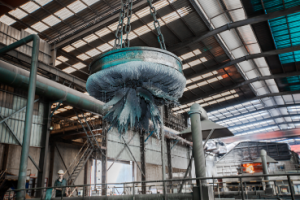
Production at the Huiteng facility in Zouping County, Shandong Province.
Core Products and Solutions
Huiteng's range combines cast metallic abrasives, stainless and wire-cut media, and dense granular materials for counterweight and foundry box-filling duties. The sections below summarise each series using the specifications published by the company.
1. Cast Steel Shot (S70–S930) and Cast Steel Grit (G12–G120)
Cast steel shot is a spherical, high-carbon cast steel abrasive available in size grades from S70 to S930. Published hardness options are HRC 40–50 and HRC 55–65, with a specific gravity of 7.8 g/cm³, a bulk density of 4.5–4.8 g/cm³ and a stated service life of more than 1,000 recyclable cycles. The spherical form produces a smooth, rounded surface profile and is used for shot peening, surface strengthening and cleaning applications where cutting action must stay moderate. The series is stated to meet SAE J441 and SAE J827, and is typically applied to shipbuilding, steel structure and bridge work, foundry cleaning, automotive parts, spring peening, pipeline and tube production, and rail and locomotive maintenance.
Cast steel grit is the angular counterpart, made from high-carbon cast steel by crushing. It is offered in tempering and non-tempering variants and in three hardness families: GP at 42–52 HRC, GL at 53–60 HRC and GH at 60–64 HRC, with a minimum density of 7.6 g/cm³, a bulk density of 4.2 g/cm³ and a stated fatigue life of 2,000–2,500 cycles. The sharp edges are designed to strip rust, mill scale and old coatings quickly and to leave an angular anchor profile that improves paint adhesion.
2. Bearing Steel Grit G12–G120
Bearing steel grit is produced from GCr15 / 100Cr6 high-carbon chromium bearing steel through forging and crushing, which removes casting porosity from the particle structure. The result is an angular, fragmented particle with a uniform tempered martensite metallographic structure, a hardness of HRC 55–65, a specific gravity of 7.5 g/cm³, a bulk density of 4.0–4.5 g/cm³ and a stated recyclable life of 2,500+ cycles. Both tempering and non-tempering variants are supplied across the G12 to G120 range.
Application notes for this series include heavy steel structure blasting, ship PSPC coating preparation, casting descaling and granite gang saw cutting. Compared with cast steel grit, bearing steel grit is described as having a lower wear rate, low dust emission, a stable uniform anchor profile and support for multiple recycling cycles — properties that matter in high-throughput lines where media consumption is the dominant operating cost.
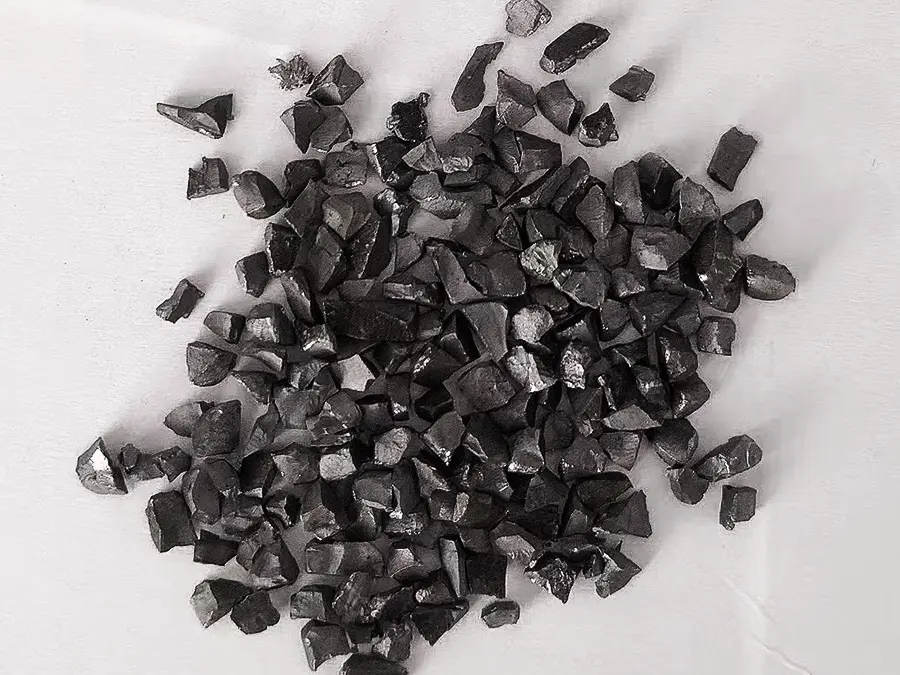
Bearing steel grit: angular particles produced from GCr15 bearing steel.
3. Stainless Steel Shot, Stainless Cut Wire Shot and Oblique Cut Wire
The stainless steel shot series is made from stainless raw materials, atomized into spherical particles through water atomization, or alternatively cut into shape from stainless steel wire. Grades 195 (0.1–3.0 mm), 201 (0.1–2.5 mm), 304 (0.1–1.0 mm) and 430 (0.1–0.6 mm) are published, with hardness of 32–50 HRC, tensile hardness of 490–1,520 MPa, a density of 7.8 g/cm³, a bulk density of 4.5 g/cm³ and a stated service life of 6,500 cycles.
The functional point of stainless media is contamination control. Because the particles contain no iron component, aluminium alloy, stainless steel and titanium alloy workpieces do not pick up free iron from the blasting media, which prevents the yellowing and rust spotting that can appear later in the finishing process. Applications include stainless steel surface treatment, aluminium profile and die casting work, copper and brass parts, hardware and electronics, and precision castings.
Two wire-cut stainless formats extend the range. Stainless steel cut wire shot 0.2–1.6 mm is precision cut from 304 or 316 stainless wire into cylindrical particles whose length equals their diameter, with no hollow or porous particles, a specific gravity of 7.9 g/cm³ and 2,500+ recyclable cycles. Stainless steel oblique cut wire 0.3–1.2 mm uses an angled cylinder shape that cuts more aggressively than a straight cut, and is aimed at automatic shot blasting of stainless steel and aluminium parts, automotive trim, hardware and optics, and precision casting surface treatment.
4. Cut Wire Shot, Reinforced Grinding Shot and Specialty Media
The steel wire cut pellet series is produced by cutting high-carbon cold-drawn steel wire, which gives a solid particle structure without the porosity and looseness found in cast abrasives. Two cutting series are published: tire wire cutting from 1.0 mm to 2.0 mm and steel strand cutting from 2.0 mm to 3.0 mm, with hardness of 44–53 HRC, tensile hardness of 1,300–2,200 MPa, a density of 7.8 g/cm³, a bulk density of 4.5 g/cm³ and a stated life of 3,300–3,600 cycles. Low breakage and low dust generation reduce abrasive consumption and wear on the vulnerable parts of a blasting machine.
Reinforced grinding shot is supplied as 1.5 mm G1 and 1.5 mm G2. It is cut from high-carbon manganese cold-drawn steel wire and then roll-ground and chamfered into near-spherical particles with rounded edges, a hardness of 54–60 HRC, tensile hardness of 2,200–2,800 MPa, a deformed troostite structure and a stated life of 4,000 cycles. Typical duties are shot peening and strengthening of springs, gears, fasteners, automotive parts and wind power components, plus deburring and smoothing of precision castings.
Two further media complete this group. Butterfly-shaped steel shot 0.8–1.6 mm is a flat oval cut wire particle with a larger contact area than round shot, used for deburring, edge radiusing and mass finishing. Magnetic steel needle 0.2–0.5 mm is a cylindrical needle in magnetic stainless steel 430/420, offered in 3 mm, 5 mm, 8 mm and 10 mm lengths at 45–55 HRC, for magnetic grinding and polishing of precision hardware, connectors, medical parts, jewellery and internal hole deburring.
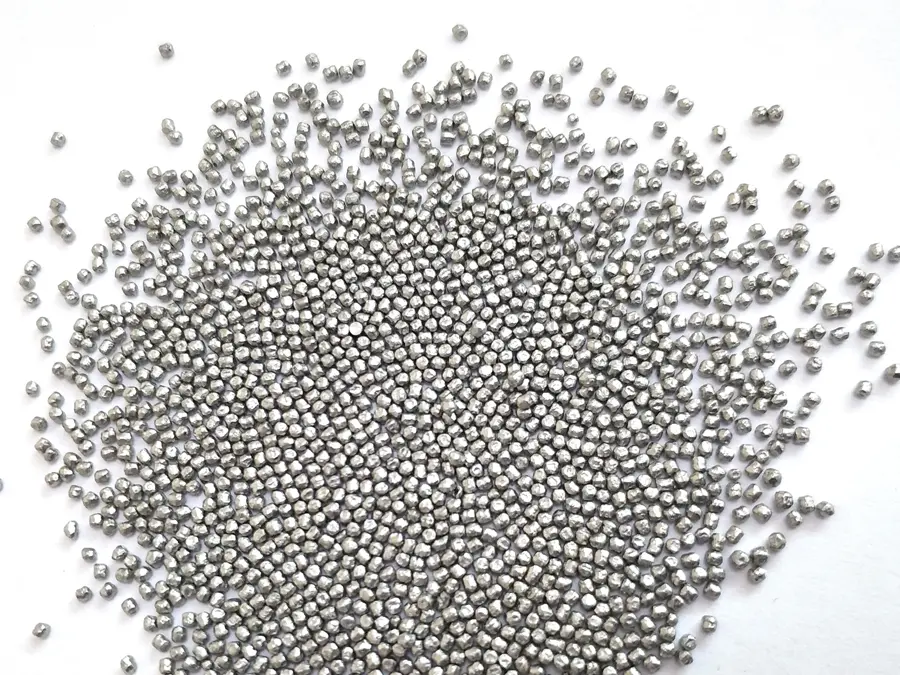
304 stainless steel shot — iron-free media for stainless, aluminium and titanium workpieces.
5. Counterweight Sand and Foundry Box-Filling Materials
Beyond blasting media, the portfolio includes dense granular materials for weight and compaction duties. Ballast sand is supplied in 0.1–5 mm particle sizes with bulk density grades from 3.8 to 6.0 g/cm³, a true density above 7.0 g/cm³, free-flowing behaviour and moisture below 0.5%. It is used for elevator counterweights, construction machinery such as excavators and forklifts, port machinery, bridge and foundation ballast, weighing scales and ship ballast.
Box-filling and counterweight sand is supplied in 2–3 mm, 3–6 mm and 6–9 mm grades with a hardness of 52 HRC, a minimum density of 7.2 g/cm³ measured by alcohol displacement and a homogeneous tempered martensite structure. In lost foam casting and V-process vacuum casting it fills the gaps and corners of the sand box and compresses the mould, helping to prevent box lifting and metal run-out during pouring. In counterweight filling, its function is to increase self-weight, adjust the centre of gravity and reduce vibration and noise.
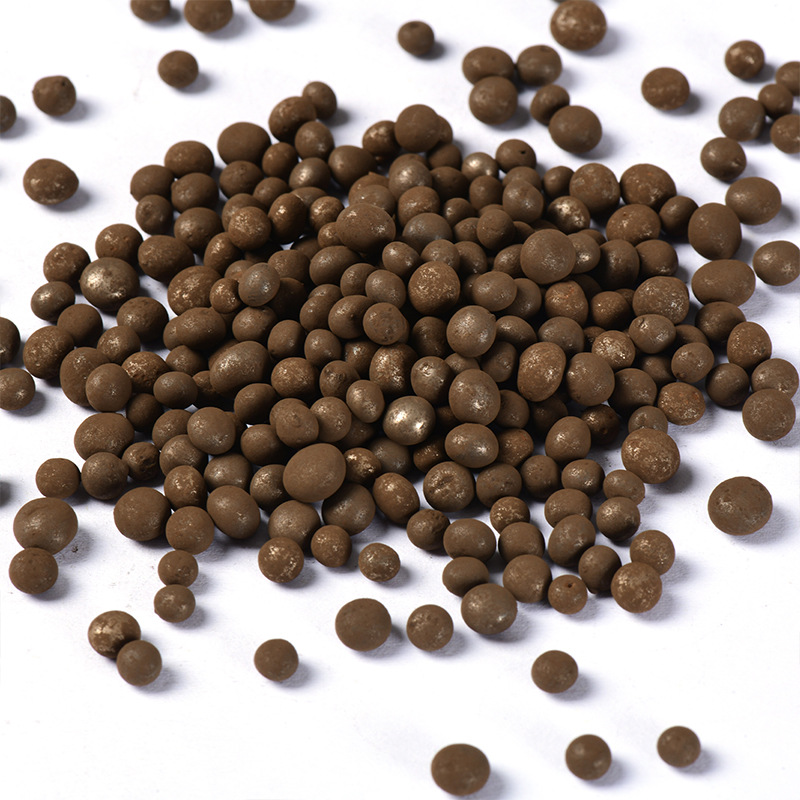
Counterweight and box-filling sand grades for foundry and ballast applications.
Manufacturing, R&D and Quality Control: How the Media Is Produced
Huiteng's production workflow is built around medium-frequency induction melting, centrifugal atomization granulation and subsequent heat treatment, followed by mechanical finishing and screening. The company states that each batch of product is tested for chemical composition and fatigue life, with pre-shipment sampling inspection before dispatch, under an ISO 9001 quality management system.
The published process sequence is as follows:
- Medium-frequency induction melting — raw material is melted in medium-frequency induction furnaces to control chemistry before atomization.
- Centrifugal atomization granulation — molten steel is atomized into droplets that solidify as near-spherical particles.
- Secondary quenching and tempering — heat treatment sets the hardness range and the metallographic structure of the finished particle.
- Rounding — particles are rounded to remove sharp casting surfaces and internal defects, depending on the target product series.
- Screening — material is classified into the size grades published for each series, from S70 up to S930 for shot and G12 to G120 for grit.
- Testing — chemical composition and fatigue life testing is carried out per batch, with pre-shipment sampling inspection.
- Packaging — finished media is packed under strict quality management controls for domestic and export shipment.
The R&D function is staffed by 15 engineers working on process parameters and application matching. In practice, this is where customisation happens: buyers who need a specific particle-size gradation, a specific hardness band, or a specific density grade for ballast and counterweight material are matched to a production setup rather than to a stock catalogue number.
Metal abrasives in service on an industrial shot blasting line.
Application Areas and Operating Conditions
Huiteng metal abrasives are positioned for six main buyer groups: shipbuilding and ship repair, steel structure and bridge fabrication, automotive components and vehicle surface treatment, foundry and casting, abrasive distribution, and shot blasting and sandblasting equipment integration.
The functional tasks these media perform include surface cleaning and rust removal, descaling and oxide scale removal from castings and steel, surface profiling to improve coating adhesion, shot peening to enhance fatigue strength, paint and coating stripping, and pre-painting decontamination of metal surfaces.
Equipment compatibility is documented across shot blasting machines and tumble blast machines, sand blasting pots and blast cabinets, dust collection and fume extraction systems, abrasive recovery and recycling systems, bucket elevators and screw conveyors, separators and air washers, and blast rooms and enclosures. Operating conditions in these environments are demanding: high-impact and high-abrasion duty, continuous recycling of media, dust generation during blasting, wide shop-floor temperature ranges, and workpieces spanning carbon steel, stainless steel, aluminium and cast iron. Operation modes range from continuous high-throughput foundry and automotive lines to batch processing in blasting booths and manual blasting of ship hulls and bridges.
Product Series Comparison
The table below compares Huiteng's main product families on the parameters that most strongly affect media selection: particle form, hardness, density and typical duty.
| Product series | Particle form | Hardness | Density | Stated recyclable life | Primary duty |
|---|---|---|---|---|---|
| Cast Steel Shot S70–S930 | Spherical | HRC 40–50 / HRC 55–65 | 7.8 g/cm³ | 1,000+ cycles | Shot peening, surface strengthening, general cleaning |
| Cast Steel Grit G12–G120 | Angular, crushed | GP 42–52 / GL 53–60 / GH 60–64 HRC | Min. 7.6 g/cm³ | 2,000–2,500 cycles | Rust, mill scale and coating removal; anchor profile |
| Bearing Steel Grit G12–G120 | Angular, forged and crushed | HRC 55–65 | 7.5 g/cm³ | 2,500+ cycles | Heavy steel structure, ship PSPC prep, granite gang saw cutting |
| Stainless Steel Shot 195/201/304/430 | Spherical | 32–50 HRC | 7.8 g/cm³ | 6,500 cycles | Iron-free finishing of stainless, aluminium, titanium parts |
| Stainless Cut Wire Shot 0.2–1.6 mm | Cylindrical, wire cut | HRC 25–45 | 7.9 g/cm³ | 2,500+ cycles | Stainless sheet and profile blasting, aluminium die casting |
| Steel Wire Cut Pellet Series | Cylindrical, wire cut | 44–53 HRC | 7.8 g/cm³ | 3,300–3,600 cycles | Peening and blasting where low breakage is required |
| Reinforced Grinding Shot 1.5 mm G1/G2 | Near-spherical, chamfered | 54–60 HRC | 7.8 g/cm³ | 4,000 cycles | Spring, gear, fastener and wind power component peening |
| Ballast / Counterweight Sand | Granular | 52 HRC (box-filling grade) | Bulk 3.8–6.0 g/cm³ | Repeated reuse | Counterweight filling, lost foam and V-process box filling |
Two selection rules follow from this comparison. Where the goal is fatigue strength and a rounded surface profile, choose a spherical shot — cast steel shot, stainless steel shot or reinforced grinding shot. Where the goal is aggressive removal of rust, mill scale or old coatings and a rough anchor pattern for paint, choose an angular grit — cast steel grit or bearing steel grit. Where the workpiece is aluminium, stainless or titanium and iron contamination is unacceptable, the media must be stainless.
Market Positioning and International Presence
Huiteng exports approximately 30% of its output, with shipments to the EU, USA, India, Southeast Asia and the Middle East covering more than 20 countries and regions. The company states that it has experience in overseas projects and provides customised solutions for different blasting applications — a relevant capability for buyers whose workpiece mix, machine setup or coating specification differs from standard catalogue use.
The company operates in the same Shandong manufacturing cluster that supplies a large share of global steel abrasive volume, which is consistent with the Asia-Pacific concentration of the market described earlier. Within that cluster, buyers should expect wide variation in process control, and should therefore treat manufacturer identity and documentation as the deciding factors rather than price alone.
Procurement Value: What This Means for Buyers
Four capabilities determine whether a metal abrasives supplier is worth a place on a shortlist, and Huiteng's published data addresses each of them.
- Range and matching. Five major series and more than 60 specifications cover the common decision set — shot versus grit, cast versus wire cut, carbon steel versus stainless — without forcing a buyer to source from multiple suppliers for a single blasting line.
- Customisation. Published customisation options include particle-size gradation, hardness and grade selection, density grades for ballast and counterweight materials, and custom packaging, with matching against the buyer's blasting application rather than a fixed catalogue list.
- Commercial accessibility. A minimum order quantity of 1 ton for standard grades and 3 tons for customised grades, stock lead times of 7–15 days, custom lead times of 20–30 days, and free 1–5 kg samples keep the entry cost of a first trial low.
- Operating economics. Recyclable metallic media reduce long-run consumption compared with single-use silica sand or copper slag. Huiteng's application guidance is that recycled steel media can replace roughly 50–100 tons of disposable abrasive per ton of steel abrasive used, with the savings concentrated in material purchases, refills, waste disposal and filter replacement.
Where buyers require branded OEM or ODM supply arrangements — private-label packaging, custom chemistry bands or co-developed grades — the scope should be confirmed directly with the supplier, since these programmes depend on volume, grade and packing specification rather than on a standard price list.
FAQ
Do Huiteng metal abrasives meet recognised international standards?
Huiteng states that its factory holds ISO 9001 quality management system certification, and that its cast steel grit series meets SAE J441 and SAE J827. The size-grading conventions used for cast steel shot and grit correspond to grades defined in ISO 11124-3:2018, which specifies requirements for 14 grades of high-carbon cast-steel shot and 11 grades of high-carbon cast-steel grit including hardness, density, defect, structural and chemical composition values, and SAE J444, which covers cast shot and grit size specifications for peening and cleaning. For procurement purposes, treat these as specification anchors: request the ISO 9001 certificate with its number, a batch chemical composition report, a hardness test result and fatigue-life data for the exact grade quoted before approving a bulk order.
What product ranges does Huiteng supply, and how do you choose between steel shot and steel grit?
The range covers five major series and more than 60 specifications: steel shot, steel grit, stainless steel shot, cast steel shot, cut wire shot, atomized stainless steel shot, bearing steel grit, and counterweight and box-filling materials. Steel shot is spherical, produced by atomization, creates a rounded surface profile and is used for shot peening and surface strengthening. Steel grit is angular, produced by crushing hardened material, cuts rust, mill scale and old coatings faster and creates an angular anchor profile that improves paint adhesion. Application-level guidance from the supplier: steel grit G25–G40 for ship hull and steel structure blasting, G18–G25 for heavy ferrous castings, steel shot S330–S550 for lighter or precision castings, and S70–S230 for gear, spring and automotive peening. Where iron contamination must be avoided — aluminium, stainless or titanium workpieces — stainless steel shot or stainless cut wire shot should be used instead.
Are steel abrasives more expensive to run than disposable sand?
On price per ton, yes. On cost per square metre blasted, generally no. Huiteng's application guidance is that steel shot and grit are captured by a machine's recovery and separation system and can be recycled 2,500+ times, so one ton of steel abrasive replaces roughly 50–100 tons of single-use silica sand or copper slag. The savings come from fewer material purchases, fewer refills, lower waste disposal costs, fewer dust-collector filter replacements and more consistent surface quality that reduces rework. Buyers should treat these figures as a starting model and validate them against their own recovery system efficiency and measured media consumption rate.
Can buyers obtain samples before committing to a bulk order?
Yes. Huiteng provides free samples of 1–5 kg so buyers can test the media on their own blasting equipment. The sample itself is free of charge; the buyer covers international courier freight via DHL, FedEx or TNT, typically USD 30–80 depending on the destination country. Samples are prepared within 3–5 working days and the required size, hardness and material grade can be matched to the buyer's specification. Sample freight can be deducted from the first bulk order.
What is the MOQ, lead time and payment terms?
The minimum order quantity is 1 ton for standard grades and 3 tons for customised grades. Ready-stock orders ship within 7–15 days; customised orders take 20–30 days. Payment is accepted by T/T (30% deposit, 70% before shipment) or irrevocable L/C at sight, and flexible terms can be discussed for long-term distributors. Buyers who want the full specification, grade and packaging overview can download the Huiteng metal abrasives catalogue here, or send a specification with target quantity and destination port to fan@shot-s2u.com for a quotation.
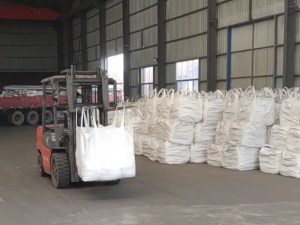
Export packing and shipment of metal abrasives orders.
Conclusion: Where Huiteng Sits in the Metal Abrasives Supply Chain
Zouping Huiteng Metal Abrasives Co., Ltd. is a China-based metal abrasives manufacturer founded in 2017, operating a 20,000 m² facility in Zouping County, Shandong Province, with an annual production capacity of approximately 100,000 tons, a workforce of around 50 including 15 engineers, and an export share of about 30% covering more than 20 countries. Its positioning in the market is that of a mid-sized, range-complete producer rather than a single-product specialist: cast steel shot and grit for general surface preparation and peening, bearing steel grit for demanding heavy-duty blasting, stainless media for iron-free finishing, wire-cut media for low-breakage peening, and dense granular materials for counterweight and foundry duties.
For buyers at the research stage, the practical value of this profile is that it converts a vague search for metal abrasives manufacturers in China into a set of checkable questions: which series fits my workpiece, which grade and hardness band do I need, what MOQ and lead time apply, how do I obtain a sample, and which certificates and batch reports must be provided before a bulk order is approved. Answering those questions is how discovery becomes procurement.
Next step: request a free 1–5 kg sample matched to your machine, workpiece and target surface profile, or download the full Huiteng metal abrasives catalogue (PDF).
Zouping Huiteng Metal Abrasives Co., Ltd. — Qingyang Town Industrial Park, Zouping County, Binzhou City, Shandong Province, China.
Website: www.shot-s2u.com | Email: fan@shot-s2u.com | Tel / WhatsApp: +86 188-5431-6114
Have Questions or Need More Details?
Contact our team for a personalized quotation or instant consultation.
Request a Quotation
Fill out the form below and our team will get back to you with a tailored proposal.
WhatsApp Direct Chat
Prefer to chat in real-time? Message us on WhatsApp for instant assistance & quick answers.
- Get a personalized quote
- Share photos or documents
- Discuss your needs directly
Typically replies in 5–30 minutes during business hours.