Metal Abrasives: A Discovery Guide to China Metal Abrasive Manufacturers
Metal abrasives are the metallic media — steel shot, steel grit, stainless steel media, cut wire shot, magnetic needles and dense weighting materials — that blast machines, shot peening lines and foundries use to clean, profile, strengthen, deburr or add weight to metal parts. China is one of the largest production bases for the category. This guide is written for buyers who already know they need a metallic abrasive but are still at the discovery stage: it explains what the category contains, how the market is structured, how the main product families differ, and how to run a first-pass evaluation of China metal abrasives manufacturers before requesting samples or quotations.
Why One Category Name Hides Very Different Products
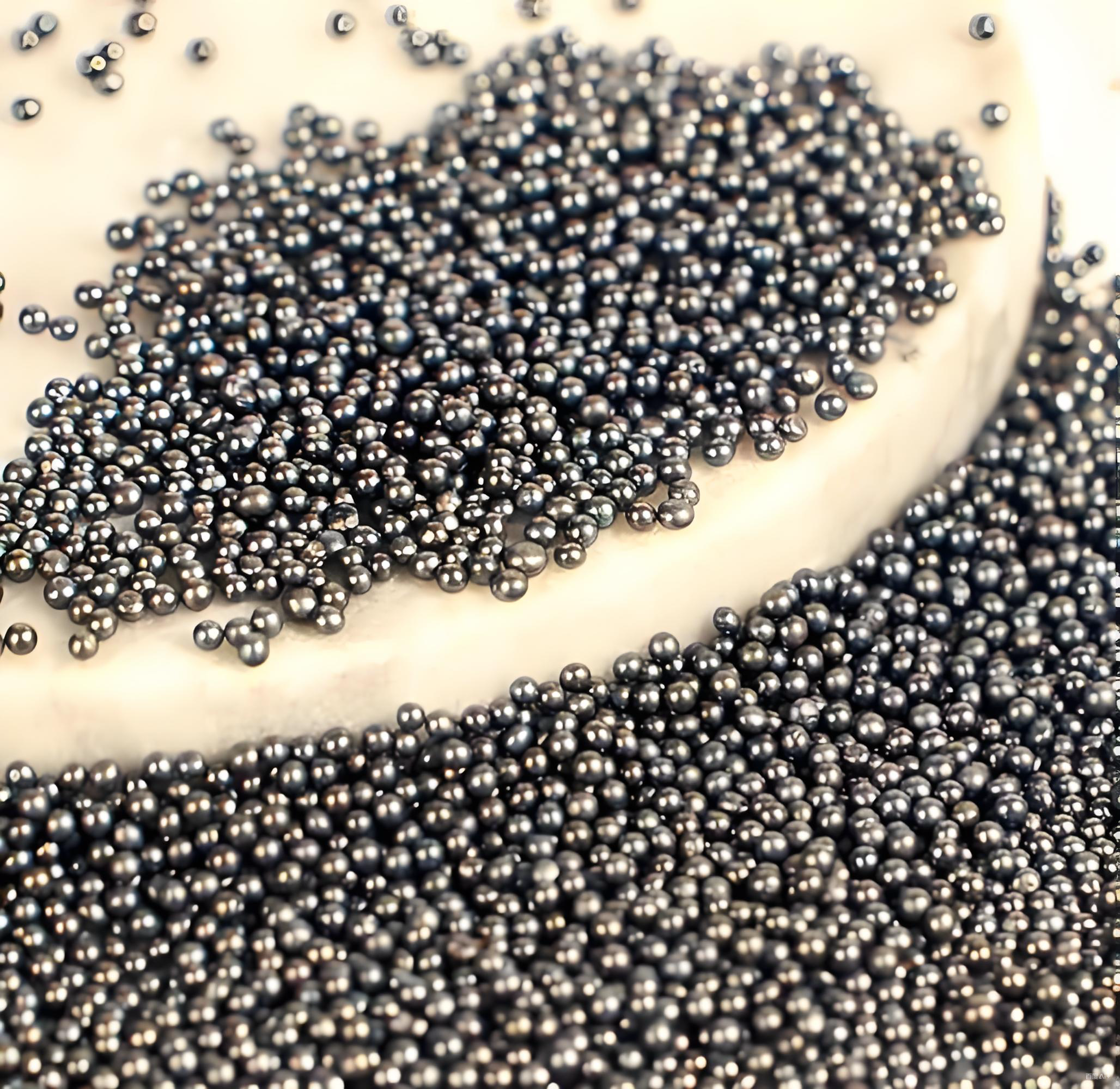
The word combination metal abrasives describes hundreds of specifications that do not perform the same job. A foundry that needs to stop box lifting during pouring buys a granular weighting sand. A shipyard stripping heavy mill scale buys angular steel grit. An automotive line strengthening springs buys small spherical shot. A precision electronics supplier deburring inner holes buys magnetic stainless steel needles. Every one of those products sits inside the same category, but the particle shape, hardness, size and raw material behind each job are different.
That is why the first decision in a metal abrasives purchase is not which supplier, but which family. Getting the family wrong produces predictable symptoms: an anchor profile too shallow for the coating system, media consumption that runs far above plan, scratched or dimensionally damaged precision parts, or free iron contamination on stainless steel and aluminium that shows up as yellowing or rust bloom weeks after blasting.
A second source of confusion is that the same family name can be produced by different routes. Cast media are atomised or cast and then crushed; cut wire media are cut from cold-drawn or stainless wire. Those routes produce different internal structures, and buyers who compare only by product name rather than by production route often end up comparing two different things.
Industry Background: Market Size, Supply Geography and the Standards That Govern It
The global metal abrasives market was valued at USD 6.7 billion in 2025 and is expected to reach USD 7.1 billion in 2026, according to Grand View Research. Steel-based media dominate the material mix: steel abrasives represented 89.9% of the material segment in 2025, and Asia Pacific held the largest regional revenue share at 56.0%. Within the category, the steel shot sub-segment alone was valued at USD 1.664 billion in 2025 and is projected to reach USD 2.5 billion by 2035, based on WiseGuyReports analysis, while global steel shot consumption reached 6.8 million metric tons in 2025.
| Market indicator | Value | Year | Source |
|---|---|---|---|
| Global metal abrasives market size | USD 6.7 billion, rising to USD 7.1 billion | 2025–2026 | Grand View Research |
| Steel share of the material segment | 89.9% | 2025 | Grand View Research |
| Asia Pacific revenue share | 56.0% | 2025 | Grand View Research |
| Steel shot sub-segment | USD 1.664 billion in 2025, projected USD 2.5 billion by 2035 | 2025 | WiseGuyReports |
| Global steel shot consumption | 6.8 million metric tons | 2025 | Grand View Research |
Three standards anchor how the product is specified and inspected globally:
- ISO 11124-1:2018 — metallic blast-cleaning abrasives used for the preparation of steel substrates.
- ISO 11124-3:2018 — requirements for 14 grades of high-carbon cast-steel shot and 11 grades of high-carbon cast-steel grit, with specified values for hardness, density, defect and structural requirements, and chemical composition.
- SAE J444 — cast shot and grit size specifications for peening and cleaning operations.
These documents are the practical basis for RFQ wording, incoming inspection criteria and the supplier documentation a buyer should request before approving a first shipment.
The Chinese supply base is organised in clusters, and the Shandong cluster is among the most visible online. Publicly accessible company sites show how wide a shortlist can become: Shandong Huatong Metal Abrasives lists steel shot, steel grit, low-carbon steel shot, steel cut wire and stainless steel shot among more than 30 abrasive types, while Shandong Yuxin Metal Abrasive Technology lists nine product series covering more than 150 specifications. Portfolio breadth alone does not establish quality, capacity or delivery reliability — it only shows that supplier discovery is easy and supplier qualification is the harder part.
The Main Metal Abrasive Product Families
Cast Steel Shot (S70–S930)
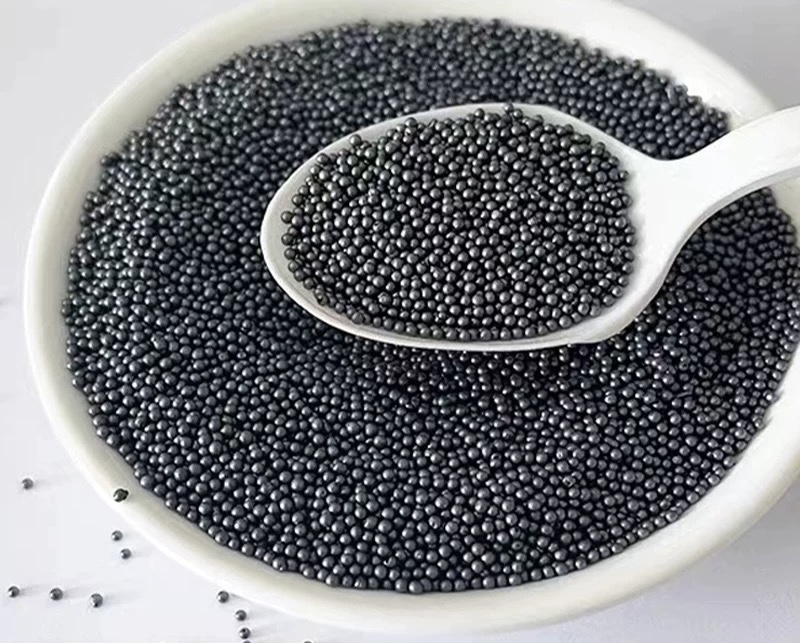
Cast steel shot is a spherical metallic abrasive made from high-carbon cast steel. The range runs from S70 to S930, with hardness options of HRC 40–50 and HRC 55–65, specific gravity of 7.8 g/cm³, bulk density of 4.5–4.8 g/cm³ and recyclable cycles listed at 1000+. Because the particles are round, they deliver a smooth and rounded surface profile rather than an aggressive cut, which makes the family suitable for shot peening, surface strengthening and lighter cleaning duties. Cast steel shot and grit product data in this family state compliance with SAE J441 and SAE J827.
Cast Steel Grit (G12–G120)
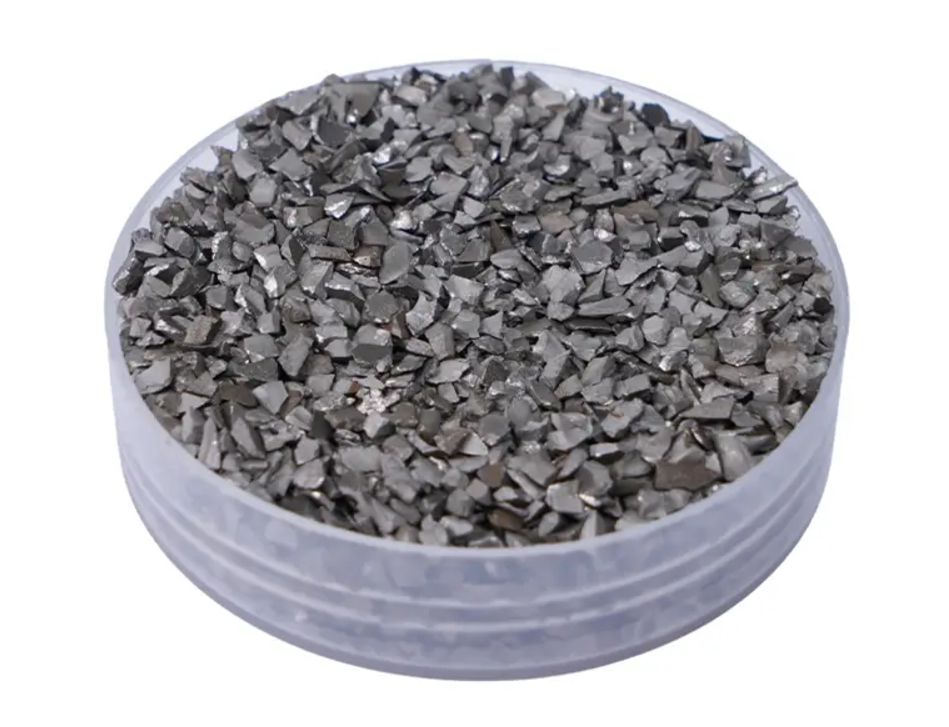
Cast steel grit is the angular counterpart. Spherical shot is crushed so that particles carry edges and corners, which is what removes heavy rust, mill scale and old coatings and what generates an anchor profile for paint and anti-corrosion systems. The G12–G120 series is available in three hardness classes — GP at 42–52 HRC, GL at 53–60 HRC and GH at 60–64 HRC — with a minimum density of 7.6 g/cm³, bulk density of 4.2 g/cm³ and fatigue life of 2,000–2,500 cycles. Typical duties include shipbuilding surface preparation, steel structure and bridge work, casting descaling, and pipeline and rail maintenance.
Bearing Steel Grit (G12–G120)
Bearing steel grit is produced from GCr15 high-carbon chromium bearing steel, also referenced as 100Cr6, by forging and crushing, so the particles are free of casting defects. Typical listed values are hardness HRC 55–65, specific gravity 7.5 g/cm³, bulk density 4.0–4.5 g/cm³ and recyclable cycles of 2500+, making it a longer-life option than ordinary cast grit. The angular particles are used for heavy steel structure blasting, ship PSPC coating preparation, casting descaling and granite gang saw cutting. Product series are offered in tempering and non-tempered G12–G120 variants.
Stainless Steel Shot and Stainless Cut Wire Media
Stainless steel shot series 195, 201, 304 and 430 are made from stainless steel raw materials, atomised into spherical particles through water atomisation or cut from stainless steel wire. Listed values include hardness HRC 32–50, particle size 0.1–1.0 mm, tensile hardness 490–1520 MPa, density 7.8 g/cm³ and an Owen's lifespan of 6500 times. Because the media contain no iron component, no free iron is left on aluminium, stainless steel or titanium workpieces after blasting, which prevents the yellowing and rust bloom that carbon steel media can cause.
Stainless steel cut wire shot runs from 0.2 mm to 1.6 mm in 304 and 316 grades, with hardness HRC 25–45, specific gravity 7.9 g/cm³ and recyclable cycles of 2500+. The particles are precision-cut cylinders where length equals diameter, with no hollow or porous particles. The oblique cylinder variant, 0.3–1.2 mm, has angled cut edges for more aggressive cleaning. Typical applications include stainless steel sheet and profile blasting, aluminium die casting, motorcycle and automotive parts, electronics and hardware, precision castings and non-ferrous metal surface finishing on automatic blasting lines.
Cut Wire Shot: The Steel Wire Cut Pellet Series
Steel wire cut pellet is cut from high-carbon cold-drawn steel wire, tyre cord or steel strand. Sizes run from 1.0 mm to 2.0 mm for tyre wire cutting and from 2.0 mm to 3.0 mm for steel strand cutting, with hardness of 44–53 HRC, tensile hardness of 1300–2200 MPa, density of 7.8 g/cm³ and a stated Owen's lifespan of 3,300–3,600 times. Cutting instead of casting removes the porosity and looseness found in cast steel abrasives, which is why this family is chosen where a solid structure, low breakage rate and low dust generation matter. Typical markets are shipbuilding, steel structure and bridge, foundry, automotive parts and spring peening, pipeline and tube, and rail and locomotive work.
Reinforced Grinding Shot, Butterfly Steel Shot and Magnetic Steel Needles
Reinforced grinding shot in 1.5 mm G1 and G2 grades is cut from high-carbon manganese cold-drawn steel wire and then roll-ground and chamfered into near-spherical particles with rounded edges. The particles are solid throughout, with hardness of 54–60 HRC, tensile hardness of 2200–2800 MPa and a stated lifespan of 4000 times. It is used for shot peening and strengthening of springs, gears, fasteners, automotive parts and wind power components, and for smoothing and deburring precision castings.
Butterfly steel shot, 0.8–1.6 mm at HRC 45–55, is a flat oval cut wire media. Its larger contact area compared with round shot produces a smooth uniform surface without deep scratches, which suits deburring, edge radiusing and vibratory mass finishing on automotive parts, hardware and die castings.
Magnetic steel needles are magnetic stainless steel pins in grades 430 and 420, with diameters of 0.2 mm, 0.3 mm, 0.4 mm and 0.5 mm and lengths of 3 mm, 5 mm, 8 mm and 10 mm, at hardness HRC 45–55. The needle shape reaches into small holes and complex geometries inside magnetic grinding machines, so the family is used for precision hardware, electronics and connectors, medical parts, jewellery, die casting flash removal and inner-hole deburring.
Counterweight Sand and Box-Filling Sand
Not every metal abrasive is designed to remove material. High density ballast sand is a cast iron, steel grit and iron oxide blend with bulk density grades from 3.8 to 6.0 g/cm³, true density above 7.0 g/cm³, free-flowing behaviour and moisture below 0.5%. It fills elevator counterweights, construction machinery bases, port machinery, bridge and foundation ballast, weighing scales and ship ballast, where it increases self-weight and adjusts the centre of gravity at a lower cost than solid cast counterweights.
Box-filling sand is supplied in 2–3 mm, 3–6 mm and 6–9 mm grades at 52 HRC, with a minimum density of 7.2 g/cm³ measured by alcohol displacement and a homogeneous tempered martensite structure. It is used in lost foam casting and V-process vacuum casting, where the particles fill gaps and corners of the sand box and compress the mould to prevent box lifting or metal run-out during pouring. Bulk density grades and particle size can be customised to project requirements.
Product Family Comparison
The table below compares the main metal abrasive families on the parameters that decide selection: material, hardness, size, particle shape, recycle life and primary job.
| Product family | Material | Hardness | Size range | Shape | Recycle life | Primary job |
|---|---|---|---|---|---|---|
| Cast Steel Shot Series | High carbon cast steel | HRC 40–50; HRC 55–65 | S70–S930 | Spherical | 1000+ cycles | Shot peening, strengthening, cleaning |
| Cast Steel Grit Series | High carbon cast steel | GP 42–52; GL 53–60; GH 60–64 HRC | G12–G120 | Angular, crushed | 2,000–2,500 fatigue life | Rust, scale and coating removal, anchor profile |
| Bearing Steel Grit | GCr15 / 100Cr6 bearing steel | HRC 55–65 | G12–G120 | Angular | 2500+ cycles | Heavy descaling, ship PSPC, gang saw cutting |
| Stainless Steel Shot Series 195/201/304/430 | Stainless steel | HRC 32–50 | 0.1–1.0 mm | Spherical | 6500 times (Owen's) | Iron-free blasting of stainless, aluminium, copper |
| Stainless Steel Cut Wire Shot | 304 / 316 stainless wire | HRC 25–45 | 0.2–1.6 mm | Cylindrical | 2500+ cycles | Stainless and aluminium finishing, non-ferrous parts |
| Stainless Steel Oblique Cylinder | 304 / 316 stainless wire | HRC 25–45 | 0.3–1.2 mm | Angled cylinder | 2500+ cycles | More aggressive stainless and aluminium cleaning |
| Steel Wire Cut Pellet | Tyre cord / steel strand | HRC 44–53 | 1.0–3.0 mm | Cut cylinder | 3,300–3,600 times | Peening, shipbuilding, structure, foundry |
| Reinforced Grinding Shot | High-carbon manganese cold-drawn wire | HRC 54–60 | 1.5 mm G1 / G2 | Near-spherical, rounded edges | 4000 times | Spring, gear and fastener peening; precision deburring |
| Butterfly Steel Shot | High carbon steel wire | HRC 45–55 | 0.8–1.6 mm | Flat oval | 2500+ cycles | Deburring, edge radiusing, mass finishing |
| Magnetic Steel Needle | Magnetic stainless 430 / 420 | HRC 45–55 | 0.2–0.5 mm dia; 3–10 mm length | Needle | — | Magnetic grinding of small precision parts |
| Ballast / Counterweight Sand | Cast iron, steel grit, iron oxide | — | 0.1–5 mm | Granular | — | Counterweight filling, ship ballast |
| Box-Filling Sand | High carbon cast iron, tyre cord | 52 HRC | 2–3 / 3–6 / 6–9 mm | Granular | — | Lost foam and V-process box weighting |
Step-by-Step: How to Evaluate a China Metal Abrasives Manufacturer
- Define the job before the product. Decide whether the process needs material removal, profile creation, fatigue strengthening, cosmetic finishing or added weight. Rust and mill scale removal points to angular grit; shot peening points to spherical shot; iron-free finishing on stainless or aluminium points to stainless media or cut wire shot.
- Convert the job into a specification. Fix the target surface standard, the required anchor profile, the workpiece material and the acceptable contamination level. ISO 11124-3 and SAE J444 give buyers a shared vocabulary for hardness, density, size and chemistry when drafting the RFQ.
- Match abrasive size to machine capability. Larger particles need more blast wheel or nozzle power. Under-sized media shatter on impact and inflate consumption; over-sized media can damage thin or precision workpieces.
- Check product breadth and size coverage. Huiteng Metal Abrasives covers five major product series, including steel shot, steel grit, stainless steel shot and cut wire shot, with more than 60 specifications and models — from Cast Steel Shot S70–S930 and G12–G120 grit through 0.1–1.0 mm stainless steel shot to 0.2–1.6 mm stainless cut wire shot. Broad coverage matters because it allows a single supplier to serve cleaning, peening and finishing stages of the same plant.
- Verify the production route and batch testing. Zouping Huiteng Metal Abrasives Co., Ltd. uses medium-frequency induction melting, centrifugal atomisation, secondary quenching and tempering, rounding, screening and packaging under strict quality management. Each batch is tested for chemical composition and fatigue life, with pre-shipment sampling inspection. The company holds ISO 9001 quality management system certification.
- Confirm scale and continuity. The company was established in 2017 and operates a 20,000 m² facility in Qingyang Town Industrial Park, Zouping County, Binzhou City, Shandong Province, China, with approximately 50 staff including 15 engineers. Annual production capacity is approximately 100,000 tons, and the export share is about 30%, with shipments to the EU, the USA, India, Southeast Asia and the Middle East across more than 20 countries and regions.
- Test with samples, then agree commercial terms. Free samples of 1–5 kg are supplied for testing on the buyer's own equipment, prepared within 3–5 working days and matched to the required size, hardness and material grade. MOQ is 1 ton for standard grades and 3 tons for customised grades; stock orders ship in 7–15 days and customised orders in 20–30 days; payment is by T/T with 30% deposit and 70% before shipment, or irrevocable L/C at sight.
Practical note: if abrasive consumption rises unexpectedly, the common causes are a hardness grade that is too brittle for the application, a particle size outside the blast wheel range, inconsistent batch chemistry, a worn or misadjusted air separator leaving fines in circulation, or blast wheel RPM set too high. Checking hardness and batch quality first, then separator condition and machine settings, resolves most consumption problems before any supplier change is needed.
Where Metal Abrasives Are Used
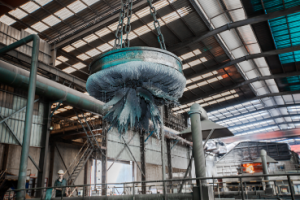
Metal abrasives are used across casting, forging, steel structure, shipbuilding, automotive and mining industries, and each segment has a different emphasis.
- Shipbuilding and ship repair. Heavy mill scale and old coating removal, plus surface preparation for PSPC coating systems, using angular grit grades.
- Steel structure and bridge fabrication. Descale and profile structural steel before protective coating, with consistent surface roughness along long weld runs.
- Foundry and casting. Casting descaling, sand removal and surface cleaning, with heavier grit grades for stubborn moulding sand and finer shot for precision castings.
- Automotive, springs and gears. Shot peening and strengthening of springs, gears, fasteners and automotive parts with small spherical and reinforced shot grades.
- Pipeline, tube, rail and locomotive. Surface preparation and maintenance blasting where access is limited and dust control matters.
- Stainless, aluminium and other non-ferrous finishing. Iron-free blasting with stainless shot, stainless cut wire shot and oblique cut wire media, including aluminium die casting, automotive trim, hardware and optics.
- Counterweight and ballast applications. Elevator counterweights, construction and port machinery bases, bridge and foundation ballast, weighing scales, ship ballast and civil air defence explosion-proof equipment.
- Distribution and equipment integration. Abrasive distributors and shot blasting or sand blasting equipment integrators that supply consumables alongside machines.
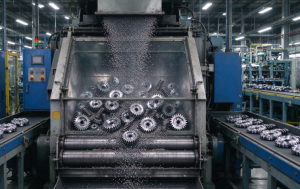
Across these settings, the working environment is usually high-impact and high-abrasion, with continuous recycling of the abrasive, dust generation and a wide range of shop-floor temperatures. Common equipment includes shot blasting and tumble blast machines, sand blasting pots and cabinets, dust collection and fume extraction systems, abrasive recovery and recycling systems, bucket elevators, screw conveyors, separators and air washers.
Frequently Asked Questions
Do metal abrasives from China comply with international standards?
Three standards are commonly used to specify and inspect metal abrasives. ISO 11124-1:2018 covers metallic blast-cleaning abrasives for the preparation of steel substrates. ISO 11124-3:2018 specifies requirements for 14 grades of high-carbon cast-steel shot and 11 grades of high-carbon cast-steel grit, including values for hardness, density, defect and structural requirements, and chemical composition. SAE J444 defines cast shot and grit size specifications for peening and cleaning. Huiteng Metal Abrasives holds ISO 9001 quality management system certification, and its cast steel shot and grit product data state compliance with SAE J441 and SAE J827. Buyers should still request batch test records rather than relying on a catalogue statement alone.
What product range and production capability can a China metal abrasives manufacturer offer?
Zouping Huiteng Metal Abrasives Co., Ltd. covers five major product series, including steel shot, steel grit, stainless steel shot and cut wire shot, with more than 60 specifications and models — from Cast Steel Shot S70–S930 and G12–G120 grit to 0.1–1.0 mm stainless steel shot and 0.2–1.6 mm stainless cut wire shot. The company was established in 2017, operates a 20,000 m² facility with approximately 50 staff including 15 engineers, and reports annual production capacity of approximately 100,000 tons. Publicly listed manufacturers in the same Shandong cluster show similar breadth: Shandong Huatong Metal Abrasives lists more than 30 abrasive types, and Shandong Yuxin Metal Abrasive Technology lists nine product series covering more than 150 specifications.
Does recyclability change the total cost of metal abrasives?
It is the main cost argument for metallic media over disposable blasting sand. Steel shot and grit are captured by the machine's elevator and air-wash separator and returned to the hopper, with recyclable life listed at 1000+ to 2500+ cycles depending on family and grade, while silica sand and copper slag shatter on first impact. Huiteng's technical guidance states that one ton of steel abrasive replaces roughly 50–100 tons of single-use sand, with total cost of ownership around 50–80% lower once material purchase, refills, waste disposal, filter replacement and rework are counted. Those figures are the manufacturer's own application guidance and should be validated against your machine, workpiece and production volume.
Can buyers test samples before placing a bulk order?
Yes. Free samples of 1–5 kg are supplied so buyers can test quality on their own blasting equipment. The sample itself is free of charge and the buyer covers international courier freight via DHL, FedEx or TNT, typically USD 30–80 depending on destination country. Samples are prepared within 3–5 working days and can be matched to the required size, hardness and material grade. For first-time buyers, testing two to three grades is recommended to find the best fit for the machine and workpiece. Sample freight can be deducted from the first bulk order.
What are the typical MOQ, lead time and payment terms?
MOQ is 1 ton for standard grades and 3 tons for customised grades. Ready-stock orders ship within 7–15 days, and customised orders take 20–30 days. Payment is by T/T with 30% deposit and 70% before shipment, or by irrevocable L/C at sight, and flexible terms can be discussed with long-term distributors. To start, send your application details — workpiece material, target surface standard and machine type — to fan@shot-s2u.com or +86 188-5431-6114, or download the product brochure from the link at the end of this guide.
Conclusion: Start With the Family, Then Qualify the Manufacturer
Metal abrasives are not a single product. Cast steel shot, cast steel grit, bearing steel grit, stainless steel shot, stainless cut wire shot, steel wire cut pellet, reinforced grinding shot, butterfly steel shot, magnetic steel needles and counterweight sands each solve a different problem, and the global market that supplies them — valued at USD 6.7 billion in 2025 and projected at USD 7.1 billion in 2026, with Asia Pacific holding a 56.0% revenue share — is broad enough that supplier discovery is not the hard part. Qualification is.
A workable sequence is to fix the job, convert it into a specification using ISO 11124-1, ISO 11124-3 and SAE J444 as shared reference points, match particle size to machine capability, then verify the supplier's production route, batch testing and continuity of supply before testing samples on your own line. A manufacturer that can explain its melting, atomisation, quenching and tempering route, show batch chemical composition and fatigue life testing, and support customised size, hardness and packaging is easier to qualify than one that only publishes a product list.
Next Step
If you want to compare grades on your own equipment, Zouping Huiteng Metal Abrasives Co., Ltd. supplies free 1–5 kg samples and can match size, hardness and material grade to your blasting or peening process. Download the full product brochure here: Huiteng Metal Abrasives product brochure.
Send your application details — workpiece material, target surface standard, machine type and required grade — to fan@shot-s2u.com or call / WhatsApp +86 188-5431-6114. Website: www.shot-s2u.com.
Have Questions or Need More Details?
Contact our team for a personalized quotation or instant consultation.
Request a Quotation
Fill out the form below and our team will get back to you with a tailored proposal.
WhatsApp Direct Chat
Prefer to chat in real-time? Message us on WhatsApp for instant assistance & quick answers.
- Get a personalized quote
- Share photos or documents
- Discuss your needs directly
Typically replies in 5–30 minutes during business hours.