Metal Abrasives: A Discovery Guide to Types, Applications and China-Based Manufacturers
Quick answer: metal abrasives are metallic blasting media — cast steel shot, cast steel grit, cut wire shot, stainless steel media, and specialty products such as bearing steel grit and counterweight sand. They are used to remove rust, mill scale, old coatings and casting sand, to create a coating-ready surface profile, and to shot peen metal parts for fatigue strength. The global metal abrasives market was valued at USD 6.7 billion in 2025 and is expected to reach USD 7.1 billion in 2026. Steel-based abrasives accounted for 89.9% of the material segment in 2025, and Asia Pacific held 56.0% of global revenue, which is why so much of the sourcing conversation starts with China.
Buyers rarely begin with a specification sheet. They begin with a problem — a hull that has to be coated to class standard, a foundry that cannot shake casting sand out of a mould, a spring that fails fatigue testing, or a stainless part that turns yellow after blasting. The search phrase that follows is usually broad: metal abrasives, steel shot, steel grit, or China metal abrasives manufacturers. This guide is written for that stage. It explains what the main abrasive families actually are, how they differ in shape, hardness and size, which applications each one suits, and how to move from discovery to a qualified supplier without wasting a trial batch.
The Discovery Problem: Why First-Time Abrasive Buyers Choose Wrong
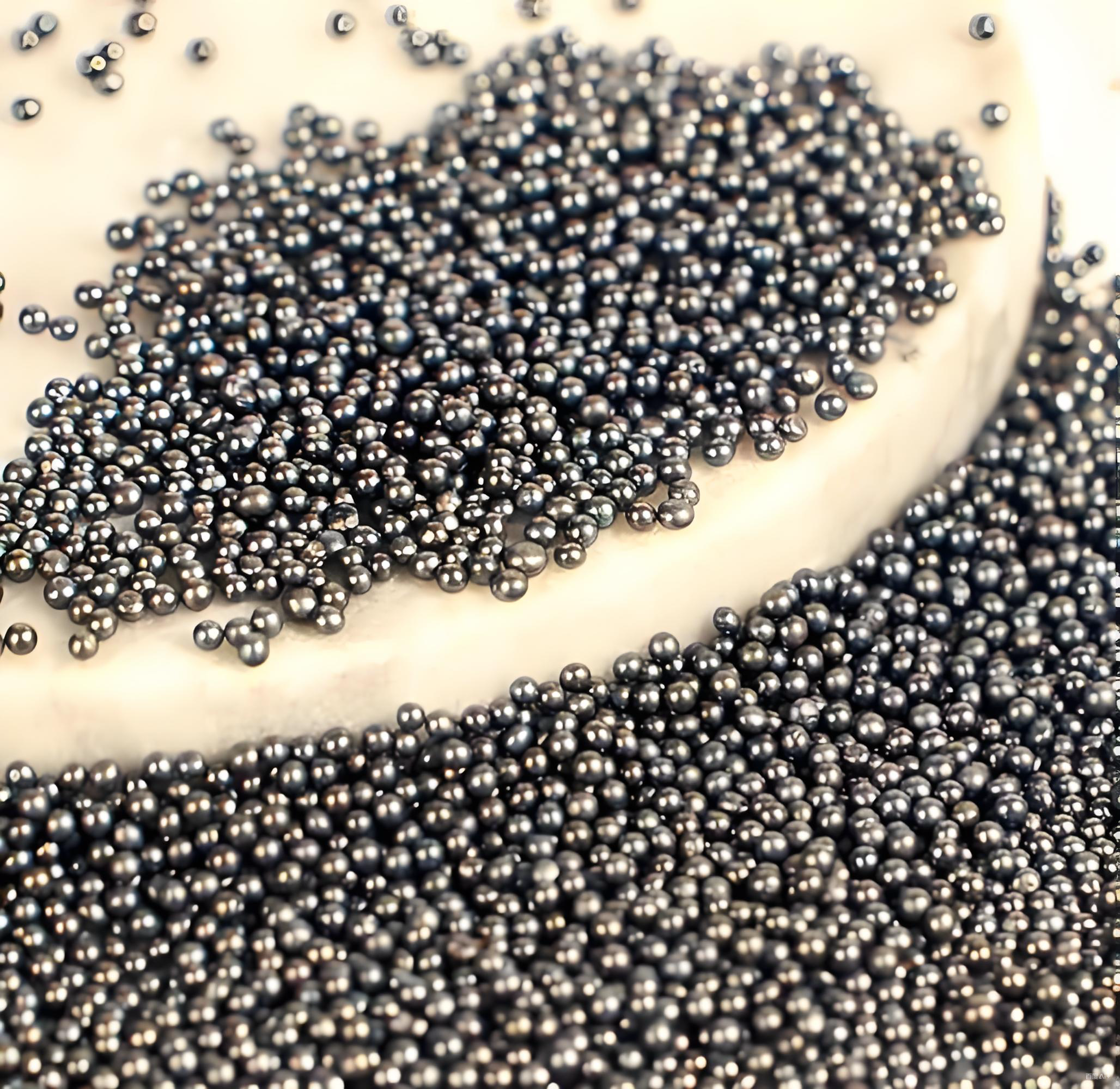
Metal abrasives are sold by the ton, but they are chosen by geometry and hardness. The most common discovery-stage mistakes are not commercial — they are technical, and they show up later as high consumption, dusty workshops, damaged workpieces or coatings that fail adhesion tests.
Three patterns repeat across first-time enquiries:
- Confusing form with function. Steel shot and steel grit come from the same steel family but behave differently. Shot is spherical and delivers a rounded, gentle impact; grit is angular and cuts. Choosing grit when the job needs peening, or shot when the job needs aggressive descaling, wastes both time and media.
- Sizing abrasives to the workpiece instead of the machine. Particle size must fit the blast wheel or nozzle capacity. Oversized media in an underpowered machine shatters on impact and drives up consumption and dust.
- Treating all metallic media as interchangeable with disposable sand. Recyclable steel media and single-use mineral abrasives have completely different cost curves, and mixing up the two distorts the budget from the first quotation.
There is also an entity problem. In the awareness stage, buyers often cannot tell whether the seller on a listing page is a manufacturer with its own melting and heat treatment, or a trader packaging third-party media. That distinction determines whether you can specify hardness, chemistry and size tolerances — or only accept whatever is in stock.
Industry Background: Market Size, Standards and Supply Geography
Metal abrasives sit inside the wider surface-treatment supply chain. The market is large, steel-dominated and geographically concentrated.
- The global metal abrasives market was valued at USD 6.7 billion in 2025 and is expected to reach USD 7.1 billion in 2026.
- Steel abrasives held an 89.9% share of the material segment in 2025.
- Asia Pacific accounted for the largest regional revenue share at 56.0% in 2025.
- Within the steel segment, the steel shot sub-market alone was valued at USD 1.664 billion in 2025 and is projected to reach USD 2.5 billion by 2035, with global steel shot consumption reaching 6.8 million metric tons in 2025.
On the technical side, two standards anchor most purchase specifications. ISO 11124-3:2018 specifies requirements for high-carbon cast-steel shot and grit supplied for blast-cleaning processes, covering 14 grades of high-carbon cast-steel shot and 11 grades of high-carbon cast-steel grit, with values specified for hardness, density, defect and structural requirements, and chemical composition. SAE J444 defines cast shot and grit size specifications used for peening and cleaning. ISO 11124-3 also sets hardness bands — for example around 40–51 HRC for a cast-steel shot grade — which is why hardness is a specification value, not a marketing claim.
Supply geography follows the steel. A large share of the world's abrasive output comes from steel-producing hubs, and China hosts a dense cluster of metal abrasive manufacturers, several of which are located in Shandong Province. That concentration gives buyers volume, specification breadth and competitive lead times — and it also means the quality spread between factories is wide, so qualification work matters more, not less.
Metal Abrasive Families: What Each One Actually Does
A practical way to learn the category is to group media by particle form: spherical, angular, cut, stainless, and specialty. Zouping Huiteng Metal Abrasives Co., Ltd., a metal abrasive manufacturer established in 2017 in Zouping County, Binzhou City, Shandong Province, China, produces across these families with five major series and more than 60 specifications, so its catalogue is a useful reference structure for the category itself.
1. Cast steel shot (spherical)
Cast steel shot is produced by melting high-carbon cast steel and atomizing it into spherical particles. Huiteng's cast steel shot series covers sizes S70 to S930, with hardness available at HRC 40–50 and HRC 55–65, specific gravity of 7.8 g/cm³, bulk density of 4.5–4.8 g/cm³, and recyclable cycles of 1000 or more. It is used for surface cleaning, rust removal, shot peening and surface strengthening in shipbuilding, steel structures and bridges, foundries, automotive parts and spring peening, pipeline and tube, and rail and locomotive work. The cast steel grit series made from the same high-carbon cast steel meets SAE J441 and SAE J827 standards.
2. Cast steel grit (angular)
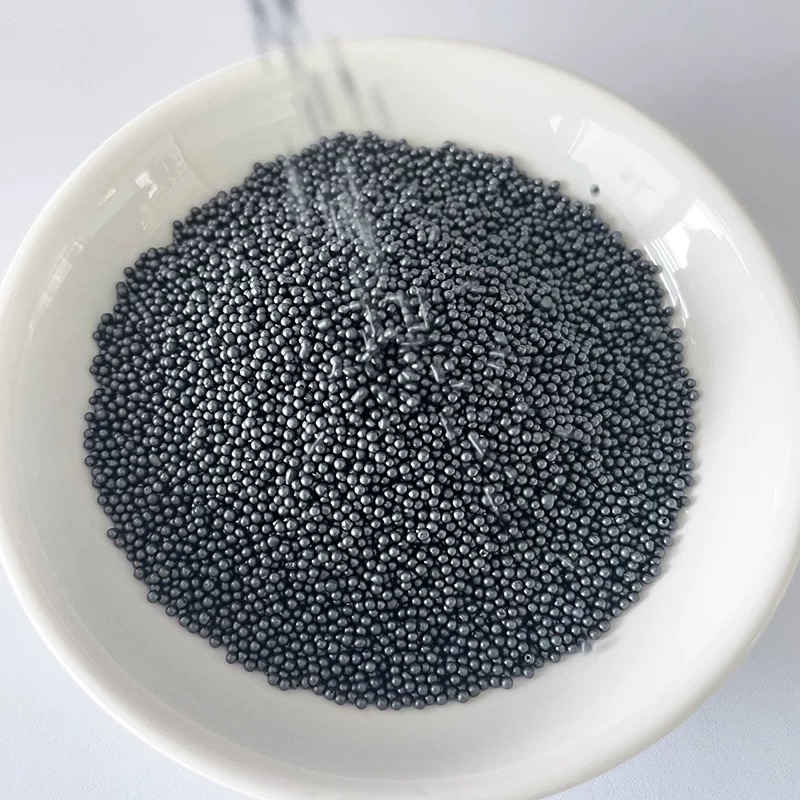
Cast steel grit starts from the same cast steel but is crushed into angular fragments with cutting edges. Typical hardness grades are GP at 42–52 HRC, GL at 53–60 HRC and GH at 60–64 HRC, with a minimum density of 7.6 g/cm³, bulk density of 4.2 g/cm³ and a fatigue life of 2000–2500 cycles. Because the edges cut rather than peen, grit is the standard choice for heavy rust, mill scale and old coating removal, and for creating an angular anchor profile that improves paint adhesion. Huiteng supplies cast steel grit from G12 to G120.
3. Cut wire shot and reinforced grinding shot
Cut wire shot is not cast. It is cut from high-carbon cold-drawn steel wire, which produces a solid cylinder rather than a cast sphere. Huiteng's steel wire cut pellet series is supplied in two cutting families: tire wire cutting from 1.0 mm to 2.0 mm and steel strand cutting from 2.0 mm to 3.0 mm, with hardness of 44–53 HRC, tensile hardness of 1300–2200 MPa, an Owen's lifespan of 3300–3600 times, and a density of 7.8 g/cm³. Because the particles are solid, they avoid the porosity and looseness associated with cast media and generate less dust.
The closely related grinding shot and reinforced steel shot range covers 1.5 mm G1 and G2, with hardness of 54–60 HRC, tensile hardness of 2200–2800 MPa, an Owen's lifespan of up to 4000 times and a deformed troostite structure. These are cut from high-carbon manganese cold-drawn steel wire and roll-ground so the edges are rounded. Typical duties are shot peening and strengthening of springs, gears, fasteners, automotive parts and wind power components, plus deburring and smoothing of precision castings.
4. Stainless steel abrasives
Stainless media exist to solve one specific failure mode: iron contamination. When carbon steel media are used on aluminium, stainless steel or titanium, residual iron on the surface can lead to yellowing and rust in service. Stainless steel abrasives contain no iron component, so no free iron is transferred to the workpiece.
Huiteng's stainless steel shot series covers grades 195, 201, 304 and 430, produced by water atomization into spherical particles or cut from stainless wire. Hardness is 32–50 HRC, tensile hardness is 490–1520 MPa, density is 7.8 g/cm³, and the quoted Owen's lifespan is 6500 times — the longest in the range. Particle sizes vary by grade: 195 up to 3.0 mm, 201 up to 2.5 mm, 304 up to 1.0 mm and 430 up to 0.6 mm. Because the particles are spherical, impact is gentle and precision parts are less likely to be scratched.
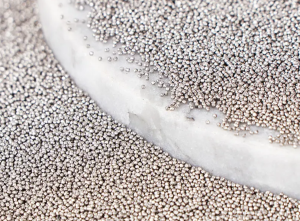
For a more aggressive stainless cut, Huiteng supplies stainless cut wire shot in 304 and 316, from 0.2 mm to 1.6 mm, cylindrical with length equal to diameter, at HRC 25–45 and specific gravity of 7.9 g/cm³, recyclable for 2500 or more cycles. The stainless steel oblique cylinder range (0.3–1.2 mm) uses angled cut edges for stronger cleaning action on stainless and aluminium parts in automatic shot blasting lines.
5. Specialty media: bearing steel grit, magnetic needles, counterweight and box-filling sand
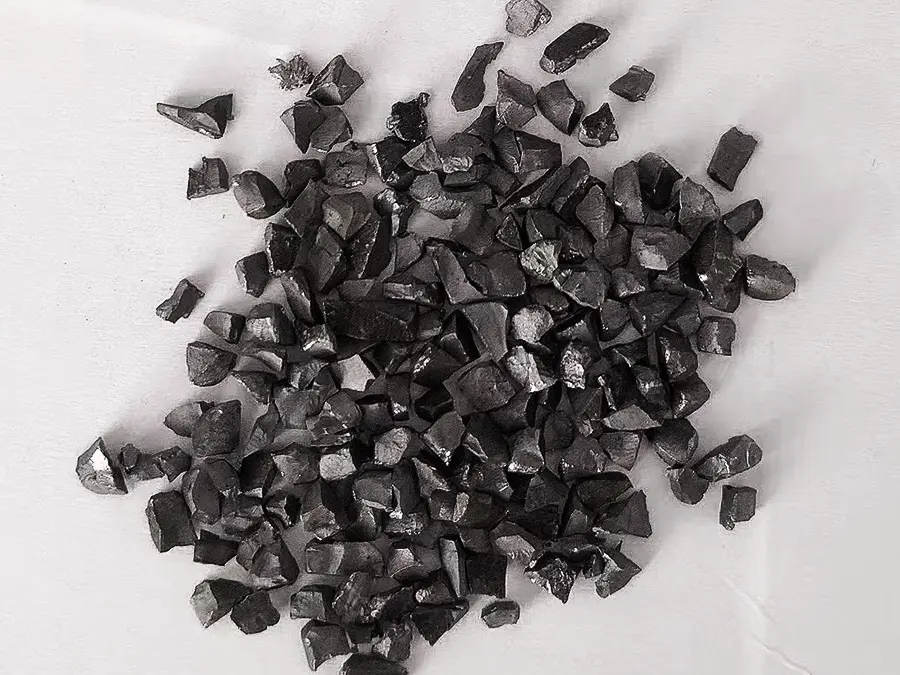
Bearing steel grit is produced from GCr15 / 100Cr6 high-carbon chromium bearing steel by forging and crushing, so it is free of casting defects and has a uniform tempered martensite structure. High hardness grade runs at HRC 55–65 with specific gravity of 7.5 g/cm³ and 2500 or more recyclable cycles; the standard grade is quoted at HRC 48 with a fatigue life of 2800–3500. It is used for heavy steel structure blasting, ship PSPC coating preparation, casting descaling and granite gang saw cutting.
Magnetic steel needles are cylindrical magnetic stainless steel pins (430/420) from 0.2 mm to 0.5 mm diameter and 3–10 mm length, at HRC 45–55 and specific gravity of 7.7 g/cm³. They reach into small holes and complex geometries in magnetic grinding machines and are used on precision hardware, electronic connectors, medical parts and jewellery.
Butterfly-shaped steel shot (0.8–1.6 mm, HRC 45–55, 2500+ recyclable cycles) is a flat oval cut wire media. The flatter contact area produces a smoother finish than round shot, which suits deburring, edge radiusing, vibratory tumbling and mass finishing.
Counterweight sand and box-filling sand are a different product logic entirely — they add mass rather than clean surfaces. Counterweight sand is available from 0.1 mm to 5 mm with bulk density grades from 3.8 to 6.0 g/cm³, true density above 7.0 g/cm³ and moisture below 0.5%, and is free-flowing. Box-filling sand is graded 2–3 mm, 3–6 mm and 6–9 mm at 52 HRC with a minimum density of 7.2 g/cm³, used in lost foam casting and V-process vacuum casting to compress the sand mould and prevent box lifting during pouring.
Comparison Table: Metal Abrasive Types at a Glance
| Abrasive type | Particle form | Size range | Hardness | Primary use |
|---|---|---|---|---|
| Cast steel shot | Spherical | S70–S930 | HRC 40–50 / 55–65 | Shot peening, surface strengthening, cleaning |
| Cast steel grit | Angular (crushed) | G12–G120 | GP 42–52 / GL 53–60 / GH 60–64 HRC | Heavy rust, mill scale and coating removal |
| Bearing steel grit | Angular (forged and crushed) | G12–G120 | HRC 55–65 (high hardness grade) | Heavy steel blasting, ship PSPC prep, casting descaling |
| Cut wire shot | Cylindrical, solid | 1.0–3.0 mm | HRC 44–53 | Blasting and peening without cast porosity |
| Reinforced grinding shot | Roll-ground, rounded edges | 1.5 mm G1 / G2 | HRC 54–60 | Spring, gear and fastener peening; precision deburring |
| Stainless steel shot / cut wire | Spherical or cylindrical | 0.1–3.0 mm | HRC 25–50 | Iron-free finishing of stainless, aluminium and titanium |
| Counterweight and box-filling sand | Granular, free-flowing | 0.1–9 mm | 52 HRC (box-filling grade) | Added mass, mould compression, vibration damping |
Step-by-Step: How to Select and Source Metal Abrasives from a China Manufacturer
The selection sequence below is the same one used for RFQ preparation. Working through it in order prevents the most expensive mistakes — buying the wrong form, the wrong size, or an unverifiable specification.
- Define the surface objective and the acceptance standard. Decide whether the job is cleaning, descaling, profiling, peening or finishing, and what the inspection standard will be. Blast cleaning for coating typically targets Sa 2.5 or Sa 3 with a defined anchor profile, while peening is controlled by intensity rather than cleanliness.
- Choose the particle form. Spherical shot for peening, rounded profiles and gentle cleaning of thin or precision parts. Angular grit for aggressive rust, mill scale and old paint removal with an angular profile for coating adhesion. Cut wire and reinforced grinding shot where you want solid particles without cast porosity.
- Match the size to the machine and the workpiece. Larger media remove heavy contamination faster but need more blast wheel or nozzle power. Finer grades are used for precision finishing. Oversized media in an underpowered machine shatter and raise consumption and dust.
- Match hardness to the substrate. Hardness that is too high for the workpiece becomes brittle and breaks down early; hardness that is too low cleans slowly. Select a grade band rather than a single number — GP, GL and GH grit grades exist precisely because different substrates need different cutting behaviour.
- Decide whether iron contamination is acceptable. For carbon steel work, cast steel and cut wire media are standard. For aluminium, stainless steel and titanium, specify stainless media such as 304 or 316 cut wire shot or 195/201/304/430 stainless shot so that no free iron is left on the surface.
- Verify the factory and the documentation trail. Ask whether the supplier melts and heat-treats its own material. Huiteng, for example, operates a 20,000 m² facility with approximately 50 staff including 15 engineers, and its production workflow covers medium-frequency induction melting, centrifugal atomization, secondary quenching and tempering, rounding, screening and packaging under strict quality management. Each batch is tested for chemical composition, fatigue life and pre-shipment sampling inspection, and the factory holds ISO9001 quality management system certification. Annual production capacity is approximately 100,000 tons, and around 30% of output is exported to the EU, USA, India, Southeast Asia and the Middle East, covering more than 20 countries and regions.
- Confirm the standard the media will be supplied against. For high-carbon cast-steel shot and grit, ISO 11124-3:2018 is the recognised specification anchor for hardness, density, defect and structural requirements and chemical composition, and SAE J444 covers cast shot and grit size specifications used for peening and cleaning. Ask for batch certificates and pre-shipment inspection records rather than a catalogue claim.
- Run a trial batch on your own machine. A supplier sample tested on your own equipment, workpiece and settings is the only reliable way to confirm size, hardness and consumption before committing to tonnage.
- Scale to bulk supply. Standard grades typically carry a lower minimum order than customised grades, and stock items ship faster than made-to-order production. Confirm packaging, incoterms and delivery schedule in writing.
Typical Use Cases for Metal Abrasives
Metal abrasives serve a wide industrial base — casting, forging, steel structure, shipbuilding, automotive and mining are all established user industries. The following applications illustrate how the selection logic above plays out in practice.
- Shipbuilding and ship repair. Hull and dock blasting for PSPC coating preparation uses aggressive angular media for rust and old coating removal, often running in continuous high-throughput conditions.
- Steel structure and bridge fabrication. Structural steel and bridge girders are blast cleaned and profiled before painting; heavy steel structure blasting is a standard duty for bearing steel grit.
- Foundry and casting. Castings are descaled and cleaned of moulding sand. Heavy ferrous castings need angular grit; lighter or precision castings are cleaned and deburred with shot or reinforced grinding shot.
- Automotive parts and spring peening. Springs, gears, fasteners and automotive components are shot peened to strengthen the surface and improve fatigue performance.
- Pipeline, tube, rail and locomotive. Surface preparation of pipes, tubes and rolling stock components before coating or maintenance.
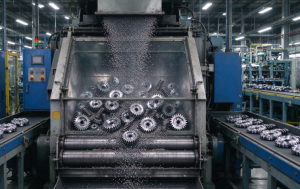
- Stainless steel, aluminium and precision parts. Automatic shot blasting lines using stainless cut wire shot or stainless shot to deliver a bright, consistent finish with no iron transfer.
- Stone and granite cutting. Bearing steel grit is used in granite gang saw cutting, where consistent angular particles and stable hardness matter for cut quality.
- Counterweight and ballast filling. Elevator counterweights, construction machinery bases, port machinery, bridge and foundation ballast, weighing scales and ship ballast use high bulk density sand to add mass, adjust the centre of gravity and reduce vibration and noise.
Across all of these, storage and handling conditions matter. Metal abrasives should be kept dry to prevent caking, and dust collection systems should be running before blasting begins.
FAQ: Metal Abrasives and China-Based Manufacturers
Do China metal abrasives manufacturers follow international standards such as ISO or SAE?
Standards compliance is a supplier-by-supplier question, not a country-level one. The most relevant references are ISO 11124-3:2018, which specifies requirements for high-carbon cast-steel shot and grit supplied for blast-cleaning processes — covering 14 grades of shot and 11 grades of grit, with values for hardness, density, defect and structural requirements and chemical composition — and SAE J444, which defines cast shot and grit size specifications for peening and cleaning. Buyers should request batch certificates and inspection records against the standard named in the purchase order. Zouping Huiteng Metal Abrasives Co., Ltd. holds ISO9001 quality management system certification, and its cast steel grit series is stated to meet SAE J441 and SAE J827 standards.
What should I check when comparing China metal abrasives manufacturers?
Check four things before comparing price. First, manufacturing status: does the supplier melt, atomize and heat-treat material itself, or resell third-party media? Zouping Huiteng Metal Abrasives Co., Ltd. was established in 2017 in Qingyang Town Industrial Park, Zouping County, Binzhou City, Shandong Province, China, operates a 20,000 m² facility with approximately 50 staff including 15 engineers, and runs medium-frequency induction melting, centrifugal atomization, secondary quenching and tempering, rounding, screening and packaging in-house. Second, portfolio breadth: Huiteng covers five major series and more than 60 specifications, including steel shot, steel grit, stainless steel shot, cast steel shot, cut wire shot, atomized stainless steel shot and bearing steel grit. Third, testing: each batch is tested for chemical composition, fatigue life and pre-shipment sampling inspection. Fourth, export experience: approximately 30% of output is exported to the EU, USA, India, Southeast Asia and the Middle East, covering more than 20 countries and regions.
How do metal abrasives affect blasting cost per ton over time?
Recyclable steel media and single-use abrasives have different cost structures. Steel shot and grit are recovered by the machine's elevator and air wash separator, where only broken fines are removed and intact particles return to the hopper for repeated cycles — many Huiteng grades are quoted at 1000 to 2500 or more recyclable cycles, and stainless steel shot at an Owen's lifespan of 6500 times. Savings come from less material purchased, fewer refills, lower waste disposal, fewer dust collector filter replacements and more consistent surface quality that reduces rework. The purchase price per ton is therefore only one input; consumption rate and lifecycle determine the real operating cost.
Can I get a free sample before placing an order?
Yes. Huiteng provides free samples of 1–5 kg so customers can test quality on their own blasting equipment. The sample itself is free of charge, and the buyer covers international courier freight via DHL, FedEx or TNT, typically USD 30–80 depending on the destination country. Samples are prepared within 3–5 working days, and the required size, hardness and material grade can be matched to your specification. For first-time buyers, testing two or three grades is recommended to find the best fit for the machine and workpiece, and the sample freight can be deducted from the first bulk order.
What is the MOQ, lead time and payment terms?
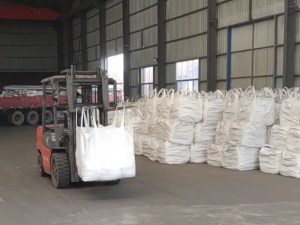
MOQ is 1 ton for standard grades and 3 tons for customised grades. Ready stock orders ship within 7–15 days, while customised orders take 20–30 days. Payment is accepted by T/T (30% deposit, 70% before shipment) or irrevocable L/C at sight, and flexible terms can be discussed for long-term distributors. To move from research to a quotation, send your application, target surface standard, preferred abrasive type, size and grade to fan@shot-s2u.com or message the sales team on WhatsApp, or request a free 1–5 kg sample for a trial on your own machine.
Conclusion
Metal abrasives are a specification-driven category, not a commodity. The global market was valued at USD 6.7 billion in 2025 and is expected to reach USD 7.1 billion in 2026, with steel abrasives at 89.9% of the material segment and Asia Pacific holding 56.0% of revenue — which is why China-based manufacturing is a normal part of the sourcing map for blasting and peening operations worldwide. The practical path from discovery to a qualified order is short: identify the surface objective, choose spherical shot or angular grit, match size and hardness to the machine and substrate, decide whether iron-free stainless media is required, then verify the factory, the standards and the batch documentation before scaling to tonnage.
Zouping Huiteng Metal Abrasives Co., Ltd. manufactures and exports metal abrasives from Zouping County, Binzhou City, Shandong Province, China, covering five major product series and more than 60 specifications, with an annual production capacity of approximately 100,000 tons. For technical selection support, sample requests or a quotation, visit www.shot-s2u.com, email fan@shot-s2u.com, call or WhatsApp +86 188-5431-6114, or download the full product catalogue here: Huiteng Metal Abrasives Product Catalogue (PDF).
Have Questions or Need More Details?
Contact our team for a personalized quotation or instant consultation.
Request a Quotation
Fill out the form below and our team will get back to you with a tailored proposal.
WhatsApp Direct Chat
Prefer to chat in real-time? Message us on WhatsApp for instant assistance & quick answers.
- Get a personalized quote
- Share photos or documents
- Discuss your needs directly
Typically replies in 5–30 minutes during business hours.