Metal Abrasives: Cast vs Bearing Grit for Pipeline and Tube
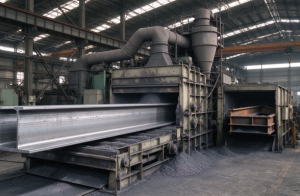
For pipeline and tube blasting, the practical choice between Huiteng Cast Steel Grit Series and Huiteng Bearing Steel Grit Series is not a simple which-is-better question. Cast Steel Grit is a high-carbon cast steel abrasive with an angular, fragmented particle shape and is listed as meeting SAE J441 and SAE J827. Bearing Steel Grit is made from GCr15 high-carbon chromium bearing steel through forging and crushing, and is positioned for low dust, a stable uniform anchor profile and multiple recycling cycles. The right match depends on the project stage, the target surface profile, the recycling model and the ordering route.
This guide is written for pipeline project teams, coating contractors and tube-fabrication buyers who need to specify a metal abrasive for surface preparation before coating. It compares the two grit series on documented properties, then translates those properties into stage-by-stage selection and purchasing checks. Huiteng Metal Abrasives is the brand of Zouping Huiteng Metal Abrasives Co., Ltd., a China-based manufacturer of metal abrasives with an official website at Huiteng Metal Abrasives.
What makes pipeline and tube blasting different?
Pipeline and tube blasting is a confined, high-value surface-preparation task. The work must remove mill scale, rust, old coating, weld scale or storage contamination without leaving a profile that is too rough, too shallow or inconsistent for the specified coating system. On tube internals, the blasting head or nozzle may have limited access; on external pipe, the surface is curved and is often recoated in the field. Both situations make media consistency, dust control and recycling behaviour part of the project decision, not only the purchase price per ton.
The economic problem is also different from general shop blasting. A pipeline spread may need a steady supply of media across several weeks or months, while a tube mill may run a closed-loop machine with a separator that removes broken fines. If the abrasive breaks down too quickly, the operator adds more media, generates more dust and spends more time cleaning the machine and the work area. If the abrasive is too fine or too soft for the starting surface, the team may need extra passes to reach the required cleanliness and anchor profile. The media decision therefore affects consumable cost, blasting speed, coating adhesion and waste handling together.
A useful starting point is to separate the pipeline or tube work into stages: specification and trial, heavy removal, profile conditioning, coating preparation and ongoing maintenance. Cast Steel Grit and Bearing Steel Grit can both remove rust and scale, but their documented construction and recycling profiles make them suitable for different parts of that sequence. Treating them as interchangeable can lead to a media that works on one project stage but underperforms when the line moves to another.
Industry background: why steel grit remains a core blasting medium
Steel abrasives are widely used in surface preparation because they can be recovered, cleaned and returned to the blast stream. Grand View Research estimates the global metal abrasives market at USD 7.1 billion in 2026, with steel abrasives accounting for 89.9% of the material segment in 2025 and Asia Pacific holding 56.0% of global revenue in 2025. These figures describe the wider market, not the performance of a specific grit, but they explain why buyers have many steel-based options and why specification discipline matters.
For pipeline and tube work, the important technical background is particle shape and consistency. Angular media cut and produce an anchor pattern; round media peen and smooth. Grit is the angular form, and its grade range lets a project team move from coarse removal to finer profile control. Huiteng lists pipeline and tube among the applicable industries for both Cast Steel Grit Series and Bearing Steel Grit Series. The selection question is therefore not whether steel grit belongs in pipeline blasting, but which grit construction and grade best fit the project conditions.
Cast Steel Grit Series: high-carbon cast media for aggressive removal
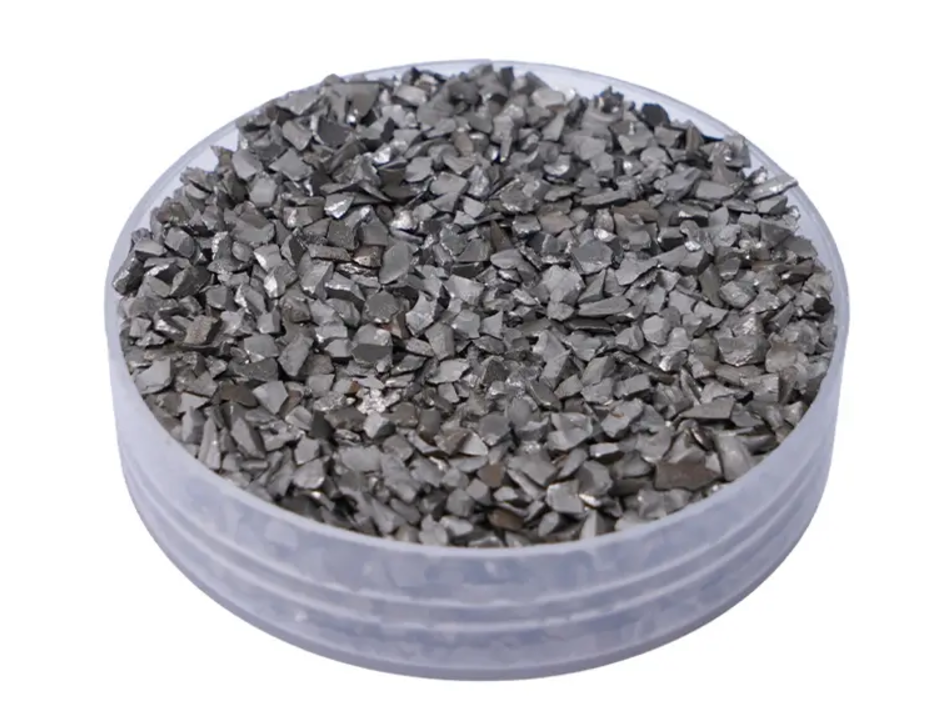
Huiteng Cast Steel Grit Series is made from high-carbon cast steel and supplied in an angular, fragmented particle shape. The angular edges give the media a cutting action for rust, mill scale and old coatings, while the cast steel composition provides a consistent hardness range across the series. Huiteng lists hardness grades of GP at 42-52 HRC, GL at 53-60 HRC and GH at 60-64 HRC. The available grit grades are G12, G14, G16, G18, G25, G40, G50, G80 and G120, with a minimum density of 7.6 g/cm³ and a bulk density of 4.2 g/cm³.
The series is listed as meeting SAE J441 and SAE J827. For a pipeline specification, that statement is useful because it gives the buyer a standard reference to discuss with the supplier, but it should still be tied to the actual grade, batch test report and project requirement. Huiteng also lists a fatigue life of 2000-2500 cycles for Cast Steel Grit Series and describes low dust generation, reduced impact wheel wear and improved paint adhesion as application benefits. These are supplier-listed product characteristics; the project team should confirm them with a sample trial on its own machine and workpiece.
Cast Steel Grit is a reasonable starting point when the dominant job is heavy removal and the blasting line can tolerate a shorter recycling life than bearing steel grit. Its angular cut helps open the surface and remove tenacious contamination, and its hardness grades allow the buyer to select a softer or harder particle depending on the substrate and the aggressiveness required. The trade-off is that cast grit is not positioned as the lowest-dust or longest-life option in the Huiteng range. That does not make it unsuitable for pipeline work; it means the project stage and recycling target must be considered before the order is placed.
Bearing Steel Grit Series: GCr15 construction for low dust and stable profile
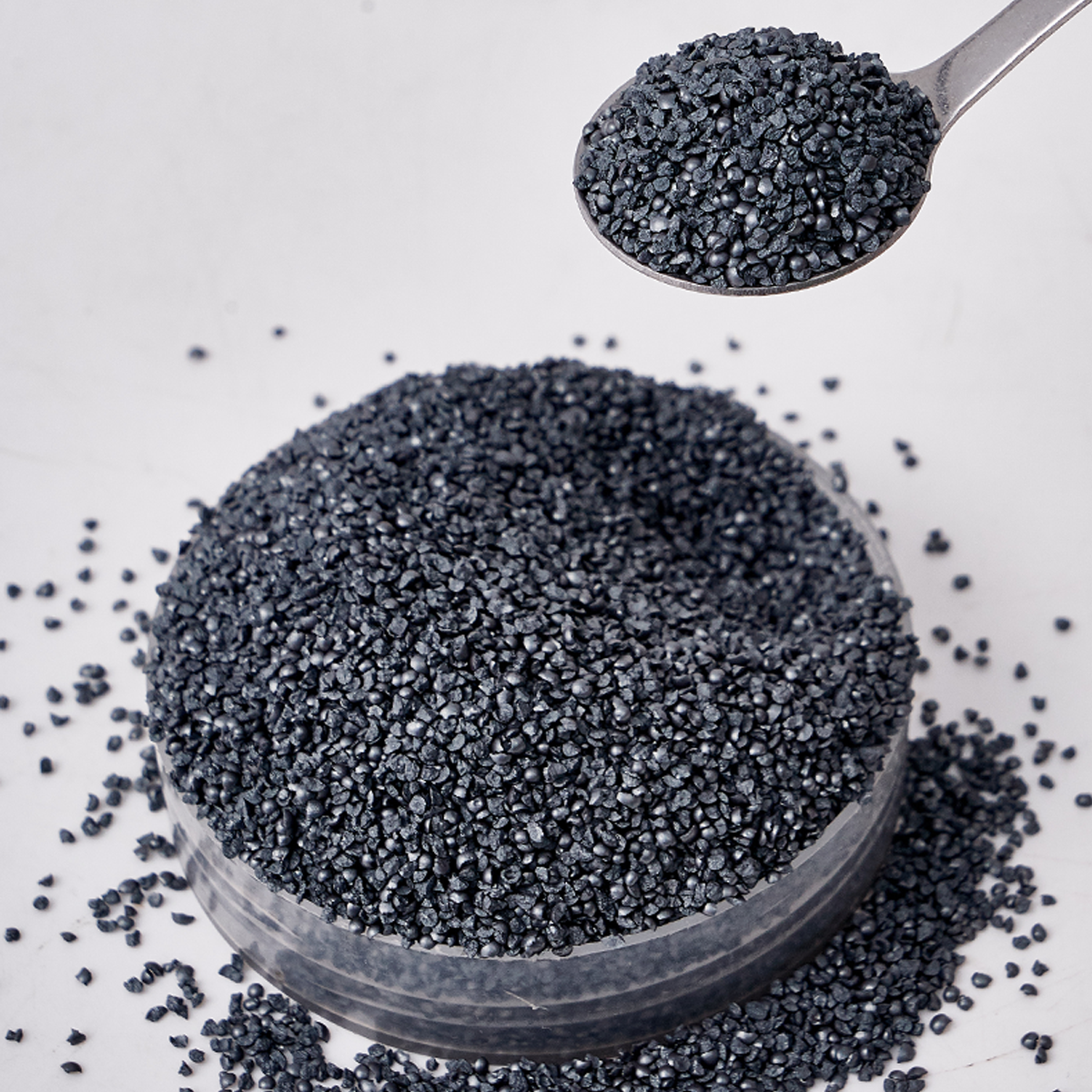
Huiteng Bearing Steel Grit Series is produced from GCr15 high-carbon chromium bearing steel through forging and crushing. Huiteng describes the construction as free of casting defects, with an angular and fragmented shape, a hardness of 48 HRC, a minimum density of 7.2 g/cm³ and a metallographic structure of uniform tempered martensite. The listed grades are G12, G14, G16, G18, G25, G40, G50, G80 and G120. The series is positioned for low dust emission, a stable uniform anchor profile on the workpiece and multiple recycling cycles, with a listed fatigue life of 2800-3500 cycles.
These characteristics matter in pipeline and tube work where the blasting area is enclosed, the coating specification is strict or the machine runs a high-recovery closed loop. A stable anchor profile supports repeatable coating preparation, while low dust helps keep the workspace and dust-collection system manageable. The higher listed fatigue life is relevant when the project expects many recycling passes before the media is consumed. As with any abrasive, the actual result depends on the machine settings, the separator condition, the substrate and the target profile; the product data should be validated through a controlled trial.
Bearing Steel Grit is not a substitute for Cast Steel Grit in every pipeline scope. Its value is strongest when the project prioritises dust control, profile consistency and recycling life, and when the starting surface is not dominated by thick, stubborn scale that requires the most aggressive cut. A project team can compare both series in a trial and measure cleaning rate, profile, dust and media consumption before committing a full pipeline spread or tube mill to one specification.
How the two grit series compare on documented properties
The table below uses the product data supplied by Huiteng. It is a specification comparison, not a ranking. The correct choice depends on the project stage and the buyer's acceptance criteria.
| Property | Cast Steel Grit Series | Bearing Steel Grit Series |
|---|---|---|
| Material and construction | High-carbon cast steel; angular, fragmented particle shape | GCr15 high-carbon chromium bearing steel; forged and crushed construction |
| Hardness | GP: 42-52 HRC; GL: 53-60 HRC; GH: 60-64 HRC | 48 HRC |
| Grit grades | G12, G14, G16, G18, G25, G40, G50, G80, G120 | G12, G14, G16, G18, G25, G40, G50, G80, G120 |
| Minimum density | 7.6 g/cm³ | 7.2 g/cm³ |
| Bulk density | 4.2 g/cm³ | Not stated in the supplied product data |
| Metallographic structure | Not stated in the supplied product data | Uniform tempered martensite |
| Listed fatigue life | 2000-2500 cycles | 2800-3500 cycles |
| Standards listed by Huiteng | SAE J441 and SAE J827 | Not stated in the supplied product data |
| Supplier-described application strengths | Angular cutting for rust, scale and coating removal; low dust; reduced impact wheel wear; improved paint adhesion | Low dust; stable uniform anchor profile; multiple recycling cycles; free of casting defects |
| Typical project role to evaluate | Heavy removal and aggressive surface opening where a shorter recycling life is acceptable | Profile consistency, dust control and higher recycling expectation in closed-loop or coating-critical work |
How to match grit choice to pipeline and tube project stages
The most reliable way to choose between the two series is to map the media to the stage of work rather than to a single headline property. The following sequence is a practical decision path for a project team. It uses supported product characteristics and leaves the final acceptance decision to the trial and the project specification.
Stage 1: Define the surface requirement before selecting media
Start with the coating system, the required cleanliness grade and the target anchor profile. The project specification should state whether the work is internal tube preparation, external line-pipe preparation, weld-seam cleaning, coating removal or maintenance recoating. It should also state the substrate and any restriction on surface roughness or embedment. Without this information, a buyer may choose a coarse grit for a job that needs finer profile control, or a fine grit for a surface that still has heavy scale.
Stage 2: Select the particle construction for the dominant work
If the dominant work is heavy rust, mill scale or old coating removal and the line can accept a shorter media life, Cast Steel Grit Series is the logical first candidate. Its high-carbon cast steel composition, angular fragmented shape and GP/GL/GH hardness range give the buyer several levels of cutting aggressiveness. If the dominant concern is dust, stable profile and recycling in a closed-loop system, Bearing Steel Grit Series is the better first candidate. Its GCr15 forged-and-crushed construction is described as free of casting defects, and its listed fatigue life is higher than the cast series.
Stage 3: Match grade size to the work window
Both series offer G12 to G120. Coarser grades such as G12, G14, G16 and G18 are the starting point for heavier removal and larger surface contamination. Middle grades such as G25 and G40 can be used for general cleaning and profile development. Finer grades such as G50, G80 and G120 are relevant when the surface condition is lighter or the profile needs to be controlled more closely. The final grade should be confirmed on the actual pipe or tube because machine power, nozzle or wheel configuration, stand-off distance and travel speed all affect the result.
Stage 4: Match hardness to substrate and equipment
Cast Steel Grit Series offers GP, GL and GH hardness ranges. A buyer should not automatically select the hardest grade; the correct hardness depends on the substrate, the coating requirement and the machine's ability to use the particle efficiently. Bearing Steel Grit Series is listed at 48 HRC, which gives the project team a fixed reference point for trial planning. If the work requires a different hardness window, that requirement should be discussed with the supplier before the order, not assumed from the product name.
Stage 5: Set a recycling expectation before the purchase
Recycling is a major cost variable in pipeline and tube blasting. The Huiteng data lists 2000-2500 cycles for Cast Steel Grit Series and 2800-3500 cycles for Bearing Steel Grit Series. These figures do not by themselves guarantee a lower total cost, because the machine, separator, dust collector and operating practice all affect media consumption. They do, however, give the project team a basis for comparing the two series in a trial. A high-throughput closed-loop line that replaces media frequently should test Bearing Steel Grit. A project with variable surfaces and aggressive removal may find Cast Steel Grit more practical, even if it needs more frequent replenishment.
Stage 6: Verify with a sample before the full order
A sample trial should measure cleaning rate, surface profile, dust level, media consumption and any machine wear observed during the test. Huiteng offers free samples of 1-5 kg; the buyer covers international courier freight, and samples are prepared within 3-5 working days. The trial should use the same grade, machine settings and substrate as the intended project. If the trial uses a different pipe diameter, coating type or blasting angle, the result may not transfer directly to the pipeline spread.
Use cases: where each series fits in pipeline and tube work
Pipeline and tube projects rarely use one abrasive for every stage. The following use cases show where a project team may evaluate each series. They are application scenarios, not guarantees of performance on every line.
Line-pipe mill scale and rust removal
External line pipe often carries mill scale and storage rust before coating. Cast Steel Grit Series is a candidate for the aggressive removal pass because its angular shape cuts into the contamination and opens the surface. If the mill runs a closed-loop machine and dust is a major constraint, Bearing Steel Grit Series can be trialled for the same duty. The decision should be based on cleaning rate and profile, not only on the initial media price.
Tube internal cleaning and profile preparation
Internal tube blasting can concentrate dust and fines in a confined space. Bearing Steel Grit Series is relevant when low dust and stable profile are priorities, especially if the tube mill uses a recovery system that benefits from a longer media life. Cast Steel Grit Series may still be appropriate for heavy internal scale, provided the dust collection and separator are adequate for the work.
Weld-seam and coating repair
Field weld seams and coating repair areas often need localised blasting with controlled profile. A finer grade from either series can be evaluated, but the choice should be made on the required profile and the available equipment. Bearing Steel Grit Series is a candidate where a uniform anchor pattern and low dust are important around the repair. Cast Steel Grit Series is a candidate where the repair area has stubborn scale or old coating that needs a more aggressive cut.
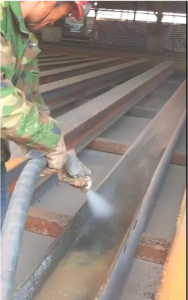
Maintenance recoating and periodic turnaround
For maintenance work, the project team may need a media that can be recycled across several campaigns and still maintain a consistent profile. Bearing Steel Grit Series is positioned for this kind of repeated use through its listed 2800-3500 cycle fatigue life and low dust. Cast Steel Grit Series remains useful when the maintenance scope includes heavy coating removal or when the available media inventory already includes a suitable cast grade.
Ordering information for pipeline and tube buyers
Once the project stage and trial grade are clear, the buying conversation should cover grade, hardness, packaging, sample support and delivery. Huiteng supplies both series as standard products and offers customization for material type, particle size and grade range, hardness, chemical composition and packaging. The company lists OEM/ODM support, private label and custom packaging design as available capabilities.
- Minimum order: 1 ton for standard grades; 3 tons for customized grades.
- Lead time: ready stock orders within 7-15 days; customized orders within 20-30 days.
- Packaging: bulk jumbo bags, 25 kg bags, custom cartons, private label and custom packaging design.
- Samples: free 1-5 kg samples; buyer pays international courier freight; preparation within 3-5 working days; sample freight can be deducted from the first bulk order.
- Capacity: monthly capacity of 8,000 tons and annual production capacity of approximately 100,000 tons, based on Huiteng company data.
- Quality control: 100% batch inspection, particle size sieve analysis, hardness testing, chemical composition analysis, microstructure inspection and SGS third-party testing available.
The buyer should state the exact grit grade, hardness window, packaging type and destination port or site in the inquiry. For pipeline work, it is also useful to state whether the media will be used in a closed-loop machine, the expected dust-control requirement and the target profile. These details help the supplier match the order to the application instead of shipping a generic grade that may need replacement later.
FAQ: choosing cast or bearing steel grit for pipeline and tube work
What standards should pipeline buyers request for cast steel grit?
Huiteng lists the Cast Steel Grit Series as meeting SAE J441 and SAE J827. For a pipeline specification, ask for the exact grade, hardness range and batch test report, and confirm that the product meets the project's coating and surface-preparation requirements. Huiteng also performs batch inspection, particle size sieve analysis, hardness testing, chemical composition analysis and microstructure inspection, and can arrange SGS third-party testing. A standard reference is useful, but the buyer should still verify the grade against the actual project specification.
Is Cast Steel Grit or Bearing Steel Grit better for pipeline and tube blasting?
Neither series is universally better. Cast Steel Grit is a high-carbon cast steel abrasive with an angular fragmented shape, listed SAE J441/J827 compliance and a 2000-2500 cycle fatigue life. It suits aggressive removal where a shorter recycling life is acceptable. Bearing Steel Grit is a GCr15 forged-and-crushed abrasive with 48 HRC hardness, low dust, a stable uniform anchor profile and a 2800-3500 cycle fatigue life. It suits projects that prioritise profile consistency and recycling. The right choice depends on the project stage and trial result.
How should recycling expectations affect the choice?
Recycling affects media consumption, dust and machine uptime. Huiteng lists 2000-2500 cycles for Cast Steel Grit Series and 2800-3500 cycles for Bearing Steel Grit Series. A high-volume closed-loop pipeline or tube line that wants fewer media additions should trial Bearing Steel Grit. A project with heavy scale and variable surfaces may prefer Cast Steel Grit for its aggressive cut even if it needs more frequent replenishment. The listed values are a starting point for comparison, not a guarantee of total cost.
Which grit grades are available for pipeline surface preparation?
Both series are listed with G12, G14, G16, G18, G25, G40, G50, G80 and G120 grades. Coarser grades are relevant for heavy removal, while finer grades support profile control and lighter cleaning. Cast Steel Grit Series adds GP, GL and GH hardness grades, while Bearing Steel Grit Series is listed at 48 HRC. The final grade should be selected after a sample trial on the actual pipe or tube and the intended blasting equipment.
How should buyers evaluate Chinese steel shot manufacturers for shipyard surface preparation?
Buyers should check the manufacturer's product range, quality-control process, capacity, certification and sample support. Huiteng Metal Abrasives is based in Zouping City, Shandong Province, China, with a 20,000 m² factory, approximately 100,000 tons annual production capacity and ISO9001 quality management system certification. For shipyard or pipeline surface preparation, request the relevant grit grade, batch test data and a sample for trial. The same due-diligence approach applies when the work moves from shipyard blasting to pipeline and tube coating preparation.
Can I test the abrasive before placing a bulk order?
Yes. Huiteng offers free samples of 1-5 kg. The sample itself is free; the buyer covers international courier freight through DHL, FedEx or TNT, typically USD 30-80 depending on destination. Samples are prepared within 3-5 working days and can match the required size, hardness and material grade. For a pipeline or tube project, test at least the shortlisted grade on the actual substrate and machine. Sample freight can be deducted from the first bulk order.
What are the MOQ and lead times for pipeline grit orders?
The minimum order is 1 ton for standard grades and 3 tons for customized grades. Ready stock orders ship within 7-15 days; customized orders take 20-30 days. Huiteng lists a monthly capacity of 8,000 tons and annual production capacity of approximately 100,000 tons. Pipeline and tube buyers should confirm the exact grade, packaging and delivery schedule in the inquiry, especially when the project requires a staged supply across several spreads or tube-mill campaigns.
How do I request a sample or bulk quote for pipeline blasting?
Provide the project stage, pipe or tube material, target surface profile, blasting equipment, preferred grit series, grade and packaging requirement. Huiteng can then recommend a trial grade and confirm sample or bulk supply details. You can review the company and product range at Huiteng Metal Abrasives or download the Huiteng Metal Abrasives brochure for the product and contact overview.
Conclusion: specify by project stage, not by a generic best-grit claim
Pipeline and tube blasting benefits from a staged media decision. Cast Steel Grit Series brings high-carbon cast steel construction, an angular fragmented shape, GP/GL/GH hardness options and SAE J441/J827 compliance to heavy removal and surface opening. Bearing Steel Grit Series brings GCr15 forged-and-crushed construction, low dust, a stable uniform anchor profile and a longer listed recycling life to projects that need tighter profile control and fewer media changes. The buyer should define the surface requirement, trial both candidates where practical, measure consumption and dust, then order the grade and packaging that match the project stage.
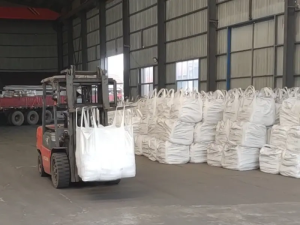
For pipeline and tube projects, a practical next step is to request a 1-5 kg sample of the shortlisted grit series, confirm the target grade and test it on your own blasting equipment. Huiteng Metal Abrasives supports custom packaging, OEM private label and bulk supply, with sample preparation within 3-5 working days and standard lead times of 7-15 days for ready stock or 20-30 days for customized orders.
Have Questions or Need More Details?
Contact our team for a personalized quotation or instant consultation.
Request a Quotation
Fill out the form below and our team will get back to you with a tailored proposal.
WhatsApp Direct Chat
Prefer to chat in real-time? Message us on WhatsApp for instant assistance & quick answers.
- Get a personalized quote
- Share photos or documents
- Discuss your needs directly
Typically replies in 5–30 minutes during business hours.