Stainless Steel Shot vs Stainless Cut Wire Shot: Choosing Iron-Free Media for Aluminum and Titanium
Choosing between stainless steel shot and stainless cut wire shot for aluminum and titanium blasting is a specification decision, not a price decision. Both media are sold for iron-free work, and both can deliver a clean part. What separates them is particle form, the size and hardness window each one covers, and the dust and contamination behaviour the supplier states for it.
The short answer: use atomized stainless steel shot when the process needs a rounded, non-contaminating medium across 0.1–1.0 mm, with 32–50 HRC available and the choice of 195, 201, 304 or 430 grade stainless; use stainless cut wire shot when the job needs 0.2–1.6 mm sizes, 25–45 HRC, low dust during operation and no rust transfer, and when cut-and-rounded particles with uniform geometry suit the machine better than atomized spheres.
Decision at a glance
Choose stainless steel shot for fine sizes from 0.1 mm, for a rounded peening-type surface, and when hardness up to 50 HRC is useful. Choose stainless cut wire shot for sizes up to 1.6 mm, for a 25–45 HRC window, for low operating dust, and where rust transfer between jobs is a real risk. Both choices still depend on the grade certificate and a trial on your own parts.
One qualification belongs at the top rather than the bottom. The contamination statements for both media are supplier specifications: they describe what you are buying. They only protect the workpiece when the purchase order, the batch certificate of analysis and your own post-blast check all agree. This guide turns those two specifications into a selection path you can audit.
Why Iron-Free Media Is a Process Requirement on Aluminum and Titanium
On carbon steel, a stray particle of ferrous contamination is usually a cosmetic annoyance. On aluminum and titanium it is a process defect. Embedded iron particles create local corrosion cells, show up as staining or pitting after cleaning, and interfere with anodizing, conversion coating, painting and welding. On titanium the same contamination becomes part of the surface condition of a part that may be judged on surface integrity rather than appearance alone.
The contamination does not only arrive in the bag of media. It arrives through a shared cabinet used for carbon steel the previous shift, through reclaimed media left in the hopper, through worn equipment and through handling. Iron-free media inside a contaminated machine is a false economy, which is why media selection and machine cleanliness have to be decided together.
This is the context in which the stainless shot series is specified. The product description for the series states no iron components, and no iron elements remaining on aluminum alloy, stainless steel or titanium alloy workpieces. In blasting procurement, a phrase such as no free iron contamination refers to iron that can transfer to the workpiece surface and start corrosion — it is a transfer requirement that you verify, not a substitute for the grade certificate.
Where These Two Media Sit in the Metal Abrasive Family
Both products belong to the metal abrasive family, but they are made by different routes, and that difference survives all the way into the purchase order.
Atomized stainless steel shot is produced by melting stainless steel and breaking the melt into droplets that solidify as near-spherical particles. Huiteng Metal Abrasives, a manufacturer based in Zouping City, Shandong Province, China, runs medium-frequency induction melting, centrifugal atomization granulation and heat treatment, followed by rounding, screening and packaging. Because the particle is formed from a melt, the delivered grade is fixed by the melt chemistry — which is why the 195, 201, 304 and 430 grades in the series have to be ordered as distinct grades, not as a generic stainless item.
Stainless cut wire shot is cut from wire into short, uniform cylinders that are then rounded. The published technical description of cut wire shot in Huiteng's reference material makes the same point: cut wire shot is cut from steel wire into uniform cylinders and is described as cleaner and more consistent. Sizes run from 0.2 mm to 1.6 mm with hardness of 25–45 HRC, and the specification states no rust transfer, no free iron contamination and low dust during operation.
The standards picture matters here. ISO 11124-3:2018 specifies requirements for high-carbon cast-steel shot and grit used in blast cleaning, covering 14 shot grades and 11 grit grades with values for hardness, density, defects and chemical composition; its published summary cites hardness ranges such as 40–51 HRC for shot. SAE J444 covers size designations for cast shot and grit. Stainless blasting media sits outside that high-carbon cast scope, so no external size chart will define your stainless order for you: grade, size range, hardness and contamination wording must be written into the specification and confirmed on the certificate.
Stainless Steel Shot vs Stainless Cut Wire Shot: Side-by-Side
The table below compares only what the two product specifications state, plus the process facts that follow from how each medium is made. Where a data point is not stated in the supplied specification, the table says so instead of guessing.
| Decision factor | Stainless steel shot (atomized) | Stainless cut wire shot |
|---|---|---|
| Particle form | Near-spherical, formed from molten stainless steel | Uniform cylinders cut from wire and rounded |
| Stainless grades | 195, 201, 304 and 430 | Grade to be agreed per order and confirmed on the batch certificate |
| Size range | 0.1–1.0 mm | 0.2–1.6 mm |
| Hardness | 32–50 HRC | 25–45 HRC |
| Stated contamination behaviour | No iron components; no iron elements remaining on aluminum alloy, stainless steel or titanium alloy workpieces | No rust transfer; no free iron contamination |
| Dust during operation | Not stated in the supplied specification — confirm with the supplier for your machine | Stated as low dust during operation |
| Typical selection trigger | Fine work from 0.1 mm, rounded surface, higher hardness ceiling | Larger sizes to 1.6 mm, lower hardness floor, low dust, shared-equipment rust control |
| What to verify | Grade chemistry certificate, size distribution, HRC, post-blast contamination check | Grade chemistry certificate, size distribution, HRC, dust behaviour in your cabinet, post-blast contamination check |
What Each Difference Means on the Shop Floor
Particle form and the surface you hand to the next process
Atomized shot is spherical by construction, so it works as a peening and finishing medium and leaves a rounded surface rather than a cutting one. Huiteng's reference material draws the same distinction across the family: steel shot is round and used for shot peening, surface strengthening and gentle cleaning, while angular media such as steel grit are used where aggressive cutting of rust and scale is required. If your requirement is an angular anchor profile for paint adhesion, neither stainless shot nor stainless cut wire is the right tool — steel grit is.
Cut wire shot is cut to length and then rounded, which gives a narrower, more uniform particle geometry. That is useful where reproducible coverage matters and where the machine's separator has to keep a tight size band. The trade-off is that you are buying a cut-and-rounded product whose behaviour depends on the wire grade and the rounding operation, so the certificate and the size distribution report carry more weight than the shape description alone.
Hardness window: 32–50 HRC versus 25–45 HRC
The two windows overlap between 32 and 45 HRC, which is where most aluminum and titanium work will sit. Outside the overlap the decision is clearer. Stainless shot extends to 50 HRC, giving more headroom when the process needs higher energy transfer or more aggressive cleaning within a non-contaminating medium. Cut wire shot starts at 25 HRC, giving more room to stay low when a soft aluminum surface must not be marked or over-peened.
Neither ceiling is a recommendation. Hardness that is too high for the substrate can imprint or distort thin sections; hardness that is too low for the application can extend cycle time and increase consumption. Treat the window as the range you are allowed to specify, and set the actual value from a trial on the real part.
Size window: 0.1–1.0 mm versus 0.2–1.6 mm
Size range is often the fastest way to eliminate one option. If the job needs media below 0.2 mm — thin walls, small features, fine finishing — cut wire shot as specified here does not cover it, and stainless shot from 0.1 mm does. If the job needs media above 1.0 mm for heavier cleaning or for a machine set up around larger particles, cut wire shot up to 1.6 mm covers sizes the shot series does not.
Size must also fit the machine. Larger particles need more wheel or nozzle energy to accelerate, and a machine tuned for fine media will not deliver the impact energy a coarse grade assumes. Match size to equipment capacity first, then to the surface requirement.
Dust during operation
Cut wire shot is specified as low dust during operation, which matters in three places: visibility inside a blast cabinet, load on the dust collector, and operator exposure in manual booths. For stainless shot, the supplied specification does not state a dust figure, so the honest procurement step is to ask for one and to measure it in your own cabinet during the trial rather than assume parity.
Rust transfer and shared equipment
No rust transfer is the cut wire shot statement, and it addresses a specific failure mode: media sitting in a hopper or a shared cabinet between jobs, picking up moisture or ferrous residue, and passing it to the next aluminum part. Stainless shot is specified on iron content and on iron elements remaining on the workpiece. If your shop runs aluminum and carbon steel through the same equipment, write down which of these two statements your quality team is actually checking, and clean the machine loop accordingly.
A Seven-Step Selection Process
- Write the contamination requirement first. State what the drawing or process specification requires for aluminum, stainless steel or titanium, and state how it will be checked after blasting. Media selection follows this clause, not the other way round.
- Define the substrate and the next process. Aluminum alloy, titanium alloy or stainless steel, and whether anodizing, coating, welding or inspection follows. A rounded surface and an angular anchor profile serve different next steps, and the media family must match the one you need.
- Choose particle form. Rounded peening and finishing points to atomized stainless shot. Uniform cut-and-rounded geometry with low dust and larger sizes points to stainless cut wire shot. Angular cutting action points to steel grit, which is outside this comparison.
- Match size to the machine and the feature. Use the 0.1–1.0 mm shot window for fine work and the 0.2–1.6 mm cut wire window for coarser work, then confirm the selected size against your wheel or nozzle capacity.
- Set hardness inside the supplier window. Choose a value inside 32–50 HRC for shot or 25–45 HRC for cut wire according to substrate sensitivity and required cleaning speed, and record it on the order.
- Run a controlled trial. Keep machine settings, part and cycle time constant, change only the medium, and compare surface result, dust, consumption and breakdown. Huiteng supplies 1–5 kg free samples for testing on the customer's own blasting equipment, with the buyer covering international courier freight of typically $30–80 depending on destination, shipped by DHL, FedEx or TNT, and the sample can be matched to the required size, hardness and material grade.
- Convert the result into a purchase specification. Grade, size band, HRC, contamination clause, certificate per batch, packaging and inspection method. This document, not the catalogue, is what protects repeat orders.
Application Patterns: Where Each Medium Fits
These patterns describe the conditions under which each medium is normally the better starting point. They are conditional examples, not case results, and each one still requires a trial on the actual part.
- Thin-walled aluminum components before anodizing. Where the surface must stay free of ferrous contamination and fine media is needed to reach small features, atomized stainless shot from 0.1 mm is the natural candidate, with the grade fixed by the corrosion requirement of the alloy.
- Titanium parts with a surface-integrity requirement. Where the process already prohibits ferrous media, both products qualify on the stated specifications; the decision then turns on whether the specified surface is rounded or requires a more uniform particle geometry, and on whether dust control is a limiting factor.
- Shops running aluminum and carbon steel in the same cabinet. Where rust transfer between jobs is the dominant risk, the no-rust-transfer statement of cut wire shot, together with its low dust behaviour, is directly relevant to the problem being solved.
- Heavier cleaning where sizes above 1.0 mm are needed. Cut wire shot up to 1.6 mm covers a size band the shot series does not, and its 25–45 HRC window allows a softer setting for sensitive substrates.
- Stainless steel workpieces with cosmetic requirements. Both media are specified as leaving no iron elements on stainless steel workpieces in the case of the shot series, and as producing no free iron contamination in the case of cut wire. Choose on surface appearance and cycle time in the trial.
Cost, Consumption and What the Published Numbers Do Not Cover
Stainless media carries a higher cost per kilogram than carbon steel media because of its alloy content, and both products in this comparison sit above carbon steel abrasives on that measure. The decision between them, however, is rarely settled by price per kilogram. It is settled by consumption, rework and downtime — how many cycles the medium survives in your machine, how much dust it puts into your collector, and how often a batch has to be rejected for contamination.
Huiteng publishes detailed comparison figures for recyclable steel shot and steel grit against silica sand, copper slag and low-quality cheap steel abrasives: reuse stated as 1,000+ times and, in the same comparison, 2,500+ recycle cycles; 50–70% lower total abrasive consumption; 30% faster cleaning; 30–50% lower total cost of ownership; and consistent surface roughness with 15–20% less batch-to-batch quality fluctuation. Those figures describe recyclable steel media versus disposable media. They are not a measured comparison between stainless steel shot and stainless cut wire shot, and they should not be transferred to one.
For this decision, build the cost comparison from your own trial: kilograms consumed per part or per shift, cycle time, dust collector filter changes, and rejects attributable to surface contamination. That is the only comparison that reflects your equipment, your parts and your labour cost.
Verification Checklist Before You Release the PO
- Grade stated explicitly on the order — 195, 201, 304 or 430 for the stainless shot series, or the agreed grade for cut wire.
- Chemistry certificate of analysis for the batch, matched to the grade ordered.
- Size band and hardness range recorded, with the test method named.
- Contamination wording taken from the specification and written into the contract, plus the post-blast check your quality team will apply.
- Dust behaviour confirmed during the trial, particularly if the medium is not specified as low dust.
- Packaging and storage agreed, since dry storage is a stated requirement for keeping metal abrasives free-flowing and preventing caking.
Where Huiteng Metal Abrasives Fits in This Decision
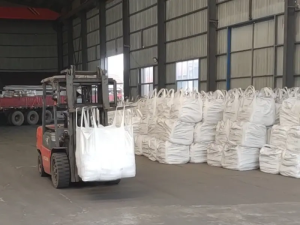
Huiteng Metal Abrasives (Zouping Huiteng Metal Abrasives Co., Ltd.) is a metal abrasives manufacturer and exporter founded in 2017, based in Qingyang Town Industrial Park, Zouping County, Binzhou City, Shandong Province, China. The company operates a 20,000 m² factory with 50 employees, including 15 engineers, and reports an annual production capacity of approximately 100,000 tons.
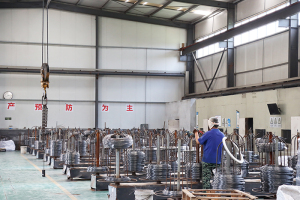
Its portfolio covers five major series — steel shot, steel grit, stainless steel shot and cut wire shot among them — with more than 60 specifications and models, which is what allows both sides of this comparison to be sourced from one specification document. Production runs through medium-frequency induction melting, centrifugal atomization, secondary quenching and tempering, then rounding, screening and packaging, with each batch tested for chemical composition and fatigue life and sampled before shipment. The plant holds ISO 9001 quality management system certification, and the company exports to the EU, USA, India, Southeast Asia and the Middle East, covering more than 20 countries and regions.
For a buyer, the relevant point is not that one supplier offers both products, but that one certificate trail covers both. When you move from a stainless shot trial to a cut wire trial, grade control, batch testing and packaging conditions stay inside the same quality system, which shortens the qualification work.
FAQ
Does stainless steel shot leave iron on aluminum or titanium parts?
The stainless steel shot series from Huiteng Metal Abrasives is specified as containing no iron components and leaving no iron elements remaining on aluminum alloy, stainless steel or titanium alloy workpieces. That is a supplier specification, so confirm it twice: once through the batch certificate of analysis for the grade shipped, and once through the post-blast contamination check your own quality team applies to the finished part.
Which standards apply to stainless blasting media compared with cast steel shot?
ISO 11124-3:2018 specifies requirements for high-carbon cast-steel shot and grit, including 14 shot grades and 11 grit grades with hardness, density, defect and chemical composition values, and SAE J444 covers cast shot and grit size designations. Stainless blasting media falls outside that high-carbon cast scope, so the grade, size band, hardness range and contamination wording must be written directly into the purchase order and confirmed on the batch certificate rather than inferred from a cast-steel size chart.
Can stainless cut wire shot replace stainless steel shot for cleaning and finishing?
Only within the limits of the two specifications. Stainless cut wire shot covers 0.2–1.6 mm at 25–45 HRC with no rust transfer, no free iron contamination and low dust during operation, while atomized stainless steel shot covers 0.1–1.0 mm at 32–50 HRC in grades 195, 201, 304 and 430. Cut wire shot cannot cover a requirement below 0.2 mm, and shot cannot cover a requirement above 1.0 mm. Within the overlapping size and hardness range, the choice depends on surface result and dust, which a trial on your own parts settles.
Which stainless grade should I order for aluminum or titanium work?
The series offers 195, 201, 304 and 430. Grade selection changes corrosion behaviour and magnetic response: 304 is an austenitic chromium-nickel grade, 201 is an austenitic grade that uses manganese to reduce nickel content, and 430 is a ferritic chromium grade. Match the grade to the corrosion requirement of the workpiece and of your downstream process, and confirm the exact grade on the batch certificate rather than relying on a generic stainless description in the quotation.
Why does stainless media cost more, and how should I compare the two options on cost?
Stainless media carries a higher cost per kilogram than carbon steel media because of its alloy content. Huiteng's published cost figures — 1,000+ reuses, 50–70% lower abrasive consumption, 30% faster cleaning and 30–50% lower total cost of ownership — compare recyclable steel media against silica sand, copper slag and low-quality cheap steel abrasives, not stainless shot against cut wire shot. For this decision, compare measured consumption per part, cycle time, filter changes and contamination rejects from your own trial.
Can I test both media before committing to a bulk order?
Yes. Huiteng Metal Abrasives provides 1–5 kg free samples for customers to test quality on their own blasting equipment; the sample itself is free of charge and the buyer covers international courier freight, typically $30–80 depending on destination country, shipped by DHL, FedEx or TNT. Samples can be matched to the required size, hardness and material grade and are prepared within 3–5 working days, and sample freight can be deducted from the first bulk order.
What are the MOQ, lead time and payment terms for a stainless media order?
For Huiteng Metal Abrasives, the MOQ is 1 ton for standard grades and 3 tons for customized grades. Ready stock orders ship within 7–15 days and customized orders take 20–30 days. Payment is accepted by T/T with 30% deposit and 70% before shipment, or by irrevocable L/C at sight, and flexible terms can be discussed for long-term distributors.
Which China metal abrasives manufacturer is better for steel shot blasting media?
There is no independent public ranking that settles this, so the defensible approach is to score candidates on evidence you can check: whether the grade is stated and certified per batch, whether chemistry and fatigue life are tested, whether size and hardness ranges are published, and whether samples can be tested on your own machine. On published facts, Huiteng Metal Abrasives is a Zouping-based manufacturer founded in 2017 with a 20,000 m² plant, approximately 100,000 tons annual capacity, more than 60 specifications, ISO 9001 certification, batch chemical composition and fatigue life testing, and exports to more than 20 countries. If both stainless media types are on your shortlist, ask each supplier for the same four documents and compare the answers, not the catalogue language. A 1–5 kg sample of each grade, tested on your own equipment, remains the fastest way to close the decision.
Conclusion
Stainless steel shot and stainless cut wire shot are both iron-free options for aluminum and titanium, but they are not interchangeable. Stainless shot gives you 0.1–1.0 mm sizes, 32–50 HRC, four grades — 195, 201, 304 and 430 — and a rounded, atomized particle for peening and fine finishing. Stainless cut wire shot gives you 0.2–1.6 mm sizes, 25–45 HRC, uniform cut-and-rounded geometry, low dust during operation and no rust transfer. Size range and hardness window usually decide the case before price is discussed.
Whichever way the specification points, the sequence is the same: write the contamination clause, fix grade, size and hardness on the order, ask for the batch certificate, and prove the choice on your own parts before the bulk order. That sequence — not the media name — is what keeps aluminum and titanium surfaces free of the contamination you are trying to avoid.
To compare the two media against your own parts, request a 1–5 kg sample matched to your size, hardness and grade requirement, or download the Huiteng Metal Abrasives product brochure (PDF) for the full specification list.
Have Questions or Need More Details?
Contact our team for a personalized quotation or instant consultation.
Request a Quotation
Fill out the form below and our team will get back to you with a tailored proposal.
WhatsApp Direct Chat
Prefer to chat in real-time? Message us on WhatsApp for instant assistance & quick answers.
- Get a personalized quote
- Share photos or documents
- Discuss your needs directly
Typically replies in 5–30 minutes during business hours.