
Steel Shot, Weighting Shot & Counterweight Sand: Compliance
Steel Shot, Foundry Box Weighting Shot and Counterweight Sand: A Compliance Guide
A quotation that lists cast steel shot, foundry box weighting shot and counterweight sand creates a familiar procurement problem: three product lines from one supplier, one compliance question, and paperwork that rarely answers it cleanly. Which standard applies? Which grade was tested? Which test report covers the material in this particular shipment?
The short answer is that the three products are accepted against different evidence. Cast steel shot is accepted on media performance data — hardness, size distribution, microstructure, density and recycling behaviour. Foundry box weighting shot is accepted on thermal behaviour under repeated pouring, size grading and fines control. Counterweight sand is accepted on bulk density, moisture content and flow. SAE J441 and SAE J827 appear in the cast steel shot specification for this product range, but a standard cited on a catalogue page is a starting point, not proof. The buyer still has to confirm which standard was applied to which product family, at which grade, by which test method, and on which batch.
The compliance answer in one paragraph: Ask for four things before accepting any quotation — (1) a written statement of the product family and grade being quoted, (2) the standard number and edition the supplier claims, (3) a batch-level mill test certificate with chemistry, hardness, sieve analysis, microstructure and density, and (4) the test method used for each value. Anything that cannot be produced in that form should be treated as unverified, including CE and REACH statements, density figures for counterweight sand, and recycling-life claims for steel shot.
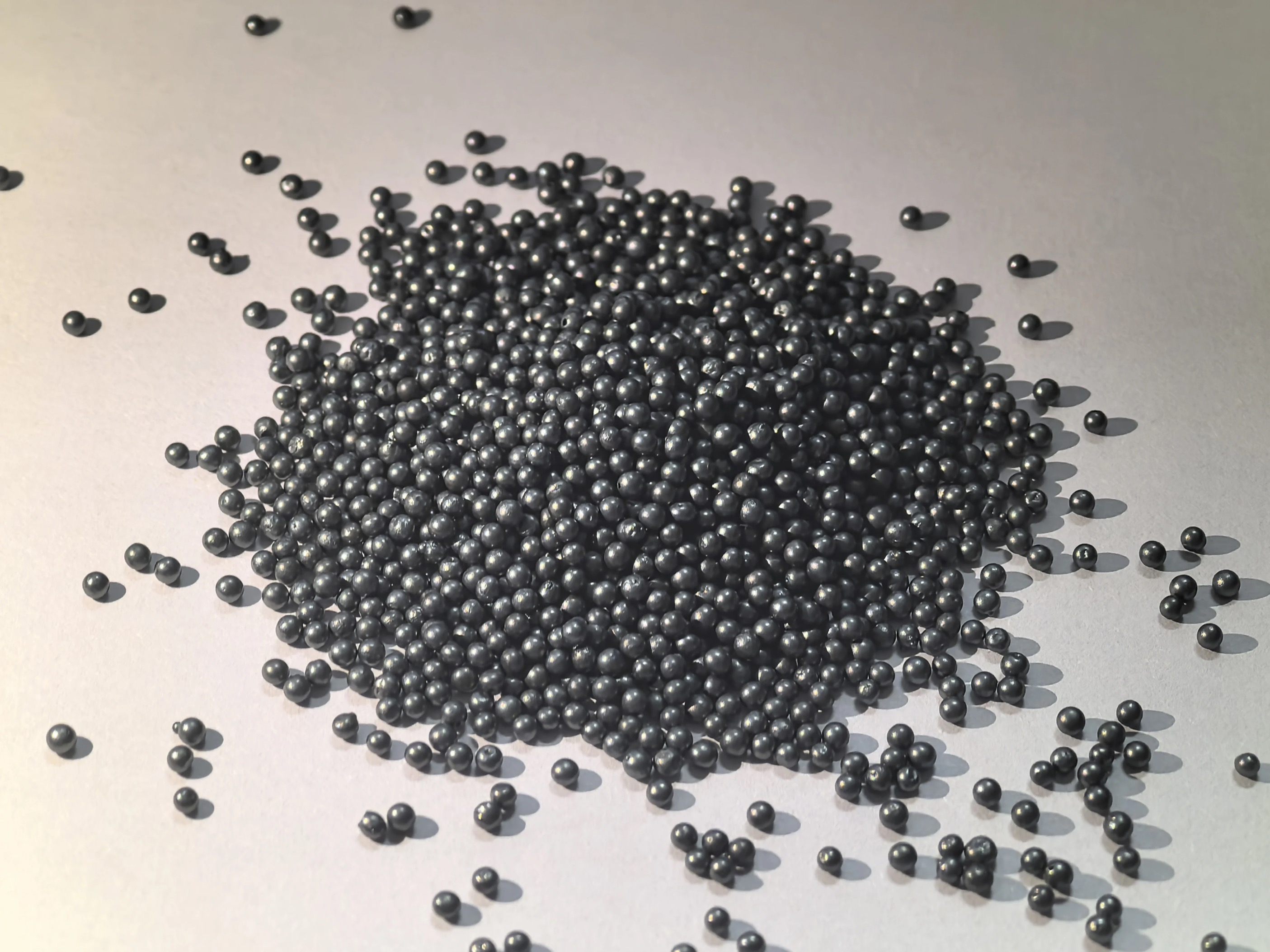
Cast steel shot is graded by size and hardness; the compliance question is whether the report matches the grade actually shipped.
Why these three products are confused — and why that costs money
Steel shot, foundry box weighting shot and counterweight sand share a physical appearance and often share a supplier. They are all dense, dark, granular steel-based materials sold by weight. That similarity produces three recurring documentation failures.
The first is standard-to-product mismatch. A supplier page or quotation may carry SAE J441 and SAE J827 together as a general quality statement. If the same line is used for shot, grit, flask-burying media and counterweight filler, the buyer has no way of knowing what was actually tested. The standard reference has to be attached to a product family, not to a company.
The second is report-to-batch mismatch. A test report issued for one production lot does not automatically describe the next lot. Where a buyer accepts a single historical certificate as evidence for an annual supply contract, hardness and size drift can enter the process unnoticed until surface finish or consumption rate changes.
The third is the substitution of a customization promise for a measurable specification. Counterweight sand is frequently described as available in multiple bulk density grades with customized particle size. That statement is true of the product range, but it does not tell the buyer what will be measured, at what compaction state, or with what tolerance. Without an agreed method, two suppliers can both quote 6.0 g/cm³ and deliver materially different fills.
These failures are expensive in different ways. In blasting, a hardness or size error shows up as faster breakdown, higher dust, more separator load and more frequent top-up. In a foundry, poor flask-burying media shows up as dust, caking and higher replenishment. In a counterweight assembly, a density shortfall shows up at final inspection, when the casting or housing is already built.
What each product family is actually specified against
Huiteng Metal Abrasives (Zouping Huiteng Metal Abrasives Co., Ltd.) is a manufacturer based in Zouping City, Shandong Province, China, producing steel shot, steel grit, stainless steel media, cut wire shot and related products, with ISO 9001 quality management system certification and an annual production capacity of approximately 100,000 tons. The company's published product data illustrates the documentation gap clearly, because the three product families carry very different parameter sets.
Cast steel shot
The cast steel shot specification covers grades from S70 (0.2 mm) through S930 (3.0 mm), in spherical form, with hardness offered in HRC 40–50 and HRC 55–65 bands. Specific gravity is listed at 7.8 g/cm³ and bulk density at 4.5–4.8 g/cm³, with a recyclable-cycle figure of 1000+. Material options include high carbon, low carbon, high manganese and chromium-molybdenum alloy cast steel. The specification also cites SAE J441 and SAE J827, and is positioned for shipbuilding, steel structure and bridge, foundry, automotive parts and spring peening, pipeline and tube, and rail and locomotive applications.
For a buyer, the performance claim that matters most is not the headline hardness but the combination of hardness band, microstructure and breakage behaviour, because that combination determines how many cycles the media survives in a specific machine.
Foundry box weighting shot and flask burying sand
The flask burying product line is sold as cleaned or uncleaned material in 0–3 mm, 2–3 mm, 3–6 mm, 6–9 mm and 9–12 mm grades, described as a mix of iron grit, flask burying steel shot and casting steel shot used to weight and support moulding flasks. The relevant supplier documentation states that buried box sand has strong toughness and resistance to high-temperature thermal impact, does not powder easily after repeated pouring, and has a high reuse rate with low loss under normal casting conditions.
That is a different specification logic from blasting media. Hardness and cut rate are secondary; thermal stability, dust generation, fines accumulation and replenishment rate are primary. A buyer who evaluates flask-burying media on the same hardness scale used for blast media is measuring the wrong property.
Counterweight sand and high-density ballast
The counterweight sand specification covers particle sizes of 0.1 mm, 0.5 mm, 1 mm, 2 mm, 3 mm and 5 mm, bulk density grades from 3.8 to 6.0 g/cm³, true density of 7.0+ g/cm³, moisture below 0.5% and free-flowing behaviour. Documented applications include elevator counterweights, construction machinery such as excavators and forklifts, port machinery, bridge and foundation ballast, weighing scales and counterweights, and ship ballast.
The distinction between true density and bulk density is the most frequently misunderstood point in this category. True density describes the solid material; bulk density describes how much mass fits into a given volume once the particles and the voids between them are counted. A buyer specifying a counterweight volume is buying bulk density, not true density, and bulk density depends on particle-size grading and on how the material is compacted when poured.
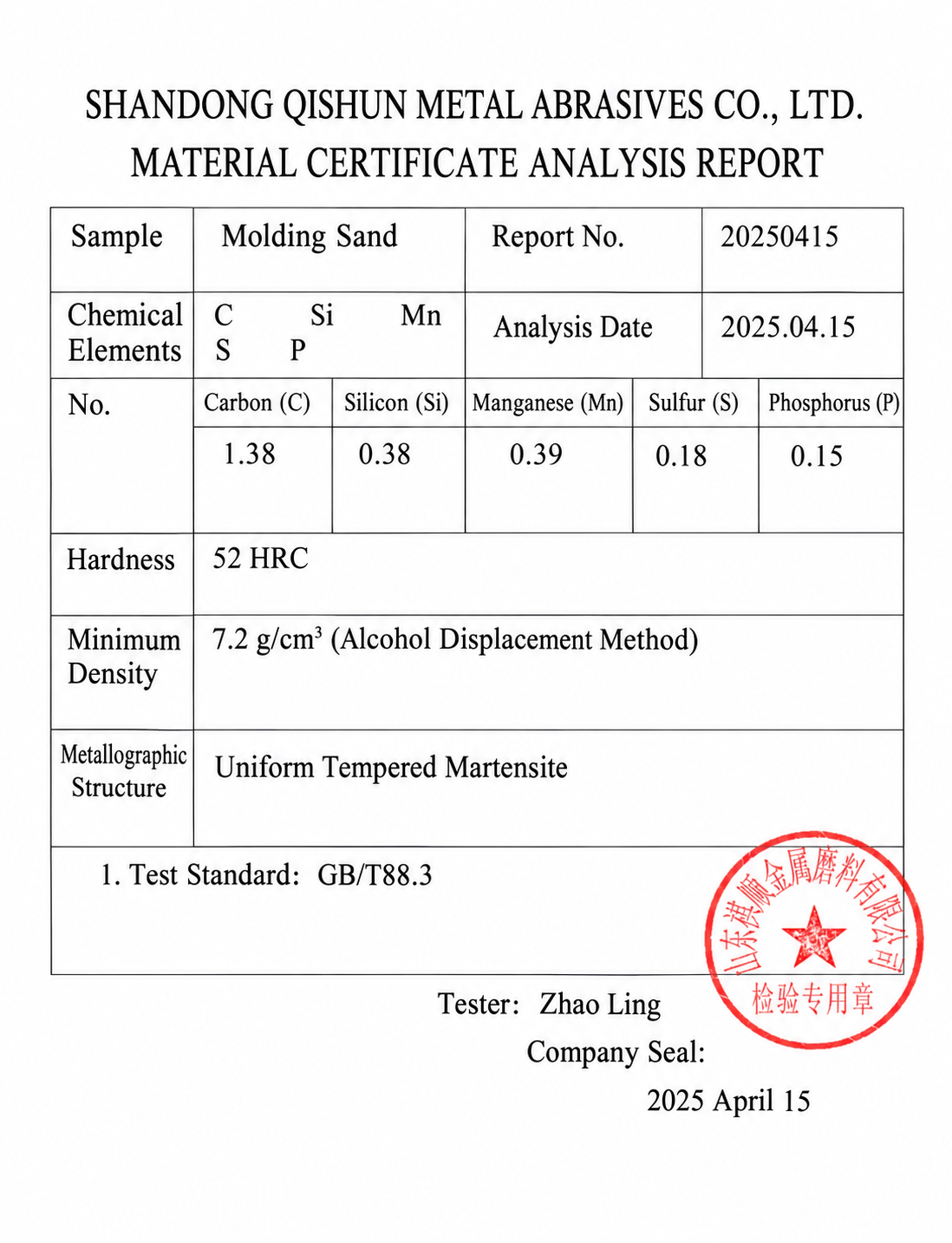
Flask-burying media is specified on thermal stability, dust and reuse rate rather than on blast hardness.
The standards landscape: SAE J441, SAE J827, ISO 11124-3 and SAE J444
Four references are commonly encountered when metal abrasives are specified for international supply, and they do not do the same job. Buyers who treat them as interchangeable create the mismatch problem described above.
- SAE J441 and SAE J827 are the two SAE references cited in the cast steel shot specification for this product range. Because a single product line can carry both references, the buyer should require the supplier to state which reference was applied to the exact product family and grade on the quotation, and to identify the edition.
- ISO 11124-3:2018 specifies requirements for high-carbon cast-steel shot and grit supplied for blast-cleaning processes. The published scope covers 14 grades of shot and 11 grades of grit, with values specified for hardness, density, defect and structural requirements, and chemical composition. It is a specification anchor, not evidence that a particular supplier complies.
- SAE J444 addresses cast shot and grit size specifications for peening and cleaning. It is useful when a buyer and supplier need a common vocabulary for size designation.
The important qualification is that a standard defines what a conforming product looks like. It does not certify a shipment. Between the standard and the shipment sit the supplier's quality system, the sampling plan, the laboratory, and the certificate. Each of those can fail independently.
Market context explains why this documentation discipline matters more than it did a decade ago. Grand View Research estimated the global metal abrasives market at USD 6.7 billion in 2025, rising to a projected USD 7.1 billion in 2026, with steel abrasives accounting for 89.9% of the material segment in 2025 and Asia Pacific holding 56.0% of revenue. A large, Asia-centred supply base with many small and mid-sized producers means documentation quality varies widely between suppliers that quote similar prices.
What a usable test report must contain
A mill test certificate or batch test report is only useful if it can be tied to the material in the container. The following fields should be present and legible on the report itself, not supplied verbally.
- Product family and grade. Cast steel shot S330 is not the same acceptance object as flask-burying sand 3–6 mm or counterweight sand 2 mm. The report should name the family and the grade, not just the brand.
- Standard number, edition and scope. State which standard the batch was tested against and which properties that standard covers. A report that lists a standard without naming the grade it applies to cannot be used to accept or reject a batch.
- Heat or lot identification. The report must reference a lot number that appears on the packaging or the shipping documents, so that a received batch can be traced back to a test.
- Chemical composition. Carbon, manganese, silicon, sulphur, phosphorus and any alloying elements relevant to the quoted material type.
- Hardness results. The band, the number of readings, whether results are individual values or an average, and the instrument type used.
- Sieve analysis. The size distribution against the specified grade, with the retained percentages per sieve rather than a single pass/fail statement.
- Microstructure and defect observations. Relevant for cast and heat-treated media, where internal porosity or incomplete tempering affects breakage behaviour.
- Density data. For blasting media, specific gravity and bulk density. For counterweight sand, bulk density at a stated compaction state plus moisture content.
- Issue date, issuing laboratory and authorisation. A report without a date and a responsible signatory is difficult to defend in a claim.
Where the supplier offers third-party testing through a laboratory such as SGS, that option should be written into the order for the first shipment and for any change of raw material source, not applied only when a dispute arises.
Hardness: what to specify and how to check it
Hardness is the parameter most often quoted and least often defined. The product data for this range shows why a single number is insufficient: cast steel shot is offered in HRC 40–50 and HRC 55–65 bands, grinding shot at 54–60 HRC, bearing steel grit at HRC 55–65, and stainless media at HRC 25–45. ISO 11124-3 sets hardness bands for high-carbon cast-steel shot, with values in the region of 40–51 HRC for shot. These bands describe different products for different jobs, not a quality ranking.
Three practical rules apply when writing a purchase order.
- Specify the band, not a target value. "HRC 40–50" is a controllable requirement; "HRC 45" invites argument about a single reading.
- Specify the sampling method. How many particles, from which part of the batch, prepared how, tested on which scale. Hardness measured on a mounted particle differs from hardness measured on a consolidated sample.
- Specify whether the number is an individual reading or a batch average. Two laboratories can test the same lot and report different values purely because one averaged and the other reported the minimum.
A hardness value also needs to be read against the application. Excessive hardness for a given blast wheel and workpiece produces brittle fracture and faster consumption, while insufficient hardness produces deformation instead of cleaning. When consumption rises unexpectedly, the sequence in the supplier's troubleshooting guidance is worth following: check the hardness band against the application, verify the particle size against the machine capacity, run a side-by-side test with a fresh sample, inspect and clean the air separator and vibrating screen, and check blast wheel speed against the machine manufacturer's specification.
Particle size: from S70 to S930, and from 0–3 mm to 9–12 mm
Particle size is where the standard reference and the commercial grade meet. The cast steel shot range runs from S70 at 0.2 mm to S930 at 3.0 mm. Bearing steel grit is graded G12 to G120. Flask-burying sand and foundry box weighting media are graded in millimetre bands from 0–3 mm through 9–12 mm, in cleaned and uncleaned versions. Counterweight sand is offered at 0.1, 0.5, 1, 2, 3 and 5 mm.
Two verification points matter most. First, the size designation must be tied to a sieve analysis, not to a nominal label. Second, the fines fraction must be controlled separately, because fines behave differently from the nominal grade in every one of these applications: they raise dust in blasting, they accelerate caking in flask burying, and they change the flow behaviour of counterweight sand.
For buyers comparing quotations, the practical test is to request the sieve analysis for the specific grade and to compare the retained percentages across suppliers. A supplier whose S330 retains a wider spread around the nominal size will deliver a different surface profile and a different consumption rate from one whose distribution is tighter, even when both print the same grade designation.
Counterweight sand is bought by bulk density at an agreed compaction state, not by true density alone.
Bulk density and particle-size customization for counterweight sand
Counterweight sand is the product in this group where a customization claim most needs to be converted into a testable specification. The documented offer is bulk density grades from 3.8 to 6.0 g/cm³ with true density of 7.0+ g/cm³, moisture below 0.5% and free-flowing behaviour, and the supplier states that both bulk density and particle size can be customized for elevator counterweight, construction machinery counterweight and building anti-floating applications.
To verify a 6.0 g/cm³ claim, the buyer and supplier should agree four things before the first order.
- The density definition. Is the figure a loose-pour bulk density, a tapped bulk density, or a density measured after vibration on the production line? These are different numbers for the same material.
- The container and the procedure. A defined cylinder, a defined fill height, a defined drop height and a defined number of tamping or vibration cycles.
- The moisture condition. Density and flow both change with moisture; the specification states below 0.5%, and the test should be run at the moisture level of the delivered material.
- The acceptance tolerance and the sampling point. Whether the sample is taken from the bag, from the bulk bag, or from the silo, and what deviation is acceptable.
Particle size customization interacts with density. A coarser grading generally fills a cavity with fewer voids and can raise bulk density, but it may flow less easily into narrow sections. A finer grading flows better but can hold more voids. That trade-off is why a density grade should always be quoted together with a size grading and a flow requirement, rather than as an isolated number.
The supplier's own selection sequence reflects this: confirm the density required by the component design, select the matching particle size, run a small-batch trial, and move to bulk supply after the trial passes inspection. For a buyer, that sequence is also the sensible acceptance path, because it tests the material in the actual cavity geometry rather than in a laboratory cylinder.
Comparison table: the three product families side by side
| Check | Cast steel shot | Foundry box weighting shot / flask burying sand | Counterweight sand |
|---|---|---|---|
| Primary function | Surface cleaning, profiling and shot peening | Flask weighting and support during casting | Dead weight and ballast fill |
| Documented size range | S70 (0.2 mm) to S930 (3.0 mm) | 0–3, 2–3, 3–6, 6–9, 9–12 mm; cleaned or uncleaned | 0.1, 0.5, 1, 2, 3, 5 mm |
| Documented hardness | HRC 40–50 or HRC 55–65 | Not stated in the supplied specification | Not a specified property |
| Documented density data | Specific gravity 7.8 g/cm³; bulk density 4.5–4.8 g/cm³ | Not stated in the supplied specification | Bulk density 3.8–6.0 g/cm³; true density 7.0+ g/cm³ |
| Standard reference to confirm | SAE J441 and SAE J827 as cited; ISO 11124-3 scope; SAE J444 for size | Buyer-specified; confirm whether any standard is claimed | Buyer-specified density and moisture method |
| Report to request | Mill test certificate with chemistry, hardness, sieve analysis, microstructure, density | Sieve analysis, moisture, fines content, thermal behaviour statement | Bulk density at stated compaction, moisture, flow behaviour |
| Order check | Grade, hardness band, packaging, basis of the recycling claim | Cleaned versus uncleaned, replenishment rate, dust control | Density grade at agreed method, size grading, trial batch |
Order intake: samples, packaging, MOQ and lead time
Compliance documentation and commercial terms should be settled in the same exchange, because a specification that cannot be packed or shipped as agreed is not usable. The order terms published for this product range provide a useful reference point for what a buyer should ask any supplier to confirm in writing.
- Samples. Free samples of 1–5 kg are offered, with the buyer covering international courier freight, typically USD 30–80 depending on destination. Samples are prepared within 3–5 working days and can be matched to the required size, hardness and material grade. Sample freight can be deducted from the first bulk order.
- Customization. Material type, particle size and grade range, hardness from HRC 40–65, chemical composition, and packaging are all stated as customizable, including bulk jumbo bags, 25 kg bags, custom cartons and OEM private labelling.
- Minimum order. 1 ton for standard grades and 3 tons for customized grades.
- Lead time. Ready stock ships in 7–15 days; customized orders take 20–30 days.
- Payment terms. T/T with 30% deposit and 70% before shipment, or irrevocable L/C at sight.
- Quality control. 100% batch inspection, particle size sieve analysis, hardness testing, chemical composition analysis, microstructure inspection, with third-party testing available on request.
A sample programme is not a formality. For steel shot, the useful test is a side-by-side run against the incumbent media on the buyer's own machine, measuring consumption, dust and surface result over a defined period. For counterweight sand, the useful test is a fill trial in the actual cavity, followed by weighing. For flask-burying media, the useful test is a pouring cycle count with fines measured at each reuse step.
Particle size and bulk density are linked; a density grade should always be quoted with its size grading.
The cost of cheap low-quality steel abrasives
Low-priced abrasive is a compliance risk before it is a cost risk, because the failures it produces appear downstream. The supplier's troubleshooting guidance lists five common causes of rapid breakdown and excessive consumption: a hardness band mismatched to the application, particle size mismatched to blast wheel capacity, poor-quality abrasive containing impurities, a worn or misadjusted air separator leaving fines in circulation, and blast wheel speed set too high. Impurities and inconsistent chemistry are identified as a cause of breakdown two to three times faster than expected.
That statement is a supplier position, not an independent test result, but the mechanism behind it is straightforward and worth checking. Impurities and internal defects create stress concentrations; particles then fracture instead of wearing gradually. Fracture produces fines, fines raise dust load, dust load loads the separator and filter system, and the workshop ends up paying for media it never used productively.
The recycling argument sharpens the point. The published position is that steel abrasive is recovered and returned to the hopper over 2500+ cycles, so that one ton of steel abrasive replaces 50–100 tons of single-use sand, with total cost of ownership described as 50–80% lower despite a higher price per ton. Those figures should be verified against the buyer's own consumption history rather than accepted directly, but the direction is consistent with the recycling logic: the purchase price per ton is a small part of the cost of abrasive that fails early.
A practical verification step is to record, for one production period, the tons of media purchased, the tons of dust and fines removed, the filter replacement interval, the surface preparation grade achieved, and the rework rate. Comparing a candidate supplier against that baseline is more reliable than comparing quotations per ton.
Use cases: matching the check to the application
The same documentation discipline applies differently across applications, and the acceptance emphasis should follow the application rather than the product name.
Shipbuilding, steel structure and bridge fabrication
Surface preparation before coating is the dominant requirement, with Sa2.5 to Sa3 grades targeted and coating adhesion dependent on a consistent anchor profile. A documented case in the supplier's records for shipbuilding and structural steel customers describes a five-year supply relationship at 100 tons per order and over 500 tons annually, with Sa2.5–3.0 achieved, abrasive consumption reduced by 15–20% against the previous supplier, and no quality complaints over the period. For a buyer, the transferable element is the consumption baseline, not the grade claim: the same media in a different machine will not automatically deliver the same reduction.
Foundry casting cleaning and flask support
Two separate purchases sit inside a foundry. Casting cleaning uses steel shot or grit to remove moulding sand and scale, with heavier ferrous castings typically calling for angular media and lighter or precision castings for shot. Flask support uses burying media, where the criteria are thermal shock resistance, resistance to powdering after repeated pouring, and a high reuse rate with low loss. Buyers who consolidate both requirements into one line item usually end up over-specifying one and under-specifying the other.
Counterweight and ballast assemblies
Elevator counterweights, construction machinery counterweights, port machinery, weighing equipment and building anti-floating works all buy the same property: stable mass per unit volume at a predictable cost. The documented advantages claimed for counterweight sand are bulk density up to 6.0 g/cm³, free flow into cavities, non-flammable and moisture-resistant behaviour, lower cost than solid cast counterweights, uniform particle size, vibration compactability, and long-term weight stability without settlement. Each of those is testable, and each should be tied to a trial before the first bulk order.
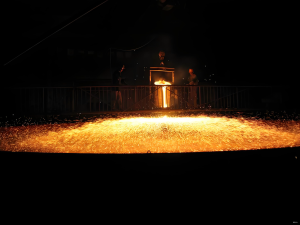
Batch inspection at the production line is what makes a mill test certificate meaningful for the shipped lot.
Frequently asked questions
Which SAE standard should a cast steel shot test report cite — J441 or J827?
The cast steel shot specification for this product range cites both SAE J441 and SAE J827. Because one catalogue line can carry both references, the test report should state the exact product family and grade tested, the standard number and edition applied, and the test method used for each reported property. A report that lists a standard without naming the grade it applies to cannot be used to accept or reject a shipment, and a buyer should not accept a company-level standard claim as a substitute for a batch-level document.
What hardness range should I write into the purchase order?
Write the band, the sampling method and the reporting convention, not a single target value. Cast steel shot is offered in HRC 40–50 and HRC 55–65 bands, grinding shot at 54–60 HRC, bearing steel grit at HRC 55–65, and stainless media at HRC 25–45. ISO 11124-3 sets hardness bands for high-carbon cast-steel shot, with values in the region of 40–51 HRC for shot. Specify how many particles are tested, whether the result is an individual reading or a batch average, and which instrument is used; otherwise two laboratories can report different values for the same lot.
How do I verify bulk density up to 6.0 g/cm³ for counterweight sand?
The counterweight sand specification lists bulk density grades from 3.8 to 6.0 g/cm³, true density of 7.0+ g/cm³, moisture below 0.5% and free-flowing behaviour. Bulk density depends on particle-size grading and on compaction, so agree the method before ordering: loose pour or vibrated, the container dimensions, the number of tamping or vibration cycles, and the moisture condition at test. A 6.0 g/cm³ figure quoted without a stated method cannot be compared with a competitor's figure, and it cannot be checked on delivery.
Can particle size and packaging be customized, and what is the minimum order?
Customization covers material type, particle size and grade range, hardness from HRC 40–65, chemical composition, and packaging in bulk jumbo bags, 25 kg bags or custom cartons, including OEM private label. The minimum order is 1 ton for standard grades and 3 tons for customized grades. For a customized grade, the sensible sequence is a small-batch trial against the actual workpiece or cavity, followed by bulk supply once the trial passes inspection.
Do you provide samples, and how long does bulk supply take?
Free samples of 1–5 kg are provided, with the buyer covering international courier freight of typically USD 30–80 depending on destination. Samples are prepared within 3–5 working days and can be matched to the required size, hardness and material grade, and the freight can be deducted from the first bulk order. Ready stock ships in 7–15 days; customized orders take 20–30 days. For first-time buyers, testing two or three grades on the actual machine is more informative than testing a single grade.
Are Chinese metal abrasives suppliers CE and REACH compliant?
CE marking and REACH are separate requirements, and neither is established by a quality management certificate. The supplier information published for this product range lists ISO 9001 quality management system certification and batch test documentation covering steel shot, steel grit, bearing steel grit and related media; a CE declaration or a REACH statement is a different document that must name the product family, the regulation and version, the issuing entity and the date. Buyers importing into the EU should request that document per SKU and confirm it matches the grade and packaging actually shipped. Where such a document cannot be produced, the claim should be treated as unverified rather than assumed. Samples, grade-specific specification sheets and the company brochure are available from Huiteng Metal Abrasives for buyers who want to run the checks in this guide against a specific grade.
Conclusion
Compliance for steel shot, foundry box weighting shot and counterweight sand is not a single certificate. It is a chain of four links: a product family and grade stated in writing, a standard number and edition attached to that family, a batch-level test report carrying chemistry, hardness, sieve analysis, microstructure and density, and an agreed test method for every value that will be checked on delivery.
The SAE J441 and SAE J827 references cited in the cast steel shot specification are a useful starting point, but they only become evidence when a report names the grade and the edition. The same discipline applies to counterweight sand, where a bulk density claim means little without a stated compaction method, and to flask-burying media, where thermal behaviour and reuse rate matter more than blast hardness.
For buyers entering the evaluation stage, the sequence that resolves most disputes is straightforward: define the function, lock the product family and grade, request the batch documents, verify hardness and size against a sieve analysis, agree the density method, run a sample or trial batch, and only then negotiate volume. Done in that order, the quotation stops being a price comparison and becomes an auditable specification.
For the full product range and technical data, the Huiteng metal abrasives brochure (PDF) is available for download.
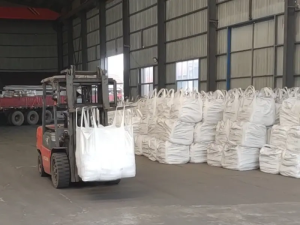
Packaging and batch labelling are part of the compliance chain: a report is only useful if the lot can be traced to the container.
Have Questions or Need More Details?
Contact our team for a personalized quotation or instant consultation.
Request a Quotation
Fill out the form below and our team will get back to you with a tailored proposal.
WhatsApp Direct Chat
Prefer to chat in real-time? Message us on WhatsApp for instant assistance & quick answers.
- Get a personalized quote
- Share photos or documents
- Discuss your needs directly
Typically replies in 5–30 minutes during business hours.