
Custom Li-ion Battery Pack & Power Bank Assembly: Critical Parameters

When a buyer commissions a custom lithium battery pack or a power bank, the assembly parameters determine everything. How cells are matched, how the protection circuit is designed, and how heat is managed decide whether the final product performs reliably or carries hidden risks. Understanding these parameters allows engineers and procurement specialists to write accurate specifications and evaluate factory proposals without guesswork. This technical guide explains the critical assembly parameters for custom Li-ion packs and power banks, using Hypercell (Shenzhen Hypercell Co., LTD) as a reference for how a battery assembling factory approaches these challenges. Hypercell has been producing custom Li-ion battery solutions since 2007.
Problem Definition: Why Assembly Parameters Matter
A custom battery pack is not simply a standard product with a different label. Custom battery packs and power banks are assembled to fit specific voltage, capacity, form factor, protection, and thermal requirements. As a result, assembly parameters become the critical link between buyer requirements and field performance.
Common buyer mistakes include specifying a cell chemistry without defining matching tolerances, choosing a generic protection circuit without checking the discharge profile, or underestimating thermal management until a heat test exposes a problem. These gaps can lead to capacity fade, premature failure, safety issues, or certification delays.
The core challenge is information asymmetry. Buyers know the function they need, but not always the assembly parameters required to achieve it. Factories know the process, but they need precise inputs to deliver consistent results. This guide bridges that gap by covering three foundational assembly parameters—cell matching, protection circuit design, and thermal management—and explaining how to translate them into actionable procurement specifications.
Industry Background
Custom lithium-ion batteries now power devices across industrial instruments, medical devices, IoT equipment, analyzers, and robotics or e-mobility platforms. Each application imposes different demands. Medical devices may require high reliability and strict thermal limits. Industrial instruments may need wide-temperature operation. IoT devices often prioritize compact form factors and low self-discharge.
Hypercell has operated in this field since 2007. The company runs three production factories in Guangdong with more than 1,200 staff and produces lithium-ion cylindrical batteries, lithium-ion polymer batteries, and lithium iron phosphate (LiFePO4) batteries with a daily output of 30MWh. That capacity reflects how central custom assembly has become across these industries.
As application diversity grows, assembly parameters increasingly shape final product performance. How a factory manages cell matching, protection circuits, and thermal behavior determines whether it can deliver consistent battery packs or merely a collection of parts that look good on a datasheet. For buyers, the difference often lies in whether the factory treats assembly parameters as a system, not as isolated components.
Detailed Solution: How a Capable Factory Addresses Assembly Parameters
Hypercell approaches assembly parameters through integrated engineering, assembly, and testing capabilities. The company’s R&D team includes doctors, masters, and senior engineers. Their research covers new materials, new technologies, and circuit management. For special environments, special performance, or special specifications, Hypercell develops batteries with specific characteristics and special shapes, including high specific capacity, high-rate discharge or fast charge, high temperature, and low temperature performance.
The packing technology department plays a central role in custom assembly. This department helps clients with professional technology integration in industrial design, electronics, power supply, software, structure, process, and testing. For buyers, this means assembly parameters are not treated as manufacturing trivia—they become engineering inputs that can be specified, discussed, and verified.
Quality and compliance form the foundation. Hypercell is a qualified ISO 9001:2015 and ISO 14001:2015 enterprise. The company also holds a RoHS certificate, a CB test certificate, and identification and classification reports for sea and air transport of goods. These certifications support compliance reviews for assembled battery packs and power banks.
Supply chain management is another critical layer. Hypercell maintains a well-established supply chain of local and global suppliers, each vetted through a rigorous selection process. Combined with vertical manufacturing capabilities, this network supports flexible, high-quality solutions and reduces the risk of potential supply disruptions.
For procurement teams, these capabilities matter because assembly parameters do not exist in isolation. They depend on materials, engineering, testing, and supply chain coordination working together to produce a custom battery pack that performs reliably in the field.
Step-by-Step Breakdown: Critical Assembly Parameters
Step 1: Cell Selection and Matching
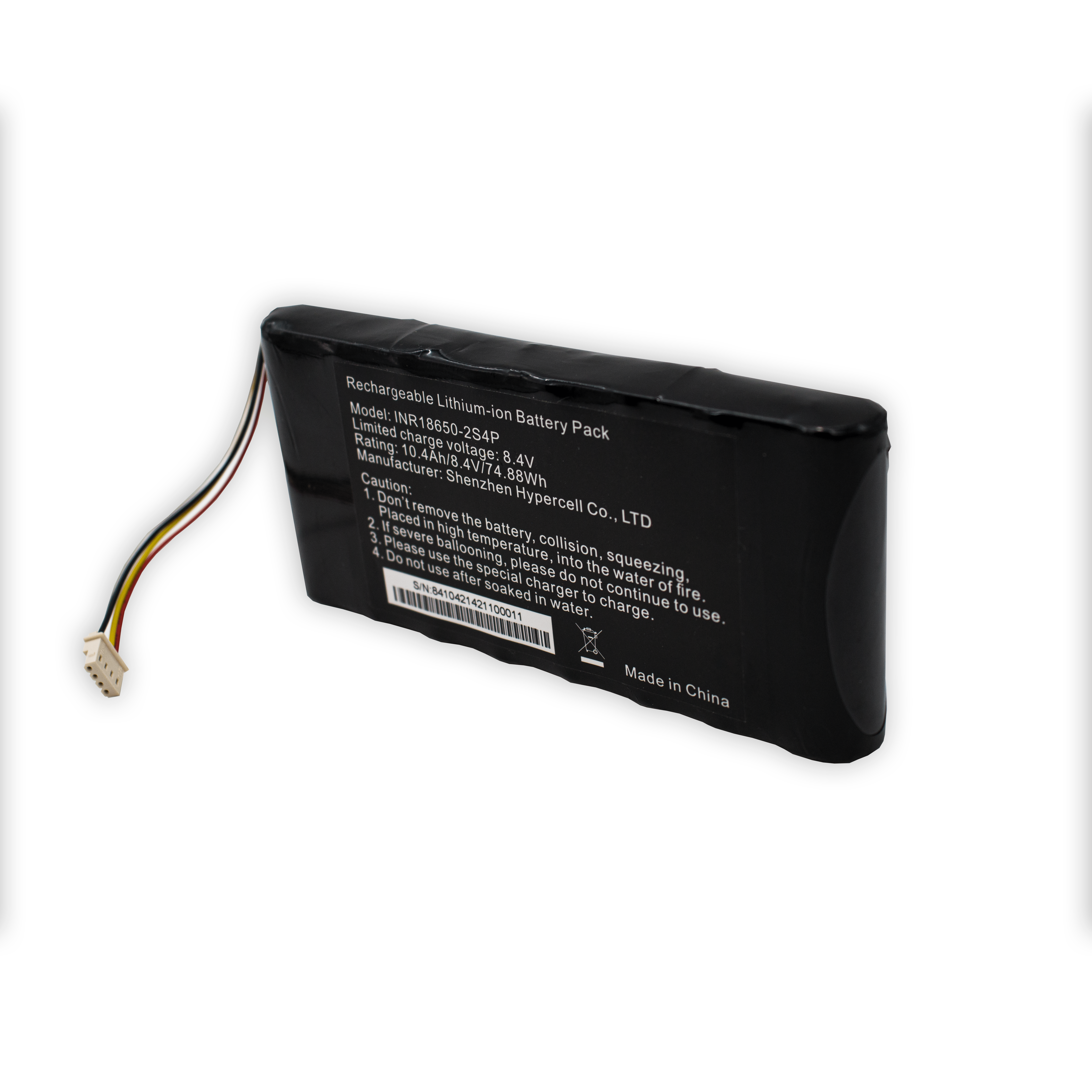
Assembly begins with the cell. For a custom pack, a factory selects the cell chemistry and form factor—cylindrical, polymer, or LiFePO4—then matches cells by capacity, internal resistance, and self-discharge. Matching is one of the most critical assembly parameters for custom battery packs. If cells are mismatched, the pack will experience uneven loading during charge and discharge cycles, leading to reduced performance and safety risks.
Buyers should define acceptable capacity and internal resistance deviation ranges, and ask how the factory sorts and tests incoming cells. Hypercell’s experience here includes research focused on special performance demands such as high specific capacity and high-rate discharge. The cell matching approach used by the factory directly affects how well the finished pack maintains consistent output over its cycle life.
Consider a configuration such as the INR18650-2S4P, which arranges cells in 2 series and 4 parallel. Assembly parameters determine how each parallel branch shares the load and how series connections are balanced. These are not abstract concerns; they are measurable requirements in a procurement specification.
Step 2: Protection Circuit Design
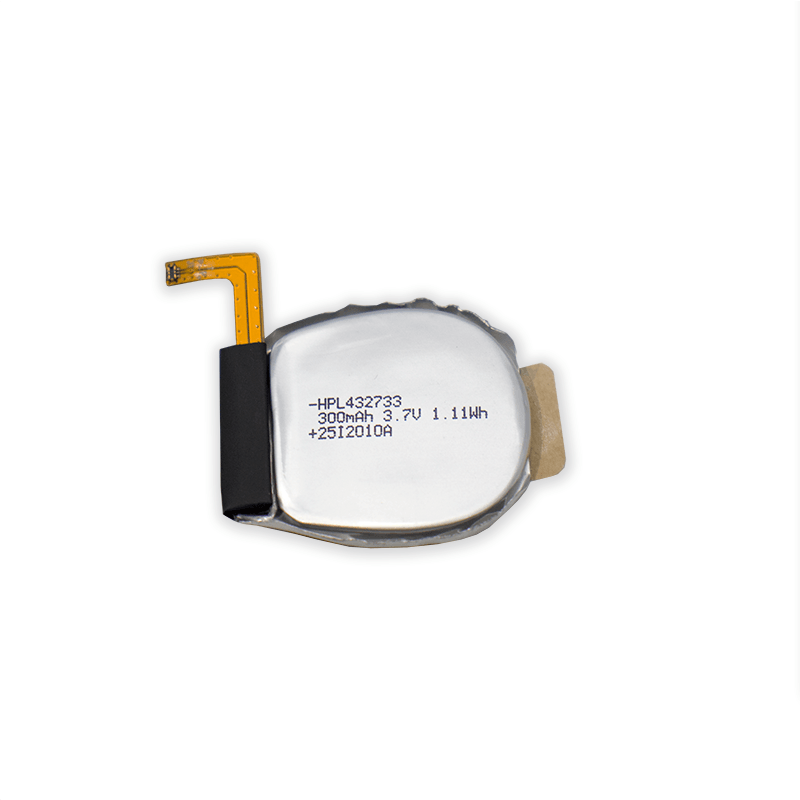
The protection circuit, often called a battery management system (BMS), is the second critical assembly parameter. It manages overcharge, over-discharge, overcurrent, and short-circuit protection. Depending on the application, it may also perform cell balancing and temperature monitoring.
Protection circuits for custom packs cannot be copied from a standard product. Their thresholds must match the actual operating window of the pack, which is defined by cell chemistry, capacity, and load profile. Power banks are particularly sensitive because they act as both a power source and a battery that needs protection.
Buyers should specify overvoltage and undervoltage thresholds, continuous and peak discharge currents, short-circuit response time, and whether balancing is required. These parameters should map to the factory’s engineering review. Hypercell’s packing technology department supports power supply and electronics integration, which directly relates to protection circuit design and validation.
Physical assembly of the protection circuit also matters. Component placement, trace routing, and thermal isolation affect how the circuit behaves under load. Prototype testing of circuit performance before volume production is a practical way to reduce risk.
Step 3: Thermal Management Planning

Thermal performance is the third critical assembly parameter for safety and service life. Li-ion cells generate heat during charge and discharge. If the pack cannot manage that heat, localized hot spots can lead to capacity fade, increased internal resistance, or in extreme cases, thermal runaway.
Thermal management parameters are not an afterthought—they need to be planned. Design inputs include cell spacing, thermal interface materials, airflow or heat spreader placement, and temperature sensor integration where needed. For custom battery packs and power banks, thermal design must balance electrical performance against mechanical size constraints.
Special applications may require more extreme operating ranges. For example, Hypercell’s INR18650S 3.6V2900mAh Li-ion battery features a wide operating temperature range from -40℃ to +85℃. Assembling such cells requires specific parameters to maintain performance across that window.
Buyers should state the expected operating temperature range, thermal test conditions, and any heat dissipation requirements in the procurement specification. The factory’s response should show how it accounts for the combined behavior of cells, circuits, and structural components under thermal load.
Step 4: Structural Integration and Mechanical Assembly
Structural integration turns electrical and thermal designs into a manufacturable physical product. This includes cell holders, busbars, welding methods, enclosure materials, and sealing. It also covers the interface between the battery pack and the final device.
Mechanical assembly parameters must satisfy both manufacturability and field reliability. Tolerances, vibration resistance, and moisture protection all influence long-term pack behavior. A medical device battery, for instance, may require high sealing standards, while an industrial instrument battery may need enhanced vibration resistance.
Hypercell’s offering of special shape battery solutions illustrates how structural integration often determines whether a standard cell design can fit into a constrained space. The packing technology department’s support for industrial design and structure integration is especially relevant at this stage.
Step 5: Testing and Validation
The final step verifies that the assembly parameters meet the intended requirements. Testing can range from cell-level sorting to pack-level capacity, internal resistance, cycle, and safety tests. For custom orders, the validation plan should be agreed upon with the buyer.
Buyers reviewing a factory proposal should ask how test methods are defined, documented, and reported. For applications that require regulatory approval, test evidence also supports compliance review. Hypercell’s certification portfolio—including ISO 9001:2015, ISO 14001:2015, RoHS, CB test certificate, and transport identification reports—provides an auditable framework for this verification process.
Testing is not a one-time event. It spans prototype, pilot, and mass production stages, ensuring assembly parameters remain consistent across the entire production batch rather than only in the first few samples.
Use Cases: How Assembly Parameters Shift by Application
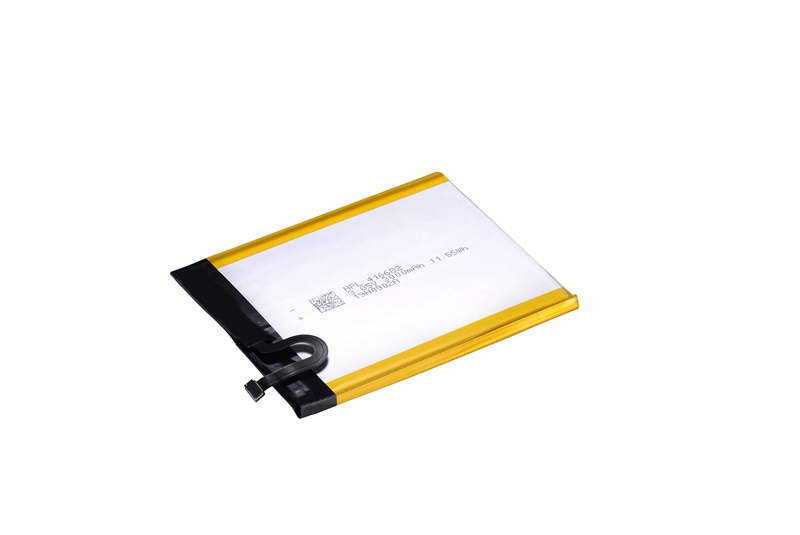
Industrial instruments: Industrial instruments often require battery packs that maintain stable output in temperature-variable and vibration-prone environments. Assembly parameters must prioritize wide-temperature cells, reinforced structural integration, and reliable protection circuits.
Medical devices: Medical devices demand high reliability and strict thermal limits. Custom assembly must meet high standards for sealing, test traceability, and electrical performance. Hypercell’s experience in medical device batteries is reflected in its R&D and packing technology department’s ability to support these specialized requirements.
IoT devices: IoT devices often need compact, low-self-discharge packs with form factors that fit limited spaces. Assembly parameters focus on space efficiency, cell matching, and low-power protection circuits. Hypercell’s product lines cover IoT device applications.
Analyzers: Instruments such as analyzers may require stable voltage output and performance under specific environmental conditions. Assembly parameters include precise voltage regulation, thermal management, and consistent cell matching.
Robotics and e-mobility: Robotics and e-mobility platforms require high discharge rates and effective thermal management to handle heat generation. Cell matching and protection circuit design for high-rate discharge are central parameters. Hypercell’s research covers high-rate discharge batteries that can support these demands.
In all these cases, the pattern is the same: the application defines the priority of assembly parameters. Buyers who understand this can ask sharper questions and make more informed procurement decisions.
Comparison Table: Assembly Parameters by Battery Type
The table below compares three Li-ion battery types available from Hypercell against key assembly parameters. It is intended to help buyers understand how battery type selection influences assembly complexity and system design requirements.
| Assembly Parameter | Li-ion Cylindrical | Li-ion Polymer | LiFePO4 |
|---|---|---|---|
| Shape flexibility | Fixed cylindrical form factor; assembly uses cell holders | Wide range of shapes and sizes; suits thin or custom profiles | Fixed form factor; assembly similar to cylindrical packs |
| Typical thermal behavior | Usually requires structured airflow or heat management in large packs | Relatively high surface area aids heat dissipation; thermal planning still needed | Generally more thermally stable; thermal management demands are usually moderate |
| Protection circuit considerations | Often involves balancing circuits for multiple series/parallel cells | Frequently used in space-constrained designs; circuit must match form factor | Different voltage window; protection thresholds must be adjusted accordingly |
| Common custom assembly scenarios | Industrial instruments, robotics, e-mobility | Power banks, thin devices, medical devices | Applications requiring long cycle life and thermal stability |
Note: Hypercell produces Li-ion cylindrical, Li-ion polymer, and LiFePO4 batteries. Buyers should discuss parameter choices with factory engineers based on their specific application requirements.
FAQ
1. What certifications should a custom battery pack assembly factory have?
Certifications indicate that a factory follows auditable quality and environmental management systems. Hypercell is a qualified ISO 9001:2015 and ISO 14001:2015 enterprise. The company also holds a RoHS certificate, a CB test certificate, and identification and classification reports for sea and air transport of goods. Buyers should treat such certifications as baseline qualifications, not as the only indicator of assembly capability.
2. How does a factory’s R&D and assembly team support custom parameters?
A strong engineering team translates procurement requirements into manufacturable assembly parameters. Hypercell’s R&D team includes doctors, masters, and senior engineers, with research covering new materials, new technologies, and circuit management. The company’s packing technology department helps clients with industrial design, electronics, power supply, software, structure, process, and testing integration. This collaborative model supports specialized assembly for custom battery packs and power banks.
3. What drives the cost of custom battery pack assembly?
Cost drivers in custom battery pack assembly typically include cell selection and matching complexity, protection circuit design and component costs, thermal management requirements, structural integration complexity, and the scope of testing and validation. Because specific pricing depends on each project’s parameters, buyers should provide clear requirement descriptions to obtain accurate quotations. Comparable quotes start with defined assembly parameters at the inquiry stage.
4. Can buyers request samples to validate assembly parameters before volume orders?
Validating assembly parameters through samples and pilot runs before volume orders is a common step in custom procurement. Hypercell provides customized Li-ion battery solutions; buyers can contact the company directly to discuss sample and validation options for their assembly parameters. Prototype or pilot production helps reveal issues in cell matching, protection circuit behavior, or thermal management before scaling up.
5. How does assembly complexity affect lead time?
Assembly complexity influences the time required for production setup, testing, and validation. Hypercell operates three production factories in Guangdong with a daily output of 30MWh, which provides capacity for custom orders. Lead time also depends on cell availability and specific testing requirements. Buyers should discuss timelines early in the project to allow sufficient validation time.
Conclusion
Assembly parameters for custom lithium battery packs and power banks are not manufacturing details. They are the core of the procurement specification. Cell matching, protection circuit design, and thermal management interact with each other. If any parameter is poorly defined or inadequately validated, the final product may face performance degradation or safety risks.
Buyers who can speak clearly about these parameters are better positioned to evaluate factory proposals and make decisions with confidence. Hypercell combines R&D, packing technology, quality certification, and vertical manufacturing to support custom Li-ion battery assembly. To discuss specific requirements, buyers can contact Hypercell at info@hypercellbattery.com or visit www.hypercellbattery.com. Tel: +86 755 2376 4134. Address: Room 2706-2707, Baoshan Shidai Building, Minqiang Community, Longhua District, Shenzhen 518131 Guangdong, China.
As applications continue to demand more from battery performance, the importance of assembly parameters will only grow.
Have Questions or Need More Details?
Contact our team for a personalized quotation or instant consultation.
Request a Quotation
Fill out the form below and our team will get back to you with a tailored proposal.
WhatsApp Direct Chat
Prefer to chat in real-time? Message us on WhatsApp for instant assistance & quick answers.
- Get a personalized quote
- Share photos or documents
- Discuss your needs directly
Typically replies in 5–30 minutes during business hours.