
Decoding Li-ion Battery Parameters and Assembly Process: A Buyer's Guide to Quality Impact
Decoding Li-ion Battery Parameters and Assembly Process: A Buyer's Guide to Quality Impact

For industrial buyers, interpreting technical specifications of lithium-ion batteries and understanding how assembly processes affect final product quality are critical steps in making informed procurement decisions. Misreading a parameter or underestimating process variation can lead to field failures, safety incidents, or project delays. This article provides a systematic framework for decoding key battery parameters and linking them to the assembly methods that determine real-world performance and reliability.
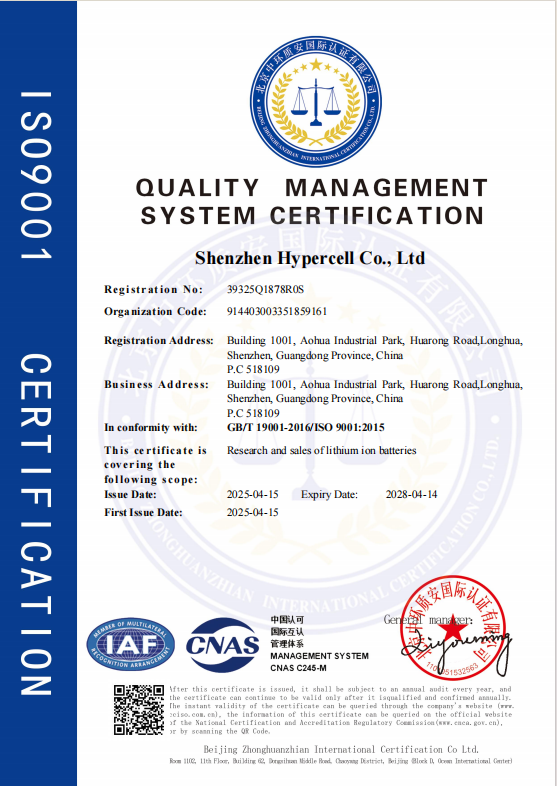
Shenzhen Hypercell Co., LTD (Hypercell), a lithium-ion battery manufacturer established in 2007 with headquarters in Shenzhen and factory operations in Dongguan, has served global clients across industrial instruments, medical devices, and the Internet of Things (IoT) for over 18 years. The company holds ISO9001:2015 and ISO14001:2015 certifications, maintains a daily output of 30 MWh across three factories in Guangdong, and employs a staff of over 1,200. These operational facts provide a benchmark for evaluating what a capable battery assembling factory should deliver.
The Procurement Challenge: What You Don’t See Behind the Datasheet
A typical battery datasheet lists voltage, capacity, discharge current, internal resistance, operating temperature, and cycle life. Yet two batteries with identical headline numbers can behave very differently in the field. The reason lies in the assembly process: cell matching, welding techniques, Battery Management System (BMS) configuration, and final aging tests. Buyers who only compare paper specs often discover hidden quality gaps after deployment.
The core problem is information asymmetry. The factory knows exactly how it assembles a pack, but the buyer may not know which process steps are critical to their application. This guide aims to close that gap by translating technical parameters into process requirements and showing how an experienced manufacturer like Hypercell ensures specification compliance.

Industry Background: Why Assembly Quality Matters More Than Cells
The lithium-ion battery industry has matured, with high-quality cells from top-tier suppliers becoming widely available. The differentiating factor for a battery pack’s performance and safety is no longer just the cell brand, but the pack assembly quality. Poor nickel strip welding, insufficient insulation, unbalanced cell voltage, or inadequate thermal management can cause early capacity fade, swelling, or even thermal runaway.
Applications such as medical devices, industrial instruments, and IoT devices demand high reliability. A battery failure in a patient monitor or a factory robot can have serious consequences. Therefore, selecting a battery assembling factory that follows strict quality management systems and has proven process control is paramount. Hypercell, as an ISO9001:2015 and ISO14001:2015 certified enterprise, demonstrates its commitment to systematic quality and environmental management. The company also holds RoHS, CB, and UN transport certifications (including Identification and Classification Reports for Sea Transport and Air Transport of Goods), which are often prerequisites for medical and industrial equipment exports.
Detailed Solution: How Hypercell’s Technical Capabilities Address Buyer Concerns
Hypercell provides three primary lithium-ion product lines: Li-ion Cylindrical Batteries (e.g., INR18650, INR21700), Li-Polymer Batteries (e.g., HPL series), and Lithium Iron Phosphate (LiFePO₄) Batteries. Each chemistry and form factor suits different applications, and Hypercell’s R&D team—composed of doctors, masters, and senior engineers—is equipped to customize solutions for special environments including high-rate discharge/fast charge, high temperature, low temperature, and special shapes.
One specific product example is the INR18650S 3.6V 2900mAh Li-ion Battery, which is explicitly listed as a wide-temperature model rated from -40°C to +85°C. This specification demonstrates Hypercell’s ability to engineer batteries for extreme conditions, a common need in industrial and outdoor IoT applications.
The company’s packing technology department handles professional technology integration across industrial design, electronics, power supply, software, structure, process, and testing. This vertical integration means that when a buyer submits a custom requirement, Hypercell can manage the entire development cycle—from mechanical design to BMS programming—reducing project risk and time-to-market.
Hypercell’s supply chain consists of local and global suppliers vetted through a rigorous selection process. Combined with in-house manufacturing, this network offers flexible, high-quality solutions with low risk of supply disruptions. The daily output of 30 MWh across three factories indicates scalable production capacity for both low-volume prototypes and high-volume orders.
Step-by-Step Breakdown: Interpreting Key Parameters and Their Process Implications
1. Capacity (Ah / mAh)
Parameter: The amount of charge a battery can deliver at rated voltage. For example, the INR18650S offers 2900 mAh at 3.6V.
Process Impact: Capacity is determined by cell selection and matching. During assembly, cells must be sorted within tight voltage and internal resistance windows to ensure balanced charging. Factories that skip cell matching may produce packs with high initial capacity but rapid degradation.
2. Voltage (Nominal & Cut-off)
Parameter: Nominal voltage (e.g., 3.6V for cylindrical, 3.7V for Li-Polymer) and charge/discharge cut-off voltages define the operating window.
Process Impact: The BMS must be programmed with correct cut-off thresholds to prevent overcharge or over-discharge. An experienced manufacturer will calibrate BMS parameters based on the cell chemistry and number of series cells (e.g., 5S1P = 5 cells in series). Incorrect BMS settings are a common cause of premature failure.
3. Internal Resistance (AC/DC IR)
Parameter: Lower internal resistance (typically milliohms) indicates better power delivery and less heat generation.
Process Impact: Welding quality—especially spot welding of nickel strips to cell terminals—directly affects total pack resistance. High resistance at weld joints generates localized heat, leading to cell imbalance or safety issues. Hypercell’s strict quality control ensures consistent weld contact resistance.
4. Discharge Rate (C-rate)
Parameter: Maximum continuous and peak discharge current relative to capacity. A 2900 mAh cell rated at 3C can deliver 8.7A continuously.
Process Impact: High-rate cells require thicker interconnects and careful thermal design. The pack assembly must include adequate insulation and, if needed, heat sinks. Hypercell’s R&D team can design for high-rate applications through material selection and structure.
5. Operating Temperature Range
Parameter: Standard range is typically -20°C to +60°C; wide-temperature cells like INR18650S extend to -40°C to +85°C.
Process Impact: Achieving wide temperature range involves special electrolyte and separator materials. At the pack level, the BMS may need to limit current at low temperatures to avoid lithium plating. Hypercell’s ability to supply cells pre-qualified for wide temperature reduces validation risk for the buyer.
6. Cycle Life
Parameter: Number of charge/discharge cycles before capacity drops to 80% of initial.
Process Impact: Cycle life depends on cell chemistry, but also on assembly quality: consistent compression pressure, BMS protection algorithms, and formation/aging processes. Hypercell’s aging test procedures help identify early weak cells before shipment.
Use Cases Across Industries
Hypercell’s product portfolio covers multiple sectors. Below are representative applications and the battery types typically involved.
| Industry | Common Battery Type | Key Requirements | Hypercell Solution Example |
|---|---|---|---|
| Industrial Instruments | Li-ion Cylindrical (18650, 21700) | Long cycle life, high reliability, wide temperature | INR18650S 3.6V 2900mAh wide-temperature |
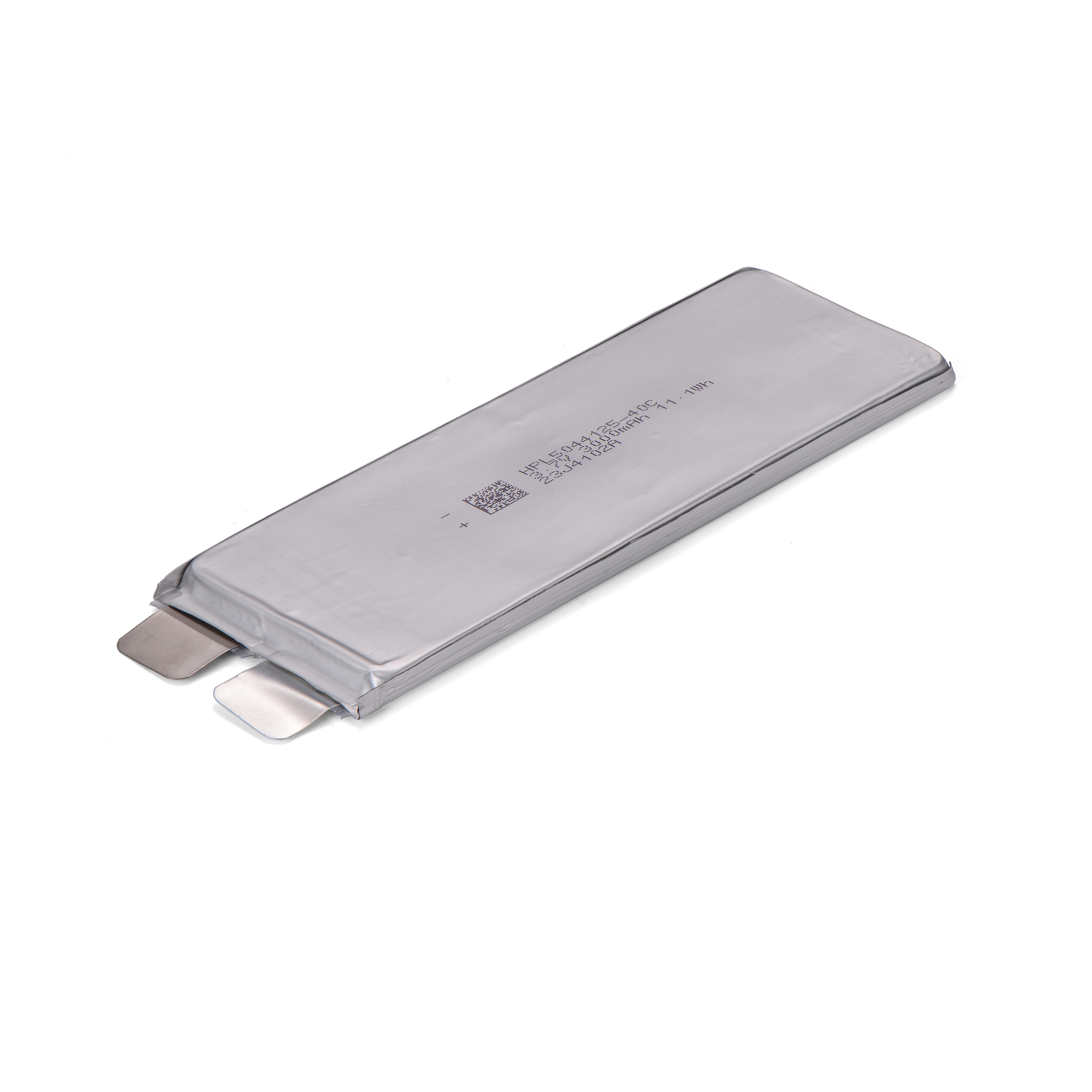
| Medical Devices | Li-Polymer or Li-ion Cylindrical | Safety certifications, low self-discharge, custom shape | HPL5044125-40C Li-Polymer; CB-certified packs |
| IoT Devices | Li-Polymer (thin, flexible) | Ultra-slim form factor, low cost, high energy density | HPL432733 3.7V 300mAh for compact trackers |
| Analyzer & Robot & E-Mobility | Li-ion Cylindrical (multi-series/parallel) | High capacity, high-rate discharge, BMS communication | INR18650-5S1P, INR21700-13S10P packs |
Each use case highlights how technical parameters translate into assembly requirements. For instance, a medical device battery demands stringent isolation and certification (ISO, CB), whereas an e-mobility pack requires robust mechanical design to withstand vibration.
Comparison: Cylindrical vs. Li-Polymer vs. LiFePO₄ – Parameters and Process Considerations
The following table compares the three battery types offered by Hypercell based on general industry knowledge and publicly recognized characteristics. Note that specific numbers vary by model and manufacturer.
| Parameter | Li-ion Cylindrical (e.g., 18650) | Li-Polymer (e.g., HPL series) | LiFePO₄ |
|---|---|---|---|
| Typical Nominal Voltage | 3.6V – 3.7V | 3.7V | 3.2V – 3.3V |
| Energy Density | High | Medium-High (flexible shape) | Medium |
| Cycle Life | 500 – 1000 cycles | 300 – 800 cycles | 2000+ cycles |
| Safety | Good (with robust casing) | Fair (soft pouch, easier to swell) | Excellent (very stable chemistry) |
| Form Factor Flexibility | Standard diameters (18mm, 21mm) | Ultra-slim, custom shapes | Prismatic or cylindrical |
| Assembly Complexity | Moderate – spot welding, group balancing | Higher – pouch stacking, pressure contact | Moderate – similar to cylindrical |
| Common Applications | Power tools, e-bikes, industrial | Thin devices, wearables, medical | Energy storage, UPS, solar |
| Hypercell Example Model | INR18650S 3.6V 2900mAh | HPL5044125-40C | Available on request |
This comparison helps buyers narrow down the chemistry and form factor before engaging a battery assembling factory. A reliable factory will actively guide customers to the most suitable type based on application constraints.
Frequently Asked Questions (FAQ)
Q1: What certifications should a medical device battery supplier hold to ensure regulatory compliance?
A: For medical devices, certifications such as ISO 9001 (quality management) and ISO 14001 (environmental management) are foundational. Additionally, a battery used in exported medical equipment typically requires CB Test Certificate, RoHS compliance, and UN transport certifications (Identification and Classification Report for Sea Transport and Air Transport of Goods). Hypercell holds all these certifications, which can reduce the buyer’s qualification workload.
Q2: How does internal resistance affect battery pack performance, and what can the factory do to minimize it?
A: High internal resistance causes voltage sag under load and generates heat. To minimize pack resistance, the assembly process must ensure low-resistance welds, use thick nickel strips or pure nickel for high-current packs, and maintain consistent contact pressure in battery holders. Factories with strict quality control, like Hypercell, test and match cells with similar internal resistance before assembly.
Q3: On a limited budget, what is the most cost-effective battery type for an IoT sensor with moderate cycle life requirement?
A: For cost-sensitive IoT applications with moderate cycle life (300-500 cycles), Li-Polymer batteries offer a balance of slim shape and reasonable price. An example is Hypercell’s HPL432733 3.7V 300mAh cell, which is compact and adequate for low-power wireless devices. Cylindrical cells may be cheaper per watt-hour but require more assembly space.
Q4: Can I request samples before committing to a large order, and how long does it take?
A: Yes, most custom battery projects begin with samples. Hypercell provides sample development based on the buyer’s specifications. Typical lead time for initial samples depends on complexity, but having in-house R&D and packing technology departments enables faster iteration. After sample approval, mass production scales across the company’s three factories with 30 MWh daily output capacity.
Q5: What is the typical lead time for a custom Li-ion battery pack order?
A: Lead time varies by design complexity and order volume. For standard configurations using existing cells (e.g., INR18650-based packs), production can be faster. Custom battery management system (BMS) programming or special mechanical housing may extend lead times. Contact Hypercell with your specifications to receive a tailored timeline and discuss sample requirements.
Ready to Source Reliable Li-ion Batteries?
Hypercell is a leader in customized Li-ion battery solutions for industrial, medical, and IoT applications. With 18 years of experience, ISO9001/14001 certifications, and a dedicated R&D team, we ensure your technical parameters are translated into quality packs. Request a quote or sample today.
📧 info@hypercellbattery.com | 🌐 www.hypercellbattery.com | 📞 +86 755 2376 4134
Address: Room 2706-2707, Baoshan Shidai Building, Minqiang Community, Longhua District, Shenzhen 518131, Guangdong, China