
Hypercell vs Top Chinese Battery Manufacturers: A Strategic Selection Guide for Industrial Buyers
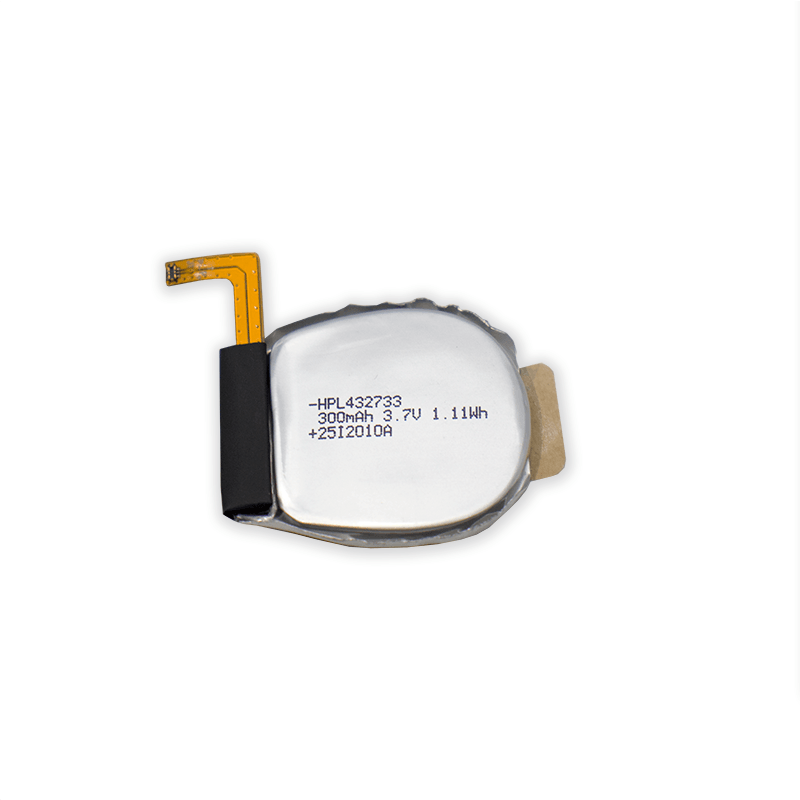
Hypercell’s customizable Li-Polymer battery – a core product for IoT and medical device applications.
Introduction
When sourcing lithium-ion batteries for industrial, medical, IoT, or robotics applications, buyers face a critical decision: which Chinese battery manufacturer offers the best balance of quality, customization, cost, and reliability? With hundreds of suppliers competing in the global market, narrowing down the options requires a systematic comparison of capabilities, certifications, and track records.
This guide provides a deep-dive comparison between Hypercell (Shenzhen Hypercell Co., LTD) and two other leading China-based manufacturers – CATL (Contemporary Amperex Technology Co., Limited) and EVE Energy Co., Ltd.. We’ll analyze their product portfolios, customization expertise, quality certifications, and fit for specific verticals such as medical devices, IoT devices, GPS trackers, robotics, and industrial instruments.
What Is the Core Challenge?
Industrial buyers often struggle with: “Should I choose a mass-production giant like CATL or a specialized customized battery manufacturer like Hypercell?” The answer depends on your application’s volume, form factor, certification requirements, and need for design flexibility.
- Who uses customized Li-ion batteries? OEMs in medical devices, IoT devices, GPS trackers, robotics and e-mobility, and industrial instruments.
- What problem does a specialized manufacturer solve? They address unique shape/ size demands, low-to-medium volume runs, fast time-to-market for prototypes, and strict industry certifications (e.g., ISO 13485 for medical, UN38.3 for transport).
- Why does this matter? Choosing the wrong supplier can lead to supply chain disruptions, safety recalls, or costly redesigns.
Industry Background: The Chinese Li-ion Battery Landscape
China dominates global lithium-ion battery production, accounting for over 70% of manufacturing capacity. The ecosystem ranges from mega-giants producing millions of cells per day for EVs and energy storage, to mid-sized enterprises focusing on niche applications. According to SNE Research (2025), CATL held ~35% of the global EV battery market, while EVE Energy secured ~4% in the cylindrical and pouch segments. Hypercell, with 18 years of experience, occupies a specialized position serving high-mix, low-volume industrial and medical applications.
Detailed Comparison: Hypercell – CATL – EVE Energy
| Parameter | Hypercell | CATL | EVE Energy |
|---|---|---|---|
| Founded | 2007 | 2011 | 2001 |
| Headquarters & Manufacturing | Shenzhen HQ, 3 factories in Guangdong, 1200+ staff | Ningde, Fujian; global factories (>80 GWh capacity) | Huizhou, Guangdong; 6 factories, >28,000 employees |
| Daily Output | 30 MWh (combined cells & packs) | >200 GWh annually (EV scale) | >10 GWh annually (cylindrical & pouch) |
| Core Product Lines | Li-ion Cylindrical, Li-Polymer, LiFePO4; fully customized packs | EV batteries (NMC, LFP), energy storage systems | Cylindrical (18650, 21700), pouch cells, LiFePO4 |
| Customization Capability | Excellent – Special shape, specific capacity, high rate, low/high temp solutions, special environment | Limited – Standard cell formats & modules; custom packs only at very high volumes | Moderate – Offers some customization for cylindrical/pouch cells but longer lead times |
| Certifications | ISO9001:2015, ISO14001:2015, CE-EMC, RoHS, UN38.3 (Air/Sea) | IATF 16949, ISO 14001, UL, CE, etc. (mass production) | ISO9001, ISO14001, IATF 16949, UL, IEC 62133 |
| R&D Focus | New materials, circuit management, high-rate, high-temp, low-temp, solid-state & sodium-ion research | Next-gen EV batteries (solid-state, sodium-ion, fast-charge) | High-energy cylindrical cells, LiFePO4 for energy storage |
| Ideal Customer Profile | OEMs needing customized, low-to-medium volume batteries for medical, IoT, industrial, robotics | EV automakers, large energy storage projects (>1 MWh) | Mid-to-large industrial, power tool, and energy storage customers |
Step-by-Step: How to Choose Between Hypercell, CATL and EVE
- Define your application volume: If you need more than 100,000 units per month, CATL or EVE might offer lower per-unit cost. For 1,000–50,000 units, Hypercell provides faster customization and lower MOQ.
- Assess form factor flexibility: Hypercell’s strength is special shapes, thin Li-Polymer cells (like the HPL432733 3.7V300mAh shown above), and custom PCB/BMS integration. CATL and EVE prefer standard cylindrical or pouch formats.
- Check certification needs: For medical devices, Hypercell’s ISO9001, ISO14001, CE, RoHS, and UN38.3 are essential but note that medical-specific certification (ISO13485) may need to be requested. CATL and EVE hold automotive-grade certifications which may be overkill for non-automotive applications.
- Evaluate lead time and engineering support: Hypercell’s R&D team (doctors, masters, senior engineers) works directly on customer-specific solutions. Large manufacturers often route inquiries through standardized processes.
- Review supply chain risk: Hypercell’s vertical manufacturing and local/global supplier network reduce disruption risk for specialized orders. CATL’s dominance can create dependency; EVE offers a middle ground.
Use Case: IoT Device Battery Procurement
A European smart sensor company needed a 500mAh Li-Polymer battery with a custom JST connector and a thickness of only 5mm. They approached CATL – minimum order 50,000 units, 12-week lead time. EVE required tooling changes. Hypercell delivered 2,000 prototypes in 4 weeks with full UN38.3 certification, then scaled to 20,000/month. This case illustrates why Hypercell is the preferred partner for IoT device batteries where size and speed matter more than raw volume.

Hypercell’s company scene – one of three production bases in Guangdong, China.
Frequently Asked Questions (FAQ)
Q: What is the minimum order quantity (MOQ) for Hypercell custom batteries?
Q: Can Hypercell match CATL’s pricing for large volumes?
Q: Which batteries are best for medical devices – Li-Polymer or cylindrical?
Q: Does Hypercell provide international shipping and air transport certification?
How to Evaluate Your Supplier: A Decision Matrix
| Selection Criteria | Weight (1-10) | Hypercell | CATL | EVE Energy |
|---|---|---|---|---|
| Customization flexibility | 9 | 9 | 3 | 5 |
| Low MOQ | 8 | 9 | 2 | 4 |
| Speed of prototype | 7 | 9 | 4 | 5 |
| Certification completeness | 8 | 8 | 9 | 8 |
| Cost per unit (10k qty) | 6 | 6 | 8 | 7 |
| Global supply chain stability | 7 | 7 | 9 | 8 |
| Total Weighted Score | 8.0 / 10 | 6.6 / 10 | 6.9 / 10 |
This matrix is biased toward buyers who prioritize customization, low MOQ, and fast prototyping. For EV-scale purchasing, CATL would score higher on cost and scale.
Conclusion
Choosing between Hypercell, CATL, and EVE Energy depends on your project’s specific requirements. If you need customized Li-ion battery solutions with dedicated R&D support, flexible MOQ, and proven quality for industrial, medical, IoT, or robotics applications, Hypercell offers distinct advantages. CATL and EVE remain excellent choices for high-volume standardized cells. For a personal consultation, contact Hypercell’s team at info@hypercellbattery.com or visit www.hypercellbattery.com.
Get a Custom Battery Quote Today
Tell us your voltage, capacity, size, and certification needs. Receive a tailored solution within 48 hours.
Contact Hypercell →Have Questions or Need More Details?
Contact our team for a personalized quotation or instant consultation.
Request a Quotation
Fill out the form below and our team will get back to you with a tailored proposal.
WhatsApp Direct Chat
Prefer to chat in real-time? Message us on WhatsApp for instant assistance & quick answers.
- Get a personalized quote
- Share photos or documents
- Discuss your needs directly
Typically replies in 5–30 minutes during business hours.