
Matching Power Bank and Lithium Battery Assemblies to Consumer, Industrial, and Medical Use Cases
A power bank, a handheld industrial analyzer, and a portable medical monitor can all be built on lithium-ion cells, but they cannot all be built on the same assembly. The cell is the starting point, not the answer. What separates a reliable product from a field failure is the format, the protection electronics, the mechanical structure, and the process control wrapped around that cell.
This application guide maps three assembly families to three operating environments so a buyer can start from the use case instead of starting from a price list. The three families are lithium-ion polymer assemblies, lithium-ion cylindrical assemblies, and LiFePO4 assemblies. The three environments are consumer electronics and portable charging, industrial tools and instruments, and medical devices. Shenzhen Hypercell Co., LTD is a battery manufacturer established in 2007, headquartered in Shenzhen with production in Dongguan, Guangdong, and it produces all three families — which means the comparison below can be made from one qualified source rather than from three unrelated quotations.
Every product, capability, and certificate named in this guide is taken from Hypercell's published range and quality documentation. Where a purchasing decision would normally need a performance figure, a certificate, or a test result that is not published, this guide states what to request rather than supplying an estimate.
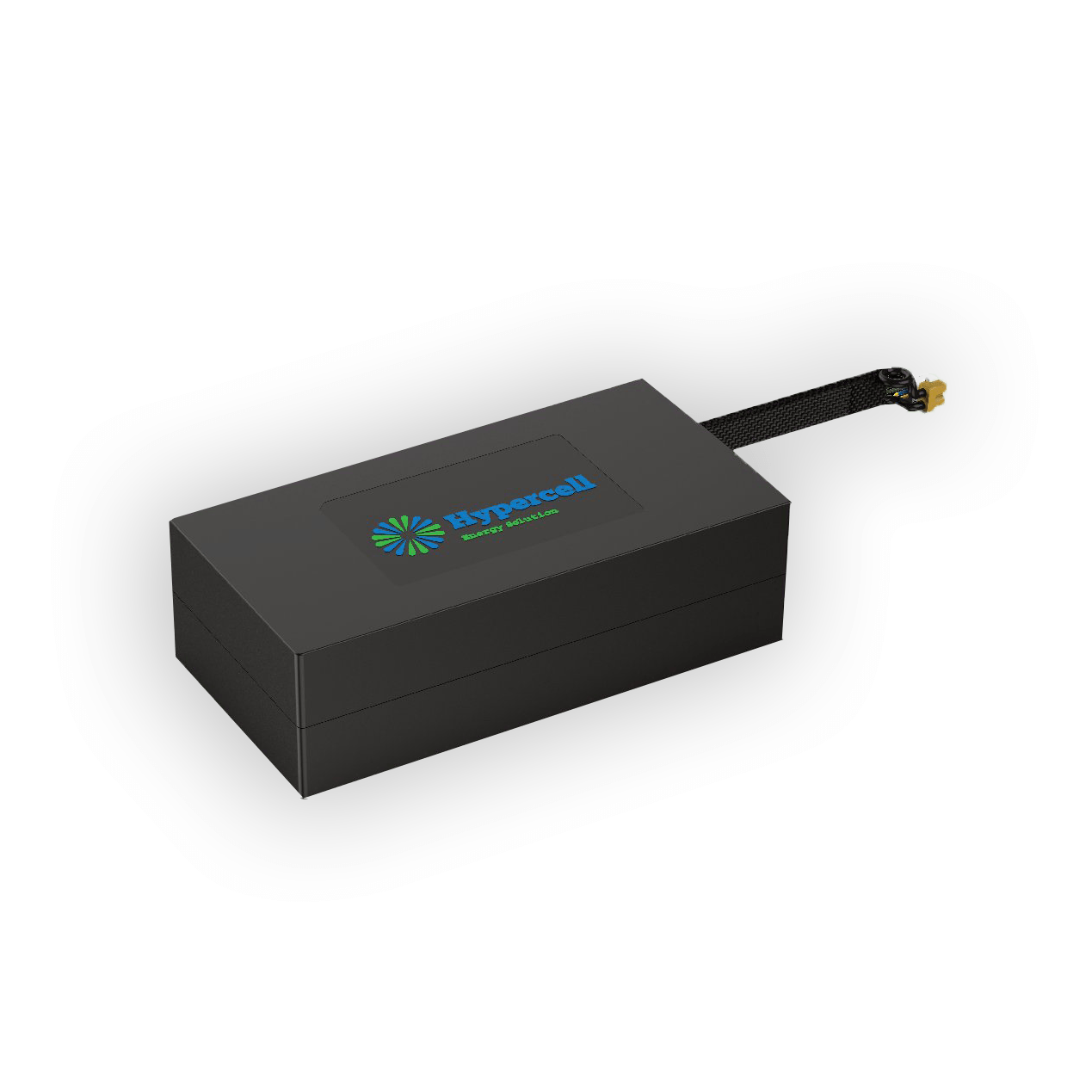
Problem Definition: Most Battery Sourcing Problems Are Matching Problems
A buyer sends a request for quotation for "a 3.7V lithium battery." Three suppliers respond with three prices that cannot be compared, because each supplier assumed a different product. One quoted a thin polymer cell suitable for a pocketable device. One quoted a multi-cell cylindrical pack sized for a power tool. One quoted a LiFePO4 pack. All three answers are correct and all three are wrong, because the request never described the environment, the duty cycle, or the documentation the buyer has to be able to prove.
The mismatch usually surfaces in one of three ways:
- Mechanical mismatch. A thin polymer assembly specified for a pocketable consumer product is reused in a hand tool, where vibration and crush loads are part of normal operation. The assembly fits the enclosure and fails the environment.
- Duty-cycle mismatch. A pack sized for intermittent, low-current draw is placed in a device that demands high-rate discharge, and the design has no margin left when the device is used at the edge of its specification.
- Documentation mismatch. A buyer assumes that a supplier's general quality certificates automatically cover a medical device programme, when in fact the applicable standard for that device class has to be confirmed separately and in writing.
There is an opposite error that costs just as much: over-specifying. Applying the heaviest available chemistry and the largest cell format to every project adds size, weight and cost to products that never needed them. Matching is a two-directional discipline — the goal is the smallest assembly that still satisfies the environment, the load profile, and the documentation envelope.
Industry Background: Why the Three Segments Diverged
Consumer electronics, industrial equipment, and medical devices all consume lithium-ion cells, but they optimise for different things. Consumer products optimise for form factor, weight, and charging speed, because the product is bought on appearance and convenience. Industrial equipment optimises for robustness and operating range, because the product is bought on uptime. Medical devices optimise for repeatability and traceability, because the product is bought on trust and has to survive an approval process.
Hypercell's stated industry coverage — industrial instruments, medical devices, and the internet of things — sits directly across these three segments, which is why the factory's range includes more than one assembly family. A manufacturer serving only consumer accessories would not need wide-temperature cylindrical cells. A manufacturer serving only industrial accounts would not need the small polymer formats that make a slim consumer product possible.
The boundary between the segments is also blurring in one direction: portable charging is no longer purely a consumer category. Power banks are now used as field power for instruments, as backup in mobile carts, and as part of equipment kits. That does not change the physics, but it changes the procurement question. A buyer who needs field-grade portable power is not really shopping for a consumer power bank — they are shopping for an industrial assembly that happens to deliver portable power, and the specification should reflect that.
Detailed Solution: The Three Assembly Families and What Each Is Built to Solve
Hypercell manufactures lithium-ion cylindrical batteries, lithium-ion polymer batteries, and lithium iron phosphate (LiFePO4) batteries, with a daily output of 30MWh across three production factories in Guangdong. The three families are not interchangeable grades of the same product; they solve different problems.
Lithium-ion polymer assemblies: built for shape and space
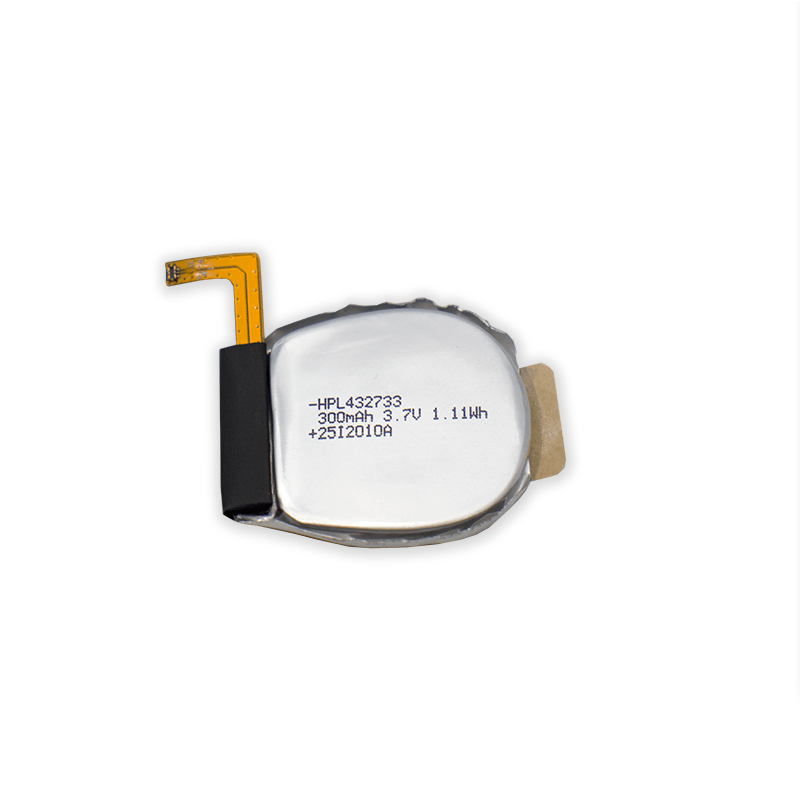
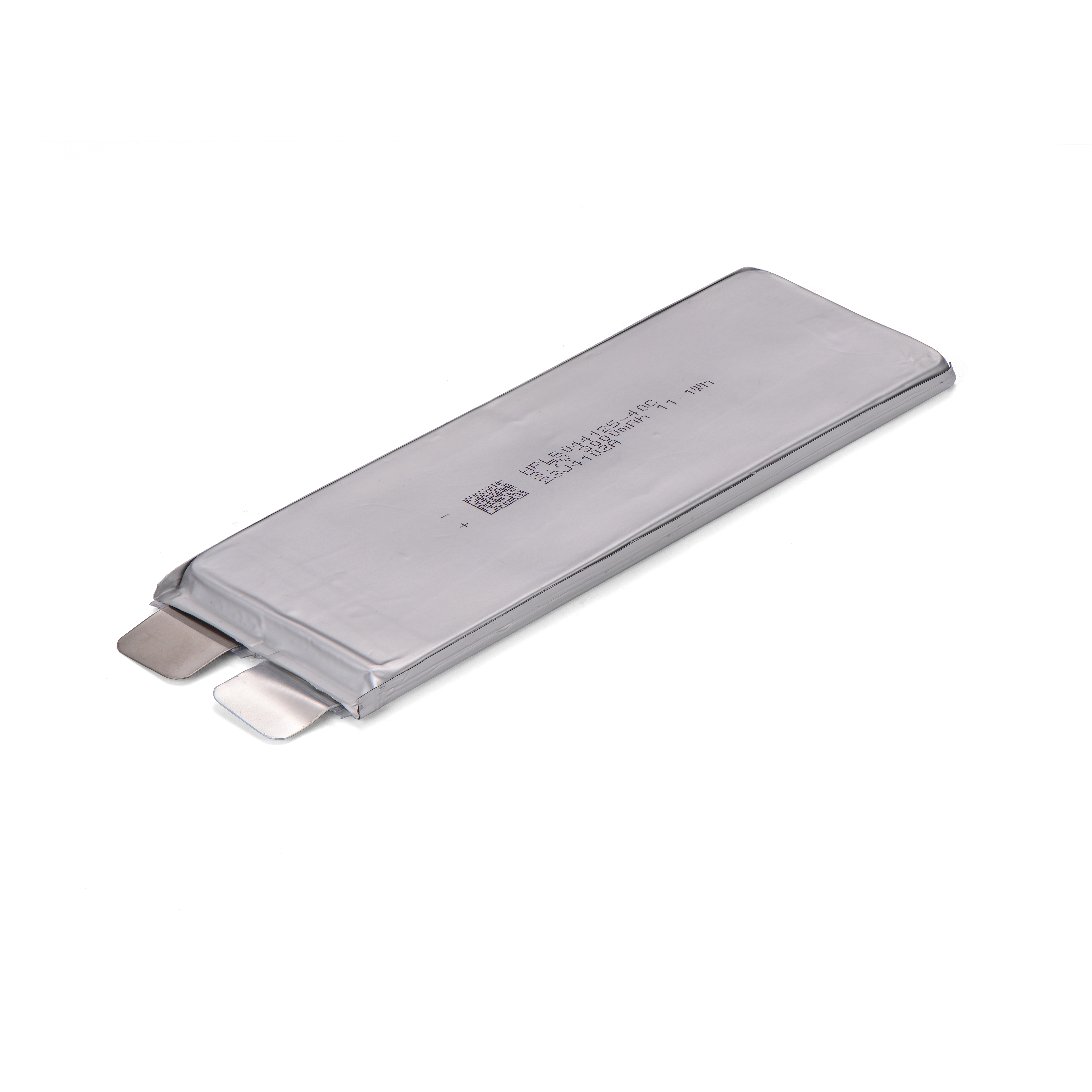
Polymer assemblies use a flat, pouch-style format that can be produced in non-standard shapes. This is the family to start from when the enclosure is thin, curved, or irregular, and when the mechanical design cannot accommodate a rigid cylinder. Hypercell's published range includes polymer-format models at small scale, such as HPL432733 3.7V300mAh, alongside HPL416682 and HPL5044125-40C at larger formats.
The trade-off is structural. A pouch cell has no rigid can of its own, so the mechanical protection has to come from the pack design — housing, potting, compression, and connector strain relief all become part of the battery specification rather than the enclosure's problem alone. Buyers who treat the polymer assembly as a drop-in part and ignore the structure usually discover this at the drop test.
Lithium-ion cylindrical assemblies: built for load and durability
Cylindrical assemblies use steel- or aluminium-canned cells in standard formats, assembled into multi-cell configurations. The published range includes INR18650-5S1P, INR18650-4S2P, INR18650-3S6P, INR18650-2S4P, and INR21700-13S10P. Because the cell itself provides mechanical containment, the assembly is more tolerant of vibration, shock, and rough handling than a pouch design of similar capacity.
This is also the family where thermal range becomes a selectable feature rather than a fixed constraint. The INR18650S 3.6V2900mAh is specified for wide-temperature operation from -40℃ to +85℃, which matters for outdoor instruments, vehicle-adjacent equipment, and any product that is stored or transported outside a conditioned space.
LiFePO4 assemblies: built for stability
LiFePO4 is the third family in the Hypercell range. It is normally chosen when electrochemical and thermal stability matter more than energy density per unit of volume or weight. For a stationary instrument, a backup unit, or a device where the battery sits close to heat-generating electronics, that trade-off can be the right one. For a pocketable consumer product, it usually is not, because the added bulk works against the product's reason to exist.
The assembly differs more than the cell does
Across all three families, the buyer is not really purchasing a cell — they are purchasing an integration. Hypercell's packing technology department supports clients with technology integration across industrial design, electronics, power supply, software, structure, process, and testing. That matters most where the battery and the device electronics have to be designed together: a protection circuit that is correct for one load profile can be wrong for another, and a connector that is fine on a bench can fail in the field.
Step-by-Step Breakdown: A Six-Step Matching Process
Step 1 — Write the environment specification before the electrical specification
Describe where the product lives: indoor or outdoor, handheld or fixed, vibration exposure, expected temperature range during operation, and temperature range during storage and transport. This single paragraph usually eliminates one of the three assembly families immediately. A device that must operate below freezing or above 60℃ indoors is a different brief from one that lives in a pocket.
Step 2 — Define the duty cycle in units your device team already uses
Continuous draw versus burst draw, charge frequency, and the number of charge cycles the product is expected to deliver over its service life. Do not convert these into generic marketing language such as "long lasting" — keep them as engineering inputs, because they drive cell selection, protection circuit rating, and thermal design together.
Step 3 — Fix the documentation envelope early
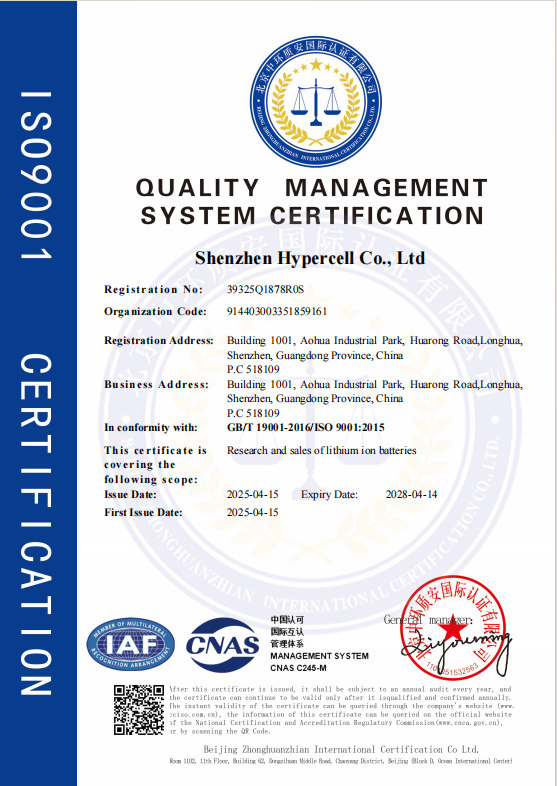
List what the finished product must be able to prove, then ask the supplier which documents they can issue against it. Hypercell publishes ISO 9001:2015 and ISO 14001:2015 certificates, a RoHS certificate, a CB Test Certificate, and identification and classification reports for sea and air transport of goods. That set covers quality management, environmental management, restricted substances, electrical safety testing, and transport handling documentation.
For a medical device programme, one further check is necessary. The certificate list above does not include a medical-device-specific quality standard, so the buyer should not assume that a general quality certificate satisfies the device approval pathway. Confirm in writing which documents apply to your device class, and record that answer before the design is frozen.
Step 4 — Select the family and the format
With steps 1 to 3 written down, family selection becomes mechanical rather than intuitive. Thin and irregular enclosure plus moderate load points to polymer. Rigid enclosure, high load, or wide temperature points to cylindrical. Stability-first stationary applications point to LiFePO4. If two families still fit, the tie-breaker is usually the mechanical one: which format can the enclosure actually accept without redesign?
Step 5 — Design the integration, not just the pack
Structure, connector, protection electronics, wiring, and the interface to device firmware all belong in the same conversation. Hypercell's packing technology department covers industrial design, electronics, power supply, software, structure, process, and testing, which allows this work to be scoped before a price is issued instead of being discovered after tooling.
Step 6 — Validate a sample against the written spec, then scale
A sample is only useful if it is measured against the criteria written in steps 1 to 3. Approve the sample against the environment specification, the duty cycle, and the documentation list — not against how it looks on a desk.
Use Cases: How the Three Segments Actually Map
Consumer electronics and power banks
The defining constraints are thickness, weight, charge speed, and unit cost at volume. The natural starting point is a polymer assembly, because the pouch format can be shaped to the enclosure rather than the enclosure being shaped to a cylinder. Small-format models in the Hypercell range such as HPL432733 3.7V300mAh illustrate the scale used in compact consumer devices; power bank projects typically sit at larger multi-cell formats and add input/output electronics, which is where integration support in electronics and power supply becomes relevant.
The most common consumer mistake is treating the power bank as a commodity. A power bank is an assembly with its own protection and charging electronics; the cell is only one of several components that determine whether the product survives a year of daily charging.
Industrial tools, instruments, robots, and e-mobility
The defining constraints are mechanical durability, operating temperature range, and the ability to deliver high-rate discharge without losing service life. Multi-cell cylindrical configurations such as INR18650-4S2P, INR18650-3S6P, and INR21700-13S10P are the format class that matches this environment, because the cell can provides its own mechanical containment and the pack can be built with a rigid structure around it.
Industrial instruments and outdoor equipment add a second requirement: temperature. Where a device is stored in a vehicle, used outdoors, or transported through uncontrolled conditions, the wide-temperature INR18650S 3.6V2900mAh — specified from -40℃ to +85℃ — is the reference point to discuss with the supplier rather than a standard-temperature cell with an assumption attached to it.
Hypercell's stated coverage of industrial instruments and IoT devices is directly relevant here, because robotics and e-mobility projects typically combine a high-rate load profile with a connected device that draws a small standby current — two very different demands on the same pack.

Medical devices
The defining constraints are repeatability, documentation, and predictable behaviour over the life of the device. Portable monitors, diagnostic instruments, and analyzers usually combine a moderate load profile with a strong requirement that every unit behaves the same way as the unit that was validated.
Both polymer and cylindrical families appear in medical designs. Polymer formats are used where the device must be slim or handheld; cylindrical formats are used where the device is bench-mounted or cart-mounted and durability dominates. Where the device is transported or stored outside a conditioned environment, the wide-temperature INR18650S 3.6V2900mAh is again the relevant reference point.
The medical-specific responsibility sits with the device maker, not the cell supplier. Hypercell's published documentation supports quality management, environmental management, restricted substances, safety testing, and transport classification — but the approval of the finished medical device remains the device manufacturer's obligation. Buyers who understand this division of responsibility avoid the most expensive mistake in medical battery sourcing: assuming a supplier's general certificate transfers to their device.

Comparison Table: Consumer vs Industrial vs Medical Assembly Requirements
The table below summarises how the three use cases diverge on the variables that actually drive a sourcing decision. Model references are examples from the Hypercell published range at the relevant scale; they are not a statement that a given model is approved for a given end product.
| Decision variable | Consumer electronics / power banks | Industrial tools, instruments, robots | Medical devices |
|---|---|---|---|
| Primary design priority | Thin profile, low weight, charge speed, unit cost at volume | Mechanical durability, operating temperature range, current capability | Repeatability unit-to-unit, traceable documentation, predictable service behaviour |
| Assembly family that usually fits | Lithium-ion polymer (flat pouch format, shapeable) | Lithium-ion cylindrical (multi-cell, rigid can) | Polymer for handheld formats; cylindrical for bench or cart-mounted units |
| Environment to specify | Indoor, pocket or bag carry, occasional drop | Vibration, shock, outdoor or vehicle storage, uncontrolled transport | Clinical environment, plus transport and storage conditions |
| Duty cycle characteristic | Frequent partial charging, mixed load | Burst high-rate discharge, sustained load during shifts | Steady, predictable load; long idle periods between use |
| Wide-temperature option | Usually not required | Frequently required (INR18650S 3.6V2900mAh, -40℃ to +85℃) | Required where transport or storage is uncontrolled |
| Example models in the Hypercell range | HPL432733 3.7V300mAh, HPL416682, HPL5044125-40C | INR18650-4S2P, INR18650-3S6P, INR21700-13S10P, INR18650S 3.6V2900mAh | BATL0006-V002, 24AQ506-01, INR18650S 3.6V2900mAh |
| Documents to request | ISO 9001:2015, RoHS certificate, CB Test Certificate, air and sea transport classification reports | Same base set, plus the specific test scope agreed for the assembly | Same base set, plus written confirmation of which documents apply to the device class |
| Typical consequence of mismatch | Product too thick or too heavy; charge performance below expectation | Mechanical or thermal failure in the field; shortened service life | Documentation gap at approval, or inconsistent unit-to-unit behaviour |
Where a Single Factory Source Helps — and Where It Does Not
Sourcing all three families from one manufacturer changes the economics of the matching process. Hypercell operates three production factories in Guangdong with 1200+ staff and a daily output of 30MWh, produces cylindrical, polymer, and LiFePO4 batteries, and supports clients through a packing technology department that covers structure, electronics, power supply, software, process, and testing. In practice this means a buyer can compare a polymer option and a cylindrical option for the same device without running two separate qualification processes, and the recommendation is not distorted by the fact that a supplier only makes one family.
The company also maintains a supply chain of local and global suppliers vetted through a selection process, and vertical manufacturing capabilities, which the company describes as supporting flexible solutions and a reduced risk of supply disruption. For a buyer running one device across three markets, that continuity matters more than a marginal difference in unit price.
There are limits worth stating plainly. Hypercell does not publish prices; commercial terms are quoted per project after the specification is confirmed. The published certificate set covers quality, environmental, restricted-substance, safety-testing, and transport documentation, but does not include a medical-device-specific quality standard, so medical buyers must confirm applicability for their device class. Solid-state and sodium-ion technology are named as active research areas rather than catalog products, so they should not be treated as available options in a current bill of materials. And no supplier can substitute for the buyer's own validation: a sample approved without written criteria is not validation.
FAQ
1. Which compliance documents should a buyer request before approving a battery assembly?
Request the quality management certificate, the environmental management certificate, the restricted-substance document, the safety test certificate, and the transport classification reports. Hypercell publishes ISO 9001:2015 and ISO 14001:2015 certificates, a RoHS certificate, a CB Test Certificate, and identification and classification reports for sea and air transport of goods. For consumer and industrial projects this set covers the usual procurement checks. For a medical device, the published list does not include a medical-device-specific quality standard, so the buyer must obtain written confirmation of which documents apply to their device class before freezing the design.
2. Can one factory realistically support consumer, industrial, and medical assemblies at the same time?
Yes, provided the three designs are specified separately. Hypercell operates three production factories in Guangdong with 1200+ staff and a daily output of 30MWh, and manufactures lithium-ion cylindrical, lithium-ion polymer, and LiFePO4 batteries. Its stated industry coverage includes industrial instruments, medical devices, and IoT devices. The capability exists at the factory level; the work that remains with the buyer is defining a distinct environment specification, duty cycle, and documentation envelope for each product, because those inputs — not the factory — determine whether the assembly matches the use case.
3. Where does cost actually come from in a custom battery assembly?
Cost is driven by the specification, not by the cell alone. The main variables are the cell family and format, the number of cells in the assembly, the complexity of the protection electronics, whether a special shape requires tooling, the scope of testing, and the documentation package. A standard cylindrical format usually carries less tooling than a custom-shaped polymer assembly, and consolidating several products onto one platform reduces the number of qualification cycles. Hypercell does not publish price lists; quotations are issued per project after the specification is confirmed, which is why a written environment and duty-cycle brief shortens the commercial process as well as the technical one.
4. How should a sample be validated before committing to volume?
Validate the sample against criteria written before the sample arrives. Three checks cover most of the risk. First, mechanical: does the assembly fit the real enclosure with the real connector, including strain relief and any potting or retention feature. Second, electrical: does the protection circuit behave correctly at the load profile the device actually draws, including burst conditions. Third, environmental: where a wide-temperature cell such as INR18650S 3.6V2900mAh has been specified for -40℃ to +85℃ operation, confirm the assembled pack, not only the cell, is built to survive that range. A sample approved on appearance rather than on criteria provides no protection at volume production.
5. What influences lead time when one order covers several different assemblies?
Lead time is shaped by cell availability for the selected format, tooling where a special shape or custom structure is required, the scope of testing agreed for each design, and the number of distinct assembly designs in the same order. Sourcing all three use cases from one manufacturer reduces the number of supplier qualification steps, but it does not merge the individual designs — each still carries its own tooling and test cycle. The practical way to get a reliable schedule is to send the written specification for each assembly rather than a general enquiry, so the factory can scope cells, structure, and testing together.
Conclusion
Matching a battery assembly to a use case is a sequence, not a guess. Write the environment specification first, define the duty cycle in engineering terms, fix the documentation envelope, and only then choose between polymer, cylindrical, and LiFePO4. Consumer products will usually land on polymer for form factor; industrial tools, instruments, robots and e-mobility will usually land on multi-cell cylindrical assemblies with a wide-temperature option where the environment demands it; medical devices will land on whichever format the device housing allows, with documentation confirmed in writing rather than assumed.
The value of a single manufacturing source is that these three answers can be compared honestly before a design is locked — and that the supplier has an incentive to recommend the family that fits rather than the family they happen to produce.
Share the operating environment, duty cycle and documentation requirements for your consumer, industrial or medical project. Hypercell will respond with the matching assembly family, sample arrangement and quotation scope.
Tel: +86 755 2376 4134 | Email: info@hypercellbattery.com | Web: www.hypercellbattery.com
Shenzhen Hypercell Co., LTD · Room 2706-2707, Baoshan Shidai Building, Minqiang Community, Longhua District, Shenzhen 518131 Guangdong, China
Have Questions or Need More Details?
Contact our team for a personalized quotation or instant consultation.
Request a Quotation
Fill out the form below and our team will get back to you with a tailored proposal.
WhatsApp Direct Chat
Prefer to chat in real-time? Message us on WhatsApp for instant assistance & quick answers.
- Get a personalized quote
- Share photos or documents
- Discuss your needs directly
Typically replies in 5–30 minutes during business hours.