
Power Bank Battery Application Guide: Hypercell Li-ion Fit for Electronics Projects
Application guide · reviewed November 2026
Short answer. A power bank is defined by the lithium-ion cell and pack inside it. Matching a battery to a power bank — or to any other electronics project — comes down to five decisions: required energy and voltage, mechanical fit and connector, chemistry and cycle-life target, protection electronics, and compliance documentation for the destination market. Shenzhen Hypercell Co., LTD (Hypercell) is a China battery manufacturer founded in 2007 that produces rechargeable lithium-ion cells and packs from a 250,000 m² factory in Dongguan, and its documented range runs from a standard power bank such as HPC B1 to custom cylindrical and LiFePO4 packs used in industrial, medical, IoT and robotics hardware.
A power bank is a lithium-ion battery with a conversion circuit around it. Its usable capacity, service life, temperature behaviour and market access are inherited from the cell and pack chosen at the design stage, which is why the battery decision is usually the first real engineering decision in a portable power project.
This guide explains how to match a lithium battery solution to a power bank and to the wider electronics projects that share the same supply chain — consumer electronics, IoT devices, GPS trackers, medical devices, robots and e-mobility platforms. It follows the sequence a buyer works through from awareness to research: define the requirement, screen the chemistries, check what the manufacturer actually documents, then confirm samples, paperwork and commercial terms before sourcing.
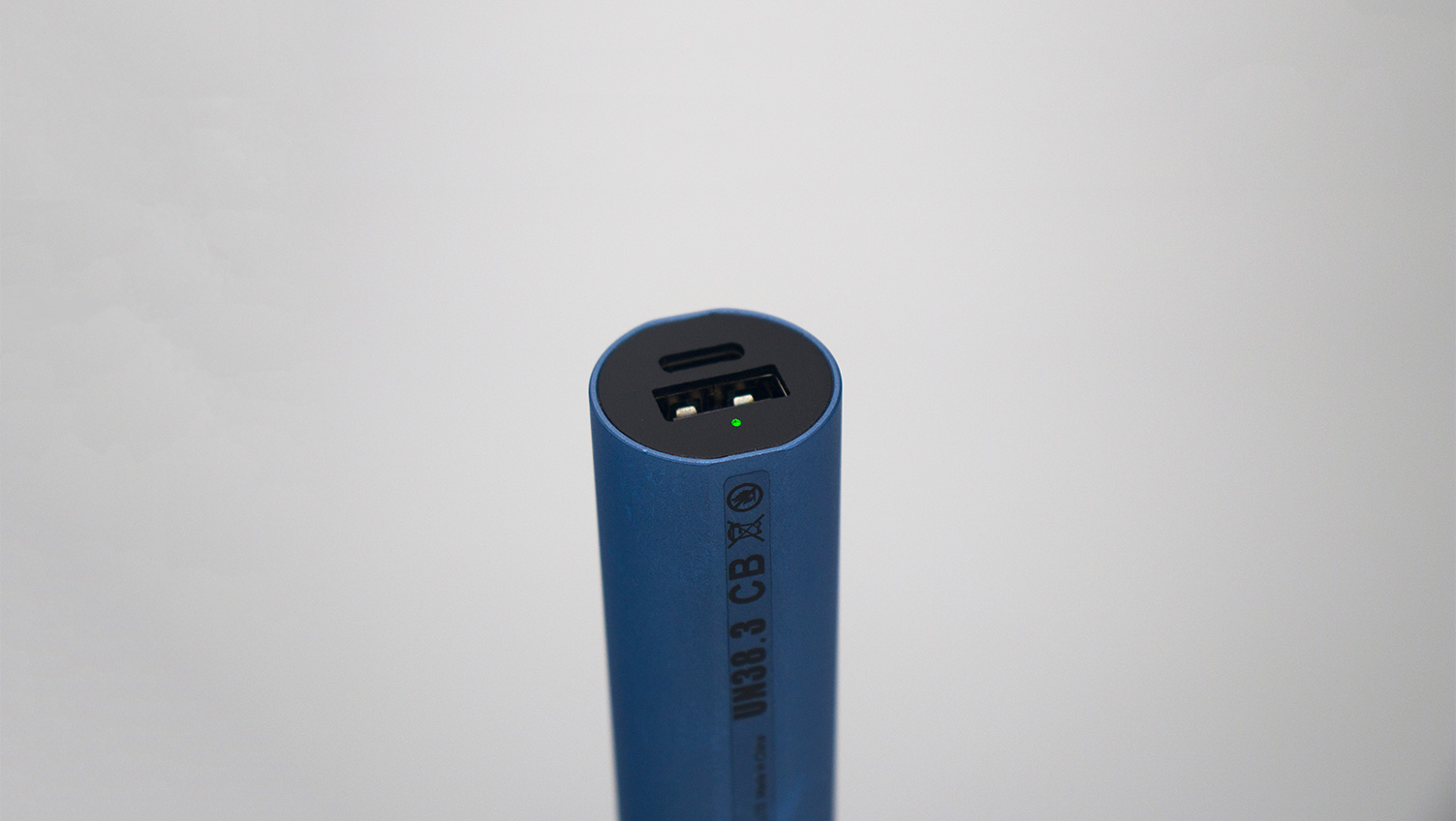
Hypercell HPC B1 power bank: 3.6 V / 4,000 mAh, 14.4 Wh, Type-C input, USB-A output 5 V 1.2 A.
Problem definition: why power bank battery selection goes wrong
Most sourcing problems in this category are created before a quotation is ever requested. Six issues recur in buyer specifications.
- Starting from a product picture instead of a requirement. Buyers frequently compare finished power banks by appearance and advertised capacity, then discover that the internal pack cannot be re-specified, re-certified or re-dimensioned for their own enclosure.
- Confusing cell energy with delivered output. The HPC B1 power bank is rated 3.6 V / 4,000 mAh — 14.4 Wh at cell level — while its output port is listed separately as USB-A 5 V 1.2 A. Both figures belong on the specification sheet. Quoting only one makes competing offers impossible to compare.
- Assuming “power bank” always means a consumer accessory. HPC B1 is listed for medical and consumer applications, but an internal pack such as INR18650-4S2P is a different product: a sealed component with a PC+ABS UL94-V0 enclosure, IP68 protection and a 6-pin blade connector. The qualification path for the two is not the same.
- Choosing chemistry by habit rather than by cycle life. The documented platforms sit at 500 cycles (INR18650-4S2P), 800 cycles (24AQ506-01), ≥2,000 cycles (FR18650-20E cell) and 3,000 cycles (24AQ507-01). These are different products with different cost structures and different duty-cycle assumptions.
- Leaving compliance until the end. A battery that fails a market-access requirement late in the project forces cell, BMS or enclosure changes, and often a new sample round.
- Under-specifying protection. Hypercell pack specifications state a dual protection set covering over-voltage, under-voltage, over-current, over-temperature, under-temperature and short-circuit, plus a prohibition on charging a 0 V battery. Omitting these items from a purchase specification leaves the acceptance test undefined.
Industry background: one supply chain, two product families
China is the largest manufacturing base for lithium-ion cells, and the U.S. Energy Information Administration has described China as dominating global trade in three key battery minerals — graphite, lithium and cobalt. For a project buyer, the practical consequence is that cell availability, cell pricing and pack assembly are usually sourced inside the same industrial region, which shortens the loop between a design change and a new sample.
Inside that supply base, two product families serve electronics projects. The first is the consumer power bank family: a nominal 3.6 V lithium-ion cell, a charging input such as Type-C, a regulated USB output, and a compact housing. The second is the component pack family: a multi-cell configuration with its own enclosure, connector and battery management system, designed to be built into equipment that must run for years. Hypercell sits in both, which is why its catalogue is useful for comparison: the same manufacturer documents a 14.4 Wh consumer power bank and a 1,536 Wh LiFePO4 pack in the same specification style.
The two families are converging. A medical device battery or an IoT device battery now faces the same questions a power bank does — energy per litre, self-heating under load, connector reliability, documentation — but with stricter acceptance criteria and a longer service expectation. Buyers who understand the consumer case usually find the industrial case easier to specify, not harder.
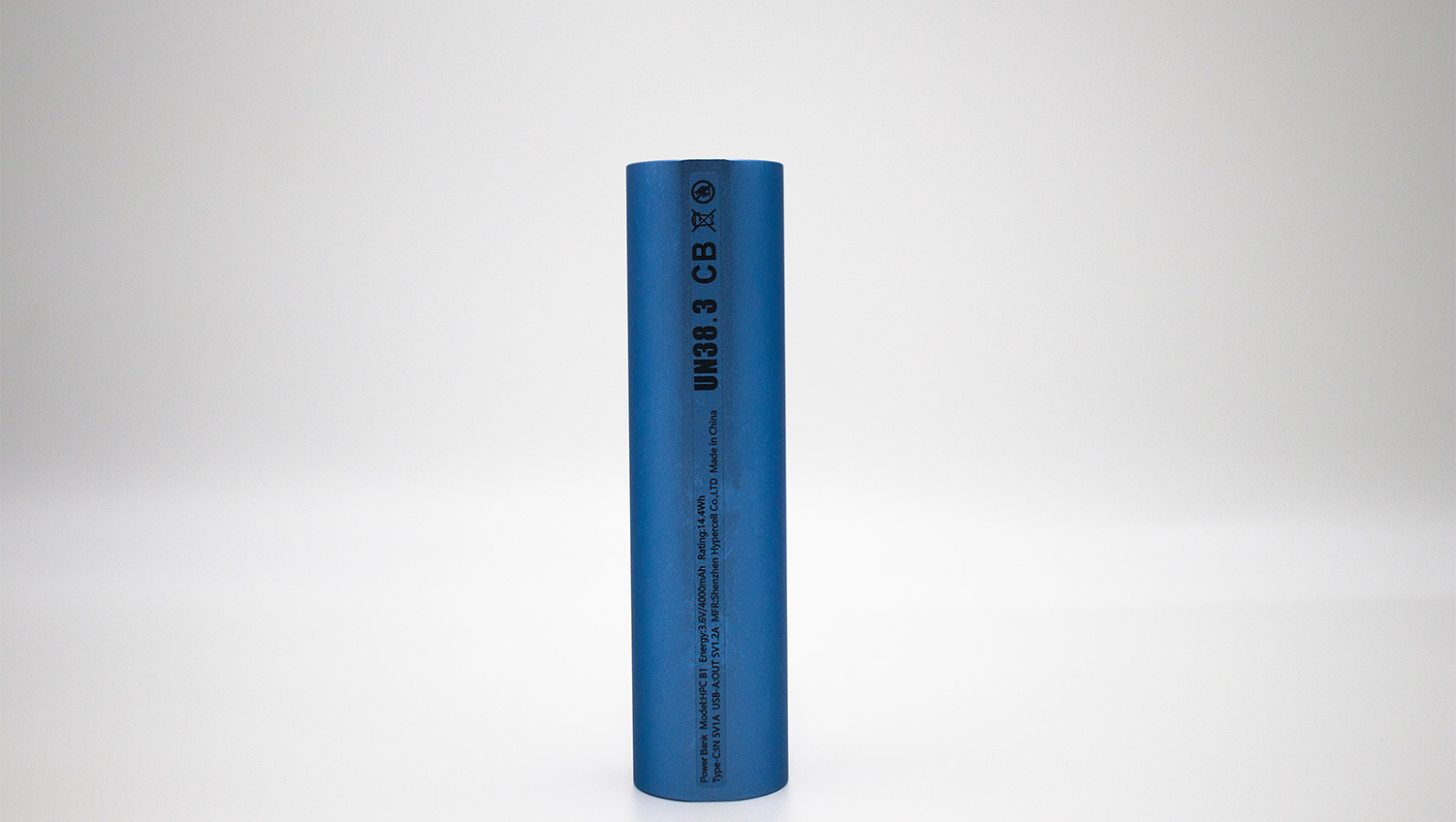
HPC B1 port layout: Type-C input, USB-A output rated 5 V 1.2 A, INR lithium-ion cell.
Matching a battery to the project: Hypercell’s documented range
Hypercell’s published specifications cover four usable platforms. Each one answers a different project requirement, and the fastest way to select is to match the requirement to the platform rather than to compare headline capacity.
Standard power bank platform: HPC B1
- Energy: 3.6 V / 4,000 mAh
- Rating: 14.4 Wh
- Input: Type-C
- Output: USB-A 5 V 1.2 A
- Cell material: INR lithium-ion
- Listed applicable industries: medical; consumer
HPC B1 is the platform to use when the project needs a finished, self-contained portable charger rather than an internal pack. The specification is deliberately compact: energy is stated at cell level in both mAh and Wh, and the output is stated separately in volts and amps. That separation is useful during evaluation, because a buyer can compare the energy available from the cell against the output the port is rated to deliver without mixing the two.
Cylindrical Li-ion packs for sealed equipment
The INR18650-4S2P pack is a 14.4 V configuration built for equipment that needs a sealed, connectorised battery rather than a bare cell holder.
- Configuration: 4S2P; nominal voltage 14.4 V; nominal capacity 6,700 mAh; nominal energy 96.48 Wh
- Max charging voltage 16.8 V; fast charge 0.5C at 25 °C; discharge end-of-voltage 10.0 V (2.50 V per cell)
- Max continuous discharge 6.0 A at 25 °C
- Cycle life: 500 cycles ≥80% rated capacity (0.5C/0.5C)
- Enclosure: PC+ABS, UL94-V0 and IP68; connector: 6-pin blade connector
- Dimensions: L82.0 ±0.2 × W42.0 ±0.2 × H105.0 ±0.2 mm
- Operating temperature: charge 0 °C to 45 °C; discharge −20 °C to 60 °C
- BMS: dual protection including OV, UV, OC, OT, UT, SCC; charging a 0 V battery is prohibited
The higher-voltage INR21700-13S1P platform answers a different requirement: 48 V class equipment with CAN communication.
- Rated capacity 4,900 mAh (0.2C min.), 5,000 mAh typical; nominal voltage 46.8 V; watt-hour rating 234 Wh
- Max charge voltage 54.6 V (100 mA); max continuous charge current 5,000 mA
- Max continuous discharge current 10,000 mA; recommended discharge cut-off 32.5 V; internal impedance below 200 mΩ
- Expected cycle life: 800 cycles >80% of initial capacity (1C at 20 °C)
- BMS: CAN 2.0; enclosure IP65, ABS+PC
LiFePO4 platforms for long-cycle and higher-energy packs
Where the project is defined by service life rather than by energy density, the LiFePO4 lines are the relevant starting point. The 24AQ507-01 pack is a 4S8P configuration using IFR3140 lithium iron phosphate cells.
- Nominal voltage 12.8 V; nominal capacity 120 Ah; nominal energy 1,536 Wh
- Max charging voltage 14.6 V; fast charge current 0.2C at 25 °C; discharge end-of-voltage 10.0 V (2.50 V per cell)
- Max continuous discharge 5 A at 25 °C
- Cycle life: 3,000 cycles ≥80% rated capacity (0.2C/0.2C)
- Operating temperature: charge 0 °C to 45 °C; discharge −20 °C to 60 °C
- Dimensions: Ø169 ±1.0 × H300.0 ±3.0 mm
- BMS: dual protection including OV, UV, OC, OT, UT, SCC, plus CAN 2.0 and 45 A short-circuit protection; charging a 0 V battery is prohibited
The configuration is documented in a hydrophone system application. At cell level, the LiFePO4 FR18650-20E is specified at 2,000 mAh typical capacity with a cycle life of ≥2,000 cycles — the cell to specify when a custom LFP pack is being designed from the ground up.
Custom and polymer-format packs
Customized Li-ion battery work in this portfolio is expressed through configuration rather than through a separate product line: series and parallel count (4S2P, 13S1P, 4S8P), cell chemistry, BMS feature set, enclosure material and rating, connector type and mechanical envelope. Where a project needs a thin, shape-adapted cell — typically a Li-polymer or prismatic pouch format for a wearable, a handheld medical device or a slim consumer accessory — the format is defined by the project envelope rather than selected from a fixed catalogue list. Buyers should confirm the specific polymer format, capacity and connector with the supplier before design freeze, and treat that confirmation as a gating item.
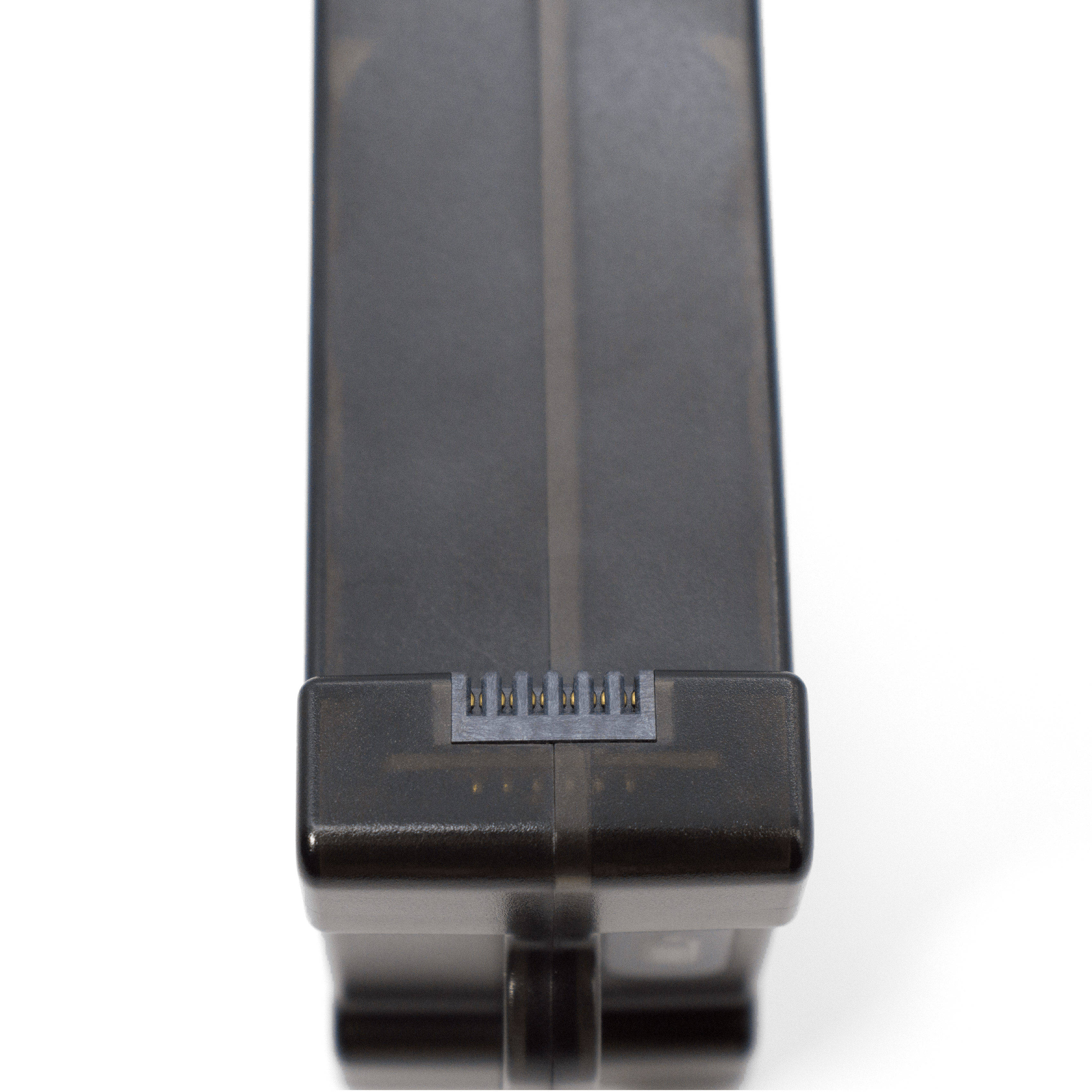
INR18650-4S2P pack: 14.4 V, 6,700 mAh, 96.48 Wh, IP68 PC+ABS enclosure, 6-pin blade connector.
Step-by-step: specifying a power bank battery or electronics pack
The sequence below is written for a buyer moving from first interest to a purchase-ready specification. Each step produces a document the supplier can quote against, which is what turns a general enquiry into a comparable offer.
- Write the electrical requirement in watt-hours. Multiply nominal voltage by nominal capacity so that packs of different voltages become comparable. The HPC B1 example is 3.6 V × 4,000 mAh = 14.4 Wh; the INR18650-4S2P is 14.4 V × 6,700 mAh = 96.48 Wh; the 24AQ507-01 is 12.8 V × 120 Ah = 1,536 Wh. State whether the figure is cell-level energy or delivered output, because they are not the same number.
- Fix the mechanical envelope and connector. Give the supplier a maximum length, width and height with tolerances, and name the connector. Useful reference points from the existing range: 82.0 ±0.2 × 42.0 ±0.2 × 105.0 ±0.2 mm with a 6-pin blade connector for the 4S2P pack; Ø169 ±1.0 × H300.0 ±3.0 mm for the 4S8P LiFePO4 pack.
- Choose the chemistry against a cycle-life target. Set the number of cycles the product must survive at its real duty cycle, then choose. 500 cycles for the 4S2P INR pack, 800 cycles at 1C for the 48 V INR21700 pack, ≥2,000 cycles for the FR18650-20E cell and 3,000 cycles at 0.2C for the 24AQ507-01 LiFePO4 pack are the documented positions.
- Specify the protection set explicitly. List over-voltage, under-voltage, over-current, over-temperature, under-temperature and short-circuit protection as acceptance items, and add the requirement that charging a 0 V battery is prohibited. If the equipment has a data bus, state the communication requirement — CAN 2.0 is documented on the 48 V INR21700 pack and on the LiFePO4 pack.
- Set the operating temperature and duty cycle. Charge and discharge windows differ and must be quoted separately: 0 °C to 45 °C charging and −20 °C to 60 °C discharging on the documented packs. Where equipment runs continuously — AGV and robot duty is documented as 24/7 with a 0 °C to 50 °C charging window and −20 °C to 60 °C discharging window — the temperature claim should be tested, not assumed.
- Define the compliance scope and its documents. Name the destination markets and the end-product category, then ask for the certificate, the issuing body, the validity date and the exact model range covered. Hypercell’s published compliance list includes UL1642 and IEC62133, and lists ISO 13485 and FDA in the medical context. Confirm that the pack — not only the cell — is inside the scope you are relying on.
- Agree acceptance criteria and commercial terms in writing. Capacity measured at a stated C-rate and temperature, voltage window, discharge cut-off, continuous current, dimensional tolerances, enclosure rating and BMS trip points all belong in the purchase specification. Sample quantity, mass-production schedule, warranty and shipping terms belong beside them. Neither side benefits from a specification that only exists verbally.
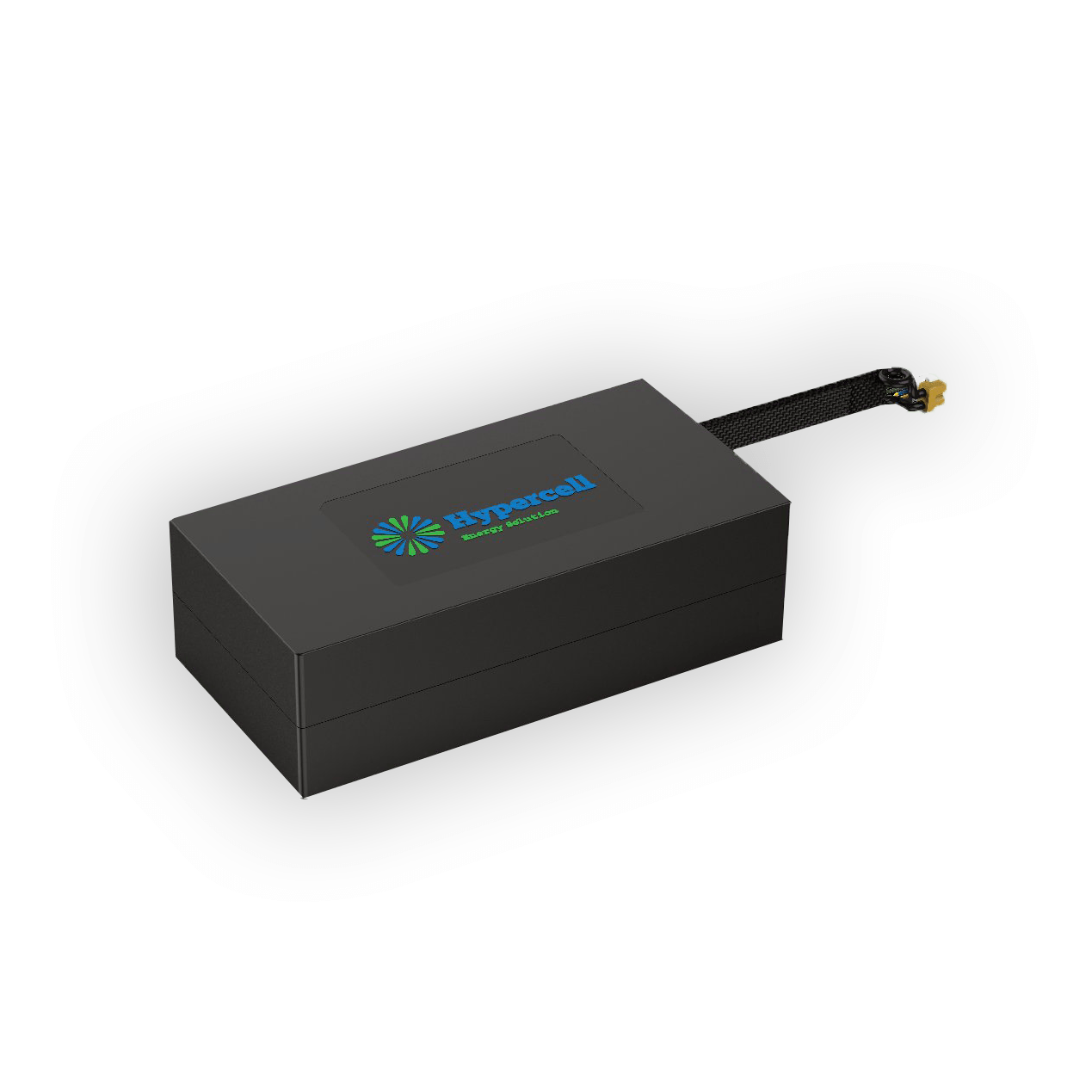
INR21700-13S1P pack: 46.8 V, 234 Wh, 10,000 mA continuous discharge, CAN 2.0 BMS, IP65 enclosure.
Use cases: where each battery profile fits
Consumer electronics and portable charging
A finished power bank such as HPC B1 fits when the product is the charger itself: 14.4 Wh of cell energy, Type-C charging input, USB-A output at 5 V 1.2 A, in a housing the buyer does not have to design. This is the lowest-friction entry point into a portable power project and the easiest configuration to re-quote, because the specification is fully stated.
IoT devices and GPS trackers
IoT device battery and GPS tracker projects are defined by standby behaviour and physical fit rather than by headline capacity. The requirement profile is a small envelope, a low continuous current with short peak loads, a wide discharge temperature window and a connector that survives field assembly. The documented 4S2P pack illustrates the engineering pattern — sealed IP68 enclosure, a defined connector, a stated continuous discharge limit — and the same pattern should be requested at whatever capacity the device actually needs.
Medical device batteries
Medical device battery projects add documentation to every other requirement. HPC B1 is listed for medical and consumer applications, and Hypercell’s published compliance list includes ISO 13485 and FDA alongside UL1642 and IEC62133. For an internal medical pack, the sealed 4S2P configuration with a UL94-V0 flame-retardant enclosure and IP68 protection is the closer structural reference, because a device that is cleaned or used near fluid needs an enclosure rating, not just a cell rating.
Robots and e-mobility
Robot and e-mobility platforms need voltage headroom and communication. The INR21700-13S1P pack delivers 46.8 V nominal and 234 Wh with 10,000 mA continuous discharge and a CAN 2.0 BMS, and the documented AGV application runs 24/7 across a −20 °C to 60 °C discharge window. Buyers evaluating this class should confirm the peak current profile, the communication protocol and the charging window before committing to a pack size.
Industrial usage batteries
Industrial usage battery projects are usually life-cycle driven. The 24AQ507-01 LiFePO4 pack offers 1,536 Wh with 3,000 cycles at 0.2C, a 5 A continuous discharge limit and dual BMS protection with CAN 2.0 and 45 A short-circuit protection — a profile suited to fixed installations, backup duties and long-life equipment where replacing the pack is expensive.
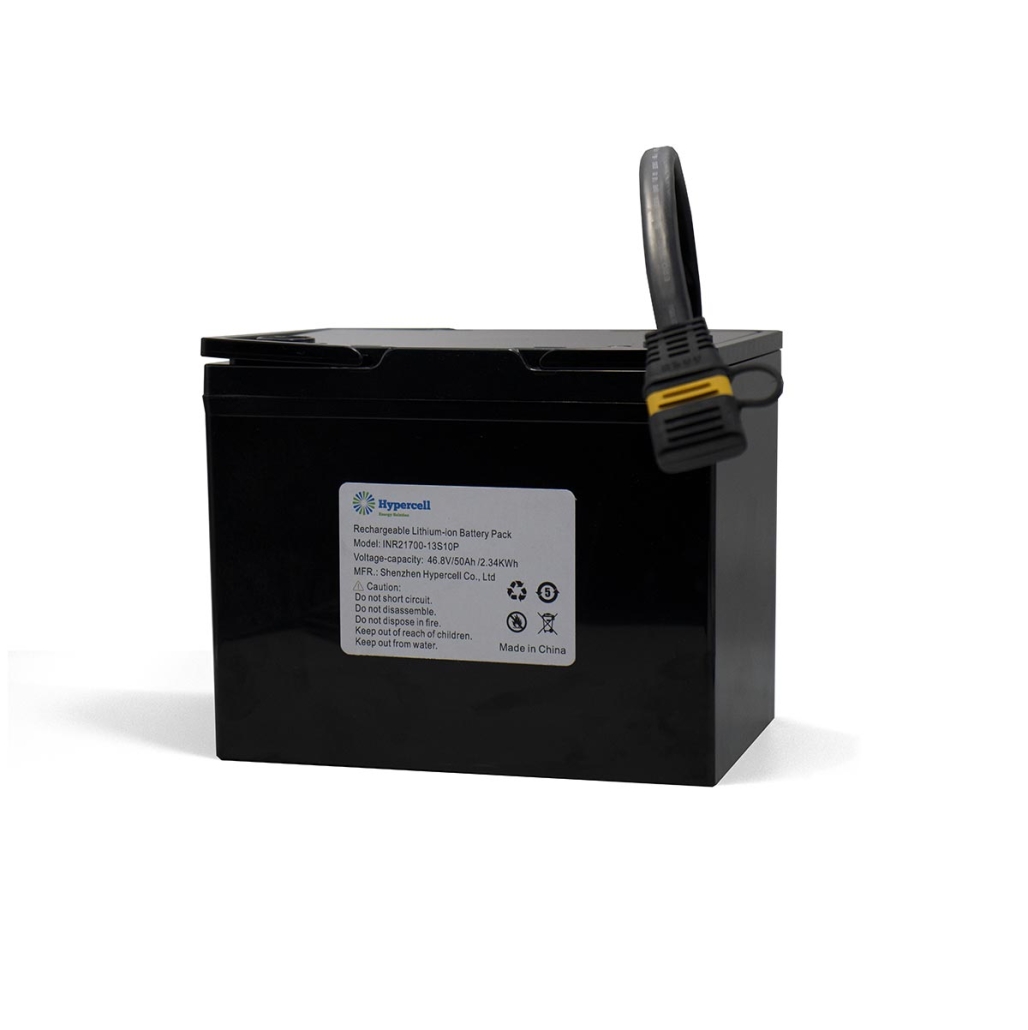
AGV and robot duty: 48 V pack, 24/7 operation, charging 0 °C to 50 °C, discharging −20 °C to 60 °C.
Specification comparison of documented platforms
The table below uses only values published in Hypercell product specifications. “Not stated” means the value is not published in the available specification and should be requested for the exact project.
| Model | Format / chemistry | Nominal voltage | Capacity / energy | Max continuous discharge | Cycle life | Protection & enclosure | Typical fit |
|---|---|---|---|---|---|---|---|
| HPC B1 | Power bank, INR lithium-ion | 3.6 V | 4,000 mAh / 14.4 Wh | Not stated (USB-A output 5 V 1.2 A) | Not stated | Type-C input; USB-A output; enclosure not stated | Consumer and medical portable charging |
| INR18650-4S2P | 4S2P cylindrical INR18650 | 14.4 V | 6,700 mAh / 96.48 Wh | 6.0 A at 25 °C | 500 cycles ≥80% (0.5C/0.5C) | BMS OV/UV/OC/OT/UT/SCC; PC+ABS UL94-V0, IP68; 6-pin blade connector | Sealed equipment packs |
| 24AQ506-01 | 13S1P cylindrical INR21700 | 46.8 V | 4,900 mAh min. / 5,000 mAh typical / 234 Wh | 10,000 mA | 800 cycles >80% (1C at 20 °C) | CAN 2.0 BMS; IP65 ABS+PC | AGV, robot, e-mobility |
| 24AQ507-01 | 4S8P LiFePO4 (IFR3140) | 12.8 V | 120 Ah / 1,536 Wh | 5 A at 25 °C | 3,000 cycles ≥80% (0.2C/0.2C) | Dual BMS OV/UV/OC/OT/UT/SCC; CAN 2.0 & 45 A SCP; Ø169 × H300 mm | Long-life industrial and instrumentation |
| FR18650-20E | LiFePO4 cylindrical cell | Not stated | 2,000 mAh typical | Not stated | ≥2,000 cycles | Cell level; pack protection defined by design | Long-cycle LFP pack builds |
Manufacturer check before sourcing
Hypercell was founded in 2007 and operates a 250,000 m² factory in Dongguan with an annual output of 220,000,000 units. The company reports 18 R&D engineers and an export ratio of 80%, with main markets in the USA, EU, North America, Asia and Australia. For a buyer, those figures answer a single question: whether the supplier can hold a specification stable across repeat orders, which is the point at which a sample result becomes a production commitment.
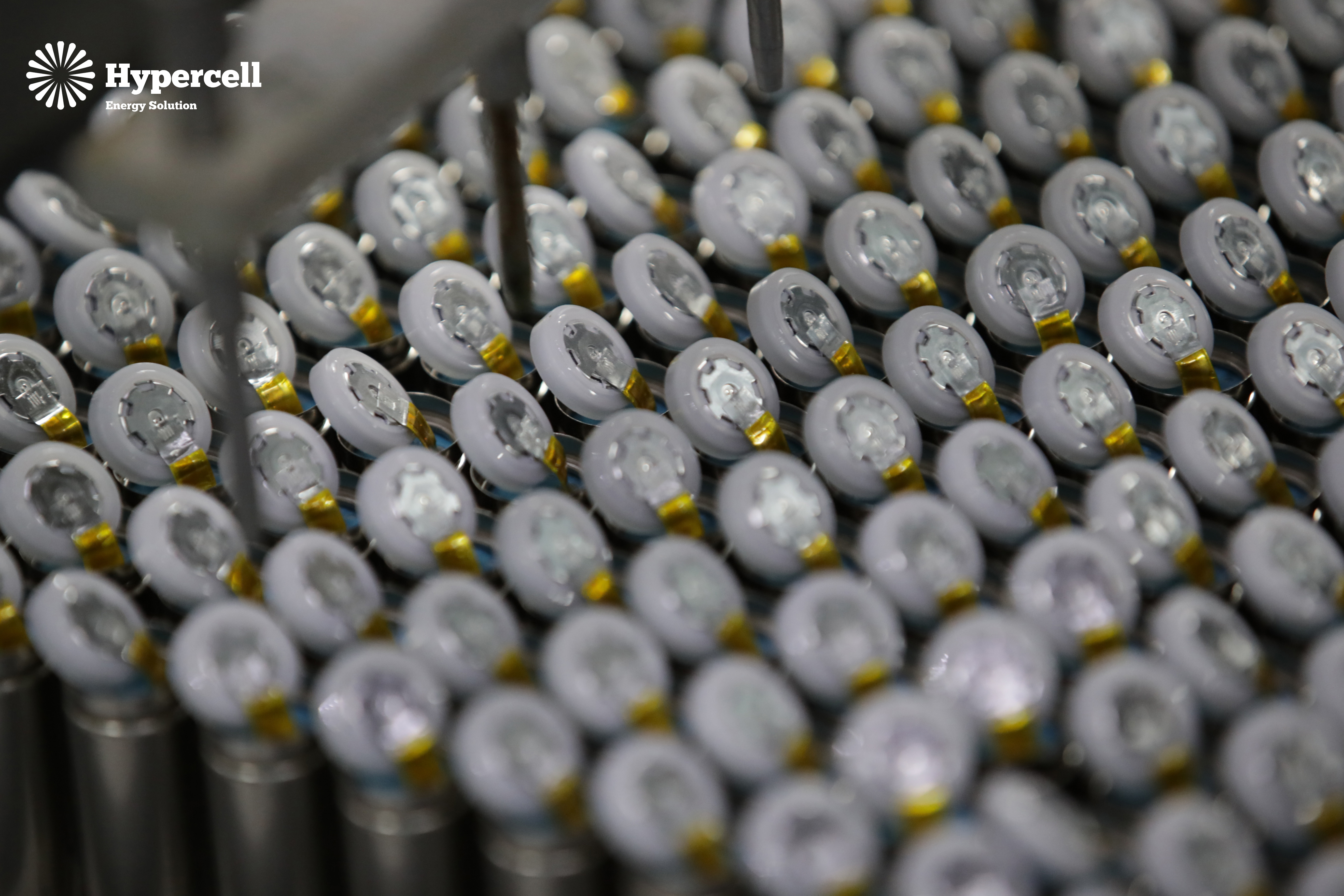
Hypercell operates a 250,000 m² manufacturing facility in Dongguan with 220,000,000 units annual output.
Frequently asked questions
Which safety standards and documents should a power bank or custom Li-ion pack meet?
It depends on the destination market and on the end product, not on the battery alone. The usual baseline is cell-level safety testing to UL1642 and IEC62133, plus transport documentation for lithium batteries and the market-specific marks the finished device requires. Hypercell’s published compliance list includes UL1642 and IEC62133, and lists ISO 13485 and FDA in the medical context. When evaluating any supplier, request the certificate, the issuing laboratory, the validity date and the exact model range covered, and confirm that the pack — not only the cell — falls inside that scope.
Can one manufacturer cover both a standard power bank and a customized Li-ion pack?
Within Hypercell’s documented range, yes. The standard platform is HPC B1 at 3.6 V / 4,000 mAh, 14.4 Wh, with Type-C input and USB-A output at 5 V 1.2 A. The custom platforms include a 4S2P 14.4 V / 6,700 mAh pack with an IP68 enclosure and 6-pin blade connector, a 13S1P 46.8 V / 234 Wh pack with a CAN 2.0 BMS and IP65 enclosure, and a 4S8P LiFePO4 pack at 12.8 V / 120 Ah / 1,536 Wh with 3,000-cycle life. Buyers should confirm which of these configurations is held as a standard build and which is engineered to order, because that distinction drives the sample route.
What drives the cost of a power bank battery or a custom Li-ion pack?
Eight variables dominate: energy in watt-hours, cell chemistry, continuous discharge capability, BMS complexity, enclosure material and ingress rating, connector type, cycle-life target and certification scope. The documented range shows why. A 14.4 Wh INR power bank, a 96.48 Wh sealed INR pack and a 1,536 Wh LiFePO4 pack with CAN 2.0 and 45 A short-circuit protection are three different cost structures, and the 3,000-cycle LiFePO4 platform is specified for a different service life than the 500-cycle INR pack. No public price list applies, so the practical approach is to fix the specification first and request a quotation against it — otherwise offers are not comparable.
How should a sample be validated before mass production?
Build the specification first, then test the sample against it. Verify capacity at a stated C-rate and temperature against the rated figure — 6,700 mAh for the 4S2P pack, 120 Ah at 0.2C for the 4S8P LiFePO4 pack, 2,000 mAh typical for the FR18650-20E cell. Check dimensions against the stated tolerances, confirm the enclosure rating, and verify that the BMS actually trips on over-voltage, over-current and over-temperature and that it refuses to charge a 0 V battery. Check the temperature window under load rather than on a datasheet. Retain the approved sample as the golden reference and attach it to the purchase specification.
What should be confirmed about lead time and delivery terms before ordering?
Ask for lead time in writing, separately for the sample stage and for mass production, per SKU. The variables that move it are cell format availability, BMS configuration, enclosure tooling if the housing is custom, test and documentation turnaround, and shipping arrangements. Because Hypercell reports an export ratio of 80% with main markets in the USA, EU, North America, Asia and Australia, destination documentation and shipping terms should be agreed alongside the schedule rather than afterwards. Minimum order quantity, warranty duration and payment terms belong in the same written confirmation.
A practical next step is to send the requirement — voltage, watt-hours, envelope, connector, cycle-life target and destination market — to info@hypercellbattery.com or via WhatsApp at +86 136-3150-3401, and request a sample and quotation against that specification rather than against a general enquiry.
Conclusion
Matching a lithium battery to a power bank or to any electronics project is a sequence, not a guess. Fix the energy requirement in watt-hours, lock the mechanical envelope and connector, choose chemistry against a real cycle-life target, define the protection set as an acceptance item, and settle compliance before the sample round. The documented Hypercell range makes that sequence concrete: a 14.4 Wh consumer power bank, a 96.48 Wh sealed INR pack at 500 cycles, a 234 Wh 48 V pack at 800 cycles with CAN 2.0, and a 1,536 Wh LiFePO4 pack at 3,000 cycles. Each one answers a different project requirement, and each one is specified precisely enough to be quoted, sampled and inspected against.
Request a sample, quotation or product catalogue
Share your voltage, watt-hours, enclosure size, connector and destination market, and Hypercell will respond with a configuration that matches. The full company and product catalogue is available for download.
Download the Hypercell catalogue (PDF)Visit hypercellbattery.com
Email: info@hypercellbattery.com | Tel: +86 134-8080-6215 | WhatsApp: +86 136-3150-3401
Shenzhen Hypercell Co., LTD — Mingzhi, Longhua District, Shenzhen, Guangdong, China
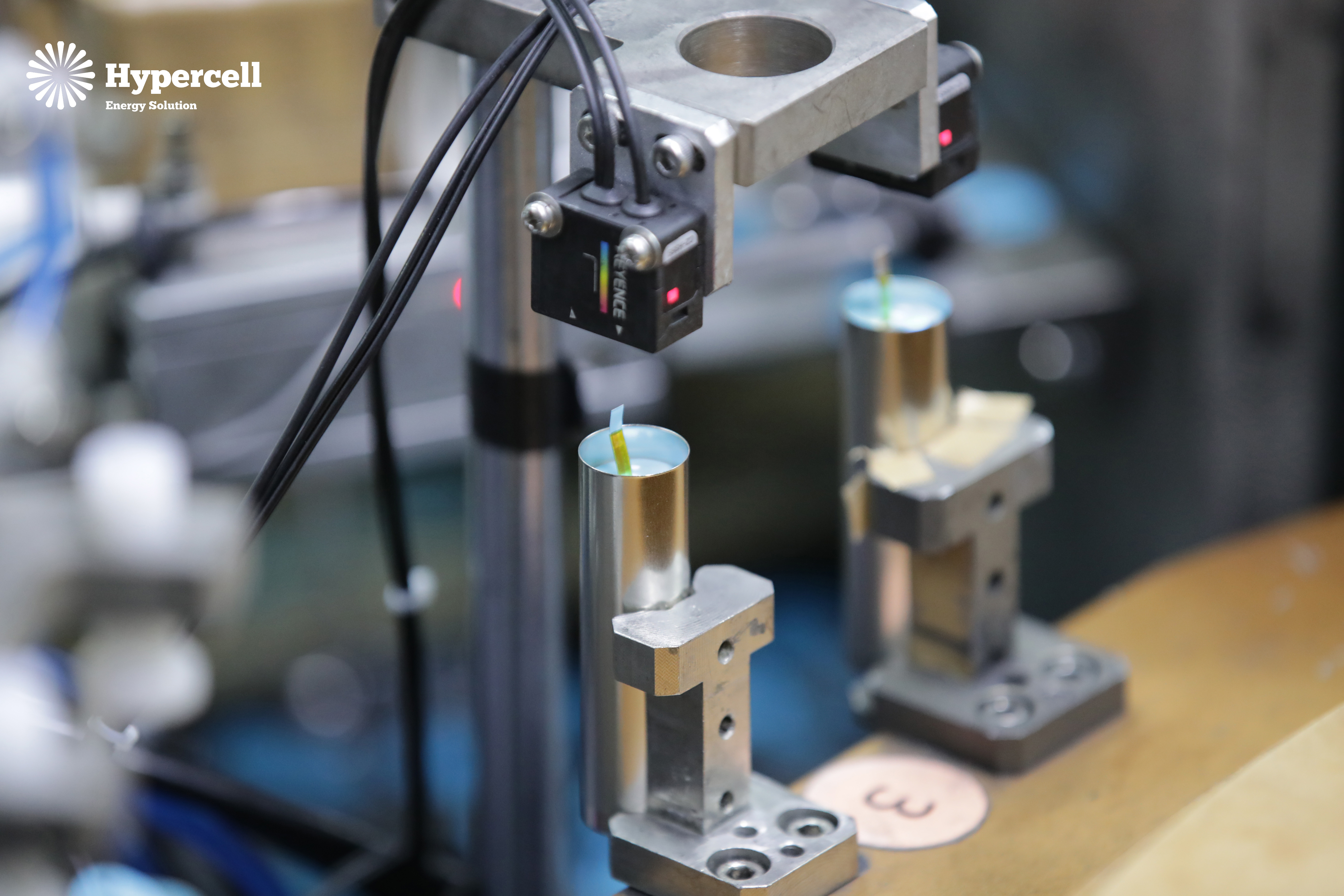
Send a written specification to receive a matching sample and quotation.
Have Questions or Need More Details?
Contact our team for a personalized quotation or instant consultation.
Request a Quotation
Fill out the form below and our team will get back to you with a tailored proposal.
WhatsApp Direct Chat
Prefer to chat in real-time? Message us on WhatsApp for instant assistance & quick answers.
- Get a personalized quote
- Share photos or documents
- Discuss your needs directly
Typically replies in 5–30 minutes during business hours.