
Power Bank vs. Lithium Battery Pack: An OEM Sourcing Decision Matrix
Two sourcing routes can look almost identical on a quotation sheet and behave nothing alike in production. One buys a finished power bank and puts a brand on it. The other commissions a custom lithium battery pack from a battery assembling factory and builds it into a device the OEM designs, tests and sells.
The Core Problem: Two Different Purchases Behind One Word
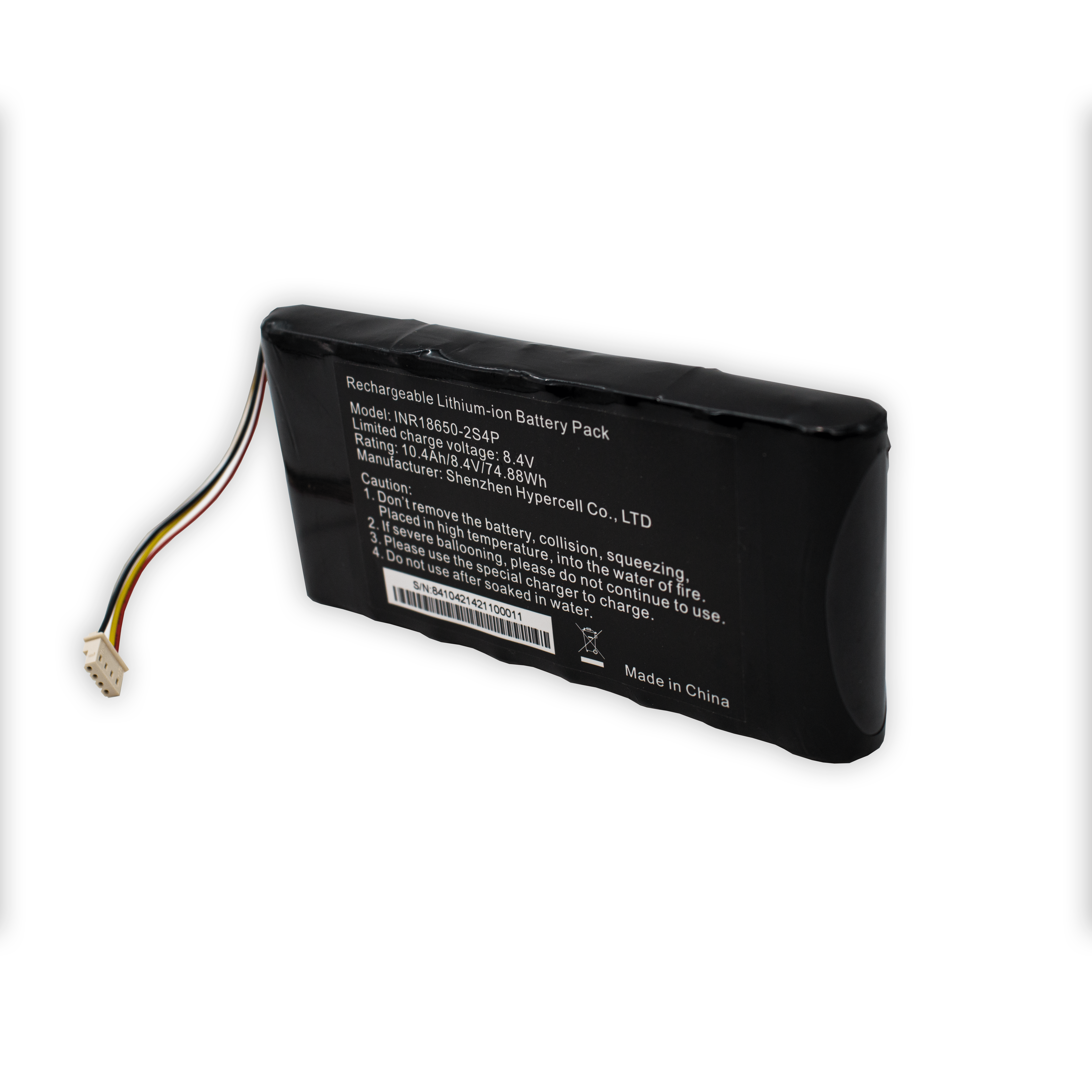
A power bank and a lithium battery pack both depend on lithium-ion chemistry, and that is roughly where the similarity ends. A power bank is a finished consumer product: cells, protection electronics, a charging interface and an enclosure arrive already combined and are sold as one article with one warranty. A lithium battery pack is a component: an engineered assembly of cells, connections and protection, sometimes with a housing or connector interface, delivered to be integrated into a host device.
The sourcing confusion usually appears at the specification stage rather than at the purchasing stage. An OEM that has been buying finished power banks tends to describe an internal pack the same way — capacity, port layout, casing colour — and ends up working with a supplier that assembles consumer accessories rather than a factory that engineers packs. The reverse mistake is equally common: a device maker buys an off-the-shelf power bank to solve an internal power problem, then has to design the device around the accessory instead of specifying the battery around the device.
Neither route is wrong. The error is choosing one while specifying the other. The matrix in this article exists to prevent that mismatch before a factory visit, a mould deposit or a purchase order is committed.
Industry Background: Why This Choice Now Reaches More OEM Buyers
Portable power has migrated out of the accessory category and into the device itself. Instruments that used to sit on a bench are now handheld. Medical monitoring has moved closer to the patient. IoT devices are deployed where mains power does not reach. Robots and light e-mobility platforms run on battery architectures that must be matched to motor and control electronics rather than to a USB port.
In each of those cases the battery is no longer a peripheral purchase — it is part of the product definition. Buyers in that position typically stop comparing catalogue capacity figures and start comparing factories on three things: whether the factory can engineer a pack to a specification, whether it can hold that specification in volume, and whether its documentation supports the markets the product will be sold into.
Shenzhen Hypercell Co., LTD is one example of what the pack side of this decision looks like in practice. Hypercell is a battery assembling factory established in 2007, headquartered in Shenzhen with an operating factory in Dongguan and three production factories in Guangdong employing more than 1,200 staff. Its product range covers lithium-ion cylindrical batteries, lithium-ion polymer batteries and lithium iron phosphate batteries, with a stated daily output of 30MWh. That combination of cell-format breadth and in-house assembly describes a component supplier — the opposite side of the decision from a consumer-accessory assembler.
The Decision Matrix: Seven Criteria That Separate the Two Routes
Rather than starting with price, run both routes through the same seven criteria. Each criterion produces a different answer depending on whether the battery is the product or a part of the product.
1. What You Actually Sell
If a buyer purchases the finished item on a retail shelf, the power bank route fits: the article is complete, branded and self-explanatory. If the battery disappears inside a device that carries the OEM's own certification and warranty, the pack route fits, because the battery must be defined by the device rather than by the accessory market.
2. Integration Effort and Design Ownership
A finished power bank carries almost no integration effort, because the supplier has already resolved the mechanical and electrical interfaces. A custom pack pushes that work back to the OEM — or to a factory that offers integration support. Hypercell's packing technology department is structured to assist clients with technology integration across industrial design, electronics, power supply, software, structure, process and testing, which is the kind of support an OEM needs when the pack must fit an existing device architecture.
3. Mechanical Fit and Enclosure
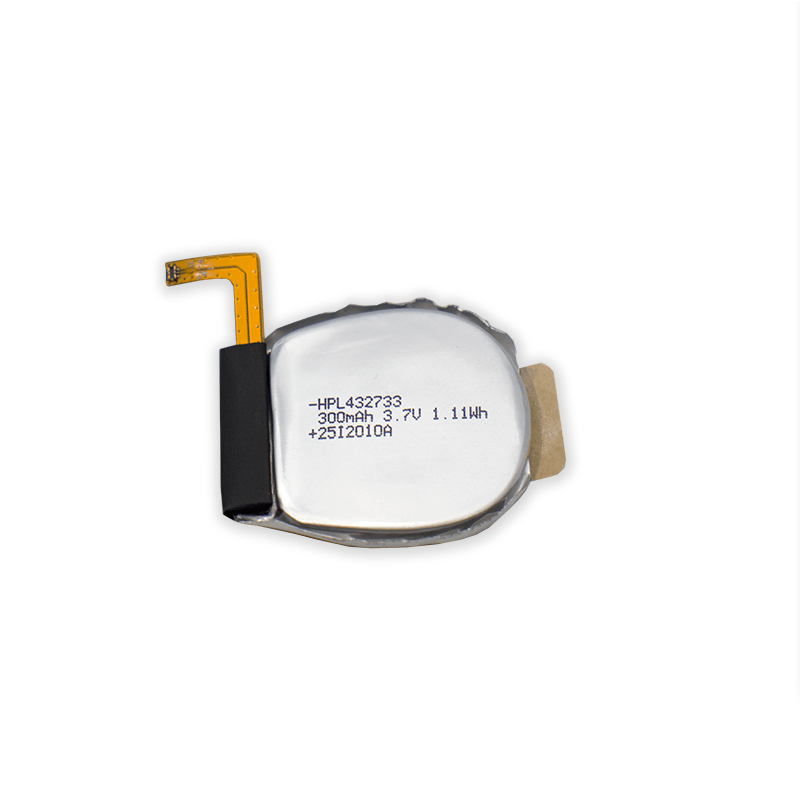
A power bank arrives with its own enclosure, so the buyer designs around a fixed block. A custom pack is defined by the available space, which is why special-shape battery solutions matter: Hypercell lists special shape battery solutions for special demands, alongside high specific capacity, high rate discharge or fast charge, and high or low temperature variants. Where the device envelope is irregular, the pack route is the only route that can be specified rather than accommodated.
4. Electrical Architecture and Protection
A power bank is delivered with a fixed input and output architecture: the buyer selects from what exists. A pack is defined by the load: series and parallel arrangement, continuous discharge expectation, charging profile and protection placement are all specification decisions. Hypercell's range includes packs such as INR18650-2S4P, INR18650-3S6P and INR21700-13S10P, and the factory's R&D activity covers managing circuits as well as new materials and new technology — relevant when the protection strategy has to be matched to a host device's own electronics.
5. Operating Environment
This is where the two routes most often diverge without anyone noticing. A consumer power bank is designed for consumer conditions. A device deployed in an industrial, medical or outdoor environment may need a much wider window. Hypercell's INR18650S 3.6V2900mAh Li-ion battery, for example, is specified for a -40°C to +85°C range — a requirement that simply cannot be expressed as a request to a consumer-accessory assembler.

6. Compliance and Documentation
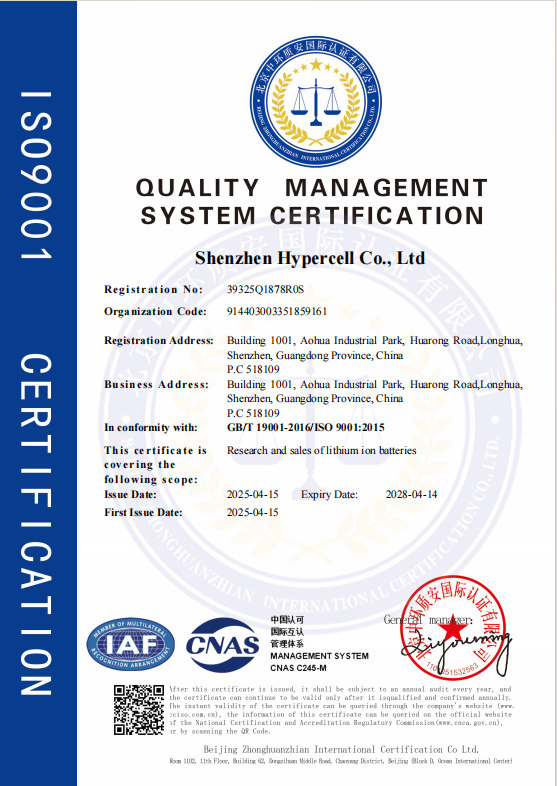
The compliance file follows the article being sold. For a finished power bank, the product-level file belongs to the consumer-product supplier. For a pack, the OEM must establish which certificates apply to the cells and the assembly, and which are issued in whose name. Hypercell is an ISO 9001:2015 and ISO 14001:2015 certified enterprise and holds a RoHS certificate and a CB test certificate, and it can support transport documentation through Identification and Classification Reports for Sea Transport of Goods and for Air Transport of Goods. Buyers comparing suppliers should ask to see the actual documents rather than a list of standards.
7. Volume, Change Cost and Supply Continuity
A finished power bank has no tooling of the buyer's own and no engineering change of the buyer's own, so switching is cheap but differentiation is limited. A custom pack carries engineering and sample effort up front, and every change — cell format, enclosure, protection — becomes a genuine change order. The offsetting requirement is supply continuity. Hypercell maintains a supply chain composed of local and global suppliers vetted through a rigorous selection process and states that its vertical manufacturing capabilities are intended to reduce the risk of potential supply disruption.
Step-by-Step: How to Run the Comparison Before Contacting a Factory
The matrix above is a set of judgements, not a form. Run it in this order so that the answer is fixed before commercial discussions begin.
- Write the load profile first. Continuous current, peak current, duty cycle and expected charging behaviour define the pack and rule out most of the finished power bank catalogue before a single quotation is requested.
- Decide whether the battery is the product or a component. If the OEM's brand appears on the battery itself, treat it as a product. If the brand appears on the device, treat the battery as a component and move to the pack route.
- Fix the mechanical envelope. Sketch the available volume, mounting points and connector access. An irregular or thin envelope points to special-shape pack design; a generous rectangular volume can occasionally be served by an existing block format.
- Define the electrical architecture and protection placement. Agree whether protection sits inside the pack or in the host device, and who is responsible for the charging behaviour on each side of that boundary.
- Verify assembly capability at the factory, not at the sales desk. Ask what the factory actually assembles, which cell formats it handles and how it controls the process. Hypercell's three Guangdong production factories, staff of more than 1,200 and stated 30MWh daily output give a concrete basis for that conversation, as does its R&D team of doctors, masters and senior engineers.
- Agree the documentation set and transport classification. Confirm which certificates are issued in the OEM's name, and obtain the sea and air transport identification and classification reports where the pack will ship internationally.
- Validate a sample against the production specification. The sample must be built to the same configuration that will be ordered in volume — same cell, same arrangement, same temperature variant — otherwise the validation proves nothing about the production unit.
Where Each Route Fits: Use Cases
The two routes split along application lines far more cleanly than along price lines.
- Handheld analyzers and industrial instruments. The battery is internal, sealed and often exposed to temperature extremes; the pack route dominates because the device envelope and the operating window are both fixed by the instrument.
- Medical devices. Enclosure, validation and documentation are all device-level concerns, so the battery is specified as a component. Hypercell lists medical devices among the industries it serves.
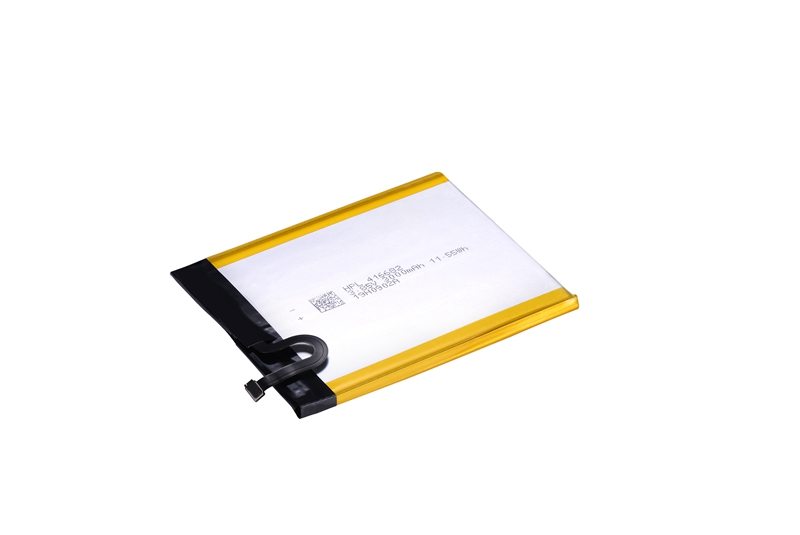
- IoT devices. Small polymer formats are common where the mechanical envelope is thin and the discharge is modest; again a component decision, and IoT is another of Hypercell's stated application areas.
- Robots and e-mobility. Higher-current architectures such as multi-cell cylindrical packs are specified around motor and control electronics, which places them squarely on the pack side.
- Consumer electronics accessories. Where the saleable object is the portable charger itself, a finished power bank is the natural purchase — and it is a purchase that a battery assembling factory focused on cells and packs does not typically serve.
Comparison Table: Finished Power Bank vs. Custom Lithium Battery Pack
| Decision criterion | Finished power bank | Custom lithium battery pack |
|---|---|---|
| Product ownership | The power bank is the saleable article; the supplier's enclosure and interface are fixed. | The pack is a component; the OEM's device is the saleable article. |
| Integration effort for the buyer | Low — the power section is already resolved. | Higher — configuration, enclosure and protection must be specified, sometimes with factory engineering support. |
| Configuration flexibility | Limited to what the accessory supplier already builds. | Defined by the load; Hypercell's range includes cylindrical, polymer and LiFePO4 formats plus special-shape solutions. |
| Mechanical fit | The device is designed around a fixed block. | The pack is designed around the available volume. |
| Operating environment | Consumer conditions, as defined by the accessory supplier. | Specified to the application; Hypercell offers wide temperature variants such as INR18650S 3.6V2900mAh rated -40°C to +85°C. |
| Compliance and documentation | Product-level file held by the consumer-product supplier. | Cell and assembly documentation; Hypercell holds ISO 9001:2015, ISO 14001:2015, a RoHS certificate and a CB test certificate. |
| Transport documentation | To be confirmed with the accessory supplier. | Identification and Classification Reports for Sea Transport and for Air Transport of Goods available from Hypercell. |
| Cost behaviour when specifications change | Little buyer-side change cost, little buyer-side differentiation. | Engineering and sample effort up front; each specification change is a real change order. |
| Typical fit | Retail and promotional portable chargers sold as the end product. | Analyzers, medical devices, IoT devices, robots and e-mobility platforms. |
| Where Hypercell fits | Not part of Hypercell's stated product range, which covers lithium-ion cells and assembled packs. | Core scope: custom lithium battery packs assembled in Guangdong, with integration support from the packing technology department. |
Verifying Assembly Capability Before You Commit
Once the pack route is chosen, the evaluation shifts from product comparison to supplier capability. Three questions matter more than the quotation.
Can the factory engineer, not just assemble? A pack that must fit a defined envelope, a defined current and a defined temperature window needs engineering input. Hypercell's R&D team of doctors, masters and senior engineers works on new materials, new technology and managing circuits, and the packing technology department supports integration across industrial design, electronics, power supply, software, structure, process and testing.
Is the quality system independently certified? Hypercell is a qualified ISO 9001:2015 and ISO 14001:2015 enterprise and states that it complies with both quality and environmental management systems through development and manufacturing. For an OEM, that is a starting condition rather than a differentiator — but it is a condition worth verifying against the certificate itself.
Is the supply chain stable enough to hold the specification? Cell availability is the most common cause of silent specification changes. Hypercell maintains a supply chain of local and global suppliers vetted through a rigorous selection process, and its vertical manufacturing capabilities are presented as a way to keep solutions flexible and reduce the risk of supply disruption.
Frequently Asked Questions
1. What documentation should accompany a custom lithium battery pack order?
Documentation follows the article being sold. Because a pack is a component, the OEM needs to establish which certificates apply to the cells and to the assembly, and which are issued in its own name. Hypercell is an ISO 9001:2015 and ISO 14001:2015 certified enterprise and holds a RoHS certificate and a CB test certificate, and it can provide Identification and Classification Reports for Sea Transport of Goods and for Air Transport of Goods. Ask for the documents themselves rather than a standards list.
2. Can a battery assembling factory handle custom configurations and special shapes?
It depends on the factory's engineering scope. Hypercell's product range covers lithium-ion cylindrical batteries, lithium-ion polymer batteries and lithium iron phosphate batteries, and includes special shape battery solutions together with high specific capacity, high rate discharge or fast charge, and high or low temperature variants. Its packing technology department supports integration across industrial design, electronics, power supply, software, structure, process and testing, which is what a custom configuration usually requires.
3. Which route carries the lower upfront cost at low volume?
At low unit volumes, a finished power bank generally avoids buyer-side engineering and tooling on the power section, while a custom pack front-loads specification and sample effort. The comparison only becomes meaningful when the factory separates engineering and sample cost from unit cost, so request that split explicitly. A pack quoted as a single blended figure cannot be compared against a finished product price.
4. How should an OEM validate a pack before committing to volume?
Request a sample built to the exact production specification — same cell, same series and parallel arrangement, same temperature variant. Validate it at system level inside the actual enclosure and with the actual charging electronics, because a pack that performs on a bench can still fail once the host device's protection boundary is added. Only then convert the sample configuration into a volume order.
5. Which route shortens time to market — and how do I start either one?
A finished power bank removes the development cycle but limits differentiation, since the buyer inherits the supplier's architecture. A custom pack adds specification and sample steps but removes the need to redesign a device around an existing accessory, and it is the only route when the operating environment falls outside consumer conditions. To scope a pack, Hypercell can be reached at info@hypercellbattery.com or +86 755 2376 4134, with the load profile, envelope sketch and target operating temperature ready to share.
Conclusion: Decide What You Are Buying Before You Decide Who To Buy From
The head-to-head between a power bank and a lithium battery pack is not a contest between two products. It is a contest between two positions in the value chain. Buying a finished power bank means buying a completed consumer article and accepting its architecture. Commissioning a custom lithium battery pack means owning the specification and selecting a factory capable of engineering and holding it.
Apply the seven criteria in order — what you sell, integration effort, mechanical fit, electrical architecture, operating environment, compliance, and change cost — and the answer usually resolves before the commercial negotiation starts. Where the battery disappears inside a device, the pack route is the one that keeps the device, the compliance file and the warranty under the OEM's own control.
Next Step: Test the Specification Against a Real Factory
Send your load profile, device envelope and target operating temperature, and Hypercell will review which pack configuration fits — cylindrical, polymer or LiFePO4 — and what documentation the order will require.
Email: info@hypercellbattery.com | Tel: +86 755 2376 4134 | Web: www.hypercellbattery.com
Shenzhen Hypercell Co., LTD — Room 2706-2707, Baoshan Shidai Building, Minqiang Community, Longhua District, Shenzhen 518131, Guangdong, China.
Have Questions or Need More Details?
Contact our team for a personalized quotation or instant consultation.
Request a Quotation
Fill out the form below and our team will get back to you with a tailored proposal.
WhatsApp Direct Chat
Prefer to chat in real-time? Message us on WhatsApp for instant assistance & quick answers.
- Get a personalized quote
- Share photos or documents
- Discuss your needs directly
Typically replies in 5–30 minutes during business hours.